
Last updated September 23, 2026
DIY vs Professional Insulation: The Pomona Homeowner’s Decision Guide
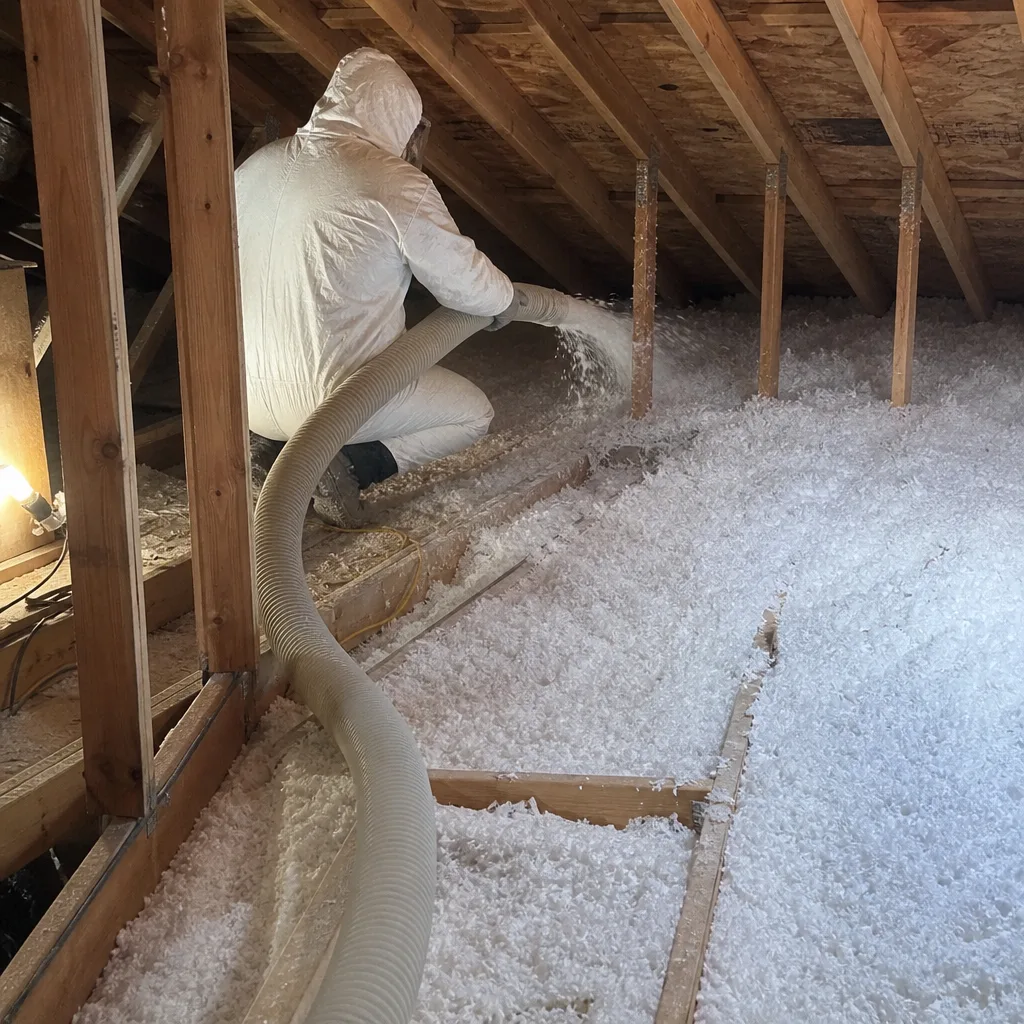
A homeowner in Pomona’s Mayfair neighborhood rents a blower from the hardware store, hauls ten bags of R-30 blown fiberglass into their attic, and spreads it evenly across the floor. The temperature in the living room barely shifts. The problem isn’t the insulation - it’s what lies beneath it. In our experience across more than 9,000 homes since 2016, an unsealed attic floor with fresh insulation on top achieves roughly 60% of the thermal performance of a properly air-sealed R-30 job. That 40% gap isn’t recoverable without removing the insulation they just installed. This guide explains why the DIY-versus-professional question in Pomona is less about money and more about sequencing: air sealing must happen first, and the tools to verify it are not available for weekend rental.
Quick Answer
DIY insulation in Pomona works for adding depth to existing blown insulation above an already-sealed attic floor. Professional work is required when air sealing is needed, when spray foam or dense-pack wall insulation is involved, or when the job must produce documentation for rebates, resale, or code compliance. The critical difference is sequencing: professionals test and seal air leaks before insulating, following a process like our How to Hire a Insulation Contractor in Pomona: A Step-by-Step Guide; most DIY installations skip this step entirely, locking in a permanent performance penalty.
Table of Contents
- What DIY Insulation Can Realistically Accomplish in a Pomona Attic
- The Air Sealing Gap: Why Sequencing Matters More Than R-Value
- Tools and Access Requirements That Require Professional Equipment
- How to Verify Air Sealing Without a Blower-Door Test
- Which Pomona Projects Trigger Mandatory HERS Verification
- The Documentation Gap: What DIY Work Cannot Produce
- Cost Comparison: Real Numbers for Pomona Homeowners
- When to Call a Professional
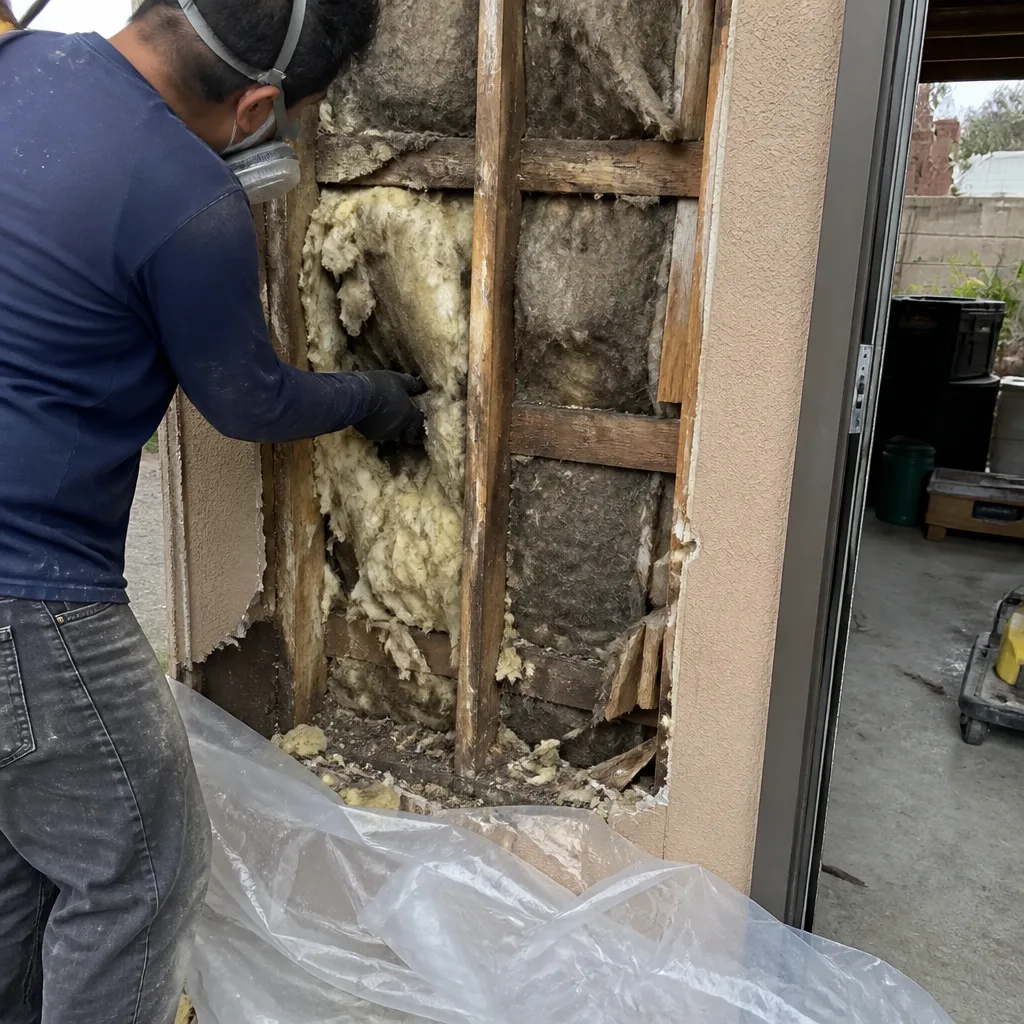 Before
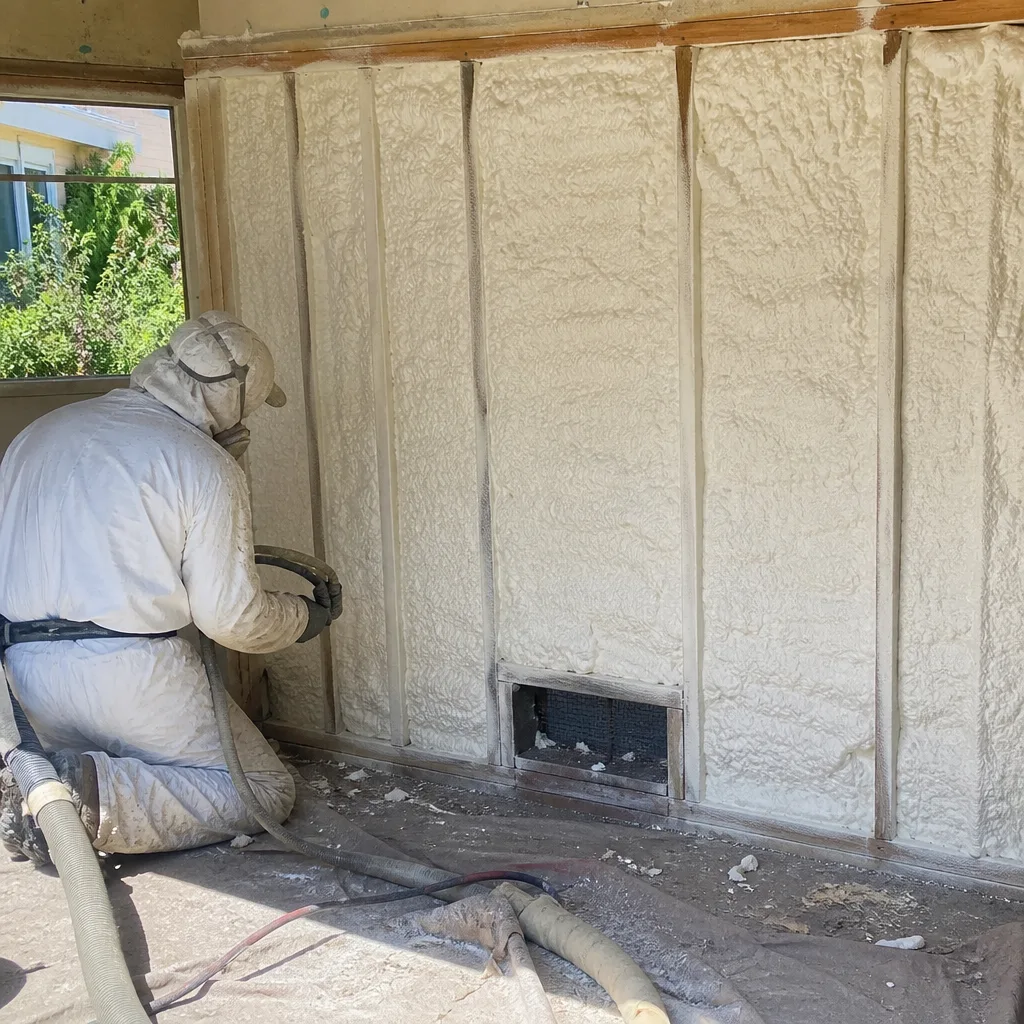 After
AfterWhat DIY Insulation Can Realistically Accomplish in a Pomona Attic
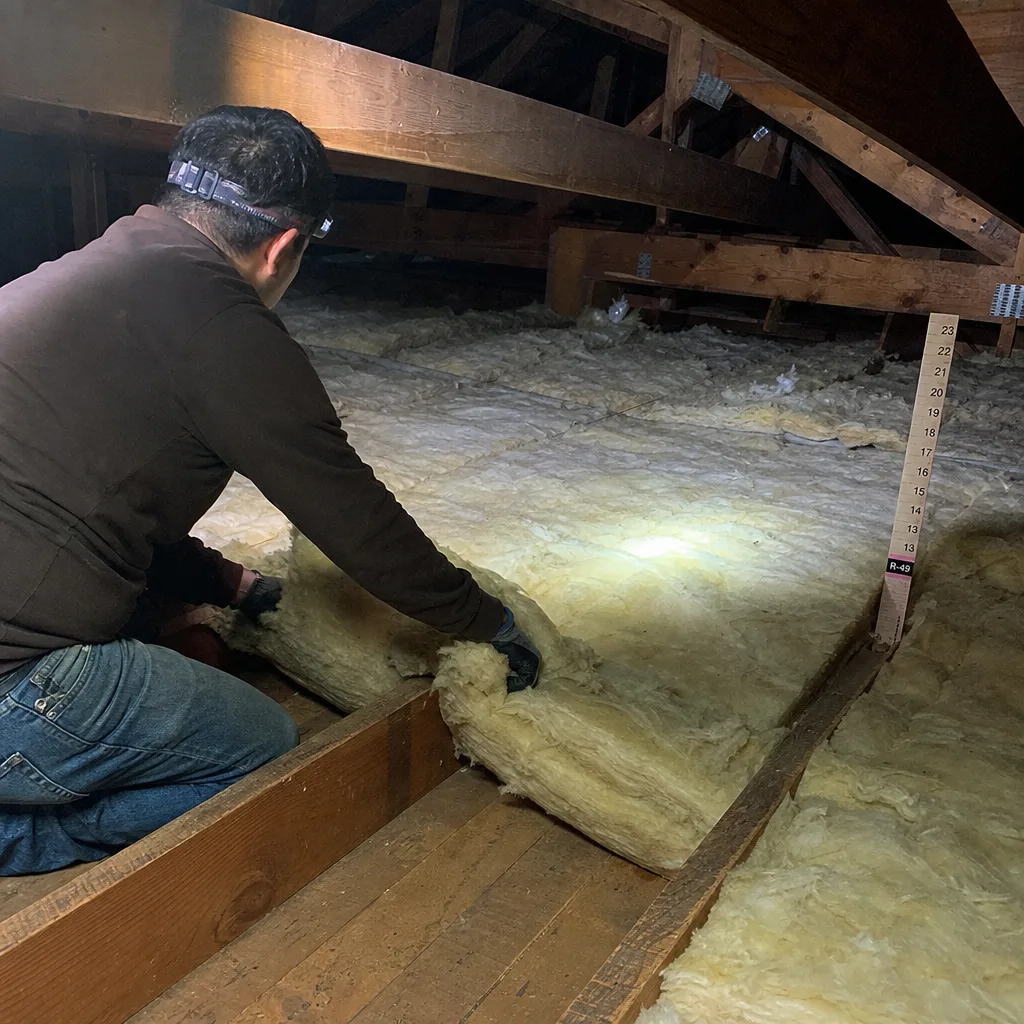
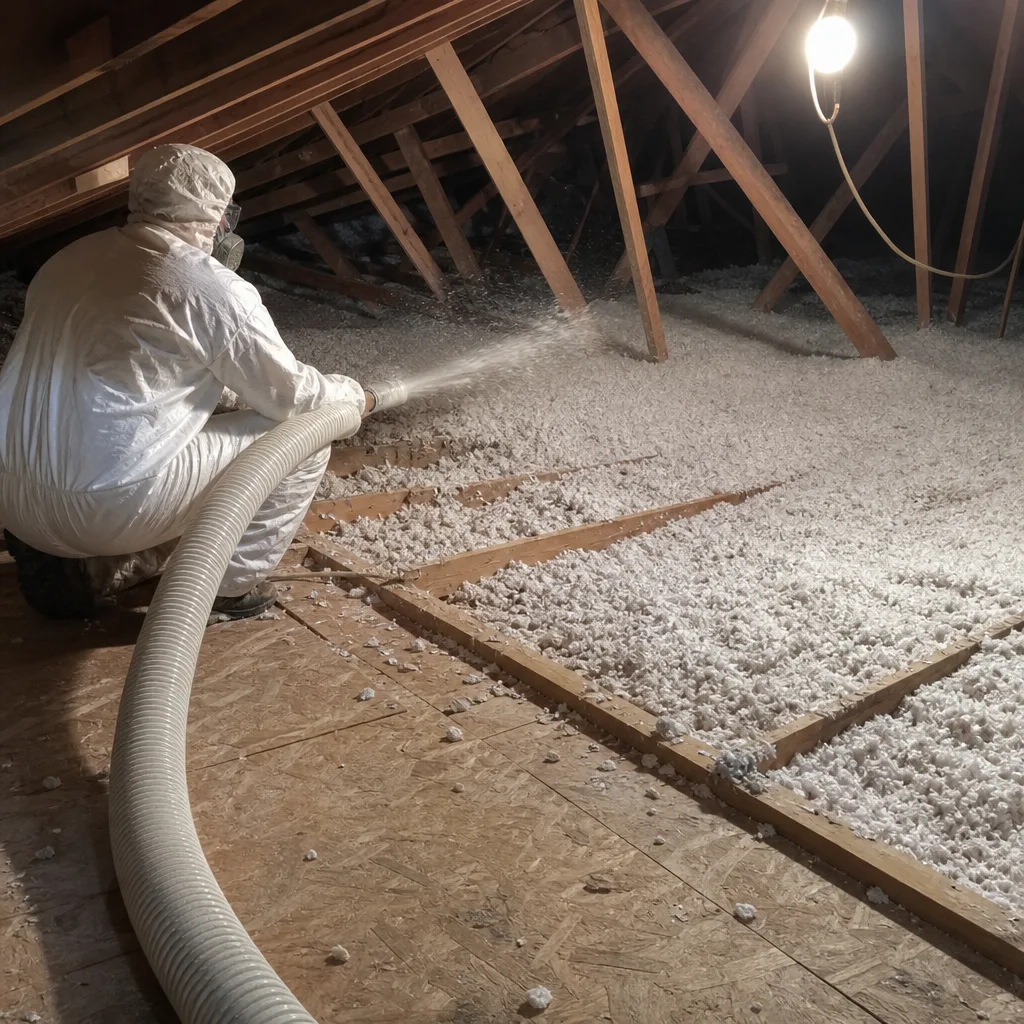
There is one scenario where DIY insulation in Pomona makes measurable sense: adding depth to existing blown-in fiberglass or cellulose on an attic floor that has already been professionally air-sealed and tested. If your home had a blower-door test within the last few years, if the top plates and can lights were sealed with two-component foam, and if the attic floor is intact with no new penetrations, then renting an insulation blower and adding R-19 or R-30 on top of the existing layer is a reasonable weekend project.
The climate in Pomona amplifies this narrow window. Our summers regularly hit 95°F, and attic temperatures can reach 130°F. That heat drives stack effect - the natural rise of conditioned air through the building envelope. If the floor below is sealed, additional insulation depth slows conductive heat gain effectively. If the floor is not sealed, the new insulation simply hides the leaks while conditioned air continues to escape through them.
DIY insulation can also work for:
- Adding batt insulation to an accessible, unconditioned crawl space with no moisture issues
- Insulating a garage ceiling that has no HVAC ductwork running through it
- Replacing damaged batts in a knee wall where air sealing was previously completed
What DIY cannot do well: anything involving spray foam, anything requiring verification of air sealing performance, and anything in a wall cavity. Dense-pack cellulose or fiberglass for walls requires specialized equipment that creates sufficient pressure to fill cavities without settling. The rental blowers at hardware stores lack the CFM and pressure control. We’ve opened walls in Pomona’s Lincoln Park neighborhood where homeowners attempted dense-pack with rental equipment; the material had settled six inches from the top plate, creating a thermal bypass that was invisible until we opened the cavity.
The Air Sealing Gap: Why Sequencing Matters More Than R-Value
R-value measures resistance to conductive heat flow. It does not measure air leakage. In Pomona’s climate, air leakage often dominates the energy load more than conduction. A 1-square-inch hole in the ceiling can leak as much conditioned air as 30 square inches of uninsulated wall. When insulation is installed over that hole, the leak continues - it’s just harder to find.
The correct sequence, which we follow on every attic insulation in Pomona job, is:
- Test the building envelope with a blower door to establish a baseline CFM50 reading - the pressurization measurement that shows, in one number, how much air the home is losing
- Locate leaks using infrared imaging and smoke testing while the blower door is running
- Seal all accessible leaks with appropriate materials: two-component polyurethane foam for large penetrations, acrylic latex caulk for small gaps, fire-rated sealant for electrical penetrations through top plates
- Retest with the blower door to verify reduction in leakage
- Install insulation only after the air sealing target is met
In Pomona’s post-war housing stock - particularly the 1,000- to 1,400-square-foot ranch homes common in the Phillips Ranch and west Pomona areas - we typically see blower-door readings of 3,500 to 5,000 CFM50 before sealing. After proper air sealing, that drops to 1,800 to 2,500 CFM50. The insulation then has a sealed surface to perform against. Without that sealing, the insulation is performing in a wind tunnel.
The permanence problem is what makes DIY sequencing so costly. Once blown fiberglass or cellulose covers the attic floor, locating and sealing the leaks beneath it requires removing the insulation, doing the work, and reinstalling. The cost of that do-over typically exceeds the original professional installation would have. We’ve completed dozens of these corrections in Pomona; the homeowner’s original DIY material is usually reusable, but the labor to remove, store, replace, and add the missing air sealing is not.
Tools and Access Requirements That Require Professional Equipment
Air sealing an attic properly requires tools that are not available for homeowner rental and techniques that are not described accurately in most DIY guides. Here is what professional envelope work actually involves in Pomona homes:
Two-component spray foam systems. The gaps around plumbing stacks, chimney chases, and top plates in a typical Pomona attic are too large for canned foam. Professional crews use plural-component foam guns that mix resin and isocyanurate at the nozzle, producing foam that expands to fill large cavities and cures to a rigid, durable seal. The equipment costs $3,000 to $8,000; the chemicals require respirator training and temperature-controlled storage. Canned “great stuff” foam from the hardware store is not a substitute - it lacks the expansion ratio and density for structural air sealing, and it degrades in attic heat over time.
Blower-door testing equipment. A blower door is a calibrated fan that mounts in an exterior door frame, combined with pressure gauges that measure the relationship between indoor and outdoor pressure. The equipment is available for purchase ($3,500 to $5,500 for a basic system), but interpretation requires training. More importantly, the test is only useful if you have the tools to act on the results. Most homeowners who rent or buy blower doors can identify that their home leaks; they cannot systematically locate and seal the leaks that matter most.
Infrared cameras for thermal imaging. These identify temperature differentials that reveal air leakage paths. Entry-level cameras start around $2,500. They require interpretation: a cold spot might be a leak, or it might be thermal bridging through a rafter, or it might be missing insulation. Distinguishing between these conditions determines whether you seal, insulate, or both.
Physical access limitations. Many Pomona homes, especially the post-war tract housing in neighborhoods north of the 10 Freeway, have attic access hatches of 16 by 24 inches or smaller, with roof pitches of 4:12 or less. Working in these spaces requires specific techniques: rolling rather than crawling, working from the perimeter inward, using pole attachments for foam guns. The 130°F attic temperatures in July and August create heat-stress conditions that professionals manage with scheduled work times, hydration protocols, and rotation schedules. A homeowner working alone in these conditions risks heat exhaustion with no one present to recognize the symptoms.
Personal protective equipment. Professional crews working in attics use respirators with P100 filters for fiberglass and cellulose dust, full coverage clothing, and knee pads designed for abrasive surfaces. Standard dust masks are inadequate for blown insulation; the fibers are small enough to pass through N95 material at the velocities created by blower operation.
How to Verify Air Sealing Without a Blower-Door Test
Not every homeowner can access or afford a blower-door test before adding insulation. There is a partial alternative, with important limitations.
The incense stick or smoke pencil method works as follows:
- Close all windows and exterior doors. Turn on all exhaust fans (bathroom, kitchen, laundry) and the furnace blower if you have forced air. This depressurizes the house slightly, simulating the suction that draws attic air downward in winter.
- Enter the attic with a lit incense stick or smoke pencil. Hold it near common leak locations: top plates (the horizontal framing member where the wall meets the ceiling), electrical boxes, can light housings, plumbing vent stacks, chimney chases, and the attic access hatch itself.
- Watch the smoke. If it draws horizontally or downward, you have air movement - a leak path. Mark the location with a flag or tape.
- Seal marked locations appropriately: fire-rated caulk for electrical penetrations through top plates, metal flashing and fire-stop sealant around chimneys, weatherstripping for the access hatch.
The limitations are significant. The incense method detects only leaks that are actively drawing air under the specific pressure conditions you’ve created. It misses leaks that are neutral or pressurized in that moment. It cannot quantify total leakage - you might seal six visible leaks and still have 1,500 CFM50 of undetected loss. It provides no documentation. And it does not test the seal after you’ve completed it; you are working without feedback.
In our work across Pomona, we’ve found the incense method catches roughly 40% of the significant leaks in a typical attic. The remaining 60% - often at interior top plates, behind insulation baffles, or within soffit chases - require blower-door-directed testing with a smoke puffer under pressurization to locate. For a homeowner adding insulation depth to an already-sealed attic, this partial verification may be sufficient. For anyone treating air sealing as a primary project, it is not.
Which Pomona Projects Trigger Mandatory HERS Verification
California’s Title 24 energy code, covered in our guide to Insulation Permits, Codes & Inspections in CA: What You Need to Know, requires Home Energy Rating System (HERS) third-party verification for specific insulation and air-sealing work, regardless of who performs the installation. This means DIY installation does not exempt a homeowner from hiring a licensed HERS rater to inspect and sign off on the work.
In Pomona, which falls under Los Angeles County jurisdiction with California state energy code enforcement, HERS verification is triggered when:
- Insulation is installed as part of a permitted addition or alteration that alters the building envelope
- Air sealing is claimed as a compliance measure for Title 24 energy calculations on new construction or major remodels
- Quality insulation installation (QII) is specified as the compliance path for attic or wall insulation in new construction
- Home energy upgrade programs, including many utility rebate pathways, require HERS-rated documentation for incentive payment
The HERS rater is independent of the installer. They verify R-values, installation grade (whether insulation fully contacts all six sides of the cavity), air barrier continuity, and - for QII compliance - blower-door test results. A homeowner who installs their own insulation must still schedule and pay for this verification, typically $300 to $600 per inspection in the Pomona market.
Where this becomes consequential: many Pomona homeowners undertake insulation work to qualify for Southern California Edison or SoCalGas rebate programs. These programs require pre- and post-installation documentation, often including HERS ratings or equivalent blower-door test records. DIY work without professional documentation is ineligible. The rebate value on a typical attic insulation upgrade in Pomona ranges from $500 to $1,500; forfeiting that rebate to save on labor costs is a miscalculation we’ve seen repeatedly.
The Documentation Gap: What DIY Work Cannot Produce
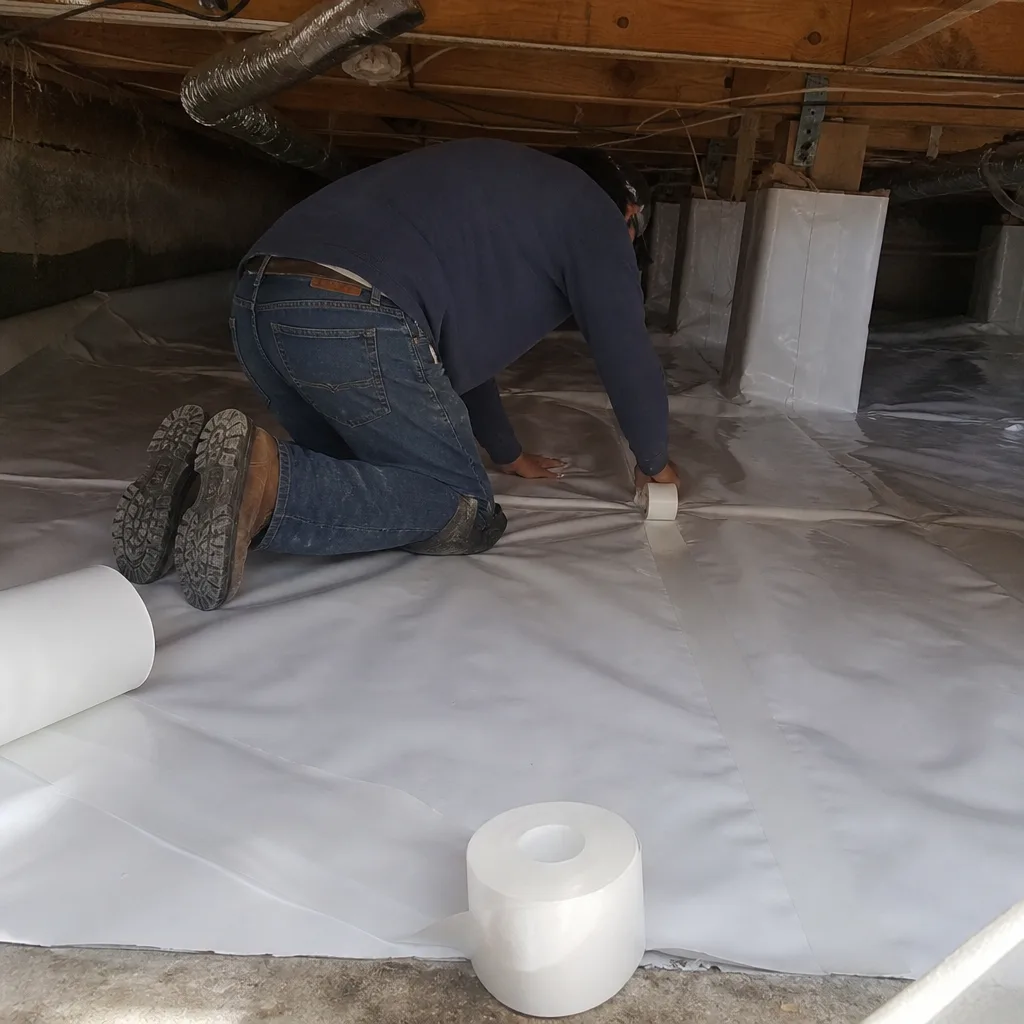
A professionally installed and tested insulation job produces documents that have tangible value. DIY work produces none of them. This is not a marketing distinction; it is a transaction-level reality that affects resale, refinancing, and rebate eligibility.
The documents from a professional job typically include:
- A written scope of work with specified materials, R-values, and installation methods - the Haven Standard requires this before any work starts
- Before-and-after blower-door test results showing CFM50 reduction
- A HERS certificate or equivalent energy rating documentation, where applicable
- A Documented Photo Record of installation conditions, including attic floor before sealing, after sealing, and after insulation
- A written warranty, in our case the 365-Day Done Right Promise, delivered before work begins
In Pomona’s housing market, these documents matter at sale. Buyers and their inspectors increasingly request utility history and energy documentation. A blower-door record showing 4,200 CFM50 reduced to 2,100 CFM50, with dated photos of the work, is verifiable evidence of building performance. A homeowner’s verbal assurance that they “added some insulation a few years back” is not.
The same documentation gap affects insurance and financing. Some green mortgage products and PACE financing for energy upgrades require third-party verification of installed measures. DIY insulation without HERS or blower-door documentation does not qualify. We’ve had Pomona homeowners contact us to retrofit documentation onto previous DIY work; we cannot. The tests must be performed before and after the work, with dated records. There is no backdating.
Cost Comparison: Real Numbers for Pomona Homeowners
Cost is the primary driver of DIY interest, but the comparison requires including all costs - including the ones that arrive later. See our Insulation Cost Breakdown: The Pomona Homeowner’s Reference for 2026 for detailed pricing.
DIY blown-in attic insulation, typical 1,200 sq ft Pomona attic:
- Insulation blower rental: $75-$100 per day
- Material (fiberglass or cellulose, R-30): $450-$650
- Basic PPE (gloves, dust mask, coveralls): $40-$60
- Access hatch weatherstripping and foam: $30-$50
- Total direct cost: $595-$860
This assumes no air sealing, no testing, and no verification. The performance result: improved conductive resistance over a still-leaky floor.
Professional attic insulation with air sealing, same footprint:
Most attic insulation jobs in a home this size in Pomona run between $2,800 and $4,500 when air sealing is included. The range depends on:
- Condition of existing insulation (removal adds $800-$1,400)
- Accessibility and roof pitch
- Number and type of penetrations requiring sealing
- Material selection - Owens Corning fiberglass, Johns Manville mineral wool, or GreenFiber cellulose each have different material costs
The professional job includes blower-door testing, air sealing with two-component foam, installation, cleanup, and full documentation. The performance result: tested, verified reduction in air leakage plus improved conductive resistance.
The hidden cost of DIY: if air sealing is later required, removing and replacing the DIY insulation to access the attic floor typically adds $1,500 to $2,500 to the eventual professional job. The “savings” of DIY are frequently negative.
Common Mistakes to Avoid
- Installing insulation over recessed can lights without checking rating. Non-IC (insulation contact) rated fixtures in older Pomona homes overheat and create fire hazards when covered. Verify IC rating before burying fixtures in insulation.
- Blocking soffit vents with insulation. Pomona homes rely on ventilated attics for moisture control. Stuffing insulation into eaves without baffles chokes airflow and can cause condensation, mold, and shingle damage.
- Using faced batts in attic floors. The kraft paper facing acts as a vapor retarder in the wrong location for our climate. In Pomona’s warm-dry to mixed-humidity conditions, this can trap moisture. Unfaced insulation with proper air sealing is correct.
- Ignoring the access hatch. A 1-inch gap around a 20-by-30-inch attic hatch leaks as much air as a 6-inch diameter hole in the ceiling. Weatherstripping and insulating the hatch is essential and often skipped in DIY work.
- Assuming more R-value always helps. Beyond R-38 to R-49 in attics, diminishing returns set in quickly in our climate. If the floor leaks, R-60 performs like R-30 with leaks. Seal first, then add depth to the cost-effective threshold.
- Working in summer attics without heat precautions. Pomona attic temperatures exceed 130°F from June through September. Heat exhaustion symptoms - confusion, nausea, cessation of sweating - can progress to heat stroke before the worker recognizes danger. Schedule attic work for morning hours, bring water, and work with a partner who can monitor your condition.
When to Call a Professional
Call a professional when the job involves air sealing, spray foam, wall cavities, or any work requiring documentation for rebates, resale, or code compliance. Call when the attic is inaccessible, when existing insulation is contaminated, or when you cannot verify the condition of the attic floor beneath what you plan to add.
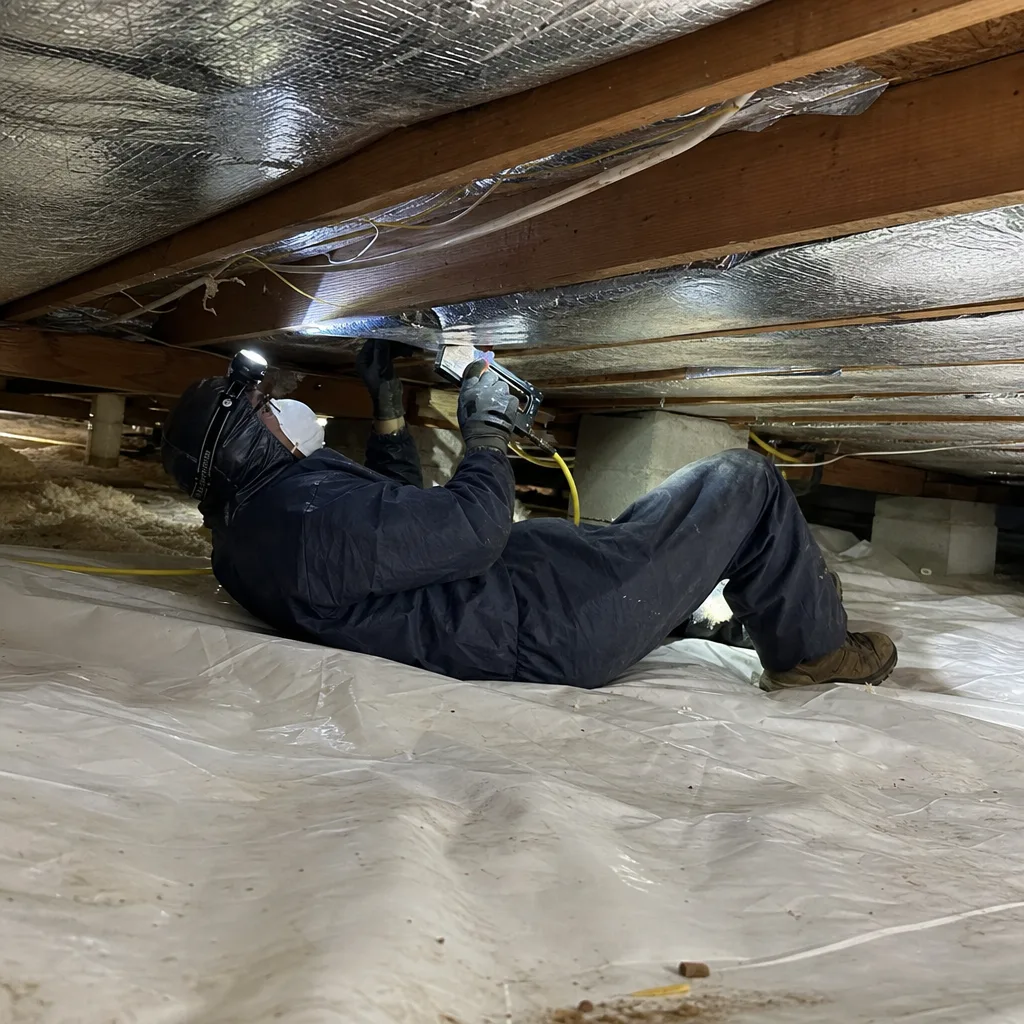
Topside Attic Insulation Pomona offers free estimates in Pomona - call (562) 242-7569. Every estimate includes a written price before any work starts, a documented photo record, and on applicable jobs, before-and-after blower-door numbers so you can see the performance change you paid for. Our crawl space encapsulation & vapor barrier in Pomona and spray foam insulation in Pomona services follow the same sequencing discipline: seal first, test, then insulate.
Frequently Asked Questions
Most attic insulation jobs in a typical Pomona home run between $2,800 and $4,500 when air sealing and blower-door testing are included. The exact price depends on attic square footage, accessibility, existing insulation condition, and material selection. Call (562) 242-7569 for a written estimate - estimates are free and include a flat price before any work starts.
No. Southern California Edison and SoCalGas rebate programs for insulation upgrades require third-party documentation, typically HERS verification or professional blower-door test records. DIY installation without this documentation is ineligible. The rebate value on a typical Pomona attic job ranges from $500 to $1,500.
California Title 24 requires R-38 minimum for new attic insulation in the Pomona climate zone. R-49 is often cost-effective given local energy rates. However, R-value only performs as specified when installed over a sealed attic floor. R-38 over leaks performs closer to R-19 in real conditions.
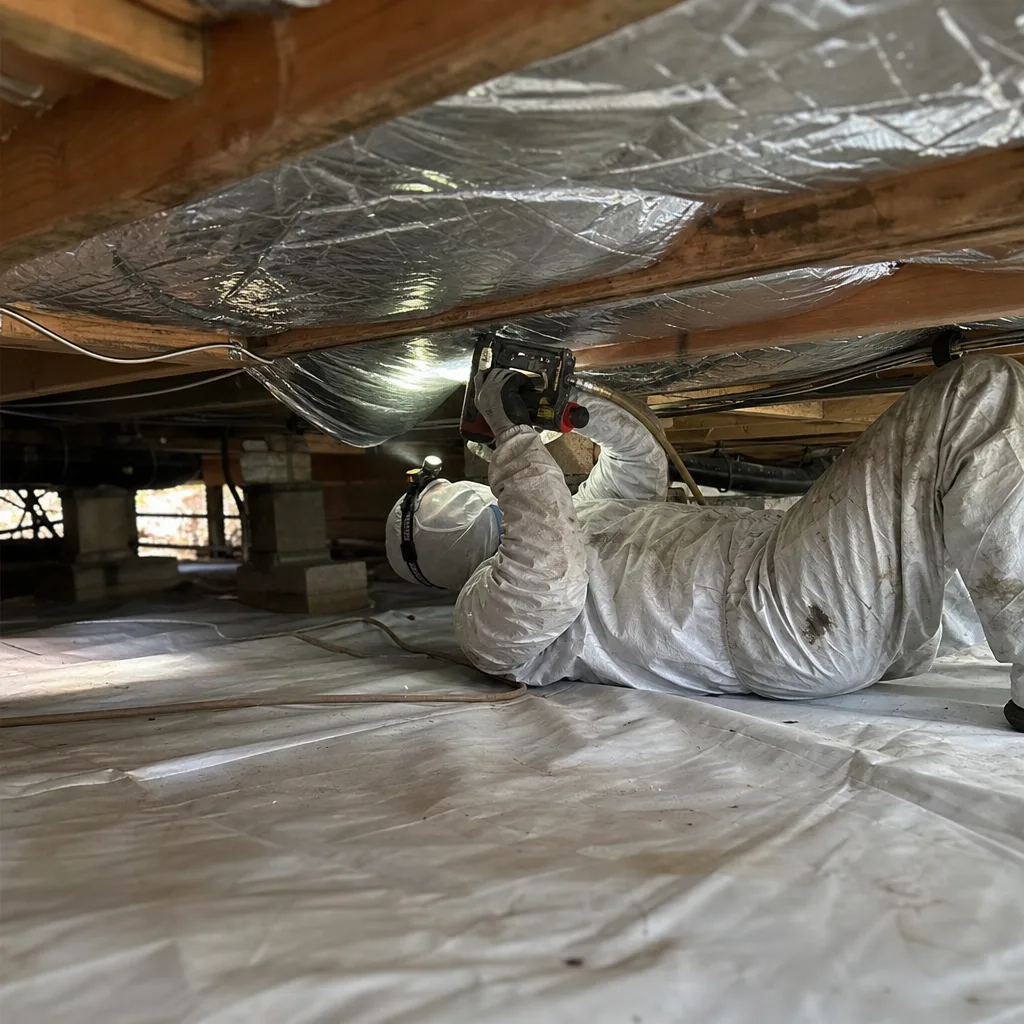
No. Two-component spray foam requires specialized equipment, chemical handling training, and respiratory protection that is not available for homeowner rental. Improper mixing ratios or application temperatures produce foam that shrinks, cracks, or fails to cure - creating permanent air leaks and potential off-gassing issues. Our spray foam insulation in Pomona crews are trained and equipped for safe, specified application.
If your home has never had a blower-door test, you do not know. The incense stick method can detect active leaks under depressurization, but it misses roughly 60% of significant leakage paths. A professional blower-door test with infrared imaging is the only way to verify. If your home was built before 1990 in Pomona and has not had professional air sealing work, the floor is almost certainly not sealed to modern standards.
DIY insulation without documentation typically adds no verifiable value. Professional work with blower-door records, HERS documentation, and dated photos provides evidence that buyers and inspectors can evaluate. In Pomona’s competitive market, documented energy improvements increasingly appear in listing descriptions and buyer request lists.
The Bottom Line
The DIY-versus-professional question for insulation in Pomona is not primarily about installation skill. It is about sequencing, verification, and documentation. A homeowner with a sealed attic floor can add insulation depth successfully. A homeowner with an unsealed floor who adds insulation first has created a permanent performance penalty that costs more to correct than professional installation would have. The tools to seal and verify - blower doors, two-component foam, infrared cameras - are not available for weekend rental. The documentation that rebates, resale, and code compliance require cannot be produced retroactively. For air sealing, spray foam, wall insulation, or any job where performance must be proven, professional work is the only path that delivers what it promises. Explore our more guides & resources for additional homeowner guidance.
Written by Wes Okafor, Owner at Topside Attic Insulation Pomona, serving Pomona since 2016.