
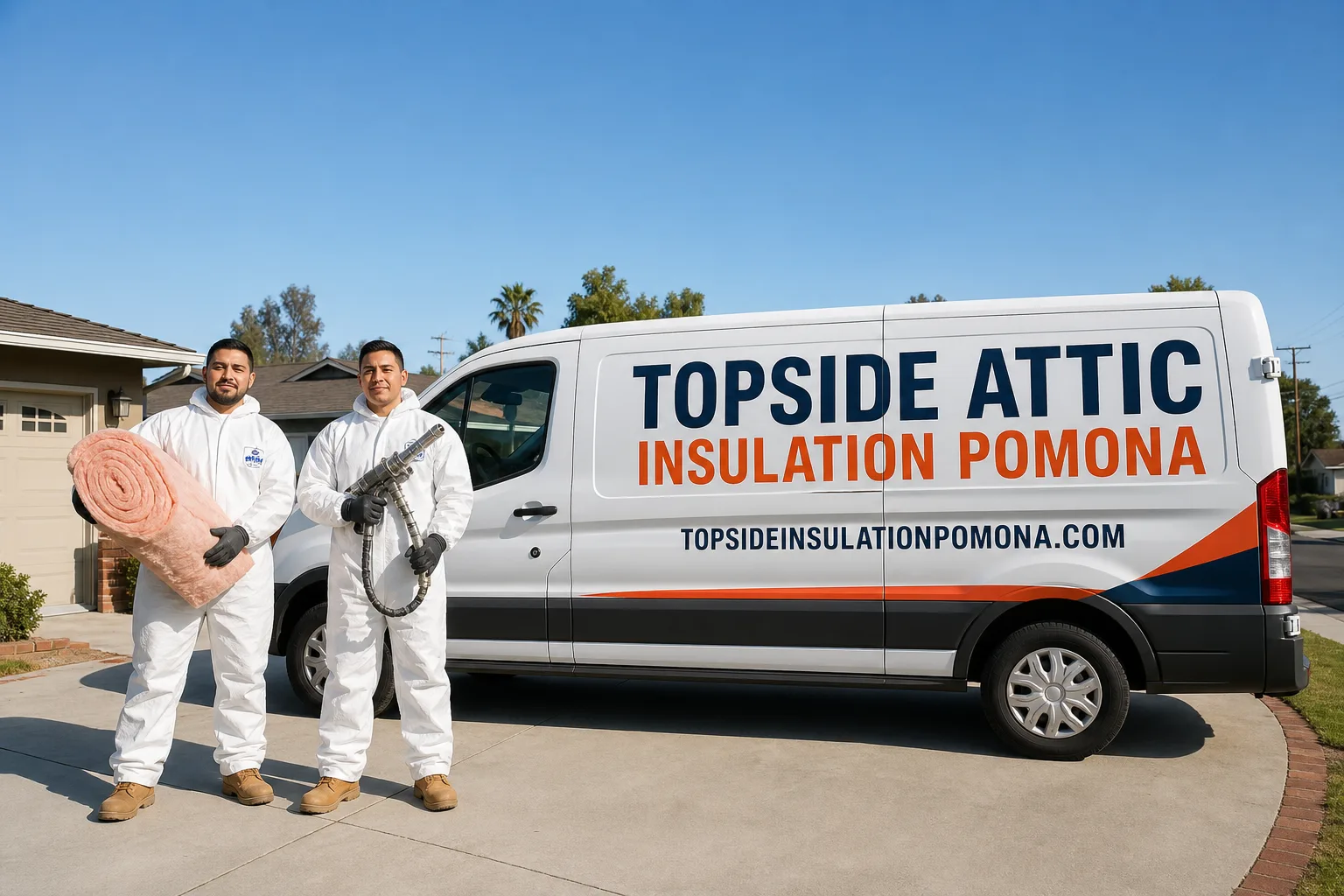
Trusted Spray Foam Insulation for Pomona Homeowners
Pomona Spray Foam Insulation typically costs $1,800-$4,500 for most residential jobs, and we’re usually able to start within 48 hours of your written estimate. We’re Topside Attic Insulation Pomona, and we’ve been sealing and insulating homes under The Haven Standard since 2016. Our crews handle everything from open-cell attic work to closed-cell garage ceiling applications in neighborhoods from Lincoln Park to Phillips Ranch, and we publish before-and-after blower-door numbers on every job where air sealing is part of the scope.
Pomona’s combination of older pre-war bungalows near downtown, mid-century ranch homes in the north hills, and newer construction around Cal Poly Pomona means we see a wide range of envelope problems. Some homes have never had proper air sealing at the top plates. Others have had fiberglass batts installed over can lights and plumbing penetrations that leak conditioned air straight into the attic. We’re not going to blow or spray anything until we’ve sealed what needs sealing first. That’s Haven Standard practice, not an upgrade. Call (562) 242-7569 and a live person will pick up, 24 hours a day.
What Our Spray Foam Insulation Service Includes
Open-Cell Spray Foam
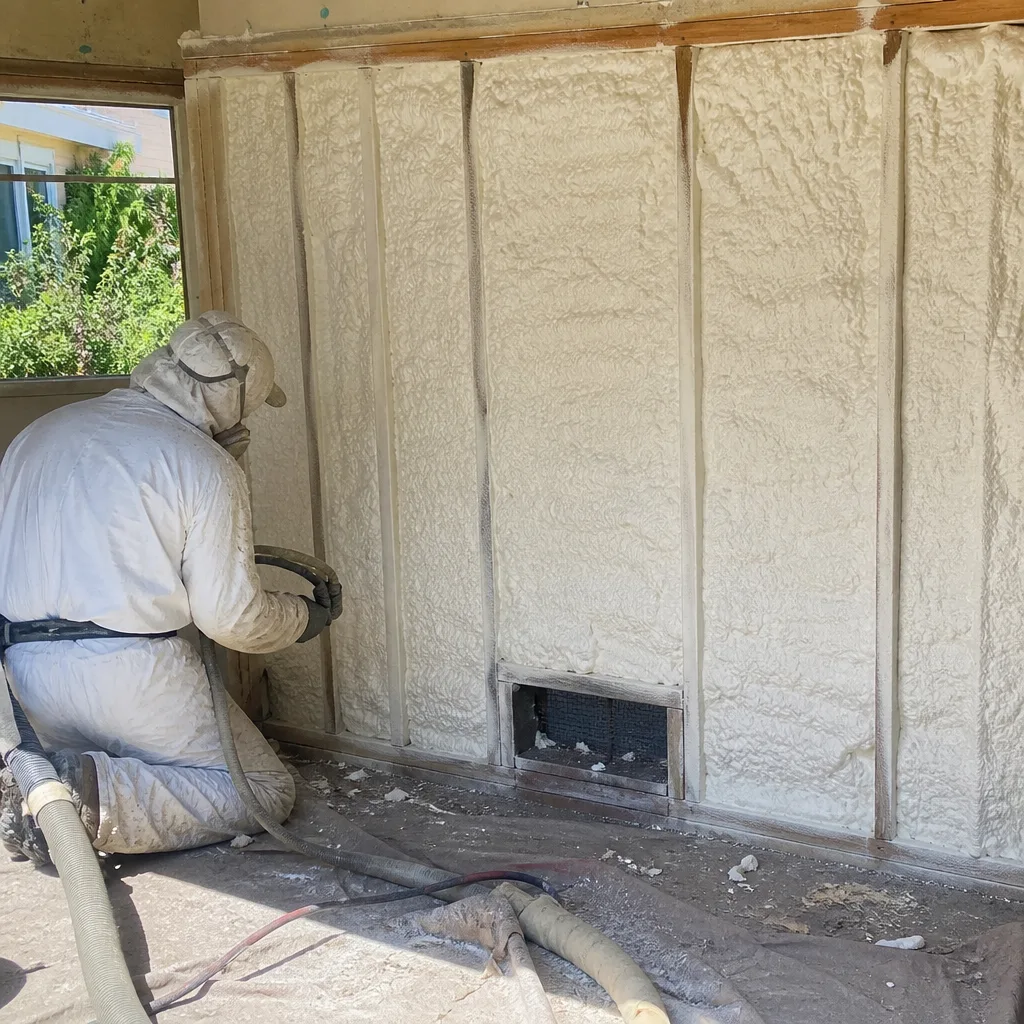
Open-cell spray foam is a lightweight, semi-rigid material that expands to fill cavities and stays somewhat soft after curing, which makes it ideal for attic floors and wall cavities where you want the foam to flex with seasonal wood movement. In Pomona, we use it most often in vented attics where the goal is stopping air leakage while adding R-value, and where the vapor permeability of open-cell is actually an advantage in our dry climate. Our crews apply it only after we’ve sealed top plates, electrical penetrations, and can light housings with targeted air sealing. You get a written scope beforehand and a Documented Photo Record showing the sealed areas and the finished foam application.
Closed-Cell Spray Foam
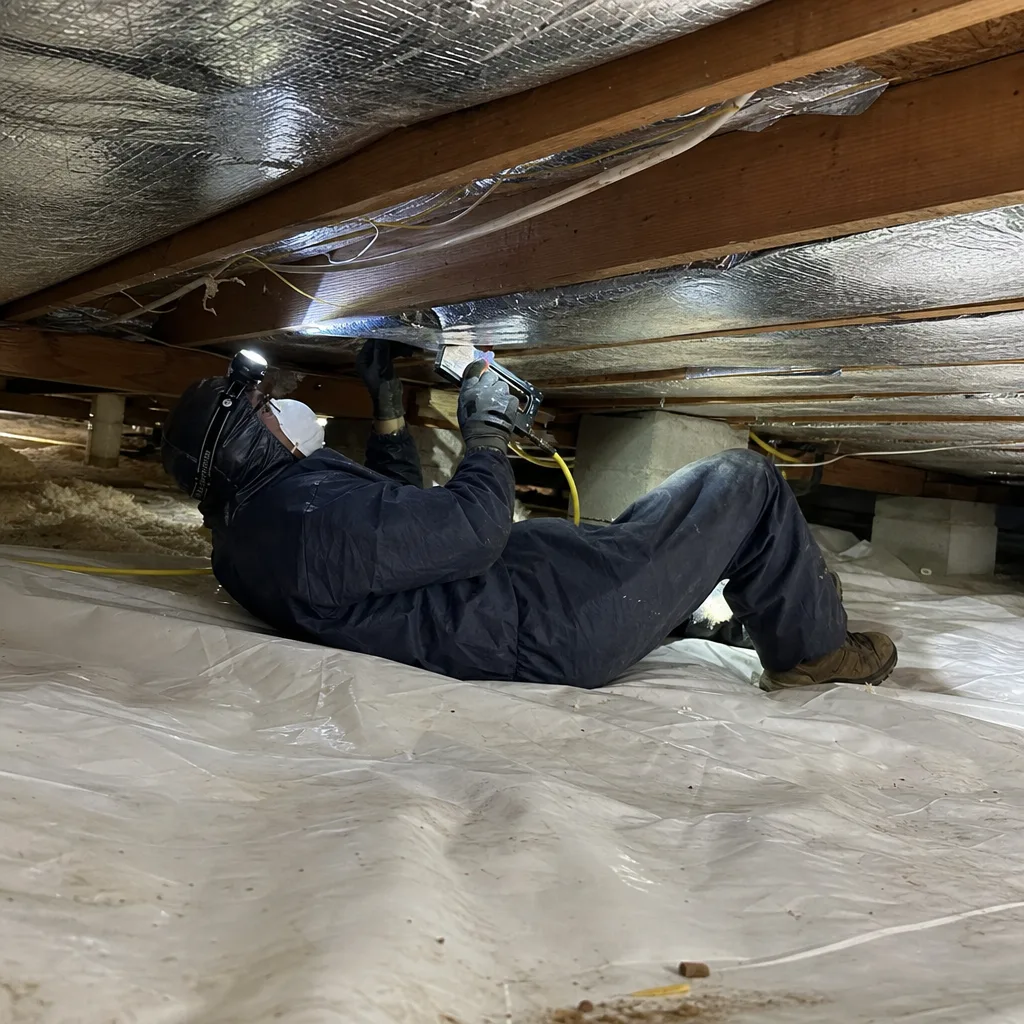
Closed-cell spray foam is denser, harder when cured, and provides both air sealing and a vapor barrier in a single application, which matters in crawl spaces, basement walls, and anywhere moisture migration is a concern. In Pomona homes with crawl space moisture issues near Ganesha Park or in the low-lying areas south of the 10 freeway, closed-cell on rim joists and foundation walls stops both air and vapor movement. We typically see closed-cell running 20-30% higher cost per board foot than open-cell, and we quote it separately in writing so you know exactly what you’re paying for. Every closed-cell job includes the before-and-after blower-door test when it’s part of a larger envelope package.
Rim Joist Spray Foam
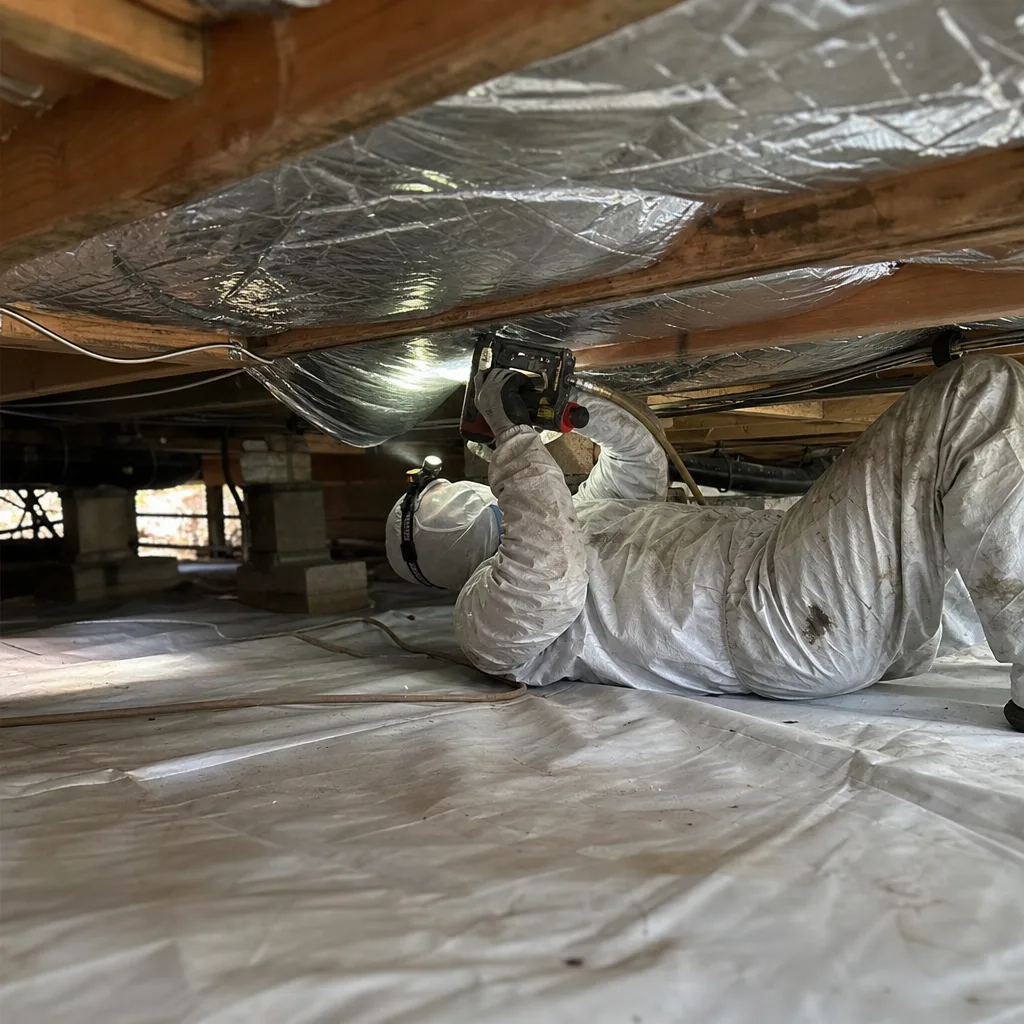
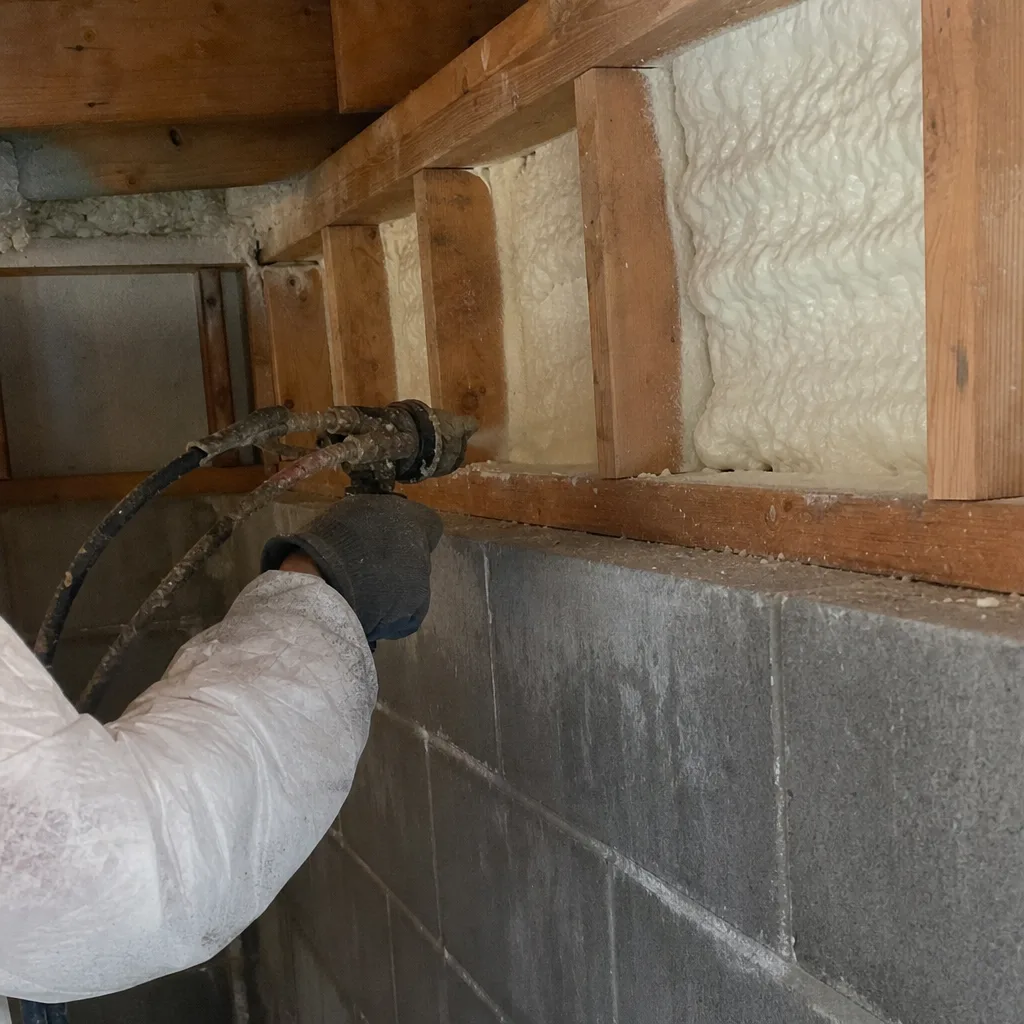
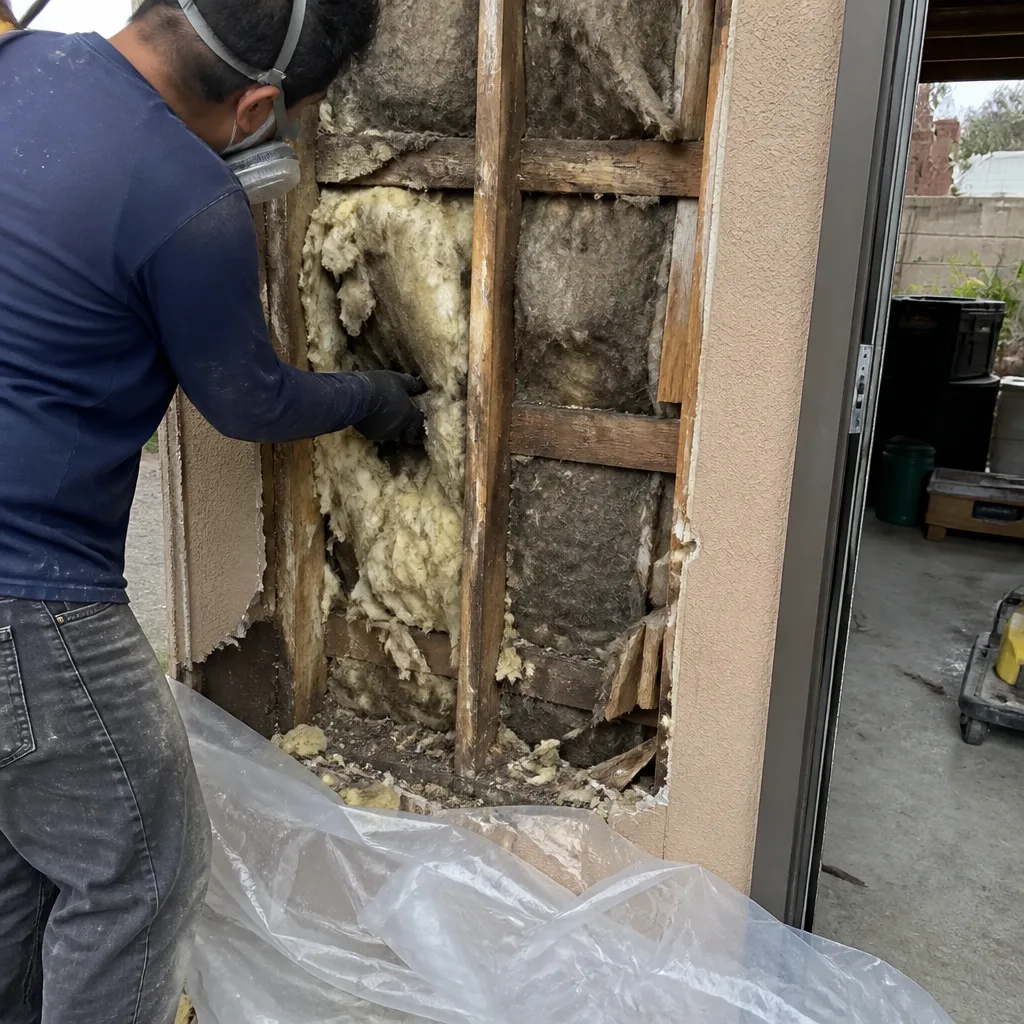
The rim joist is where your foundation walls meet your first floor, and it’s one of the leakiest parts of a house’s envelope because it’s rarely sealed properly during original construction. In Pomona’s older homes, especially the 1940s-1960s stock near downtown and along Holt Avenue, rim joists are often wide open to outside air, letting in dust, pollen, and unconditioned air from the crawl space or exterior. We spray closed-cell foam directly to the rim joist after removing any degraded fiberglass or rodent-damaged material, and we photo-document the condition we found and the finished work. This is a half-day job in most homes, and the comfort difference is immediate.
Garage Ceiling Spray Foam
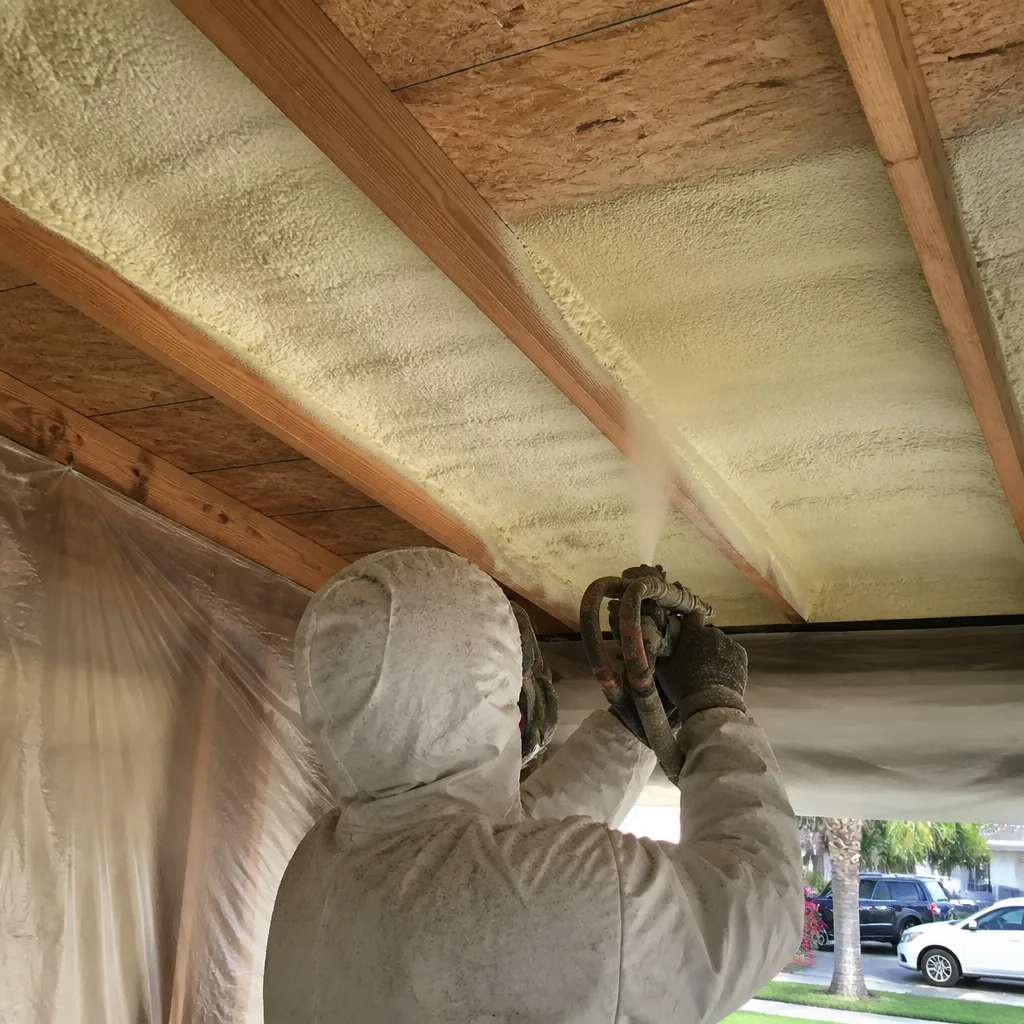
Our Spray Foam Insulation in La Verne and Pomona makes sense on garage ceilings when there’s living space above the garage, which is common in two-story homes built from the 1980s forward in neighborhoods like Kellogg Ranch and the newer developments near the 71 corridor. Without proper air sealing and insulation, the garage becomes a thermal bridge that pulls heat out of the room above in winter and radiates heat upward in summer. We treat garage ceiling jobs as full envelope work, not just insulation: we seal the garage-to-house wall, any duct penetrations, and the ceiling itself before spraying. The result is a garage that’s closer to conditioned space temperature and a room above that actually holds its set point.
Spray Foam Roof Deck
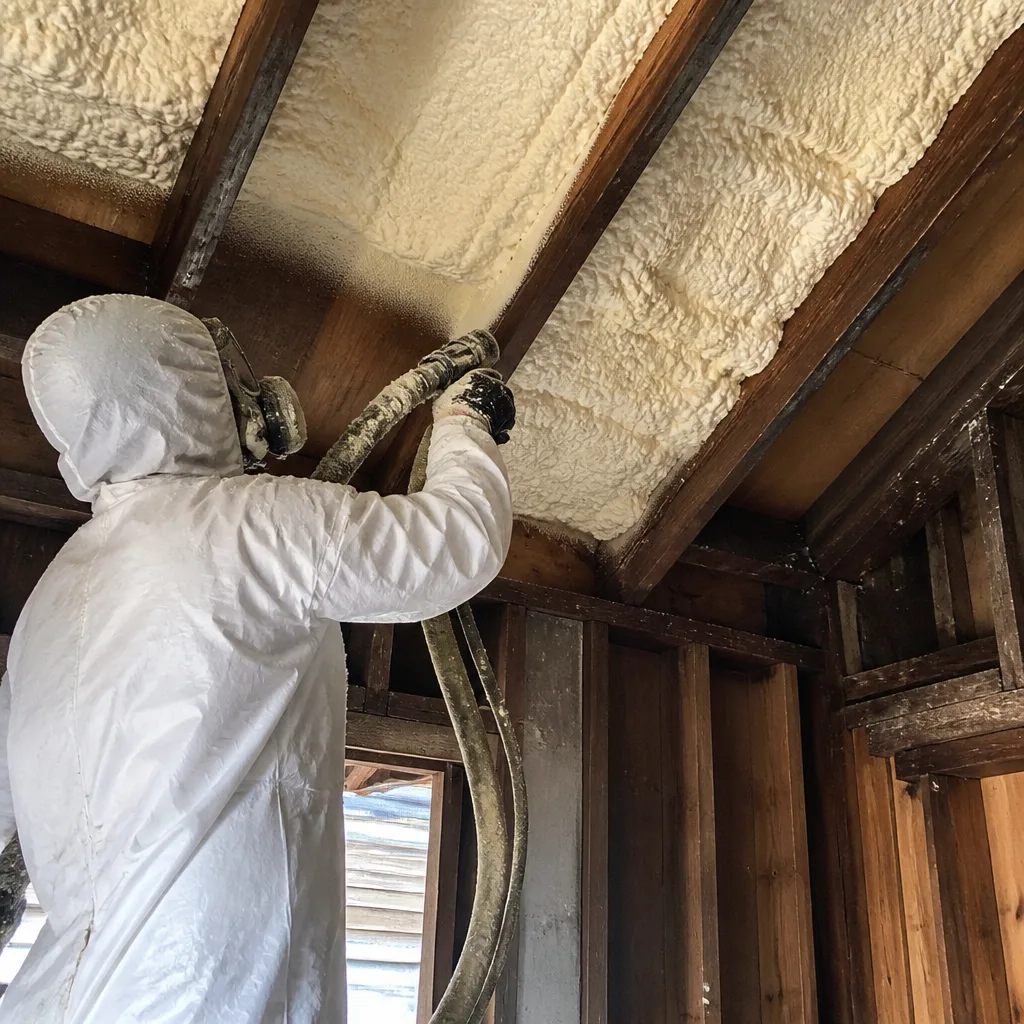
Spraying foam directly to the underside of the roof deck converts a vented attic into an unvented, conditioned space, which is the right approach when you have HVAC equipment or ductwork in the attic that you don’t want cooking in 140-degree summer air. In Pomona, where attic temperatures routinely hit 130-150°F from June through September, this is a significant efficiency play for homes with furnaces or air handlers located above the ceiling. We use open-cell foam on the roof deck in most cases, paired with proper ventilation calculations to meet California Title 24 requirements. The job includes a written scope showing R-value targets, foam thickness, and the air-sealing details at the ridge and eaves.
What happens when you call
- 1
A real person answersNo phone trees - you reach a local pro.
- 2
You get an upfront price rangeHonest numbers before anyone is dispatched.
- 3
A background-checked tech heads outLicensed & insured, dispatched right away.
- 4
You approve before work beginsNothing starts until you say go.
Brands We Service for Spray Foam Insulation
We work with Icynene and Demilec spray foam systems regularly, and our crews are trained on both manufacturers’ application requirements, temperature specifications, and mixing ratios. Icynene’s open-cell products are what we reach for most often in Pomona attic conversions because of their consistent expansion and established track record in California’s climate zones. Demilec’s closed-cell formulations, including their heat-resistant options, go on our rim joist and crawl space jobs where higher density and lower permeability matter. We’ve also used CertainTeed’s spray foam products on commercial-adjacent residential projects where specific fire-rating requirements applied. We don’t lock you into any single manufacturer, and we’ll tell you exactly which product we’re proposing for your job and why.
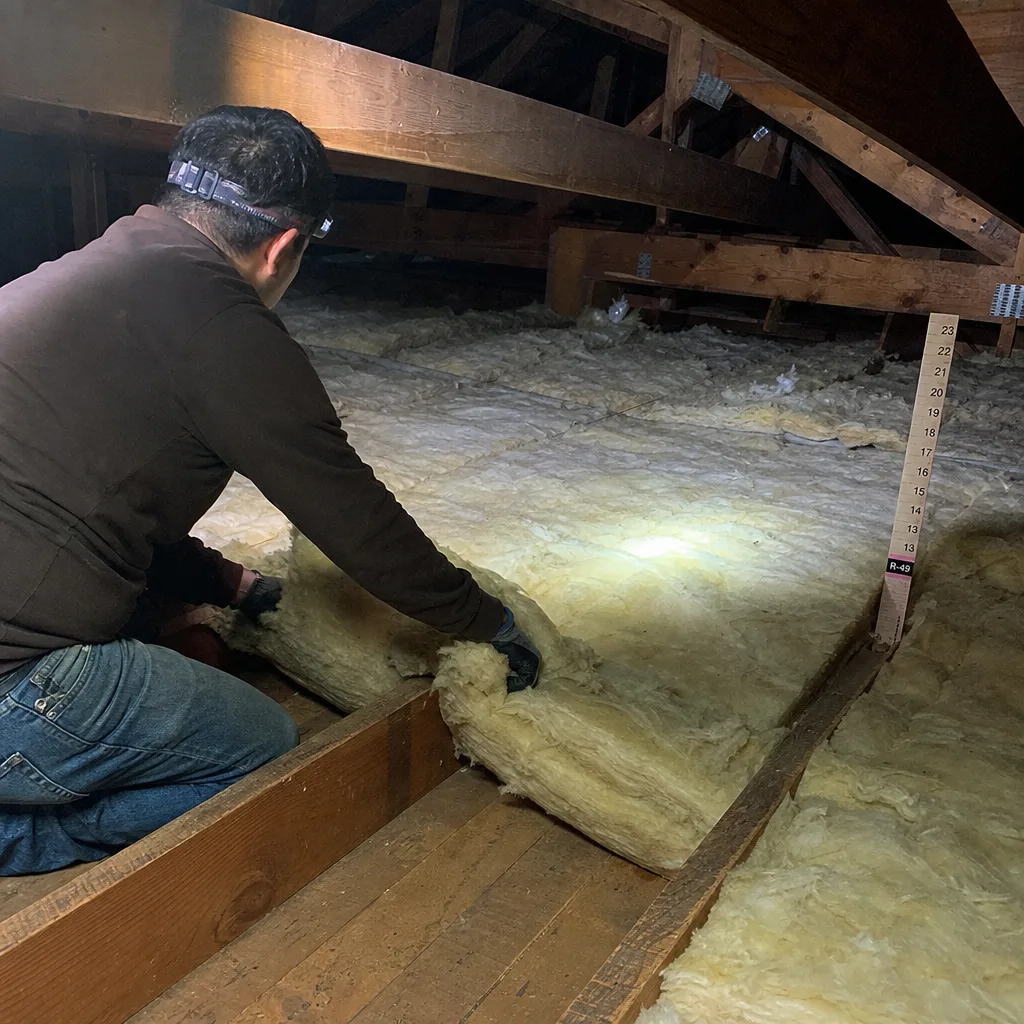
Whether your existing spray foam was installed by a contractor using GreenFiber, Owens Corning, Johns Manville, Knauf, Rockwool, or any other system, we can assess its condition, add to it where appropriate, or remove and replace it if it’s degraded, improperly applied, or contaminated. Our material sourcing is flexible because your house is specific, and what works in a 1920s bungalow near Ganesha Hills Park may not be right for a 2005 tract home north of Temple Avenue. We bring the right product for the assembly, not the product we happen to have on the truck.
 Before
 After
AfterSigns You Need Spray Foam Insulation Right Now
- Your upstairs rooms are 10-15 degrees hotter than downstairs in summer. This temperature stratification usually means conditioned air is leaking into the attic through penetrations in the ceiling plane, while hot attic air radiates downward through inadequate insulation. In Pomona’s inland climate, where summer afternoons regularly hit 95-100°F, this problem gets worse every year the gap goes unsealed.
- You can see daylight around your attic hatch or through recessed light fixtures. Any visible gap between conditioned space and attic is an air leak, and air leaks move more heat than conduction through fiberglass batts ever will. We find this constantly in Pomona homes where original construction used no top plate sealing and where DIY fiberglass installations left these gaps untouched.
- Your energy bills spike every July and August despite moderate thermostat settings. When your air conditioner runs continuously from 2 p.m. to 8 p.m. without cycling, the building envelope is losing conditioned air faster than the equipment can replace it. Spray foam, applied after proper air sealing, reduces that load so your system can actually reach set point and shut off.
- You’ve had rodents in the attic and the insulation is compressed, tunneled, or soiled. Rodent activity destroys the loft and R-value of fiberglass and cellulose, and the contamination often extends to areas that look fine from the hatch. We remove damaged material, sanitize the deck, seal all entry points, and then apply spray foam that can’t be burrowed through and doesn’t provide nesting material.
- Your garage is unbearable in summer and the room above it is the worst in the house. This is the garage ceiling thermal bridge problem, and it’s endemic in Pomona’s two-story homes with bonus rooms or bedrooms over attached garages. The garage ceiling is rarely insulated to the same standard as the rest of the house, and the result is a room that’s expensive to condition and never comfortable.
Our Spray Foam Insulation Process - Step by Step
- 1
Initial call and scheduling. When you call (562) 242-7569, a live person answers. We schedule a site visit at your convenience, and you get a text when your technician is en route. Under Haven Standard: Arrive on schedule, you get a named technician and a text when they are on the way.
- 2
Building envelope assessment and blower-door test. We run a blower-door test, a pressurization reading that shows, in one number, how much air your building envelope is losing. In Pomona’s older housing stock, we typically see starting readings of 3,500-5,500 CFM50. We also inspect the attic, crawl space, rim joists, and any other accessible assemblies with photo documentation.
- 3
Written scope and price. Before any work starts, you receive a written scope detailing exactly what will be sealed, what product will be applied, at what thickness, and what R-value you’ll achieve. The price is flat. The warranty is written. This is Haven Standard Clause 1, and there are no exceptions.
- 4
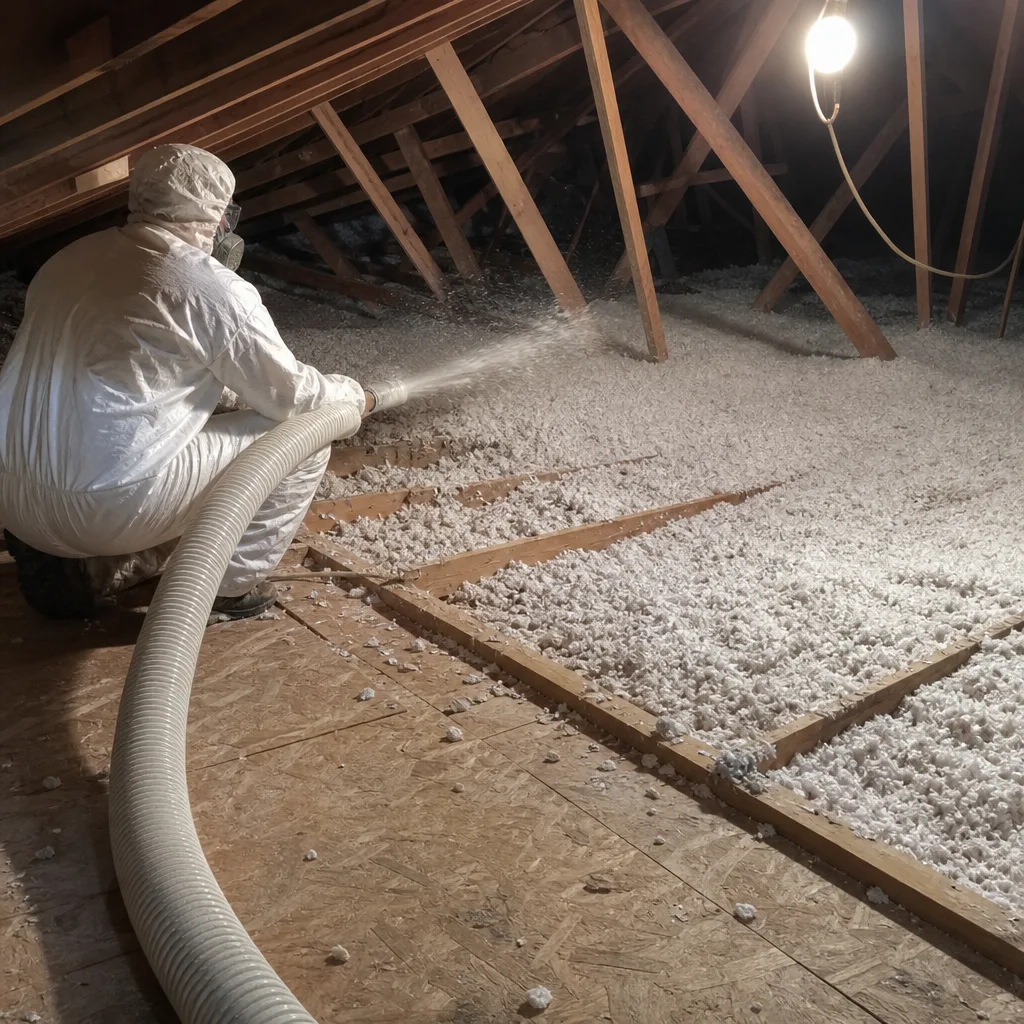
Air sealing first, then insulation. Our crew seals top plates, electrical and plumbing penetrations, can light housings, duct boots, and any other leakage points before the spray foam rig arrives. We run a mid-job blower-door test to confirm the sealing worked, then apply foam to the specified thickness.
- 5
Final blower-door test, photo record, and documentation. After foam curing, we run the final blower-door test and publish the before-and-after numbers on your job record. You receive a Documented Photo Record showing pre-condition, air sealing details, foam application, and post-work readings, plus your written warranty under the 365-Day Done Right Promise.
How Much Does Spray Foam Insulation Cost in Pomona?
A typical open-cell attic floor job in a 1,200-1,800 square foot Pomona home runs $2,200-$3,800, so check how much Spray Foam Insulation costs for your specific project. Closed-cell rim joist work in a standard crawl space runs $1,800-$2,800. Garage ceiling applications range from $1,500-$2,500 depending on whether the garage-to-house wall also needs sealing. Full roof deck conversions, which include ventilation calculations and often require coordination with your HVAC contractor, typically run $3,500-$5,500 for a 2,000 square foot home.
Several factors move these numbers. Roof deck jobs cost more because of access complexity and the engineering review sometimes required for unvented assemblies in California. Closed-cell foam costs more per board foot than open-cell because of the chemical density and the precision required in application. Homes with significant existing insulation removal add labor and disposal fees. And any home with active rodent issues needs remediation before foam goes in, because sealing contaminated material under foam creates a worse problem.
What we don’t do: quote low per-square-foot numbers that assume ideal conditions, then add change orders once we’re in your attic. Our written price includes everything in the scope, and if we find something unexpected, we document it, show you, and write a separate scope if additional work is needed. You can also bring us any competing written estimate for a Free Second Opinion. We’ll read it with you and tell you what’s included, what’s missing, and what questions to ask.
Every estimate is free, includes the blower-door test, and comes with no obligation. Call (562) 242-7569 to schedule.
Spray Foam Insulation Near Pomona - Our Service Area
We work throughout the Pomona Valley and surrounding communities, with typical response times of same-day to next-day for estimates in Pomona proper, La Verne, and San Dimas. Claremont, Charter Oak, and Covina are usually within 24-48 hours. Glendora, Citrus, West Covina, San Antonio Heights, Vincent, and Azusa round out our regular service area. We’ve worked on the hillside homes near Ganesha Park where access is tight, the ranch homes north of Foothill Boulevard with their original 1950s insulation, and the newer construction around Cal Poly Pomona where builders often left the envelope details to subcontractors who didn’t coordinate. If you’re within about 15 miles of downtown Pomona, we cover your area.
Serving Pomona, CA - Our Local Coverage Area
We’re based in the Pomona area and know this community well. Use the map below to see our service coverage - if you’re nearby, we can almost certainly help.
Frequently Asked Questions - Spray Foam Insulation in Pomona
Spray foam insulation is a two-part chemical mixture that expands on contact to fill cavities, seal air leaks, and provide thermal resistance in a single application. Unlike fiberglass batts, which leave gaps at edges and don’t stop air movement, spray foam adheres to surfaces and creates an air barrier. In Pomona’s climate, where summer attic temperatures exceed 130°F, that air sealing matters as much as the R-value.
Most residential spray foam jobs in Pomona take one to two days from start to finish, including air sealing, application, and curing time. Rim joist jobs are often completed in a half day. Roof deck conversions may take two to three days because of access complexity and the need to verify ventilation compliance. You’ll know the exact timeline in your written scope before work starts.
Most Spray Foam Insulation - Claremont area jobs run $1,800-$4,500 depending on the area treated, foam type, and whether existing material needs removal. Open-cell attic work in a typical home falls in the $2,200-$3,800 range. Closed-cell rim joist jobs run $1,800-$2,800. We provide a flat written price after our assessment, and estimates are always free. Call (562) 242-7569 for your specific quote.
Yes, we install both Icynene and Demilec systems regularly, and our crews are trained on each manufacturer’s application requirements. Icynene open-cell is our standard for attic applications in Pomona’s dry climate, while Demilec closed-cell goes on rim joist and moisture-sensitive assemblies. We’ll specify which product we’re proposing for your job and why.
We answer calls 24/7, and for urgent situations like insulation compromised by water damage or rodent contamination that has created health concerns, we can often schedule same-day or next-day assessment. True emergencies in insulation are rare, but when your home’s envelope has been breached by roof leaks or pest damage, we treat it with priority. Call (562) 242-7569 anytime.
All completed spray foam work is covered by our 365-Day Done Right Promise. If it’s not done right, we make it right. You also receive a written warranty at the start of the job, before any work begins, as part of Haven Standard Clause 1. The warranty covers both installation quality and the specified R-value performance.
Clear attic access paths, remove stored items from areas to be treated, and ensure pets and sensitive individuals are out of the house during application and the initial curing period, typically 24 hours. We cover floors and protect finishes as part of our standard prep, and we’ll give you a specific preparation checklist in your written scope. The crew handles all material delivery, setup, and cleanup.
Schedule Your Spray Foam Insulation Service in Pomona Today
Call (562) 242-7569 now and a live person will answer, 24 hours a day. We’ll schedule your free estimate, run the blower-door test, and deliver a written price before any work starts. Every job comes with a Documented Photo Record, and on applicable work, you’ll see your before-and-after air leakage numbers in black and white. That’s the Haven Standard, and it’s how we’ve handled 9,000+ homes since 2016.
Written by Wes Okafor, Owner at Topside Attic Insulation Pomona, serving Pomona and the surrounding valley since 2016.