
How Much Does Spray Foam Insulation Cost in Pomona?
Our Spray Foam Insulation services in Pomona, CA typically cost between $1.50 and $4.50 per board foot, depending on whether you’re using open-cell or closed-cell foam and where in the home it’s being applied. Most Pomona homeowners pay between $2,200 and $6,800 for a complete spray foam project, with attic and crawl space jobs landing toward the lower end and unvented roof deck or wall cavity work pushing higher. That range reflects 2026 material and labor costs in the Inland Valley market, including the premium that Southern California contractors typically carry over national averages.
Spray Foam Insulation Cost Breakdown (2026)
Spray foam insulation in Pomona is sold by the board foot – one square foot of coverage at one inch of thickness. The table below reflects current installed pricing in the Pomona market. These are not manufacturer list prices; they’re what you should expect to see on a written quote from a qualified contractor doing the job correctly.
| Application / Location | Foam Type | Typical Cost Range |
|---|---|---|
| Attic floor (open-cell, 5-6 inches) | Open-cell | $1,800 – $3,200 |
| Unvented roof deck / cathedral ceiling (closed-cell, 3-4 inches) | Closed-cell | $3,400 – $6,800 |
| Crawl space rim joists and floor deck | Closed-cell | $900 – $2,400 |
| Exterior wall cavities (2×4 stud bay, new construction or gut rehab) | Open-cell | $1.50 – $2.25 per board foot |
| Exterior wall cavities (closed-cell, retrofit injection not included) | Closed-cell | $2.75 – $4.50 per board foot |
| Garage ceiling (bonus room or conditioned space above) | Open- or closed-cell | $1,200 – $2,600 |
| Air sealing only (top plates, penetrations, can lights) before insulation | Two-component spray foam or caulk | $350 – $900 |
A few things move that range significantly. Closed-cell foam runs about twice the material cost of open-cell because its chemical formulation produces a denser, moisture-resistant product – useful in Pomona’s occasional wet winters and in any below-grade or semi-conditioned space. Open-cell foam is lighter, expands more aggressively, and works well in standard attic and interior wall applications where vapor permeability isn’t a liability. The right choice depends on where the foam is going, not which one sounds more premium.
Labor in the Pomona area reflects both the cost of Southern California trade wages and the logistical realities of working in the Inland Valley: fuel, drive time from supplier depots, and summer heat that affects how spray foam cures on the job. Most contractors here charge a minimum mobilization of $400 to $600 regardless of project size, so very small jobs – a single rim joist bay or one small attic hatch – rarely pencil out under $700 even if the foam itself is inexpensive.
Removal of existing batt or blown-in insulation adds $0.75 to $1.50 per square foot to the total. In older Pomona homes – particularly the post-war tract housing around Lincoln Park, Fremont Park, and the blocks east of Garey Avenue – we regularly find deteriorated fiberglass batts or old cellulose that has settled and compacted. That material has to come out cleanly before spray foam goes in, or you trap moisture and undermine the air seal you’re trying to create.
What Affects Spray Foam Insulation Pricing in Pomona
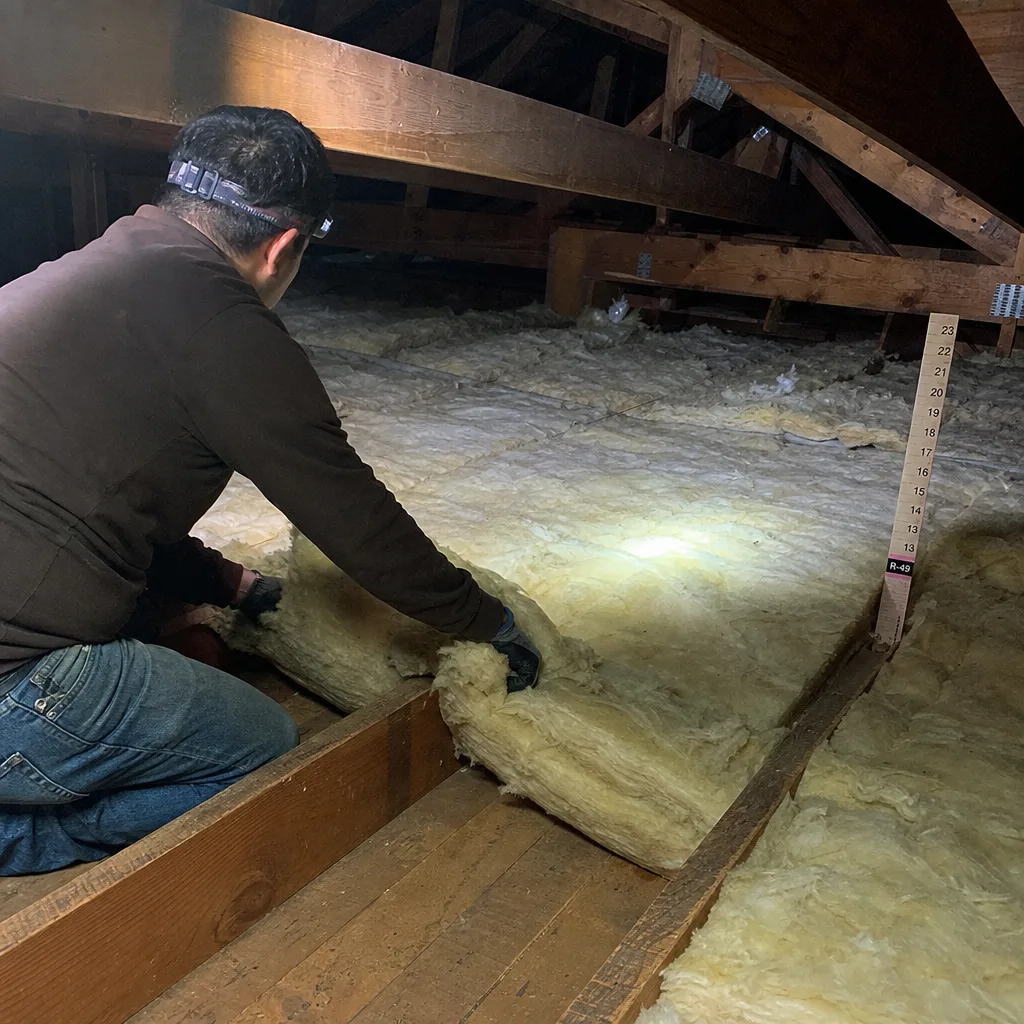
- Open-cell vs. closed-cell foam: Closed-cell foam (R-6 to R-7 per inch) costs roughly twice as much per board foot as open-cell (R-3.5 to R-4 per inch) but delivers a vapor retarder and structural benefit in the same pass. In Pomona’s climate zone 10, closed-cell is often specified for roof decks and crawl spaces; open-cell handles most attic floor and interior wall applications at a lower installed cost.
- Access and attic conditions: Pomona’s older housing stock includes many homes with low-pitch rooflines and limited attic clearance. When a technician can’t stand upright or move equipment freely, labor time increases. Knee walls, HVAC equipment sitting on the attic floor, and existing ductwork all create obstacles that add 15-30% to a standard attic job estimate.
- Air sealing prerequisite: A properly installed spray foam project starts with air sealing – top plates, can lights, plumbing penetrations, electrical chases – before any insulation is added. At Envelope Insulation Co., that step is never optional or treated as an add-on; it’s how the scope is written. If a quote you’re comparing skips air sealing entirely, the insulation performance you’re paying for won’t fully materialize. Expect $350 to $900 for thorough air sealing on a typical Pomona single-story before the spray foam begins.
- Square footage and coverage area: Most Pomona single-family homes run between 1,100 and 2,200 square feet of living space, with attic footprints that closely track that range. Larger homes in the Ganesha Hills or near Cal Poly Pomona’s surrounding neighborhoods can push attic coverage to 2,500 square feet or more, which brings material cost up proportionally but reduces the per-square-foot labor rate slightly on big, open attic floors.
- Removal of existing insulation: Old fiberglass batts or compacted cellulose must be removed before spray foam is applied to the attic floor or roof deck. Removal runs $0.75 to $1.50 per square foot and adds a disposal step. Homes with rodent activity – common in Pomona neighborhoods that border open land near Frank G. Bonelli Regional Park – may also require sanitizing and rodent proofing before new insulation is safe to install.
- California energy code compliance: California’s Title 24 energy code specifies minimum R-values for attic insulation based on climate zone. Pomona sits in CEC Climate Zone 10, which requires R-38 minimum for attic insulation in most residential applications. Achieving R-38 with spray foam means at least 5.5 inches of closed-cell or 9-10 inches of open-cell – and the cost of material reflects that depth requirement. A contractor who quotes less than code-minimum thickness is either planning to combine foam with another material or is handing you a compliance problem.
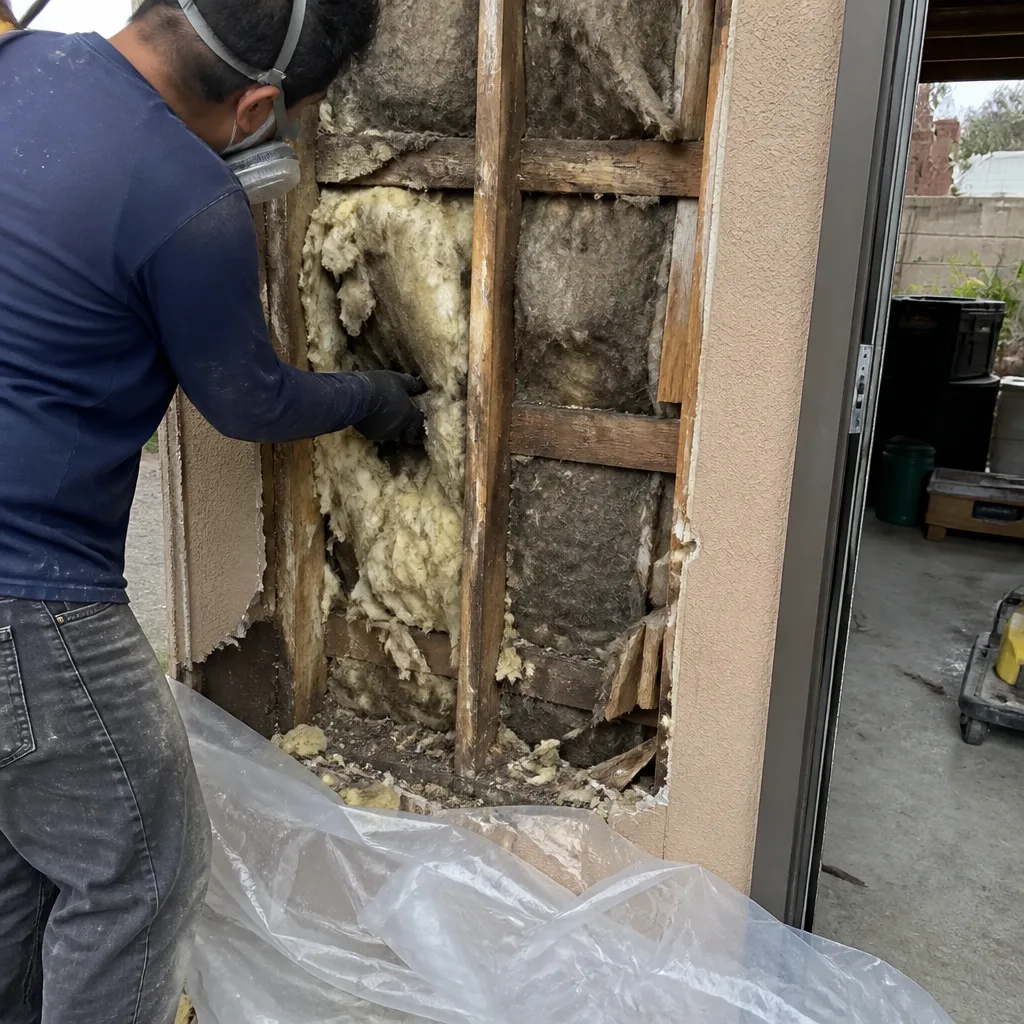 Before
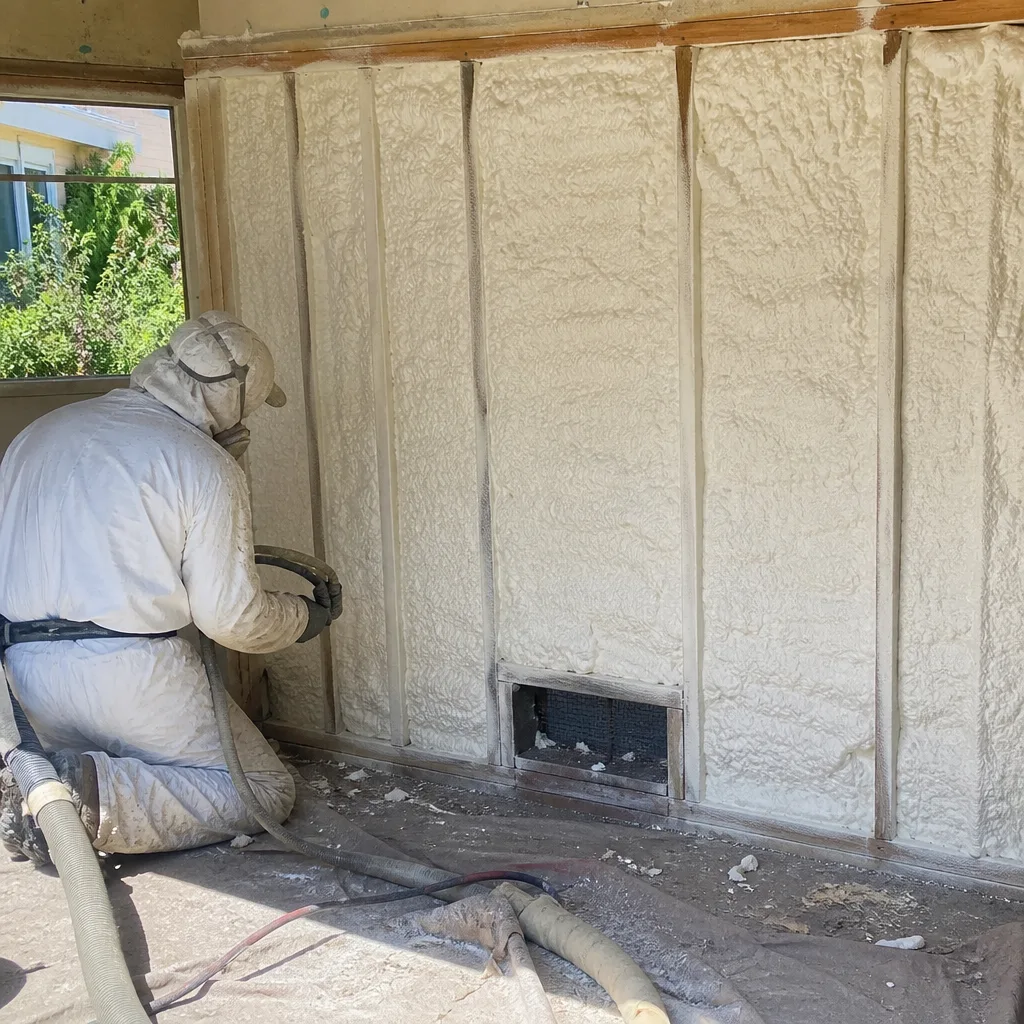 After
AfterOpen-Cell vs. Closed-Cell: Which One Do Pomona Homes Actually Need?
This question comes up on nearly every job we run in Pomona, and the honest answer is: it depends on where in the building envelope the foam is going, not on which product carries a higher price tag.
Open-cell foam expands aggressively – to roughly 100 times its liquid volume – making it good at filling irregular cavities and attic floors with complex framing. It’s vapor-permeable, which matters in interior wall applications where you don’t want to trap moisture. At R-3.7 per inch, you need more thickness to hit a given R-value, but material cost is lower and the air-sealing performance is comparable to closed-cell in most above-grade applications. For Pomona homes where the goal is attic air sealing plus insulation on a budget that works, open-cell is often the correct answer.
Closed-cell foam is denser, adds structural rigidity to the assembly, and acts as its own Class II vapor retarder. At R-6.5 per inch, it hits Title 24 minimums with less thickness, which matters when attic clearance is tight or when you’re spraying the underside of a roof deck to create an unvented attic assembly. For Pomona crawl spaces – which can see ground moisture in wet years – closed-cell on the rim joists and band joists makes sense because it won’t absorb water if the space floods temporarily.
A hybrid approach works on many jobs: closed-cell on the roof deck or rim joists where moisture resistance matters, open-cell on interior wall cavities or attic floors where cost is the primary driver. That’s not a workaround; it’s how a properly scoped project is often designed.
The Air Sealing Step Most Contractors Skip
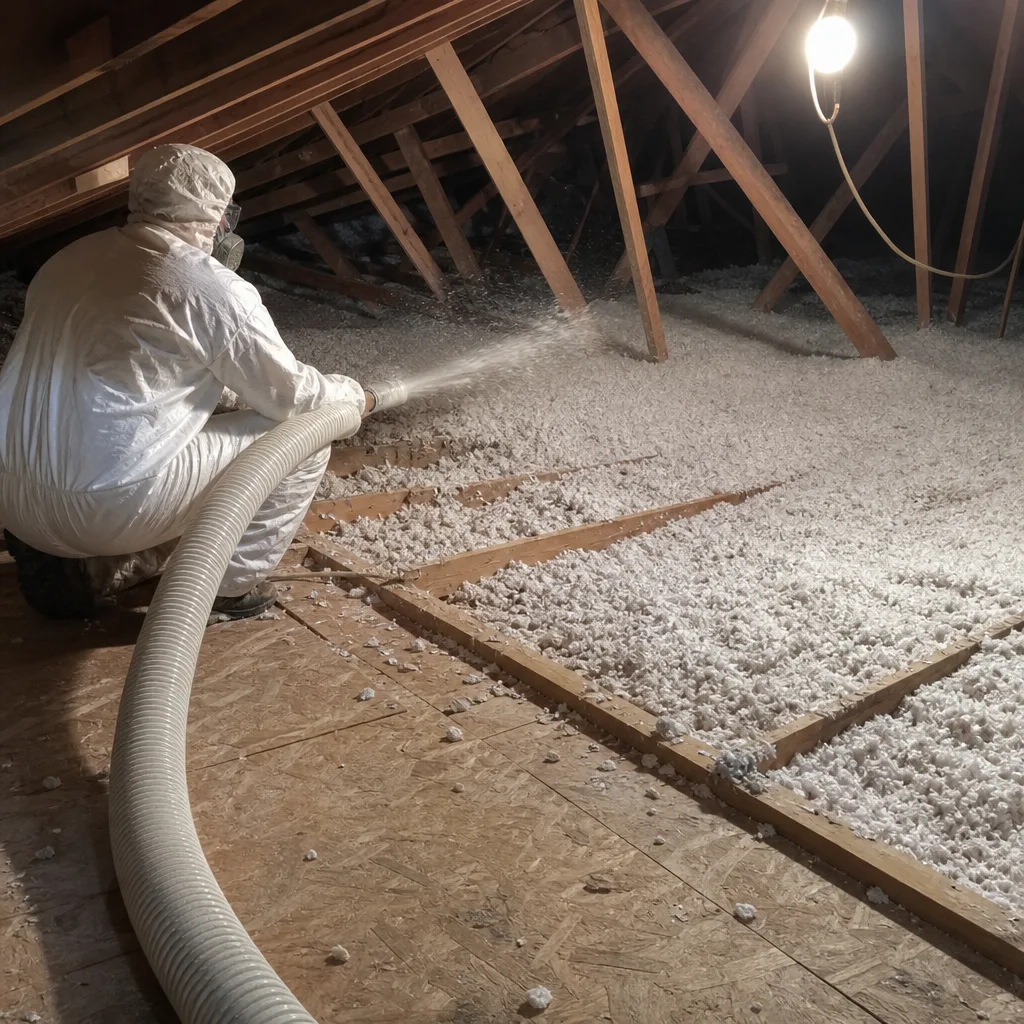
Here’s something specific to the Pomona market that affects your final price and, more critically, your actual energy performance: most insulation bids you’ll receive do not include air sealing as a line item. The contractor shows up, blows or sprays material, and leaves. The top plates where interior walls meet the attic floor – every wire, pipe, and recessed light that punches through the ceiling plane – remain connected to the exterior. Spray foam sits on top of that leaky substrate and does a partial job.
At Envelope Insulation Co., air sealing is the first step on every applicable job and it’s written into the scope before a price is presented. We seal top plates, can lights, electrical penetrations, and plumbing chases with two-component spray foam or fire-rated caulk before any insulation goes in. Then, on applicable jobs, we run a blower-door test – a pressurization measurement that reads, in one number (CFM50), how much air the building envelope is losing. We document that number before work starts and again when we’re done, and you receive both readings as part of the job record.
In Pomona homes built between 1950 and 1985 – which describes a substantial portion of the housing stock in neighborhoods like Phillips Ranch, College Park West, and the streets surrounding Pomona Valley Hospital – we routinely see pre-sealing blower-door readings above 3,500 CFM50. Post-sealing readings on those same homes typically fall below 2,000 CFM50. That change is measurable. It’s not a feeling; it’s a number you can read and compare.
That’s what the Spray Foam Insulation in Pomona page explains in full – what a complete scope looks like, why air sealing comes first, and what documentation you should expect to walk away with.
How to Save on Spray Foam Insulation in Pomona
The single highest-leverage thing you can do is get three written quotes that describe identical scopes. Not ballpark numbers – written scopes with square footage, foam type, installed thickness, R-value delivered, whether air sealing is included, and what happens if the job uncovers something unexpected. When quotes describe different scopes, you’re not comparing prices; you’re comparing guesses.
A few specific ways to reduce total project cost without compromising performance:
- Combine attic air sealing and insulation in one visit. Mobilization costs are real. If a crew is already set up in your attic with spray equipment, adding air sealing to that visit costs far less than scheduling it as a separate job. Most of the savings come from not paying twice for setup time and equipment deployment.
- Check for utility rebates before signing a contract. Southern California Edison offers residential energy efficiency rebates that can apply to qualifying insulation upgrades. Pomona properties on SCE service territory can verify current rebate eligibility at the SCE website; amounts change annually. A contractor who mentions these proactively is more useful than one who doesn’t.
- Time the project for fall or early spring. Pomona summers push attic temperatures above 140 degrees Fahrenheit, which affects how spray foam cures and limits the windows when crews can safely work. Fall and early spring scheduling is easier to coordinate, sometimes faster to complete, and occasionally priced more competitively because summer backlog has cleared.
- Don’t pay to insulate before sealing. If a contractor quotes insulation only – no air sealing, no blower-door test – ask what the scope would look like if sealing were added first. In many cases the total price difference is modest, and the performance difference is significant. Insulation without air sealing is the most common reason homeowners call a second contractor six months after the first one left.
- Use the free second opinion. Envelope Insulation Co. offers a free second opinion on any written estimate. Bring us a competing quote and we’ll go through it line by line with you – what’s included, what’s missing, and whether the scope described will actually deliver what you’re expecting. That’s not a sales call; it’s a reading of the document in front of us.
To get a written price on your specific project – before anyone shows up and before any commitment on your part – call (562) 242-7569. The estimate is free and the price is written. That’s Haven Standard Clause 1: a flat price, written scope, and written warranty before anyone lifts a tool.
What Pomona’s Climate Actually Does to Your Insulation Budget
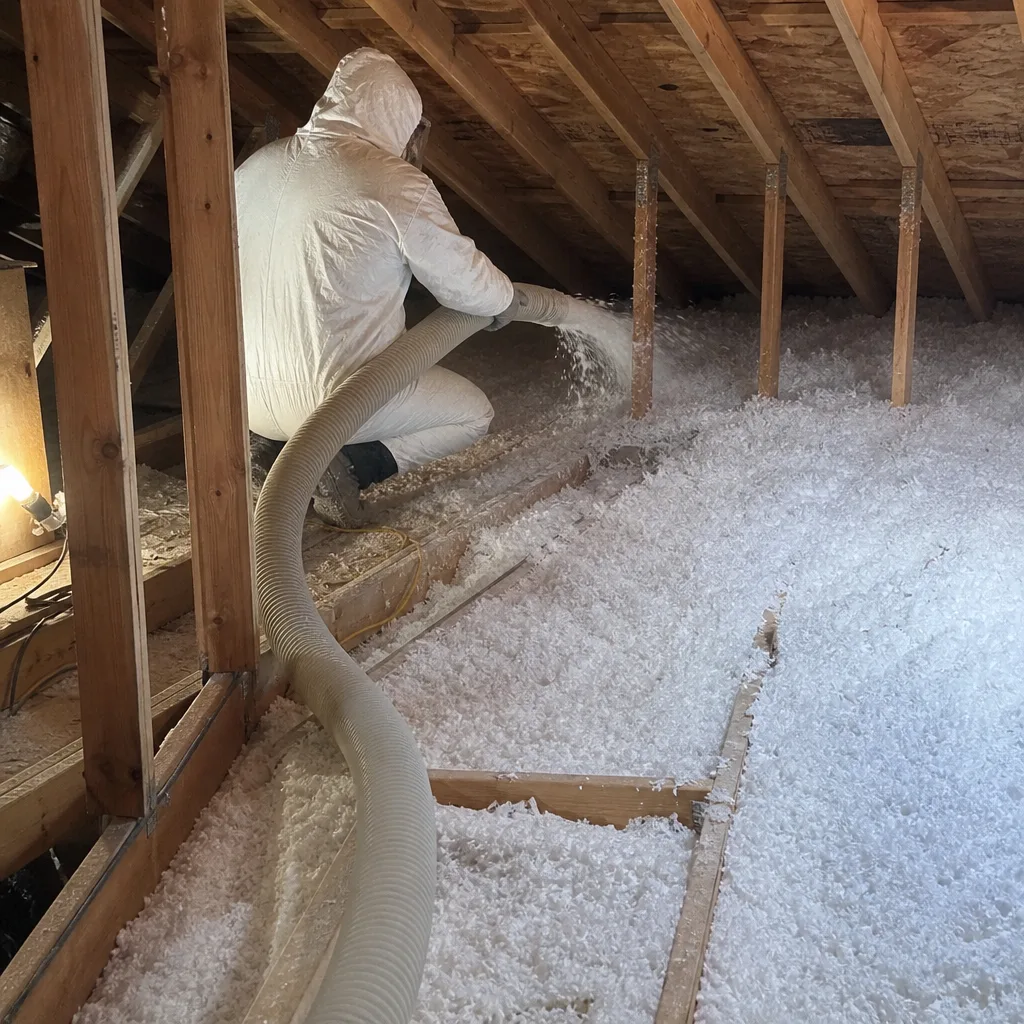
Pomona sits inland enough that it doesn’t benefit from the marine layer that moderates temperatures in coastal LA County. Summer highs regularly reach 95 to 104 degrees Fahrenheit, and attic temperatures on west- or south-facing roof planes can exceed 150 degrees during peak afternoons in July and August. That thermal load puts sustained pressure on whatever insulation and air barrier system is in place.
It also means that an undersized or poorly installed spray foam job fails faster in Pomona than it might in a milder climate. Open-cell foam that isn’t protected by a properly working vapor retarder in an unvented attic assembly can absorb moisture during the infrequent but real wet seasons Pomona sees in El Nino years. Closed-cell foam that doesn’t fully contact the roof deck substrate – a quality-control problem, not a material problem – leaves thermal bridging through the framing that reduces real-world R-value below what the spec sheet says.
None of this is hypothetical. It’s what we document on jobs in Pomona’s older neighborhoods, and it’s why the written scope matters as much as the material being specified. If you want to see what a before-and-after blower-door result looks like on a Pomona home, ask us when you call. We have the numbers from completed jobs and we’ll show them to you.
Is Spray Foam the Right Choice for Your Pomona Home?
Spray foam is the best air barrier you can install in a residential attic or crawl space, and it’s the only insulation material that simultaneously seals and insulates in a single pass. That makes it the correct specification for unvented attic assemblies, cathedral ceilings, and crawl spaces where moisture management matters.
It’s not always the right choice for every situation. For a Pomona home with a standard vented attic and no unusual moisture conditions, blown-in insulation over a properly air-sealed attic floor can deliver comparable energy performance at a lower installed cost. The difference is in the air sealing step: if that work is done first with two-component foam at all penetrations, and blown-in cellulose or fiberglass is added to the correct depth, the result is often within a few percentage points of a full spray foam application at meaningfully lower cost.
We’re not going to recommend spray foam when it doesn’t fit. If your project scope, your home’s construction, and your budget point toward a different solution, the written quote you receive will reflect that – with the reasoning explained, not just the number.
For context on the full service line available to Pomona homeowners, the home page covers every service we offer under the Envelope Insulation Co. building-envelope approach.
FAQs: Spray Foam Insulation Cost in Pomona, CA
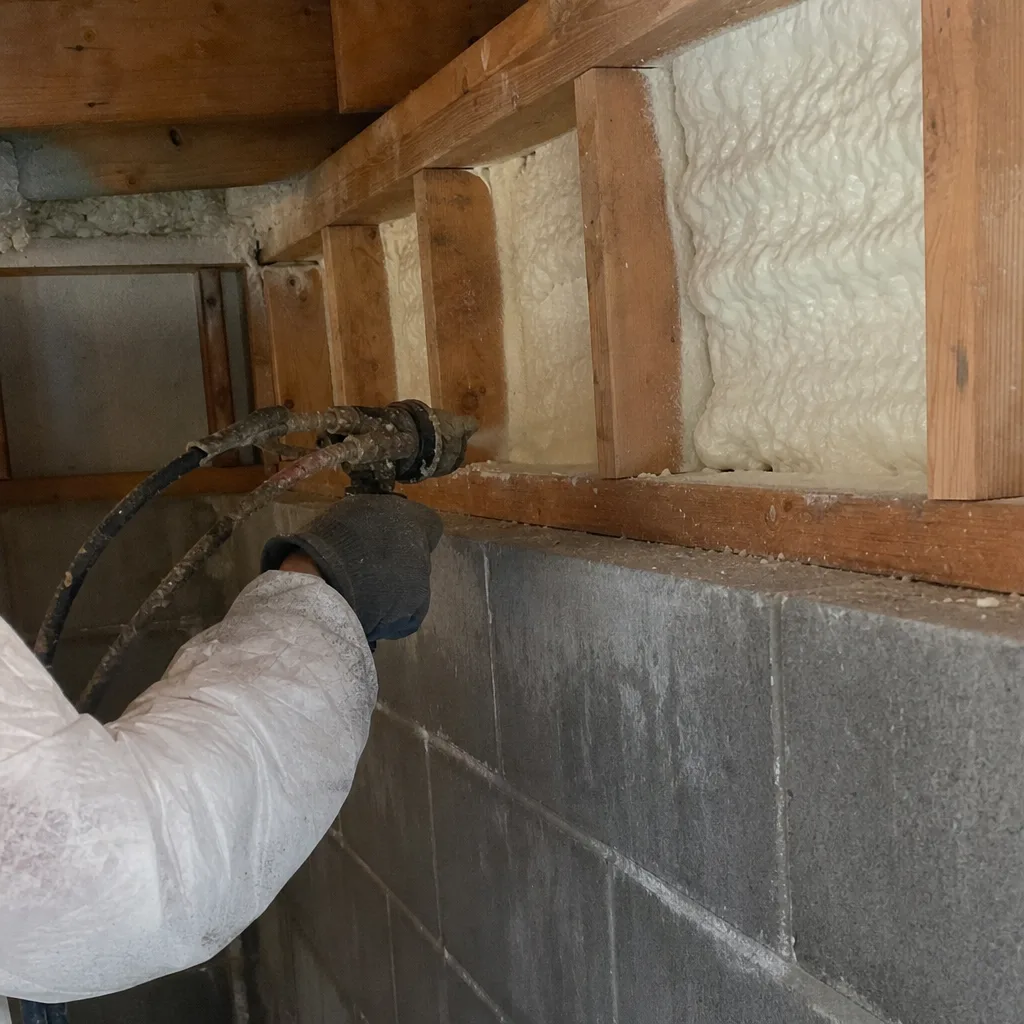
How much does spray foam insulation cost per square foot in Pomona?
Installed spray foam insulation in Pomona costs between $1.50 and $4.50 per board foot (one square foot at one inch of thickness), depending on foam type and application. Open-cell foam runs $1.50 to $2.25 per board foot installed; closed-cell runs $2.75 to $4.50. Converting to square feet at finished thickness, most attic jobs land between $2.00 and $5.50 per square foot of floor area when you account for the depth required to hit California Title 24 R-value minimums. Call (562) 242-7569 for a written price on your specific square footage – estimates are free.
Is open-cell or closed-cell spray foam cheaper in Pomona?
Open-cell foam is consistently cheaper – typically $1.50 to $2.25 per board foot installed, versus $2.75 to $4.50 for closed-cell. But because open-cell delivers about R-3.7 per inch versus R-6.5 for closed-cell, you need more of it to hit the same R-value. For a Title 24 compliant R-38 attic, open-cell requires roughly 10 inches of thickness; closed-cell needs about 5.5 to 6 inches. The total installed cost difference narrows when you factor in that additional material depth. In most Pomona attic-floor applications, open-cell is the better value. In crawl spaces and unvented roof decks, closed-cell typically justifies its premium.
How long does spray foam insulation last in Pomona’s climate?
Properly installed spray foam – both open- and closed-cell – has an effective service life of 80 years or more under normal conditions. Pomona’s heat cycles don’t meaningfully degrade cured foam, but installation quality matters: foam that doesn’t fully adhere to the substrate or that’s applied at incorrect ambient temperatures can delaminate over time. That’s a workmanship issue, not a material failure. The documented photo record we provide at the end of every job gives you a visual baseline of what the installation looked like when it was complete – useful if you’re ever assessing performance years later.
Does spray foam insulation require a permit in Pomona, CA?
The City of Pomona generally requires a building permit for spray foam insulation applied to roof decks and unvented attic assemblies because those applications change the thermal and moisture dynamics of the structural assembly. Standard attic-floor spray foam and crawl space rim joist work typically doesn’t trigger a permit requirement, but that determination belongs to the Pomona Building and Safety Division, not the contractor. A contractor who dismisses the permit question without checking is a contractor who may leave you with an unpermitted improvement that complicates a future sale. We handle permit research as part of scoping any job where the requirement is ambiguous.
Can spray foam insulation lower my energy bill in Pomona?
Yes – measurably, and we can show you the numbers. On Pomona homes where we’ve completed attic air sealing plus spray foam, blower-door readings (CFM50, a measure of air leakage through the building envelope) have dropped by 30 to 55 percent compared to pre-project baselines. Southern California Edison estimates that a well-sealed and insulated attic can reduce cooling costs by 15 to 25 percent in Inland Valley climates like Pomona’s, where summer cooling loads dominate the annual energy bill. The actual reduction on your home depends on what it looks like before we start – which is why we document the before reading, not just the after. Call (562) 242-7569 to schedule a free estimate and discuss what a before-and-after blower-door test would show on your home.
What should a spray foam insulation quote include in Pomona?
A complete written quote should specify: the foam type (open- or closed-cell), the application location and area in square feet, the installed thickness in inches, the R-value delivered at that thickness, whether air sealing is included as a line item before the foam is applied, how existing insulation will be handled if it needs to be removed, and what the warranty covers and for how long. If a quote is a single number with no scope description, it cannot be compared to anything and it won’t protect you if the job goes sideways. Under Haven Standard Clause 1, every price we present is flat, written, and accompanied by a written scope and written warranty before any work begins. Call (562) 242-7569 to request one.
Key Takeaways
- Spray foam insulation in Pomona costs $1.50 to $4.50 per board foot installed, with most whole-home projects falling between $2,200 and $6,800.
- Open-cell foam is less expensive per board foot but requires more thickness to hit California’s Title 24 R-38 minimum for Climate Zone 10.
- Air sealing – top plates, can lights, and penetrations – must come before insulation. Projects that skip this step underperform, regardless of foam quality.
- Pomona’s heat load (attic temperatures above 140 degrees in summer) makes installation quality and complete coverage critical to long-term performance.
- Get three written quotes with matching scopes. A number without a scope is not a quote.
- Before-and-after blower-door readings document what the air sealing actually delivered – ask for them on any job that includes sealing work.
- Wes Okafor and the team at Envelope Insulation Co. have operated under The Haven Standard since 2016, with a written price before every job and a documented photo record when the crew leaves.
If you’re comparing quotes for spray foam insulation in Pomona or want a second set of eyes on a written estimate you’ve already received, call (562) 242-7569. The estimate is free, the price will be written before anyone schedules anything, and Wes Okafor’s team will go through the scope with you so you know exactly what you’re comparing. Under the 365-Day Done Right Promise, if it’s not done right, we make it right – and that’s in writing before the job starts.
Pricing reflects the Pomona market as of 2026. Topside Attic Insulation Pomona offers free estimates – call (562) 242-7569.
Written by Wes Okafor, Owner at Envelope Insulation Co., serving Pomona, CA since 2016.
What Our Customers Say
"Two other companies quoted to blow more insulation on top of what was there. These were the only ones who said the existing material had to come out first, and explained why."
- Clifford E."They air-sealed the attic floor before insulating and showed me the blower-door number before and after. The upstairs is finally the same temperature as downstairs."
- Marisol D."They photographed rodent damage in the old insulation that we had no idea about, and priced the exclusion work separately so we could decide."
- Harriet N.