
Last updated September 23, 2026
How to Hire a Insulation Contractor in Pomona: A Step-by-Step Guide
California’s CSLB does not issue an insulation-specific license classification. The contractor quoting your attic may hold a C-2 framing license or a general B license - neither of which requires a single hour of insulation training. In Pomona, where summer attic temperatures regularly exceed 140°F and winter nights dip into the low 40s, that gap between legal qualification and actual competence costs homeowners thousands in energy bills and redo work. This guide replaces the credential-checking you can’t do with performance-based questions and documentation demands that separate contractors who understand building science from those who just blow product. For more guides & resources on protecting your investment, see our blog.
Quick Answer
To hire an insulation contractor in Pomona, request four documents before signing: a written itemized scope, proof of blower-door or HERS rater capability, a certificate of insurance listing your address, and a sample completed-job record from a prior local project. Then compare bids on installed performance - same R-value with air sealing versus without - not just bottom-line price. A legitimate contractor in Pomona will provide these without pressure; one who resists is telling you something about their process.
Table of Contents
- The License Gap: Why California’s System Fails Homeowners
- The Four Documents to Demand Before Signing
- How to Evaluate a Quote That Omits Air Sealing
- Pomona-Specific Red Flags
- The Blower-Door Test: Cost, Value, and What “Optional” Really Means
- Comparing Bids on Performance, Not Price
- Common Mistakes to Avoid
- When to Call a Professional
- Frequently Asked Questions
- The Bottom Line
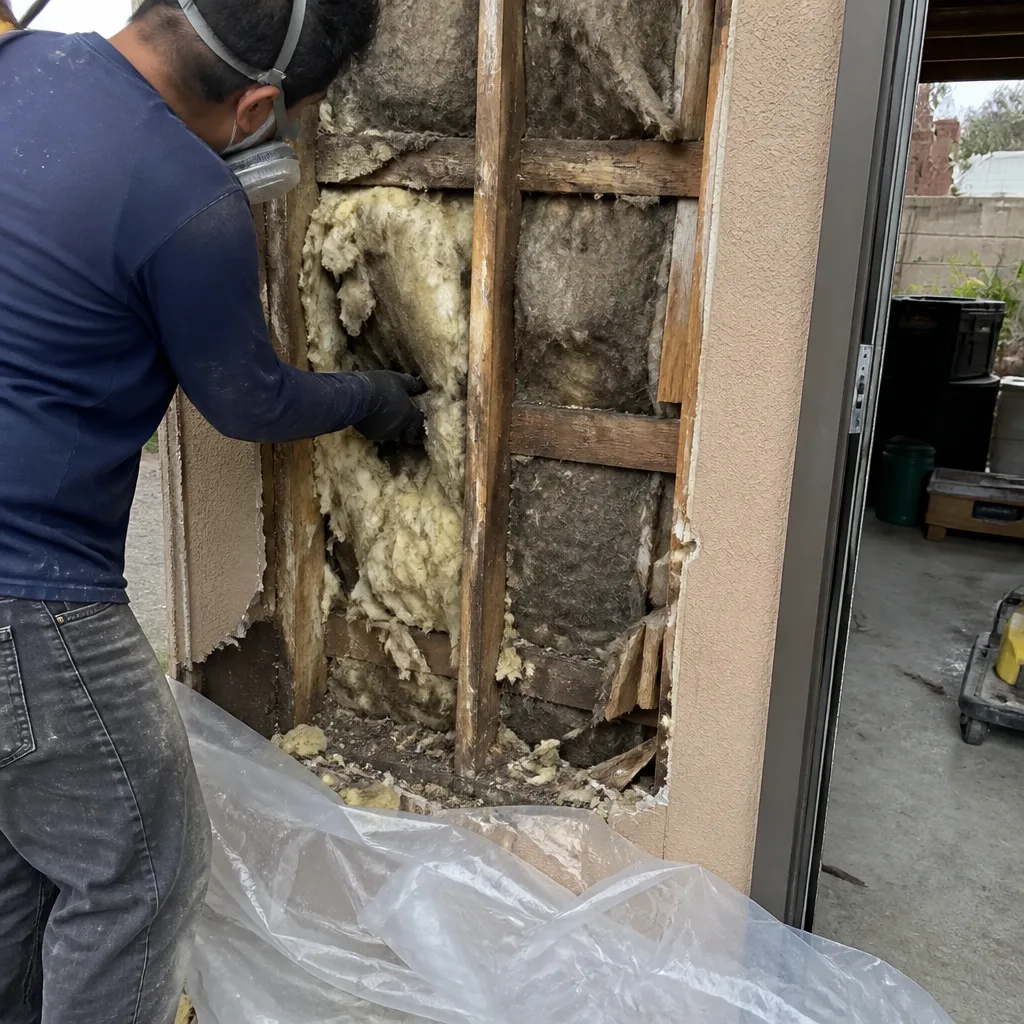 Before
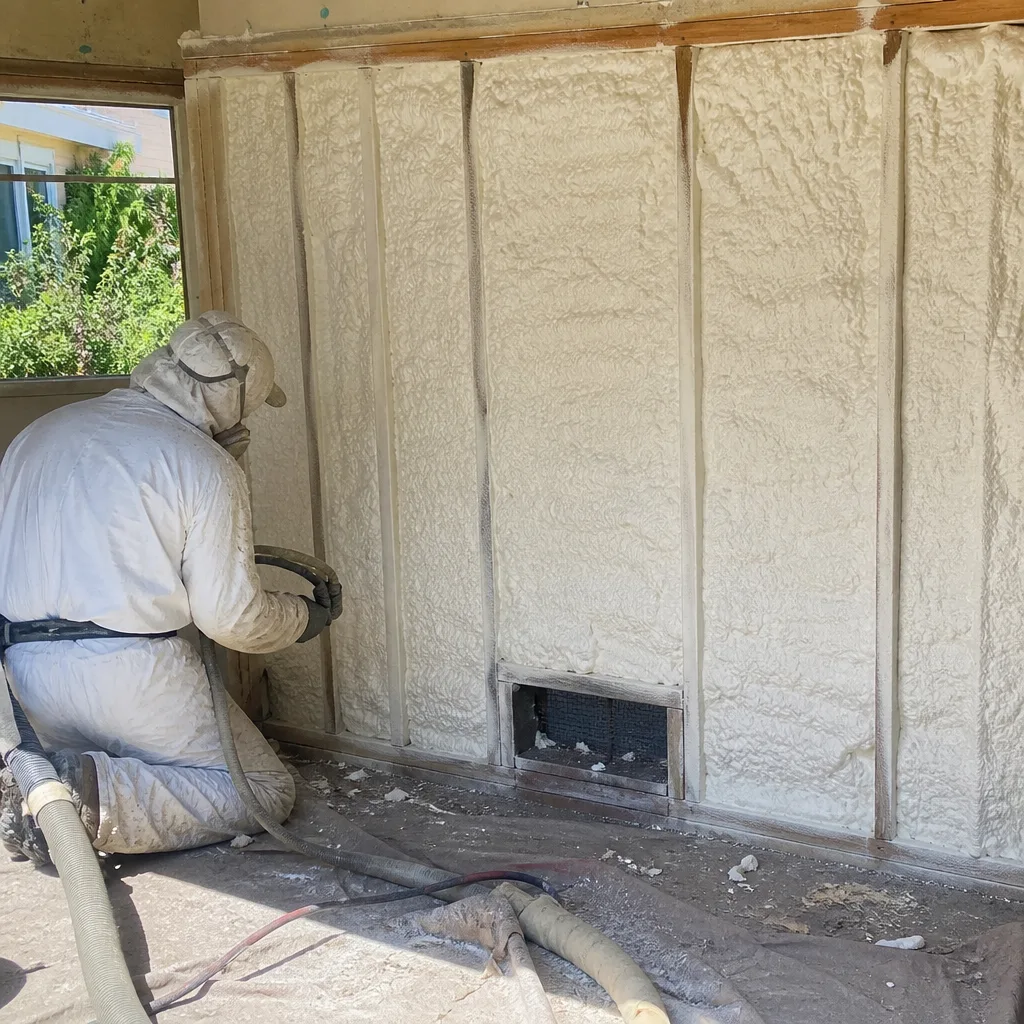 After
AfterThe License Gap: Why California’s System Fails Homeowners
Most homeowners assume the contractor installing their insulation holds a specialized credential. In California, they do not. The Contractors State License Board recognizes no insulation-specific classification. A C-2 Warm-Air Heating, Ventilating and Air-Conditioning contractor, a C-5 Framing and Rough Carpentry contractor, or a B General Building contractor can all legally bid your attic job. The B license, the most common path, requires no demonstrated knowledge of thermal performance, moisture management, or pressure boundary integrity.
We’ve seen the consequences in Pomona homes from Phillips Ranch to Lincoln Park. A contractor with a B license and a blower truck can install R-38 fiberglass batts that test at R-28 in practice because compression gaps at the eaves weren’t addressed. Or they can blow cellulose over unsealed top plates, creating a filter that loads with attic dust and delivers it into the living space through every recessed light. The installation looks full. The thermal camera tells a different story.
This is not a theoretical problem. In 2023, a homeowner on East Mission Boulevard showed us a $4,200 attic job completed six months prior. The contractor had packed R-38 batts against the roof deck without ventilation baffles, trapping summer moisture that degraded the paper facing and created visible mold within two seasons. The contractor held a valid B license. The work was technically legal. It was also fundamentally wrong.
What this means practically: you cannot rely on license verification alone. The CSLB website will confirm the contractor is bonded and has workers’ compensation, which you should check. But it will not confirm they understand stack effect pressure, attic ventilation ratios per California Title 24, or why Pomona’s inland heat island demands different radiant barrier strategies than coastal markets. That verification falls to you, through the documentation you request and the questions you ask.
Start with the CSLB license check anyway. Note the classification. Then immediately shift to performance-based screening.
The Four Documents to Demand Before Signing
Every contractor who deserves your consideration in Pomona will produce these without hesitation. Anyone who deflects, delays, or claims “we don’t do it that way” has self-selected out of your process.
1. Written Itemized Scope of Work
This is not an estimate. It is a specification document that names every task, material, and performance target. At minimum, it should include:
- Insulation type and brand (e.g., Owens Corning ProPink, CertainTeed InsulSafe, Rockwool Comfortbatt)
- Target installed R-value with measurement method (depth gauge, thermal imaging verification, or both)
- Air sealing tasks explicitly listed: top plates, wire and pipe penetrations, can light enclosures, chimney chase gaps, duct boot connections
- Attic ventilation assessment and any required modifications (baffle installation, soffit vent clearance)
- Cleanup, disposal, and protection of finished spaces below
- Start date, crew size, and estimated duration
Under Haven Standard Clause 1, every job begins with a written price - flat, itemized, and signed before any work starts. We’ve delivered over 9,000 of these since 2016. A contractor who asks you to sign a vague proposal with “insulate attic” as the sole line item is asking you to fund their learning curve.
2. Proof of Blower-Door or HERS Rater Capability
A blower-door test - a pressurization reading that shows, in one number, how much air your building envelope is losing - is the only objective measure of air-sealing quality. The test requires a calibrated fan, a manometer, and training to operate both correctly. Ask specifically: “Do you own a blower door, and will you run it before and after the job?”
If the contractor rents equipment or subcontracts testing, that’s acceptable if they can name their HERS rater or third-party verifier. What is not acceptable is dismissal: “You don’t need that for insulation” or “We can tell if it’s sealed by looking.” Air leakage is invisible. Thermal imaging helps, but only under sufficient temperature differential. A blower-door test works in any weather and gives you a documented number.
In Pomona’s climate, pre-sealing readings on 1970s-1990s homes typically range from 3,500 to 6,000 CFM50. A competent air-sealing and insulation job should reduce that by 20-40%. The contractor should commit to sharing both numbers in writing.
3. Certificate of Insurance with Your Address Listed
General liability and workers’ compensation certificates are standard. The critical detail most homeowners miss: the certificate must name your property address as a covered location, or the policy must confirm blanket coverage for all work sites. A certificate naming only the contractor’s business address does not protect you if a worker falls through your ceiling.
Request the certificate directly from the insurance broker, not from the contractor. This takes 24-48 hours and eliminates the possibility of a forged or expired document. The certificate should show minimum $1 million general liability and active workers’ compensation if the contractor employs anyone.
4. Sample Completed-Job Record from a Prior Pomona Project
This is the document that separates marketing from practice. Ask for:
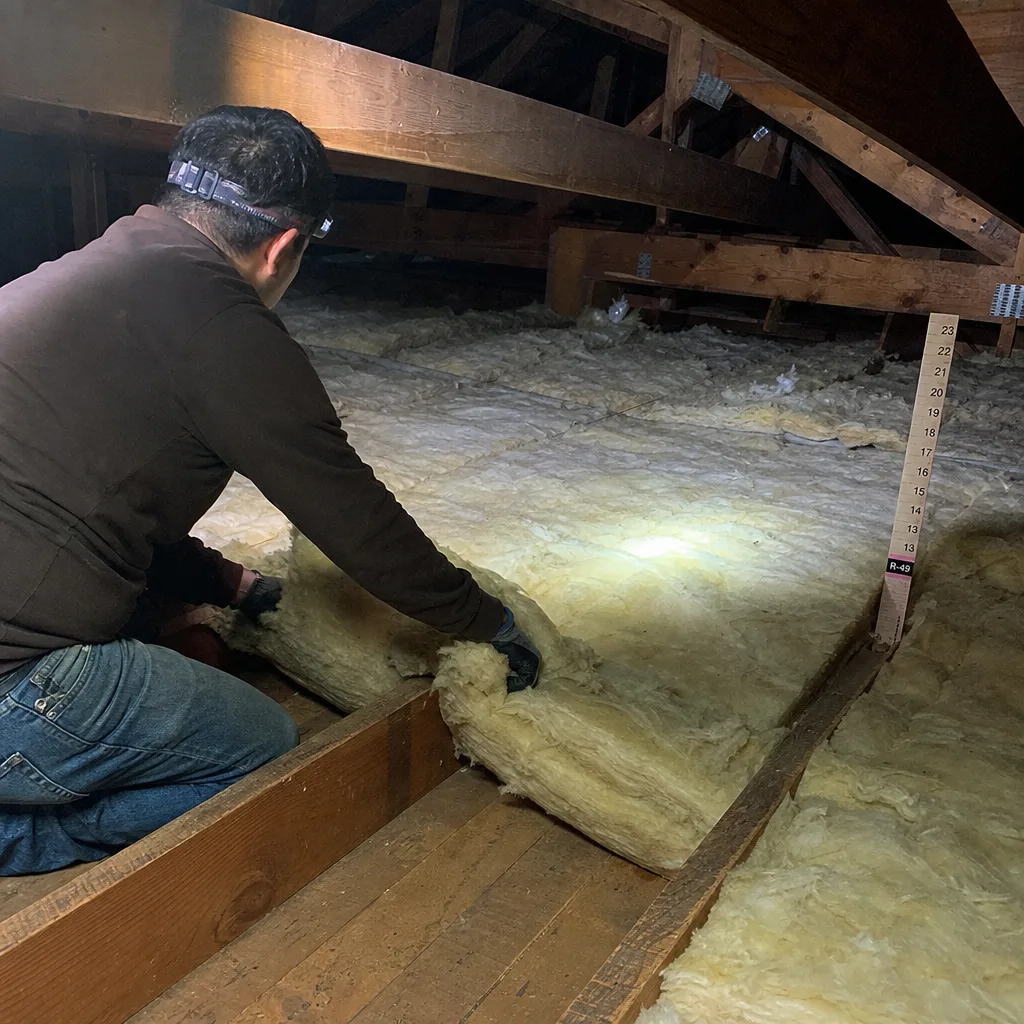
- Before-and-after photos of the attic, including detail shots of sealed penetrations and installed baffles
- Blower-door readings if applicable
- The written scope that was signed before work began
- Any warranty or promise document delivered at completion
Redact the prior customer’s name if privacy is cited - you’re evaluating process, not seeking references. A contractor with consistent, documented work will have these records organized. One who operates informally will stall, make excuses, or offer only verbal assurances.
At Topside Attic Insulation Pomona home, we provide a Documented Photo Record on every visit, included automatically, not available on request. It’s part of the file you receive at completion, along with your blower-door numbers and written warranty.
How to Evaluate a Quote That Omits Air Sealing
This is the most expensive mistake Pomona homeowners make: comparing two attic bids on installed R-value alone, ignoring whether the pressure boundary was addressed first.
Here’s the building science. Insulation slows heat transfer, but it does not stop air movement. Fiberglass and cellulose are air-permeable materials. When wind blows across a vented attic, or when the stack effect draws warm air upward through ceiling penetrations, air moves through the insulation matrix, carrying conditioned air out and attic air in. The R-value rating assumes no air movement. Real performance depends on sealing the leaks first, then insulating.
A contractor who omits air sealing from the scope is not offering a lower price for the same result. They’re offering a different, inferior result at a price that looks competitive. The homeowner who accepts it pays twice: once for the incomplete job, and again for the redo when they realize the house still drafts, the upstairs still overheats, and the energy bills barely moved.
What air sealing should include in a Pomona attic:
- Top plates: The horizontal framing member where interior walls meet the ceiling. These joints run continuously and are rarely sealed by the builder.
- Wire and pipe penetrations: Every electrical wire, plumbing vent, and HVAC line that passes through the ceiling plane creates a gap that bypasses insulation.
- Recessed light housings: Standard can lights are not airtight. IC-rated airtight enclosures or sealed LED retrofits are required.
- Chimney chase and flue penetrations: Metal flues require fire-rated sealant and proper clearance; framing gaps around masonry chases need packed mineral wool and sealant.
- Duct boot connections: Where flex duct or metal trunk lines pass through the ceiling, the boot-to-drywall joint is a major leakage point.
- Attic access hatch or pull-down stair: Often the largest single leak in the ceiling plane; requires weatherstripping and insulated cover.
When we evaluate Attic Insulation in Pomona, we begin with a pressure-boundary assessment. If the attic floor leaks, we seal it completely before adding any insulation material. The blower-door test confirms the result. A contractor who proposes to “just add more insulation” over an unsealed floor is treating the symptom, not the cause.
Cost context: air sealing adds 15-30% to the base insulation price in most Pomona homes, depending on access difficulty and penetration count. For a detailed analysis, see our Insulation Cost Breakdown: The Pomona Homeowner’s Reference for 2026. But the performance difference is not incremental. A well-sealed and insulated attic can reduce heating and cooling loads by 25-40% in our climate zone. An insulated-but-unsealed attic might achieve 10-15%. The payback math favors doing both, correctly, once.
Pomona-Specific Red Flags
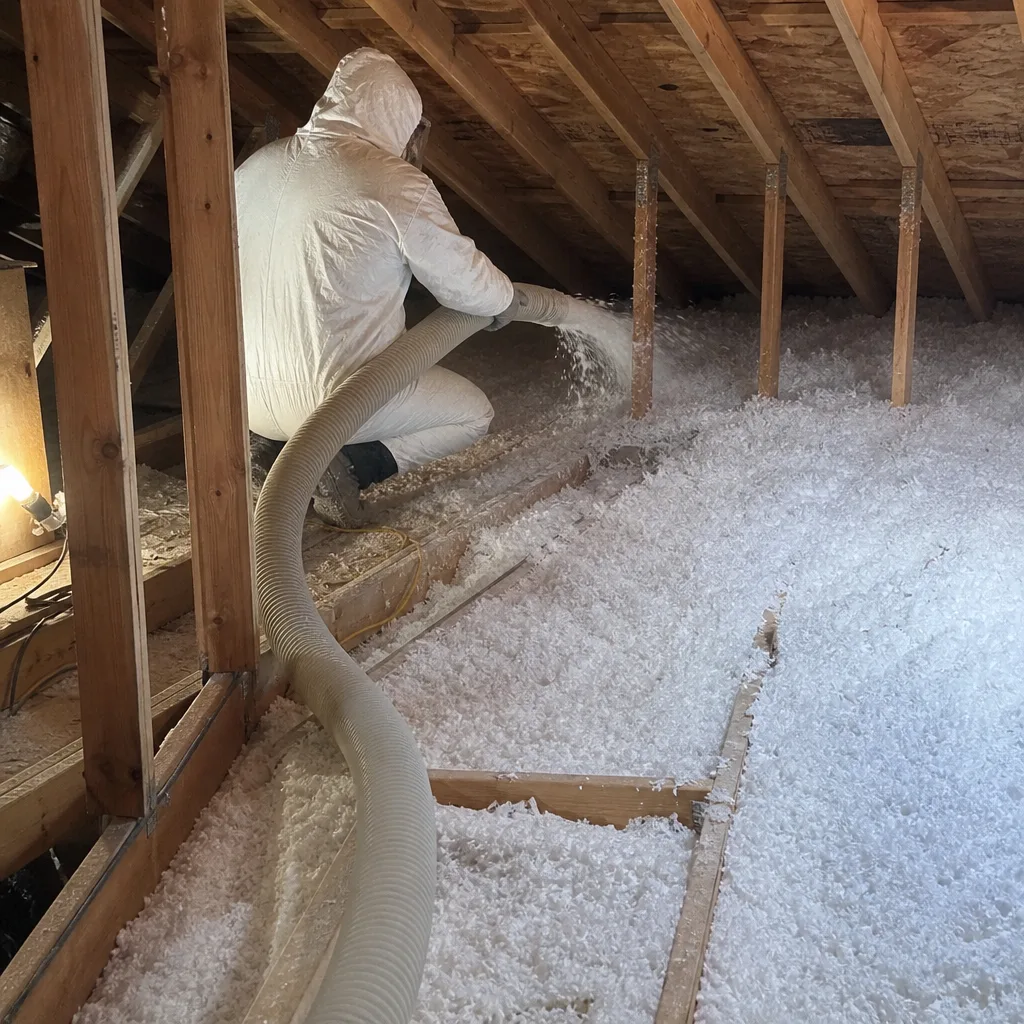
Some warning signs are universal to any home improvement trade. Others are particular to Pomona’s housing stock, climate, and market conditions. For a complete overview, read our Insulation Warning Signs: A Pomona Homeowner’s Reference Guide. Watch for these:
“Up to R-38” Language
This phrasing allows the contractor to install less material in inaccessible areas while claiming the average meets spec. Demand “installed at R-38 per depth gauge” with verification method named. In Pomona’s older neighborhoods like Mayfair and Westmont, irregular joist spacing and obstructed eaves make uniform depth difficult. A contractor who won’t commit to minimum depth everywhere is planning to skip the hard spots.
No Attic Ventilation Assessment
Pomona’s inland location means summer attic temperatures routinely reach 140-150°F. Without adequate ventilation, that heat radiates downward through any insulation, overwhelming its capacity. Title 24 requires 1:150 attic ventilation ratio (net free area to attic floor area) unless balanced intake and exhaust are provided, then 1:300. For full regulatory details, see Insulation Permits, Codes & Inspections in CA: What You Need to Know. A bid that doesn’t mention ventilation assessment - soffit vent condition, baffle installation, ridge or gable vent adequacy - is incomplete. We’ve replaced insulation in Pomona attics that failed prematurely because the contractor never checked that the existing vents were painted shut or blocked with debris.
Bid Submitted Without Site Visit
Insulation is not a commodity. The same square footage can require vastly different scopes depending on existing conditions: rodent damage, buried junction boxes, knob-and-tube wiring, structural defects, or prior inadequate work. A contractor who bids from satellite imagery or a phone description cannot price accurately and will either inflate to cover unknowns or cut corners to protect a low bid. Either way, you lose. In Pomona’s varied housing stock - from 1920s bungalows near downtown to 1980s tract homes in Phillips Ranch - site-specific assessment is mandatory.
Vague Material Specifications
“Fiberglass” or “spray foam” is not a specification. Name the product line: Owens Corning AttiCat, CertainTeed InsulSafe SP, Icynene Classic Plus open-cell foam, Demilec Heatlok HFO closed-cell foam. Each has distinct properties, installation requirements, and cost structures. A contractor who won’t specify is likely sourcing whatever is cheapest this month, with no consistency in thermal performance or fire rating.
Pressure to Decide Immediately
This is standard sales manipulation, but it works because homeowners fear price increases. In reality, a contractor with legitimate demand does not need same-day commitments. Under Haven Standard, we provide written prices valid for 30 days, with no escalation for taking time to compare. Any “today only” discount is a markup being temporarily removed, not a genuine savings.
No Mention of Material Safety Data Sheets or Installation Conditions
Spray foam installation requires temperature and humidity controls, occupant evacuation during application, and re-entry timing based on cure chemistry. Fiberglass and mineral wool require respiratory protection for installers. A contractor who dismisses these concerns - “it’s safe, we’ve been doing this for years” - is not following manufacturer protocols. In Pomona’s dry summer heat, open-cell foam can cure too quickly if mixed improperly, leading to shrinkage and adhesion failure. The contractor should explain their environmental controls, not wave off the question.
The Blower-Door Test: Cost, Value, and What “Optional” Really Means
The blower-door test is a diagnostic tool and a quality verification method. It belongs at both ends of the job: before, to establish baseline leakage and prioritize sealing targets; after, to confirm the work performed and document improvement.
What it costs in Pomona: As a standalone service, a single-point blower-door test with thermal imaging runs $350-$550 from a HERS rater or energy auditor. When bundled with insulation work by a contractor who owns the equipment, the pre- and post-test typically adds $200-$400 to the project. Some contractors, including our operation, include it at no additional charge on applicable jobs because the data is essential to our process.
What it reveals: The primary metric is CFM50 - cubic feet per minute of air leakage at 50 Pascals of pressure, roughly equivalent to a 20 mph wind on all sides of the house. But the test also enables targeted diagnosis:
- With the house depressurized, a technician can feel leaks at outlets, windows, and baseboards
- Thermal imaging during the test shows insulation voids that are invisible to the eye
- Zonal pressure testing compares attic, crawl space, and garage pressures to the house, identifying connected leaks
- Post-test comparison validates that sealing work actually reduced leakage, not just moved it
Why “optional” is a warning: A contractor who calls blower-door testing optional is revealing that they do not measure their own work. They install, they invoice, they leave. There is no feedback loop between what they promised and what they delivered. In our experience across 9,000 homes, the contractors who resist testing are the same ones whose “air sealing” consists of waving a caulk gun near obvious penetrations without systematic pressure-boundary mapping.
The test is particularly valuable in Pomona’s older homes, where multiple renovation layers create unpredictable leakage paths. A 1950s ranch in Lincoln Park may have original lath-and-plaster ceilings with no top plate seal, plus a 1980s room addition with different framing and a 2000s HVAC retrofit with new duct penetrations. Guessing at leakage locations wastes time and material. The blower door shows where to work.
We publish before-and-after blower-door numbers on every applicable job so the homeowner can verify the air-sealing result they paid for. The number doesn’t lie. A 4,200 CFM50 pre-test that drops to 2,400 CFM50 post-test is a 43% reduction. That’s documented performance, not promised performance.
Comparing Bids on Performance, Not Price
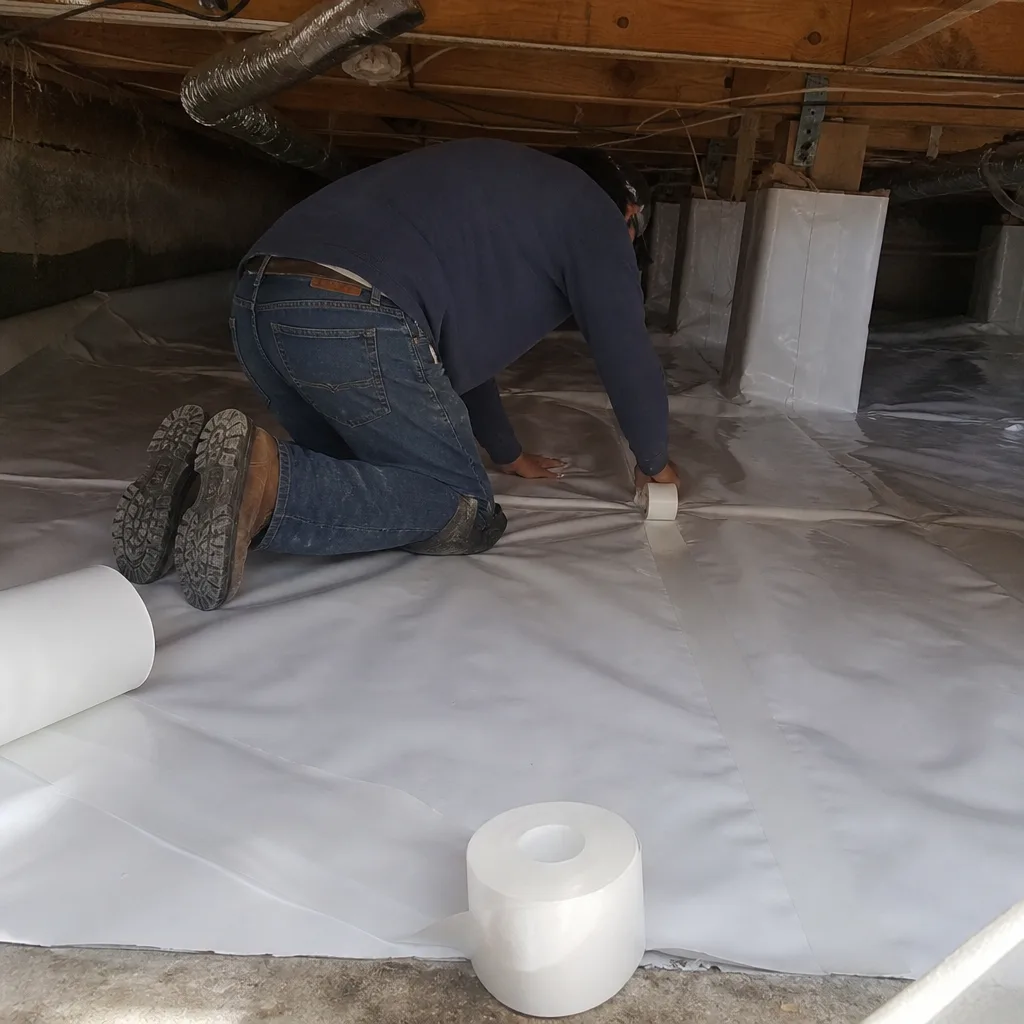
The standard homeowner approach - line up three bids, pick the middle - fails for insulation because the bids rarely describe the same work. Here’s how to normalize them for actual comparison.
Step 1: Verify Identical R-Value Targets
One bid may propose R-38 blown cellulose, another R-38 fiberglass batts, a third R-30 with a radiant barrier. These are not equivalent assemblies. Cellulose at R-38 requires approximately 10-12 inches depth; fiberglass batts at R-38 are 12 inches nominal but achieve less if compressed or installed with gaps. Radiant barrier effectiveness depends on installation quality and attic ventilation, not just presence. Demand that each bidder state the installed thermal resistance and how it will be verified.
Step 2: Normalize for Air Sealing
Create a binary: does the scope include comprehensive attic floor air sealing, or not? If one bid includes it and another doesn’t, add $800-$1,500 to the non-sealing bid as your estimated cost to have it done later by someone else. Then compare. In nearly every case, the “cheaper” bid becomes the more expensive path to the same result.
Step 3: Check Material Density and Coverage
Blown insulation coverage depends on installed density, not just bag count. A contractor using fewer bags to cover the same area may be under-blowing, achieving lower R-value per inch. Ask each bidder: “How many bags for this square footage, and what installed density does that achieve?” For cellulose, proper density is approximately 1.5-2.0 lbs per cubic foot. For fiberglass, 0.5-1.0 lbs per cubic foot depending on product. Vague answers suggest the contractor doesn’t control this variable.
Step 4: Evaluate Warranty Terms
What does the warranty cover, for how long, and what documentation triggers it? A “lifetime” warranty on material that fails due to moisture intrusion caused by inadequate ventilation is worthless if the contractor won’t honor labor to fix the cause. Our 365-Day Done Right Promise - if it’s not done right, we make it right - applies to all completed work, with the written scope as the binding definition of “right.”
Step 5: Assess Documentation Delivered
The bid should specify what you receive at completion: photos, test results, warranty document, maintenance guidance. A contractor who promises “we’ll leave it clean” but won’t specify documentation is operating informally. The documentation is your protection in a future home sale, warranty claim, or dispute.
For Spray Foam Insulation in Pomona, the comparison matrix is even more critical. Open-cell and closed-cell foams have different R-values per inch, vapor permeance, and structural contribution. A bid for “2 inches of spray foam” is meaningless without specifying which product and what that achieves thermally and structurally.
Common Mistakes to Avoid
- Choosing by price alone in a market with no license barrier. The lowest bid often reflects omitted scope, not efficiency. In Pomona’s competitive market, we’ve seen bids 40% below ours that excluded air sealing, used unspecified recycled material, and carried no blower-door verification. The homeowner saved $1,800 and gained nothing in performance.
- Accepting verbal promises about R-value achievement. “You’ll get R-38” means nothing without measurement method. Demand depth gauge verification, thermal imaging, or both, with photos.
- Ignoring the crawl space in Pomona’s older homes. Many 1940s-1960s homes in Pomona have uninsulated or poorly insulated crawl spaces that create a thermal bypass even with a well-treated attic. A contractor who doesn’t assess the full envelope is treating half the problem. For complete solutions, consider Crawl Space Encapsulation & Vapor Barrier in Pomona.
- Permitting the contractor to start without a written scope signed by both parties. This seems obvious, but pressure tactics work. The scope is your enforceable document. Without it, you have no recourse for deviation.
- Failing to verify that existing insulation removal is included if needed. Rodent-contaminated, water-damaged, or improperly installed prior insulation must be removed before new material goes in. Some contractors bid low by assuming they’ll blow over everything. Ask explicitly: “Will you remove existing material if inspection shows it’s necessary, and at what cost?”
- Not checking for Title 24 compliance documentation. In California, insulation alterations in existing homes may require HERS verification for compliance with energy code. A contractor who doesn’t mention this may leave you without the documentation needed for a future permit or sale.
- Overlooking the attic access itself. A poorly sealed pull-down stair or uninsulated hatch can negate much of the attic improvement. Ensure the scope includes access treatment, not just the open floor area.
When to Call a Professional
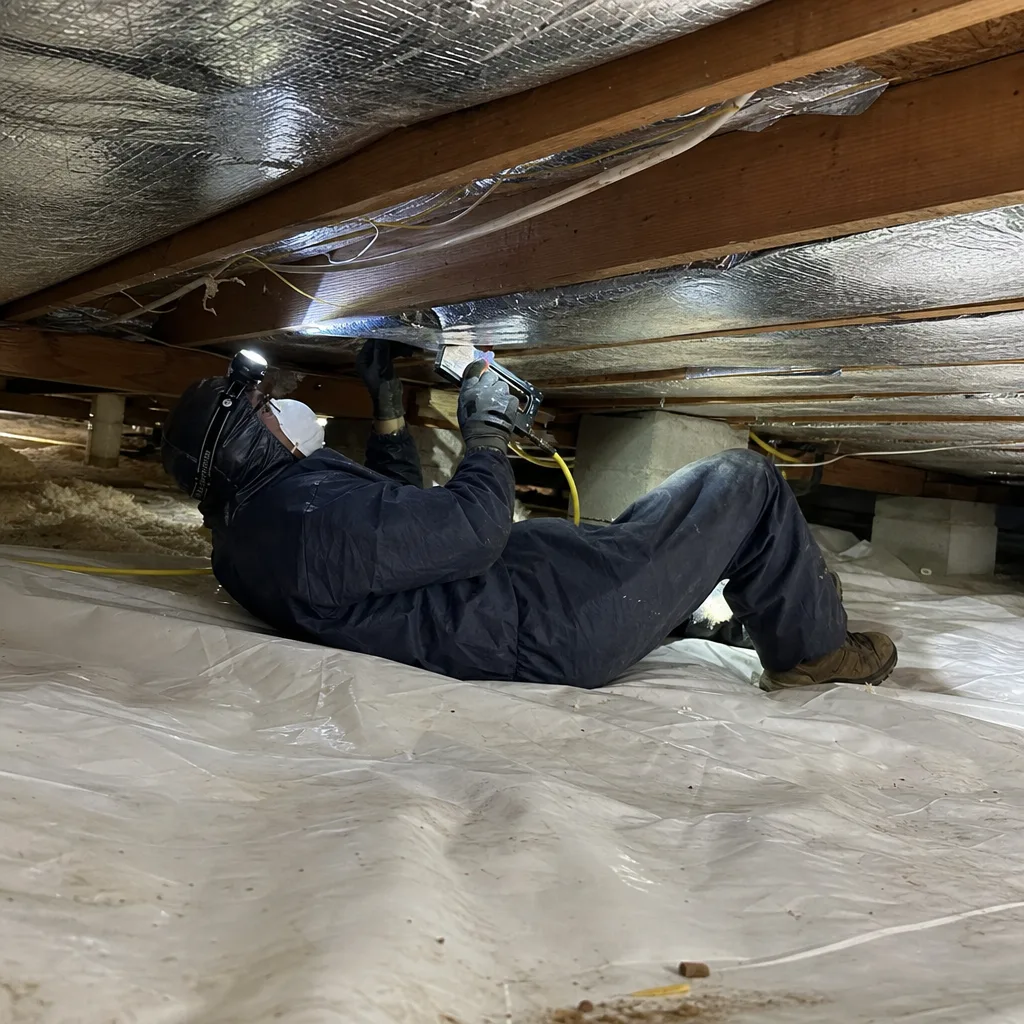
Call a qualified insulation contractor when your energy bills trend upward without rate increases, when upstairs rooms stay uncomfortably hot in summer despite HVAC operation, when you feel drafts from outlets and light switches on exterior walls, or when inspection reveals compressed, displaced, or damaged existing insulation. In Pomona’s climate, attics over 15 years old often have insulation that has settled below original R-value, plus leakage paths that weren’t addressed at installation.
Topside Attic Insulation Pomona offers free estimates in Pomona - call (562) 242-7569. Every estimate includes a written scope, and we provide a Free Second Opinion on any written estimate you’ve already received. Bring us a competing quote; we will read it with you and identify scope gaps, material specification issues, or missing verification steps. No obligation, no pressure. Under Haven Standard, you get a named technician, a text when they’re on the way, and a Documented Photo Record of everything we find.
Frequently Asked Questions
Most complete attic insulation jobs in Pomona run between $2,800 and $6,500 for a typical 1,200-2,000 square foot home, depending on insulation type, air sealing extent, and whether existing material removal is required. Spray foam applications range higher, from $4,500 to $12,000, based on open-cell versus closed-cell product and thickness. These ranges reflect 2024-2025 material and labor costs in the Pomona market. Call (562) 242-7569 for a written price specific to your home - estimates are free.
Permit requirements depend on scope. Simple addition of insulation over existing material often does not require a permit in Pomona. Removal and replacement, structural modifications, or spray foam application may trigger permit and inspection requirements under California Title 24. A competent contractor will identify permit needs in the written scope and handle submittal. Ask explicitly: “Will you pull the permit, and is that cost included?”
Measure depth with a ruler at multiple points, avoiding compressed areas near eaves or around obstructions. In Pomona’s climate zone, attics should have R-38 to R-60 per current Title 24 guidance. If your insulation measures less than 12 inches of fiberglass or 10 inches of cellulose, it’s likely below R-38. But depth alone doesn’t indicate performance - gaps, compression, and air leakage can reduce effective R-value by 30% or more. A blower-door test with thermal imaging reveals the real condition.
Spray foam provides superior air sealing and higher R-value per inch, making it valuable for constrained spaces like vaulted ceilings or for homeowners prioritizing maximum performance. In Pomona’s hot climate, closed-cell foam’s vapor barrier properties can also help manage moisture in certain applications. However, open-cell foam requires careful humidity management during our dry summers to ensure proper cure. The cost premium is justified when the building science supports it - not as a default upgrade. We specify Icynene and Demilec products where foam is the right solution, never as a one-size-fits-all recommendation.
A typical attic insulation job in Pomona takes one to two days: half day for assessment and air sealing, half day for insulation installation, plus additional time if existing material removal or ventilation modifications are needed. Spray foam applications require cure time before re-entry, typically 24 hours for open-cell and 24-48 hours for closed-cell, depending on product and conditions. The written scope should specify start date, crew size, and estimated completion.
Walk away. The documents - written itemized scope, blower-door or HERS capability proof, certificate of insurance with your address, and sample completed-job record - are baseline professionalism, not exceptional service. A contractor who cannot or will not produce them is either inexperienced, undercapitalized, or intentionally opaque. In a market with no insulation-specific license, these documents are your only protection. There are qualified contractors in Pomona who will provide them without resistance. Find one.
The Bottom Line
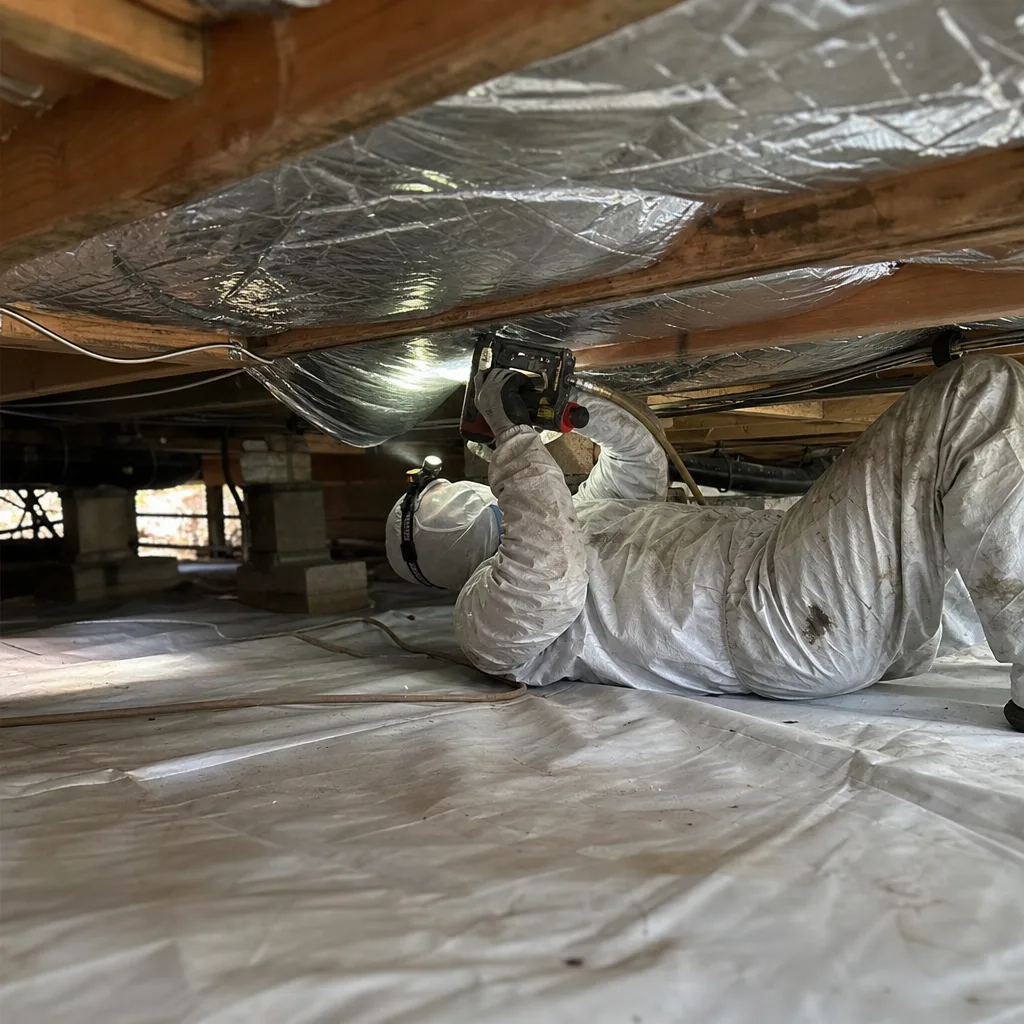
Hiring an insulation contractor in Pomona requires replacing credential-checking with documentation-demanding. California’s lack of an insulation-specific license means any C-2 or B contractor can bid your job, regardless of training. Protect yourself by requiring four documents before signing, evaluating air sealing as a non-negotiable scope component, and comparing bids on verified performance rather than quoted price. The contractor who measures before and after with a blower door, who specifies materials by brand and product line, and who delivers written proof of work completed is the contractor who will actually deliver the comfort and efficiency you’re paying for. Everything else is just a lower number on a page that won’t match your results.
Written by Wes Okafor, Owner at Topside Attic Insulation Pomona, serving Pomona since 2016.