
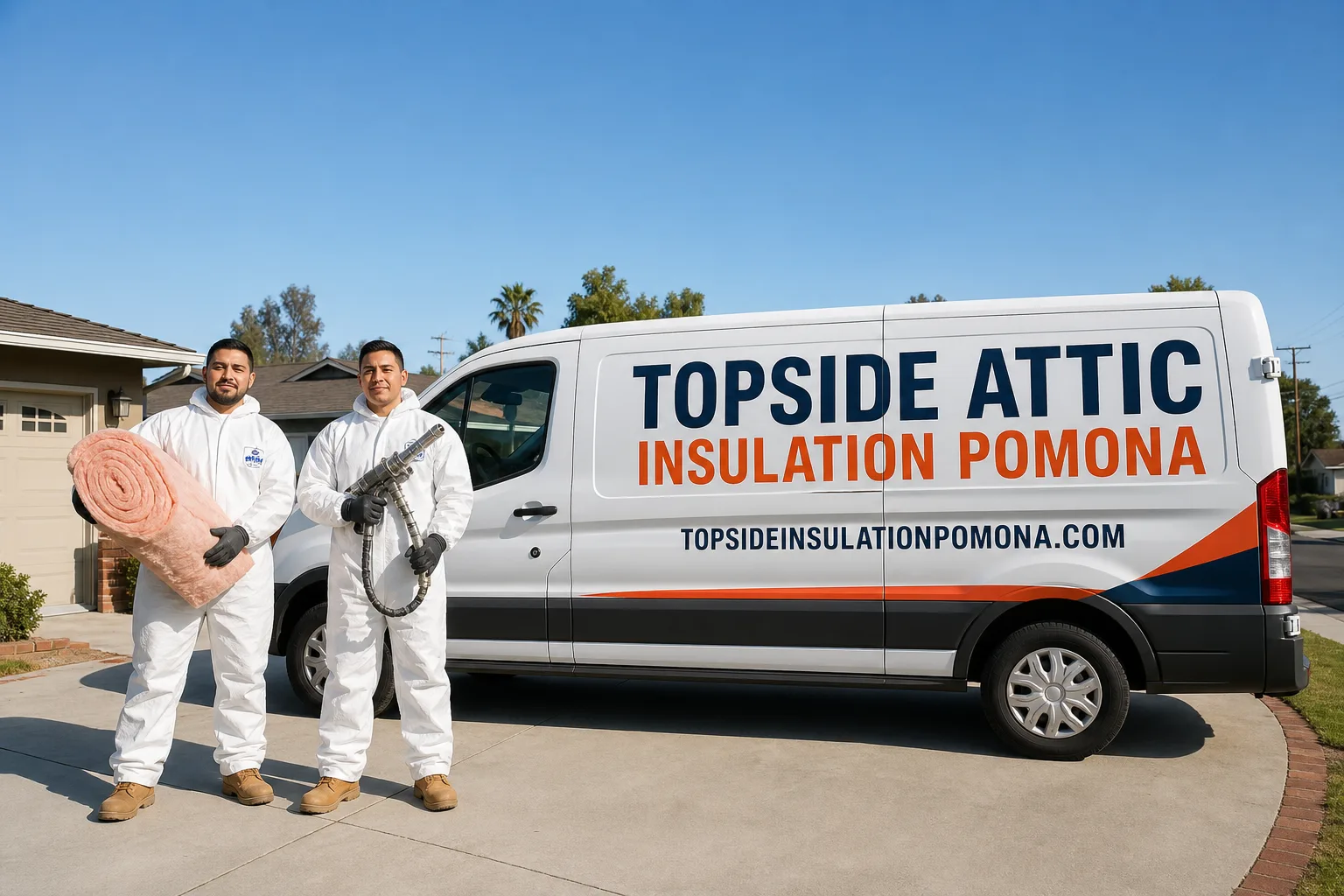
Fast, Reliable Blown-In Insulation Across Azusa
Blown-in insulation in Azusa typically runs $1.80-$3.20 per square foot of attic floor, with most complete attic jobs falling between $2,400 and $4,800 for the 1,200-2,000 square foot homes common in the older neighborhoods west of Azusa Avenue. Our crews are dispatched from the Los Angeles office and usually reach Azusa properties within 45 minutes to an hour. We know the 1940s-1960s stucco bungalows and ranch homes that dominate Azusa’s residential core, and we know that insulation here fails differently than it does in flat-valley cities just a few miles west. Call (562) 242-7569 for a written price before any work starts.
Why Topside Attic Insulation Pomona Is Azusa’s Preferred Blown-In Insulation Company
We’ve sealed and insulated more than 9,000 homes since 2016, and the Azusa jobs stick in our memory because the canyon-mouth conditions force us to work differently. Our Blown-In Insulation crews don’t blow a single bag until the top plates and rim joists are sealed - a sequence that coastal contractors often skip, then regret.
Azusa homeowners who’ve had us back for second-phase work after another company’s install failed during Santa Ana season have left detailed reviews mentioning the difference. Our response time to Azusa averages under an hour from dispatch, and we text when the technician is en route so you’re not waiting on a four-hour window.
We know the specific failure patterns: the wind-washing at eaves in the older blocks near historic downtown, the dense-pack wall jobs in pre-1978 open-cavity homes that need air sealing before the cellulose goes in, the attics on streets like Foothill Boulevard and Alosta Avenue where the original insulation was never upgraded. That local knowledge saves you from paying twice for the same job.
Our Blown-In Insulation Services in Azusa
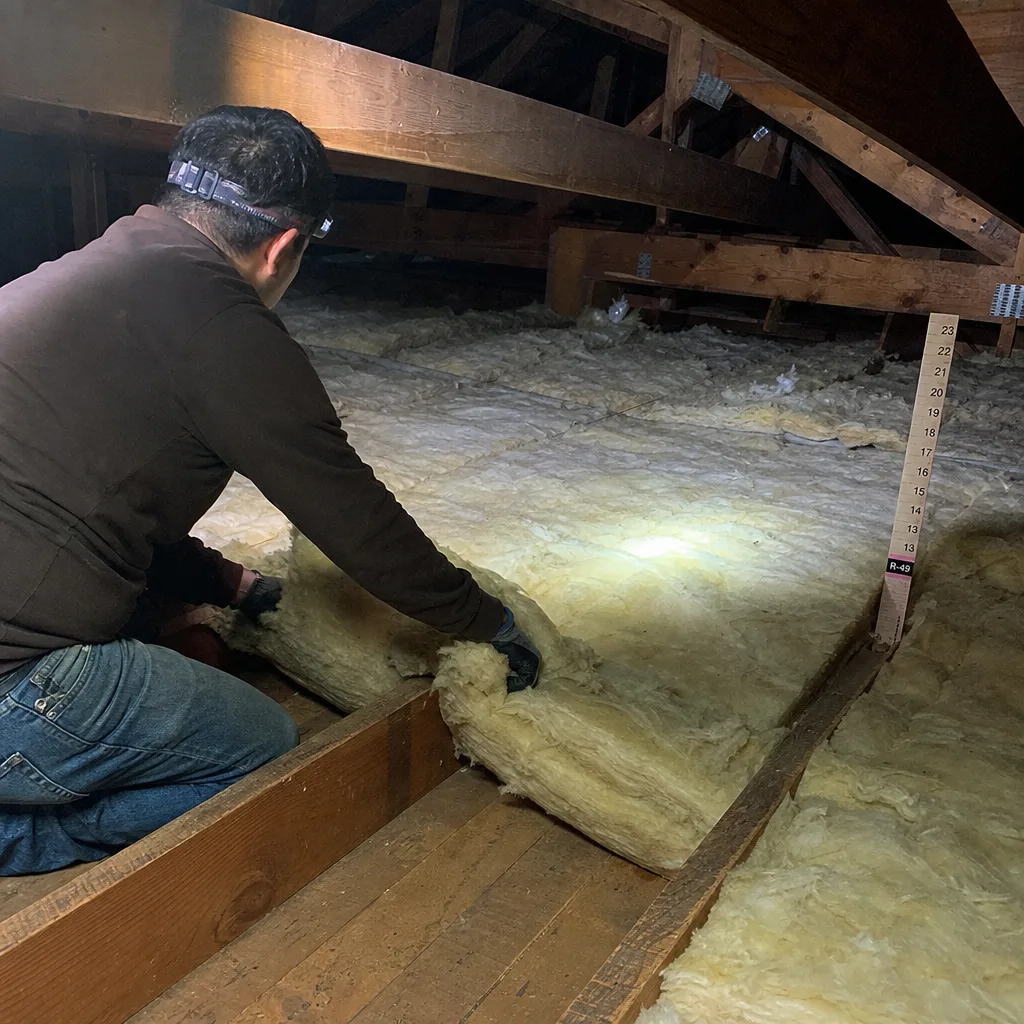
Blown-In Cellulose
Cellulose - ground and treated paper fiber - performs well in Azusa’s dual-season climate because it handles both the 100-105°F summer peaks and the winter nights in the 30s without the thermal drift you see in some synthetic materials. We source cellulose from GreenFiber and other manufacturers, and we install it at the dense-pack density of 3.5 pounds per cubic foot in walls, or loose-fill at 0.5-1.5 pounds in attics. In Azusa, we never install cellulose without first sealing the top plates; Santa Ana winds will find every gap and loft the material. The homeowner on Azusa Avenue whose insulation failed during that first wind event? That was loose-fill fiberglass, but cellulose is equally vulnerable to wind-washing if the air sealing is skipped.
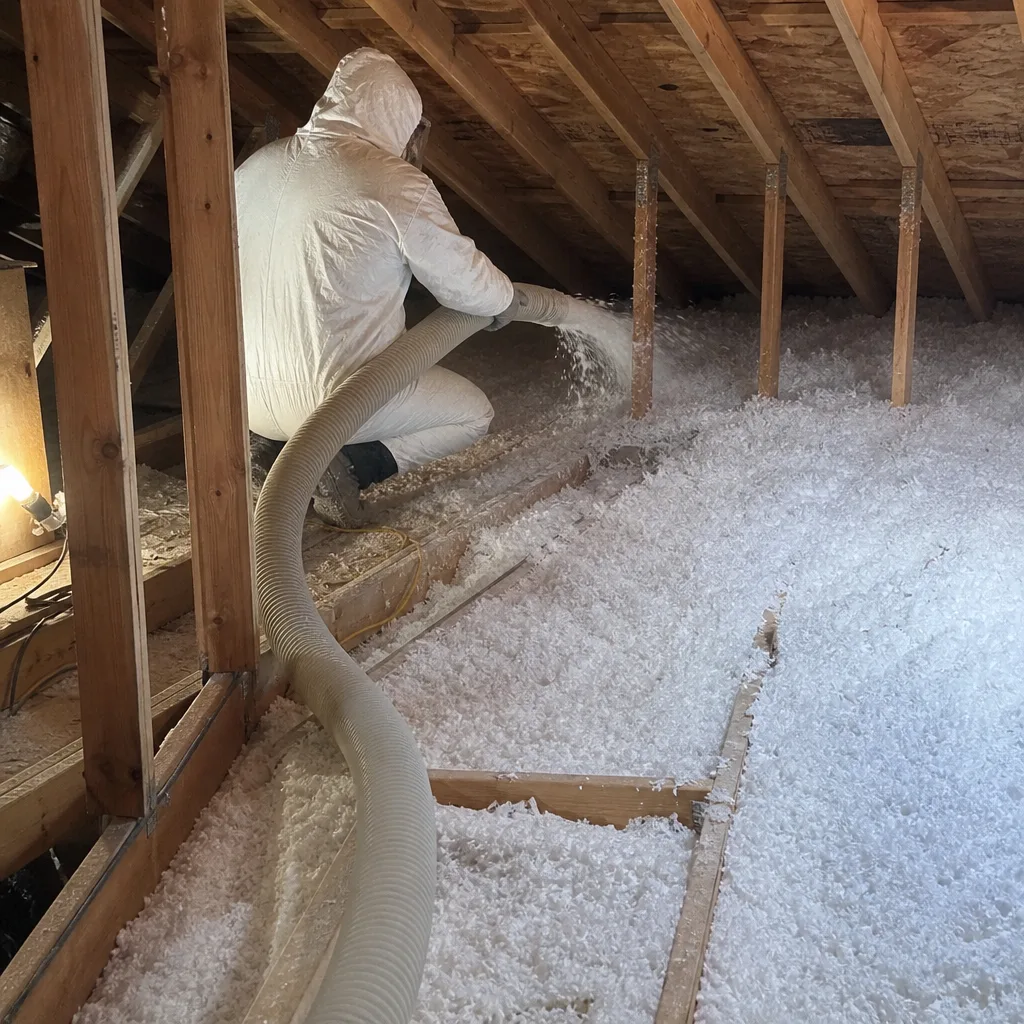
Blown-In Fiberglass
We install Owens Corning blown-in fiberglass in Azusa attics where the homeowner wants the higher R-value per inch - R-2.5 to R-4.2 depending on density - and where the attic geometry allows proper depth without blocking soffit vents. Fiberglass doesn’t absorb moisture the way cellulose can, which matters in Azusa’s extreme thermal-swing climate where condensation on the roof deck is a real risk if ventilation is poor. But fiberglass is lighter, more easily lofted by wind. That’s why our Azusa installs include wind-wash baffles at every eave and sealed top plates before the first bag is opened.
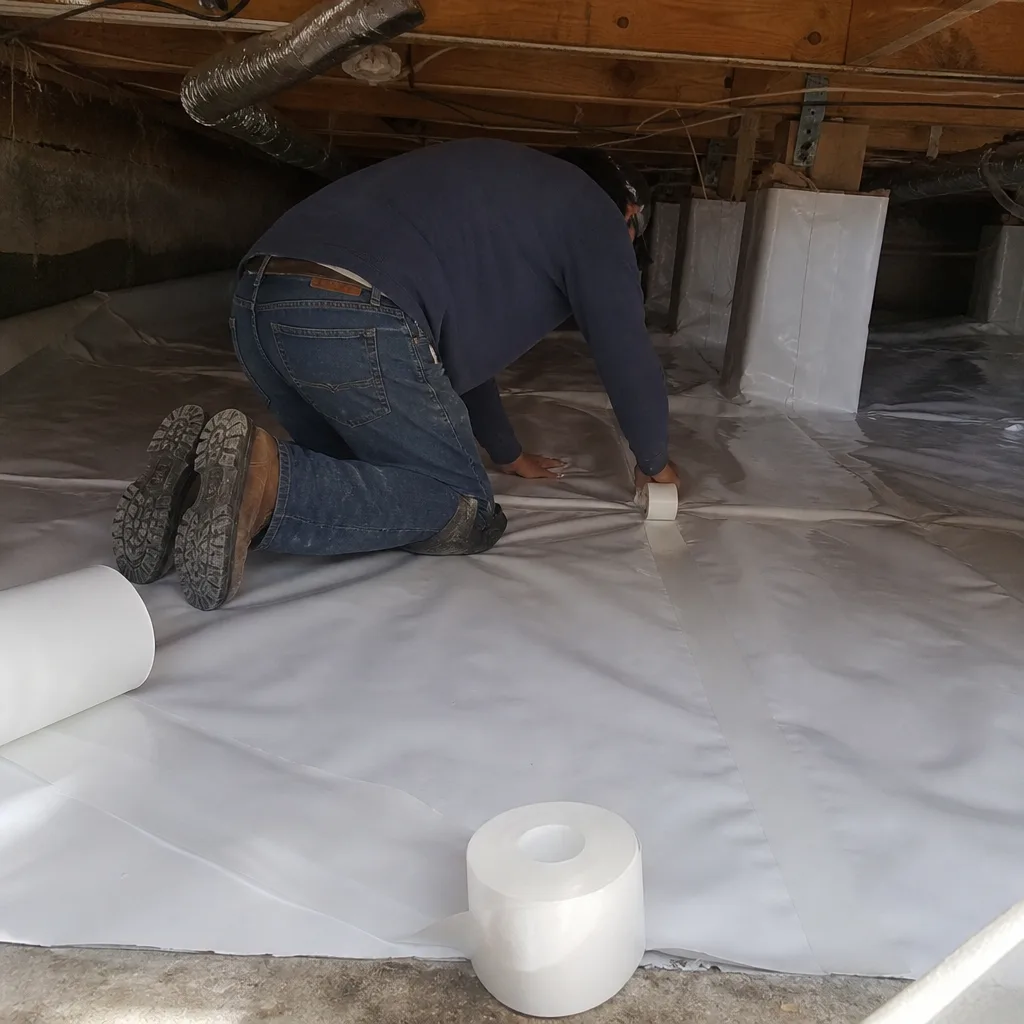
Dense-Pack Wall Insulation
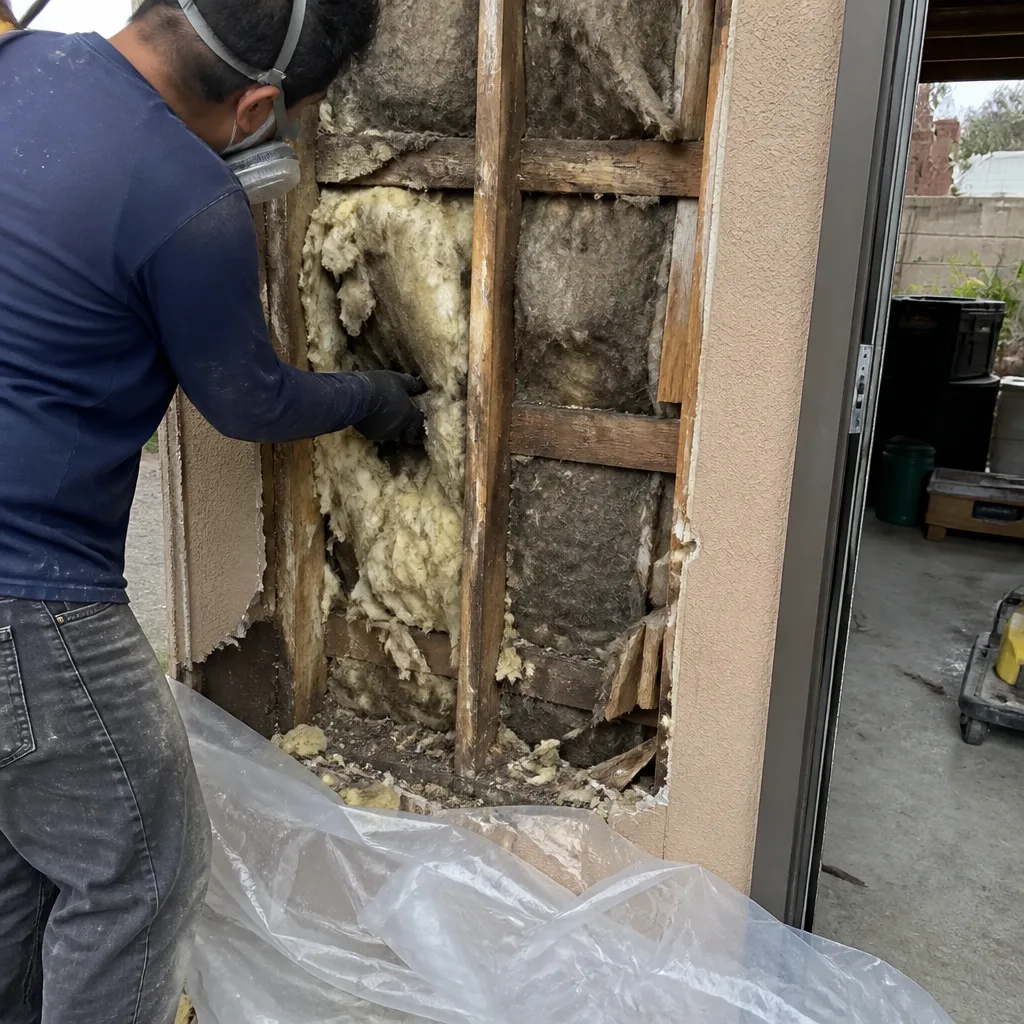
This is the service we emphasize most for Azusa’s 1940s-1960s housing stock. Dense-pack blown-in insulation - cellulose or fiberglass installed at 3.2-3.5 pounds per cubic foot - fills open wall cavities without removing interior drywall or exterior stucco. We drill access holes at the top and bottom of each stud bay, blow the material to density, then patch and match the stucco texture. In Azusa’s pre-1978 homes, this is often the first insulation the walls have ever had. But canyon-mouth pressure changes everything: without air sealing the rim joists, top plates, and electrical penetrations first, the wind drives air through the wall cavity and creates cold spots, moisture accumulation, and eventually callbacks. We seal first, then dense-pack. That’s the sequence.
Blown-In Top-Up
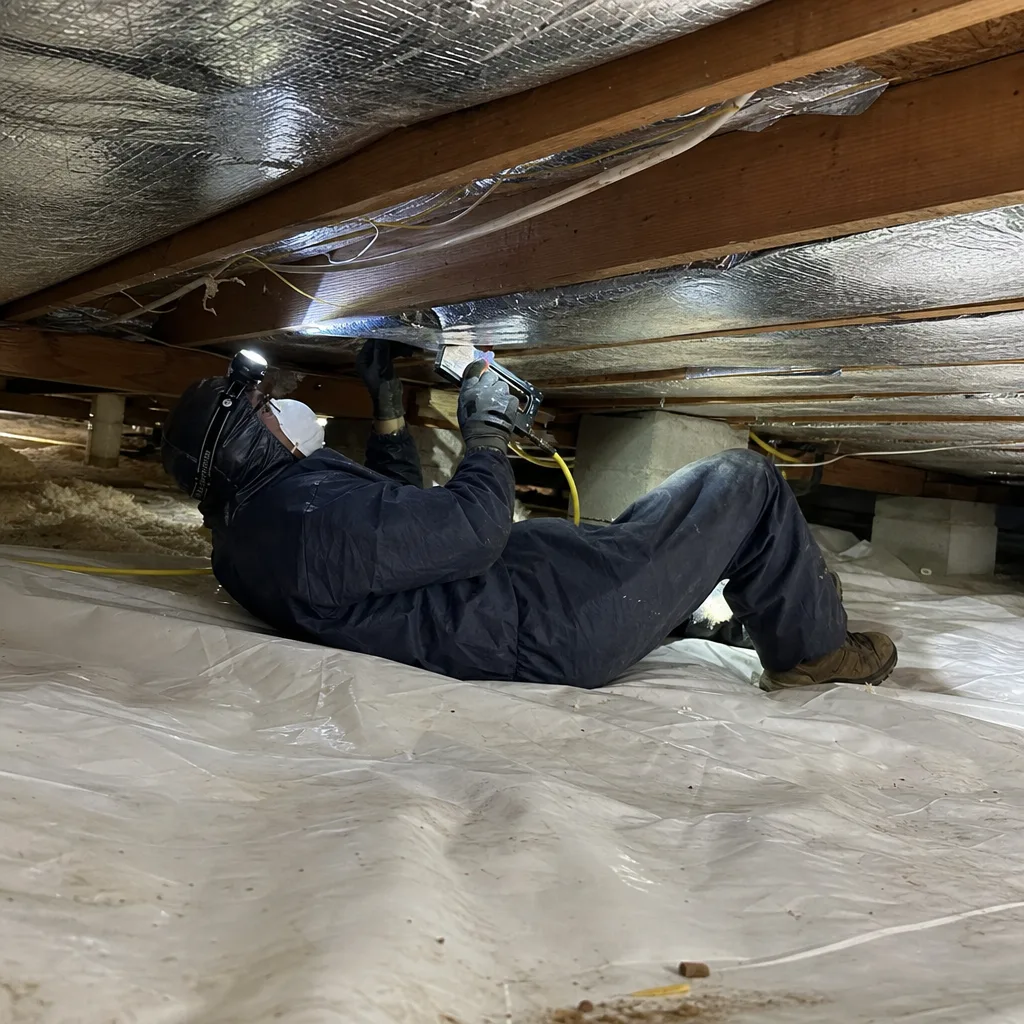
Many Azusa attics have some existing insulation - often thin, compressed fiberglass batts from a 1980s or 1990s retrofit, or a partial loose-fill job that settled below R-30. A blown-in top-up adds material over the existing layer to reach current Title 24 standards, typically R-38 to R-49 for Azusa’s climate zone. But we inspect first. Compressed or moisture-damaged old insulation gets removed. Attic ventilation gets checked, because Azusa’s thermal swing will condense moisture on the roof deck if airflow is inadequate. And we air-seal before we top-up, every time. A top-up over an unsealed attic is just burying the problem under more material.
What happens when you call
- 1
A real person answersNo phone trees - you reach a local pro.
- 2
You get an upfront price rangeHonest numbers before anyone is dispatched.
- 3
A background-checked tech heads outLicensed & insured, dispatched right away.
- 4
You approve before work beginsNothing starts until you say go.
 Before
 After
AfterTrusted Brands We Service in Azusa
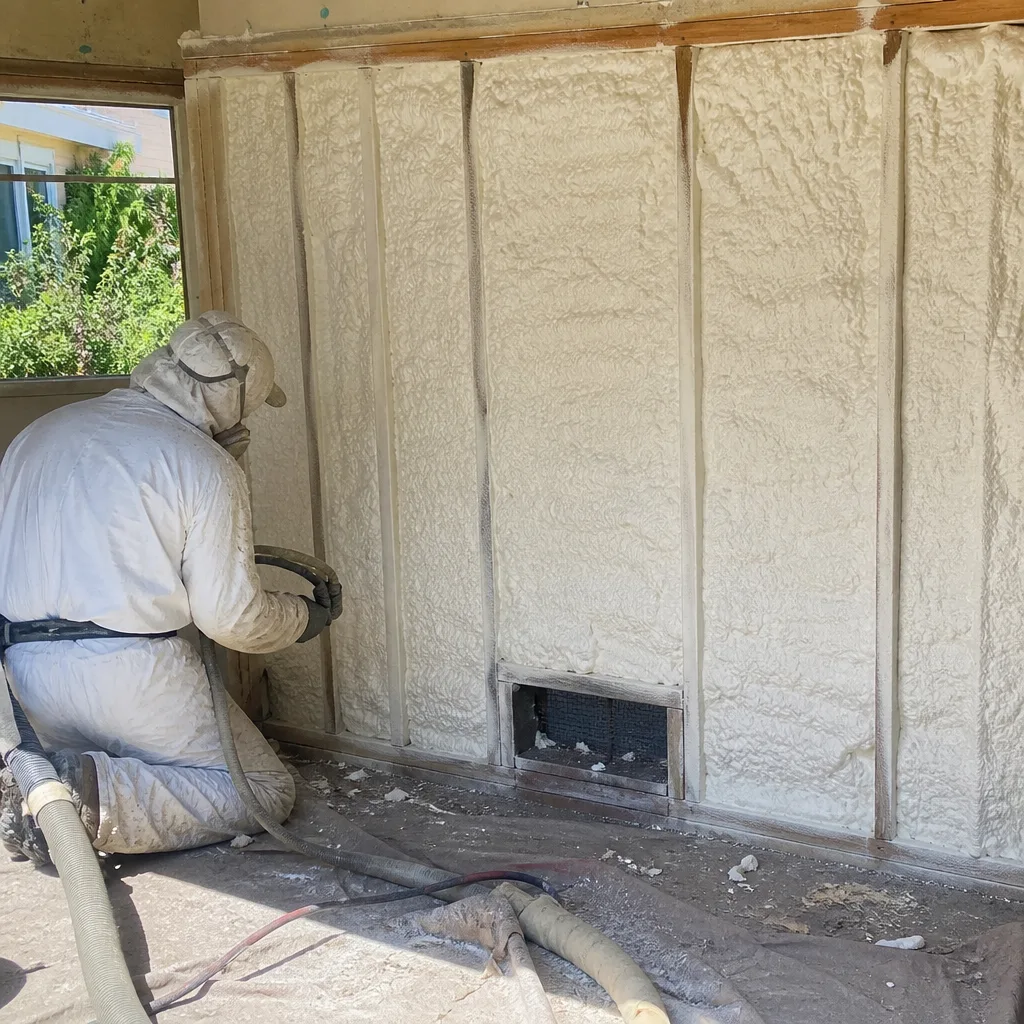
We source materials from Owens Corning, Johns Manville, Knauf, Icynene, Demilec, and GreenFiber - no proprietary lock-in that limits your options. For Azusa jobs, we stock Owens Corning blown-in fiberglass and GreenFiber cellulose at our Los Angeles warehouse, which means no multi-day wait for material delivery on standard installs. When a job calls for hybrid air sealing with spray foam before the blown-in goes in, we specify Icynene or Demilec open-cell foam for the top plates and rim joists, then follow with the blown-in material. The brand choice depends on your specific attic or wall cavity conditions, and we document the specification in the written scope before anyone starts.
Common Blown-In Insulation Problems We See in Azusa Homes
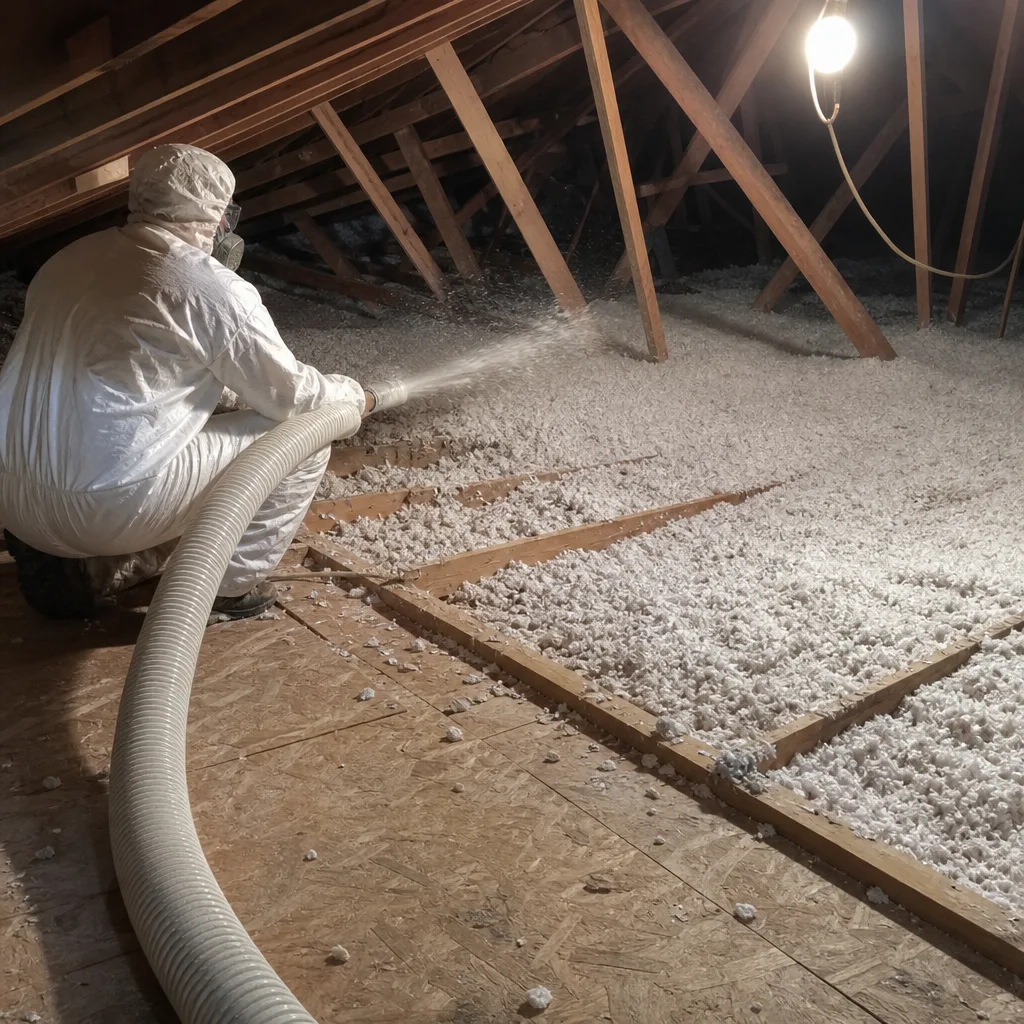
- Wind-washing at eaves and top plates: Santa Ana and canyon-drainage winds pressurize the attic through unsealed penetrations, lofting the blown-in material and destroying its R-value. We see this in homes from the 1950s blocks near downtown to the ranches on Foothill Boulevard. The insulation looks fine from the hatch but has shifted away from the eaves where it’s needed most.
- Dense-pack wall insulation installed without air sealing in pre-1978 open-cavity stucco homes: Canyon-mouth pressure drives air through the wall cavity, creating cold spots and moisture issues. Contractors from flatter cities like Covina or Baldwin Park often miss this; they dense-pack the walls, the homeowner feels drafts anyway, and the job gets blamed on the insulation rather than the skipped air sealing.
- Blown-in top-up over old, compressed insulation without checking attic ventilation: Azusa’s extreme thermal swing - 105°F afternoons dropping to 50°F or lower the same night - causes condensation on the roof deck when airflow is blocked. We’ve pulled back top-up jobs where the new material was clean but the old layer underneath was mold-compromised from years of trapped moisture.
- Insulation blown over active air leaks in can lights and chimney chases: The old housing stock in Azusa’s residential core has unsealed can lights, open chimney chases, and plumbing vent stacks that bypass the attic floor. Blown-in material filters into these openings or gets bypassed entirely by the airflow. We map these leaks with a blower-door test before we install anything.
Pricing for Blown-In Insulation in Azusa, CA
A typical blown-in attic insulation job in Azusa runs $2,400-$4,800 for homes in the 1,200-2,000 square foot range, which covers most of the post-WWII stock in the neighborhoods west of Azusa Avenue and near historic downtown. Dense-pack wall insulation for a full home typically falls between $3,200 and $6,000, depending on wall cavity height, access difficulty, and the extent of air sealing required beforehand. Blown-in top-up jobs, where existing insulation is viable and we’re adding material to reach R-38 or R-49, usually range from $1,200 to $2,800.
What moves the price: attic accessibility (steep roof pitch or limited hatch size), the condition and removal cost of existing insulation, the extent of air sealing needed before blowing, and whether we need to install baffles or vent chutes. Every job gets a written price before any work starts - Haven Standard Clause 1 - and we provide a free second opinion on any written estimate you’ve already received. Call (562) 242-7569 for your specific number.
We Also Serve Cities Near Azusa
Our crews work throughout the San Gabriel Valley, including Azusa and the surrounding cities of Covina, Glendora, Duarte, and Baldwin Park. Each city has different wind exposure, housing stock, and thermal conditions, and we adjust our air-sealing sequence accordingly. The flat-valley homes in Baldwin Park don’t see the canyon-mouth pressurization that defines Azusa jobs, so our approach there is calibrated to different failure modes.
Serving Azusa, CA - Our Local Coverage Area
We’re based in the Azusa area and know this community well. Use the map below to see our service coverage - if you’re nearby, we can almost certainly help.
FAQs - Blown-In Insulation in Azusa
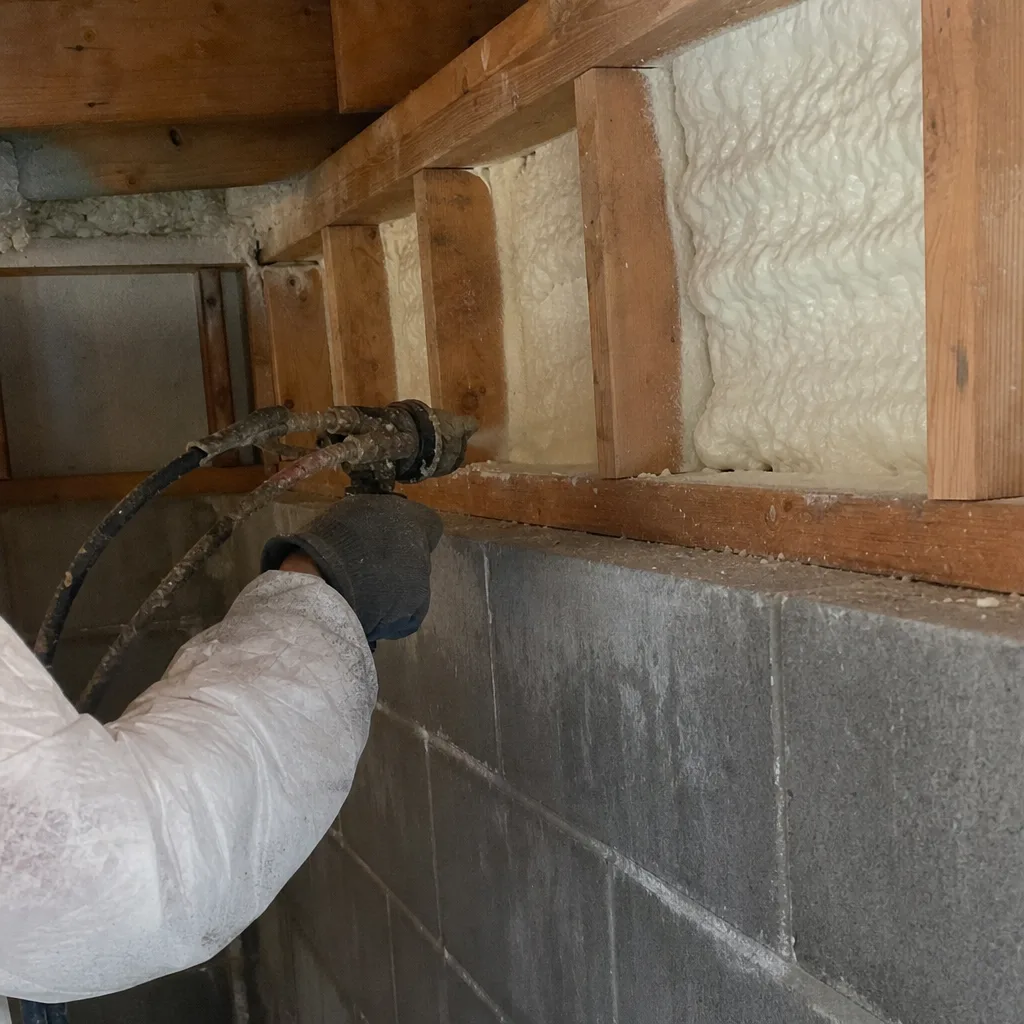
It fails because Santa Ana and canyon-drainage winds pressurize the attic through unsealed top plates, rim joists, and eave gaps, lofting the insulation and destroying its thermal barrier. In flatter cities like Covina, a blow-and-go install might hold; in Azusa, the wind velocity through the building envelope is measurably higher. We air-seal every penetration with spray foam before we install a single bag of blown-in material. Call (562) 242-7569 for a written scope and price.
Yes. We drill access holes at the top and bottom of each stud bay from the exterior, blow cellulose or fiberglass to dense-pack density, then patch and match the stucco texture. Most Azusa homes from this era have open cavities with no insulation at all, so the improvement is immediate. But we air-seal the rim joists and top plates first; without that step, canyon-mouth wind drives air through the wall cavity and creates cold spots the insulation alone can’t fix. Call (562) 242-7569 for a free inspection and written estimate.
The extreme swing - summer highs over 100°F, winter nights in the 30s - means you need material that performs in both conditions without moisture risk or thermal drift. Cellulose handles the dual-season load well and has slight humidity-buffering capacity. Fiberglass gives higher R-value per inch and doesn’t absorb moisture, which matters if your attic ventilation is marginal. We test and inspect before we recommend; the right material depends on your specific attic conditions, not just the climate. Call (562) 242-7569 and we’ll walk you through the written specification.
Blown-in attic insulation in Azusa typically does not require a permit if it’s a straightforward material addition with no structural modification. Dense-pack wall insulation or any work involving electrical or plumbing penetration sealing may trigger a permit check, and we handle that determination as part of our pre-work inspection. Wind-load requirements apply to the building envelope assembly, not the insulation itself; our air-sealing work actually improves the envelope’s wind resistance by reducing pressurized infiltration. We document permit status in your written scope before starting. Call (562) 242-7569 for specifics on your property.
A top-up adds material over existing viable insulation to reach current R-value standards, typically R-38 to R-49. A full install removes old material, air-seals the entire attic floor, and installs fresh blown-in insulation to depth. In Azusa, many attics need the full treatment because the original insulation is compressed, moisture-damaged, or was never air-sealed underneath. We inspect and photograph the existing conditions; you’ll see the documentation before we recommend either approach. The written price covers exactly what we’re doing and why. Call (562) 242-7569 to schedule.
Written by Wes Okafor, Owner at Topside Attic Insulation Pomona, serving Azusa and the San Gabriel Valley since 2016.