

Fast, Reliable Spray Foam Insulation Across Azusa
Spray foam insulation in Azusa typically runs $2.80-$6.50 per square foot depending on open-cell versus closed-cell application, and most residential jobs are completed in one to two days. Our crews are dispatched from our Los Angeles office and carry both open-cell and closed-cell rigs to Azusa daily. We’ve worked the canyon-mouth blocks west of Azusa Avenue, the ranch homes near Foothill Boulevard, and the hillside builds up toward San Gabriel Canyon - enough to know that Azusa’s thermal swing and wind pressurization change how you specify foam. Call (562) 242-7569 for a written price before any work starts.
Why Topside Attic Insulation Pomona Is Azusa’s Preferred Spray Foam Insulation Company
We’ve sealed and insulated over 9,000 homes since 2016, and a measurable share of them sit in Azusa’s wind corridor. Our Spray Foam Insulation team documents every job with before-and-after blower-door numbers - the pressurization reading that shows, in one figure, how much conditioned air your home was losing before and after the work.
Azusa homeowners find us because they read the three-star reviews as carefully as the five-star ones, and they want the numbers that back up the claim. Our 365-Day Done Right Promise applies here the same as everywhere we work: if it’s not done right, we make it right, backed by a written scope and written warranty delivered before anyone lifts a tool.
Calls are answered by a live person, 24/7 - no voicemail loops, no callback windows measured in business days. Scheduling to Azusa is typically next-day or same-week, depending on scope. We know the difference between a flat-valley house in Covina and a canyon-mouth house in Azusa, and we specify foam accordingly.
Our Spray Foam Insulation Services in Azusa
Closed-Cell Spray Foam
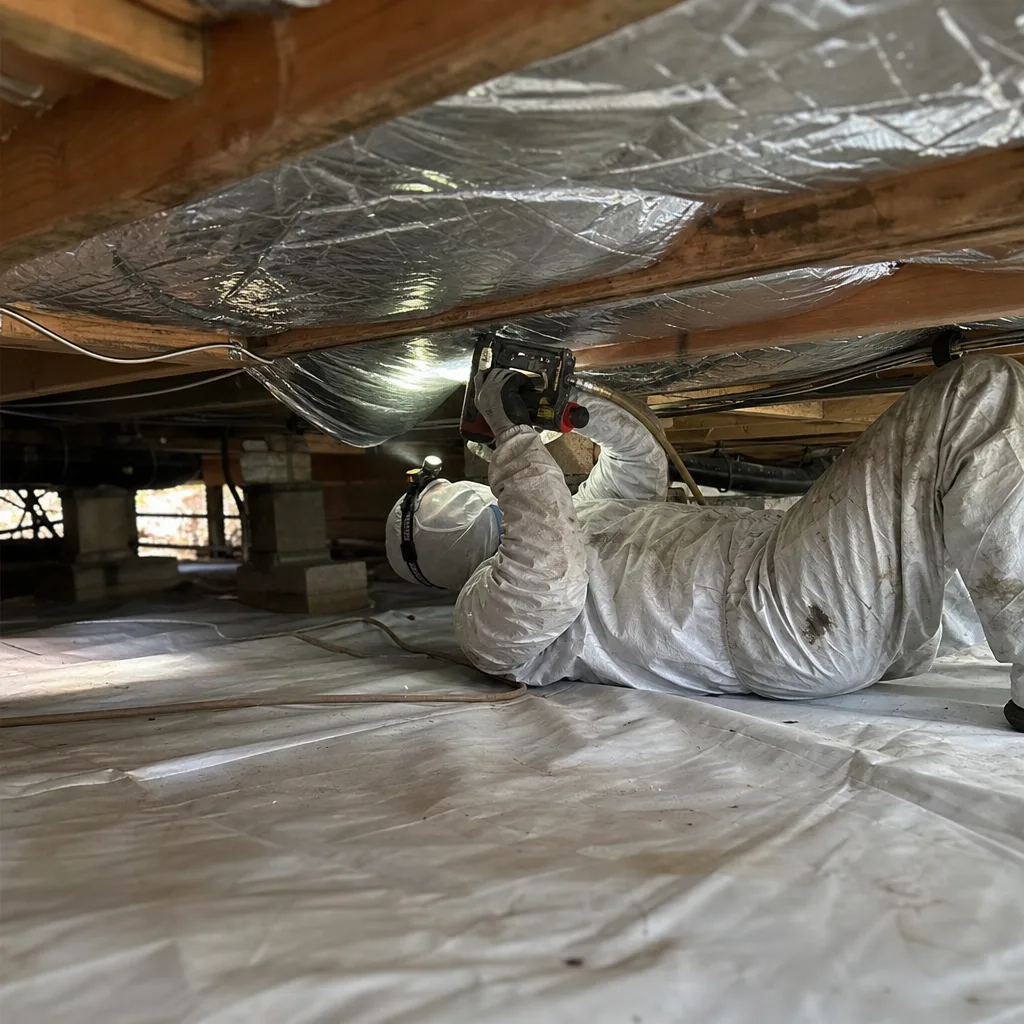
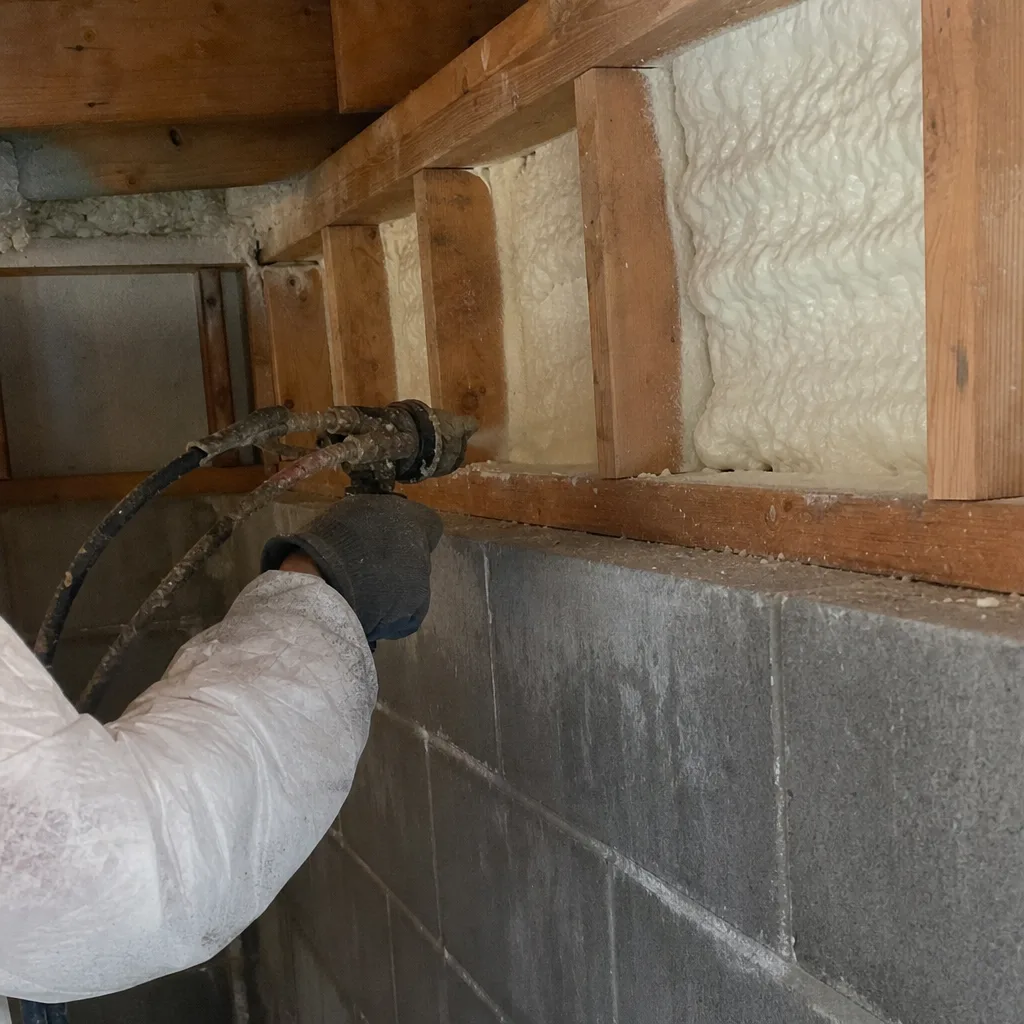
Closed-cell spray foam is our primary recommendation for Azusa’s rim joists, crawlspaces, and any envelope point that sees direct wind pressurization. At 2.0 lbs per cubic foot, it air-seals and insulates in one pass - R-6.5 per inch - which matters in a city where Santa Ana winds drive canyon air through gaps that flat-valley homes don’t have. We use closed-cell on Azusa’s post-WWII stucco-over-wood-frame homes where the rim joist is pulling wind straight through the floor system. Materials from Demilec and CertainTeed, specified to thickness based on cavity depth and moisture management, never sprayed so thick in one pass that we trap winter condensation against the frame.
Open-Cell Spray Foam
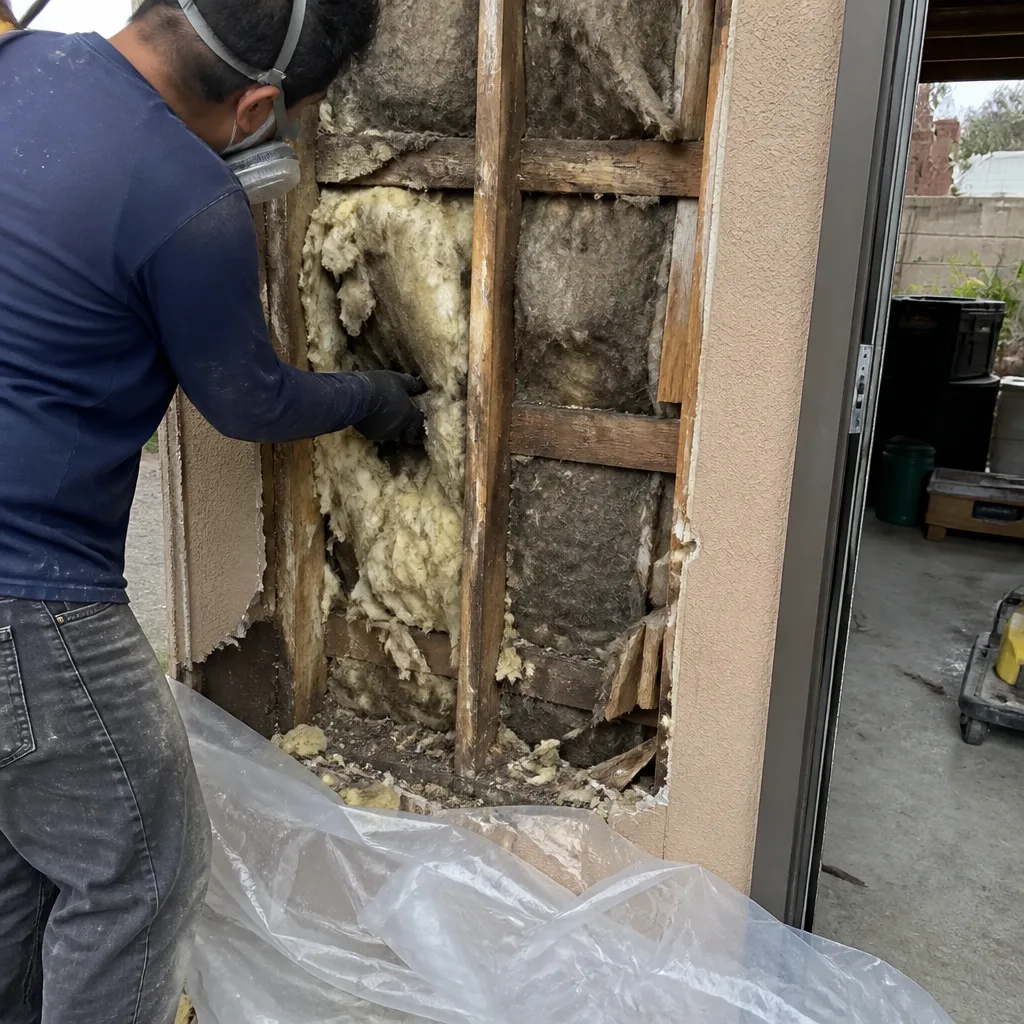
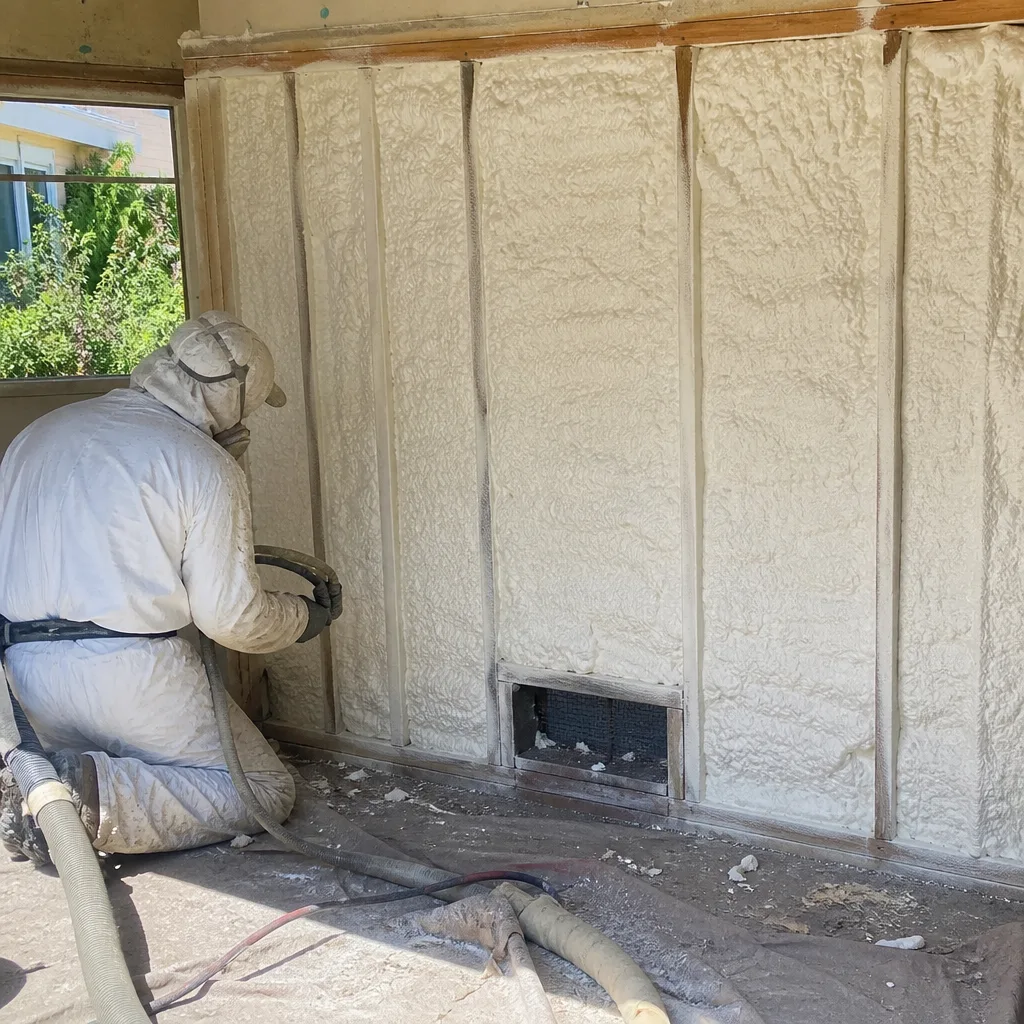
Open-cell foam - half-pound density, R-3.6 per inch - goes in Azusa’s wall cavities and some attic applications where we need vapor permeability and sound dampening. On a 1952 stucco-over-wood-frame ranch off North Azusa Avenue near the historic downtown, we found open wall cavities with zero original insulation and a rim joist in the crawlspace that was pulling canyon wind straight through the floor system. We shot closed-cell spray foam along the rim joist and top plates, then open-cell in the wall cavities, and the homeowner reported the living room stopped whistling during the next Santa Ana event. Open-cell alone in an Azusa attic that sees 100-105°F summer radiant heat can off-gas and sag if the roof deck isn’t addressed alongside it - we don’t spec it that way.
Rim Joist Spray Foam
The rim joist is where your floor framing meets the foundation, and in Azusa it’s often the single largest uncontrolled air leak in the house. Canyon-mouth wind pressure turns these joints into driven-air pathways that batt insulation simply lays against without sealing. We shoot closed-cell foam along the full rim-joist perimeter, sealing the sill plate and band joist in one continuous application. This is the detail that flat-valley crews from Covina or Baldwin Park consistently miss on their first Azusa job - they treat it like a standard retrofit and get called back when the homeowner feels drafts through the floor during the next Santa Ana event.
Garage Ceiling Spray Foam
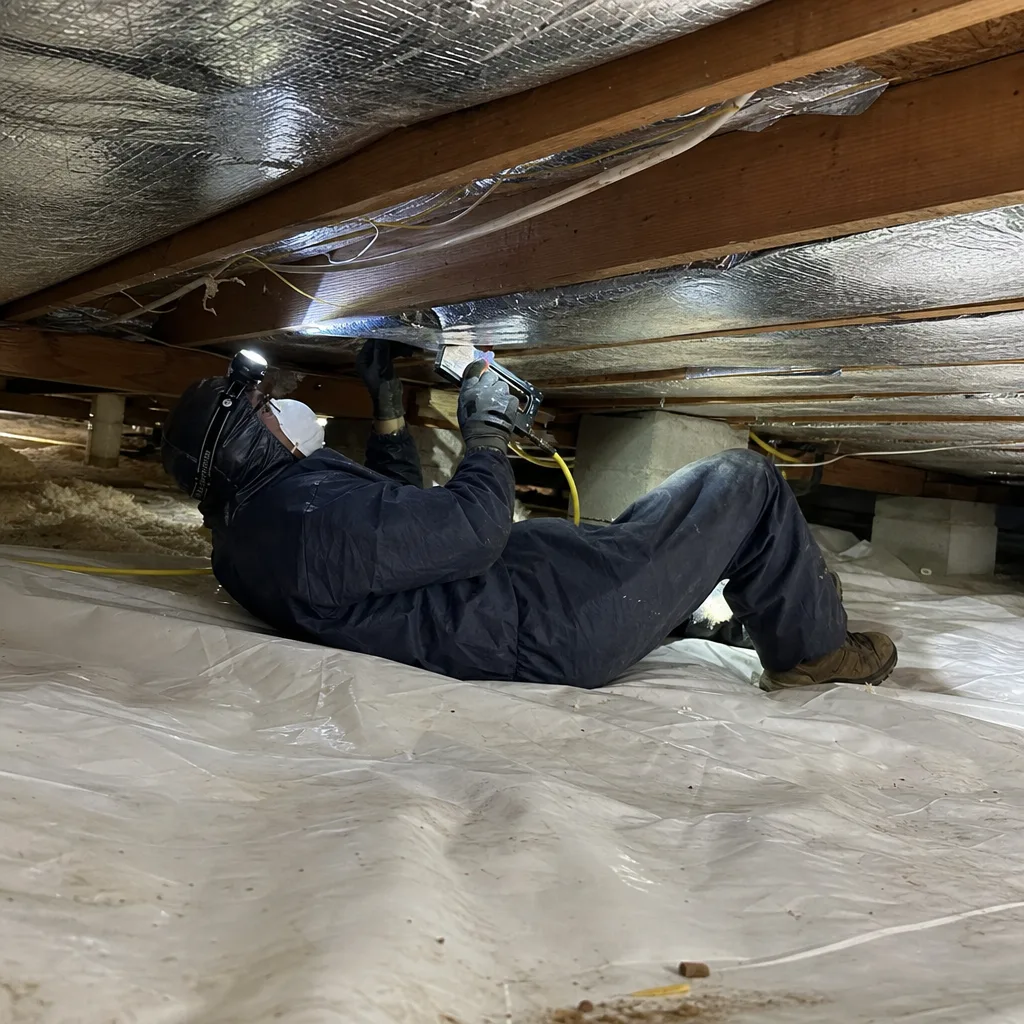
Garage ceilings under conditioned rooms are a common Azusa retrofit, especially in the 1960s ranch tracts where the garage was never thermally separated from the living space. We spray open-cell or closed-cell depending on whether the garage sees temperature extremes - closed-cell if the garage door is uninsulated and the space freezes in winter, open-cell if we’re primarily stopping heat transfer to the room above. Either way, we air-seal the garage ceiling penetrations first: duct boots, electrical, any chase to the attic above.
Spray Foam Roof Deck
Spray foam applied directly to the underside of the roof deck turns the attic into conditioned space - critical in Azusa, where 105°F radiant heat builds in unvented attics and can degrade insulation performance or drive moisture cycling. We use medium-density closed-cell formulations rated for roof-deck application, with proper ignition barriers per California building code. This is the specification that prevents the open-cell sag and off-gassing we see in callback jobs where a contractor foamed the attic floor instead of the deck, or used the wrong product for the temperature range.
What happens when you call
- 1
A real person answersNo phone trees - you reach a local pro.
- 2
You get an upfront price rangeHonest numbers before anyone is dispatched.
- 3
A background-checked tech heads outLicensed & insured, dispatched right away.
- 4
You approve before work beginsNothing starts until you say go.
 Before
 After
AfterTrusted Brands We Service in Azusa
We source spray foam materials from Icynene, Demilec, and CertainTeed - no proprietary lock-in, so we match the product to the Azusa job rather than forcing a single brand across every application. Icynene’s open-cell line goes in wall cavities where vapor permeability matters. Demilec’s closed-cell formulations handle the rim-joist and roof-deck work where air sealing and thermal resistance compete with wind-driven moisture. CertainTeed’s medium-density products cover the middle ground. We stock locally and coordinate delivery to Azusa jobs from our Los Angeles office, so we’re not waiting on freight when the crew is scheduled.
Common Spray Foam Insulation Problems We See in Azusa Homes
- Spray foam installed without sealing the rim joist and top plates. Canyon-mouth wind pressure pushes air through those gaps anyway, so the foam underperforms and the job returns as a callback. We see this from out-of-area crews who don’t account for Azusa’s wind corridor.
- Open-cell only in an attic that sees 100-105°F summer radiant heat. The foam off-gasses and can sag if the roof deck isn’t addressed alongside it. We specify roof-deck spray foam or hybrid systems for Azusa attics, not floor-only open-cell.
- Closed-cell sprayed too thick in one pass on a post-WWII stucco wall with no vapor management. Trapped moisture against the wood frame during those 30s winter nights causes rot we find on tear-outs. We calculate thickness per pass and total assembly drying potential.
- Blown-in insulation added over unsealed attic floors. Our Spray Foam Insulation in Azusa work always begins with air sealing of top plates, can lights, and penetrations - completed before any insulation goes in. Sealed first, then insulated. In that order.
Pricing for Spray Foam Insulation in Azusa, CA
A typical open-cell spray foam job in an Azusa ranch home runs $2.80-$4.20 per square foot of surface area. Closed-cell, with its higher material density and air-sealing performance, runs $4.50-$6.50 per square foot. Rim-joist-only jobs in Azusa’s older crawlspaces typically fall between $1,800 and $3,400. Roof-deck applications, which require ignition barriers and full surface prep, range $5.50-$8.00 per square foot depending on access and deck condition.
What moves the number: cavity depth, current insulation removal, accessibility (steep roofs, tight crawlspaces), and whether we find unsealed penetrations that must be addressed first. Every Azusa job gets a written price before any work starts - Haven Standard Clause 1 - and we provide a Free Second Opinion on any competing written estimate you bring us. Call (562) 242-7569 for scheduling.
We Also Serve Cities Near Azusa
Our crews work the full San Gabriel Valley corridor: Covina, Glendora, Duarte, and Baldwin Park. Each city gets the same written-price protocol and documented photo record, though Azusa’s canyon-mouth wind loading and thermal swing require specifications we don’t use in flatter terrain.
Serving Azusa, CA - Our Local Coverage Area
We’re based in the Azusa area and know this community well. Use the map below to see our service coverage - if you’re nearby, we can almost certainly help.
FAQs - Spray Foam Insulation in Azusa
Yes - Azusa’s channeled Santa Ana and canyon-drainage winds pressurize the building envelope so aggressively that rim joists and top plates act as wind-driven air leaks. Closed-cell spray foam that air-seals and insulates in one pass outperforms any batt or blown-in-only job here. Blown-in cellulose or fiberglass laid over an unsealed attic floor will still let canyon wind bypass it through gaps at the top plates. Call (562) 242-7569 and we’ll show you the blower-door difference.
Azusa’s residential core is dominated by 1940s-1960s post-WWII stucco-over-wood-frame bungalows and ranch homes built before California’s 1978 Title 24 energy code - most have open-cavity walls with zero original insulation. In the older blocks west of Azusa Avenue and near the historic downtown, no insulation at all in wall cavities is the norm rather than the exception. We verify cavity conditions with borescope inspection before writing the scope.
Yes - this is the dual-season argument that makes Azusa different from coastal LA. San Gabriel Canyon cold-air drainage pushes winter nights well into the 30s, while summer highs exceed 100-105°F. Spray foam’s air-sealing performance reduces both heating and cooling loads, so you’re not sizing for one season while bleeding energy in the other. The blower-door numbers we publish show the combined effect.
We use medium-density closed-cell foam rated for roof-deck application, with a code-compliant ignition barrier. Open-cell or low-density products can off-gas and sag under sustained 105°F radiant heat. The roof deck is the hottest surface in the Azusa building envelope, and we specify for that temperature range, not for attic-floor conditions.
Most spray foam insulation in Azusa requires a building permit through the City of Azusa Community Development Department, with Title 24 energy compliance documentation for the thermal envelope alterations. We handle permit submittal and HERS verification as part of our scope - the homeowner receives copies of all documentation, same as the blower-door readings and photo record. Under Haven Standard: Have it in writing.
Written by Wes Okafor, Owner at Topside Attic Insulation Pomona, serving Azusa since 2016.