
Blown-In Attic Insulation in Pomona, CA
Blown-in attic insulation is loose-fill material – typically fiberglass or cellulose – machine-blown into your attic floor cavity to bring your home’s thermal resistance up to the R-38 to R-60 range that Southern California’s climate zone demands. Most Pomona homes built before 2000 have between R-11 and R-19 sitting on their attic floor, which means conditioned air is fighting through a thermal layer that’s roughly half as thick as it should be. A properly executed blown-in job closes that gap in a single day, and the result shows up in your next SCE bill. Learn more about our Attic Insulation services.
At Topside Attic Insulation Pomona, we’ve been running blown-in jobs in Pomona since 2016 under The Haven Standard – which means Wes Okafor’s crew seals every air leak at the attic floor before the blower runs, delivers a written price before any work starts, and hands you a documented photo record and blower-door readings when we leave. If you want to know what that looks like for your specific house, call us at (562) 242-7569. Estimates are free and you get a written number, not a ballpark.
Blown-in insulation is one piece of a larger building-envelope picture. For the full scope of what good attic work involves in this market, our Attic Insulation in Pomona page covers every layer of that conversation.
When You Need Blown-In Attic Insulation
- Your attic floor reads below R-30. We probe existing insulation on every assessment visit. In Pomona’s Inland Valley climate – where summer attic temperatures regularly hit 150°F and afternoon heat gain drives cooling loads well past what coastal homes deal with – anything under R-30 is actively costing you money each day from June through September.
- Rooms on the top floor of your home run noticeably hotter than the rest of the house. This is the single most common complaint we hear from homeowners in the College Park and Ganesha Hills neighborhoods. Thin or settled insulation at the attic floor lets radiant heat press straight down into those rooms regardless of how hard your HVAC runs.
- Your insulation is compressed, wet-damaged, or contaminated. Insulation that has absorbed moisture from a past roof leak or been disturbed by rodents loses a significant share of its R-value and, in some cases, harbors biological material that should not stay in the envelope. Blown-in replacement over a cleaned, sealed attic floor is the standard remediation path.
- You’re adding blown-in depth over existing batts that are still in good condition. If your original batt insulation is dry, undisturbed, and sitting flat, you don’t always need to pull it. Blowing a cellulose or fiberglass layer over sound batts is a cost-effective way to reach current California Title 24 compliance without a full tear-out.
- You’ve just had an energy audit and the auditor flagged attic thermal performance. A blower-door test – the pressurization reading that captures, in one CFM50 figure, how much air your building envelope is losing – often reveals that the attic plane is the primary bypass. Blown-in insulation, installed after air sealing, directly addresses that finding.
- You’re preparing the home for sale or a solar installation. Appraisers and solar contractors both look at attic insulation depth. Pomona homes that go to market with documented R-values and a current photo record carry that as a verifiable line item, not a seller’s claim.
Our Blown-In Attic Insulation Process
- Written scope and price before anyone touches your attic. Haven Standard Clause 1 is non-negotiable: a flat written price, a written scope of work, and a written warranty are delivered and signed before any crew member climbs a ladder. You know the R-value target, the material going in, and what the job will cost. There are no line items that appear later.
- Pre-work blower-door baseline. We run a blower-door test before the insulation phase starts. This pressurization measurement gives us a CFM50 reading – a single number that quantifies how much conditioned air your envelope is losing at that moment. That number goes into your job documentation so you have a before figure to compare against.
- Attic air sealing – mandatory, not optional. Every penetration at the attic floor gets sealed before the blower runs: top plates, recessed can lights, plumbing chases, HVAC boots, and any electrical penetrations we find. In older Pomona homes, especially those built in the 1960s and 1970s in the Lincoln Park and Westmont areas, top-plate gaps are often the largest single air-bypass point in the entire building. We use spray foam and mastic for this step; we do not use caulk on wide gaps. Insulation blown over unsealed penetrations does not perform at its rated R-value – it traps air that moves. We seal first. Every time.
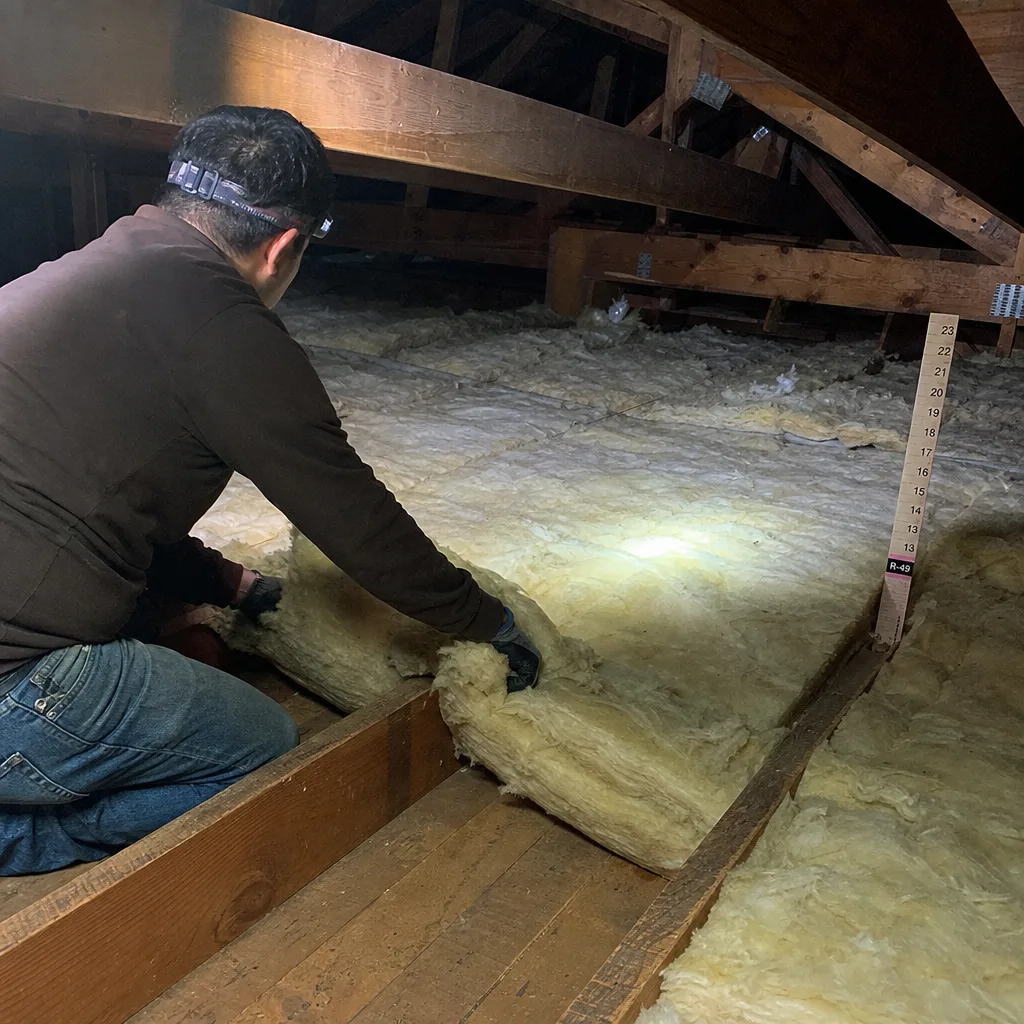
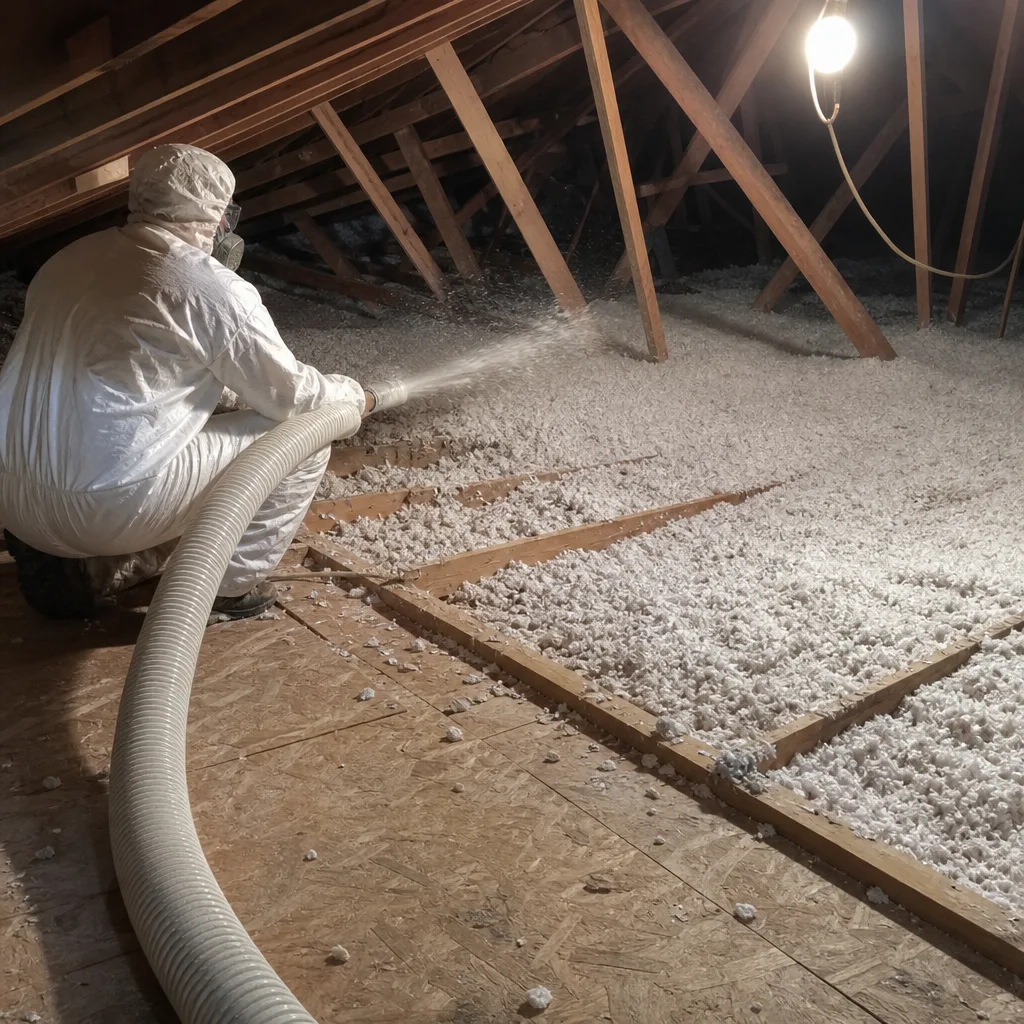
- Blown-in installation to the specified depth. We use GreenFiber cellulose on the majority of Pomona jobs where the attic floor is accessible and the target is R-49 or R-60. Cellulose’s density also provides a modest improvement in sound transmission, which matters in the denser residential blocks near the 10 and 71 freeway corridors. For jobs where moisture history or rodent activity has been a factor, we switch to fiberglass – CertainTeed’s ProCat is a common choice – because fiberglass does not retain moisture the way cellulose can if a future roof event occurs. Depth markers are installed at multiple points across the attic floor so you can verify the installed depth yourself after we leave.
- Post-work blower-door test and photo documentation. After the crew finishes, we run the blower-door again. You get both numbers – before and after – in writing. On a typical Pomona job where air sealing and blown-in are done together, we see CFM50 reductions in the 25% to 45% range, depending on the home’s original construction quality. The documented photo record captures attic-floor conditions before work, the air-sealing step, installed depth markers, and the finished attic floor. That record is yours. It goes with the house if you sell.
- 365-Day Done Right Promise – in writing, before we leave. If anything about the installed work falls outside the written scope within 365 days, we make it right. Not at a reduced rate. Not as a warranty call that takes three weeks to schedule. Right. The written warranty you receive on job completion is the documentation of that promise.
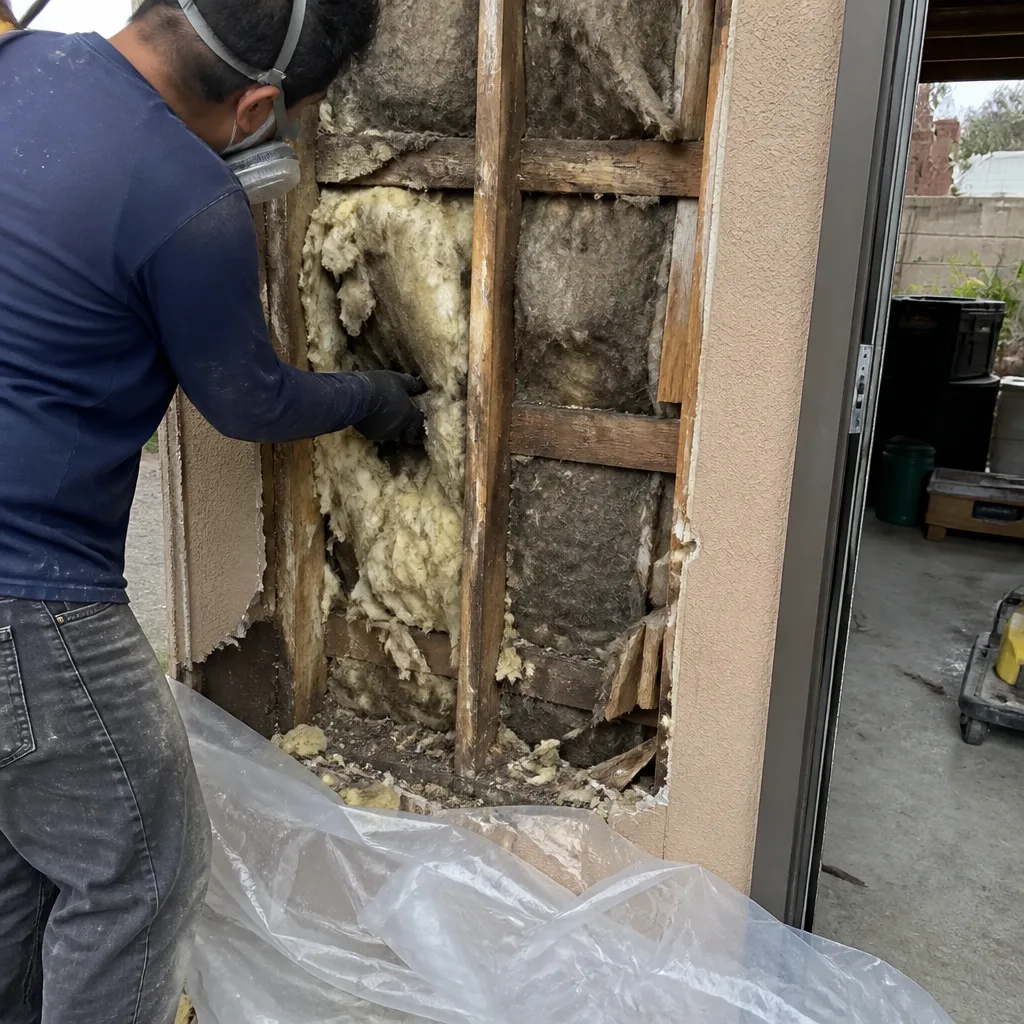 Before
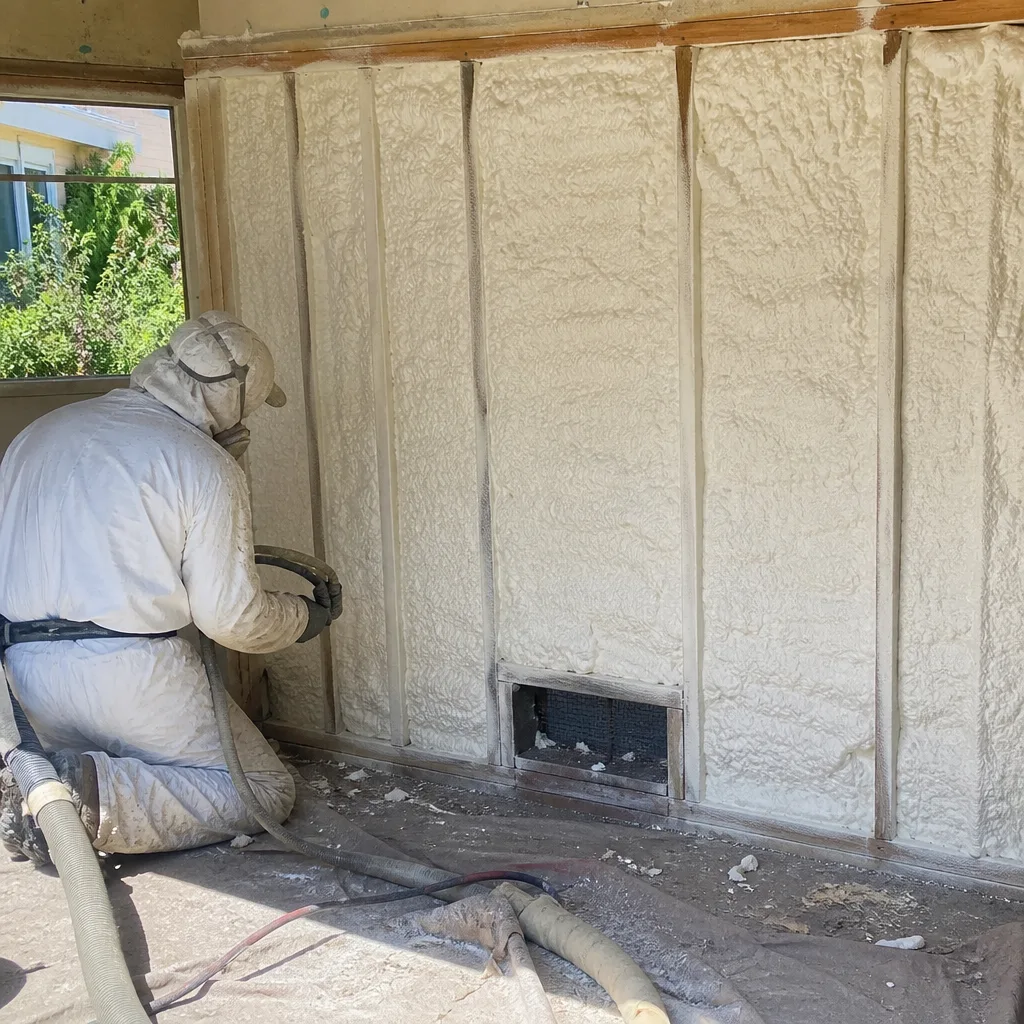 After
AfterBlown-In Attic Insulation Pricing in Pomona
Blown-in attic insulation in Pomona typically runs between $1.20 and $2.40 per square foot of attic floor space, installed, for the insulation phase alone. A 1,200-square-foot attic floor – common in the single-story ranch homes that make up a large share of the Pomona housing stock – lands most jobs in the $1,440 to $2,880 range for the blown-in material and installation. That figure shifts based on the variables below.
| Cost Factor | Typical Impact on Price |
|---|---|
| Attic floor area | Primary driver – priced per square foot |
| Target R-value (R-38 vs. R-49 vs. R-60) | Higher target = more material = higher cost; R-49 is the California Title 24 standard for Pomona’s climate zone |
| Material: cellulose vs. fiberglass | Cellulose is generally $0.10-$0.20/sq ft lower; fiberglass preferred where moisture history exists |
| Attic access and clearance | Low-pitch rooflines (common in 1950s-1970s Pomona construction) increase labor time and add to cost |
| Existing insulation condition | Removal and disposal of damaged material adds $0.50-$1.20/sq ft before new insulation goes in |
| Air sealing scope | Typically $300-$800 added to the job depending on number of penetrations found; always done before insulation is blown |
These are Pomona market ranges drawn from jobs we’ve completed in this ZIP code area. Your exact number depends on what the attic shows us. Under the Haven Standard, you get a flat written price before any work starts – not a range, not an estimate with asterisks. Call (562) 242-7569 to schedule your free on-site assessment and get that written number in hand.
One note on second opinions: if you have a written estimate from another contractor, we’ll read it with you line by line. That’s not a sales tactic – it’s Haven Standard. An informed homeowner makes a better decision, and a better decision tends to produce a better attic.
FAQs – Blown-In Attic Insulation in Pomona
How long does a blown-in attic insulation job take in Pomona?
Most blown-in jobs on a standard Pomona single-family home – say, 1,000 to 1,600 square feet of attic floor – are complete in four to six hours including the air-sealing step. Two-story homes or those with complex framing, tight knee-wall sections, or significant penetration counts at the floor can push that to a full day. We schedule the blower-door baseline at the start of the job and the post-work reading at the end, both within the same visit. You’ll have your before-and-after numbers and your documented photo record before we pull out of the driveway. Call (562) 242-7569 and we can give you a tighter time estimate once we know your attic’s square footage and access situation.
Can blown-in insulation be added on top of my existing attic insulation?
Yes, in many cases – but it depends on what’s already there. If existing Attic Batt Insulation or blown-in insulation is dry, flat, and uncontaminated, blowing a new layer over it is standard practice and a cost-effective path to current R-value compliance. If the existing material is compressed below half its original thickness, wet-damaged, or rodent-compromised, we recommend removal first. Blowing over degraded material doesn’t recover the R-value you’ve lost – it just adds insulation on top of a problem. We assess the existing material on every job and show you what we found with photos before we recommend a path forward.
What R-value do I need for a Pomona attic?
California Title 24 sets R-49 as the attic floor standard for Pomona’s climate zone (Climate Zone 10). That’s roughly 14 to 16 inches of blown cellulose or 17 to 19 inches of blown fiberglass at the attic floor. Homes that were built or permitted before the current code cycle often sit at R-19 or below – we see R-11 batts in some of the original 1950s construction in the South Pomona and Palomares Hills areas, which is less than a quarter of the current standard. We target R-49 as the floor on every job unless the customer has a specific reason to go higher, and we document the installed depth so you have a verifiable record, not just our word for it. Proper Attic Baffles & Ventilation Prep ensures that depth performs as rated.
Why does air sealing have to happen before the blown-in insulation goes in?
Insulation resists heat transfer by trapping still air inside its fibers. When the attic floor has open penetrations – gaps at top plates, unblocked can lights, chase openings – air moves through those gaps and carries conditioned air with it. That moving air bypasses the insulation entirely, so the R-value you paid for is not what you actually get in performance. Sealing those penetrations first means the insulation can do its job at its rated resistance. We will not run the blower before the attic floor is sealed; that sequence is not adjustable. Every home we work on gets that same order of operations regardless of how straightforward the job looks at first glance. It’s the only way the blower-door numbers after the job reflect real, durable performance rather than an optimistic reading that degrades over the first few months of use.
Key Takeaways
- Blown-in attic insulation in Pomona typically costs $1,440 to $2,880 for a standard single-story home attic floor; the exact number depends on square footage, target R-value, material, and what the existing attic shows.
- California Title 24 requires R-49 at the attic floor for Pomona’s climate zone; most pre-2000 homes in this market are well below that threshold.
- Air sealing at penetrations, top plates, and can lights is completed before any insulation is blown – always. Insulation over unsealed gaps does not perform at its rated value.
- Every job includes a written price before work starts, a documented photo record, and before-and-after blower-door readings – no exceptions under The Haven Standard.
- The 365-Day Done Right Promise applies to every completed job in writing. If it’s not right, we make it right.
- We use materials from GreenFiber and CertainTeed, selected per job conditions – no proprietary product lock-in.
- Estimates are free. You get a flat written price. Call (562) 242-7569.
Wes Okafor and the crew at Topside Attic Insulation Pomona have completed blown-in jobs across Pomona’s neighborhoods since 2016 – from the tight attic access on post-war bungalows near Lincoln Park to the larger floor plates in newer construction closer to the 71. If your attic hasn’t been assessed recently, that’s the logical starting point. Call (562) 242-7569 to schedule a free on-site assessment. You’ll leave with a written scope, a written price, and a clear picture of what your attic floor actually contains – before you decide anything.
For the broader context of what attic work involves in this market, including radiant barrier options and full removal-and-replacement scopes, visit our Attic Insulation in Pomona page.
Written by Wes Okafor, Owner at Topside Attic Insulation Pomona, serving Pomona since 2016.