
Attic Baffles & Ventilation Prep in Pomona, CA
Attic baffles – also called rafter vents – are rigid channels installed between roof rafters that keep insulation from blocking soffit vents, so outside air can move continuously from the eaves to the ridge. In Pomona, where summer attic temps regularly push past 150°F, a blocked soffit vent doesn’t just waste the insulation you paid for – it creates a heat reservoir that drives cooling bills up month after month. Before any Attic Insulation services go in on one of our jobs, ventilation prep is finished and documented. That’s not an upsell; it’s the sequence.
This page covers what attic baffle and ventilation prep work actually involves, what it costs in the Pomona market, and what you’ll have in hand when we leave. If you want the full picture of what happens after the ventilation is right, our Attic Insulation in Pomona page covers the insulation scope from there.
Questions before you read? Call us directly at (562) 242-7569 – a live person answers, no voicemail loop.
Why Ventilation Prep Matters Before Insulation – Not After
The short answer: insulation blown over blocked soffits traps the heat it’s supposed to resist. A baffle holds a clear airway at every rafter bay so the insulation depth you’re paying for actually performs at the R-value on the label.
Pomona’s climate adds specific pressure here. The city sits inland in the San Gabriel Valley, which means marine air from the coast doesn’t reach it as reliably as coastal communities. Heat soak in summer is intense and prolonged – June through September regularly brings multiple weeks above 95°F in the valley floor neighborhoods around Garey Avenue, near Cal Poly Pomona, and east toward Diamond Bar. Without continuous soffit-to-ridge airflow, that heat doesn’t leave the attic overnight. It radiates back into living spaces and forces your AC to work longer into the evening hours.
We’ve been doing this work across the Pomona area since 2016, and the pattern holds: homes built in the 1960s through the 1980s in neighborhoods like Lincoln Park and near the Pomona Fairplex typically have narrow rafter bays (2×6 or even 2×4 construction) where the original insulation – batts pushed right to the eaves – has been blocking soffits for decades. The ventilation has never been right. Adding more Attic Batt Insulation on top of that condition makes the problem worse, not better.
That’s why, under The Haven Standard, Envelope Insulation Co. treats ventilation prep as a prerequisite, not an option. Sealed first, then insulated – in that order, every time. We document the condition we found, the work completed, and the final state before the insulation crew sets up.
When You Need Attic Baffles and Ventilation Prep
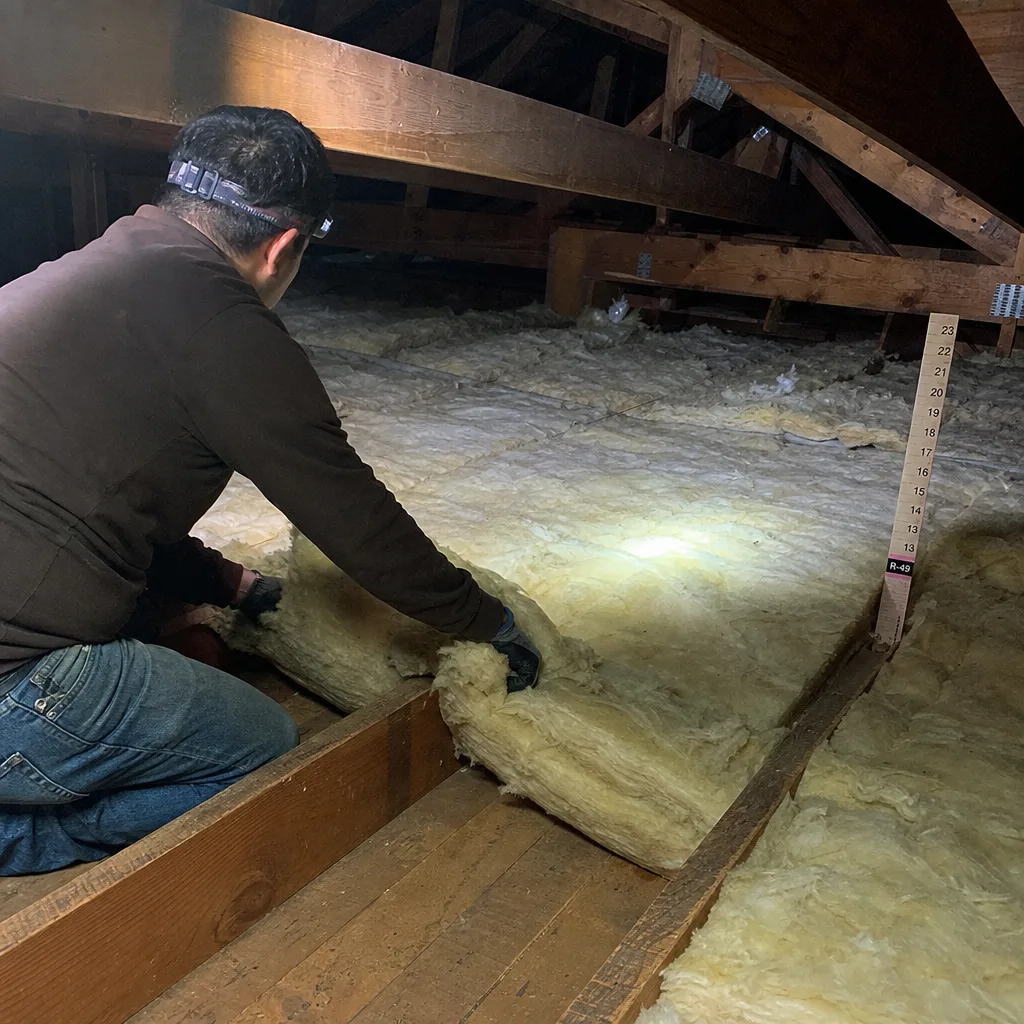
- Your attic runs noticeably hotter than the outside temp, even early in the morning. At 7 a.m. on a Pomona summer day, a properly ventilated attic should be within a few degrees of outdoor air. If it’s already 20-plus degrees hotter, the airflow path is blocked somewhere.
- You’re preparing to add blown-in insulation and don’t know the condition of existing soffits. Blown insulation – GreenFiber cellulose or fiberglass – migrates toward soffit openings during installation if baffles aren’t in place. Without baffles, you lose depth at the eaves and block the one air channel the attic has.
- Your energy bills increased after a previous insulation job. This happens more often than it should. Insulation added over blocked soffits creates a tighter heat trap. If your cooling costs went up rather than down after the last contractor left, ventilation is the first thing to check.
- There’s moisture staining, mold growth, or condensation on the underside of the roof deck. In Pomona, this is less common than in coastal cities, but it does occur in homes with poor ridge ventilation or in the slightly more humid winter months. Stagnant air in the rafter bays allows moisture to sit rather than exhaust.
- You can see that insulation has spilled over the top plates and into the eave area. From inside the attic, if insulation covers the soffit vent channels at any rafter bay, those bays are not ventilating. It takes a headlamp and a few minutes to check – we do it as part of every attic assessment.
- Your home was built before 1990 and has never had a documented ventilation inspection. A large share of Pomona’s housing stock falls in this category. Pre-1990 construction often predates current California Energy Code ventilation ratios, and many of those attics have never had baffles installed.
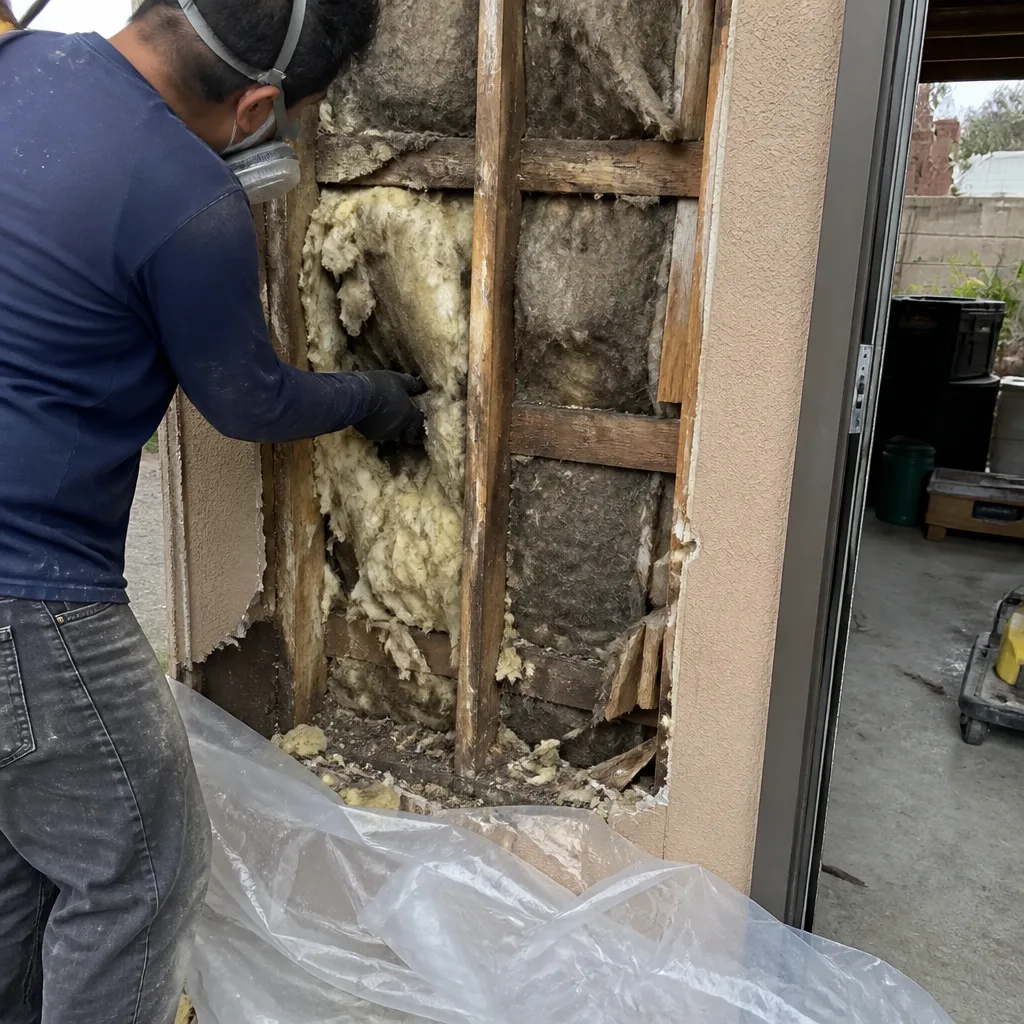 Before
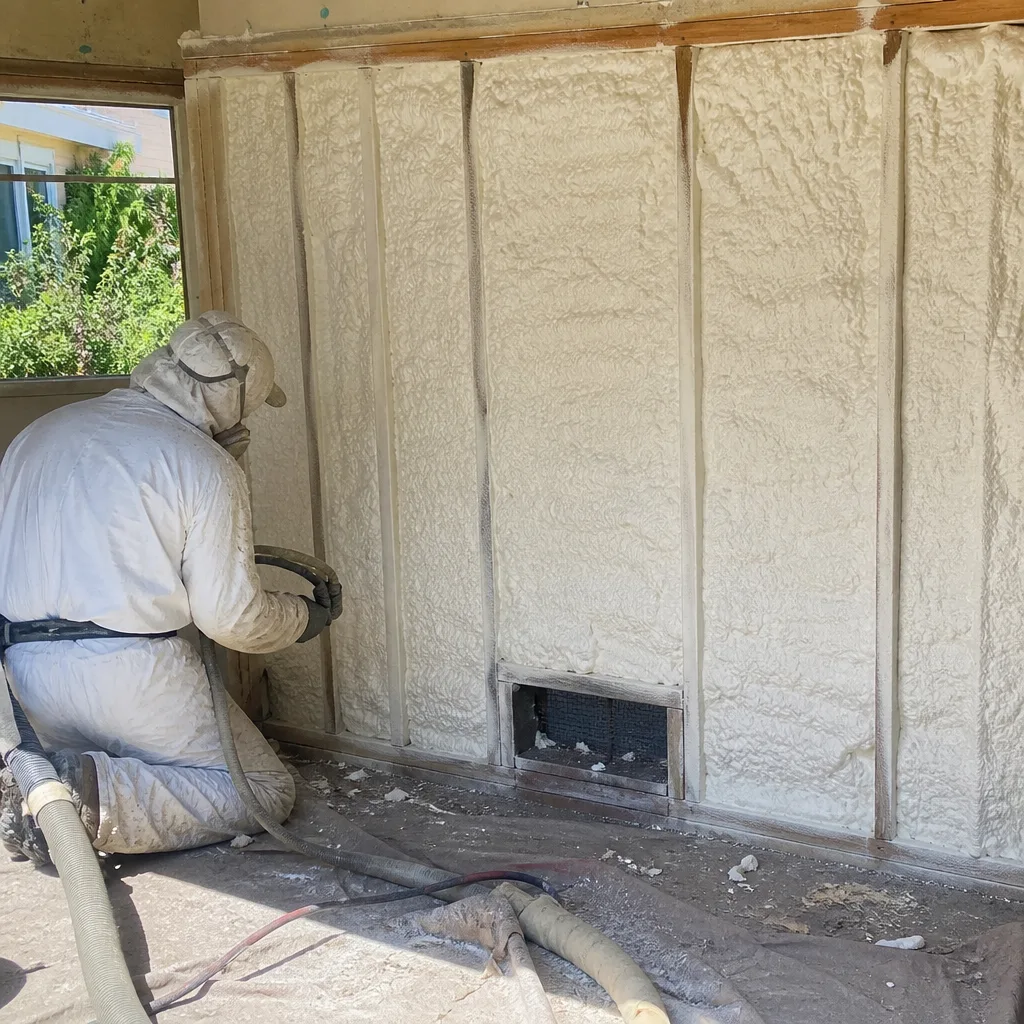 After
AfterOur Attic Baffles and Ventilation Prep Process
- Written scope and price before we touch anything. Under Haven Standard Clause 1, you receive a flat written price and written scope before any work starts. This includes the number of rafter bays to be baffled, the baffle material specified, any ridge or gable vent work included, and the total cost. No surprises when the job closes.
- Full attic inspection with photo documentation. A uniformed, background-checked technician accesses the attic and photographs the existing condition at the eaves, at the ridge, and across the attic floor. We note every blocked soffit bay, any damaged or missing vents, and the depth and condition of existing insulation. You receive these photos – this is the Documented Photo Record, included on every visit.
- Existing insulation moved back from the eaves. Before baffles go in, existing insulation is carefully pulled back from the eave area at each rafter bay to expose the top plates and the soffit vent opening. This step also gives us a clear view of any air-sealing work needed at the top plates before the baffle goes in.
- Air sealing at top plates and penetrations. This is the step most ventilation-only contractors skip. We seal bypasses at top plates, around any can lights that penetrate the ceiling plane, and around plumbing or electrical penetrations before the baffle goes in. Sealing here – before insulation covers it – is the only time it can be done correctly. On applicable jobs, a blower-door test (a pressurization measurement that shows, in one number, how much air your building envelope is losing) gives you a before-and-after figure so you can see the air-sealing result in writing.
- Baffle installation at each rafter bay. Rigid baffles – typically polystyrene or cardboard/foam depending on rafter bay width – are fitted and stapled at each bay, running from the soffit opening up past the top plate and into the clear attic space. The baffle maintains the required airway (California residential code requires a minimum 1-inch clear channel; we install to that minimum or greater depending on the rafter depth available). Every blocked bay gets a baffle – we don’t spot-treat.
- Ridge and gable vent assessment, repair, or upgrade if in scope. Baffles create the intake path; the ridge or gable vent is the exhaust. If the ridge vent is undersized, blocked by debris, or missing sections, the intake work accomplishes less than it should. We document the ridge condition in the photo record and include any agreed repair or upgrade in the written scope before it’s done.
When the ventilation prep is complete and documented, insulation can go in. That’s the sequence we follow – part of what Envelope Insulation Co. does on every applicable job.
Attic Baffles and Ventilation Prep Pricing in Pomona
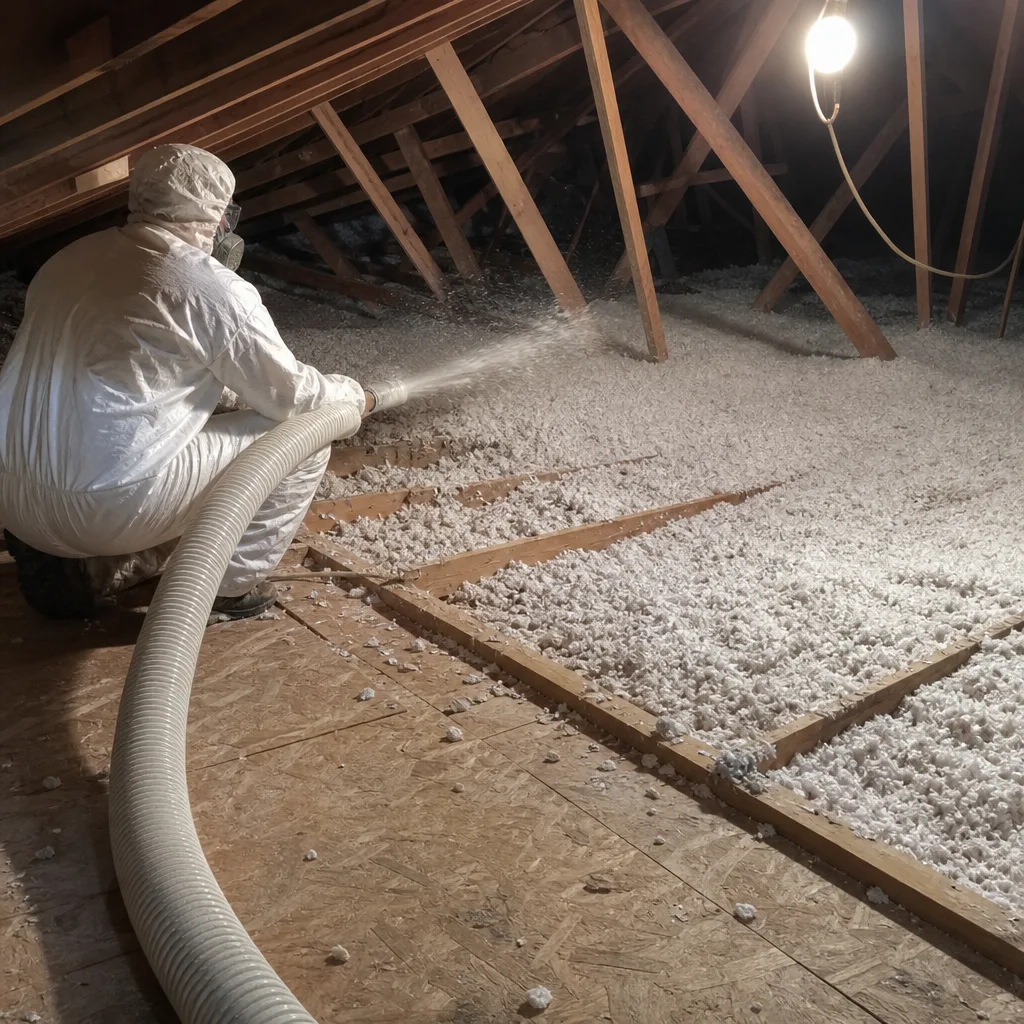
Most attic baffle and ventilation prep jobs in Pomona run between $350 and $950 for the ventilation prep scope alone. Where a job lands in that range depends on four factors: attic square footage, number of rafter bays requiring baffles, whether ridge vent work is included, and whether air sealing at the top plates is part of the same visit.
| Scope | Typical Pomona Price Range |
|---|---|
| Baffle installation only, up to 20 bays | $350 – $520 |
| Baffle installation, 21-40 bays | $520 – $720 |
| Baffles plus top-plate air sealing | $620 – $950 |
| Ridge vent repair or addition (when needed) | $150 – $350 added to baffle scope |
| Blower-door test (before and after, documented) | Included on applicable air-sealing jobs |
These ranges reflect current labor and material costs in the Pomona/San Gabriel Valley market as of 2025-2026. Homes on the eastern side of Pomona near the 71 freeway corridor, and older homes in the College Heights area, often have more complex rafter configurations that can push a job toward the higher end of the range.
When ventilation prep is completed as part of a full attic insulation project, the combined scope is typically more cost-effective than scheduling them separately-learn more in our How Much Does Attic Insulation Cost? (2026 Price Guide) - Pomona, CA. A written price covers both scopes before any work starts – that’s Haven Standard Clause 1, no exceptions.
If you already have a written estimate from another contractor, we’ll read it with you – that’s the Free Second Opinion on Any Written Estimate. Call (562) 242-7569 to set that up.
FAQs – Attic Baffles and Ventilation Prep in Pomona
What is an attic baffle and why does it matter in Pomona specifically?
An attic baffle is a rigid channel – usually polystyrene foam or dense cardboard – installed between roof rafters to hold a clear airway from the soffit vent up into the open attic space. Without it, insulation fills the rafter bay and blocks the only intake path for ventilation air. In Pomona, where attic temperatures regularly exceed 145-155°F during July and August, that blocked airway means heat accumulates rather than exhausting through the ridge, which shortens roof shingle life and keeps living spaces hotter than they need to be. Baffles are a small material cost relative to the performance difference they make in an inland Southern California climate. Call (562) 242-7569 and we can tell you whether your attic currently has them.
Can I skip baffles if I’m just topping off existing insulation?
No – adding insulation depth without first confirming baffle coverage at every rafter bay almost always makes the ventilation problem worse. Blown insulation – whether cellulose like GreenFiber or fiberglass – migrates toward the eaves during installation and can extend further into the soffit channel than the existing insulation already has. If baffles aren’t in place before the blown product goes in, you lose depth at the eaves (the coldest spot on the attic floor, where depth matters most) and reduce the ventilation airway at the same time. We don’t blow insulation over an unverified attic floor – that’s a firm policy, not a suggestion. Call (562) 242-7569 and we’ll tell you exactly what we find before quoting the insulation scope.
How long does attic baffle installation take?
For most single-story Pomona homes – typically 1,200 to 1,800 square feet of conditioned space – baffle installation runs two to four hours when the attic is accessible and the rafter bays are a standard 16 or 24 inches on center. Older homes with non-standard framing, partially blocked access panels, or significant existing insulation to move back temporarily can run closer to a full day. Two-story homes with complex hip rooflines take longer. We give you a time estimate in the written scope so you know what to expect before the crew arrives.
Does California require attic baffles?
California’s residential building code (Title 24, Part 6) requires a minimum 1-inch clear ventilation channel in enclosed rafter spaces – which is exactly what a baffle maintains. For new construction, this is a code requirement inspected before drywall goes up. For existing homes, the retrofit requirement is triggered when you apply for a permit for insulation work in jurisdictions that require it; some Pomona-area projects require a permit pull, and we handle that as part of the written scope when applicable. Even when a permit isn’t required, meeting the ventilation ratio (1 square foot of net free vent area per 150 square feet of attic floor, or 1:300 with balanced intake and exhaust) is the standard we work to because it’s what makes the insulation perform. Under Haven Standard Clause 1, whatever code or standard applies to your project is spelled out in writing before work starts.
What You’ll Have When We Leave
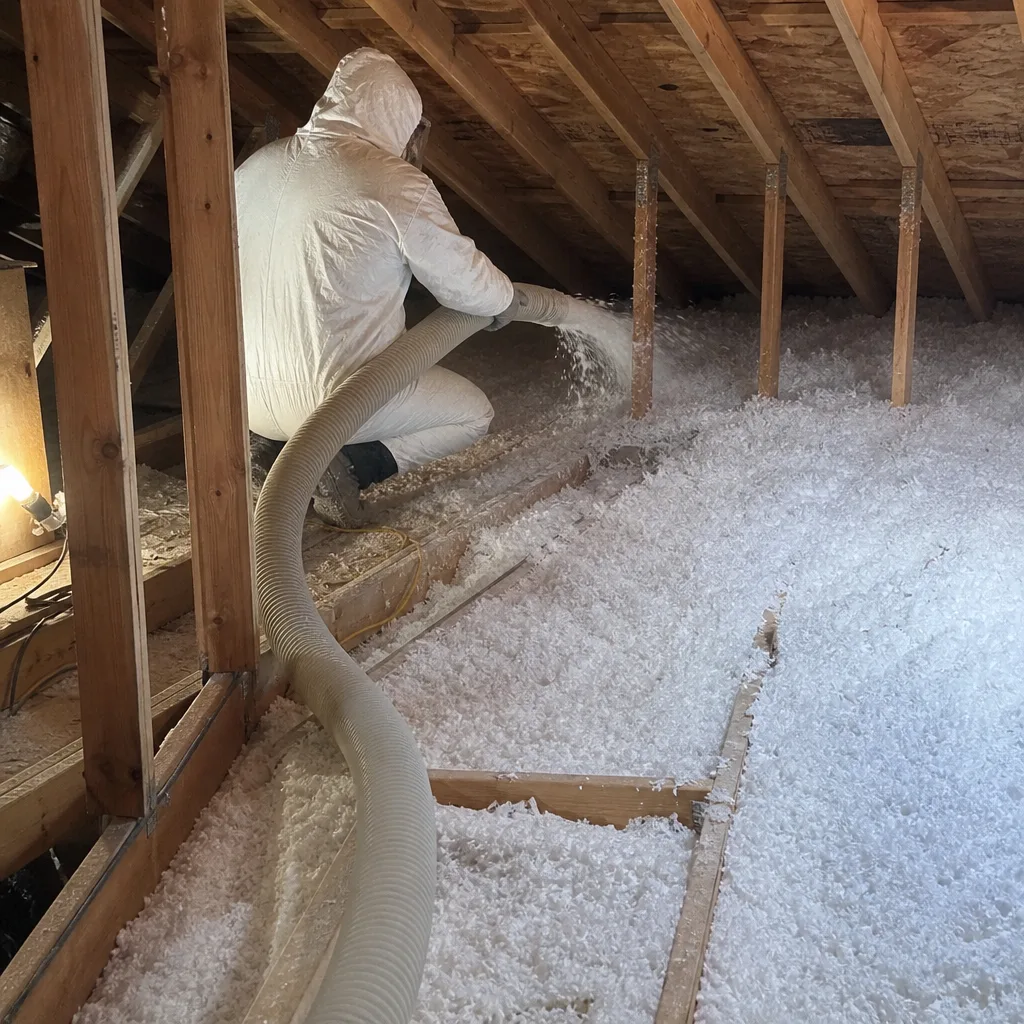
Every Topside Attic Insulation Pomona job closes with a Documented Photo Record – before and after photos of the attic condition, the baffle installation, and any air-sealing work completed. On jobs that include top-plate air sealing, you also receive before-and-after blower-door readings: a pressurization measurement, in writing, that shows the air-leakage number before the work started and the number when it was done. Not a description of how much we improved things – the actual figures.
The 365-Day Done Right Promise applies: if it’s not right within a year of the completed job, we make it right. That promise is written into your scope before anyone starts – not offered verbally after the fact.
Since 2016, we’ve completed ventilation prep and insulation work across more than 9,000 homes in the region. Every one of them started with a written price and closed with documentation the homeowner can keep. The Pomona market – from the older ranch homes near Ganesha Park to the 1990s construction south of the 10 freeway – is one we know well, and Attic Insulation Near Me in Pomona, CA is work we take seriously because skipping ventilation prep undermines every dollar spent on insulation.
Ready to see what your attic is actually doing? Call (562) 242-7569 for a free estimate. A live person answers – no callback windows, no voicemail. You’ll get a named technician, a text when they’re on the way, and a written price before anyone touches your attic.
Written by Wes Okafor, Owner at Topside Attic Insulation Pomona, serving Pomona.