
Last updated September 23, 2026
Insulation Warning Signs: A Pomona Homeowner’s Reference Guide
Here’s a number that stops homeowners cold: in Pomona, we’ve measured upstairs-downstairs temperature differentials of 8°F or more in houses with perfectly functional air conditioners. The owner, sweating through summer evenings upstairs, replaces a $6,000 HVAC system that was never the problem. The real culprit? Attic insulation compressed below its labeled R-value and an unsealed attic floor leaking conditioned air into the roof space faster than the equipment can replace it. This guide - a companion to our Complete Guide to Insulation in Pomona - walks backward from the symptoms Pomona homeowners actually notice - the bill shock, the hot second floor, the room that never matches the thermostat - to the specific insulation failures causing them, with measurement thresholds that separate “normal” from “warning sign.”
Quick Answer
Insulation failure in Pomona homes typically announces itself through four measurable symptoms: a floor-to-ceiling temperature differential of 3°F or more with HVAC running, summer electricity bills that spike disproportionately to cooling degree-day data, hot spots on finished ceilings detectable by hand on 100°F days, and visible pest disturbance or compression in attic insulation. These warning signs point to specific envelope failures - degraded R-value, air bypasses at top plates and penetrations, or insulation displaced by rodents - that are diagnosable before any money is spent on equipment replacement, as detailed in our Attic Insulation Maintenance Checklist for Pomona Homeowners.
Table of Contents
- The 3°F Rule: When Temperature Gaps Signal Attic Insulation Failure
- Pomona’s Heat-Climate Equivalent of Ice Dams: Hot Spots on Finished Ceilings
- Reading the Shape of Your Summer Bill Spike
- Duct Leakage vs. Insulation R-Value: The Diagnostic Sequence That Saves Money
- Rodent Intrusion as Insulation Warning Sign: R-Value Loss and Remediation Order
- Compression, Settling, and the Gap Between Labeled and Actual R-Value
- Moisture and Vapor Drive in Pomona’s Inland Climate
- Common Mistakes to Avoid
- When to Call a Professional
- Frequently Asked Questions
- The Bottom Line
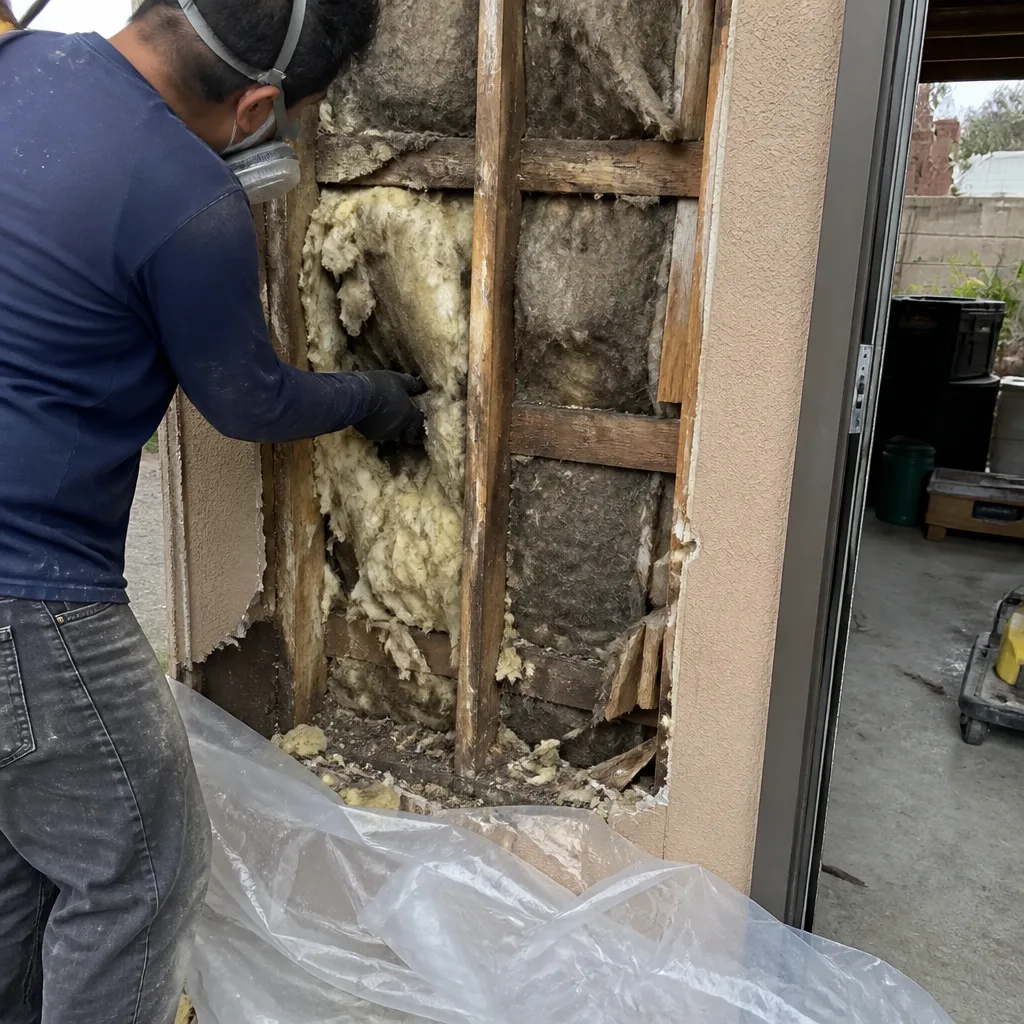 Before
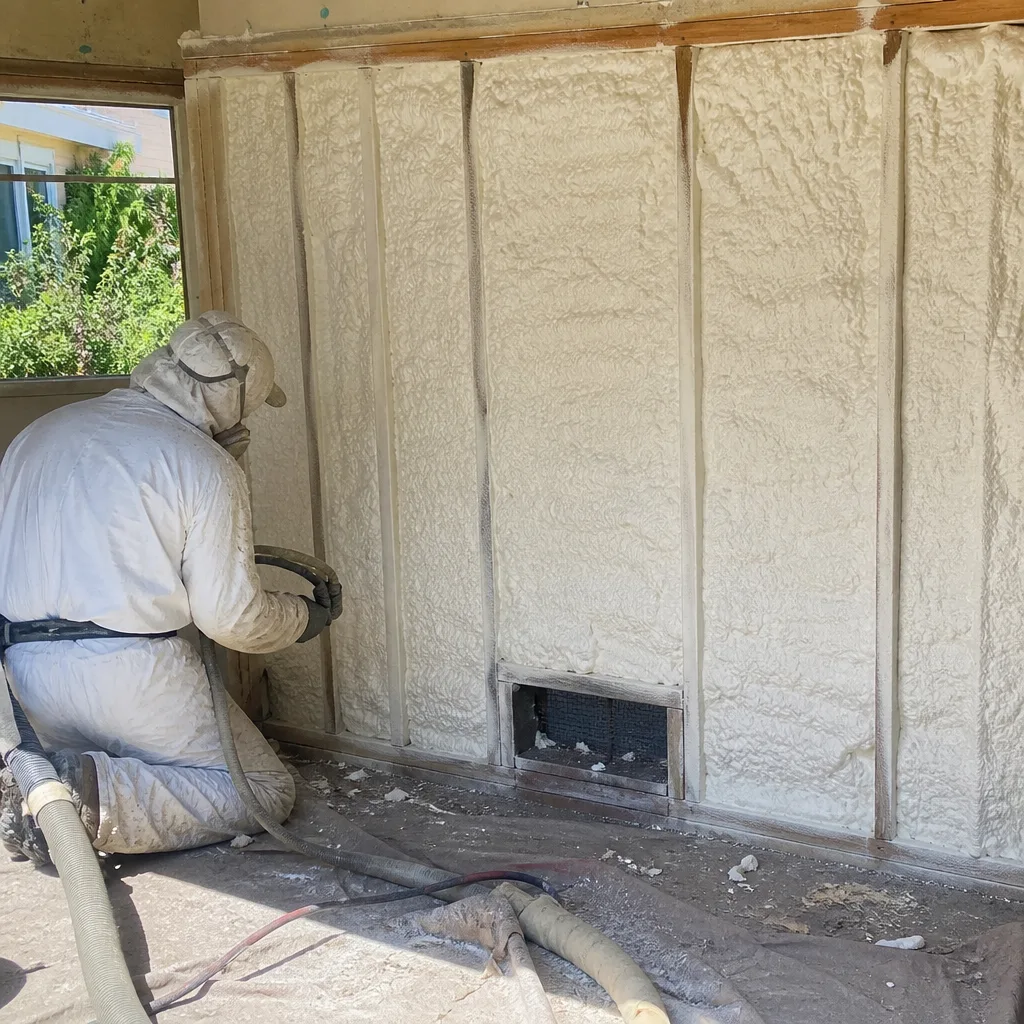 After
AfterThe 3°F Rule: When Temperature Gaps Signal Attic Insulation Failure
The thermostat reads 74°F. Downstairs feels fine. Upstairs, you’re peeling off layers. Most Pomona homeowners blame equipment sizing - “our AC can’t handle the second floor” - and start collecting bids for larger systems or zone dampers. In our experience across more than 9,000 homes since 2016, the actual cause is attic insulation and air sealing failure in roughly 60% of cases where the temperature split exceeds 3°F on a 95°F day with the HVAC running continuously.
Here’s why that threshold matters. A properly insulated and sealed attic in Pomona’s climate zone should keep ceiling surface temperatures within 2°F of the conditioned air temperature below. When insulation compresses, settles, or gets displaced - or when air bypasses at top plates, can lights, and duct chases allow attic air to wash across the ceiling drywall - that thermal boundary degrades. The ceiling becomes a radiator, pumping heat downward faster than the supply registers can counter it. The HVAC runs longer, the upstairs never catches up, and the homeowner pays for a symptom instead of the disease.
We measure this during home energy audits with an infrared camera and surface thermometers. A ceiling reading 82°F when the thermostat is set to 74°F tells a clear story. The insulation isn’t doing its job, and no amount of equipment upsizing will fix a thermal boundary problem. In fact, oversized equipment cycles on and off faster, dehumidifying poorly and wearing components prematurely - the homeowner gets a bigger bill for a worse outcome.
The diagnostic sequence we follow at Topside Attic Insulation Pomona home starts with the attic, not the mechanical room. We verify insulation depth against the labeled R-value (R-38 minimum for attics in California Title 24, though many Pomona homes built between 1960 and 1990 still carry original R-19 or less). We map air leakage with a blower-door test - a pressurization reading that shows, in one number, how much conditioned air the building envelope is losing. Only after we quantify the envelope do we comment on whether the HVAC is appropriately sized.
Neighborhoods like Lincoln Park and the older sections of Phillips Ranch show this pattern repeatedly: postwar ranch homes with original insulation, later retrofits that added recessed can lights without sealing, and homeowners who’ve replaced two air conditioners in fifteen years without ever addressing the attic.
Pomona’s Heat-Climate Equivalent of Ice Dams: Hot Spots on Finished Ceilings
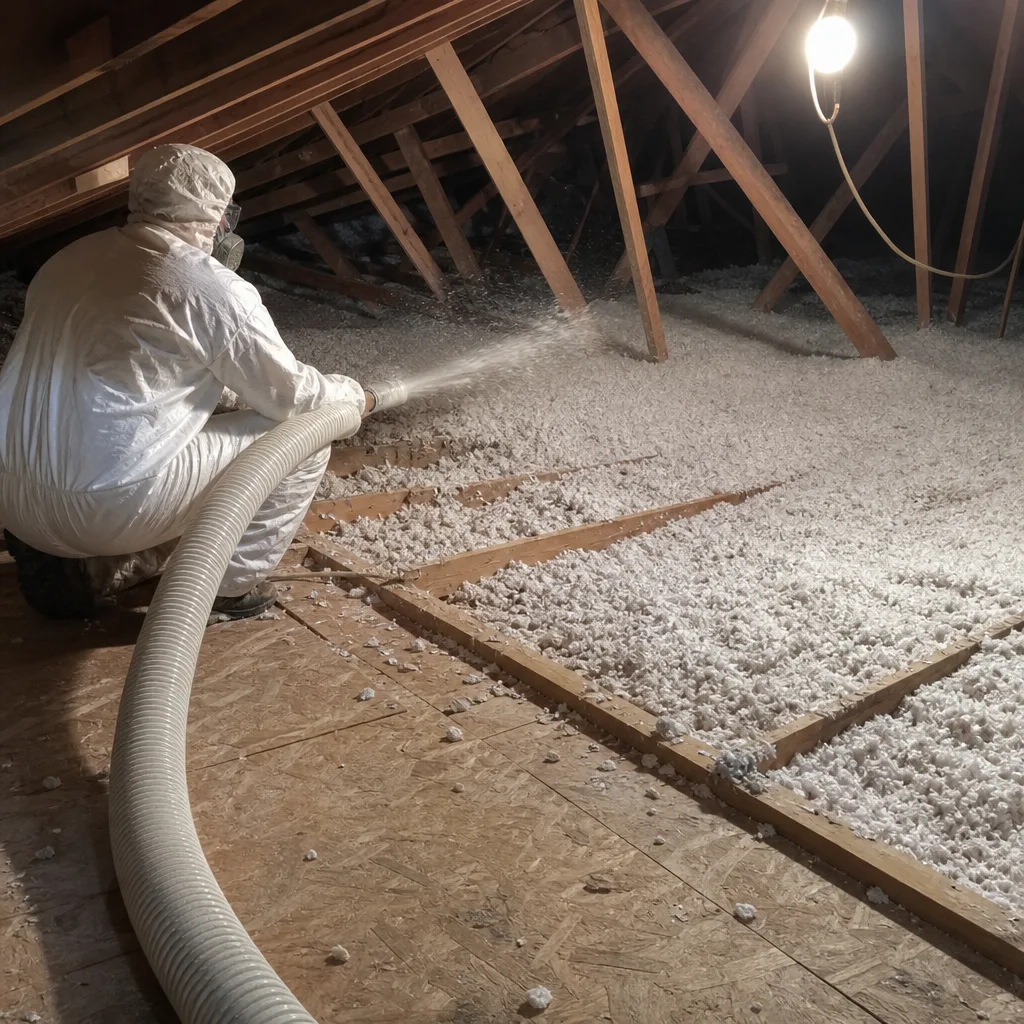
In cold climates, the iconic insulation warning sign is the ice dam - a ridge of frozen meltwater at the eave that signals heat leaking through an inadequately insulated attic floor. Pomona doesn’t get ice dams. But we get something functionally equivalent: discrete hot spots on finished ceilings, detectable by touch or infrared camera, on days when the ambient temperature pushes past 100°F.
These hot spots map directly to specific failures. A circular warm patch around a recessed can light typically means an unsealed “non-IC” fixture - insulation-contact rated - with attic air washing around the housing. A linear hot strip along a ceiling-wall intersection usually traces to a missing or poorly sealed top plate, the horizontal framing member where the wall meets the attic floor. A broad warm area in a room’s center often indicates insulation that has been compressed by foot traffic during prior roofing or HVAC work, or settled below its original depth over decades.
On a 105°F August afternoon in Pomona, an unsealed attic can reach 140°F or higher. A single can light with a 1/8-inch gap around its housing becomes a heat injector, raising the surrounding ceiling surface temperature 10-15°F above the rest of the room. The homeowner feels it as a persistent warm spot, a room that “just never cools down,” or - if the spot is near a supply register - air that seems to blow warm no matter how low the thermostat is set.
We’ve documented this repeatedly in homes near Ganesha Hills and the north Pomona foothills, where afternoon sun loads are most severe. The fix isn’t more insulation dumped on top. It’s air sealing first - expanding foam or rigid blocking around every penetration, sealed top plates, gasketed fixture covers - then restoring or adding insulation to a consistent depth. On applicable jobs, we provide before-and-after blower-door numbers so the homeowner can verify the air-sealing result in a single figure: 4,200 CFM50 before, 2,100 after, meaning half the conditioned air leakage has been eliminated.
Materials for this work vary by application. We source from Owens Corning, Johns Manville, Knauf, and others - no proprietary lock-in - selecting blown fiberglass, mineral wool, or spray foam based on the specific assembly and access constraints. For Spray Foam Insulation in Pomona, we use open-cell products like Icynene or Demilec where vapor permeability is desired, or closed-cell where structural rigidity or moisture resistance is the priority.
Reading the Shape of Your Summer Bill Spike
Most Pomona homeowners know their summer bills are higher. Fewer track the shape of that increase against actual cooling demand. The difference between “my bill went up because it’s hot” and “my bill went up faster than the weather did” is the warning sign that points to envelope degradation.
Cooling degree days (CDDs) measure how much and how long outdoor temperatures exceed a baseline - typically 65°F. Southern California Edison publishes this data by climate zone. A home with a sound thermal envelope should show a roughly linear relationship between CDDs and cooling kilowatt-hours. When insulation degrades or air leakage increases, the slope steepens: each additional degree day costs more than the last, because the envelope is no longer buffering the load effectively.
Here’s the practical check. Pull your last three years of summer bills (June through September). Divide each month’s kWh by the CDDs for that month, available from SCE or NOAA. If that ratio increases year over year - if you’re using more electricity per degree day - your envelope is degrading. Common causes in Pomona:
- Blown-in fiberglass or cellulose that has settled 20-30% below original depth, reducing effective R-value
- Squirrel or rodent tunneling that creates void channels through insulation batts or loose fill
- Ductwork in unconditioned attic space that has separated at seams, leaking cooled air directly into the attic (this shows up on the bill as both increased consumption and envelope stress, since the attic gets artificially cooled)
- Addition of unsealed penetrations - bathroom fans, new recessed lighting, security wiring - that bypass the insulation layer
The threshold that triggers our attention: a 15% or greater increase in kWh per CDD compared to the same month three years prior, with no change in occupancy, thermostat setting, or major appliance addition. That pattern almost always traces to attic or crawl space envelope failure, not equipment inefficiency.
We document this during our Topside Attic Insulation Pomona home energy audits with a written analysis the homeowner keeps: the bill data, the CDD normalization, and the projected savings from restoring the envelope to Title 24 minimum performance. Under Haven Standard Clause 1, that analysis comes with a flat price, written scope, and written warranty before anyone lifts a tool.
Duct Leakage vs. Insulation R-Value: The Diagnostic Sequence That Saves Money
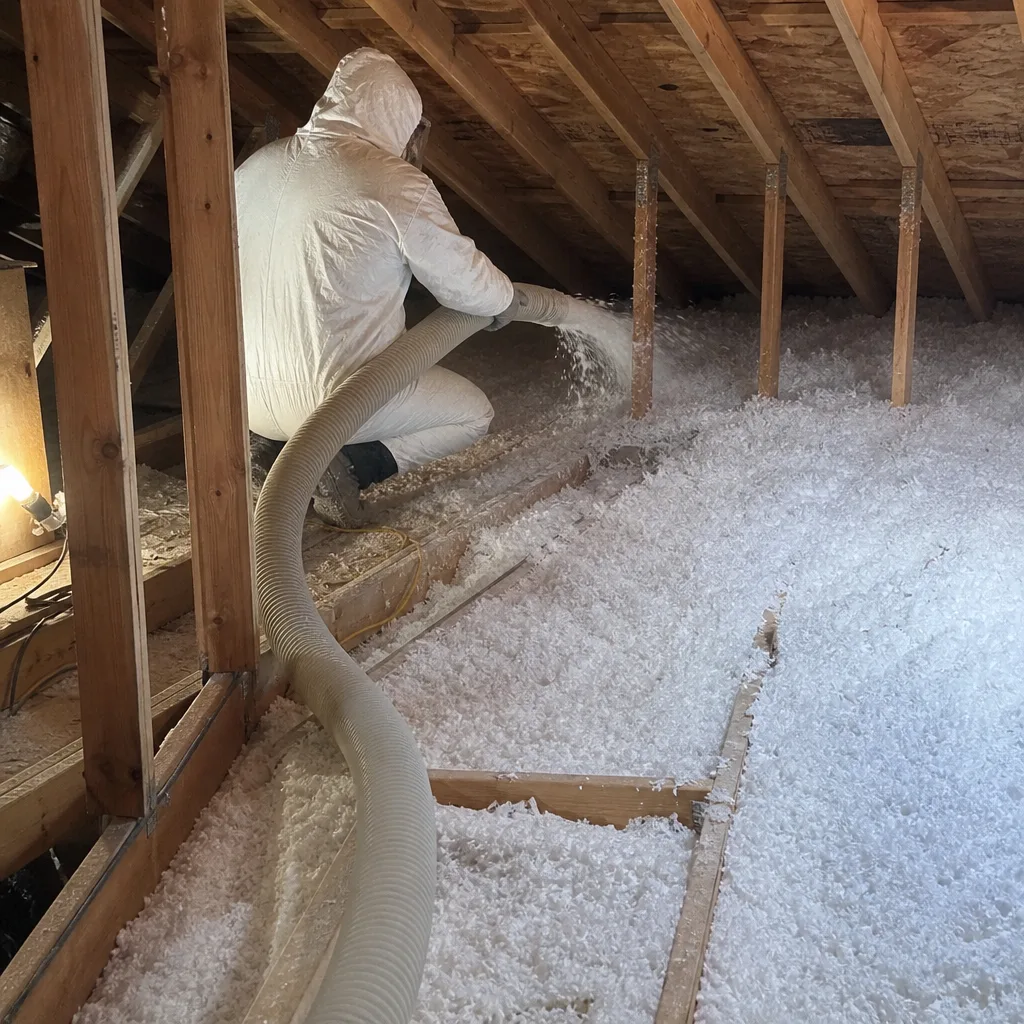
High summer bills and uneven temperatures have two common culprits, and treating the wrong one wastes thousands. Duct leakage and inadequate insulation produce overlapping symptoms: long run times, poor comfort, and spiking electricity use. The diagnostic sequence matters because the fixes have different costs, different contractors, and different documentation standards.
Here’s how we separate them in Pomona homes:
- Pressure-pan test at every supply and return register. A pressure pan - a calibrated hood placed over the register - measures how much attic pressure is being pulled into the duct system when the air handler runs. Readings above 1 Pascal indicate significant duct leakage to the attic. This is an equipment problem, not an insulation problem, though the two often coexist.
- Infrared scan of ceiling and duct surfaces with HVAC running. Cold spots on duct surfaces in the attic indicate conductive losses through uninsulated or poorly insulated ductwork. Cold spots on the ceiling below indicate insulation gaps or air bypasses.
- Blower-door test with ducts sealed and unsealed. By comparing envelope leakage with the duct registers taped off versus open, we isolate how much of the total leakage is the building envelope versus the duct system. A typical Pomona home from the 1970s might show 3,800 CFM50 total, with 1,200 CFM50 attributable to duct leakage alone.
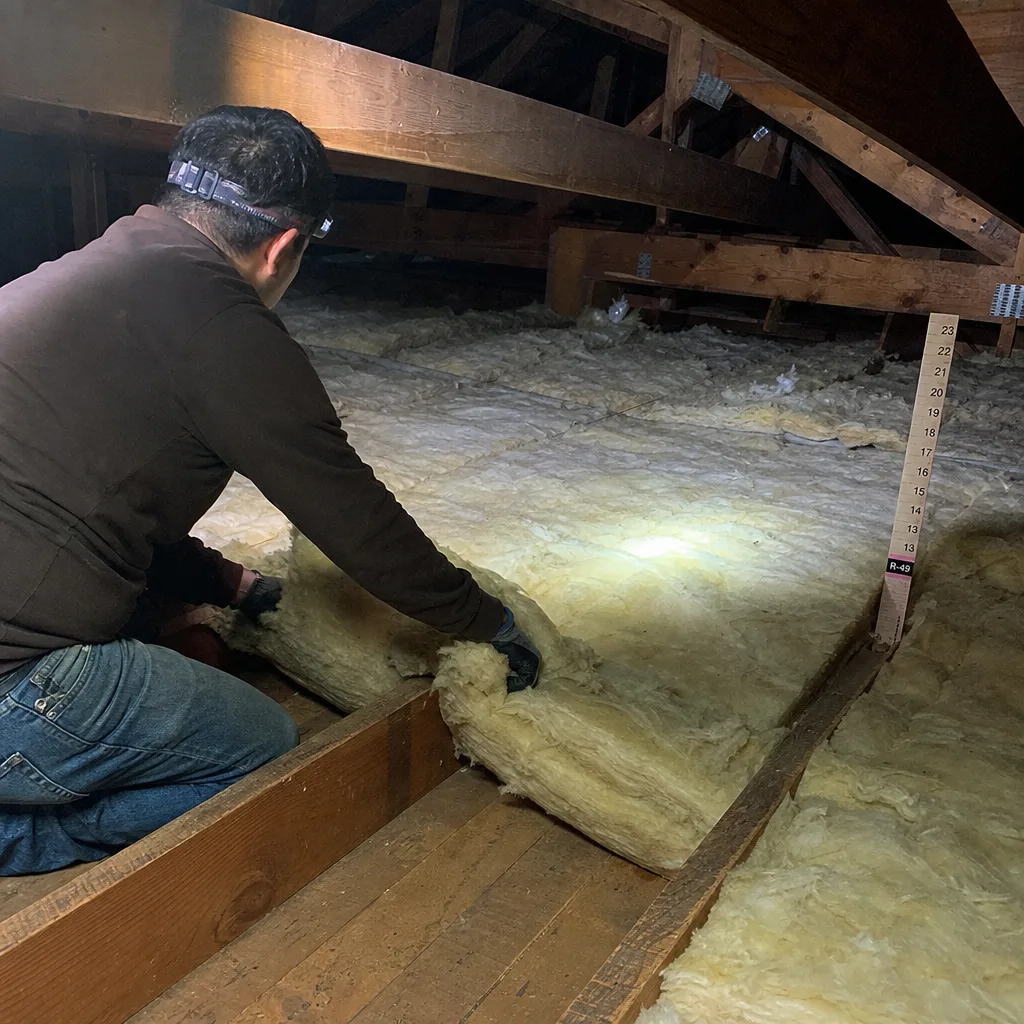
- Insulation depth and condition assessment. We measure at ten points across the attic, photograph each, and compare to the labeled R-value on any visible product. Compression, displacement, or pest damage gets flagged with photos.
The critical distinction: duct leakage can be fixed by a qualified HVAC contractor with duct sealing (aerosol or mastic) and duct insulation wrap. Insulation and air sealing failure requires an envelope contractor. Some Pomona homeowners have paid for both, sequentially, because no one tested to separate the contributions. Under our Haven Standard process, we deliver the documented photo record and blower-door numbers so the homeowner knows exactly what was found and what was fixed.
In the Mayfair neighborhood and other areas with original 1950s-1960s construction, we commonly find both problems: uninsulated metal ductwork in the attic, plus R-11 fiberglass batts fallen off the ceiling or compressed to half their original thickness. The remediation sequence is seal ducts first (or replace with insulated flex), then air seal the attic floor, then restore insulation to R-38 or greater. Reversing that order - blowing new insulation over leaky ducts - buries the problem and makes future access expensive.
Rodent Intrusion as Insulation Warning Sign: R-Value Loss and Remediation Order
Pomona’s combination of mature tree canopy, hillside interface, and mild winters makes rodent pressure a persistent reality. Roof rats and squirrels don’t just nest in attics; they reshape the insulation layer into tunnels, nests, and latrines that destroy its thermal performance. A single active rat runway through blown cellulose can create a 6-inch void channel that thermally bridges the entire insulation layer.
The warning signs homeowners can spot from the attic access:
- Compression trails or tunnel networks visible on the insulation surface, often following joist bays or near ductwork
- Scattered droppings concentrated in corners or near penetrations
- Urine staining that appears as darkened, crusted areas on insulation - these areas lose significant R-value even after the pest is gone, because the binding agents in cellulose break down and fiberglass filaments clump
- Insulation displaced entirely from joist bays, exposing drywall below
- Chewed wiring or flex duct, which indicates active infestation and creates fire hazard beyond the insulation damage
The R-value impact is substantial and underreported. A 2019 study by the Oak Ridge National Laboratory found that rodent tunneling in loose-fill attic insulation reduced effective R-value by 30-50% in affected areas, with the greatest losses in cellulose due to its higher density and packability for nesting. In Pomona’s climate, that can drop an attic from R-38 to an effective R-19 or lower in the tunneled zones - and because heat follows the path of least resistance, those voids become disproportionate thermal bridges.
The remediation sequence is non-negotiable, and it’s where we see the most expensive mistakes. Re-insulating over active pest evidence traps the problem, violates most material warranties, and often accelerates decay. The correct order:
- Exclusion: seal all entry points larger than 1/4 inch - roof/wall intersections, vent screens, pipe penetrations, damaged soffits
- Trapping and removal until zero activity is confirmed, typically 7-14 days
- Contaminated insulation removal and disposal per California waste regulations
- Sanitization of exposed surfaces
- Air sealing of all attic floor penetrations (the same gaps that admitted rodents admit conditioned air)
- Re-insulation to current code minimum or above, with material selected for the specific application
We handle this full sequence for Attic Insulation in Pomona homes, including the Crawl Space Encapsulation & Vapor Barrier in Pomona where subfloor insulation shows similar pest damage. Every step is photographed; the documented photo record shows the attic condition before removal, after sanitization, and after re-insulation. The 365-Day Done Right Promise applies to the completed work - if rodents re-enter through our exclusion work, we return and make it right.
Materials for re-insulation after pest remediation often favor GreenFiber cellulose treated with borate pest deterrent, or fiberglass products that don’t support nesting behavior. We source from multiple manufacturers and specify based on the home’s specific conditions, not a one-product-fits-all approach.
Compression, Settling, and the Gap Between Labeled and Actual R-Value
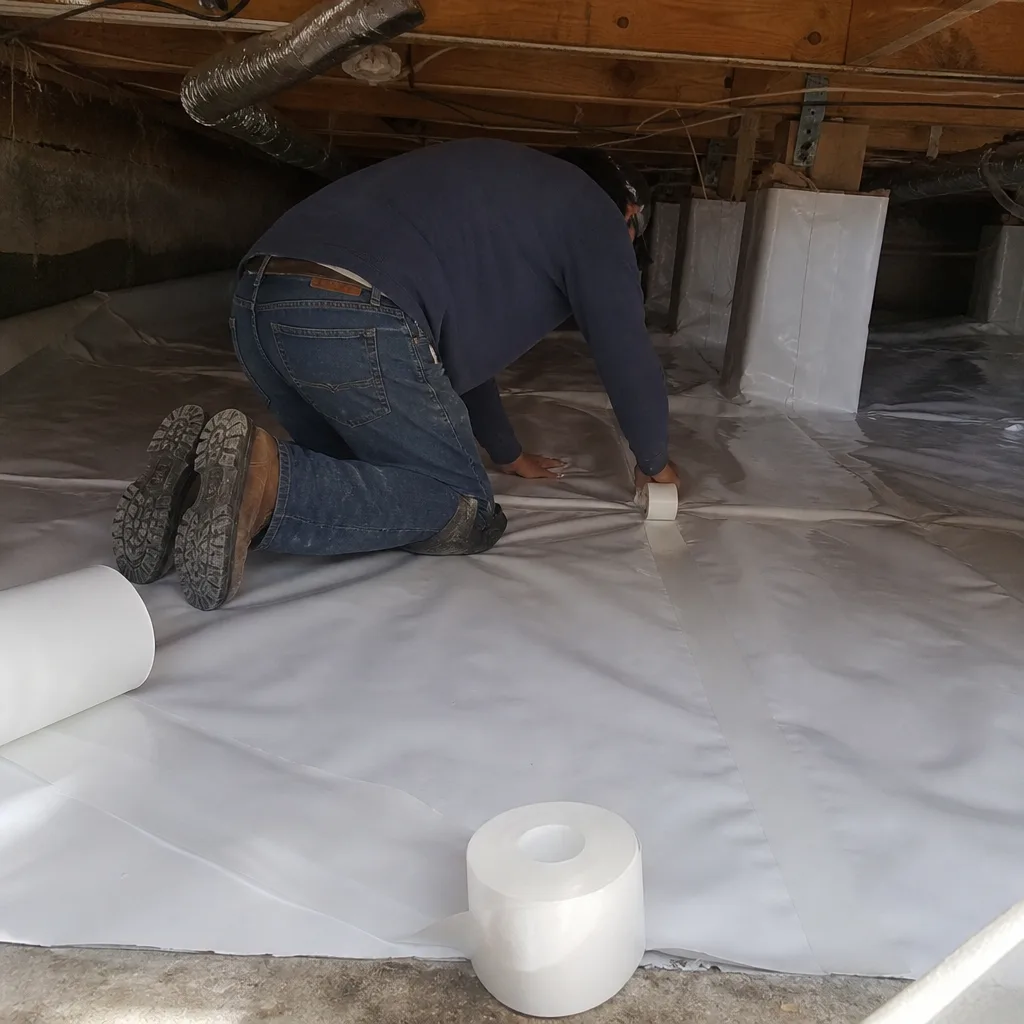
Insulation products are labeled with an R-value measured under laboratory conditions: full loft, no compression, no moisture loading, no disturbance. In a real Pomona attic, none of those conditions persist for long. Understanding how actual R-value diverges from labeled R-value is essential to recognizing when “adequate” insulation has become a warning sign.
Blown fiberglass settles 2-4% over decades - minimal. Blown cellulose settles 10-20% in the first years after installation, which reputable installers account for by over-blowing to compensated depth. The bigger problems are human-caused: compression from foot traffic during roofing or solar installation, displacement by HVAC technicians running new lines, or well-meaning homeowners who board sections of the attic for storage and crush the insulation beneath.
Compressed insulation loses R-value non-linearly. A batt designed for 6-inch joist bays, compressed to 3.5 inches to fit a 2×4 wall cavity, loses roughly 40% of its rated R-value. In attics, where insulation should maintain full loft above the joists, any area that has been walked on repeatedly - typically near the access hatch, around the furnace, or under plywood storage platforms - can drop from R-38 to R-15 or lower.
We measure this with a ruled probe at multiple points, photograph each location, and flag compression zones on the attic diagram we provide the homeowner. In Pomona’s older neighborhoods - the Craftsman-era homes near downtown, the postwar tracts south of the 10 Freeway - we find original insulation compressed by decades of maintenance access, sometimes with three or four material generations stacked and mashed together.
The fix isn’t always removal. In some cases, we can restore loft by carefully fluffing and supplementing with additional blown material. In others, particularly where moisture or pest contamination is present, full removal and replacement is the sounder long-term investment. The written scope we deliver under Haven Standard specifies which approach applies to which zone of the attic, with line-item pricing for each.
Moisture and Vapor Drive in Pomona’s Inland Climate
Pomona’s climate is often described as “dry,” which misleads homeowners about moisture risk. Annual rainfall is modest, but vapor drive - the movement of water vapor through building assemblies - operates year-round, and the direction reverses seasonally. In summer, hot attic air holds substantial moisture; when that air contacts cooler air-conditioned ceiling drywall, condensation can occur at the insulation-drywall interface if the vapor retarder is missing or compromised.
The warning signs of moisture-compromised insulation:
- Water staining on ceiling drywall, particularly after rare heavy rains, that doesn’t trace to a roof leak
- Musty odor detectable at the attic access hatch or in upstairs rooms during humid periods
- Insulation that clumps, mats, or shows dark discoloration - cellulose turns gray-black when wetted repeatedly; fiberglass loses its loft and becomes dense and sheet-like
- Corrosion on metal ductwork or nail heads protruding through the ceiling, indicating chronic condensation
- Mold growth on the attic side of drywall, visible during inspection - typically dark spotting near bathroom fan penetrations or other moisture sources
Pomona’s winter vapor drive is inward: warm, moist interior air migrates through the ceiling and into the attic. Without adequate air sealing at the attic floor, that vapor meets cold roof sheathing and condenses. The resulting “attic rain” wets insulation from above, destroying R-value and creating mold conditions. Summer drive reverses: hot attic air, including moisture from any bathroom vents dumping into the attic rather than outside, presses inward against the cooled ceiling.
The diagnostic tool is simple: a moisture meter probe into the insulation and a visual check for proper bathroom vent termination. We find an alarming number of Pomona homes with bath fans venting directly into the attic space, not through the roof or gable end. That’s a building code violation and an insulation killer, and it’s invisible from the living space until the damage is extensive.
Remediation requires fixing the moisture source before addressing the insulation. Vent terminations get extended to exterior. Air sealing eliminates the vapor transport pathway. Then damaged insulation is removed and replaced. For homes with chronic moisture issues, we may specify closed-cell spray foam at the roofline - converting the attic to conditioned space - or a vapor barrier strategy appropriate to the specific assembly. We source materials including Demilec and Icynene spray foam products where that approach is indicated, always with the moisture problem solved first.
Common Mistakes to Avoid
- Replacing HVAC equipment before testing the envelope. In Pomona’s Lincoln Park and north-side neighborhoods, we’ve documented homeowners spending $8,000-$12,000 on new systems that couldn’t overcome R-19 attic insulation and unsealed can lights. The blower-door test costs a fraction of that and answers the equipment-sizing question with data.
- Adding insulation over air leaks. Blowing new fiberglass or cellulose over an unsealed attic floor buries the problem and makes future air sealing exponentially more expensive. The correct sequence is seal first, insulate second - a core principle of our work since 2016.
- Ignoring pest evidence and re-insulating anyway. This traps contamination, voids material warranties, and often accelerates decay. Rodent remediation must precede re-insulation, with photographic documentation of each phase.
- Storing items on attic insulation. Every storage platform compresses insulation beneath it, creating a thermal bridge. If attic storage is non-negotiable, raised platforms with insulation beneath are the minimum acceptable solution.
- Assuming original insulation is “good enough” because it was code-compliant when installed. California’s Title 24 has increased attic insulation requirements three times since 1990. A 1985 home with R-19 was code-compliant then and is now 50% below minimum. Energy code compliance at construction doesn’t equal adequate performance today.
- Hiring based on price per square foot without specifying material, depth, and air sealing scope. The lowest bid often omits air sealing entirely, uses lower-density blown product, or specifies depth without accounting for settling. A written scope with material type, target settled depth, and air sealing checklist is the only comparable metric.
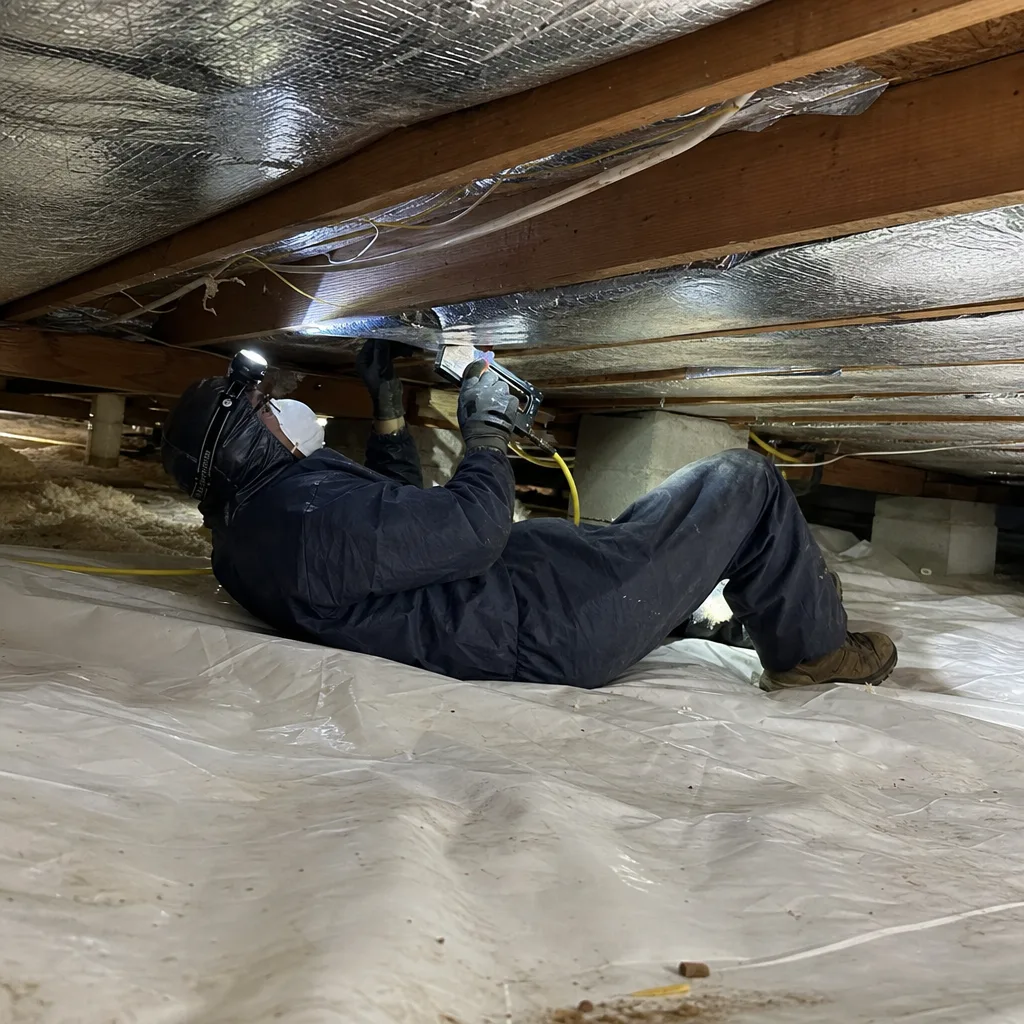
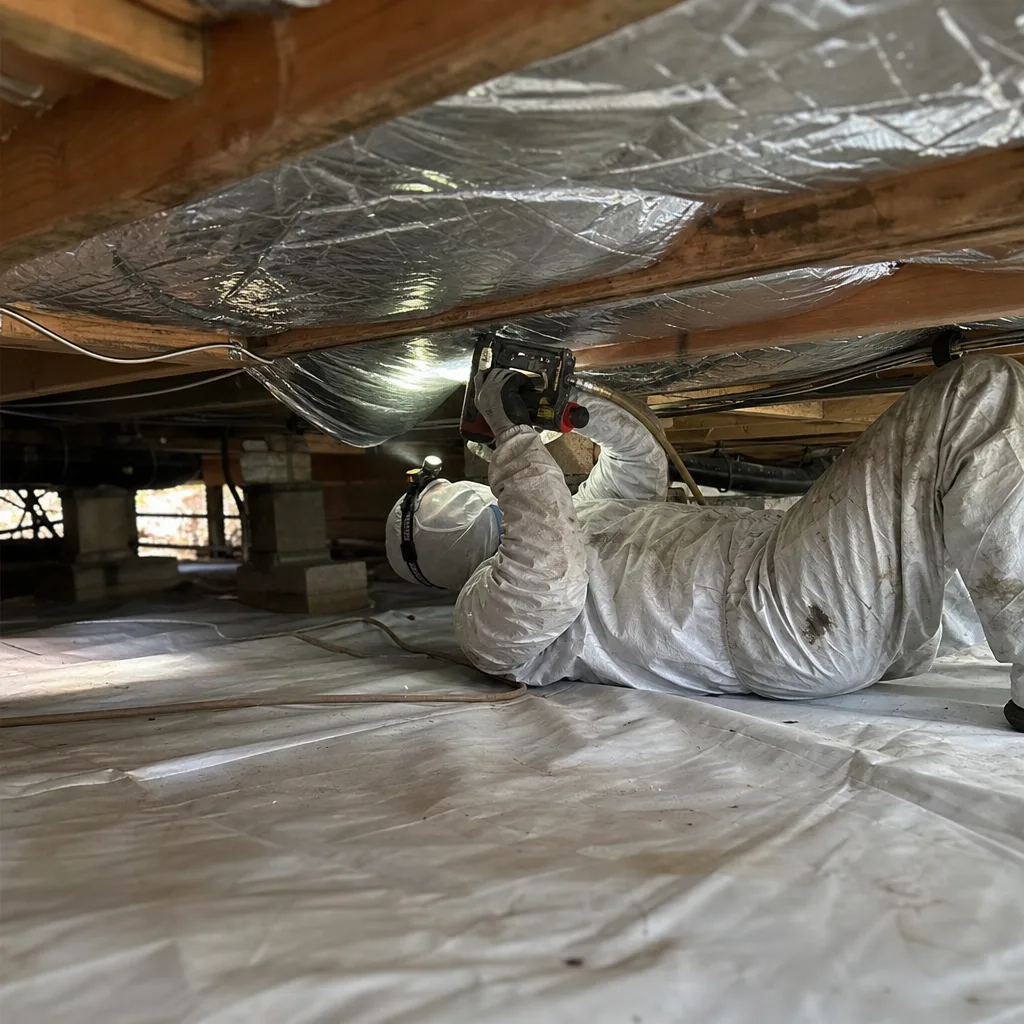
- Neglecting crawl space insulation while upgrading the attic. In Pomona’s older homes with raised perimeter foundations, uninsulated or degraded subfloor insulation creates a thermal short circuit that undermines attic improvements. The building envelope is a system; partial fixes deliver partial results.
When to Call a Professional
Call for a professional assessment when you’ve measured a 3°F or greater temperature differential between floors, when your normalized summer electricity use has climbed 15% or more over three years, when you can feel hot spots on ceilings during heat waves, or when you’ve found any evidence of pest activity in the attic or crawl space. These are not maintenance items; they are envelope failures that progress in cost and damage until addressed.
Topside Attic Insulation Pomona offers free estimates in Pomona - call (562) 242-7569. Every estimate includes a written scope, flat price, and written warranty before any work is authorized. We also provide free second opinions on any written estimate from another contractor; bring us their scope and we’ll review it with you, line by line.
Frequently Asked Questions
Most complete attic insulation removals and replacements in a Pomona single-family home run between $3.50 and $6.50 per square foot, with typical projects for 1,200-2,000 square foot homes falling in the $4,200-$13,000 range depending on access difficulty, contamination level, and whether air sealing is included. A partial supplement over existing insulation costs less, typically $1.50-$3.00 per square foot. Call (562) 242-7569 for an exact quote - estimates are free, and we deliver a written price before any work starts.
Same-day remediation is possible for straightforward supplement jobs with clean existing insulation, but most envelope failures we find in Pomona require a sequenced approach: diagnosis and written scope first, then scheduling for the remediation work with proper material staging and crew allocation. Rushed insulation work over unsealed air leaks or active pest evidence creates worse problems than it solves. Under Haven Standard, we don’t start work without a written scope and written warranty in hand.
Repair - adding supplemental insulation over clean, undisturbed existing material with intact air sealing - is cheaper when the original insulation is in good condition and simply below current depth requirements. Replacement is necessary when insulation is compressed, pest-contaminated, moisture-damaged, or installed over an unsealed attic floor that must now be accessed for air sealing. The wrong choice traps problems and voids warranties; our free second opinion on any written estimate helps you determine which applies to your specific attic.
Normalize your bill against cooling degree days: divide monthly kWh by CDDs for that month. If the ratio has increased 15% or more over three years with no occupancy or thermostat changes, the envelope is the primary suspect. A blower-door test confirms this by quantifying air leakage in CFM50 - a single number that shows how much conditioned air your home loses. We provide this test with documented before-and-after numbers on applicable jobs, so you can verify the improvement you paid for.
Pomona’s hot, dry summers and mild winters create specific stress patterns: thermal cycling that fatigues batt insulation and causes settling in loose fill, intense attic temperatures that degrade paper-faced vapor retarders and some foam products, and occasional Santa Ana wind events that can displace lightweight materials if attic ventilation is excessive. The inland location also means greater daily temperature swings than coastal cities, accelerating material fatigue. These factors make periodic attic inspection - every 5-7 years - a sound practice for Pomona homeowners; see our Seasonal Insulation Care for Pomona: Year-Round Homeowner’s Guide for a maintenance calendar.
Blown fiberglass or cellulose offers the best coverage ratio for irregular attic floors with many penetrations, at moderate cost. Batts work well in open, accessible attics with uniform joist spacing but leave gaps around obstructions. Spray foam, including open-cell Icynene or Demilec products we source, provides air sealing and insulation in one application and is ideal for conditioned attics or complex rooflines, at higher initial cost. The right choice depends on your attic’s geometry, your budget, and whether air sealing can be completed separately. We specify from multiple manufacturers - Owens Corning, Johns Manville, Knauf, and others - with no proprietary lock-in.
The Bottom Line
Insulation failure in Pomona rarely announces itself with obvious symptoms. The warning signs - temperature differentials above 3°F, summer bill spikes that outpace the weather, hot ceiling spots on 100°F days, and pest-disturbed attic insulation - are routinely mistaken for equipment problems, duct issues, or normal seasonal variation. Working backward from these symptoms to their envelope causes, with measurement tools that separate speculation from data, prevents the costly error of treating effects while ignoring causes. For more guides & resources on diagnosing and fixing envelope problems, explore our blog. The correct sequence is diagnose first, specify in writing second, then remediate with documented results. Every home we’ve sealed and insulated since 2016 - more than 9,000 - began with that written price and ended with a documented record, including before-and-after blower-door numbers on applicable jobs so the performance change is verifiable, not promised.
Written by Wes Okafor, Owner at Topside Attic Insulation Pomona, serving Pomona since 2016.