
Last updated September 23, 2026
Seasonal Insulation Care for Pomona: Year-Round Homeowner’s Guide
Pomona’s spring and fall are deceptively mild. Most homeowners assume these comfortable months mean their insulation is performing fine. In our experience, those same mild periods are the only time of year when envelope failures become mathematically visible. When HVAC runtime is low, a 15% heat loss through a compromised attic floor shows up clearly on a bill. In July, that same leak gets buried under 130°F attic temperatures and compressor runtime that would have spiked anyway. This guide - alongside our Complete Guide to Insulation in Pomona - explains how to use Pomona’s actual thermal calendar, not a generic four-season model, to catch problems early and document what you find.
Quick Answer
Seasonal insulation care in Pomona means preparing for two distinct stress periods: the June-September heat-load window, when attic temperatures exceed 130°F and force HVAC systems into continuous runtime, and the December-January radiation-loss period, when clear-sky nights pull heat directly through ceiling assemblies. The two transition months, May and October, are diagnostic windows where year-over-year utility bill comparison reveals envelope degradation that peak-season usage masks. Effective maintenance centers on pre-season attic inspection, documented photo records, and air-sealing verification before insulation is added or assumed sufficient - a process detailed in our Attic Insulation Maintenance Checklist for Pomona Homeowners.
Table of Contents
- The May Pre-Season Checklist: Before Attic Temperatures Spike
- Summer Stress Period: What June-September Does to Pomona Attics
- October as Diagnostic Window: Reading Your Utility Bills
- December Radiation Loss: Why Clear-Sky Nights Matter in Pomona
- Post-Santa Ana Inspection: Wind Redistribution of Insulation
- Documenting Your Attic: Photos, Depth Measurements, and Warranty Evidence
- Common Mistakes to Avoid
- When to Call a Professional
- Frequently Asked Questions
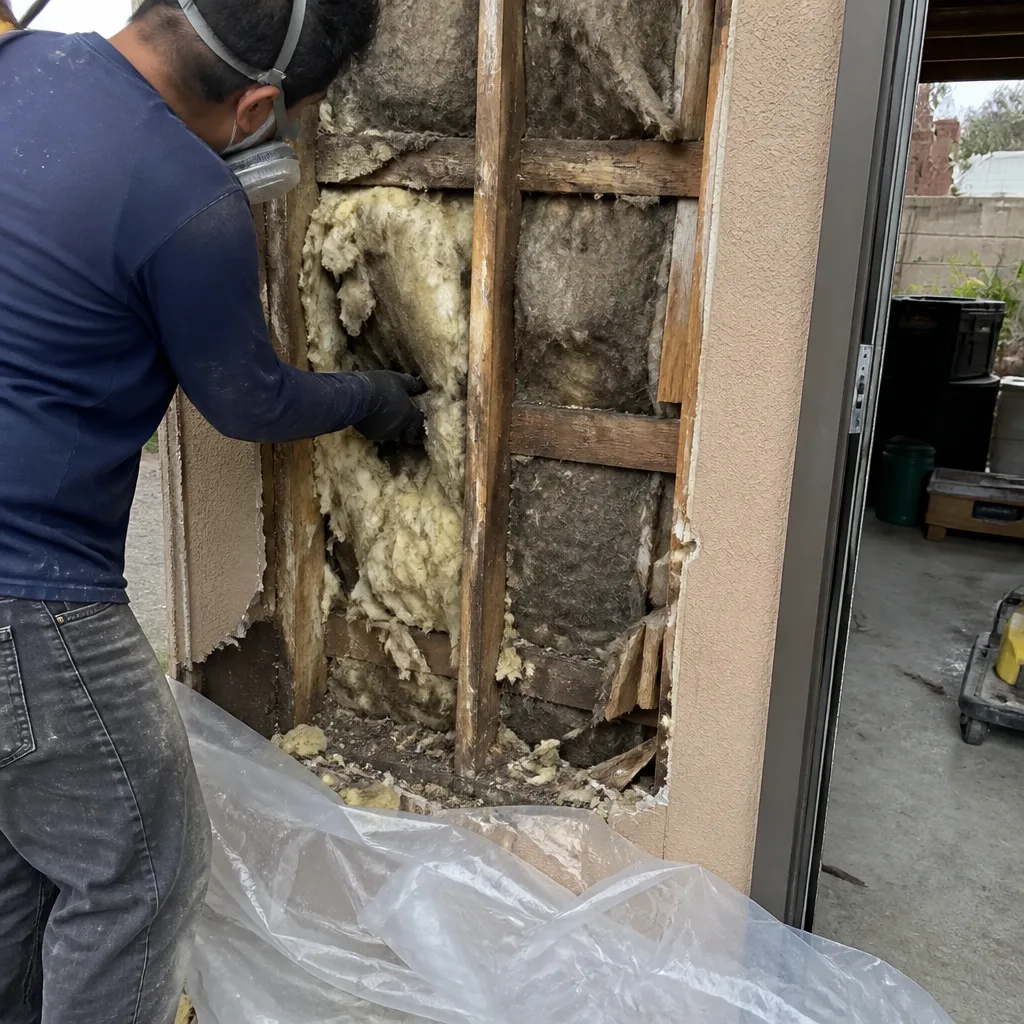 Before
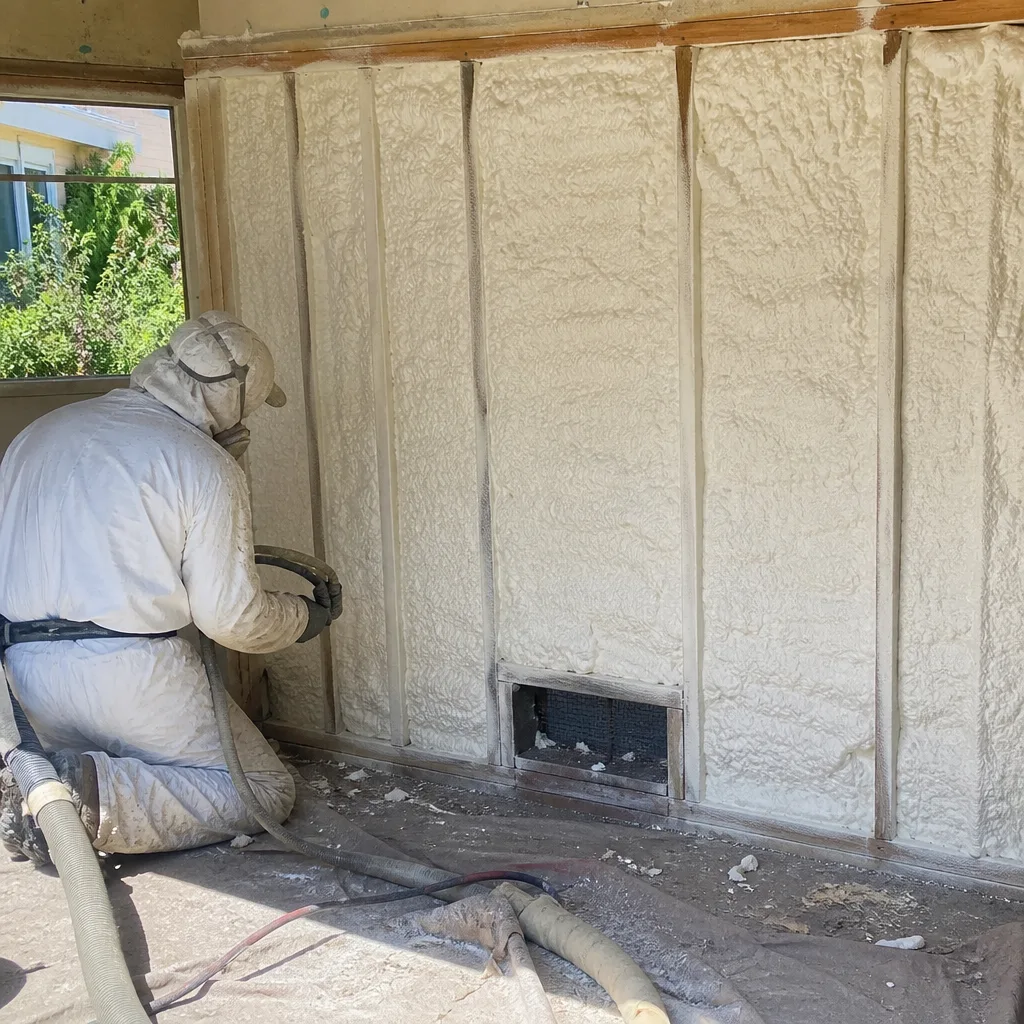 After
AfterThe May Pre-Season Checklist: Before Attic Temperatures Spike
By late May, attics in Pomona’s Lincoln Park neighborhood and along the 71 freeway corridor are already touching 110°F. By June, 130°F is standard. Any insulation or air-sealing deficiency that survived winter becomes punitive fast. We treat May as the last reliable window for attic work before crew safety and material behavior degrade.
Here’s what we verify on every pre-season inspection:
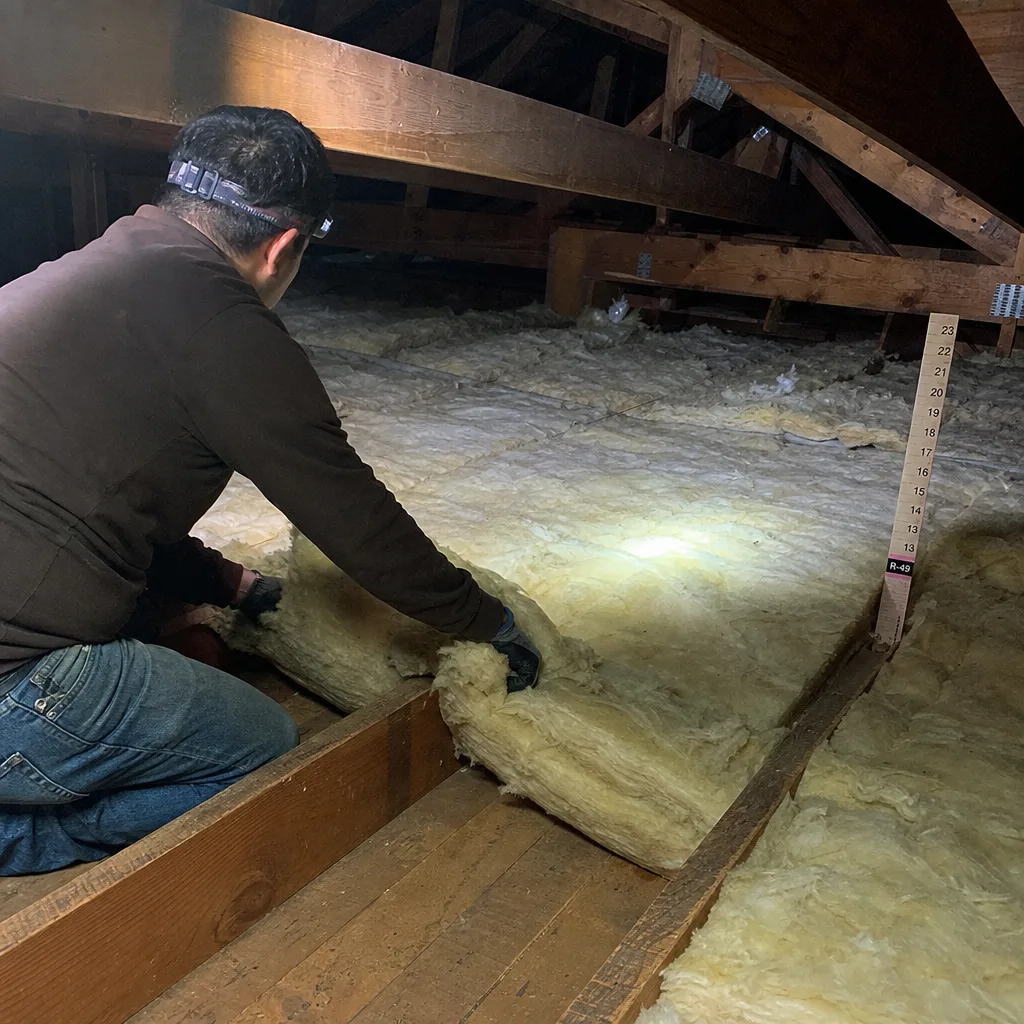
- Insulation depth at six or more points. We measure with a ruled probe, not a visual guess. Fiberglass batts settle 10-20% in the first three years. Blown-in cellulose can shift with wind or vibration. In Pomona’s older stock, particularly pre-1980 homes near downtown, we commonly find R-19 where R-30 was specified, sometimes with original 1970s batts compressed below their labeled thickness.
- Duct insulation condition. Flexible ductwork in vented attics loses capacity when its fiberglass wrap degrades. We look for torn vapor barriers, tape failures at seams, and sagging runs that have pulled off supports. A 10% duct leak in a 130°F attic doesn’t lose 10% cooling - it loses more, because the return side pulls that superheated air back into the system.
- Attic ventilation airflow. We check soffit vents for paint overspray, insulation blockage, or stucco intrusion - common in Pomona’s Spanish Revival and Ranch-era remodels. Ridge vents get inspected for uniform slot opening and absence of debris from our prolonged dry season. A vented attic needs intake and exhaust in balance; blocked soffits create a negative pressure that pulls conditioned air upward through ceiling penetrations.
- Top plate and penetration sealing. This is where most Pomona homes leak. Electrical boxes, plumbing stacks, chimney chases, and partition wall top plates create a continuous path from conditioned space to attic. We verify prior sealing work with a smoke pencil or thermal camera on a mild morning, when the delta-T is still readable.
- Exhaust fan terminations. Bathroom and kitchen fans that terminate in the attic, rather than through the roof or gable, dump moisture directly onto insulation. We’ve replaced saturated batts in Phillips Ranch homes where this condition went unobserved for years.
If any of these five items fails, we document it with dated photos and a written scope before recommending work. Under Haven Standard Clause 1, no work starts without a flat price, written scope, and written warranty delivered first.
Summer Stress Period: What June-September Does to Pomona Attics
Pomona’s summer heat-load window runs roughly June 15 through September 15. The Inland Empire’s inland position, east of the San Gabriel Valley’s thermal shielding, produces attic temperatures that coastal Orange County doesn’t experience. We’ve recorded 147°F in a Lincoln Park attic during a late-August heat wave. That temperature changes how insulation performs and how we interpret its condition.
Heat-load effects on common materials:
- Fiberglass batts: High temperatures accelerate binder degradation. Older batts become dusty and lose loft. In homes near Ganesha Park built 1960-1985, we find batts that have slumped to half their original thickness, creating thermal bypass channels.
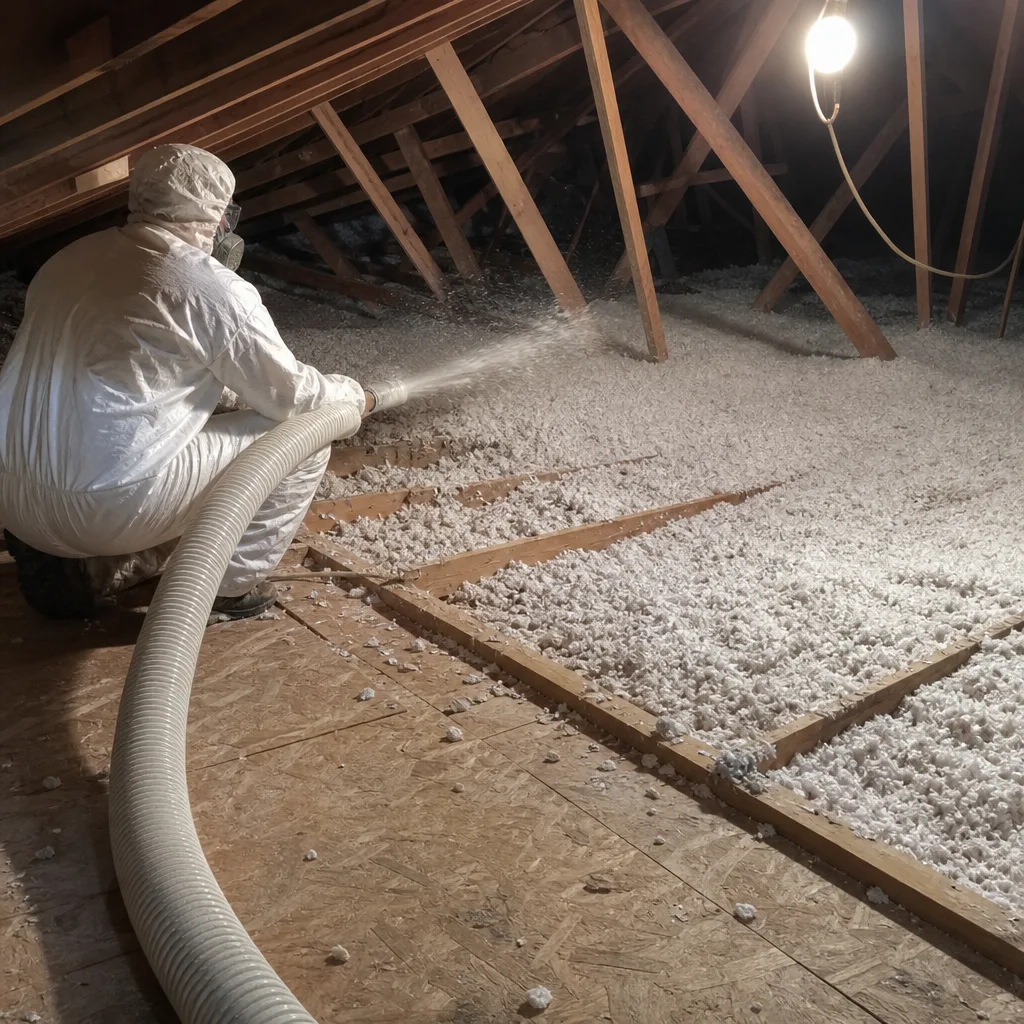
- Blown-in cellulose: Cellulose performs well thermally but is vulnerable to wind washing at eaves and around penetrations. Our Santa Ana events, even in summer, can redistribute material. We look for bare spots near soffits and uneven depth patterns.
- Spray foam (open-cell and closed-cell): Properly installed foam is stable to 180°F+, but installation errors - missed substrate contact, incomplete coverage at truss heels - become visible under thermal load as hot spots. Spray foam insulation in Pomona requires substrate temperatures within manufacturer spec during application; summer attic work demands early-morning scheduling.
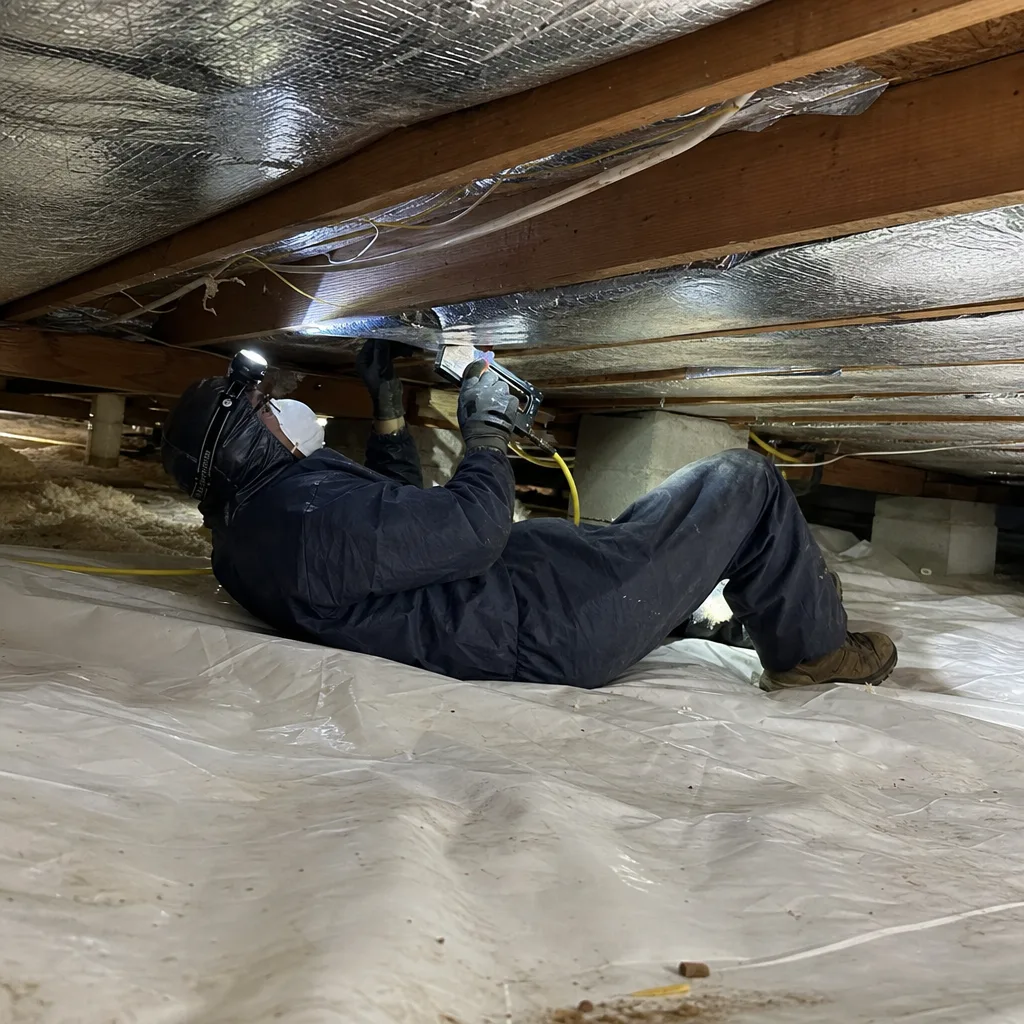
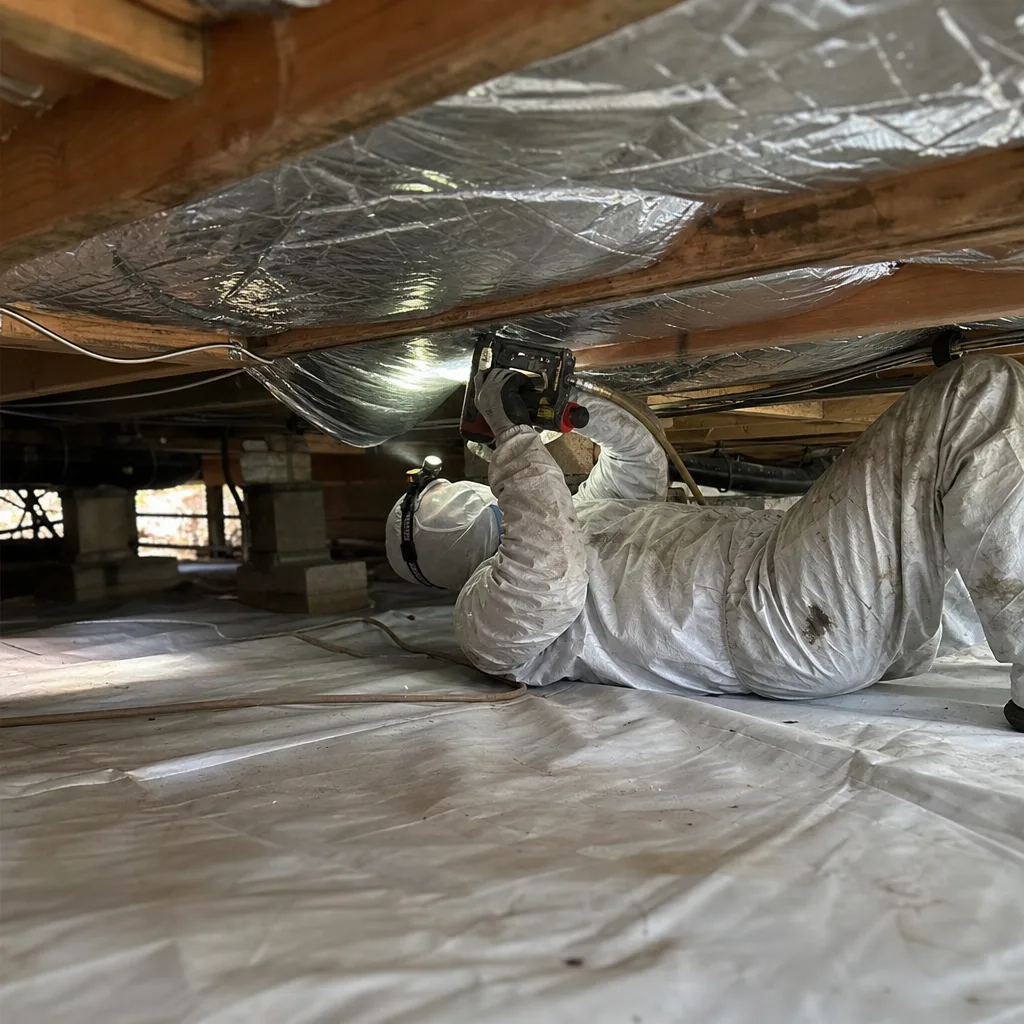
- Radiant barriers: Foil-faced products degrade if dust accumulates on the reflective surface. In Pomona’s dry, dusty environment, we inspect for uniform reflectivity and proper attic-side orientation.
During this period, homeowner observation is limited. We don’t recommend attic entry for non-professionals when temperatures exceed 120°F. What you can do: note your HVAC runtime pattern. If your compressor runs continuously from 2 PM to 8 PM on days below 95°F outdoor, your envelope is likely undersized or compromised. Compare to the same month prior year; utility bills in Pomona’s SCE territory are available online in daily increments if you’re on a smart meter.
One specific Pomona factor: homes near the 10 freeway or in the industrial corridor south of the 60 experience more particulate loading on attic surfaces. We’ve found that radiant barrier effectiveness degrades faster in these locations, requiring more frequent inspection.
October as Diagnostic Window: Reading Your Utility Bills
October is the most underused diagnostic month in Pomona home maintenance. Outdoor temperatures drop to the 70s. HVAC runtime falls to near-zero for well-sealed homes. Any remaining heating or cooling load is almost entirely envelope-driven, not solar-gain or extreme-temperature driven.
The 12% rule: Compare your October kWh and therms to October two years prior. Same occupancy, same habits. A year-over-year increase above 12% suggests envelope degradation. Below 12% can be rate changes, weather variation, or equipment aging. Above 12% is structural.
What causes jumps in this specific month:
- Insulation settlement or displacement that accumulated over the cooling season
- Air-sealing failures from thermal cycling - caulk and foam sealants expand and contract; Pomona’s 40°F+ daily temperature swings in September-October stress these joints
- Duct leakage increase from flex duct vibration or connection loosening
- Moisture accumulation in insulation from winter condensation that dried incompletely, reducing effective R-value
We ask homeowners to pull three data points: total kWh, total therms, and average daily temperature from a local weather station. The temperature correction is simple - degree days are publicly available. If your usage per degree day rose 15% and your neighbor’s didn’t, your envelope changed.
This is also when we schedule blower-door tests for homeowners who want baseline numbers before winter. A blower-door test - a pressurization reading that shows, in one number, how much air your building envelope is losing - reads most accurately when the indoor-outdoor temperature difference is 20°F or greater. October mornings in Pomona regularly provide that.
We publish before-and-after blower-door numbers on every applicable job. A typical pre-sealing reading in a 1,600-square-foot Pomona ranch built 1975-1985 runs 3,500-4,500 CFM50. After comprehensive air sealing and insulation upgrade, we expect 1,800-2,400 CFM50. The homeowner receives both numbers in writing, with the photo record.
December Radiation Loss: Why Clear-Sky Nights Matter in Pomona
Pomona’s winter is mild by national standards but thermally distinctive. Our December-January nights are clear more often than not. Clear skies mean radiative cooling: your roof surface loses heat directly to the night sky, dropping below air temperature. On a 45°F night with low humidity, a dark shingle roof can fall to 35°F or lower. That temperature differential across your ceiling assembly drives heat loss differently than in cloudy climates, where the sky temperature stays closer to ambient.
What this means for insulation performance:
Radiative loss bypasses some of the resistance that bulk insulation provides. A well-insulated attic floor with poor air sealing loses more than it should on clear nights because warm, humid indoor air exfiltrates through ceiling penetrations and condenses on cold roof decking. We’ve found frost on nail points in Pomona attics where the indoor relative humidity was 55% and the attic ventilation was inadequate - not a leak, just physics.
December-specific maintenance tasks:
- Verify bathroom and kitchen exhaust operation. Winter means closed windows and higher indoor humidity. Fans that don’t move rated airflow (typically 50-110 CFM for bathrooms, verified with a calibrated anemometer) allow moisture accumulation that degrades insulation over time.
- Check for ceiling thermal anomalies. On cold clear mornings, walk through with an infrared thermometer or thermal camera if you have access. Look for rectangular patterns around light fixtures, linear cold strips along partition walls (indicating top plate leaks), and circular patterns around ceiling speakers or smoke detectors.
- Inspect attic access hatch sealing. The pull-down stair or scuttle hole is often the largest single leak in a Pomona attic. We install weatherstripped, insulated covers with latches; R-5 covers over R-30 floors create a predictable thermal bridge.
- Evaluate ceiling insulation adequacy for radiant conditions. In Pomona’s climate zone (CEC Climate Zone 10), current code calls for R-38 to R-49 in vented attics. Homes built before 2005 often have R-19 or R-30. The incremental cost of going to R-49 pays back faster in clear-sky winter conditions than in overcast coastal equivalents.
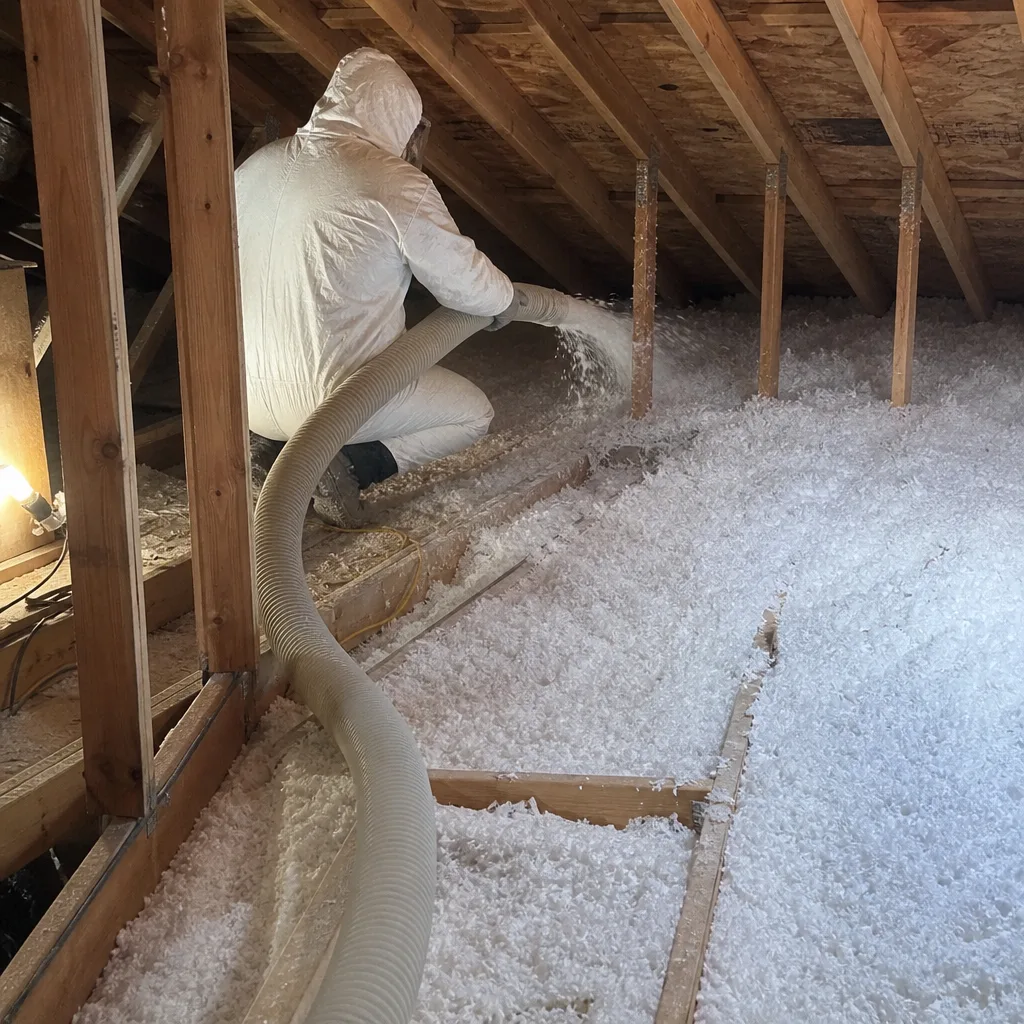
Materials matter here. Attic insulation in Pomona for winter performance should prioritize consistent coverage over maximum labeled R-value. We’ve seen Rockwool batts maintain dimension better than fiberglass in attics with temperature cycling, and blown-in Knauf Jet Stream Ultra provide more uniform coverage at eaves where settling occurs.
Post-Santa Ana Inspection: Wind Redistribution of Insulation
Pomona’s Santa Ana wind events, typically October through March but occasionally extending into April, create a specific insulation failure mode that coastal California doesn’t experience. Sustained winds of 40-60 mph, with gusts above 80, pressurize attic spaces through ridge vents, gable vents, and any soffit vent that isn’t properly baffled. The result: blown-in insulation moves.
What we find after major events:
- Scoured eaves: Insulation pulled back 2-4 feet from exterior walls, exposing top plates directly to attic temperature. This is the most common pattern.
- Ridge-vent redistribution: Fine cellulose or loose fiberglass pulled toward and sometimes through ridge vents, creating thin spots at the attic peak where heat loss is already greatest.
- Penetration displacement: Material pulled away from plumbing vents, electrical masts, and chimney chases, creating annular gaps.
- Duct contact loss: Blown material that was in contact with flex duct shifts, leaving duct runs suspended in hot or cold attic air rather than embedded in insulating material.
We recommend a visual attic inspection after any Santa Ana event with sustained winds above 50 mph. This doesn’t require full entry - a camera on a pole through the scuttle, or a drone if clearance permits, can identify major redistribution. What you’re looking for: color variation (darker substrate showing through), visible joists or top plates that were previously covered, and any insulation piled against vents or ductwork.
Remediation is straightforward if caught early: rake and redistribute to uniform depth, install vent baffles at eaves if absent, and verify ridge vent screening is intact. We use Knauf blown-in fiberglass for redistribution work because its higher density resists wind movement better than lower-density alternatives.
Homes in north Pomona, toward San Antonio Heights and the foothill interface, experience more severe Santa Ana exposure due to terrain channeling. We’ve documented 40% greater insulation displacement in these areas compared to central Pomona for equivalent wind speeds.
Documenting Your Attic: Photos, Depth Measurements, and Warranty Evidence
Every insulation warranty and every insurance claim we’ve supported has hinged on documentation. Not memory, not verbal description, but dated, located, measurable records. We provide a Documented Photo Record on every job we complete; we strongly recommend homeowners maintain their own parallel record.
Twice-yearly documentation protocol:
- Choose consistent dates. We recommend the first Saturday of May and the first Saturday of November. These bracket the stress periods and capture pre- and post-season condition.
- Photograph from fixed locations. Stand at the attic access and shoot north, south, east, west. Then shoot toward any known problem areas: ductwork, penetrations, the ridge line. Use your phone’s timestamp and location services.
- Measure depth at six points minimum. Use a yardstick or ruled probe. Record: location (e.g., “north eave, 4 ft from east gable”), depth in inches, and insulation type. Note any variation from prior measurement.
- Photograph the ruler in place. Not alongside - in the insulation, with the depth visible. This is admissible evidence if a warranty or insurance question arises.
- Store with utility bills. Keep photos and depth log in the same folder as PDF utility bills for the corresponding months. The correlation between physical condition and energy use is your strongest argument if performance degrades.
What this documentation protects against:
- Insulation contractor warranty disputes - “it was installed at proper depth” versus your measured record showing settlement
- Homeowner insurance claims for ice dam or moisture damage - proof that insulation was maintained and ventilation functional
- Property sale inspections - documented R-value verification for disclosure requirements
- Utility rebate program compliance - programs like SCE’s Energy Upgrade California require pre- and post-installation documentation
For homeowners who’ve had Topside Attic Insulation Pomona home work performed, we maintain our own record and can provide copies on request. But your independent documentation is stronger - it shows ongoing maintenance, not just installation condition.
Common Mistakes to Avoid
- Blowing new insulation over unsealed air leaks. This is the most common error we correct. Insulation does not stop air movement. Fiberglass is an air filter, not an air barrier. In Pomona’s climate, blown insulation over leaky top plates creates a filter that loads with dust and loses effectiveness. Seal first, then insulate - in that order.
- Assuming R-value is the only metric. A bag of R-38 fiberglass with 15% compression and wind washing at eaves performs like R-25. Uniform installation matters more than labeled value. We measure effective coverage, not just bag count.
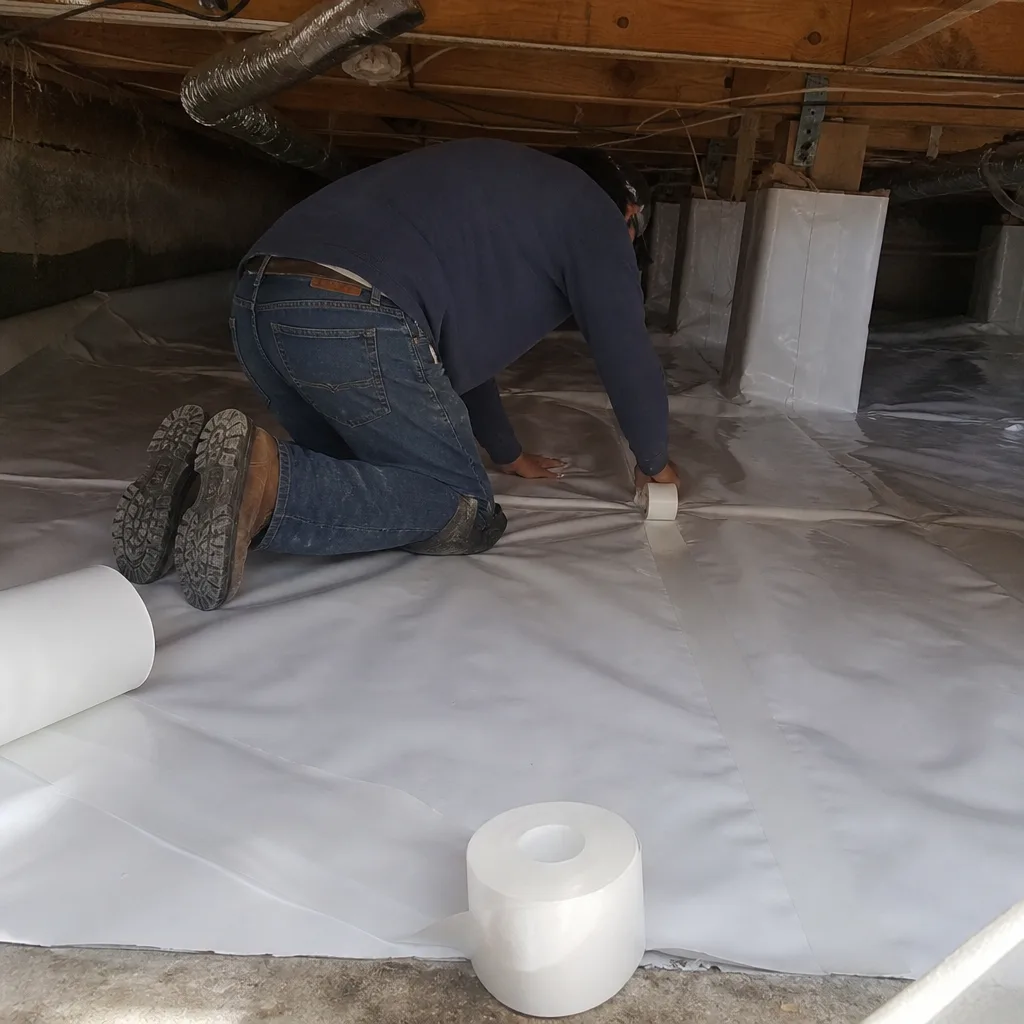
- Ignoring the crawl space. In Pomona’s older neighborhoods, particularly near downtown and the railroad corridor, raised floors with vented crawl spaces contribute 20-30% of total envelope loss. Crawl space encapsulation and vapor barrier in Pomona is often the higher-ROI improvement than additional attic insulation.
- Scheduling attic work in peak summer. Crew safety, material behavior, and test accuracy all degrade above 120°F attic temperature. We start attic jobs at 6 AM in July and August; some days we reschedule entirely. Homeowners who insist on summer scheduling often get rushed work.
- Neglecting post-wind inspection. After every Santa Ana event, some Pomona attics need redistribution. Waiting until the next scheduled maintenance means a full season of compromised performance.
- Using utility bill totals without temperature correction. A hot August uses more kWh than a mild August - that’s weather, not envelope. Compare per-degree-day or use the October diagnostic method described above.
- Trusting visual assessment alone. Insulation that looks adequate from the attic hatch is often scoured at eaves, compressed under decking, or displaced around ductwork. Probe and measure.
When to Call a Professional
Call for a professional assessment when: your October year-over-year usage increase exceeds 12%; you observe visible insulation displacement after wind events; your HVAC runs continuously on mild days; you find moisture staining on ceiling drywall; or you’re considering any insulation addition and haven’t had air sealing verified first.
We provide free estimates in Pomona with a written price before any work starts - Haven Standard Clause 1. Every applicable job includes before-and-after blower-door numbers so you can verify the air-sealing result. Our 365-Day Done Right Promise applies to all completed work, and a live person answers calls 24/7. Topside Attic Insulation Pomona home offers free second opinions on any written estimate - bring us a competing quote and we’ll read it with you.
Call (562) 242-7569 to schedule.
Frequently Asked Questions
Most attic insulation jobs in a Pomona home of 1,200-2,000 square feet run between $2,800 and $5,400 for blown-in fiberglass to R-38, including air sealing of top plates and penetrations. Spray foam applications range higher, typically $4,500-$8,500 depending on coverage area and foam type. We provide a flat written price before any work starts - no estimates that balloon, no day-of surprises. Call (562) 242-7569 for an exact quote; estimates are free.
Attic insulation can be installed in summer, but scheduling matters. We begin work at 6 AM when attic temperatures are below 100°F, and we reschedule if the forecast exceeds 115°F ambient. Spray foam specifically requires substrate temperatures within manufacturer specifications; hot roof decking can cause adhesion failure. For most Pomona homeowners, May or October scheduling produces better material behavior and more accurate blower-door test conditions.
Clear-sky radiative cooling pulls heat directly through your ceiling assembly faster than cloudy conditions would. If your attic insulation is uniform and your air sealing is intact, this effect is minimal. If you have top plate leaks, recessed light penetrations, or insufficient insulation depth, the radiant loss becomes perceptible as draft and cold ceiling sensation. A blower-door test identifies the leak path; thermal imaging on a cold clear morning shows the pattern.
We recommend a professional inspection every three years, with homeowner visual checks twice yearly - May and November - using the documentation protocol described above. Homes in high Santa Ana exposure areas, or with prior wind redistribution, may need annual professional review. Insulation doesn’t degrade on a calendar schedule; it degrades with specific events and conditions that inspection catches.
Removal is necessary when insulation is contaminated (rodent activity, mold, significant dust loading), wet, or compressed below 50% of original thickness. Otherwise, supplemental insulation over existing material is cost-effective if air sealing is addressed first. We never blow new insulation over unsealed leaks - that’s Haven Standard. In Pomona’s market, removal and replacement of contaminated attic insulation in a 1,500-square-foot home typically runs $3,200-$5,800 including disposal and air sealing.
Check your attic within one week for visible redistribution: scoured eaves, piled material against vents, exposed joists or top plates. Photograph anything suspicious. If you find bare spots larger than 2 square feet or depth variation greater than 2 inches, call for redistribution. Minor displacement can be raked level by a homeowner with proper protective equipment; significant redistribution or any duct exposure warrants professional attention. Post-event inspection is particularly important for homes near the foothills or with ridge vents without internal baffles.
The Bottom Line
Pomona’s insulation calendar has two stress periods, not four seasons. Use May to verify your envelope before heat loads peak. Use October’s mild weather to read your utility bills with temperature-corrected precision. Document everything with dated photos and depth measurements. After Santa Ana events, inspect for wind redistribution. And never add insulation over air leaks that haven’t been sealed - the performance you pay for depends on the sequence being right. We’ve sealed and insulated over 9,000 homes since 2016, every one with a written price first and a documented record at completion. For more guides & resources, visit our blog.
Written by Wes Okafor, Owner at Topside Attic Insulation Pomona, serving Pomona since 2016.