
Last updated September 23, 2026
The Complete Guide to Insulation in Pomona
Pomona recorded 47 days above 95°F in 2023, yet the average attic in a 1960s Pomona tract home holds R-11 or less - about one-third of what California Energy Code now requires for that assembly. That gap between what your house has and what the climate demands is where most insulation problems start. In this guide and our more guides & resources, we’ll map Pomona’s specific conditions - its inland heat sink position, marine layer ceiling, and aging 1950s-1970s housing stock - to the material, depth, and sequencing decisions that actually matter. You’ll learn how to read your home’s envelope performance before you spend anything, why air sealing must come first, and what documentation a legitimate job should produce.
Quick Answer
Proper insulation in Pomona means achieving R-38 to R-60 in attics and R-13 to R-21 in walls, using materials selected for CEC Climate Zone 10’s extreme heat and temperature swings. The correct sequence is always air sealing first, then insulation - never reversed - with blower-door verification proving the envelope was tightened before new material goes in.
Table of Contents
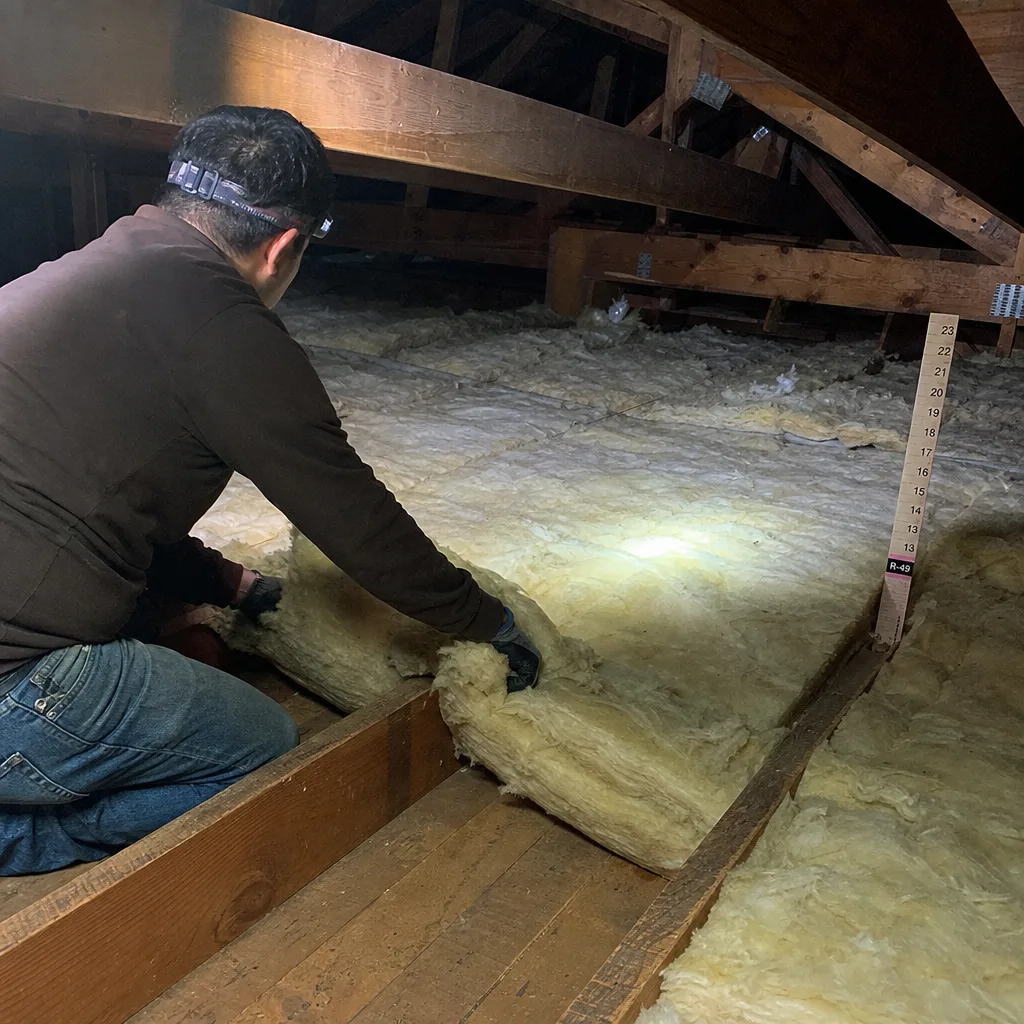
- Why Pomona’s Climate Destroys the Wrong Insulation
- CEC Zone 10: What the Code Actually Requires
- Material Selection Matrix for Pomona Homes
- The Sealing-First Rule: Why Order Matters
- How to Read a HERS Report and Your ACH50 Number
- Insulation by Neighborhood: Pomona’s Housing Stock
- What a Completed Job Should Document
- What Insulation Costs in Pomona
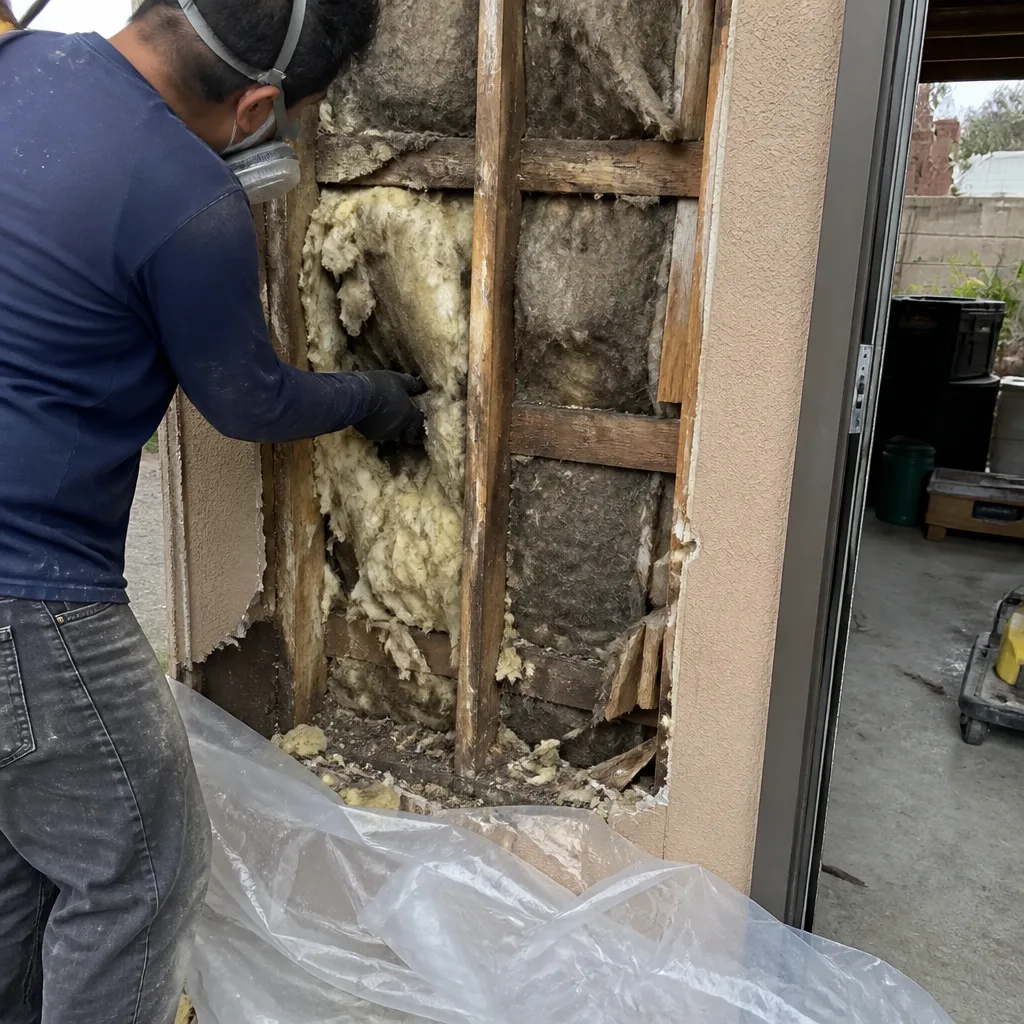 Before
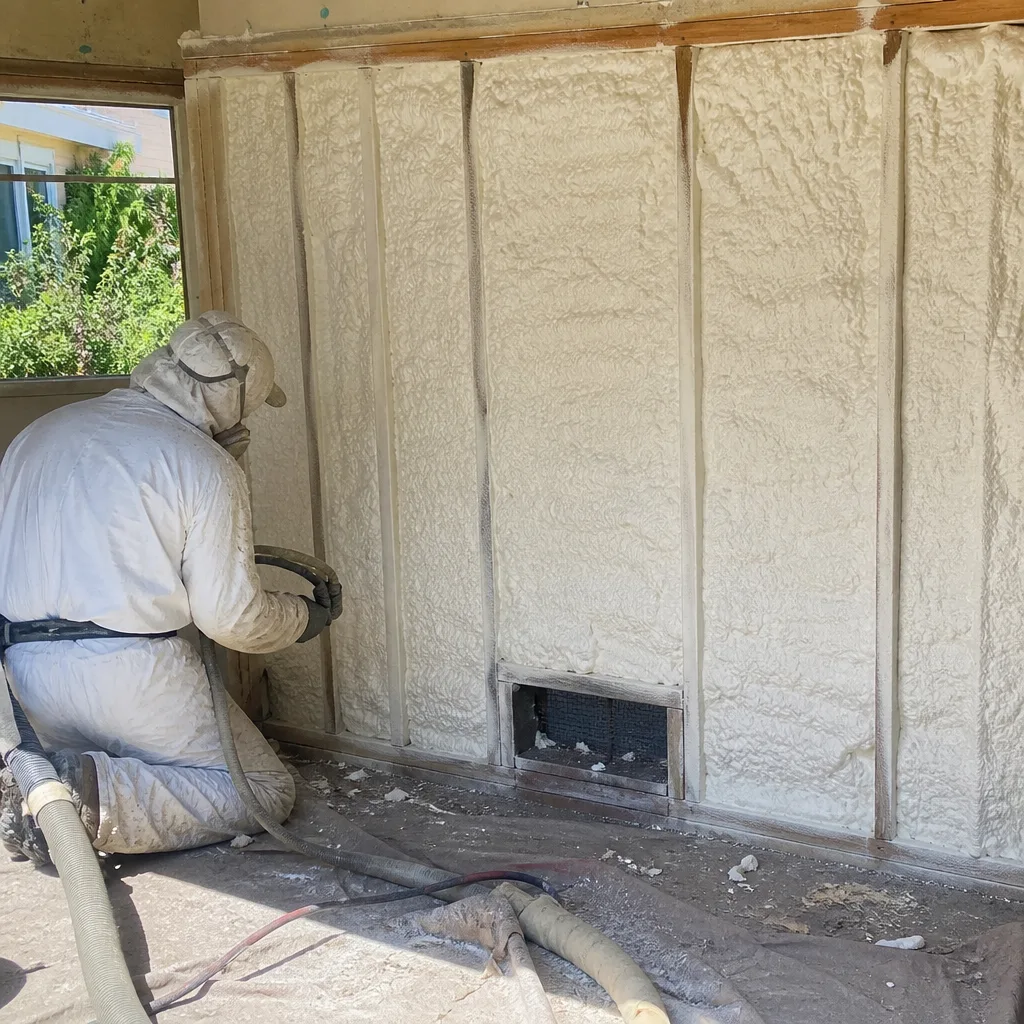 After
AfterWhy Pomona’s Climate Destroys the Wrong Insulation
Pomona sits in the San Gabriel Valley heat bowl, 30 miles inland from the Pacific but blocked from marine influence by the Puente Hills and San Jose Hills. This geography creates a climate that punishes building envelopes harder than coastal-adjacent cities.
Here’s what happens to your attic on a typical July day. The sun beats down on dark composite shingles or concrete tile. Attic temperatures in Pomona regularly exceed 150°F - we’ve measured 163°F in a Lincoln Park attic with inadequate ventilation. That sustained heat does three things to insulation:
- Fiberglass batts sag and compress when exposed to thermal cycling above 140°F, losing their loft and effective R-value within 5-7 years in Pomona conditions.
- Cellulose settles unevenly if installed below manufacturer’s density specs, creating thin spots where heat punches through. Pomona’s dry summers and Santa Ana wind events pull moisture through attic vents, accelerating this.
- Spray foam degrades at the substrate if the roof deck isn’t allowed to dry properly - a real risk in Pomona’s sudden winter rain-on-hot-deck patterns.
The marine layer complicates this further. On June mornings, Pomona can wake to 65°F and 80% humidity, then hit 102°F by 3 PM. That daily expansion and contraction cycles every material in your envelope. Homes in Philips Ranch, built in the 1980s with R-19 batts, often test at effective R-12 by year fifteen - the material is still there, but it’s not performing.
We’ve also seen accelerated rodent damage in Pomona’s older neighborhoods. The 1950s-1960s stock in Mayfair and Westmont has original soffit venting that invites roof rats, who tunnel through fiberglass and compress cellulose into nesting material. This isn’t a material failure; it’s an envelope failure that better air sealing and crawl space encapsulation would have prevented.
CEC Zone 10: What the Code Actually Requires
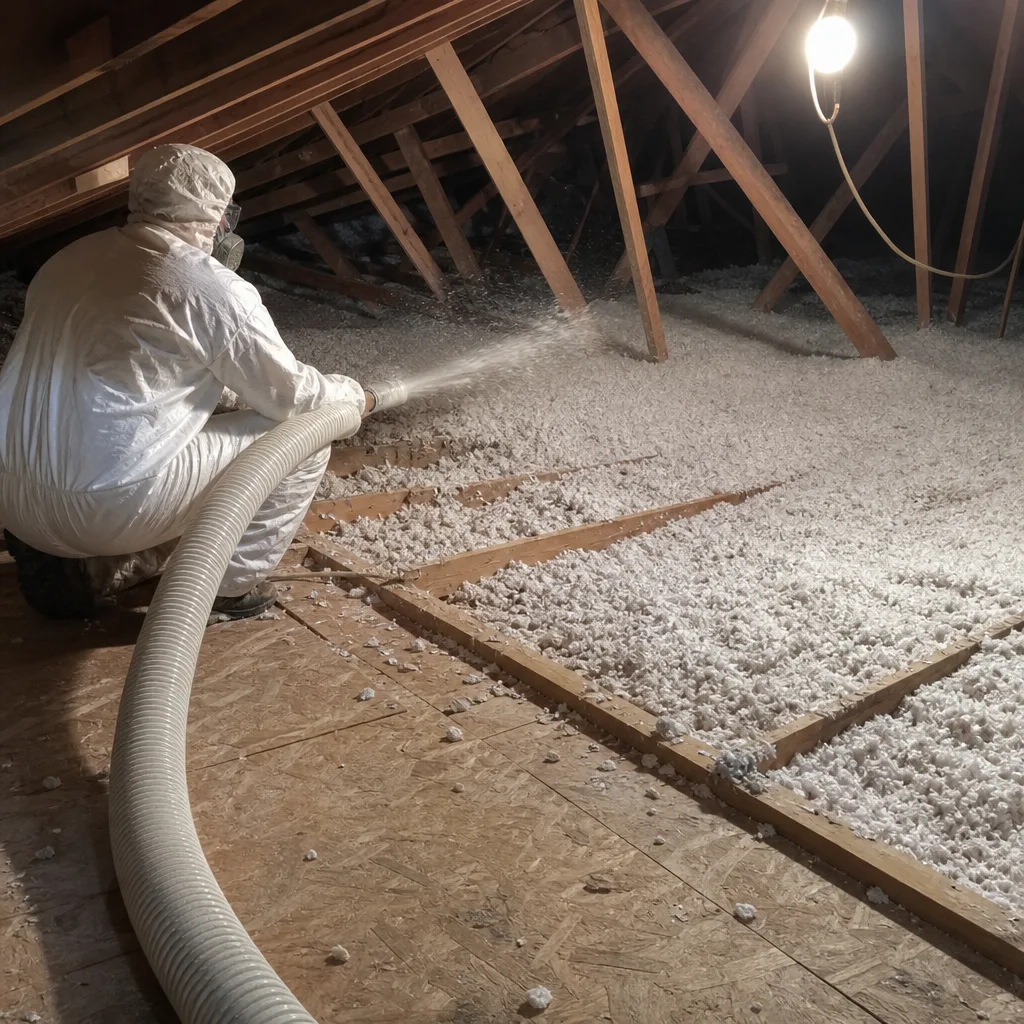
California Energy Commission Climate Zone 10 covers Pomona and the inland valleys. The 2022 Energy Code, effective January 2023, sets minimum thermal performance standards that most pre-1990 Pomona homes fall well below.
For existing homes undergoing insulation upgrades, the code requires:
| Assembly | Minimum R-Value | Typical Pomona Existing |
|---|---|---|
| Attic, pitched roof | R-38 (R-30 existing) | R-11 to R-19 |
| Attic, flat or cathedral | R-30 | R-11 to R-19 |
| Wood-framed wall | R-13 (R-15 with 2×6) | R-0 to R-11 |
| Floor over unconditioned space | R-19 | R-11 or missing |
These are floors, not targets. In Zone 10’s heat, R-38 in an attic is the minimum survivable - not the comfortable. We’ve found that Pomona homeowners who stop at code minimum typically call us back within three years wanting more. The cost difference between R-38 and R-60 blown cellulose is usually 15-20% of the total job, but the performance gap in summer peak load is substantial - see our Insulation Cost Breakdown: The Pomona Homeowner’s Reference for 2026 for detailed pricing.
Permit requirements in Pomona follow Los Angeles County unincorporated standards for building envelope work. Any insulation removal, replacement, or addition in an attic or wall cavity requires a building permit if the work exceeds 500 square feet or involves spray foam application. The permit triggers a HERS verification - which is why understanding your HERS report matters before you start.
Material Selection Matrix for Pomona Homes
Not every material suits every Pomona home. Here’s how we match material to condition, based on 9,000+ homes sealed and insulated since 2016.
Blown Cellulose (Fiberglass-Alternative)
Best for: Attic floors in 1950s-1970s tract homes with accessible joist bays and existing mixed insulation.
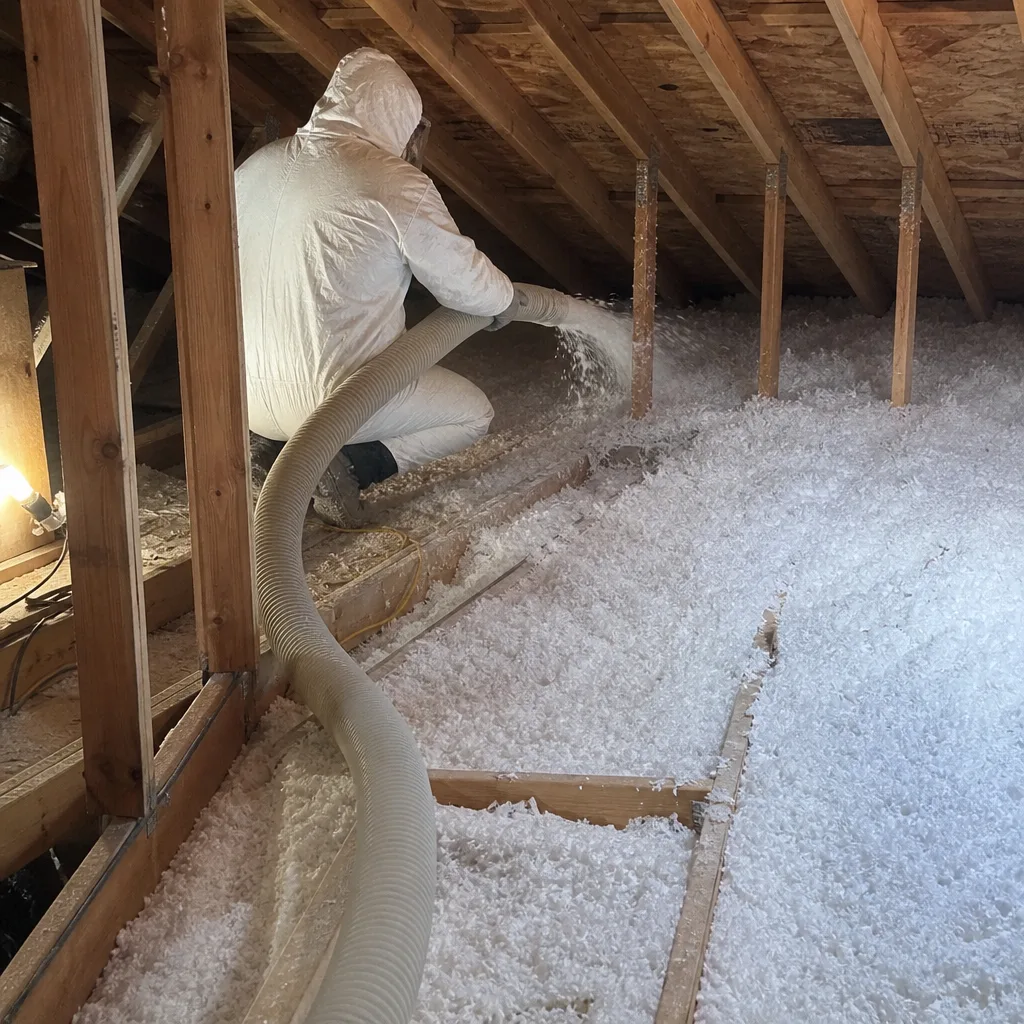
Cellulose - ground recycled paper treated with boric acid for fire and pest resistance - outperforms fiberglass batts in Pomona’s climate when installed to proper density. At 1.5 lbs per cubic foot minimum density, it resists settling and fills irregular joist bays that batts leave gapped. The boric acid treatment matters in Pomona specifically: roof rats and mice avoid tunneling through it, unlike fiberglass.
We specify cellulose from GreenFiber or Johns Manville for most Pomona attic floors. The installed cost runs $1.80-$2.40 per square foot for R-38 to R-49 coverage. Critical caveat: cellulose must not contact recessed can lights unless they’re IC-rated (insulation contact). Pomona’s 1960s housing stock is full of original non-IC cans that must be replaced or sealed with rated covers before any insulation goes near them.
Mineral Wool (Rockwool)
Best for: Wall cavities, cathedral ceilings, and fire-blocking applications in multi-family or attached Pomona housing.
Rockwool - spun basalt rock and recycled slag - handles Pomona’s temperature extremes without degradation. It doesn’t absorb moisture, won’t support mold, and maintains R-value across the temperature swing. We use Knauf or Rockwool brand batts in wall retrofits where we’re dense-packing from the exterior or working through interior drywall access. Cost is 20-30% above fiberglass, but the durability dividend in Zone 10 pays back.
Spray Foam: When It Helps, When It Hurts
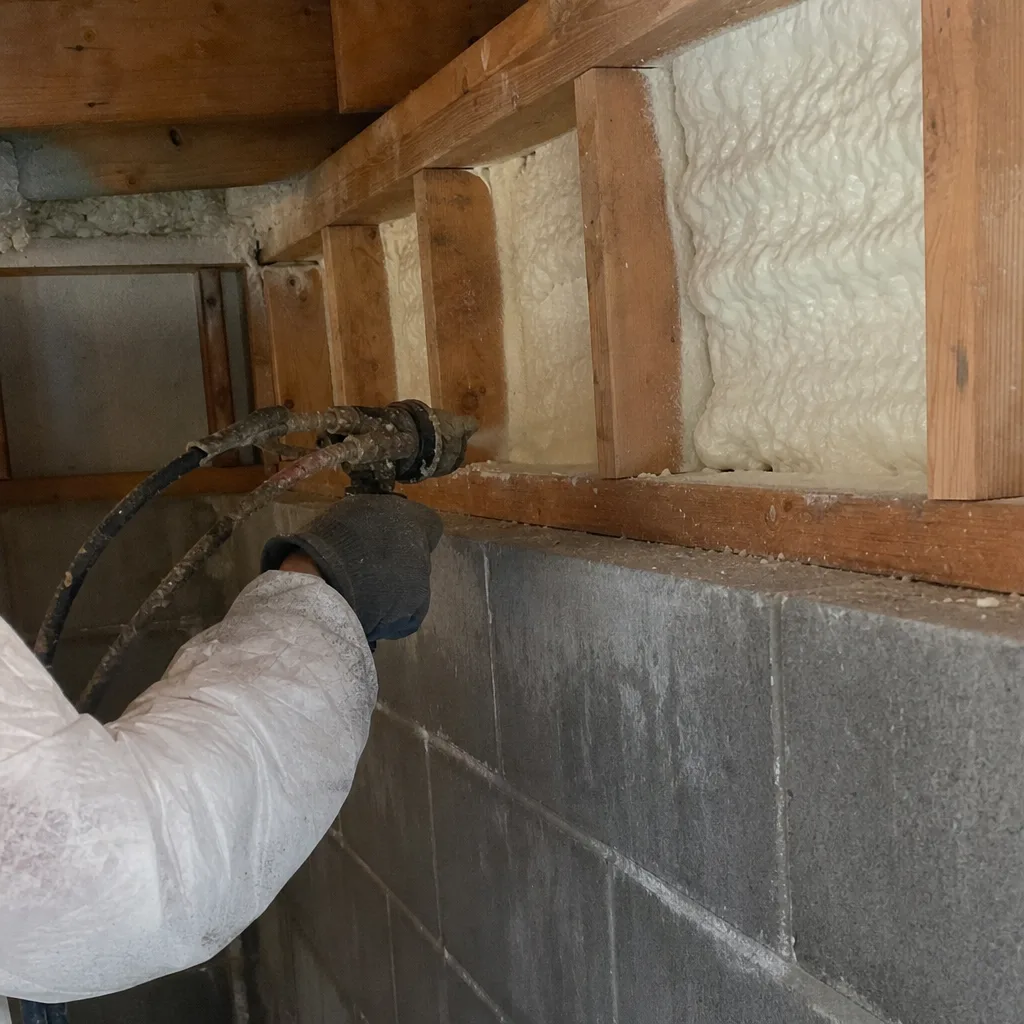
Open-cell spray foam - the lower-density, vapor-permeable formulation - is aggressively sold in Pomona as a cure-all. It is not. Open-cell has a place: unvented cathedral ceilings where roof deck drying must be managed, and rim joist sealing in basements. But in a vented Pomona attic, open-cell on the roof deck traps moisture against wood in winter, when the marine layer pushes humid air up the hills. We’ve removed failed open-cell installations from Pomona attics where the sheathing rotted in four years.
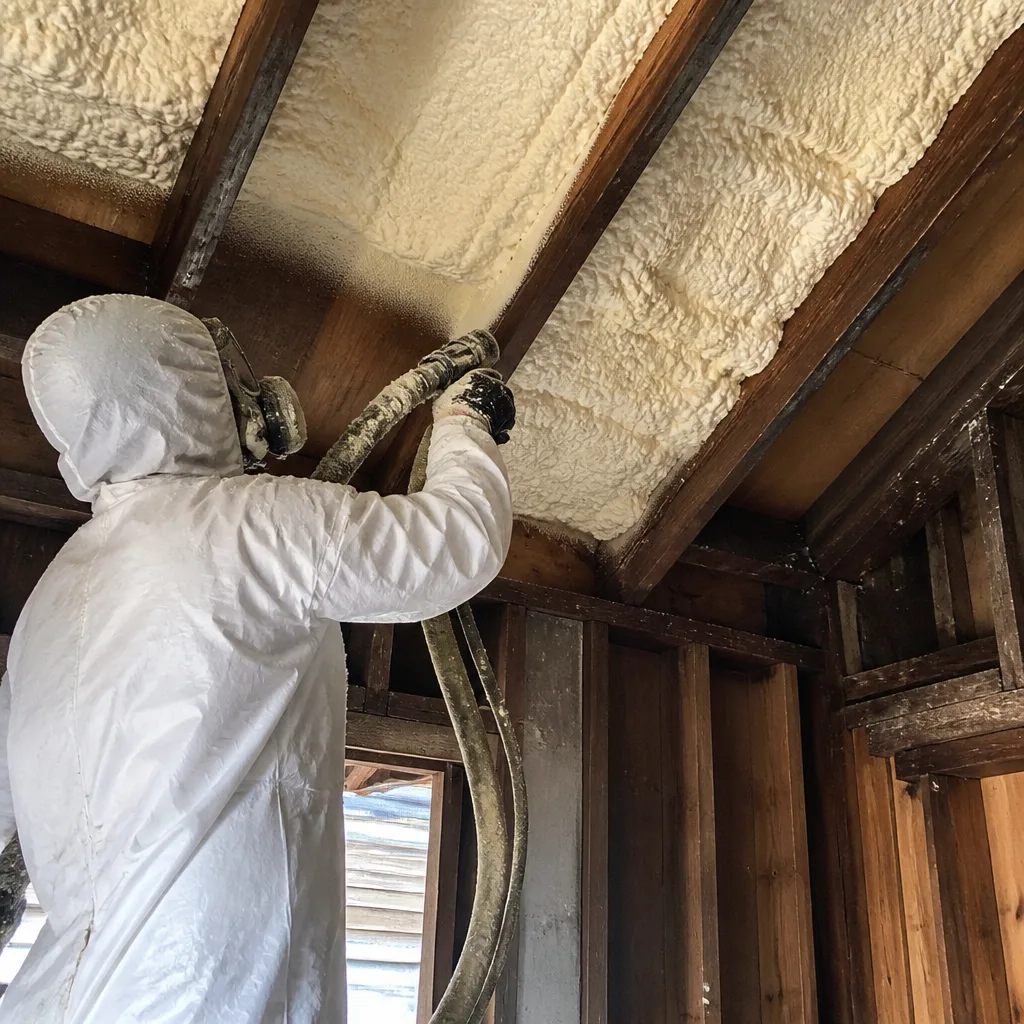
Closed-cell spray foam, at 2.0 lbs density, is the correct choice for conditioned attics, crawl space walls, and steel-frame applications. We apply Demilec or Icynene closed-cell products at 2-3 inches for air barrier and condensation control. Spray foam insulation in Pomona should never be specified without a moisture management plan - and that plan should be in writing before work starts.
Fiberglass Batts: Limited Appropriate Use
Fiberglass batts from Owens Corning or CertainTeed still work in standard wall cavities with perfect installation - which means no compression, no gaps, no voids. In Pomona’s heat, we limit batts to interior wall applications and new construction where cavity geometry is uniform. For attic floors, batts are the wrong tool: they leave thermal bypasses at every joist end, electrical penetration, and framing irregularity.
The Sealing-First Rule: Why Order Matters
This is the most expensive mistake we correct in Pomona. A homeowner adds insulation - blown cellulose, batts, even spray foam - over a leaky attic floor. The insulation performs for one season, then the house feels drafty again, the bills don’t drop, and the contractor is long gone.
Here’s what happened: insulation does not stop air movement. It slows conductive heat transfer. When air moves through or around insulation, it carries heat with it - convective bypass - and the effective R-value collapses. A study by the Florida Solar Energy Center found that a 2% gap in an insulation layer can reduce effective performance by 30%. In Pomona’s pressure-driven climate, with hot attic air trying to push down through every crack in summer, those gaps are everywhere.
The correct sequence, which we enforce on every job:
- Test the envelope with a blower-door - a pressurization reading that shows, in one number, how much air your building envelope is losing. We record CFM50 (cubic feet per minute at 50 pascals) before any work.
- Locate leaks with infrared imaging and smoke pencil tracing while the blower door runs. In Pomona’s 1960s stock, the typical leak pattern is: top plates of interior walls, plumbing and electrical penetrations, recessed light housings, chimney chases, and dropped soffits over kitchen cabinets.
- Seal every leak with appropriate material: fire-rated caulk for top plates and electrical boxes, rigid foam and spray foam for large penetrations, weatherstripped dams for attic access hatches.
- Re-test with the blower door. We don’t proceed to insulation until the CFM50 drops to our target - typically 35-50% reduction for a 1960s Pomona home.
- Install insulation over the sealed surface, with verified depth and density.
- Final blower-door test to confirm no new leaks were created during insulation work.
We’ve documented this sequence on every applicable job since 2016. A typical Pomona attic starts at 4,200 CFM50, drops to 2,100 after sealing, and holds near that after insulation. The homeowner gets both numbers in writing. Without that documentation, you have no proof the sealing happened - and in Pomona’s climate, unsealed insulation is wasted money.
How to Read a HERS Report and Your ACH50 Number
California requires a Home Energy Rating System (HERS) verification for most insulation work that triggers a permit. The HERS rater is a third-party verifier, not your contractor. Understanding their report protects you from paying for work that doesn’t perform.
The key number is ACH50 - air changes per hour at 50 pascals of pressure. This measures how many times your home’s entire air volume would be replaced in one hour under standardized test conditions. Here’s how to read it for a Pomona home:
- Above 10 ACH50: Very leaky. Typical of pre-1970 Pomona stock with original windows and no prior air sealing. Priority is sealing, not more insulation.
- 7-10 ACH50: Leaky. Common in 1970s-1980s Pomona homes. Sealing will yield major comfort and bill improvements.
- 5-7 ACH50: Moderate. Achievable with good sealing work. Insulation additions will perform as rated.
- Below 5 ACH50: Tight. Requires mechanical ventilation (exhaust fans, ERV/HRV) to maintain indoor air quality. Don’t seal further without adding ventilation.
The HERS report also includes a CFM50 number - raw cubic feet per minute. For context, a 1,600 square foot Pomona ranch at 8-foot ceilings has about 12,800 cubic feet of volume. At 10 ACH50, that’s 2,133 CFM50. At 5 ACH50, it’s 1,067 CFM50. We target 5-7 ACH50 for most Pomona homes, which balances efficiency with healthy ventilation.
Other HERS report elements to verify:
- Installed insulation depth: Measured at multiple points with a probe. R-38 cellulose at settled density is about 10-11 inches. If your report shows 7 inches, you didn’t get R-38.
- Grade 1 installation: The highest HERS installation grade, meaning no gaps, voids, or compression. Anything less and your effective R-value drops.
- Air sealing verification: Visual inspection of sealed penetrations, with photos. If this section is missing, the sealing may not have happened.
Before you sign any insulation contract in Pomona, read our How to Hire a Insulation Contractor in Pomona: A Step-by-Step Guide, and ask: “Will a HERS rater verify this work, and will I receive the report?” If the answer is no, the work won’t meet code and you won’t have documentation of what was actually done.
Insulation by Neighborhood: Pomona’s Housing Stock
Pomona’s neighborhoods have distinct construction eras, and the insulation strategy changes with each.
Mayfair, Westmont, and Lincoln Park (1940s-1960s)
These neighborhoods hold Pomona’s oldest substantial housing stock: postwar bungalows and early ranch homes with minimal original insulation. Attics typically have R-11 batts or nothing. Walls are uninsulated 2×4 construction. The priority is attic air sealing and dense-pack cellulose to R-49, with wall insulation via exterior access during re-siding or interior access during renovation. We’ve found knob-and-tube wiring still active in some Lincoln Park attics - this must be replaced before any insulation contact.
Philips Ranch (1980s-1990s)
Planned community with better original construction but specific failure patterns. Attics have R-19 batts that have sagged to effective R-12. The raised heel trusses allow full-depth insulation at the eaves - a design advantage many contractors waste by stuffing batts and compressing them. Blown cellulose to R-49, with proper baffles at every vent channel, corrects this. We’ve also found widespread duct leakage in Philips Ranch attics - the flex duct connections failed where they exit the plenum. Sealing ducts before insulating is critical here.
Downtown Pomona and Multi-Family (Mixed Era)
Older apartment buildings and converted commercial structures present fire-rating requirements that standard residential insulation doesn’t meet. Mineral wool batts - Rockwool or Johns Manville - provide the necessary fire resistance between units and at penetration assemblies. Spray foam is rarely appropriate in these buildings due to ignition barrier requirements and limited access for proper application.
North Pomona and Recent Infill (2000s-Present)
Newer construction that should meet code but often doesn’t perform. The issue is typically trade sequencing: insulation installed before final air sealing, or spray foam applied too thin to achieve rated R-value. We provide Topside Attic Insulation Pomona home assessments for these properties, focusing on blower-door verification of what the builder actually delivered.
What a Completed Job Should Document
Under Haven Standard Clause 1, every job begins with a written price and ends with a documented record. Here’s what you should receive when an insulation crew leaves your Pomona home:
- Written scope of work - signed before work starts, describing every assembly to be treated, materials specified by brand and R-value, and the air-sealing sequence.
- Pre-work blower-door reading - CFM50 and ACH50, with date, time, and outdoor temperature. Conditions matter: a test at 55°F reads differently than one at 85°F.
- Post-sealing blower-door reading - proving the envelope was tightened before insulation went in.
- Installed R-value verification - depth measurements at minimum five locations, photographed, with insulation brand and lot number recorded.
- Permit and HERS documentation - permit number, HERS rater name and certification, final verification report.
- Documented Photo Record - included on every job, not available on request. Photos of: attic before, leaks identified, sealing work completed, insulation depth verification, final condition.
- Written warranty and 365-Day Done Right Promise - specific coverage terms, with no exclusion for “settling” or “normal degradation.”
If your contractor delivers less than this, you don’t have a record of what you paid for. In Pomona’s climate, that means you won’t be able to prove why your upstairs bedroom still hits 94°F in August.
What Insulation Costs in Pomona
Pricing insulation by the square foot is imprecise - the condition of what exists, the accessibility of the space, and the sealing work required all move the number. That said, Pomona homeowners deserve a realistic range before calling. Here’s what most jobs in a home this size run between, based on our 2023-2024 work:
| Scope | Typical Range | What Drives the Price |
|---|---|---|
| Attic air sealing only (no insulation) | $1,200-$2,400 | Attic square footage, number of penetrations, can light replacement count |
| Attic seal + blown cellulose to R-38 | $2,800-$4,500 | Existing insulation removal, attic accessibility, square footage |
| Attic seal + blown cellulose to R-49 | $3,400-$5,200 | Depth required, baffle installation, platform building for storage |
| Wall insulation (dense-pack cellulose, per sq ft of wall) | $3.50-$5.50 | Access method (exterior vs. interior), cavity condition, electrical upgrade needs |
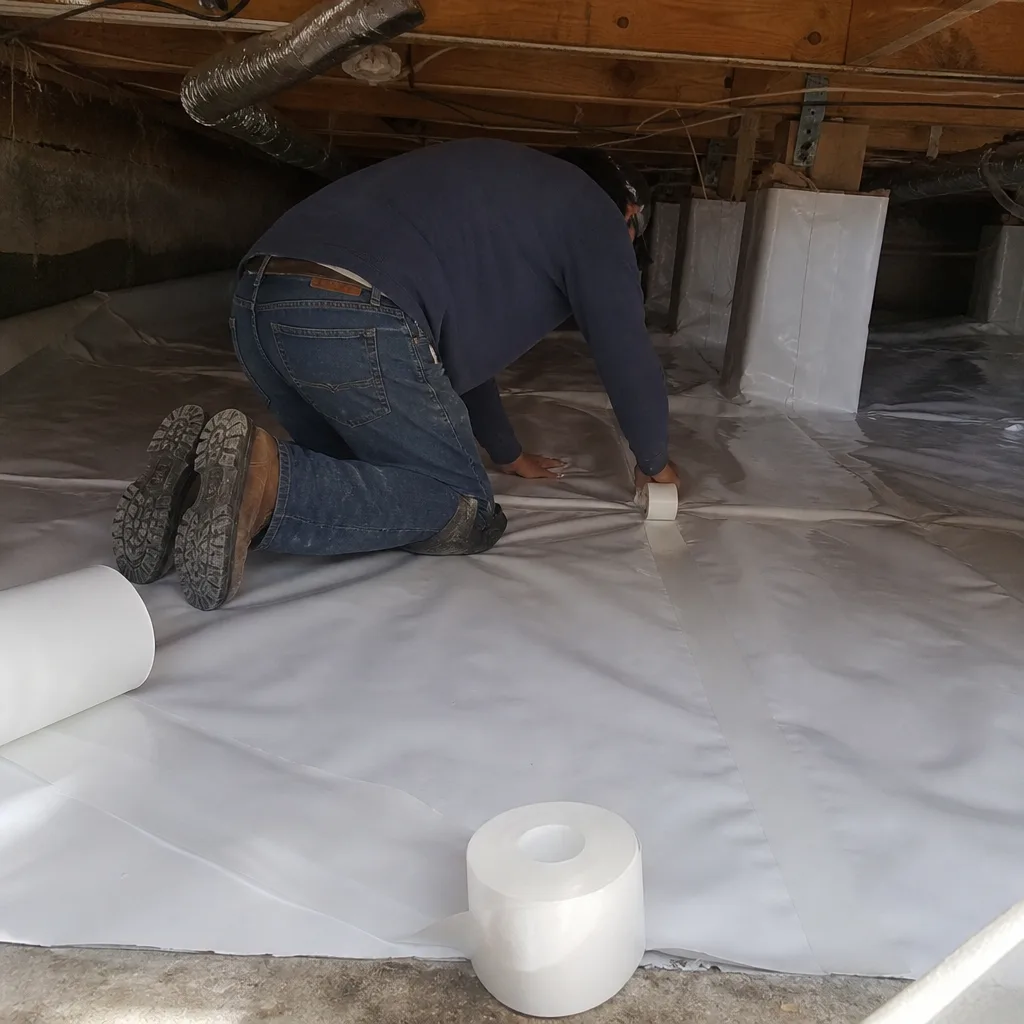
| Crawl space encapsulation + vapor barrier | $4,500-$8,500 | Crawl space height, existing moisture damage, perimeter sealing extent |
| Spray foam (closed-cell, per board foot) | $1.80-$2.80 | Thickness specified, substrate preparation, ignition barrier requirements |
These ranges include the sealing work that must precede insulation. A quote that omits air sealing, or buries it as a line item you can decline, is not a complete quote for Pomona conditions.
We provide a Written Price Before Any Work Starts, always - Haven Standard Clause 1. We also offer a Free Second Opinion on any written estimate: bring us a competing quote and we’ll read it with you, line by line, to identify what’s included, what’s omitted, and what Pomona’s climate will test.
Common Mistakes to Avoid
- Adding insulation over unsealed leaks. This is the most common error we correct. The new insulation performs for one season, then convective airflow degrades it. The fix costs more than doing it right the first time.
- Specifying open-cell spray foam in a vented Pomona attic. The moisture risk is real and expensive. We’ve removed rotted roof decks where this was done.
- Ignoring the HERS requirement. Unpermitted work in Pomona triggers problems at sale - and voids your ability to verify what was actually installed.
- Compressing batts to fit. A batt compressed from 6 inches to 3 inches loses half its R-value. We see this constantly in eaves and around obstructions.
- Blocking soffit vents with insulation. Pomona attics need ventilation to shed heat. Baffles at every rafter bay maintain airflow; without them, you trap moisture and overheat shingles.
- Accepting “R-value at manufacture” as installed performance. Settled, compressed, or gapped insulation performs below label. Only a HERS-verified Grade 1 installation guarantees what you paid for.
- Hiring based on lowest price without documentation requirements. The cheapest quote usually omits sealing, skips permits, and provides no performance verification. In Pomona’s climate, that’s the most expensive choice long-term.
When to Call a Professional
Call a professional when your upstairs rooms exceed 85°F on summer afternoons despite running AC continuously; when your winter gas bill spikes without rate changes; when you find compressed, disturbed, or wet existing insulation; or when you’re considering any insulation work that requires permit and HERS verification. Topside Attic Insulation Pomona offers free estimates in Pomona - call (562) 242-7569. We’ll run a blower-door assessment, show you the leak pattern, and deliver a written price before any work starts.
Frequently Asked Questions
Most attic insulation jobs in a typical Pomona home run between $2,800 and $5,200 including air sealing, depending on square footage, existing material removal, and the R-value target. A written estimate with line-item scope is the only way to know your exact number - call (562) 242-7569 for a free assessment.
Replacement is usually the better value in Pomona’s climate. Existing insulation in 1960s homes is typically R-11 or less, compressed below original thickness, and contaminated with rodent debris or dust. Repair attempts - spot-adding over old material - leave thermal bypasses and don’t address the air leaks that caused the original failure. We remove and replace with sealed, verified new insulation.
No - and any contractor who says yes is skipping critical steps. We perform a blower-door test, photograph the attic condition, and produce a written scope with fixed price before work is scheduled. Under Haven Standard, no work starts without a written price. Same-day installation means same-day shortcuts.
Because insulation slows heat transfer but doesn’t stop air movement. In Pomona’s 150°F+ attics, even small leaks - top plates, can lights, chimney chases - pump hot air into conditioned space faster than your AC can remove it. The fix is air sealing first, then verifying with a blower-door test. We’ve seen homes with R-30 insulation perform worse than R-19 homes that were properly sealed.
Yes, for most work exceeding 500 square feet or involving spray foam. The permit triggers HERS third-party verification, which protects you from substandard installation. Unpermitted work can be flagged in a real estate transaction and may void insurance coverage for related damage. We handle permit submission as part of every job.
Request the HERS verification report, the post-installation blower-door reading, and the depth verification photos. Correct installation in Pomona means: sealed penetrations before insulation, verified depth at multiple points, no compression or gaps, and a final blower-door number proving the envelope tightened. Without documentation, you don’t know - and neither will the next buyer of your home.
The Bottom Line
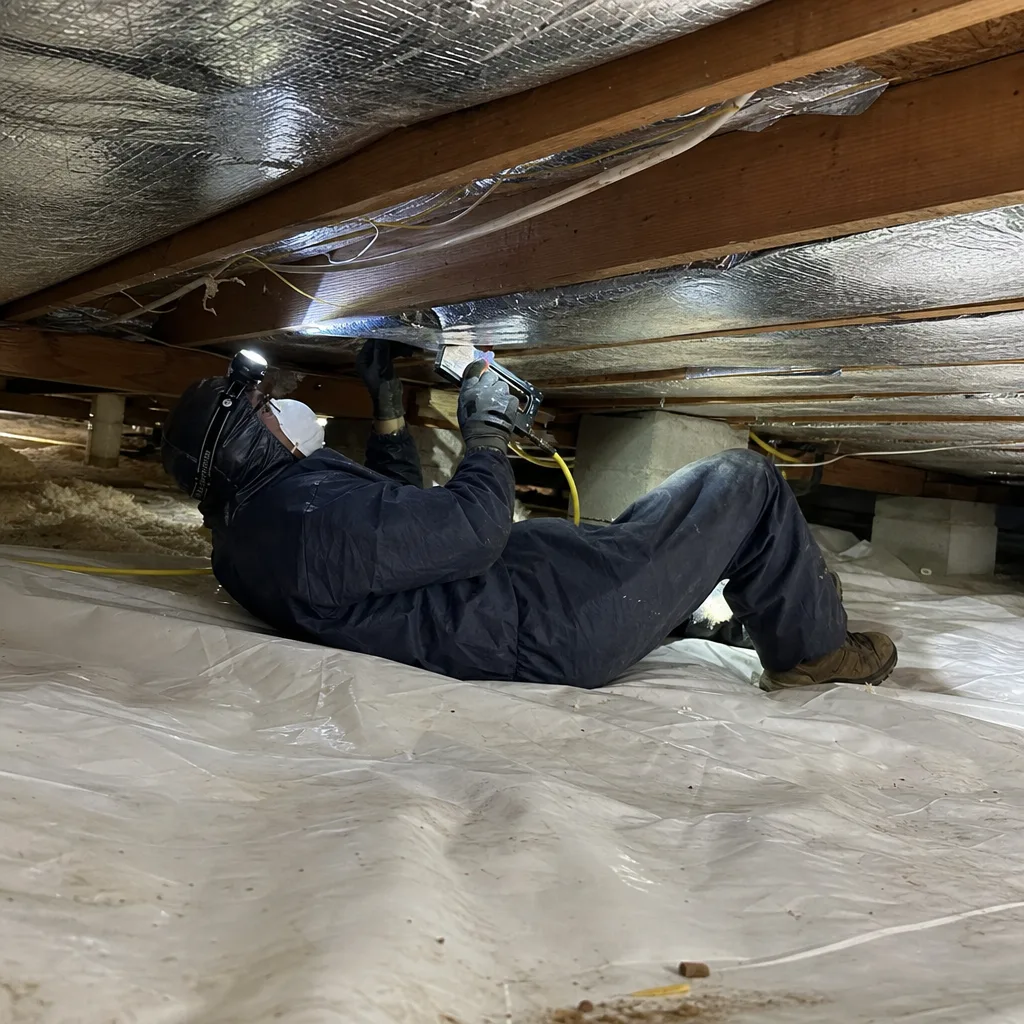
Pomona’s inland heat bowl climate, aging housing stock, and code requirements create insulation failure patterns that generic advice misses. The right approach is specific: air seal first with blower-door verification, select materials for 150°F attic survival, install to verified depth with HERS documentation, and receive written proof of what was done. Anything less wastes money in this climate. We’ve sealed and insulated 9,000+ homes since 2016, every one with a written price before work started and a documented record when the crew left. The 365-Day Done Right Promise applies to all completed work.
Ready to assess your Pomona home’s envelope? Call (562) 242-7569 for a free estimate. A live person answers 24/7 - no voicemail loops, no callback windows measured in business days. We’ll run the blower-door test, show you the leak pattern, and deliver a written price before any work starts. Haven Standard: Have it in writing.
Written by Wes Okafor, Owner at Topside Attic Insulation Pomona, serving Pomona since 2016.