
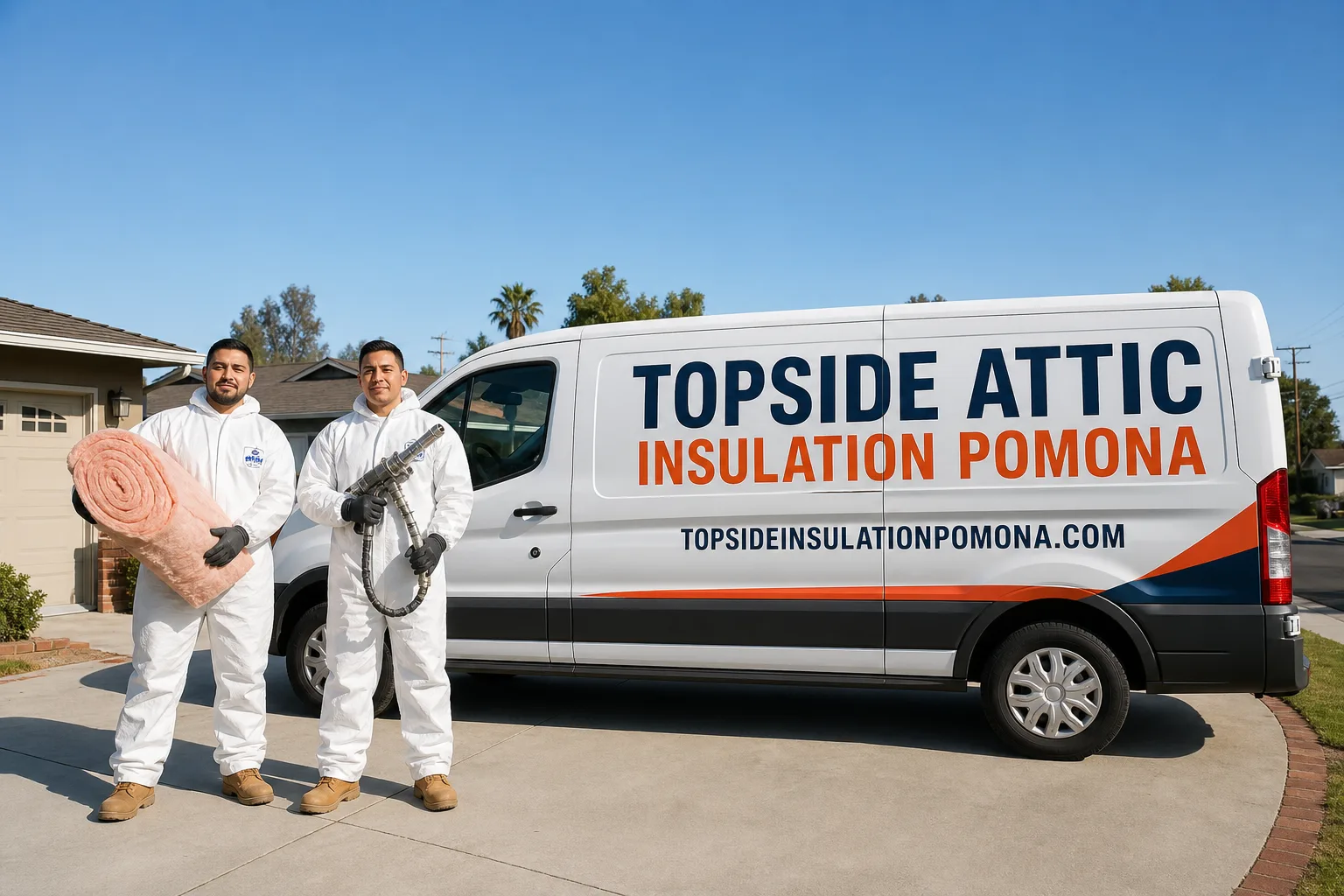
How Much Does Radiant Barrier Installation Cost in Pomona?
Radiant barrier installation in Pomona, CA typically costs between $1,400 and $3,200 for a standard single-story home, with most jobs landing around $1,800 to $2,400 when the attic is accessible and reasonably clean. Foil staple-up jobs on open rafter decking run toward the lower end; hybrid systems that combine a foil barrier with blown-in insulation below it push toward the top. At Envelope Insulation Co., every quote is written before any work starts – no surprises when the crew shows up.
Radiant Barrier Installation Cost Breakdown (2026)
Radiant barrier installation in Pomona, CA typically costs between $1,400 and $3,200 for a standard single-story home, with most jobs landing around $1,800 and $2,400 when the attic is accessible and reasonably clean. Foil staple-up jobs on open rafter decking run toward the lower end; hybrid systems that combine a foil barrier with blown-in insulation below it push toward the top. At Envelope Insulation Co., every quote is written before any work starts – no surprises when the crew shows up.
Below is how those dollars break down across the variables we see most often on Pomona jobs.
| Scope / Configuration | Typical Cost Range (2026) | Notes |
|---|---|---|
| Foil staple-up only – rafters exposed (1,000-1,500 sq ft attic) | $1,400 – $1,900 | Standard on most 1,200-1,600 sq ft ranch-style homes in Pomona |
| Foil staple-up only – rafters exposed (1,500-2,500 sq ft attic) | $1,800 – $2,600 | Common on split-level and two-story homes near Garey Ave corridor |
| Foil over existing blown-in (retrofitting on top of insulation) | $2,000 – $2,900 | Requires careful stapling to avoid compressing existing R-value |
| Radiant barrier + attic air sealing (top plates, can lights, penetrations) | $2,400 – $3,600 | This is the combination we recommend; air sealing always precedes insulation under our process |
| Radiant barrier + blown-in insulation upgrade (hybrid system) | $2,800 – $4,200 | Full-envelope upgrade; most impactful for homes built before 1990 with under-R-30 attics |
| Insulation removal + radiant barrier install (dirty or rodent-damaged attic) | $3,200 – $5,500+ | Removal adds significant labor; pricing depends on existing material depth and contamination |
| Perforated foil upgrade (over standard solid foil) | Add $150 – $350 | Perforated foil allows moisture vapor to pass through – worth the upgrade in Pomona’s occasional June marine-layer periods |
What Pushes the Price Up
Three things drive radiant barrier costs above the midpoint in Pomona more consistently than anything else. First, attic access: older homes in the Lincoln Park and Tri-Community areas often have hatches under 22 inches, which slows crew movement significantly and adds time. Second, truss configuration: open rafter decking is fast; cut-and-stack trusses with diagonal webbing require working around framing members, which adds an hour or two on a 2,000-square-foot attic. Third, existing insulation depth – when blown-in sits above the top plates, we have to work on top of it without compressing it, which is slower and harder on the material.
What Keeps the Price Down
Clean, open attics with a full-size hatch near the ridge and good head clearance are the jobs that come in at the lower end of every range above. If your attic was last serviced recently, there’s no rodent debris, and the rafter bays are unobstructed, a skilled crew can cover 1,800 square feet of rafter surface in a single day. Combining the radiant barrier with another service – attic air sealing especially – also tends to reduce the per-service cost because mobilization is shared.
What Affects Radiant Barrier Installation Pricing in Pomona
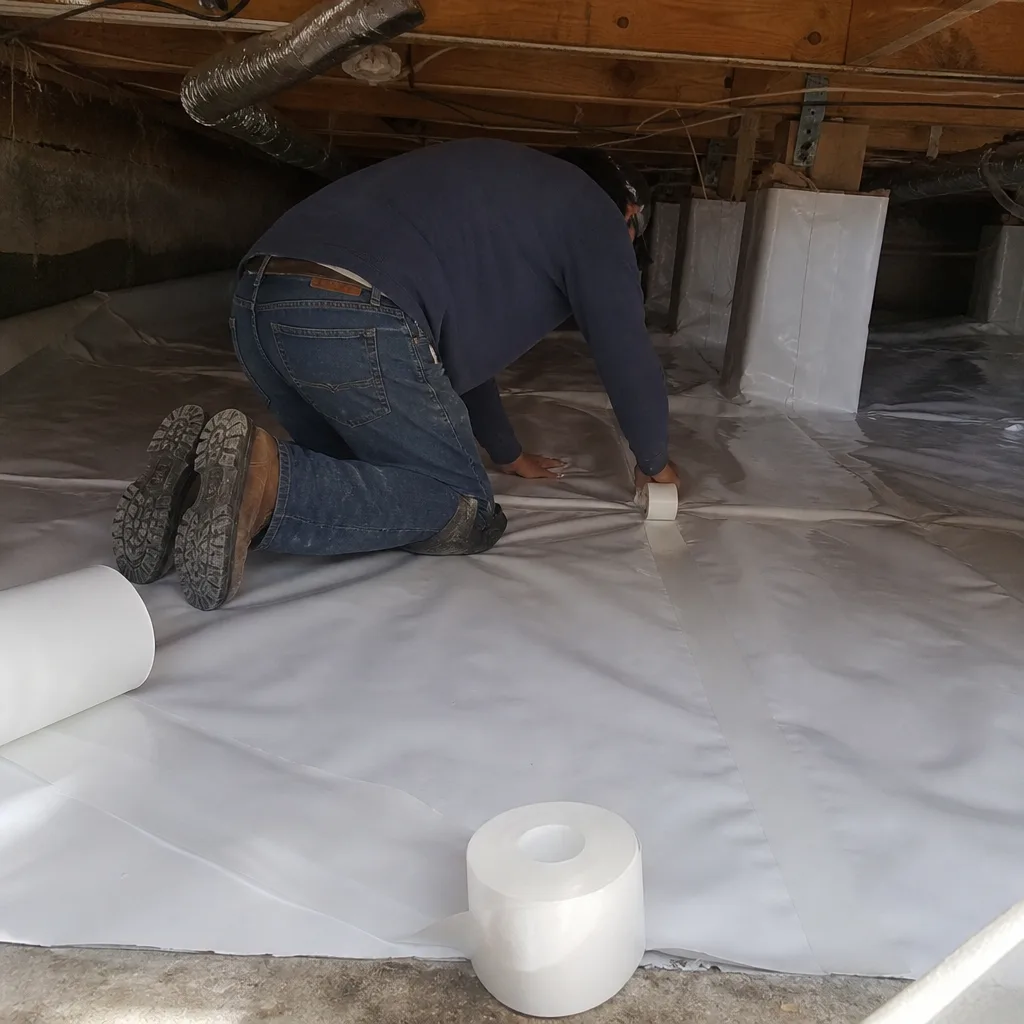
Pomona’s housing stock is diverse in ways that matter for radiant barrier pricing. We see 1950s ranch homes in the Westmont area with original fiberboard sheathing, 1970s-era tract homes near Cal Poly Pomona with flat rafter bays, and newer construction east of Garey with engineered trusses. Each one prices differently. Here are the six factors that move the number the most.
- Attic square footage: Most Pomona single-family homes fall between 1,100 and 2,400 square feet of attic floor area. Radiant barrier material is priced by the square foot of rafter surface covered (which runs 15-20% larger than floor area), so a 1,200 sq ft attic and a 2,200 sq ft attic are genuinely different jobs – not a small difference.
- Roof pitch and clearance: Pomona’s older ranch homes tend toward 4:12 pitches with decent clearance. Some of the 1960s homes near Lemon Avenue run steeper, 6:12 to 8:12, which limits standing room and requires kneeling work across much of the rafter field. Steeper pitches add labor time.
- Existing insulation condition: If blown-in insulation has settled below R-22 or shows rodent tunneling – something we document photographically on every visit – we’ll flag it before quoting radiant barrier work. Installing foil over inadequate or contaminated insulation doesn’t make sense, and we’ll say so in writing.
- Number of penetrations and obstructions: Homes in Pomona’s older neighborhoods frequently have multiple can lights, exhaust fans, HVAC supply boots, and plumbing vent stacks breaking up the rafter field. Each one has to be worked around and, if we’re doing the air sealing portion, sealed before the foil goes up. More penetrations means more time.
- Foil type – perforated vs. solid: Standard solid foil costs less per roll; perforated foil costs slightly more but lets moisture vapor move through rather than trapping it against the decking. Given Pomona’s proximity to the San Gabriel Valley’s occasional marine-layer intrusion in late May and June, we typically recommend perforated foil for homes without ridge-and-soffit ventilation that meets current California Title 24 ventilation ratios.
- Permit requirements: Radiant barrier installation in the City of Pomona generally does not require a standalone building permit when installed in an existing attic. However, if the project includes significant electrical work (such as adding or relocating recessed lighting) or HVAC duct replacement in the same attic, permit requirements may apply. We pull permits when the scope requires them – that’s in writing before any work starts, under Haven Standard Clause 1.
A Note on Pomona’s Climate and Why Radiant Barriers Work Here
Pomona sits in the eastern end of the Los Angeles Basin, where summer temperatures regularly reach 95-105°F and afternoon sun hits low-slope roofs at a nearly direct angle. On a clear July afternoon, an unshaded dark asphalt shingle roof in the Mission Hills or Ganesha Hills neighborhoods can reach surface temperatures above 150°F. That heat radiates downward through the attic airspace – and that’s exactly the mechanism a radiant barrier blocks. The foil, installed with an air gap facing the heat source, reflects that radiant energy rather than absorbing and transmitting it. Studies from Lawrence Berkeley National Laboratory found radiant barriers in hot, sunny climates reduce attic temperatures by 20-30°F and cut cooling loads meaningfully. Pomona’s sun exposure makes radiant barriers one of the higher-ROI insulation upgrades available here, more so than in coastal cities where marine influence moderates peak temperatures.
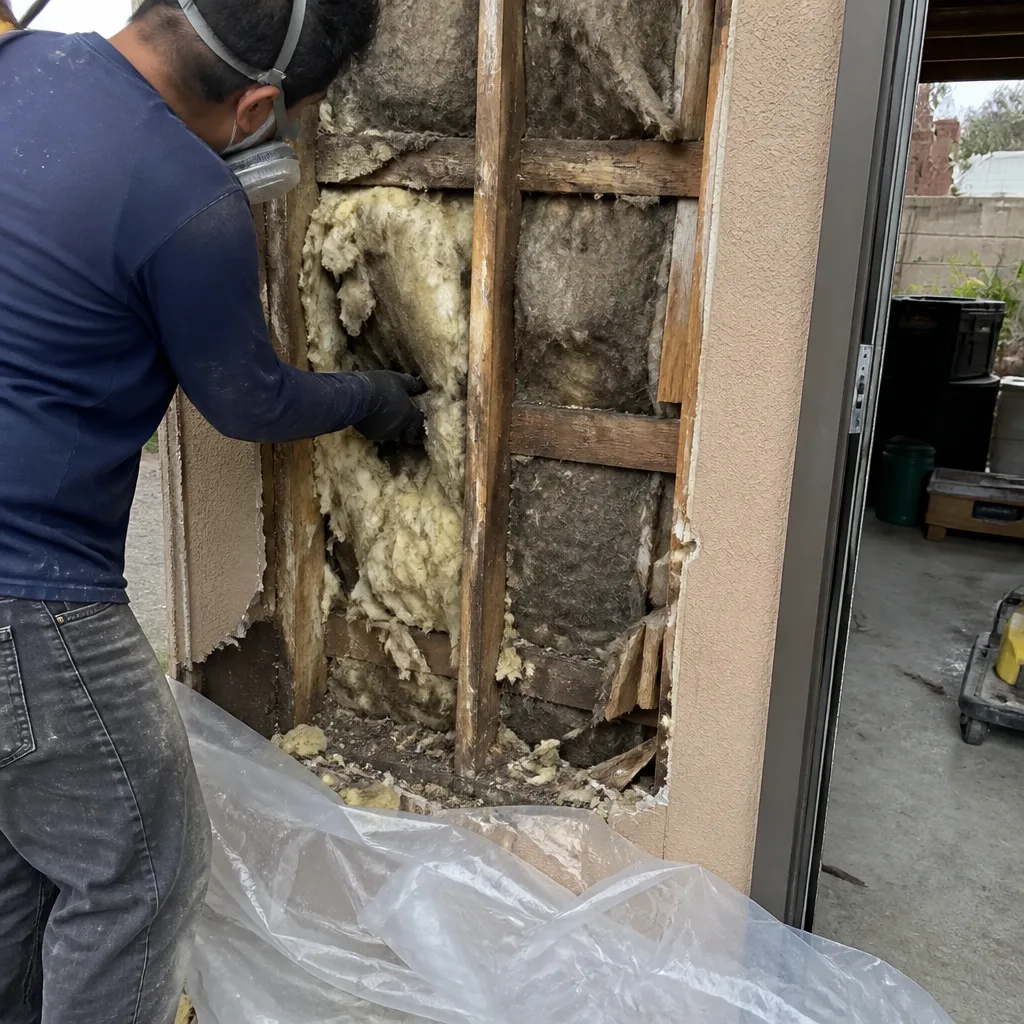 Before
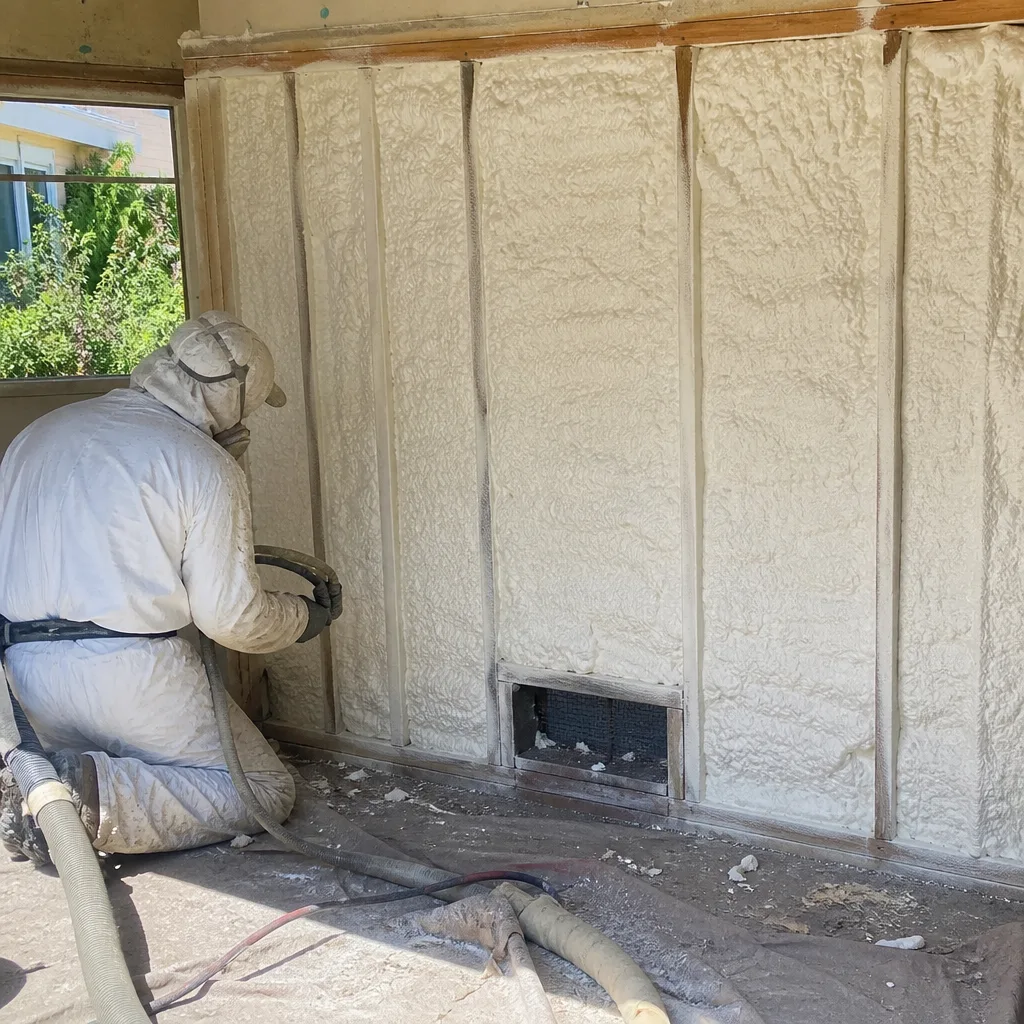 After
AfterRadiant Barrier vs. Additional Attic Insulation: Which Comes First in Pomona?
This question comes up on almost every Pomona job. The short answer: if your attic is already at R-38 or better, a radiant barrier is the logical next upgrade because additional blown-in above R-38 yields diminishing returns on cooling savings in this climate. If your attic is below R-30, adding insulation to depth before adding the barrier will deliver better performance per dollar.
The longer answer is that the two aren’t mutually exclusive – in fact, they work together. The radiant barrier reduces the temperature of the insulation below it, which improves the insulation’s effective performance. Insulation at 130°F loses a meaningful percentage of its rated R-value compared to the same material at 90°F. So a hybrid system – foil on the rafters, then adequate blown-in below – outperforms either product alone. On our Radiant Barrier Installation in Pomona service page, we walk through exactly how we size and sequence these systems.
What we will never do: install blown-in insulation over an attic floor that hasn’t been air-sealed first. Top plates, can light housings, and plumbing penetrations are where conditioned air leaves a Pomona home fastest. Covering those leaks with fiberglass or cellulose without sealing them first is like adding a blanket over a broken window. Under our standard process, air sealing of the attic floor is completed and photographically documented before any insulation or barrier material is added.
How to Save on Radiant Barrier Installation in Pomona
Get a Written Quote First – Then Compare It
Under Haven Standard Clause 1, every Envelope Insulation Co. quote is a flat written price with a written scope and a written warranty – delivered before any work begins. That makes comparison straightforward: you have a document in your hand, not a verbal estimate that can shift after the crew is already in your attic. If you have a competing written estimate, bring it. We offer a free second opinion on any written estimate and will read it with you, line by line, so you know exactly what you’re comparing.
Call (562) 242-7569 to schedule your free estimate. You’ll get a written price before anyone sets foot on a ladder.
Combine Services When the Crew Is Already There
Mobilization cost – getting a crew and equipment to your home – is real. Combining radiant barrier installation with attic air sealing, insulation top-up, or attic cleaning on the same visit eliminates a second mobilization charge and typically saves $200-$500 compared to scheduling those services separately. We see this frequently in older Pomona homes near the downtown core where the attic needs multiple improvements anyway.
Check for Utility Rebates
Southern California Edison offers residential energy efficiency rebates that may apply to radiant barrier installation when it’s part of a qualifying insulation upgrade. The program parameters change year to year, so check SCE’s current rebate finder directly. We can provide the documentation – material specs, installed square footage, before-and-after conditions – that utility rebate applications typically require, because that documentation is part of every job regardless.
Don’t Skip Air Sealing to Save Money
We know it’s counterintuitive to list this under “how to save money,” but it’s true: skipping attic air sealing to reduce the upfront cost of a radiant barrier project is one of the most common ways Pomona homeowners end up spending more over time. The radiant barrier reduces radiant heat gain from the roof. But if conditioned air is still escaping through unsealed top plates and can lights at the rate of 3,000-5,000 CFM50 (a blower-door measurement we see frequently on pre-1990 Pomona homes), the HVAC system is still running hard. The two measures together move the needle on your utility bill. One without the other is a partial fix.
Time the Project Before Summer
March through May tends to be the optimal scheduling window for Pomona attic work – before the heat that makes attic labor genuinely difficult, and early enough that the barrier is performing before peak cooling season. Scheduling in this window generally means faster crew availability and less risk of heat-delay on the install day.
FAQs – Radiant Barrier Installation Cost in Pomona
How much does radiant barrier installation cost in Pomona, CA?
Most radiant barrier installations in Pomona cost between $1,400 and $3,200 for a standard attic, with the midpoint around $1,900 to $2,400 for a foil staple-up on a 1,500-2,000 square foot attic floor. Larger homes, steep-pitch roofs, existing insulation that complicates access, or a combined radiant barrier-plus-air-sealing scope push costs toward $3,000-$4,200. The only way to get a precise number is a written quote based on your specific attic – call (562) 242-7569 and we’ll schedule a free estimate, documented in writing, before any work starts.
Is a radiant barrier worth the cost in Pomona?
For most Pomona homes, yes – particularly those built before 2000 with dark-colored asphalt shingle roofs and attics that routinely hit 140-150°F in summer. Radiant barriers are most cost-effective in climates with high solar intensity and long cooling seasons. Pomona’s inland location, with summer highs regularly above 95°F and direct afternoon sun exposure, places it firmly in the high-benefit zone for radiant barriers. Homes that are primarily heating-dominated (which Pomona homes are not, given the mild winters) see less ROI. If your attic insulation is already at or above R-38, a radiant barrier is typically the next-best envelope upgrade for cooling performance.
How long does radiant barrier installation take in Pomona?
Most single-story Pomona homes with accessible attics are completed in one day, typically 4-8 hours of crew time depending on attic size and configuration. Two-story homes or attics with complex truss geometry run 6-10 hours. Jobs that combine radiant barrier with attic air sealing add time – plan for a full day on those. We provide a time estimate in the written scope so you know what the day looks like before we start.
Does radiant barrier installation require a permit in Pomona?
Radiant barrier installation in an existing attic in Pomona typically does not require a standalone building permit. However, if your project includes electrical work – adding or relocating recessed lighting, for example – or significant HVAC modifications in the same attic, permit requirements may apply under the City of Pomona’s building code. We assess permit needs as part of scoping and pull permits when the work requires them. That determination is made before any work starts and documented in the written price.
What’s the difference between a radiant barrier and attic insulation – do I need both?
Radiant barriers and insulation address different heat transfer mechanisms. Insulation slows conductive heat flow – the slow transfer of heat through solid materials like drywall and framing. Radiant barriers block radiant heat – the infrared energy that a hot roof deck beams down through the attic airspace the same way the sun warms your face. In Pomona’s climate, both mechanisms are active in summer, which is why a hybrid system – radiant barrier on the rafters, adequate blown-in below – outperforms either alone. If your insulation is already at R-38 or better, a radiant barrier is typically the higher-priority next step. If you’re below R-30, add insulation first. Call (562) 242-7569 to schedule a free estimate – we’ll assess both in one visit and give you a written quote for each option.
Can I install a radiant barrier myself in Pomona?
The foil material itself isn’t inherently dangerous the way high-tension garage door springs or electrical panels are. That said, attic work in Pomona between June and September involves temperatures that regularly exceed 130°F in the rafter bays, which creates genuine heat-stress risk for anyone working unassisted. Beyond safety, effective radiant barrier installation requires cutting and fitting foil around truss webbing, ensuring a proper air gap on the correct side of the material, and avoiding bridging penetrations in ways that trap moisture. An improperly installed radiant barrier – one that traps moisture against the decking or makes contact with insulation rather than maintaining an air gap – performs poorly and can accelerate wood deterioration. If you’re considering a DIY approach, at minimum get a professional assessment of your attic configuration first so you know what you’re working with.
Key Takeaways
- Radiant barrier installation in Pomona runs $1,400 to $3,200 for most homes, with the typical midpoint around $1,900 to $2,400.
- Pomona’s inland climate – summer highs above 95°F, direct afternoon sun, and long cooling seasons – makes radiant barriers one of the higher-ROI envelope upgrades in this market.
- Attic size, roof pitch, existing insulation condition, and number of penetrations are the four factors that move the price most consistently.
- Combining radiant barrier installation with attic air sealing delivers meaningfully better cooling performance than the barrier alone – and typically costs less than scheduling the two services separately.
- Radiant barrier installation in an existing Pomona attic generally does not require a building permit, but permit needs depend on project scope and are assessed before any work begins.
- Every Envelope Insulation Co. quote is a written flat price with a written scope and warranty – delivered before anyone starts work, under Haven Standard Clause 1.
- Before-and-after blower-door readings are provided on applicable jobs, so you can see the performance change in a single number rather than taking our word for it.
Get a Written Estimate for Your Pomona Home
If you’re weighing Radiant Barrier Installation services for a Pomona home, the first step is a written quote based on your specific attic – not a range pulled from a pricing guide. Envelope Insulation Co. has assessed and completed work on more than 9,000 homes since 2016, every one with a written price before any work started and a documented photo record when the crew left. On applicable jobs, we include before-and-after blower-door readings so you can verify the air-sealing result in a single number.
Wes Okafor and the team at Envelope Insulation Co. serve Pomona and the surrounding San Gabriel Valley. For a free written estimate – no verbal ballparks, no follow-up pressure – call (562) 242-7569. A live person answers. You can also learn more about our full service line on our home page.
If you already have a competing quote in hand, bring it. Under our Free Second Opinion policy, we’ll read it with you line by line so you know exactly what you’re comparing before you decide.
Pricing reflects the Pomona market as of 2026. Topside Attic Insulation Pomona offers free estimates – call (562) 242-7569.
Written by Wes Okafor, Owner at Envelope Insulation Co., serving Pomona since 2016.
What Our Customers Say
"Crawl space encapsulation done properly. Photographs of the vapour barrier at every seam, and the damp smell in the hallway is gone."
- Ainsley P."Two other companies quoted to blow more insulation on top of what was there. These were the only ones who said the existing material had to come out first, and explained why."
- Clifford E."They air-sealed the attic floor before insulating and showed me the blower-door number before and after. The upstairs is finally the same temperature as downstairs."
- Marisol D.