

How Much Does Crawl Space Encapsulation & Vapor Barrier Cost in Pomona?
Crawl space encapsulation in Pomona, CA typically runs between $3,200 and $8,500 for a standard single-family home, with most projects landing around $4,500 to $6,000. A standalone vapor barrier installation – without full encapsulation – costs less, usually $1,200 to $2,800 depending on crawl space square footage and the mil thickness of the liner selected. Most jobs in Pomona are completed in one to two days, and you’ll receive a written price before anyone goes under the house.
Crawl Space Encapsulation & Vapor Barrier Cost Breakdown (2026)
Crawl space encapsulation in Pomona, CA typically costs between $3,200 and $8,500 for a complete system installed in a standard single-family home. That range covers the full scope: ground cover liner, wall liner, seam tape, drainage mat if needed, and foundation vent sealing. Crawl Space Vapor Barrier-only jobs – where a polyethylene sheet goes over the dirt floor without sealing the walls or vents – run $1,200 to $2,800.
Here is how the line items break down for a Pomona-market job in 2026:
| Scope of Work | Typical Cost Range | Notes |
|---|---|---|
| Vapor barrier only (6-12 mil liner, dirt floor) | $1,200 - $2,800 | Covers floor area only; vents and walls left open |
| Full encapsulation – small crawl space (under 1,000 sq ft) | $3,200 - $4,500 | Floor + wall liner + vent sealing, no drainage |
| Full encapsulation – mid-size (1,000-1,800 sq ft) | $4,500 - $6,500 | Most common range for 1940s-1970s Pomona homes |
| Full encapsulation – larger footprint (1,800-2,500 sq ft) | $6,500 - $8,500 | Includes drainage mat, vents sealed, wall liner to grade |
| Dehumidifier (Santa Ana Winery District, older blocks near Garey Ave) | $1,000 - $1,800 added | Recommended when relative humidity exceeds 70% regularly |
| Old vapor barrier removal | $300 - $900 | Depends on liner condition, debris load, crawl space height |
| Crawl space access door upgrade | $150 - $400 | Sealed, insulated hatch to maintain conditioned-space boundary |
| Spray foam rim joist sealing | $400 - $900 | Closes the gap between foundation wall and floor framing |
| Rodent exclusion / wire mesh at vents before sealing | $200 - $600 | Common add-on in older Pomona neighborhoods east of Towne Ave |
Several things push a project toward the higher end. Crawl space height matters – anything under 18 inches slows the crew significantly and adds labor cost. Older Pomona homes built before 1960, particularly those in the blocks between Garey Avenue and White Avenue, often have existing deteriorated liner, standing debris, or evidence of prior rodent activity that has to be addressed before new liner goes down. Homes near the Pomona Valley floor along Holt Avenue sometimes carry more ground moisture than properties at higher elevation near Ganesha Hills, and that can push a project toward a dehumidifier add-on. Permit requirements vary – Pomona does not currently mandate a permit for vapor barrier installation alone, but encapsulation work that involves modifying foundation vents may fall under a mechanical permit depending on scope. Ask your contractor to confirm before work starts; under Haven Standard Clause 1, you’ll have that information in writing before anyone begins.
What Affects Crawl Space Encapsulation & Vapor Barrier Pricing in Pomona
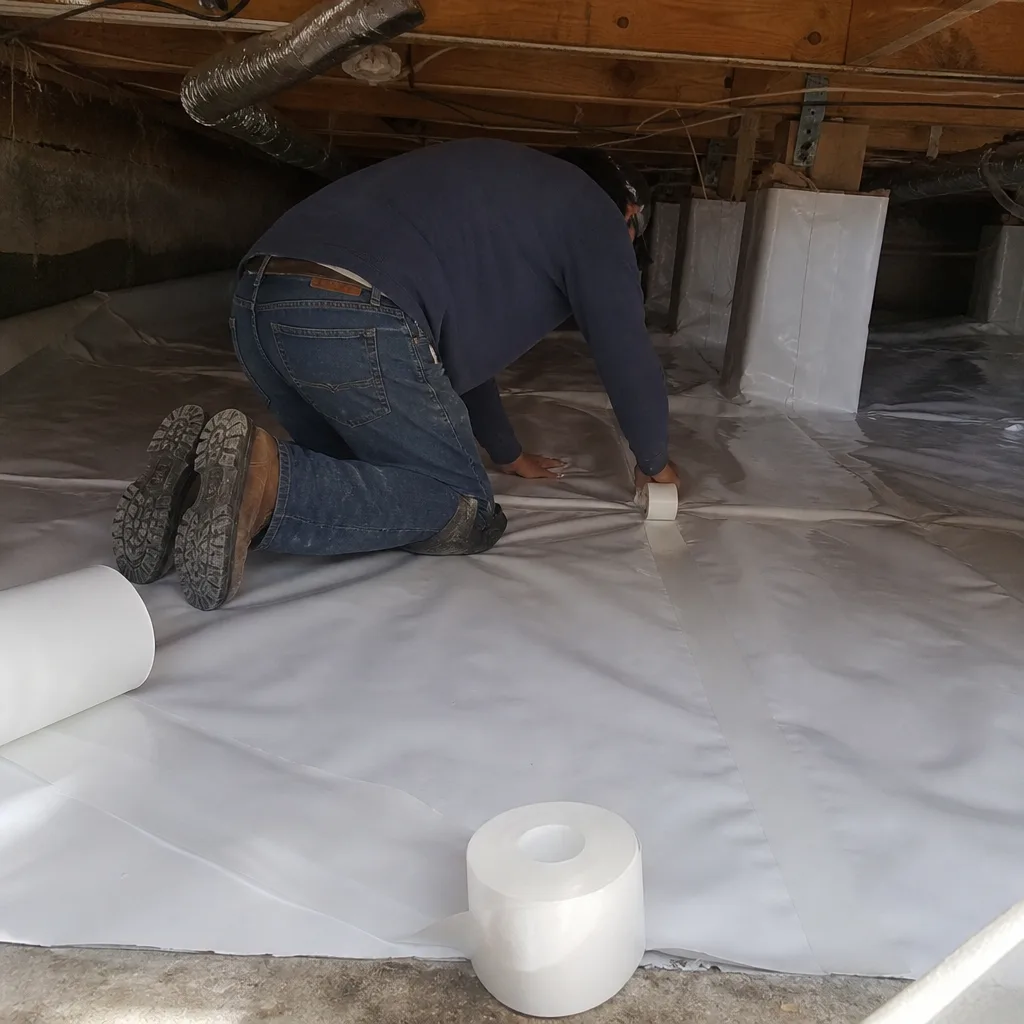
Six variables account for most of the cost spread in the Pomona market. Understanding them helps you evaluate any written quote you receive.
- Crawl space square footage and configuration: Pricing is usually calculated per square foot of floor area plus the linear footage of wall coverage. A simple rectangular crawl space under a 1,400-square-foot Pomona bungalow costs less to line than an irregular space broken up by interior piers, HVAC equipment, or plumbing runs – all of which require additional cutting, seaming, and taping.
- Liner thickness (mil rating): A 6-mil polyethylene sheet is the entry-level option and meets California Title 24 minimum requirements. Most encapsulation systems use 12-mil to 20-mil reinforced liner. Thicker liner costs more per square foot but resists puncture during future access and holds up longer in the San Gabriel Valley’s heat cycles. At Envelope Insulation Co., we spec the liner thickness in writing before the job starts so you know exactly what’s going in.
- Existing moisture damage or debris: Pomona’s older housing stock – particularly the Craftsman and Spanish Revival homes in the historic districts around Phillips Boulevard – often has decades of debris, deteriorated felt-paper barriers, or pest activity under the floor. Removal and disposal of the old material adds labor and landfill cost before new liner can go down.
- Vent sealing and wall coverage: A vapor barrier that stops at the floor is not the same as a fully encapsulated crawl space. Sealing the foundation vents and running liner up the walls to grade – creating a true conditioned-air boundary – adds cost but produces measurably better results. On applicable jobs, we document that boundary with a photo record so you can confirm the coverage you paid for.
- Drainage and dehumidification needs: Parts of Pomona near the base of the San Gabriel foothills, including neighborhoods around Reservoir Street and the older blocks west of Garey, see elevated soil moisture during winter months. When ground moisture is high enough that passive liner alone won’t hold humidity below 60%, a crawl space dehumidifier is the right call – not an upsell. We’ll tell you the measured humidity level and let the number make the case.
- Access difficulty: A standard exterior crawl space hatch at grade level is straightforward. Interior access only, hatch openings under 24 inches, or clearance under 18 inches all increase labor time and therefore price. Pomona homes with post-and-pier foundations on sloped lots near Ganesha Park sometimes have uneven crawl space heights that require additional work at the low points.
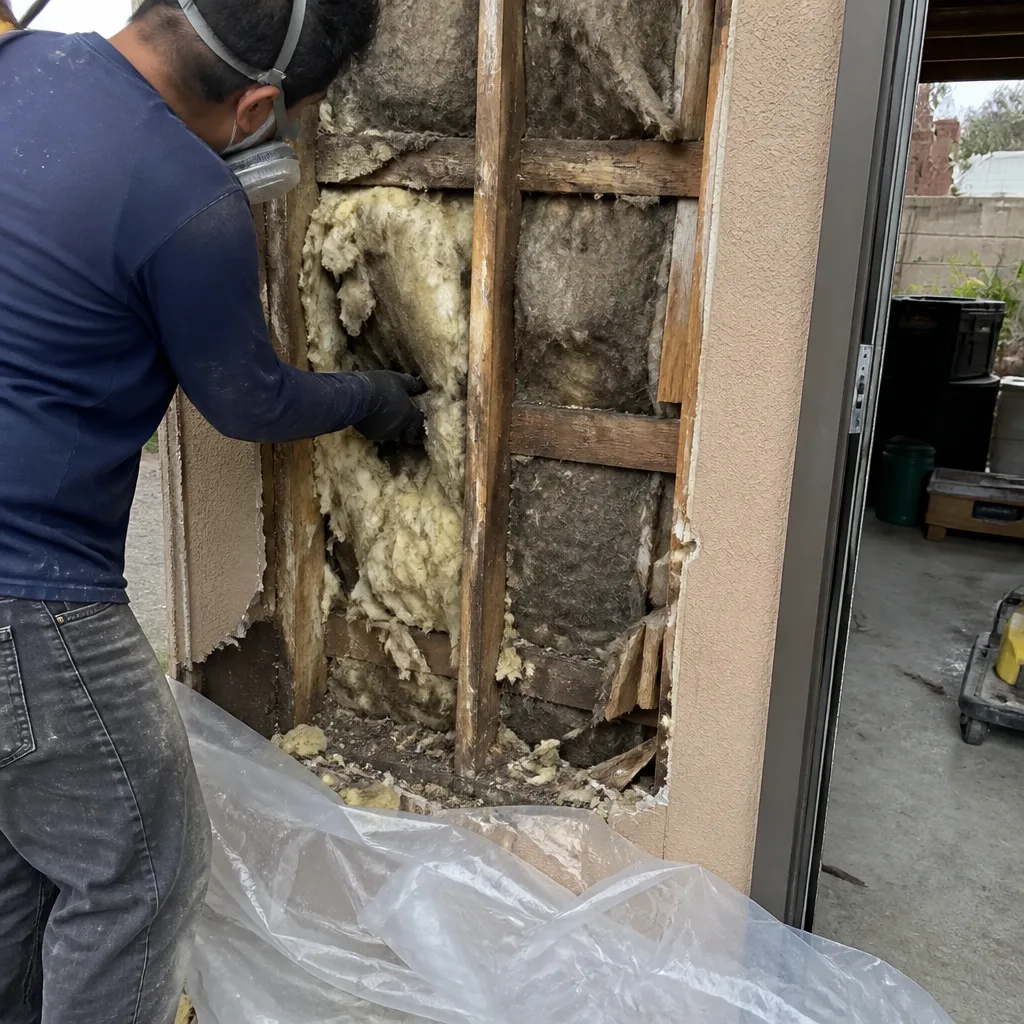 Before
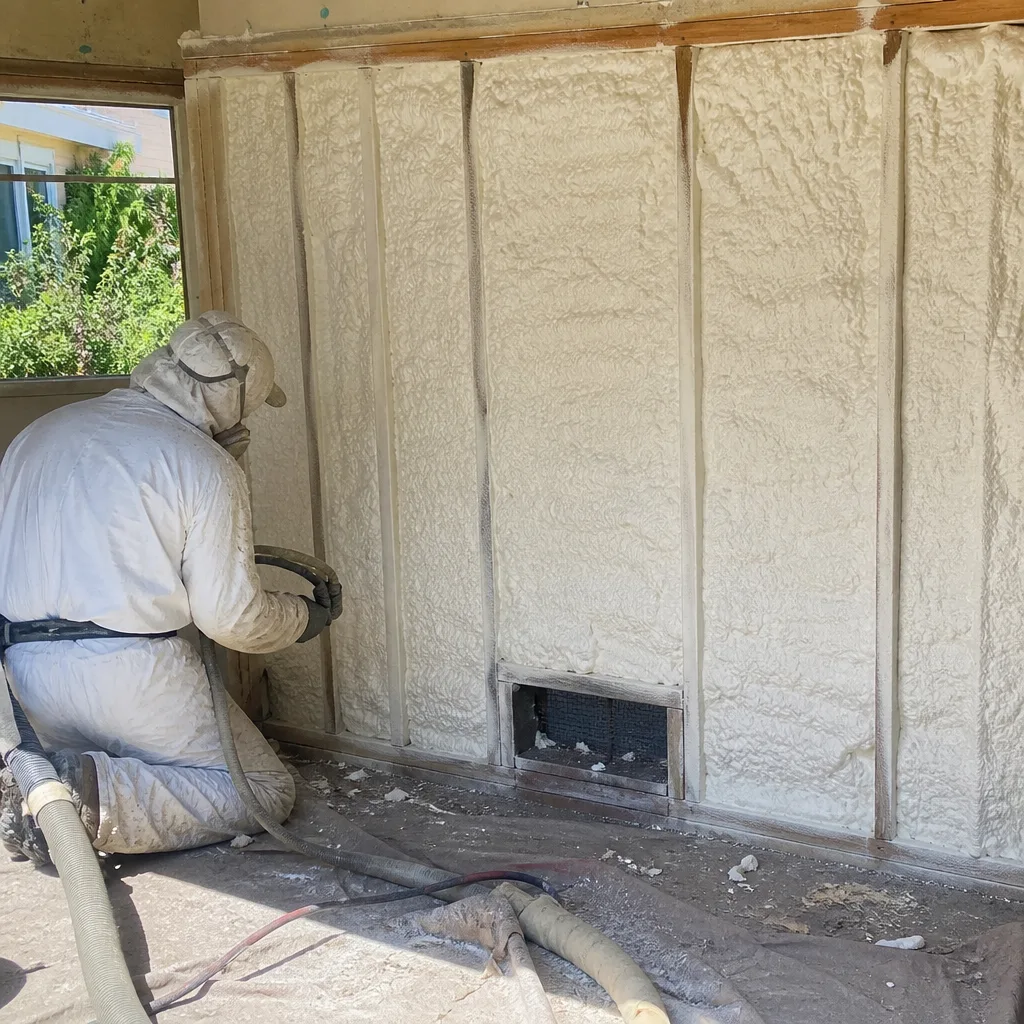 After
AfterCrawl Space Encapsulation vs. Vapor Barrier: What’s the Difference, and Which Does a Pomona Home Need?
This question comes up on almost every estimate we run in Pomona, and it’s worth a direct answer.
A vapor barrier is a sheet of polyethylene plastic laid over the dirt floor of the crawl space. It slows moisture evaporation from the soil into the air above. It’s the minimum – California building code allows it, it’s less expensive, and for a dry crawl space with no recurring moisture issues it can be adequate. If you’re renting and the landlord wants the cheapest compliant option, this is likely what they’re doing.
Full encapsulation seals the floor, walls, and foundation vents to create a conditioned boundary – meaning the crawl space air is no longer connected to outside air. The liner runs up the stem walls and is sealed at the top. Vents are closed and often covered with rigid foam. The result is a crawl space that behaves thermally and hygroscopically more like the inside of your house than like the outside. For Pomona homeowners who have seen recurring musty odors, soft floor sections, or high utility bills, encapsulation typically produces a measurable change – one we can document with before-and-after humidity readings.
Which one you need depends on what’s actually happening under your house. A contractor who recommends full encapsulation without measuring ground moisture or documenting existing conditions isn’t giving you evidence – they’re giving you an opinion. We bring the numbers; you make the call.
For context on how crawl space work fits into the broader building envelope, the home page outlines the full service line – from attic air sealing through crawl space encapsulation and vapor barrier – so you can see where each piece connects.
Local Notes: What We See Under Pomona Homes
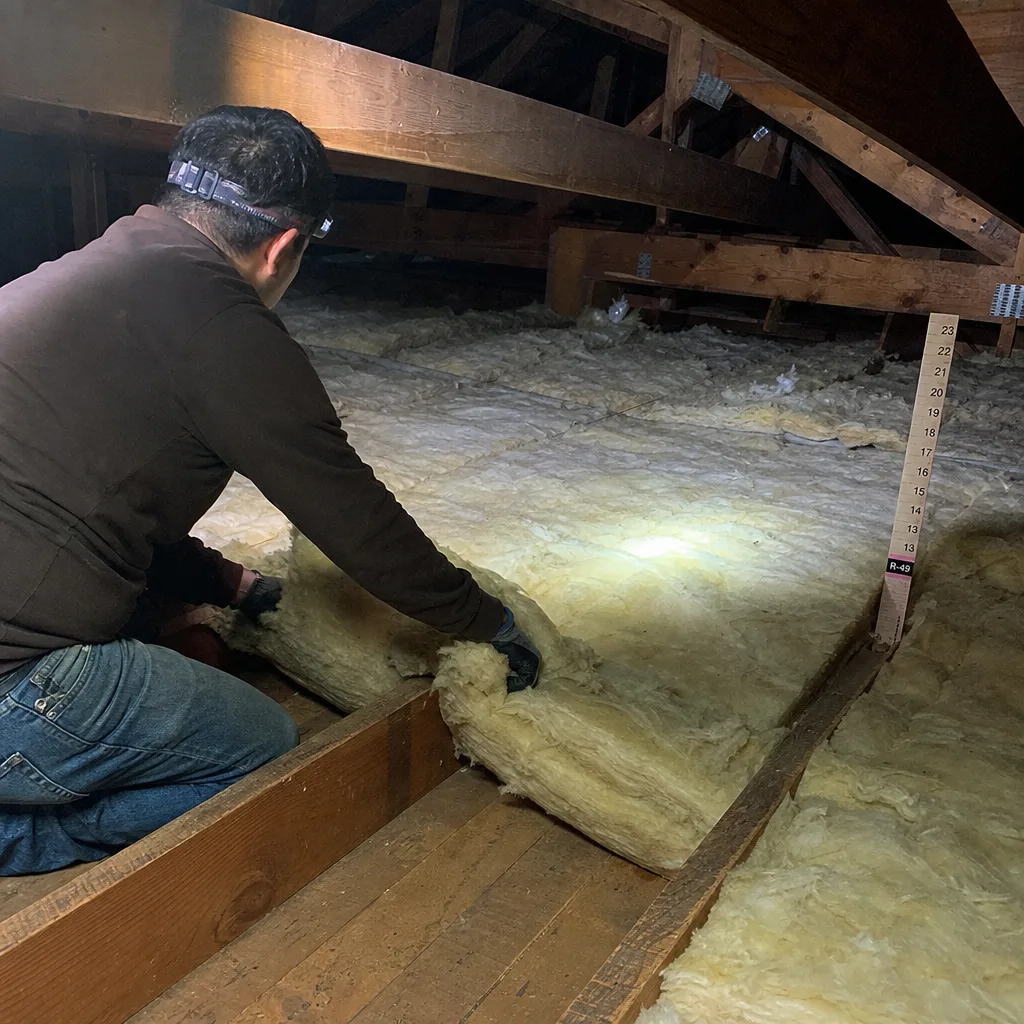
Pomona’s housing inventory is older than most of the surrounding Inland Empire cities. A large share of the single-family homes in Pomona were built between 1920 and 1975, and most of them have vented crawl spaces with either no liner, original felt-paper barriers, or deteriorated 4-mil polyethylene that was installed sometime in the 1980s and is now torn and matted against the soil.
In the Lincoln Park neighborhood and the blocks near Pomona’s historic downtown core, we regularly find crawl spaces where the original wood floor framing has absorbed decades of soil moisture – not enough to compromise structural integrity, but enough that the subfloor reads elevated moisture content with a pin meter. In those cases, we document the readings, include them in the photo record, and in some situations recommend a licensed structural inspector confirm framing condition before we seal the space. That’s not a delay tactic; it’s what you’d want your contractor to do.
Near the 71 freeway corridor and older industrial-adjacent blocks east of Garey Avenue, rodent activity under the floor is more common than in the western sections of the city. Wire mesh exclusion at the old vent openings before sealing is worth doing – and worth doing first, not as an afterthought after the liner is in.
Homes in the hillside sections near Ganesha Park and the Pomona College-adjacent neighborhoods to the northwest generally have drier crawl spaces than the valley-floor properties near Holt Avenue. That difference shows up in moisture readings and in whether a dehumidifier is actually warranted versus just upsold.
If you want to see the specifics for your address, our Crawl Space Encapsulation & Vapor Barrier in Pomona service page outlines exactly what a site visit covers and what documentation you’ll have in hand afterward.
How to Save on Crawl Space Encapsulation & Vapor Barrier in Pomona
There are real ways to reduce cost without compromising the result. There are also ways that look like savings but create problems two years later. Here’s the difference.
- Get a written scope before agreeing to anything. The fastest way to overpay is to approve a vague proposal. A written scope specifies liner thickness, wall coverage height, vent treatment, and warranty duration. Without those details, a lower bid may be a narrower scope – not a better price. Under Haven Standard Clause 1, you’ll have a flat written price and written scope from us before anyone goes under your house. If a competitor won’t produce the same, factor that into how you weigh their number.
- Use our Free Second Opinion on any written estimate. If you’ve already received a quote from another Pomona contractor, bring it to us. We’ll read it line by line with you, identify what’s included and what’s not, and give you our number in writing. No obligation to proceed. This offer exists because we think evidence should win the job, not sales pressure.
- Ask about California utility rebates. Southern California Edison and SoCalGas both periodically offer rebates for crawl space encapsulation work that improves a home’s energy performance. The programs change; ask your contractor to confirm current availability rather than relying on information from a page that may be out of date. We check current program status at the time of estimate.
- Combine crawl space work with other building-envelope projects. A crew already mobilized for crawl space encapsulation can often add rim joist spray foam or crawl space access door work at a lower incremental cost than a separate trip. If you’ve been considering attic air sealing or insulation work, ask whether scheduling them together changes the pricing – it sometimes does.
- Don’t over-spec for a dry space. If ground moisture readings are low and there’s no history of water intrusion, a high-quality 12-mil reinforced liner without a dehumidifier may be exactly the right answer. We’ll tell you what the numbers say, not what sells the most expensive package.
- Address rodent exclusion before the liner goes in. Fixing rodent entry points after encapsulation means cutting into liner you just paid for. Doing it as part of the original job is less expensive. If exclusion is needed, include it in the written scope from the start.
For a free, no-obligation estimate on your Pomona property, call (562) 242-7569. You’ll have a flat written price before any work starts – that’s not a sales promise, it’s a written condition of every job we take on.
What’s Included in a Properly Done Crawl Space Encapsulation Job
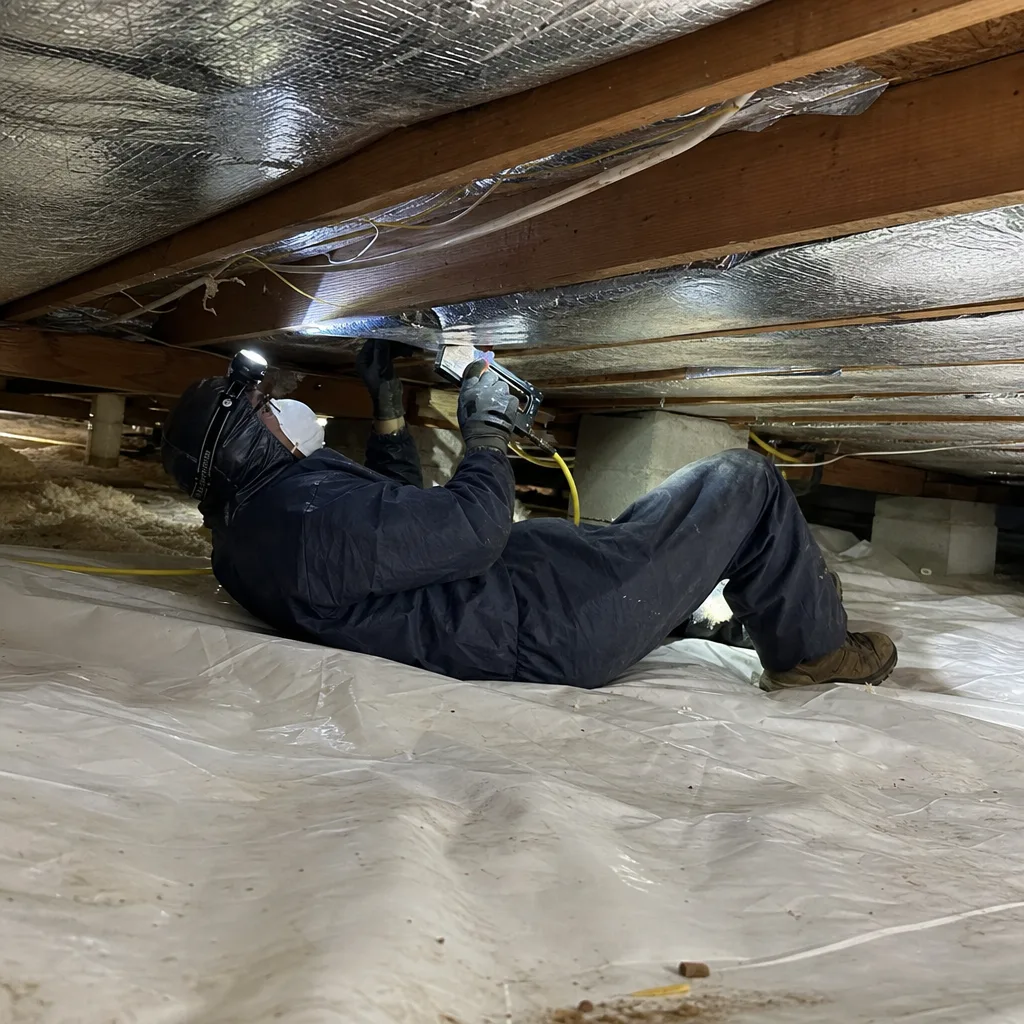
This matters because “encapsulation” gets used loosely. Some contractors install a floor liner, call it encapsulation, and move on. A complete job has more components, and you should be able to verify each one in the written scope and photo record before and after the work.
Here’s what a full encapsulation system includes:
- Site documentation before work starts – photos of existing conditions, moisture meter readings at the subfloor, and ground surface condition recorded in writing.
- Old liner or debris removal – if there’s deteriorated barrier material, it comes out first. New liner over old failing liner doesn’t solve the problem.
- Ground cover liner installation – 12-mil minimum reinforced polyethylene, overlapped at seams by at least 12 inches and taped with approved encapsulation tape. Liner runs continuously across the floor area.
- Wall liner installation – liner runs up the stem walls from the floor to at least the sill plate (some specs go to the band joist). Taped at the wall-floor seam and at all overlaps.
- Foundation vent sealing – existing vents are closed with rigid foam insulation board and sealed. California code allows conditioned crawl spaces with sealed vents; the building science behind it is well established. Note: verify with your city’s building department or ask us to confirm for your specific property.
- Rim joist sealing – the rim joist (the perimeter framing member sitting on top of the foundation wall) is a significant air leakage point. Spray foam sealing here is a meaningful part of the building-envelope closure.
- Access point treatment – the crawl space hatch is upgraded to a sealed, insulated door that maintains the conditioned-space boundary. A poorly sealed hatch can undermine everything else.
- Post-installation documentation – photos of completed installation, liner coverage, vent sealing, and any add-ons. On applicable jobs, humidity readings before and after are recorded and handed to the homeowner.
The Documented Photo Record is included on every Envelope Insulation Co. visit – not available on request, included as a standard deliverable. When the crew leaves your Pomona home, you have a record of what was done and where.
FAQs – Crawl Space Encapsulation & Vapor Barrier Cost in Pomona
How much does crawl space encapsulation cost in Pomona, CA?
Most Crawl Space Insulation and encapsulation jobs in Pomona run between $3,200 and $8,500, with the majority of single-family homes landing in the $4,500 to $6,000 range. Homes under 1,000 square feet of crawl space typically fall at the lower end; larger footprints with dehumidifier add-ons or significant debris removal push toward the upper end. A vapor-barrier-only installation without wall or vent sealing costs less, typically $1,200 to $2,800. Call (562) 242-7569 for a written estimate specific to your address – it costs nothing, and you’ll have a flat number in writing before any decision is required.
Is a vapor barrier alone enough for a Pomona home, or do I need full encapsulation?
It depends on what’s measurably happening in your crawl space. A 12-mil floor liner alone can be adequate if ground moisture is low and the space has no history of water intrusion or high humidity. Full encapsulation – which adds wall liner and vent sealing – is the right call when soil moisture readings are elevated, when there’s a recurring musty odor inside the home, or when the homeowner wants a durable, documented air and moisture boundary rather than a partial solution. We measure before we recommend. A contractor who recommends full encapsulation without showing you a moisture reading first is speculating, not advising.
How long does crawl space encapsulation last in Pomona’s climate?
A properly installed 12-mil to 20-mil reinforced liner in Pomona’s climate typically lasts 15 to 25 years with normal use. The San Gabriel Valley’s heat cycles are harder on polyethylene than a more temperate climate, which is one reason we don’t spec 6-mil liner as a default – thicker liner holds up to thermal expansion and contraction more reliably. Dehumidifiers have a mechanical service life of roughly 8 to 12 years with routine maintenance. The 365-Day Done Right Promise covers workmanship for the first year; the written warranty delivered before we start specifies the full coverage period for materials and installation.
Does Pomona require a permit for crawl space encapsulation?
Pomona does not currently require a permit for standard vapor barrier installation. Full encapsulation work that involves sealing or modifying foundation vents may fall under a mechanical permit depending on scope and how the city’s building department interprets the work at the time of application. Permit requirements can change, and the right answer for your specific property and scope should be confirmed with the City of Pomona Building & Safety Division before work starts. We confirm permit requirements during the estimate process and document the outcome in writing as part of the project scope – so there are no surprises after the fact.
Can I save money by doing a vapor barrier myself and having a contractor do the rest?
Technically yes, but it usually doesn’t save much and sometimes creates problems. Liner seaming and taping at the wall-floor transition is the part of the job most likely to fail if it’s done without the right materials and technique. A partial DIY installation that leaves gaps at seams or misses vent sealing produces inconsistent results and may void warranty coverage on the contractor-installed portions. If budget is the constraint, a better approach is to ask for a written scope for the full job and discuss which line items are genuinely optional for your specific crawl space – that conversation is free and doesn’t obligate you to anything. Call (562) 242-7569 to set it up.
How soon can crawl space encapsulation be scheduled in Pomona?
Most Pomona jobs are scheduled within 5 to 14 business days of an accepted written estimate, depending on current crew availability and project complexity. Larger jobs requiring debris removal and dehumidifier installation may take a day or two longer to complete. Wes Okafor and the team at Envelope Insulation Co. have completed crawl space and encapsulation work across Pomona since 2016 – we know the housing stock and we don’t double-book jobs. A named technician and an on-the-way text notification are standard before every appointment, not a feature you have to ask for.
Key Takeaways
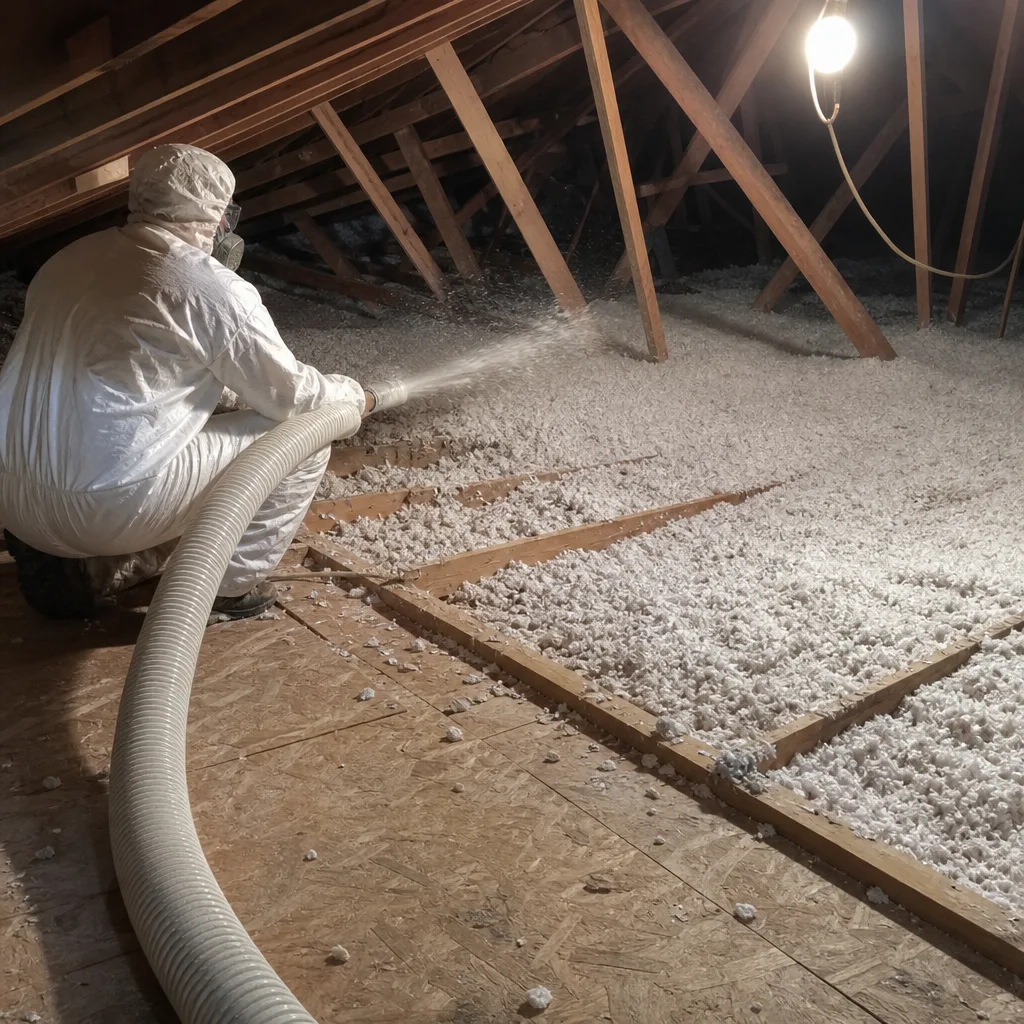
- Full crawl space encapsulation in Pomona runs $3,200 to $8,500 for most homes; vapor barrier only runs $1,200 to $2,800.
- The biggest cost drivers are crawl space square footage, liner thickness, vent sealing scope, and whether a dehumidifier is warranted based on measured humidity.
- Pomona’s older housing stock (pre-1975) frequently requires old liner removal or rodent exclusion work before new liner is installed – both should appear in the written scope.
- A written price before any work starts is not a perk at Envelope Insulation Co. – it’s Haven Standard Clause 1, and it applies to every job without exception.
- The Documented Photo Record is included on every visit, giving you a before-and-after record of what was installed and where.
- Since 2016, Wes Okafor and the team have sealed and insulated 9,000+ homes – every one with a written price before work started and a documented record when the crew left.
- If you have a competing quote in hand, we’ll read it with you at no cost under our Free Second Opinion offer.
Get a Written Estimate for Your Pomona Crawl Space
If you’re trying to decide whether a vapor barrier or full encapsulation is the right call for your Pomona home – or you already have a quote and want a second set of eyes on it – the next step is a site visit where we measure, document existing conditions, and hand you a flat written price before anything else happens.
There’s no vague “call for pricing” here. The number is on the page because we think you deserve to walk into this conversation informed. What the site visit adds is the specifics: your crawl space dimensions, your moisture readings, your existing conditions, and a written scope that reflects all of them.
Wes Okafor leads every estimate review at Envelope Insulation Co., and a live person answers every call – no voicemail loops, no callback windows measured in days. Call (562) 242-7569 to schedule your free estimate. You’ll have a written price before anyone lifts a tool.
Pricing reflects the Pomona market as of 2026. Topside Attic Insulation Pomona offers free estimates – call (562) 242-7569.
Written by Wes Okafor, Owner at Envelope Insulation Co., serving Pomona, CA since 2016.
What Our Customers Say
"They photographed rodent damage in the old insulation that we had no idea about, and priced the exclusion work separately so we could decide."
- Harriet N."The winter gas bill dropped by about a third. They had estimated a quarter, so they under-promised."
- Genevieve R."Fixed price, clean work, and they hauled the old material away as agreed."
- Todd M.