
Rockwool Radiant Barrier Installation: The Pomona Owner’s Guide
Rockwool radiant barrier installation in Pomona typically runs $2,800-$4,200 for a 1,200-2,000 square foot attic, and we stock Rockwool-compatible radiant barrier systems on every truck for same-day starts when the attic is already sealed. Most Pomona homeowners figure out something’s wrong when their second-story bedrooms won’t cool below 78°F even with the AC running flat out, or when their summer electric bill jumps $80-$140 over the prior year despite no rate change. The Rockwool stone wool substrate holds up better than fiberglass in our Inland Empire heat, but the radiant barrier foil layer still degrades, delaminates, or gets installed with gaps that let infrared through.
Which Rockwool Models This Applies To
Rockwool doesn’t sell a standalone “radiant barrier” product line under its own brand. What we see in Pomona attics is Rockwool Comfortbatt, Comfortbatt Firestop, or AFB evo used as the insulation layer beneath a separate radiant barrier foil, or Rockwool installed in a hybrid system where the foil is laminated to the facing. The key compatibility gotcha: Comfortbatt at R-30 compresses to 7.25 inches, and if your original installer stapled radiant barrier foil directly to the underside of the rafters without the required ¾-inch minimum air gap, the foil can’t reflect heat. It becomes a conductor.
To identify what you’ve got, check the kraft paper facing for a printed spec label. Rockwool batts will show “ROCKWOOL” and a density rating, usually 0.5-1.5 pcf depending on the application. The radiant barrier component might be Reflectix, a foil-faced OSB product, or a standalone perforated foil. We carry aftermarket radiant barrier foil rated for 97% reflectivity that mates correctly with Rockwool’s density and won’t sag between rafters the way lightweight polyethylene products do. OEM Rockwool foil facing isn’t sold separately; when it fails, we replace with a mechanical-grade equivalent that outlasts the original in Pomona’s 110°F+ attic peaks.
Topside Attic Insulation Pomona is an independent service provider, not affiliated with Rockwool.
Signs Your Rockwool Radiant Barrier Installation Is Failing
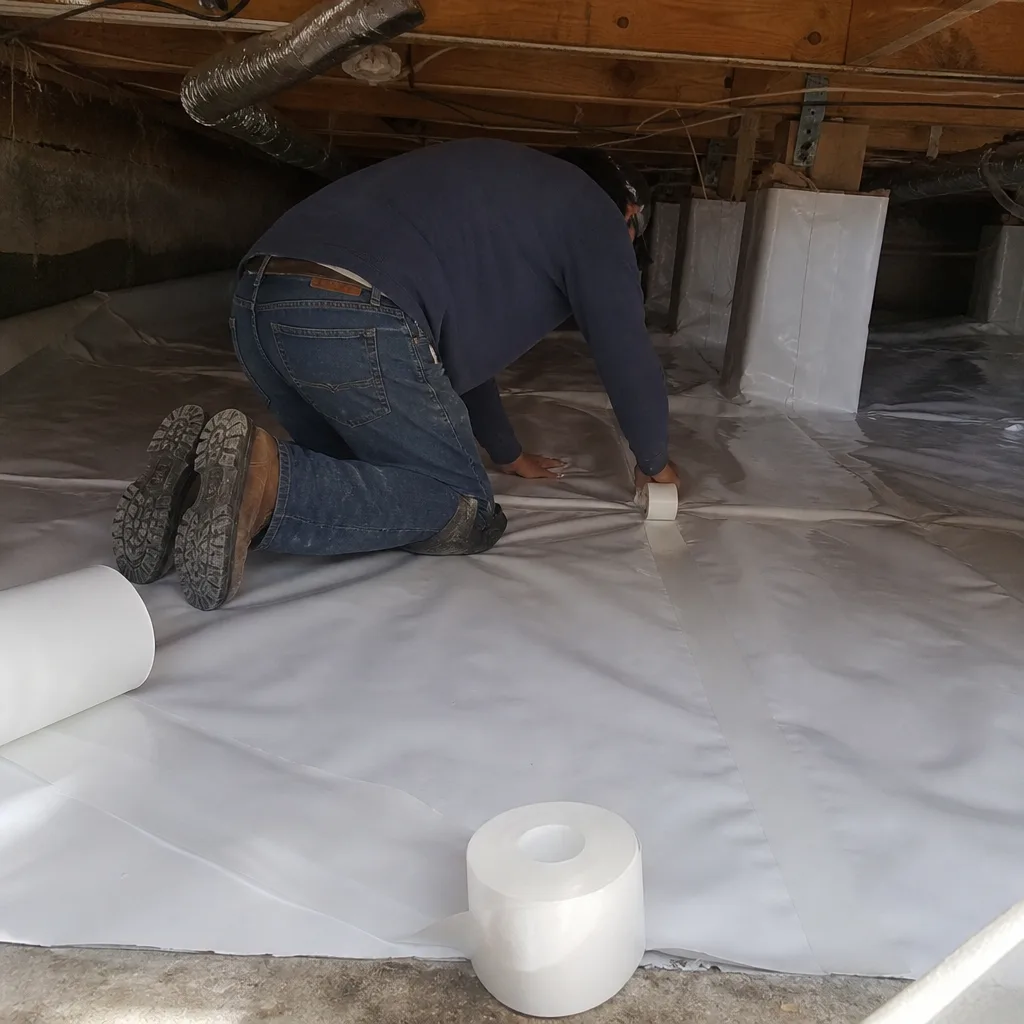
- Hot ceiling patches in the afternoon. The radiant barrier foil has torn, oxidized, or pulled away from the rafters, letting infrared radiation hit the drywall directly. You’ll feel it walking barefoot on the second floor, usually on the south and west exposures first.
- AC runs continuously from 2 PM to sunset. The thermal bypass is severe enough that your cooling load exceeds the system’s capacity during peak solar gain. In Pomona, that’s typically July through September, when attic temperatures hit 140°F.
- Foil facing that looks dusty gray or has visible holes. Rockwool’s stone wool doesn’t degrade, but the foil facing does. Oxidation starts at the staple lines where the protective coating is compromised; once the silver turns chalky, reflectivity drops below 70% and you’re losing performance fast.
- Insulation that looks fine but performs poorly. The Rockwool batt itself is intact, but the radiant barrier was installed with the wrong side facing down, or with no air gap, or was compressed during a later roofing job. The R-value of the insulation reads correctly on paper; the assembly doesn’t work.
- Moisture staining on the rafter bays. Perforated radiant barrier foil that got clogged with dust or was never perforated to begin with trapped moisture against the roof deck. In Pomona’s occasional winter rains, this shows as dark streaks on the sheathing, usually near the eaves where ventilation is weakest.
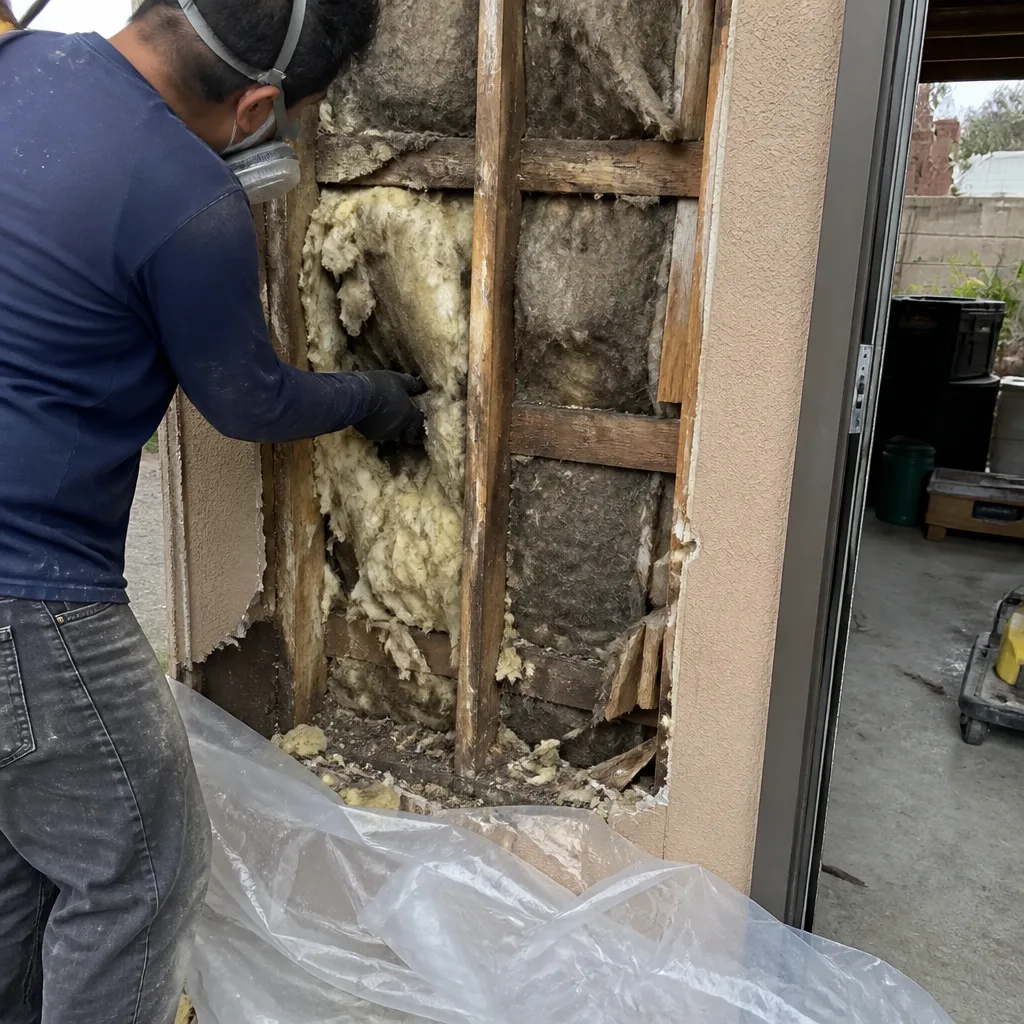 Before
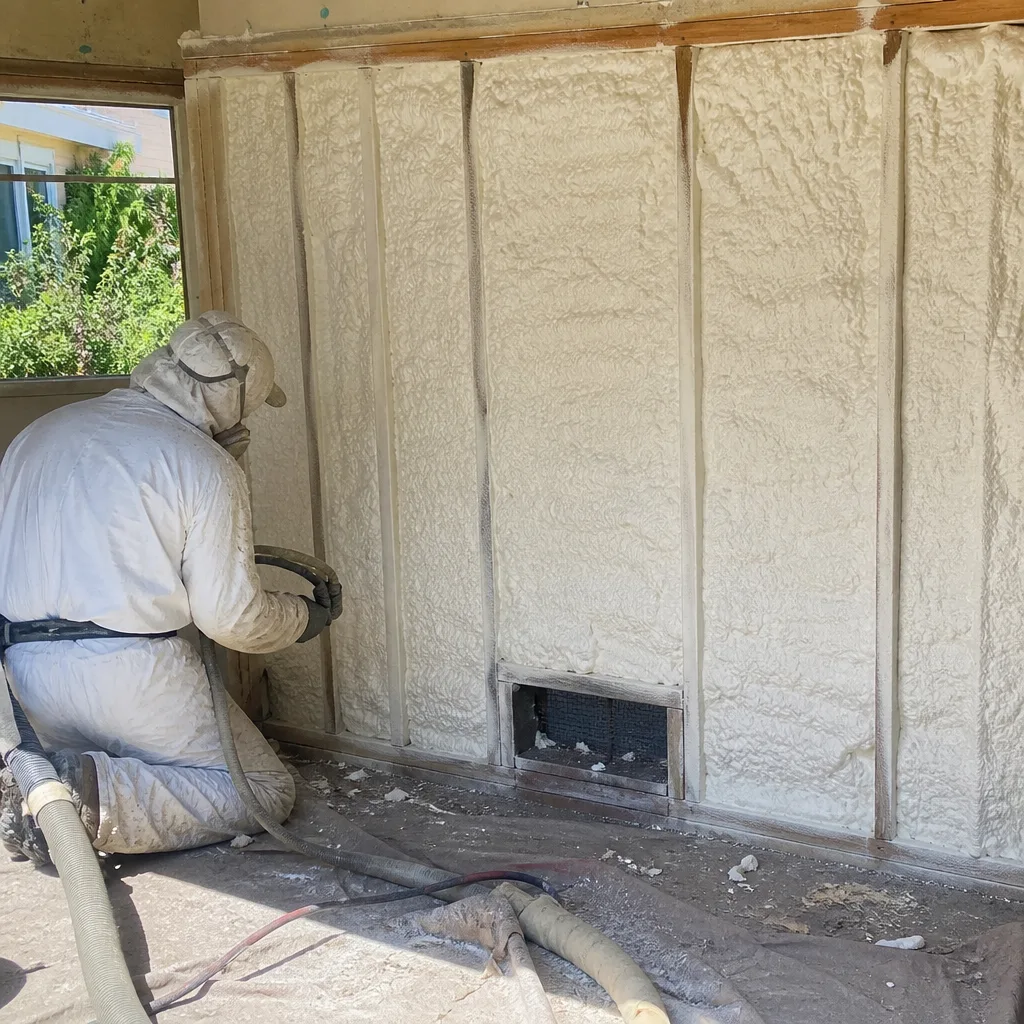 After
AfterReplacement Cost & What’s Included
| Scope | Price Range in Pomona |
|---|---|
| Radiant barrier foil replacement only (existing Rockwool stays) | $1,800-$2,800 |
| Full assembly: remove failed foil, air seal, reinstall Rockwool + new barrier | $2,800-$4,200 |
| Large or complex attic (steep pitch, multiple levels, limited access) | $4,200-$5,500 |
What drives the range: attic square footage, pitch (steeper means more labor), whether we need to remove and re-install existing Rockwool, and how much air sealing the top plates and penetrations need first. Every job starts with a written price before any work starts, per Haven Standard Clause 1. The price includes materials, labor, disposal of the failed barrier, and a Documented Photo Record. On applicable jobs, we run a blower-door test - a pressurization reading that shows, in one number, how much air your building envelope is losing - before and after sealing. Work is backed by our 365-Day Done Right Promise.
DIY or Call Us?
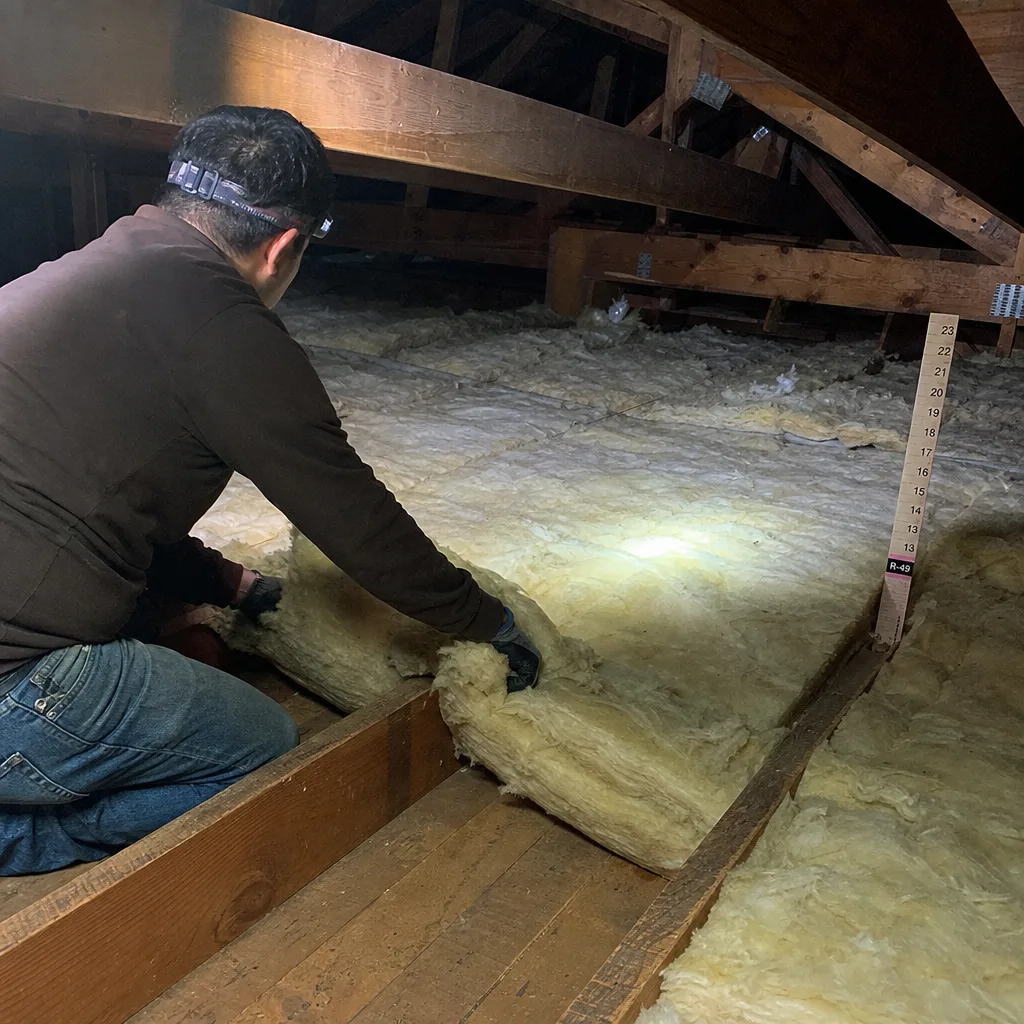
There’s no high-tension spring or electrical hazard in radiant barrier work, but there is a real performance hazard: installing it wrong. What a homeowner can safely check is whether the foil is intact, properly oriented (shiny side down, toward the attic floor), and has that required ¾-inch air gap. Use a yardstick. If the foil is stapled flat against the roof deck or the insulation, it’s wrong.
Where DIY goes wrong: compressing Rockwool batts to fit around obstructions, missing the top plate gaps that let conditioned air wash right past the barrier, and using the wrong foil product. Big-box radiant barrier “paint” products test at 15-30% reflectivity in field conditions, not the 95%+ of mechanical-grade foil. And in Pomona’s climate, an unsealed attic with new radiant barrier performs worse than a sealed attic with no barrier at all. Seal the leaks first. The insulation is just the last layer of the answer. For a written price and a same-day start, call (562) 242-7569.
FAQs
Mechanical-grade foil properly installed with an air gap lasts 20-25 years in Pomona’s climate. The Rockwool substrate itself is essentially indefinite; we’ve pulled 40-year-old Rockwool that still met spec density. What fails first is the foil facing at the staple lines, where thermal cycling and oxidation attack the coating. Dust accumulation on horizontal foil installations in our dry, windy climate can cut reflectivity by half in 10-12 years. Call (562) 242-7569 and we’ll check what you’ve got; estimates are free.
Patching small tears with foil tape works for isolated damage, but if the foil is oxidized, sagging, or was installed without an air gap, repair is false economy. The labor to patch and the labor to replace are nearly identical once you’re in the attic, and patched foil doesn’t carry a warranty. We quote both options when repair is technically possible, but most Pomona homeowners choose replacement once they see the photo documentation. Call (562) 242-7569 for an exact quote; estimates are free.
Most Pomona residential attics are a one-day job for a two-person crew: 4-6 hours for foil-only replacement, 6-8 hours if we’re removing and re-installing Rockwool with full air sealing first. Large or complex attics in the Phillips Ranch or Lincoln Park areas may run into a second day. We don’t start without a written price, and we don’t leave without a Documented Photo Record. Call (562) 242-7569 to schedule; same-day starts available when the attic is already sealed and accessible.
Yes. We carry mechanical-grade perforated radiant barrier foil, compatible fasteners, and the air-gap spacers required for Rockwool assemblies on every truck serving Pomona. We also stock Reflectix and other major brands for mixed-material attics. If your system uses a proprietary or discontinued foil product, we’ll match it with an equivalent that meets or exceeds the original spec, and you’ll see the comparison in writing before we start. Call (562) 242-7569 to confirm compatibility with your specific setup.
Written by Wes Okafor, Owner, Topside Attic Insulation Pomona at Topside Attic Insulation Pomona, serving Pomona and nearby areas.