
Rockwool Crawl Space Encapsulation: The Pomona Owner’s Guide
Rockwool crawl space encapsulation in Pomona typically runs $3,800-$6,400 for a complete install on a standard 1,200-square-foot footprint, and we stock the full Rockwool Comfortboard and Comfortbatt line for same-day starts when the crawl is accessible. Most Pomona homeowners discover their encapsulation has failed when they notice musty odors returning after a dry winter, or when their spring energy bill jumps despite mild weather - signs that the vapor barrier seal has degraded or the rigid board has pulled away from the foundation wall.
We’ve sealed and insulated over 9,000 homes since 2016, and crawl spaces in Pomona’s older neighborhoods near Ganesha Park keep us busy. The clay-heavy soil and seasonal groundwater shift here stress rigid insulation boards differently than the sandy loam you find closer to Claremont. We’ve logged enough bypasses - gaps where conditioned air escapes around penetrations - in those ranch crawl spaces to know that Rockwool’s dimensional stability holds up, but only when the air sealing underneath it is done first.
Which Rockwool Models This Applies To
Rockwool’s crawl space lineup breaks into two families: Comfortboard 80 and 110 for exterior foundation walls and rim joists, and Comfortbatt for cavity fills in framed crawl floors. The model number is stamped on the board edge in black ink - look for “CB80” or “CB110” followed by a thickness code: “2” for 2-inch, “3” for 3-inch. Comfortboard 80 runs 8 pounds per cubic foot density; Comfortboard 110 jumps to 11 pounds, which matters in Pomona because the heavier board resists the compression you get from backfill against older foundation walls that have settled toward the street.
Comfortbatt comes in standard 15.25-inch widths for 16-inch on-center framing, but the 23-inch version for 24-inch spacing is what we see most in 1950s-1970s Pomona tract homes. The R-value per inch is roughly 4.2 for both board and batt, so a 3-inch Comfortboard 80 layer gives you R-12.6 - below current Title 24 requirements for new construction, but perfectly viable for retrofit when combined with proper air sealing and a ground vapor barrier.
OEM Rockwool versus aftermarket: we source factory-direct Rockwool through their West Coast distribution in Rancho Cucamonga, which keeps freight damage low and edge squareness tight. Aftermarket mineral wool boards exist - some from overseas suppliers - but we’ve found dimensional tolerance drift of up to 1/8 inch, which turns into a thermal bridge when you’re butting boards against a concrete wall that isn’t plumb to begin with. For Pomona’s humidity cycling, factory Rockwool’s hydrophobic binder formulation also outlasts generic equivalents we’ve removed after 6-8 years.
Signs Your Rockwool Crawl Space Encapsulation Is Failing
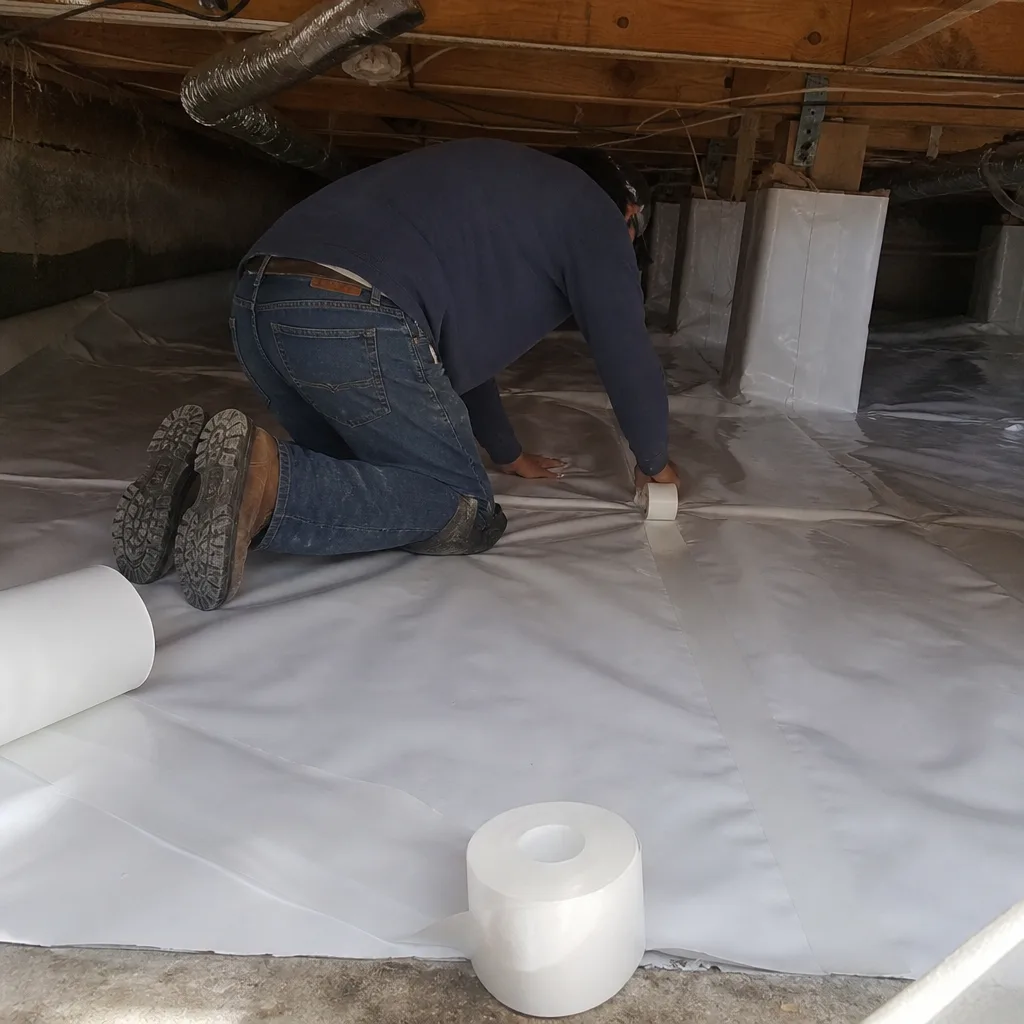
- Musty odor returning in spring. Rockwool itself doesn’t mold - it’s mineral fiber - but if the vapor barrier underneath has torn at seams or the perimeter seal has pulled away from the wall, ground moisture reaches the wood framing. We find this most often where the 6-mil poly was taped rather than sealed with acoustic sealant at the sill plate.
- Insulation boards sagging or pulling from rim joists. Comfortboard is held by mechanical fasteners or adhesive, but Pomona’s summer heat in unvented crawls can soften standard construction adhesive. When the board gaps, you get convective looping - air moving behind the insulation, carrying moisture and eroding your effective R-value.
- Cold floors in winter despite intact attic insulation. This usually means the crawl space air sealing failed at penetrations: plumbing stacks, electrical conduit, or the duct boot connections. We run a blower-door test - a pressurization reading that shows, in one number, how much air your building envelope is losing - and if the crawl is pulling hard during depressurization, the seal is gone.
- Pest activity in the insulation layer. Rockwool is pest-resistant, but gaps at the perimeter create highways. We’ve pulled Comfortboard in Pomona’s Lincoln Park neighborhood to find rodent tunnels through the poly but clean mineral fiber - the board did its job, but the air sealing didn’t.
- Visible water staining on the foundation wall above the insulation line. This indicates bulk water intrusion, often from a failed downspout or grade sloping toward the foundation. Rockwool handles incidental moisture, but sustained wetting wicks to the sill plate. The fix isn’t replacing the insulation; it’s stopping the water, then reinstalling.
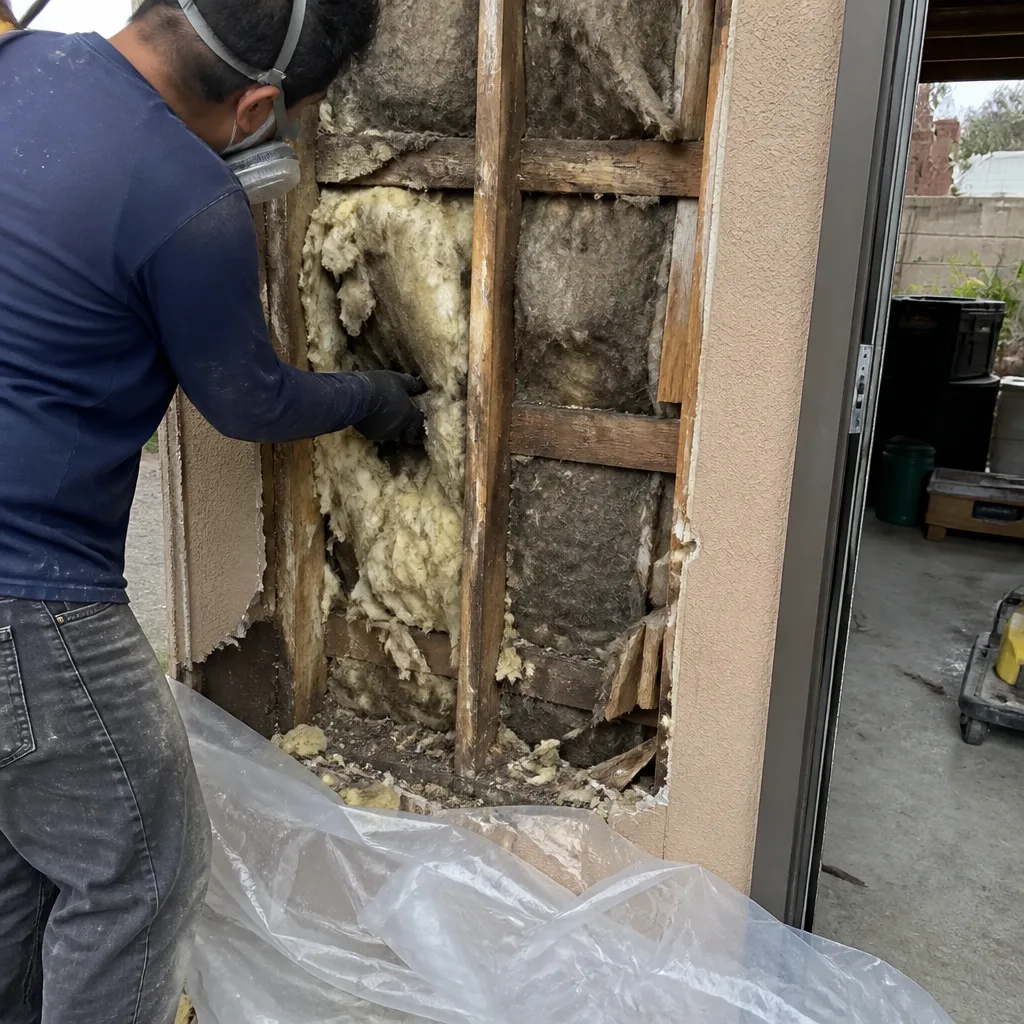 Before
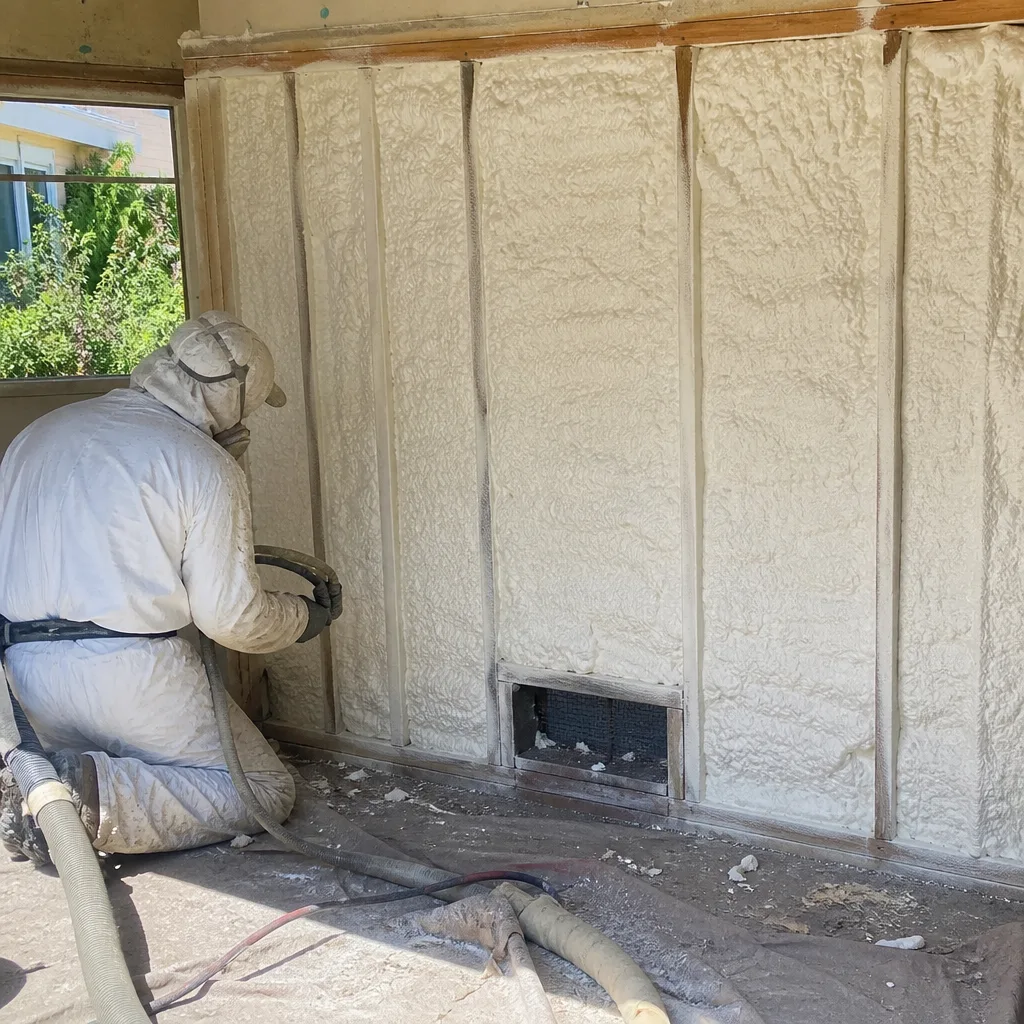 After
AfterReplacement Cost & What’s Included
| Component | Typical Range (Pomona) |
|---|---|
| Rockwool Comfortboard 80, 2-inch (foundation walls) | $2.40-$3.10/sq ft installed |
| Rockwool Comfortboard 110, 3-inch (high-compression zones) | $3.20-$4.00/sq ft installed |
| Comfortbatt 23-inch, R-15 (framed floor) | $1.80-$2.40/sq ft installed |
| Ground vapor barrier, 10-mil reinforced | $1.50-$2.20/sq ft installed |
| Air sealing (sill plates, penetrations, rim joists) | $800-$1,400 (typical crawl) |
| Blower-door test (before/after) | $325 (included on full encapsulations) |
A complete Rockwool crawl space encapsulation in Pomona - removal of failed materials, air sealing, new vapor barrier, and reinstallation with documented blower-door numbers - runs $3,800-$6,400 for most homes under 1,500 square feet of crawl footprint. The spread depends on access (crawls under 18 inches require rotation work), existing mold remediation needs, and whether the rim joist bays are blocked by ductwork.
Under Haven Standard Clause 1, you get a written price before any work starts - flat, with line-item scope and warranty language included. Every job closes with a Documented Photo Record and, on applicable work, before-and-after blower-door readings so you can verify the air-sealing result. The 365-Day Done Right Promise covers all completed work; if it’s not done right, we make it right.
DIY or Call Us?
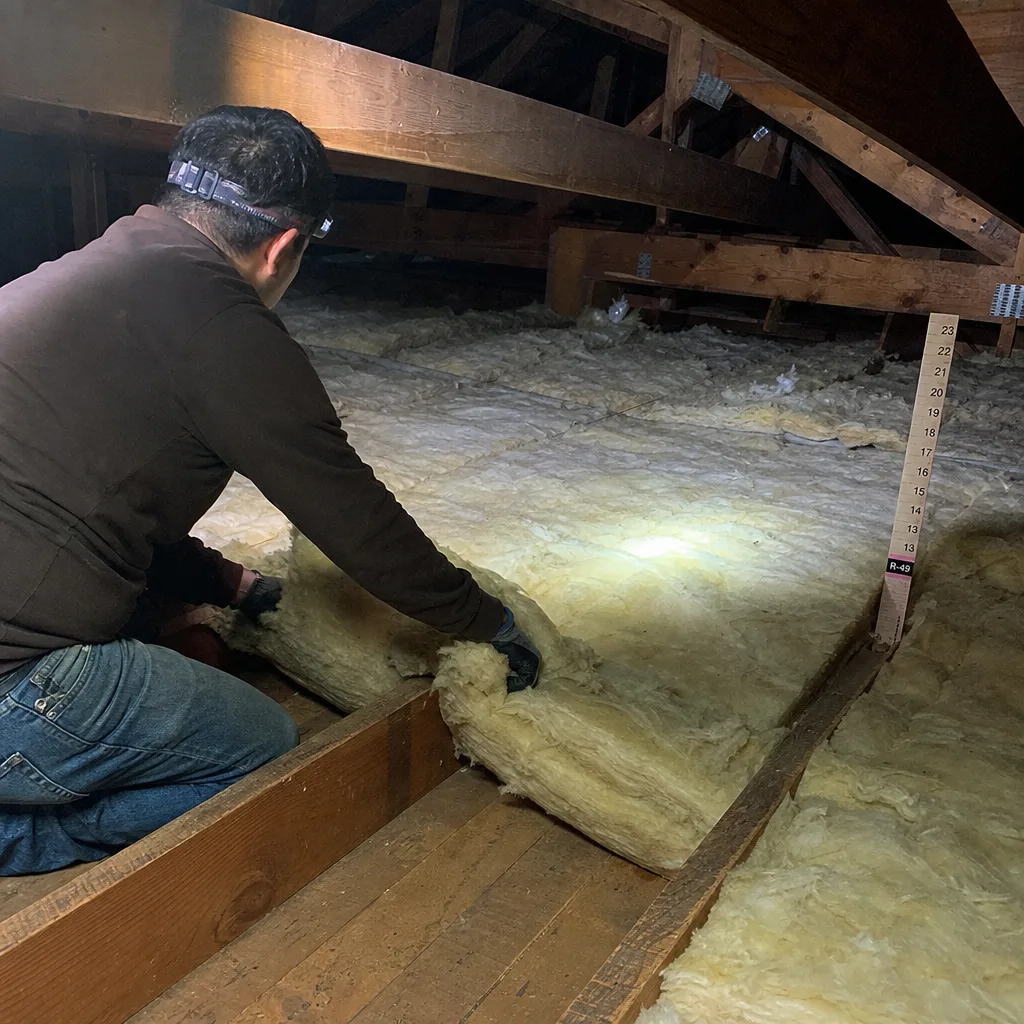
Here’s where we’ll draw the line honestly. A homeowner can safely inspect their own crawl space for the symptoms above - look for sagging boards, torn poly, or dark stains on the foundation wall. You can also verify your Rockwool model by reading the edge stamp with a flashlight. What you shouldn’t attempt: removing and reinstalling Comfortboard in a confined space with active mold, disturbing old vermiculite insulation that might contain asbestos, or running a propane torch to cut board (some online guides suggest this; it’s a fire and CO hazard in a crawl).
The actual failure pattern we see in Pomona isn’t the Rockwool material - it’s the assembly. Boards installed before the air sealing, vapor barrier seams taped instead of sealed, perimeter gaps left for “ventilation” that just lets humid air in. We fix those assemblies every week. If you’re staring at a failed encapsulation and want to know whether it’s a $400 seal repair or a $4,000 redo, call (562) 242-7569. We’ll read your situation with you, and our Second Opinion on any written estimate is free.
FAQs
Properly installed Rockwool mineral wool itself is rated for the life of the building - it’s stone and steel slag, it doesn’t degrade. The assembly fails first: the vapor barrier at 10-15 years, the air seal at 8-12 years depending on how much the house settles. In Pomona’s climate, with dry summers and intermittent winter rains, we’ve found 6-mil poly lasts 8 years on average before seam tape gives way; 10-mil reinforced with acoustic-sealed seams runs 12-15. Call (562) 242-7569 and we can assess your specific assembly - estimates are free.
Sometimes. If the Comfortboard is still firmly attached and the only issue is a torn vapor barrier or failed seam tape, we can spot-repair the air seal and re-lay poly for $800-$1,800. If the boards have sagged, compressed, or gotten wet, replacement is the only fix - wet Rockwool won’t dry to original performance in a crawl space. We document the condition with photos before recommending either path. Call (562) 242-7569 for an exact quote.
Most Pomona crawls run two to three days: half day for removal and disposal, full day for air sealing and vapor barrier, half day for Rockwool installation and blower-door verification. Tight crawls under 18 inches, or those with active ductwork in the way, stretch to four days. We don’t rush the air sealing - seal the leaks first. The insulation is just the last layer of the answer. You’ll get a written schedule with your price before anyone lifts a tool.
We stock Comfortboard 80 in 2-inch and 3-inch, Comfortboard 110 in 3-inch, and both Comfortbatt widths on our Pomona warehouse truck. Full encapsulations require a material pull from Rancho Cucamonga, which we can same-day if the crawl is accessible and the scope is signed by noon. Spot repairs with stocked material start same day in most cases. Call (562) 242-7569 to confirm current stock for your model - a live person answers 24/7.
Topside Attic Insulation Pomona is independently owned and operated, not affiliated with Rockwool. We also stock parts for Reflectix and other major building envelope brands.
Ready to fix your crawl space? Call (562) 242-7569 for a free estimate with written pricing before any work starts. A live person answers, 24/7.
Written by Wes Okafor, Owner, Topside Attic Insulation Pomona at Topside Attic Insulation Pomona, serving Pomona and nearby areas.