
Owens Corning Vapor Barrier Installation: The Pomona Owner’s Guide
Owens Corning vapor barrier installation in Pomona typically runs $1,800-$3,400 for a standard single-family crawl space or attic floor, and we stock the 6-mil and 10-mil reinforced polyethylene rolls on our trucks for same-day starts. Most Pomona homeowners discover the problem after a rain cycle leaves condensation on ductwork or a musty smell starts rising through floor registers. The Owens Corning system relies on precise seam overlap and mechanical fastening to the foundation walls; when that seal breaks, warm moist air from our heavy clay soils hits cooler surfaces and the degradation accelerates fast.
Which Owens Corning Models This Applies To
Owens Corning does not sell vapor barrier as a standalone branded kit with model numbers like their insulation batts. What we install are Owens Corning-compatible systems: the 6-mil clear polyethylene sheeting specified for crawl space encapsulation, and the 10-mil reinforced scrim version used beneath raised floors in Pomona’s older ranch and mid-century stock. You identify what you need by what’s currently down: original 6-mil turns cloudy and brittle after 5-7 years in our inland heat, while the reinforced 10-mil carries a woven grid visible when held to light.
The OEM-vs-aftermarket question matters less here than with insulation facing. Owens Corning sources their polyethylene from the same mills that supply our independent rolls. We use Stego Wrap or Poly-America sheeting that meets the same ASTM E1745 Class A standard, because the critical spec is perm rating and seam integrity, not the logo printed on the roll. One compatibility gotcha: if your home was built 2008-2015 in the Phillips Ranch or Lincoln Park areas, check whether the builder used a zero-perm Class I barrier on dirt floors over expansive soil. Trapping moisture inward rots rim joists. We switch those to Class II (0.1-1.0 perm) so the assembly can dry to the interior.
Signs Your Owens Corning Vapor Barrier Installation Is Failing
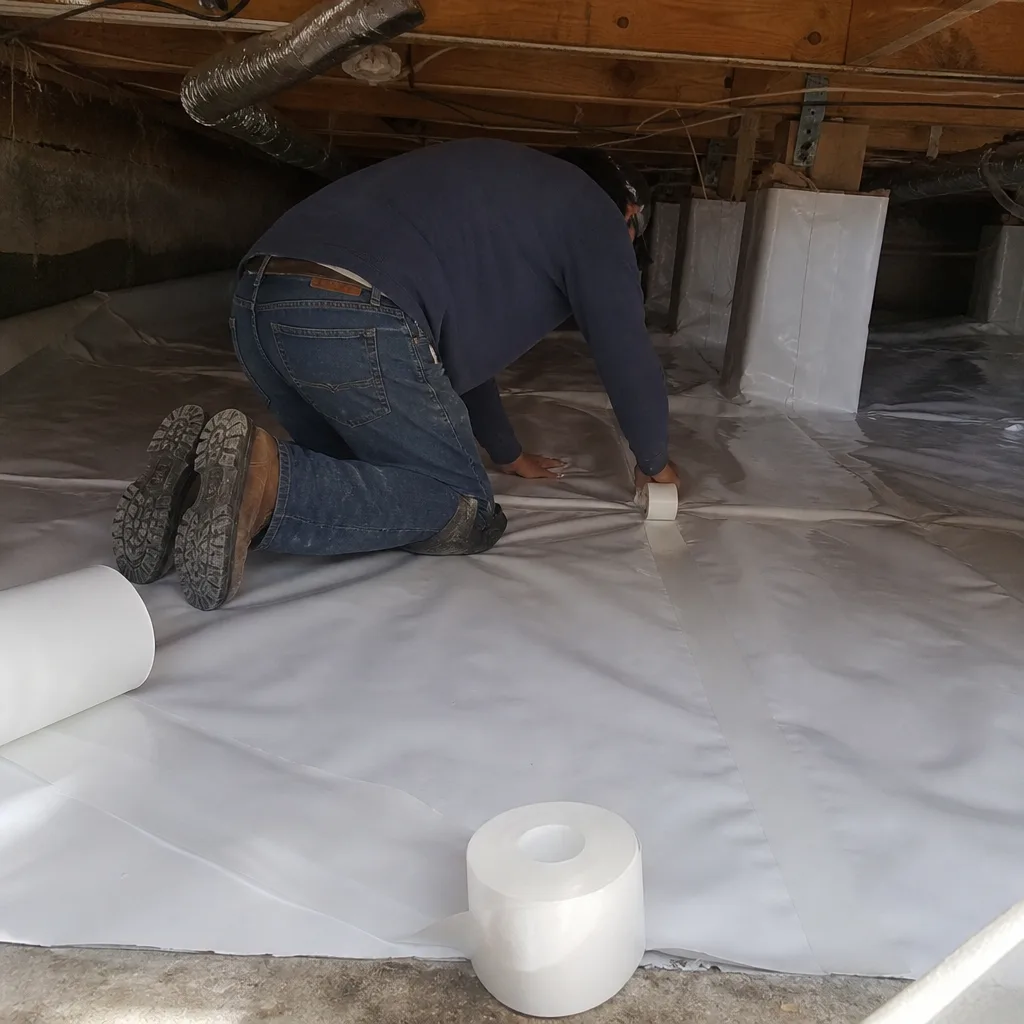
- Condensation on ductwork or pipes. When the barrier tears at seams or pulls from walls, groundwater evaporation from Pomona’s clay-heavy subsoil hits 70-degree supply ducts and condenses. We see this most in crawl spaces near Ganesha Park where the water table sits high in spring.
- Musty odor through floor registers. The smell is mold on joist bottoms or the bottom face of subfloor sheathing. It means vapor is migrating upward faster than your HVAC can dehumidify, and the barrier is no longer the dominant control layer.
- Visible pooling on top of the barrier. This is a drainage failure, not just a vapor failure. Water is getting in faster than it can evaporate. In Pomona’s older neighborhoods with concrete perimeter walls, we find the culprit is usually a gap where the barrier meets the stem wall or a failed sump crock.
- White mineral deposits on the barrier surface. Efflorescence from concrete walls or soil salts means moisture is moving through, carrying minerals, then evaporating at the surface. The barrier has lost its low-perm seal at that location.
- Sagging or torn sections with soil contact. When the barrier drapes into dirt, it becomes a wick instead of a shield. Our crews in Pomona find this where original installers used landscape staples instead of masonry fasteners on block walls; the weight of backfill or rodent traffic pulls everything down.
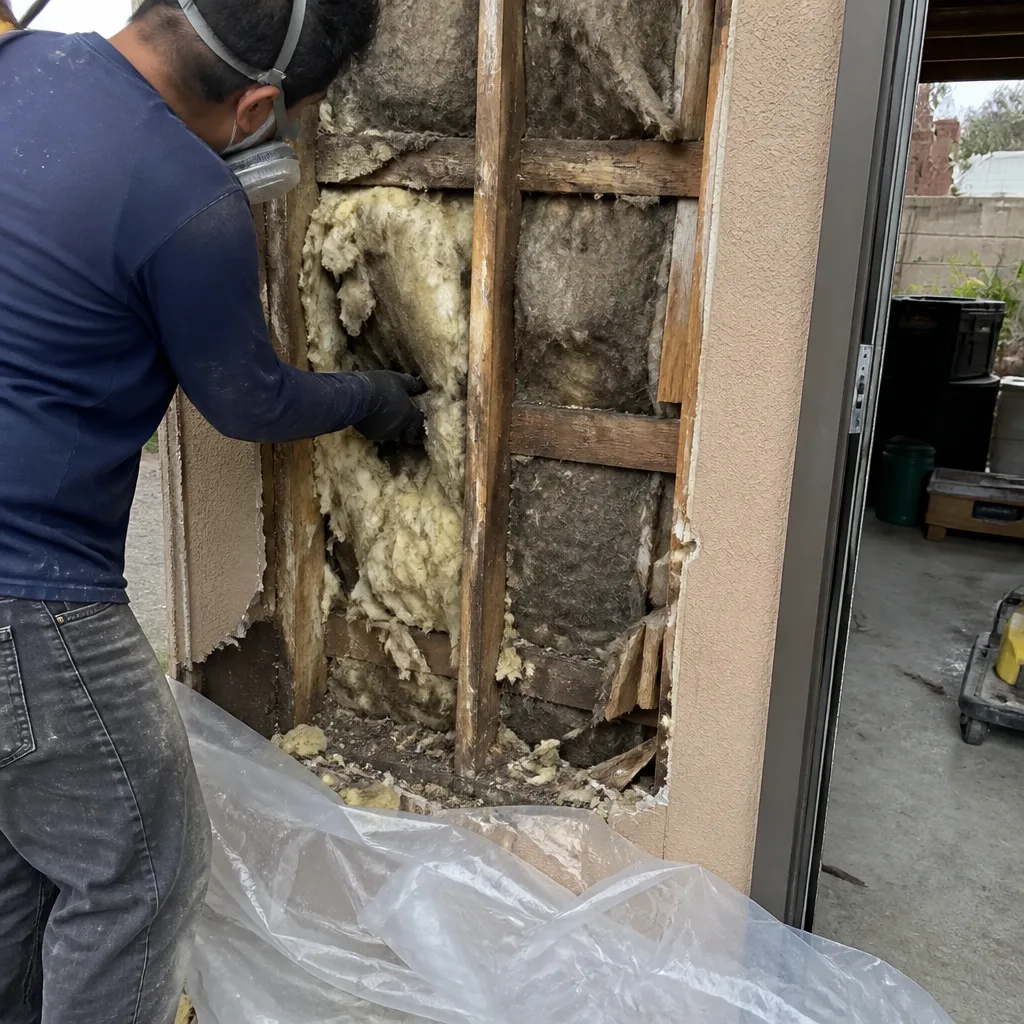 Before
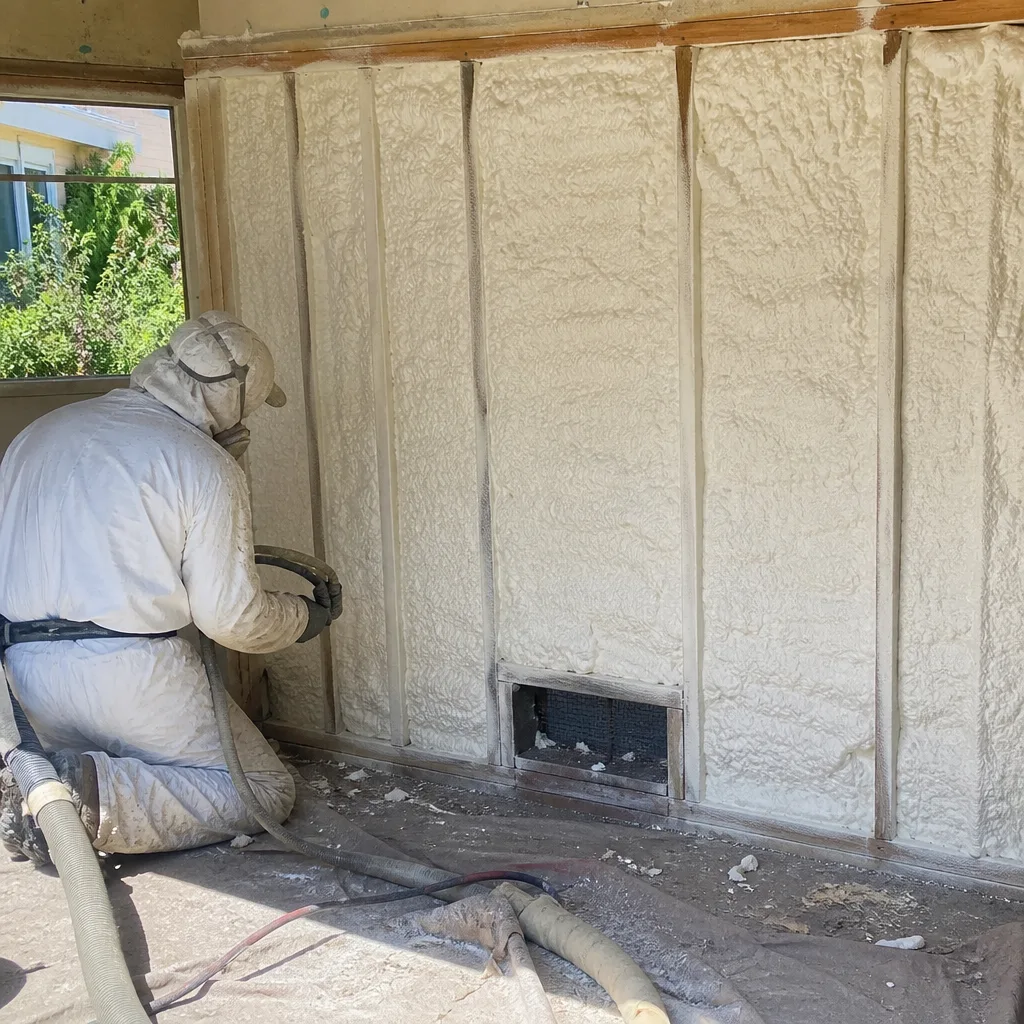 After
AfterReplacement Cost & What’s Included
Most Owens Corning-compatible vapor barrier replacements in Pomona run $1,800-$3,400 for crawl spaces up to 1,200 square feet. That range reflects three variables: whether we need to remove and dispose of the failed barrier ($200-$400), whether the foundation walls need mechanical fastening prep for a proper seal ($300-$600), and whether drainage correction or a sump pump is part of the scope.
Our price is parts plus labor, flat, written before anyone enters the crawl space. The 10-mil reinforced polyethylene, seam tape, and mechanical fasteners are itemized. We include a Documented Photo Record of the completed work and a 365-Day Done Right Promise under Haven Standard. If your blower-door test or thermal imaging shows continuing moisture migration, we return and fix it.
DIY or Call Us?
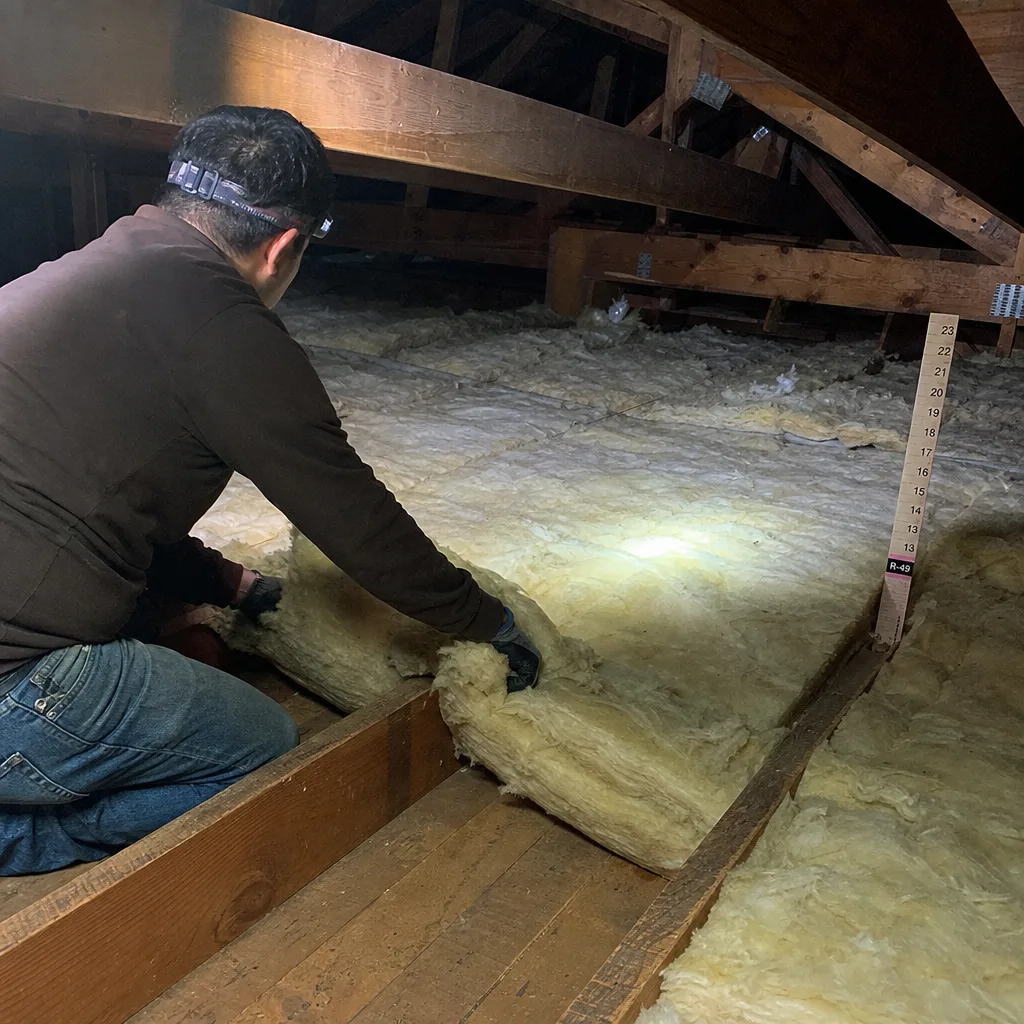
What you can safely check: look for tears, pooling, or pulled seams from the crawl space hatch with a flashlight. Note where the barrier meets walls; gaps wider than a quarter inch are failure points. What goes wrong fast: cutting and seaming polyethylene in a confined space with soil gas exposure is not a Saturday project. The 10-mil rolls weigh 120-plus pounds and require two people to position without creasing. More critically, if your home has active knob-and-tube or Romex running through joist bays, crawling over that wiring in damp conditions is a genuine hazard.
We carry the 6-mil and 10-mil rolls, seam tape, and masonry fasteners on every truck. Call (562) 242-7569 and we’ll read your situation with you. Estimates are free, and we bring a written price before any work starts.
FAQs
Properly installed 10-mil reinforced polyethylene lasts 15-20 years in Pomona’s dry inland climate, though the heavy clay soils and seasonal groundwater rise near Ganesha Park and the Puddingstone Reservoir watershed can shorten that to 10-12 years if drainage is poor. The 6-mil non-reinforced version, common in 1990s-2000s tract homes, typically fails in 5-7 years from UV degradation at perimeter gaps and mechanical damage during service work. Call (562) 242-7569 for an exact assessment of your current barrier’s condition.
Small punctures or seam gaps under two square feet can be patched with compatible polyethylene tape if the surrounding material is still supple and the wall seal is intact. If the barrier is brittle, extensively torn, or has pulled from multiple wall sections, patching becomes false economy; the labor to prep and tape exceeds the cost of new material, and the warranty is stronger on a full replacement. We stock both repair tape and full rolls, so we can quote either honestly.
A standard single-family crawl space in Pomona takes one day for removal, prep, and new barrier installation. Larger homes or those requiring drainage correction, sump pump installation, or extensive wall prep may run into a second day. We never start without a written scope and completion date, and we text when the crew is en route.
We stock 6-mil and 10-mil reinforced polyethylene vapor barrier compatible with Owens Corning specifications, plus seam tape, masonry fasteners, and drainage components. Topside Attic Insulation Pomona is an independent service provider, not affiliated with Owens Corning; we source materials from Owens Corning, Johns Manville, Knauf, and other manufacturers so we’re never locked into a single product line. Same-day starts are available when the scope is confirmed by morning.
Seal the leaks first. The insulation is just the last layer of the answer.
Written by Wes Okafor, Owner, Topside Attic Insulation Pomona at Topside Attic Insulation Pomona, serving Pomona and nearby areas.