
Owens Corning Radiant Barrier Installation: The Pomona Owner’s Guide
Owens Corning radiant barrier installation in Pomona typically runs $2,400-$4,800 for a complete attic application depending on square footage and whether the attic floor needs air sealing first. Most Pomona homes we see in the 1,200-2,200 square-foot range fall in the $2,800-$3,600 bracket, and we stock Owens Corning AtticCat radiant barrier-compatible rolls on our trucks for same-day starts when the attic is accessible. Homeowners usually figure out something’s wrong when their second-story bedrooms won’t cool below 78°F even after the AC runs all afternoon, or when their summer electric bill jumps 30-40% year-over-year despite no rate change.
Which Owens Corning Models This Applies To
Owens Corning doesn’t sell radiant barrier as a discrete “model” with a part number like a garage door opener. What you’re looking at is the AtticCat Expanding Blown-In PINK Fiberglass Insulation system paired with Owens Corning FOIL radiant barrier sheathing or retrofitted radiant barrier foil rolls installed beneath the rafters. The compatibility gotcha in Pomona’s 1960s-1980s housing stock: if your original insulation was blown-in cellulose or Rockwool, the Owens Corning foil needs a clean, continuous air gap of at least 3/4 inch facing downward toward the attic floor to work. We’ve found that in the ranch homes near Ganesha Park, previous contractors often stapled the foil directly against the roof deck, which kills the reflective performance and can trap moisture against the sheathing.
To identify what you have, check the attic for printed labeling on any existing foil: Owens Corning product reads “OC” and a lot code, usually with a 48-inch roll width. If your foil is discolored, torn, or was installed before 2015, it’s likely the older single-sided variety; current Owens Corning stock is double-sided reinforced. We also stock Reflectix as a quality aftermarket equivalent when the Owens Corning lead time stretches out, though we default to OEM when the roof geometry allows standard-width rolls. Topside Attic Insulation Pomona is an independent service provider, not affiliated with Owens Corning.
Signs Your Owens Corning Radiant Barrier Installation Is Failing
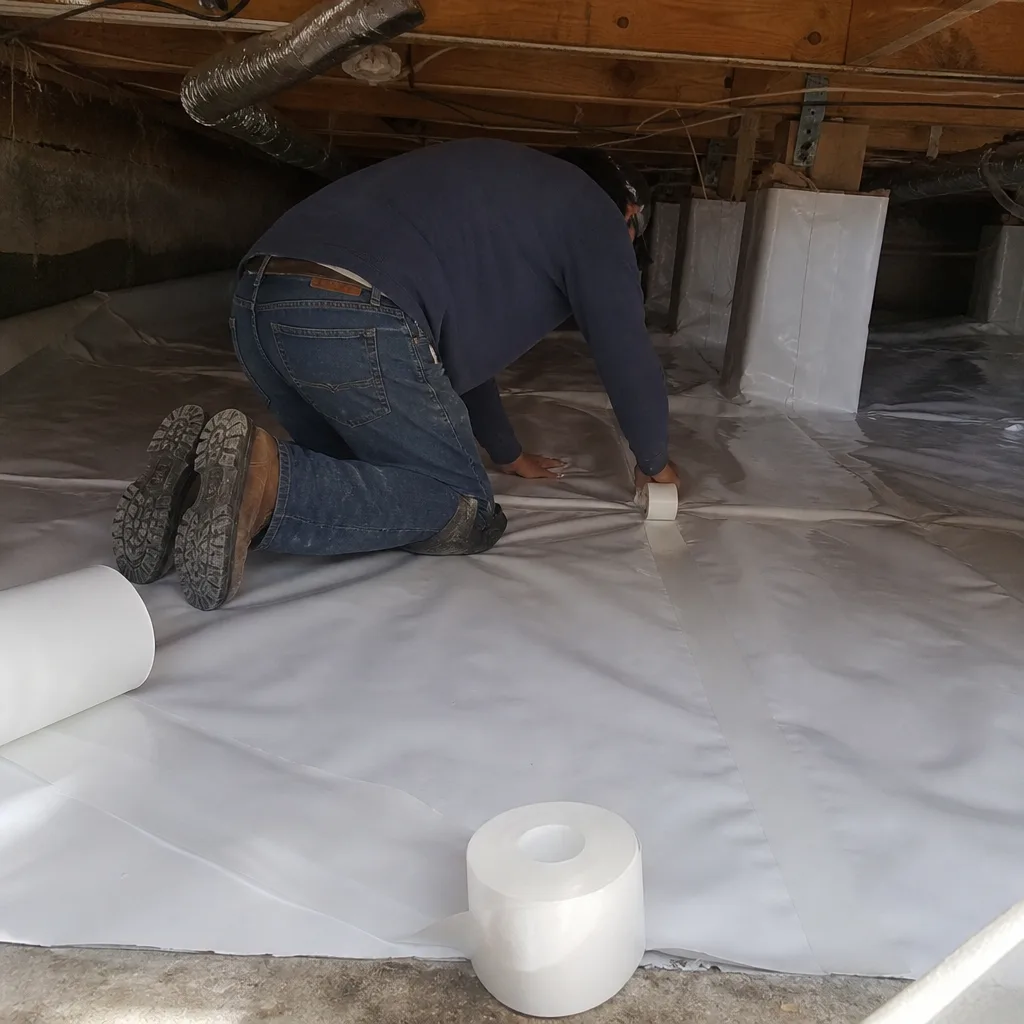
- Hot ceiling patches in afternoon sun. The foil has torn or pulled loose at the staples, creating gaps where infrared radiation passes straight through. In Pomona’s south-facing exposures, this shows up as distinct warm stripes you can feel walking barefoot on the ceiling below.
- AC runs continuously from 2 PM to sunset. A properly installed radiant barrier should drop attic temperatures 20-35°F. When performance degrades, the delta shrinks to under 15°F and your condenser can’t catch up.
- Foil visible from attic access is dusty, brittle, or flaking. Owens Corning’s reinforced product holds up better than generic foil, but Pomona’s Santa Ana wind cycles pull fine dust through ridge vents that abrade the reflective surface over 8-12 years.
- Water stains on the foil itself. This means condensation is forming between the foil and roof deck, usually because the air gap was compressed or never installed. In winter, this moisture can drip onto insulation below, compressing it and dropping its effective R-value.
- Insulation removal reveals foil installed upside-down. The reflective side must face the open attic airspace. We’ve found this in about one in six Pomona retrofits where a general contractor, not an insulation specialist, handled the original job.
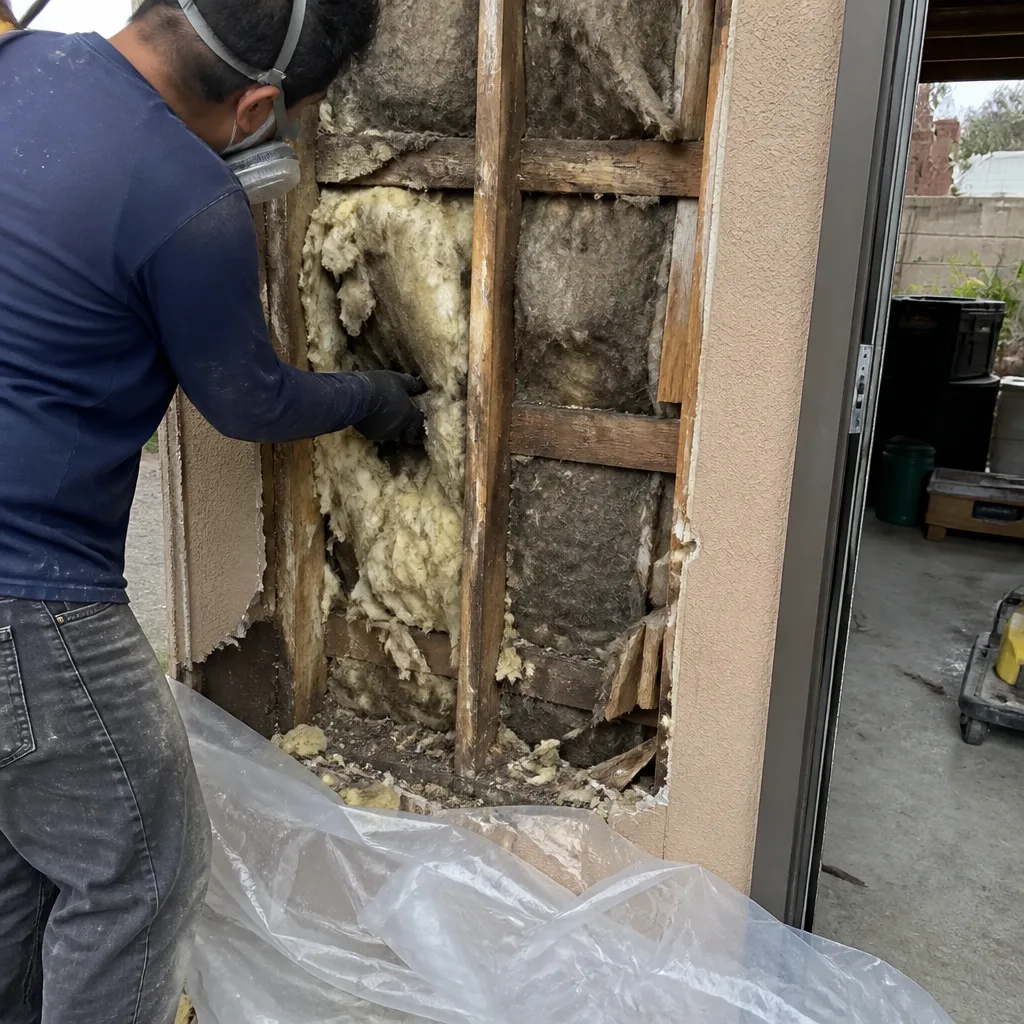 Before
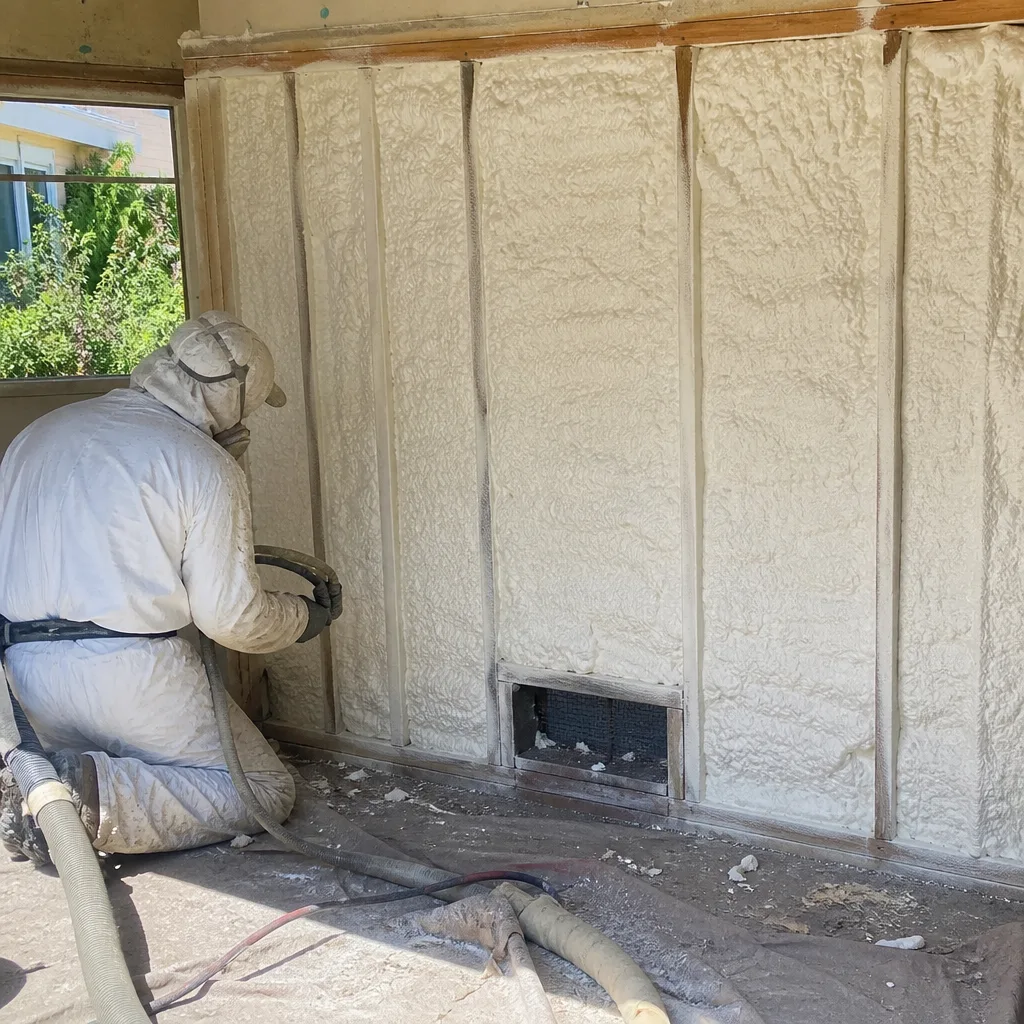 After
AfterReplacement Cost & What’s Included
Most complete Owens Corning radiant barrier replacements in Pomona run $2,400-$4,800 installed. The driver is attic square footage and accessibility: a 1,400-square-foot footprint with a single ridge and standard 4/12 pitch lands around $2,800; a 2,400-square-foot home with cathedral ceilings, dormers, or a 12/12 pitch can push $4,500 because we need scaffolding and more labor hours.
Every quote includes removal of degraded foil, inspection of roof deck condition, installation of new Owens Corning double-sided reinforced rolls with proper 3/4-inch standoffs, and sealing of all attic bypasses before the new barrier goes up. We don’t blow insulation over unsealed top plates or can lights; that’s not how we work. Under Haven Standard Clause 1, you get a written price before any work starts, a written scope, and a written warranty. The 365-Day Done Right Promise covers the installation. On applicable jobs, we run a blower-door test - a pressurization reading that shows, in one number, how much air your building envelope was losing before and after the air sealing - and we publish those numbers with your documented photo record.
DIY or Call Us?
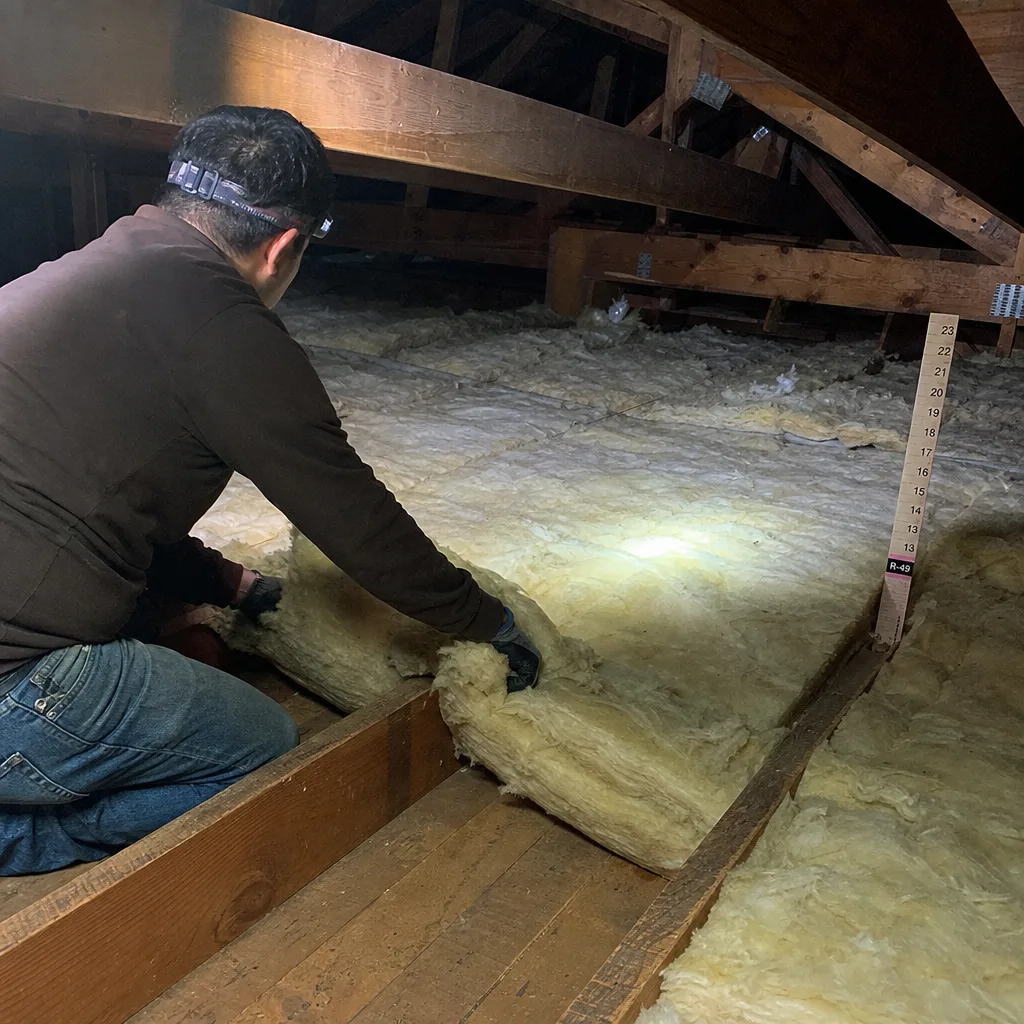
There’s nothing inherently dangerous about handling radiant barrier foil, but the failure mode is almost never the foil itself. It’s what the foil conceals: unsealed top plates, compromised can-light housings, or rodent damage to existing insulation that you won’t see until you pull the old material. A homeowner can safely check whether the reflective side faces downward and whether gaps exceed six inches between strips. What you can’t assess from a ladder is whether your attic ventilation is balanced for the new barrier’s moisture behavior, or whether the bypasses we regularly find in Pomona’s older ranch stock are dumping conditioned air into the roof cavity.
If you’re considering DIY, borrow a thermal camera on a 95°F afternoon and look for ceiling hot spots. If they’re scattered and irregular, the foil is likely compromised in multiple locations, and a patch job won’t restore performance. Call (562) 242-7569 and we’ll walk through what we found on similar homes in your neighborhood.
FAQs
In Pomona’s inland Southern California climate, properly installed Owens Corning reinforced radiant barrier lasts 15-25 years before dust accumulation degrades reflectivity below 50%. The Santa Ana winds accelerate surface abrasion compared to coastal markets, so attics near the 71 freeway corridor with exposed ridge vents tend toward the shorter end of that range. Call (562) 242-7569 for an attic inspection and we’ll measure current reflectivity with a solar reflectance meter - estimates are free.
Small tears under six inches can be patched with foil tape rated for 250°F, but the repair rarely matches original reflectivity and multiple patches create thermal bridges that show up on infrared imaging. We typically recommend replacement when more than 15% of the surface area is compromised, which is the threshold where whole-attic performance drops measurably. Call (562) 242-7569 and we’ll shoot thermal images to show you exactly what percentage is affected - estimates are free.
A standard 1,500-square-foot attic with clear access takes one crew day: morning for removal and air sealing, afternoon for new Owens Corning foil installation and blower-door verification. Homes with limited attic hatches, steep pitches, or active rodent issues may need a second day. We text you a named technician and arrival window under Haven Standard, and you’ll receive your documented photo record and blower-door numbers before we leave.
Yes. We carry 48-inch and 60-inch Owens Corning reinforced foil rolls, plus compatible standoff clips and foil tape, on every Pomona-area truck. If your attic geometry requires custom widths or if Owens Corning stock is backordered, we also carry Reflectix equivalent product. We don’t start a job with material we can’t finish it with.
Ready to get your attic performance back? Call (562) 242-7569 for a free estimate with a written price before any work starts. We’ll run the blower-door test, show you the numbers, and seal the leaks first. The insulation is just the last layer of the answer.
Written by Wes Okafor, Owner, Topside Attic Insulation Pomona at Topside Attic Insulation Pomona, serving Pomona and nearby areas.