
Owens Corning Attic Insulation: The Pomona Owner’s Guide
Most Owens Corning attic insulation jobs in Pomona run between $1.80 and $3.20 per square foot installed, depending on whether we’re topping existing batts or stripping down to the ceiling deck and starting fresh. We stock Owens Corning ProPink L77 loose-fill and EcoTouch PINK Fiberglas batts on every truck, and we can usually inspect and quote same-day if you call before noon. Homeowners typically discover their insulation is failing when the second floor won’t cool below 78 degrees in August, or when they pull down attic stairs and notice batts have compressed to half their labeled thickness, turned gray from dust infiltration, or shifted away from the eaves entirely.
Which Owens Corning Models This Applies To
Owens Corning labels their residential attic insulation by product line and R-value, not by a single model number, so matching what’s in your attic starts with reading what’s printed on the paper facing or the bag residue if loose-fill was blown. The lines we see most in Pomona are EcoTouch PINK Fiberglas batts (R-30 through R-38, kraft-faced or unfaced), ProPink L77 loose-fill blown to R-38 or R-49, and the older M45 product still found in 1960s ranch homes near Ganesha Park and the Lincoln Park neighborhood.
The compatibility gotcha: Owens Corning batts from before 2010 used a different width spec, 15 inches nominal rather than the current 15.5 inches, meaning new batts won’t friction-fit between older 16-inch on-center joists without compression or a gap. Compression kills R-value; gaps create thermal bypasses. We measure joist spacing and existing batt thickness before ordering material. For loose-fill, the L77 we stock is compatible with any prior Owens Corning blown-in product, but we verify depth markers on your rafters or trusses to confirm the previous installer didn’t under-blow the valleys.
Topside Attic Insulation Pomona is an independent service provider, not affiliated with Owens Corning. We source their materials through authorized distribution, and we also stock Reflectix radiant barrier products where the roof geometry calls for it.
Signs Your Owens Corning Attic Insulation Is Failing
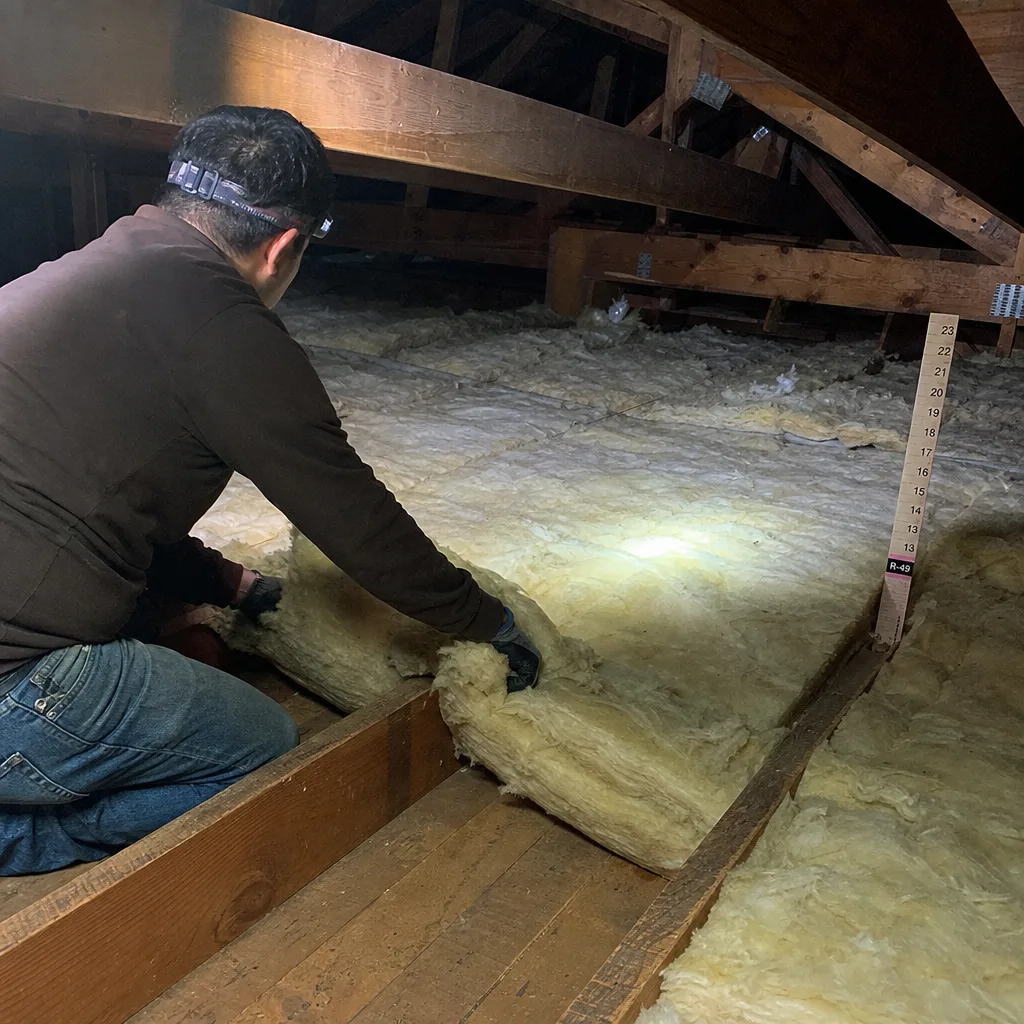
- Uneven temperatures room-to-room. When batts shift or loose-fill migrates toward the attic center, the perimeter rooms over exterior walls lose their thermal buffer first. We find this constantly in Pomona’s older split-levels near Phillips Ranch, where HVAC ducts run through the attic and the pressure differential slowly pushes loose-fill away from the eaves.
- Insulation appears thin, gray, or stained. Fiberglas doesn’t rot, but it does filter air, and when attic air leaks through the insulation year after year, the binder yellows and the fibers collect dust that reads as gray. A 6-inch batt compressed to 3 inches performs like R-11, not R-19, no matter what the label once said.
- Ice dams or excessive summer heat in the attic. Pomona doesn’t see true ice dam conditions often, but during the occasional January freeze, inadequate R-value at the eaves lets roof deck heat escape unevenly. In summer, an attic hitting 140 degrees by 2 PM means the insulation isn’t doing its job, or more commonly, the air sealing underneath it was never done.
- Rodent trails or droppings on top of batts. Mice don’t eat fiberglas, but they tunnel through it, compressing pathways and leaving gaps. The nesting material they drag in adds moisture. We see this in homes near the Pomona Fairplex and along White Avenue where mature trees give roof access.
- Your energy bill climbed 15% or more year-over-year with no rate change. Insulation degradation is gradual, but when the cumulative loss crosses a threshold, the HVAC runtime spikes. We compare your usage against degree-day data to confirm the building envelope is the culprit, not the mechanical system.
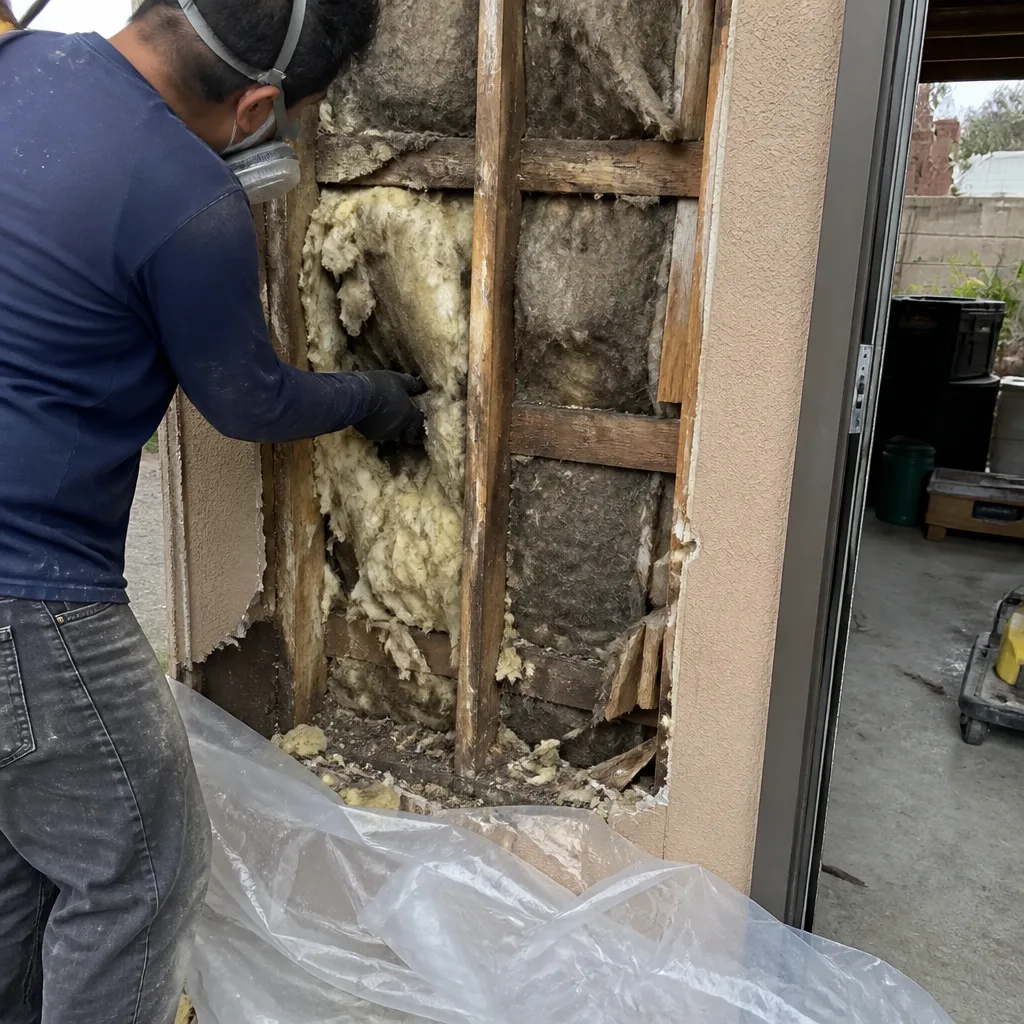 Before
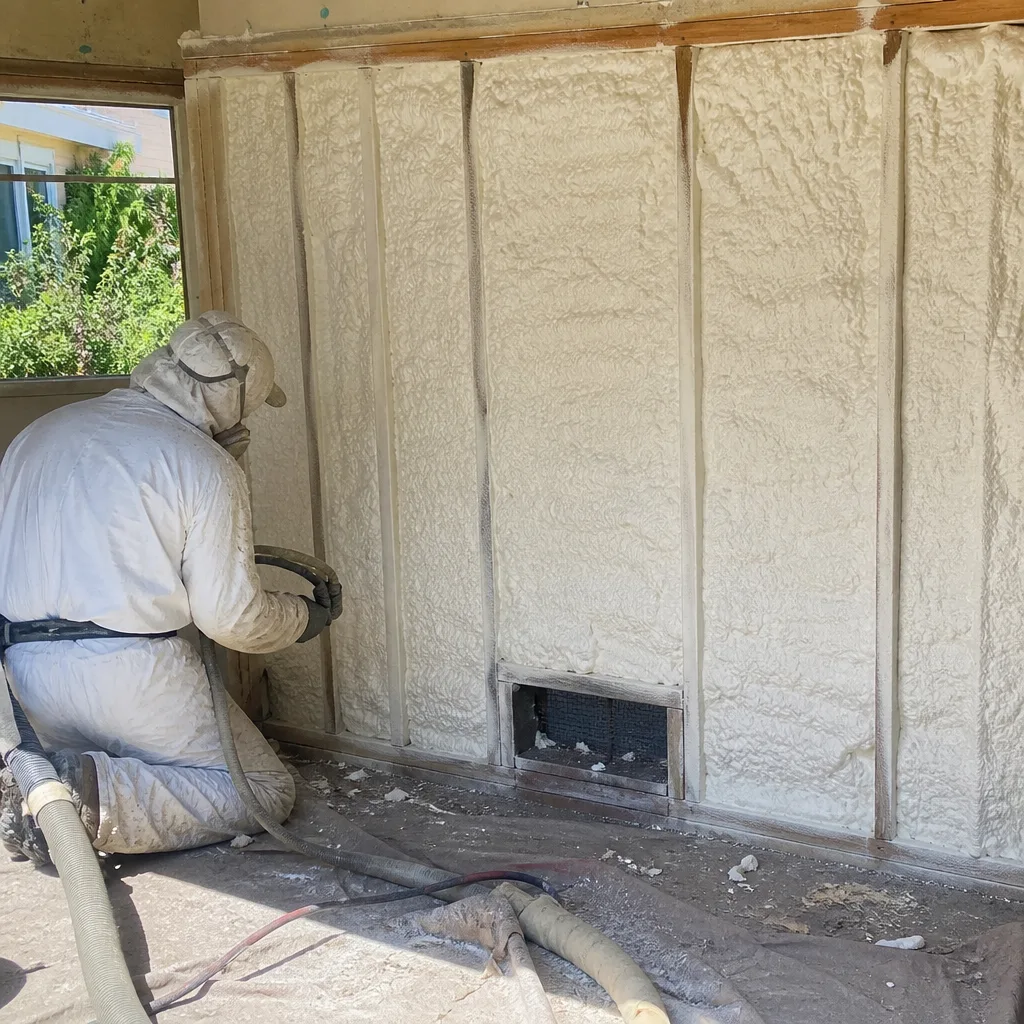 After
AfterReplacement Cost & What’s Included
For a typical 1,200-square-foot attic in Pomona, stripping old Owens Corning batts, sealing top plates and penetrations, and reinstalling to R-38 with new EcoTouch batts runs $2,800 to $4,400. Blown-in ProPink L77 over existing insulation, provided the old material is clean and uncompressed, runs $1.80 to $2.60 per square foot. The range moves with access difficulty (steep roof pitch, limited attic hatch size), whether we need to build storage decking over the joists, and how much air sealing the attic floor requires before any insulation goes back.
Every job includes our written scope and written warranty before anyone starts, per Haven Standard Clause 1. We run a blower-door test, a pressurization reading that shows in one number how much air your building envelope is losing, before and after the work. The Documented Photo Record covers condition of the old insulation, sealed bypasses, and final coverage depth. Our 365-Day Done Right Promise applies to all completed work.
DIY or Call Us?
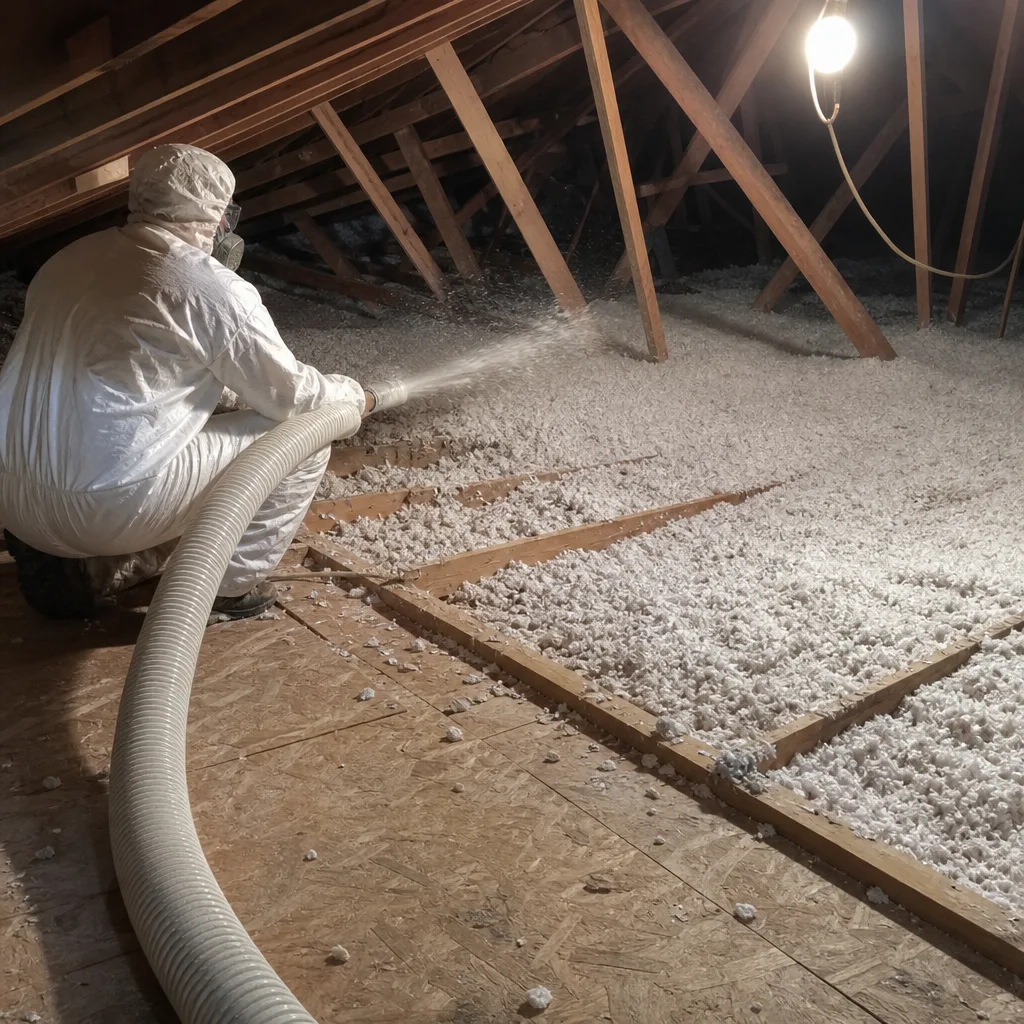
What you can safely check: measure your existing insulation depth with a ruler, photograph any product labels, and look for obvious gaps at the eaves or around the attic hatch. What goes wrong fast: disturbing old fiberglas without a respirator rated for fine fibers, stepping through the ceiling between joists, or blowing loose-fill without first sealing the air leaks underneath. The insulation is only as good as the air barrier below it. We’ve pulled out too many DIY jobs where the homeowner added R-38 on top of an unsealed attic floor and wondered why the house still leaked conditioned air.
There’s no high-tension danger here like a garage door spring, but the respiratory hazard is real, and the code compliance question matters if you sell. California’s Title 24 requires specific R-values by climate zone; Pomona sits in Zone 10, and attic insulation must meet or exceed R-38 for new work. We handle the HERS verification if your project triggers it.
Call (562) 242-7569 for a free estimate. We’ll read your existing setup, give you a written price before any work starts, and if you have a competing quote, we’ll review it with you under our Free Second Opinion.
FAQs
Fiberglas batts hold their R-value for 80 to 100 years if left undisturbed, but in practice we see performance drop after 15 to 25 years due to compression, air infiltration, and rodent activity. The hot, dry Pomona summers accelerate binder breakdown in older products, and the Santa Ana wind cycles pull more dust through bypasses than in coastal climates. Call (562) 242-7569 for an attic inspection if your insulation is past the 20-year mark.
Spot repair works if the damage is isolated, a single rodent nest in one corner or a section displaced by a prior HVAC repair. We cut out the compromised batt, seal the underlying air leak that attracted the problem, and patch with matching material. Widespread compression, moisture staining, or batt widths that don’t match current joist spacing means full replacement performs better. We’ll tell you which applies after seeing the attic.
A standard attic, 1,000 to 1,500 square feet, takes one day for removal, air sealing, and reinstall with batts. Blown-in jobs run faster, often four to six hours, because we’re not hand-fitting around every obstruction. Two-story homes in Pomona’s historic districts near downtown, with limited attic access and complex rooflines, may stretch to a second day. We give you a firm schedule in the written scope.
We carry ProPink L77 loose-fill and EcoTouch batts in R-30 through R-49 on every truck. Specialty products like Owens Corning FOAMULAR rigid board for kneewall applications or Mineral Wool for fire-rated assemblies we order with a two-day lead time. Same-day installation is standard for loose-fill and batt work if you approve the written price by noon.
Written by Wes Okafor, Owner, Topside Attic Insulation Pomona at Topside Attic Insulation Pomona, serving Pomona and nearby areas.