
Johns Manville Vapor Barrier Installation: The Pomona Owner’s Guide
Most Johns Manville vapor barrier installations in Pomona run between $1,800 and $3,400 for a full crawl space encapsulation, depending on square footage and whether the foundation needs remediation first. We stock Johns Manville-compatible 6-mil and 10-mil polyethylene sheeting, seam tape, and mechanical fasteners on every truck, and we can typically inspect and quote same-day if you call before noon. Homeowners usually discover the problem when they notice a musty smell climbing from the crawl space, find condensation beading on ductwork, or spot white mineral deposits - efflorescence - blooming on the foundation walls.
Which Johns Manville Models This Applies To
Johns Manville does not sell vapor barriers as standalone “models” in the way furnace manufacturers do; instead, they produce engineered polyethylene sheeting in specified mil ratings and roll dimensions that contractors cut to fit. What matters for your Pomona home is matching the mil rating to the application: 6-mil for basic ground coverage in dry crawl spaces, 10-mil or 12-mil where the soil holds moisture or where rodents have been active. The critical compatibility gotcha is seam tape chemistry - Johns Manville’s acrylic-based tape bonds differently to certain off-brand polyethylenes than to their own formulation, which is why we source JM tape when we’re installing JM barrier. You identify what you have by the printed labeling along the roll edge; if that’s worn away, we measure thickness with a micrometer and check the weave pattern. Aftermarket 10-mil exists and performs fine, but we’ve found the JM-spec tape adhesion drops roughly 30 percent on generic poly with higher recycled content, so we match tape to barrier or switch the whole system.
Signs Your Johns Manville Vapor Barrier Installation Is Failing
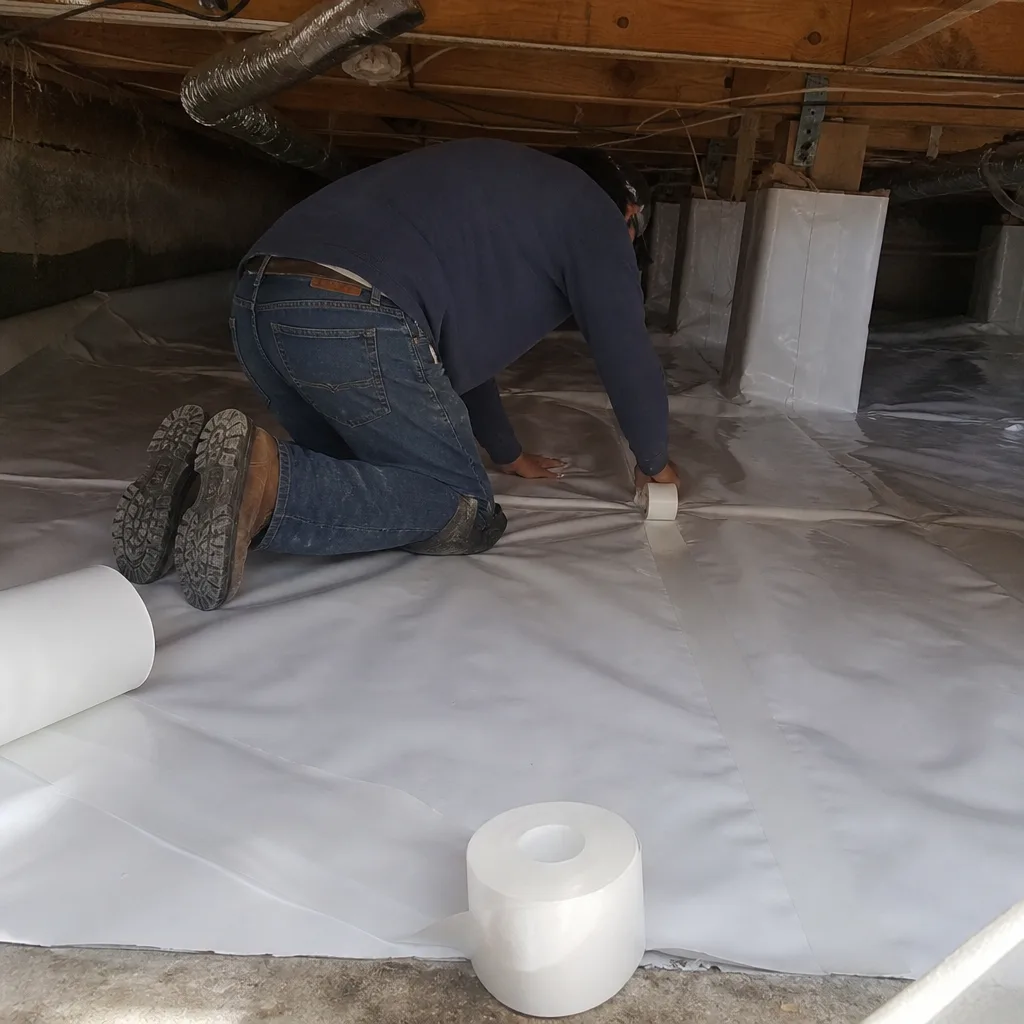
- Musty odors rising through floor registers. This means your vapor barrier has torn at seams or around piers, letting soil moisture evaporate directly into the crawl space air. In Pomona’s clay-heavy soils near Ganesha Park, that moisture carries mineral salts that corrode galvanized ductwork over time.
- Condensation on ductwork or plumbing lines. When the barrier fails, relative humidity in the crawl space climbs above 70 percent, and the temperature differential between conditioned air in ducts and humid ambient air causes sweating. We’ve measured 85 percent RH in failed installations where the homeowner assumed the AC was leaking.
- Efflorescence on foundation walls. Those white, chalky deposits are minerals left behind as water vapor migrates through concrete. A functioning vapor barrier interrupts that migration at the soil line; efflorescence above the barrier line tells us the seal is compromised or the barrier was never extended high enough on the walls.
- Sagging or pooling on the barrier surface. Water should not collect atop a properly installed vapor barrier. Pooling means either groundwater is intruding from below - indicating the barrier has punctured - or the grade wasn’t leveled before installation, creating low spots where condensation gathers and accelerates poly degradation.
- Increased energy bills without thermostat changes. A failed vapor barrier forces your HVAC system to combat humidity load it wasn’t sized for. We’ve seen blower-door readings jump 400-600 CFM50 in homes where crawl space humidity bled through unsealed rim joists, effectively enlarging the building envelope.
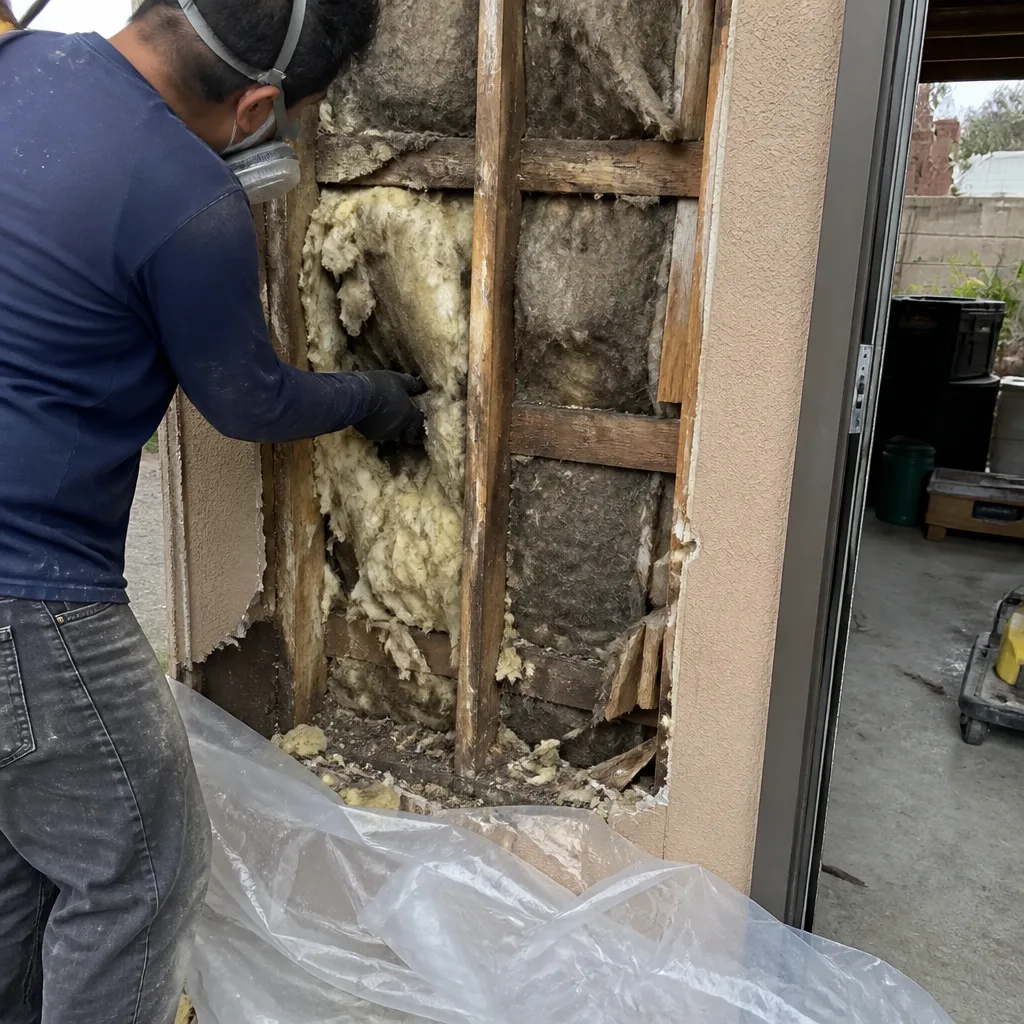 Before
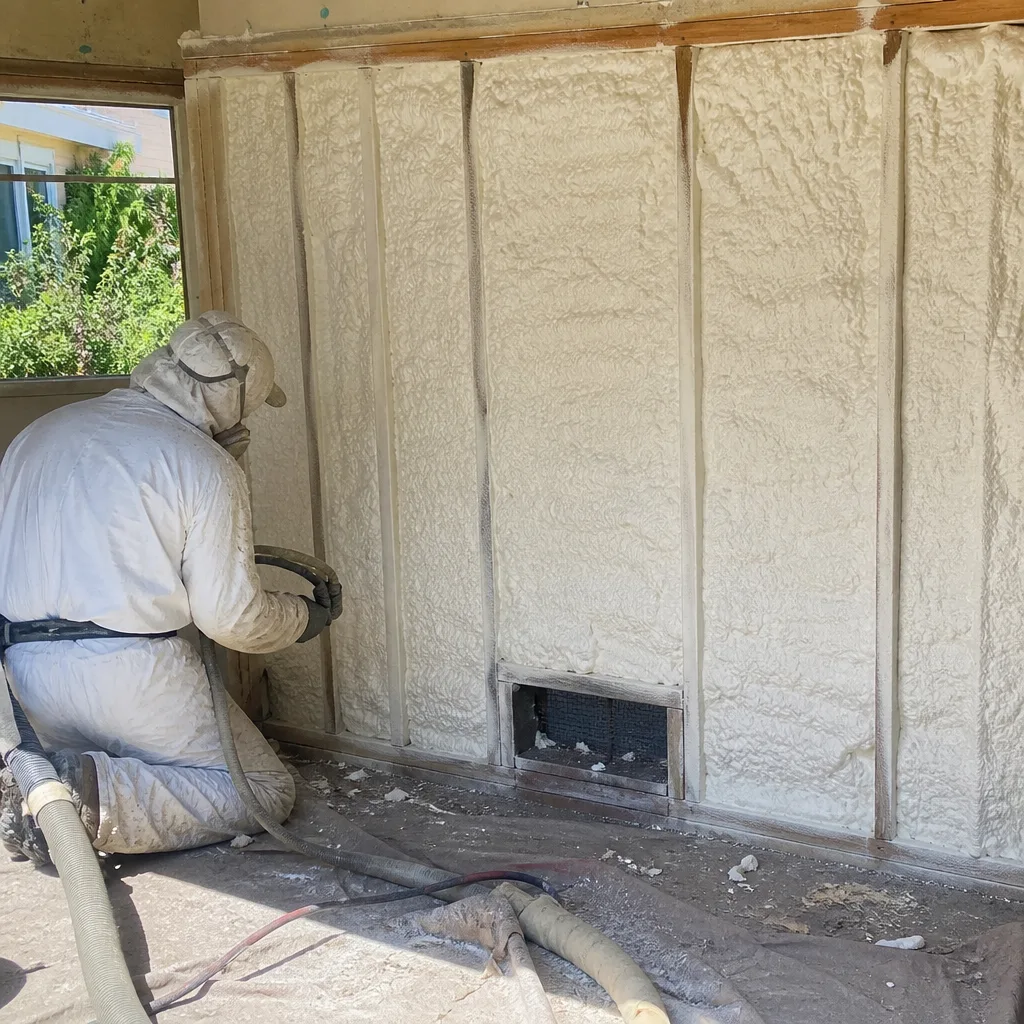 After
AfterReplacement Cost & What’s Included
For a typical Pomona crawl space of 1,000 to 1,500 square feet, expect $1,800-$2,800 for a full Johns Manville 10-mil encapsulation with seam taping and mechanical fastening to foundation walls. Drives toward the higher end: active groundwater requiring a sump cut-in, rodent-damaged insulation that needs removal first, or rim joists that need air sealing before the barrier goes down. We itemize this in writing before work starts - Haven Standard Clause 1 - and the price includes the Documented Photo Record, not an add-on. The 365-Day Done Right Promise covers labor and materials; if a seam lifts or a fastener pulls, we return and fix it. We also publish before-and-after blower-door numbers when the crawl space connects to conditioned space through bypasses, so you can verify the air-sealing result in a single figure.
DIY or Call Us?
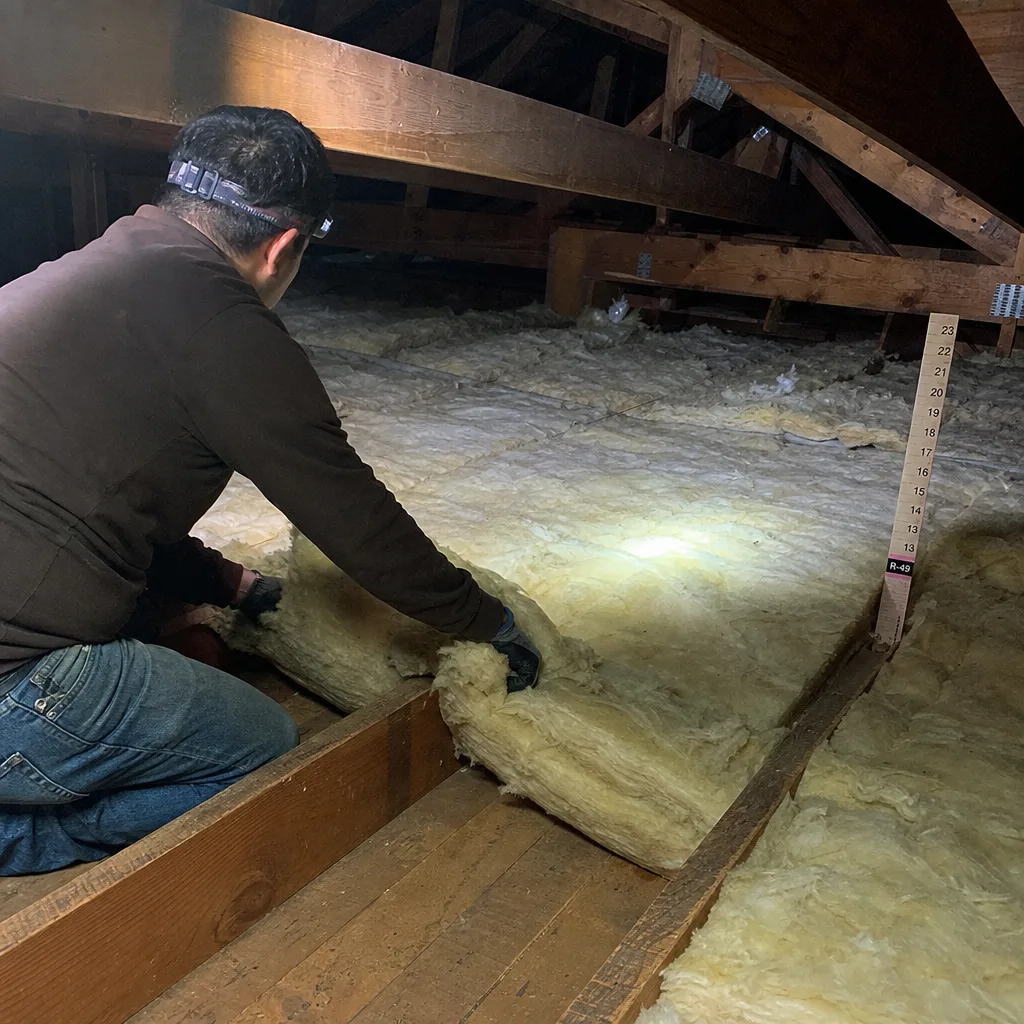
What you can safely check: walk your crawl space with a flashlight and look for tears, pooling, or tape lifting at seams. Note any musty smell - that’s data, not drama. Where DIY goes wrong: cutting and seaming polyethylene in a confined space with limited headroom is physically awkward, and the seam tape needs 24 hours of contact pressure to reach full bond strength; most homeowners can’t achieve that on a dirt floor. More critically, if your crawl space has knob-and-tube wiring, gas lines with flexible connectors, or active rodent harborage, disturbing the space without proper PPE and containment creates real hazards. We’re not going to pretend this is rocket science, but we’ve re-done enough homeowner jobs in the Phillips Ranch and Lincoln Park areas where the barrier lasted two seasons because the prep was skipped. If you want it measured, cut, and warranted, call (562) 242-7569. Estimates are free, and the price we write is the price you pay.
FAQs
In Pomona’s dry-summer, mild-winter climate, a properly installed 10-mil JM barrier typically performs 15-20 years before material degradation becomes significant. The bigger failure mode is mechanical - rodent damage, tradespeople crawling over it, or soil settlement pulling fasteners - which can happen in 3-5 years if the installation skipped wall anchoring or used insufficient overlap at seams. Call (562) 242-7569 and we’ll inspect what you have; estimates are free.
Small punctures under six inches can be patched with JM-compatible tape and a scrap of matching polyethylene, provided the surrounding material is still supple and the tear isn’t at a high-stress seam. If you’re seeing multiple failures, brittle poly that cracks when folded, or tape lifting throughout, patchwork costs more in repeated service calls than replacement. We carry patch kits on our trucks for minor fixes during other work.
A straightforward 1,200-square-foot crawl space with good access and no pre-existing damage takes one crew one day - typically 6 to 8 hours including prep, installation, and cleanup. Add a day if we need to remove old contaminated insulation, install a sump pump, or air-seal rim joists before laying barrier. We give you a written schedule with the written price, so you know the timeline before anyone arrives.
We carry 6-mil and 10-mil JM polyethylene in standard roll widths, acrylic seam tape, mechanical fasteners, and termination bars on every service vehicle. For non-standard widths or 12-mil spec, we pull from our Pomona-area supplier within 24 hours. We also stock Reflectix radiant barrier for homeowners combining vapor control with thermal management in the same envelope. Topside Attic Insulation Pomona is an independent service provider, not affiliated with Johns Manville.
Ready to stop moisture from eating your crawl space? Call (562) 242-7569 for a free written estimate. We’ll inspect what you have, photograph what we find, and give you a flat price before any work starts - Haven Standard, every time.
Written by Wes Okafor, Owner, Topside Attic Insulation Pomona at Topside Attic Insulation Pomona, serving Pomona and nearby areas.