
Icynene Vapor Barrier Installation: The Pomona Owner’s Guide
Most Icynene vapor barrier installations in Pomona run between $1,800 and $3,400 for a standard crawl space or attic application, and we stock Icynene-compatible barrier material on our trucks for same-day starts when the scope is straightforward. The job pairs a Class I vapor retarder (0.1 perm or less) with proper air sealing at the perimeter, because the barrier only works if the air moving around it is controlled first. Homeowners usually figure out something’s wrong when they notice musty odors returning after a dry winter, or when their energy bills climb back toward pre-insulation levels - signs that moisture is getting past the barrier or the air sealing underneath it has failed.
Which Icynene Models This Applies To
Icynene’s vapor barrier installations aren’t tied to a single spray foam model, but they do need to match the assembly type: open-cell (Icynene Classic Max, Classic Plus, or LD-C-50) versus closed-cell (Icynene MD-C-200 or ProSeal). The critical compatibility point is the substrate the barrier adheres to. Open-cell foam is vapor-permeable, so it demands a separate vapor barrier on the warm-in-winter side in Pomona’s mixed-dry climate zone (CEC Climate Zone 10). Closed-cell foam is its own vapor barrier at 2 inches or more, but many Pomona homes from the 1950s through 1980s have hybrid assemblies where closed-cell was added over existing fiberglass, leaving the original kraft paper or poly sheeting compromised.
We identify the right approach three ways: the original installation paperwork (if the homeowner has it), a core sample showing foam density and thickness, or a calibrated moisture-meter reading at the foam-to-drywall or foam-to-sheathing interface. OEM Icynene barrier products are branded and spec-matched, but we also install equivalent ASTM E1745 Class A barriers from Poly-America and Stego when the assembly allows. The aftermarket equivalents carry the same perm rating and tensile strength, but they won’t have the Icynene logo - something to note if you’re maintaining warranty documentation for a newer build. We keep both on the truck because Pomona’s permit history is spotty on older homes, and we can’t always confirm what was originally installed.
Signs Your Icynene Vapor Barrier Installation Is Failing
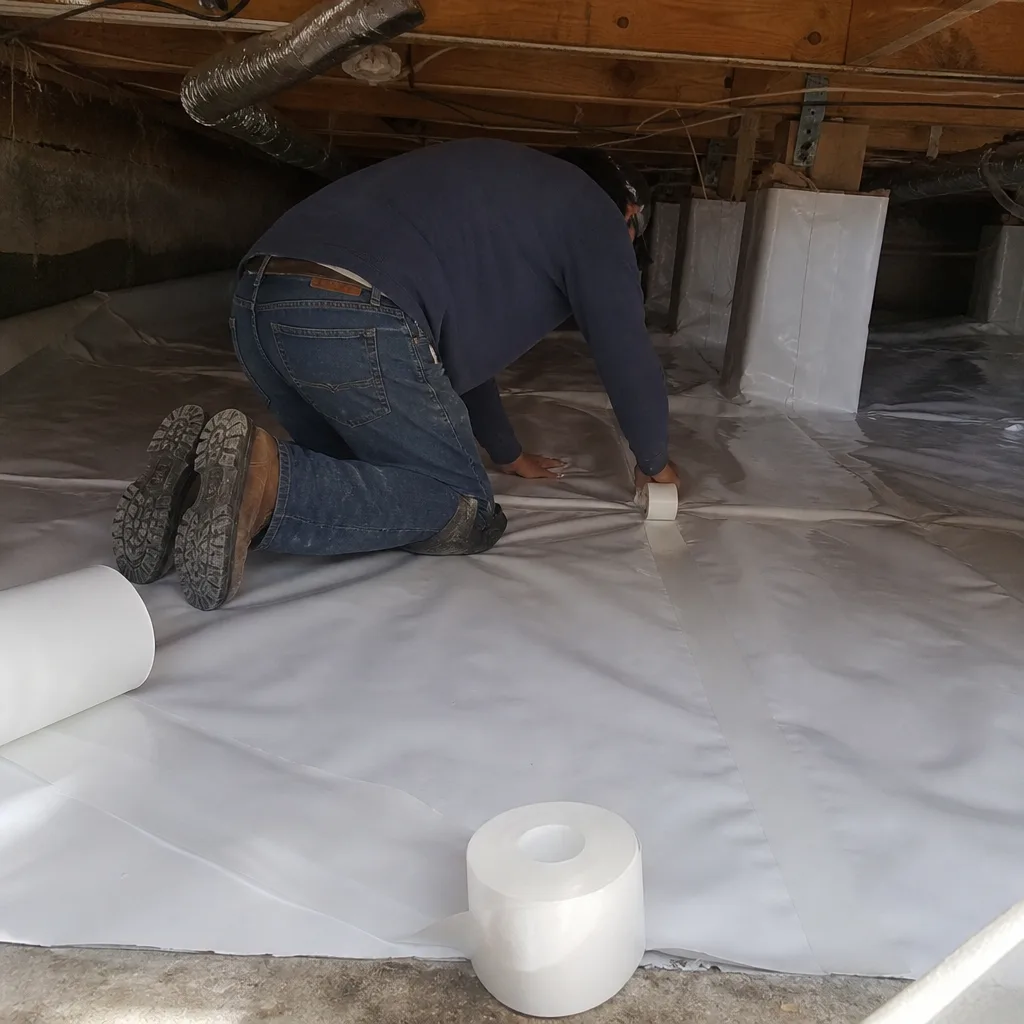
- Musty odors that return after rain. The barrier’s job is to stop ground moisture from reaching conditioned space. When seams separate or the poly tears at penetrations, humidity spikes first in the crawl space or attic, then migrates through any remaining air leaks into living areas. We see this most in the Ganesha Park and Lincoln Park neighborhoods where clay soils hold moisture longer.
- Insulation that looks damp or darkened. Vapor barriers don’t fail all at once; they fail at stress points - pipe penetrations, the rim joist, or where the barrier meets the foundation wall. Darkened fiberglass or surface mold on foam means moisture is condensing against the insulation because the barrier below it is breached.
- Floor temperatures that swing with outdoor humidity. In a properly sealed and barriered crawl space, the floor above should feel stable year-round. If your hardwood or tile goes cold and clammy in February, moist air is likely moving through a compromised barrier and cooling against the subfloor.
- Pest activity increasing in the crawl space. Rats and insects follow moisture. A torn barrier creates damp pockets that attract them, and once they’re in, they tear the barrier further. We document this with photos on every inspection - part of the record you get back.
- Blower-door numbers that have degraded since original work. If your home was tested at 2,800 CFM50 after insulation and now reads 3,600 or higher, the barrier system isn’t the only problem, but it’s often the first place we find new air leakage paths. The vapor barrier and air sealing are a single system; one fails, the other works harder and usually fails too.
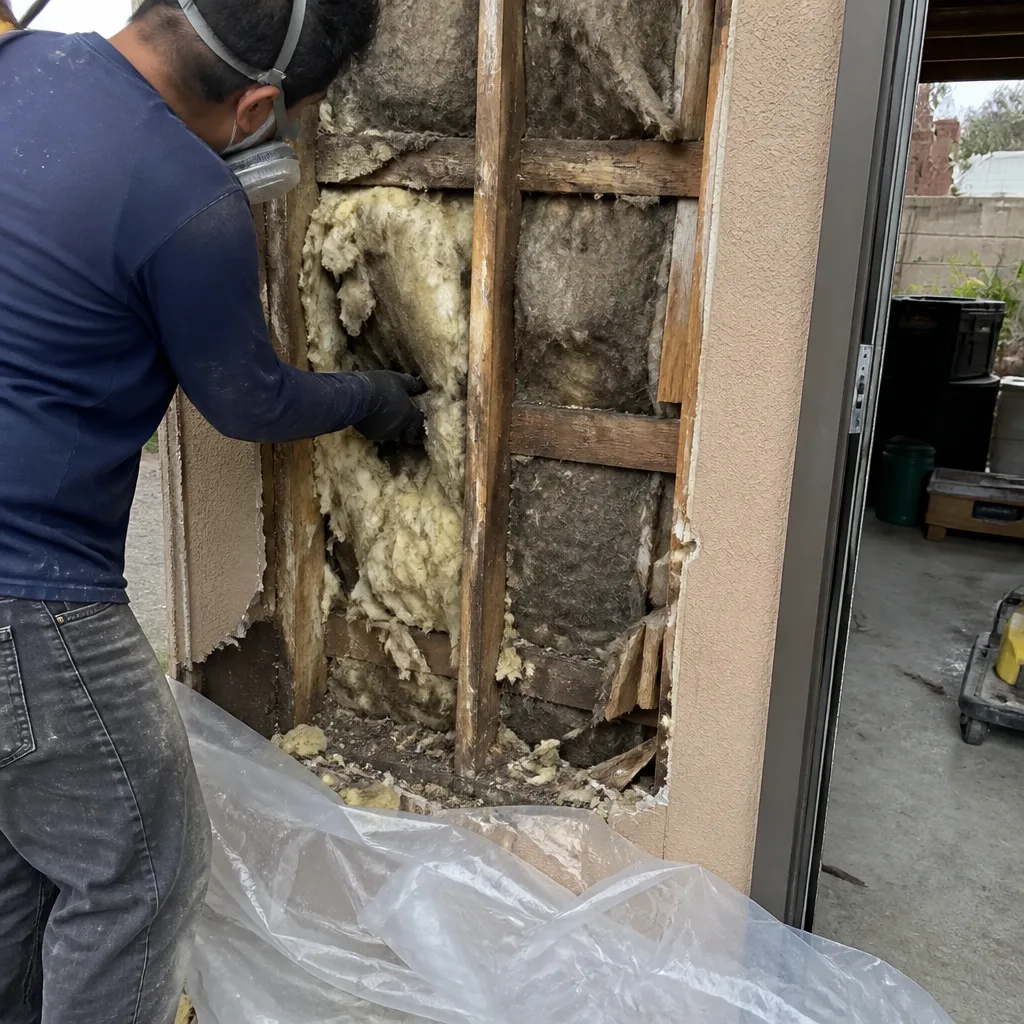 Before
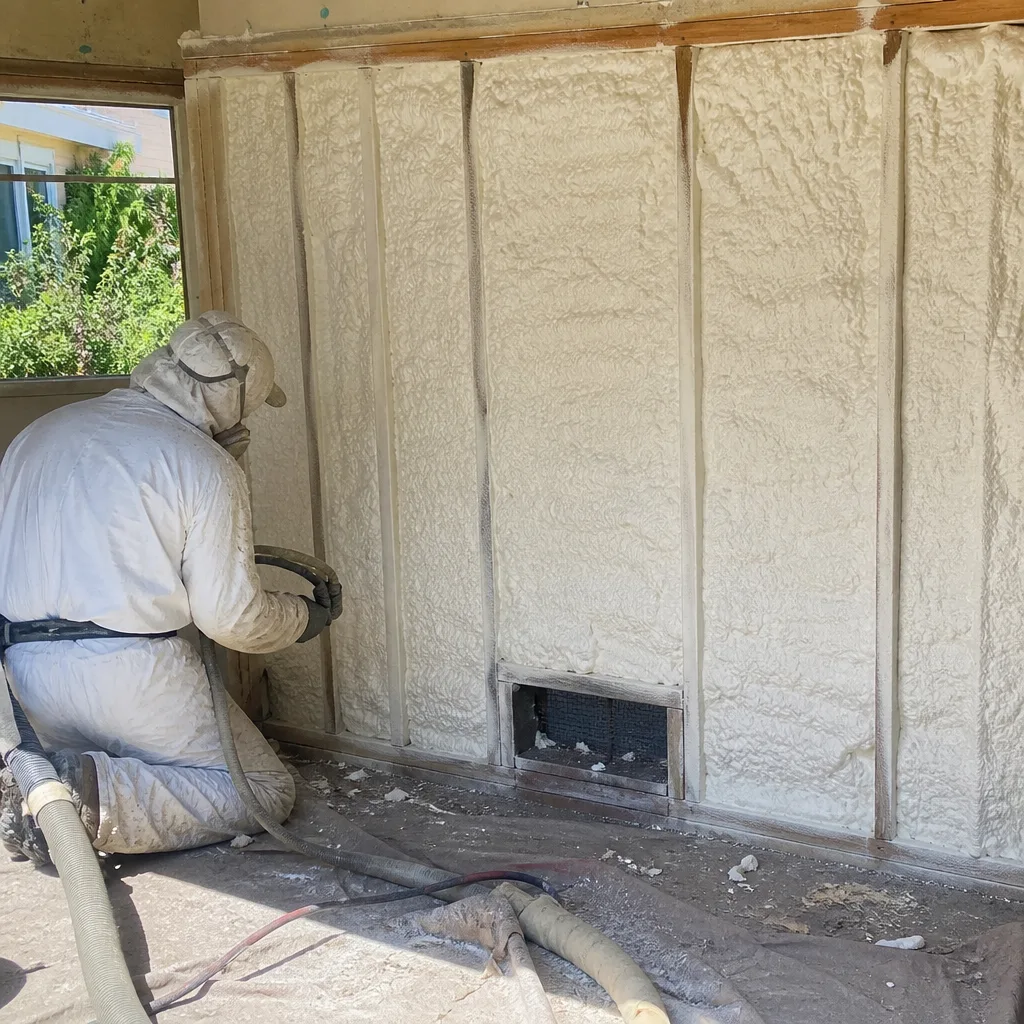 After
AfterReplacement Cost & What’s Included
In Pomona, a full Icynene-compatible vapor barrier replacement runs $1,800-$3,400 for crawl spaces under 1,200 square feet, and $2,400-$4,200 for attic applications with complex geometry. The range depends on three things: how much existing barrier needs removal (old poly with rodent damage takes longer), whether the foam substrate needs repair before new barrier goes down, and how many penetrations (ducts, plumbing, wiring) need custom detailing.
| Component | Typical Range |
|---|---|
| Vapor barrier material (Class I, 10-mil or 15-mil reinforced poly) | $0.85-$1.40/sq ft installed |
| Perimeter sealing and mechanical fastening | $380-$620 |
| Penetration detailing (pipes, conduits, ducts) | $45-$90 each |
| Substrate foam repair (if needed) | $180-$450 |
| Post-install moisture verification | Included |
Every job gets a Written Price Before Any Work Starts under Haven Standard Clause 1, and the final invoice matches the written scope. We warranty the installation for 365 days under our Done Right Promise, and you’ll receive a Documented Photo Record showing the barrier layout, seam details, and any moisture readings we took.
DIY or Call Us?
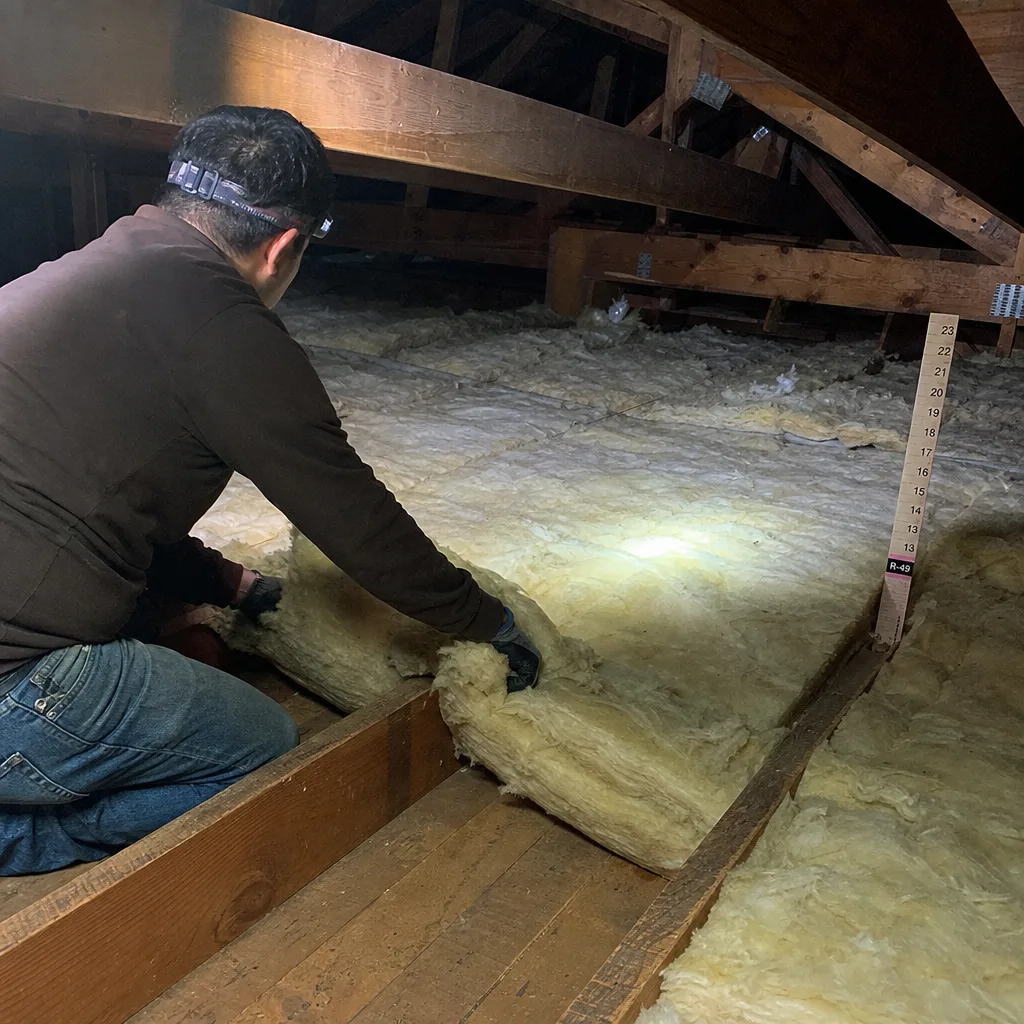
There’s a clear line between what a homeowner can check and what they should handle. You can safely verify whether your crawl space has standing water, whether the existing barrier is visibly torn, and whether your HVAC condensate line is draining properly - all with a flashlight and a moisture meter from the hardware store. What you shouldn’t do is crawl under there with a roll of plastic and a staple gun. Vapor barriers fail because of how they’re terminated at walls and penetrations, not because the plastic itself is exotic. A stapled sheet with untaped seams is worse than no barrier at all; it traps moisture instead of controlling it. And in Pomona’s older homes, knob-and-tube remnants and damaged subfloor joists are common hazards we find once we’re under there. Call (562) 242-7569 and we’ll give you a free second opinion on any estimate you’ve already received, plus a written price for our scope before anyone starts.
FAQs
A properly installed Class I vapor barrier should last 15-20 years in Pomona’s climate, but we’ve seen failures at 8-10 years when the original installer skipped mechanical fastening at the perimeter or used 6-mil poly instead of 10-mil or 15-mil reinforced material. Soil chemistry matters too - the alkaline clay in parts of north Pomona can degrade thinner plastics over time. Call (562) 242-7569 and we’ll assess what’s down there now.
Patching works for isolated tears smaller than a square foot if the surrounding material is still supple and well-fastened. Multiple failures, brittle poly, or any mold on the substrate mean full replacement - patches over compromised material just hide the problem. We don’t quote patch jobs without seeing the space; anyone who does is guessing. Estimates are free.
Most crawl space vapor barrier replacements in Pomona are completed in one day, assuming no standing water remediation or structural repairs. Attic applications with complex ductwork or cathedral ceilings can run into a second day. We give you a schedule commitment in writing, not a range.
Yes - 10-mil and 15-mil reinforced poly, Icynene-branded seam tape, and compatible mechanical fastening systems are on our trucks. We also stock Reflectix radiant barrier for hybrid assemblies where the homeowner wants both vapor control and reflective insulation. We’re an independent service provider, not affiliated with Icynene or Reflectix, so we match the material to your assembly rather than pushing a brand.
Topside Attic Insulation Pomona is independently owned and operated under The Haven Standard since 2016. We source materials from Icynene, Owens Corning, Johns Manville, Knauf, Rockwool, CertainTeed, Demilec, GreenFiber, and Reflectix - no proprietary lock-in, ever. Seal the leaks first. The insulation is just the last layer of the answer.
Ready to get it documented and done right? Call (562) 242-7569 for a free estimate. A live person answers 24/7, and you’ll get a written price before any work starts - that’s Haven Standard Clause 1, no exceptions.
Written by Wes Okafor, Owner, Topside Attic Insulation Pomona at Topside Attic Insulation Pomona, serving Pomona and nearby areas.