
GreenFiber Attic Air Sealing: The Pomona Owner’s Guide
GreenFiber attic air sealing components in Pomona typically run $340-$680 installed for a standard single-story attic, and we stock the full range of GreenFiber-compatible baffles, sealants, and fire-rated covers on our trucks for same-day replacement. Most Pomona homeowners discover the problem when their summer cooling bills spike 20-40% above the prior year, or when a home energy audit flags thermal bypasses around top plates and recessed can lights that the original GreenFiber installation was supposed to block. We see this most often in ranch homes built between 1955 and 1985 near Ganesha Park and the Lincoln Park corridor, where attic access is tight and the original air-sealing detail was minimal or has degraded from decades of Inland Empire heat cycling.
Which GreenFiber Models This Applies To
GreenFiber’s building envelope line includes loose-fill cellulose (Low Dust, Sanctuary, and Cocoon series), dense-pack wall systems, and the associated air-sealing accessories: vent baffles (proper vents), recessed light covers (Tenmat or equivalent fire-rated enclosures), top-plate foam gasket kits, and caulk/sealant specified for cellulose contact. The critical compatibility point is the baffle height. GreenFiber loose-fill in a vented attic requires baffles that maintain a 1-inch minimum clear air channel from soffit to ridge; their OEM baffles are 14-inch and 24-inch widths, but many Pomona attics with 2×6 rafters at 24-inch centers need the narrower 14-inch version, not the 24-inch that box stores push by default. A mismatched baffle collapses under dense-pack pressure and kills your ventilation.
We carry both GreenFiber-specified OEM baffles and fire-rated aftermarket equivalents from Owens Corning and Johns Manville that meet the same ASTM E84 Class A standard. For recessed can light covers, the Tenmat MM-150 is the GreenFiber-recommended fire enclosure, rated for direct cellulose contact up to 150 watts; we stock these and the slightly deeper MM-180 for LED retrofits with integrated drivers that run hotter than the lamp rating suggests. If your original GreenFiber installation used non-fire-rated foam board or plastic covers, that’s a code violation under current California Title 24 and needs immediate correction before any new insulation goes in.
Signs Your GreenFiber Attic Air Sealing Is Failing
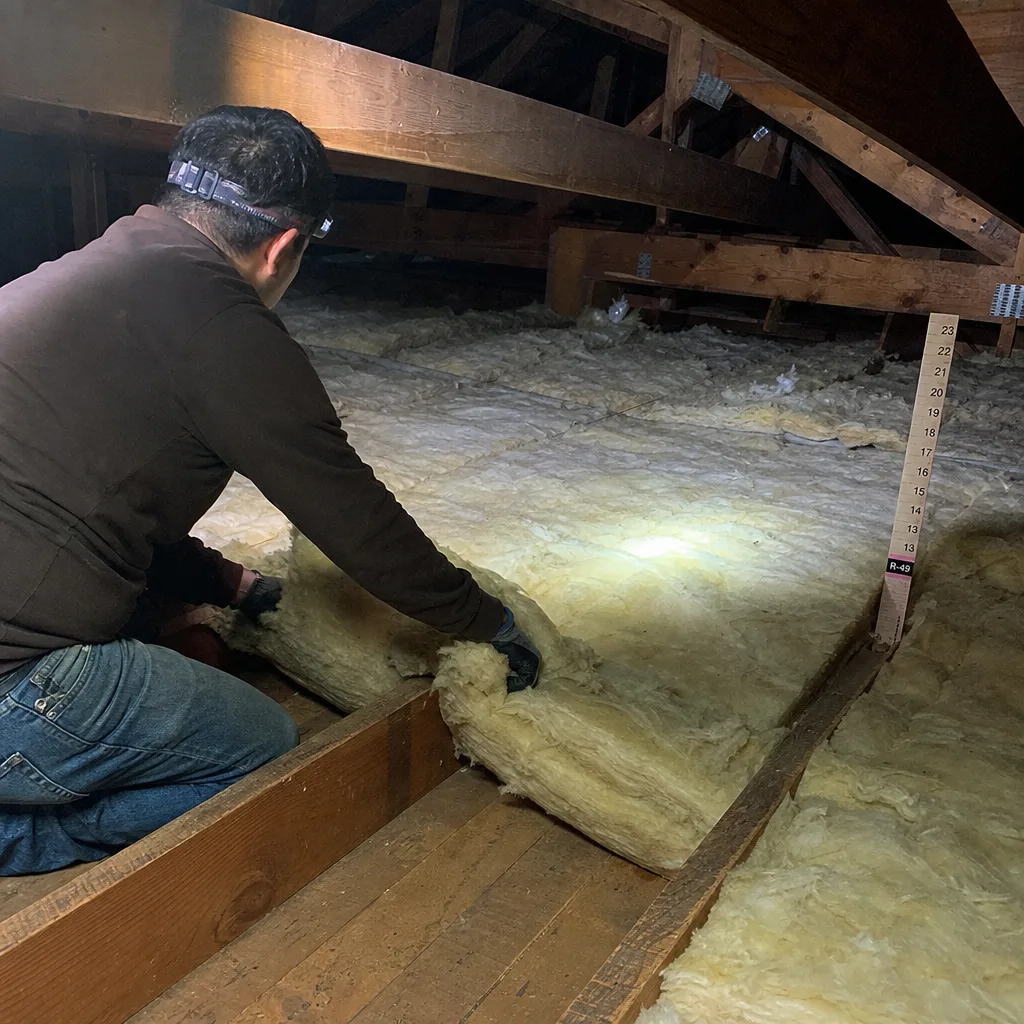
- Hot spots on your ceiling in July and August. In Pomona’s 95-105°F summer stretches, failed top-plate sealing lets attic air pressurize into wall cavities. You’ll feel it as warm stripes where interior walls meet the ceiling, especially on south-facing rooms. The underlying cause is gasket foam that has compressed or pulled away from the top plate, or caulk that cracked after repeated thermal expansion cycles.
- Dust streaking around recessed can lights. When the fire-rated cover seal fails, attic air pulls through the fixture housing every time your HVAC cycles. In Pomona’s windy spring months, this shows as dark radial patterns on the ceiling paint. The cause is either a degraded gasket on the cover or a cover that was never sealed to the drywall at installation.
- Ice damming or moisture staining at the eaves. Failed vent baffles let blown cellulose block the soffit intake, killing airflow across the roof deck. In Pomona’s occasional winter rains, this traps moisture and shows as water stains at exterior wall edges. The baffle may have collapsed, been undersized for the rafter bay, or been omitted entirely in some bays.
- Rooms that never reach set temperature despite new insulation. We see this in Pomona’s 1960s-1970s tracts near Arrow Highway, where plumbing and electrical penetrations through the top plate were never sealed during the original GreenFiber blow. Conditioned air escapes into the attic faster than the HVAC can replace it. The fix is targeted foam sealing at each penetration, not more insulation on top.
- Blower-door reading above 4,000 CFM50 on a home under 2,500 square feet. If you have a recent energy audit, this number tells the story directly. A well-sealed home of that size in Pomona should read closer to 2,500-3,000 CFM50. The gap is almost always attic bypasses, not window leakage.
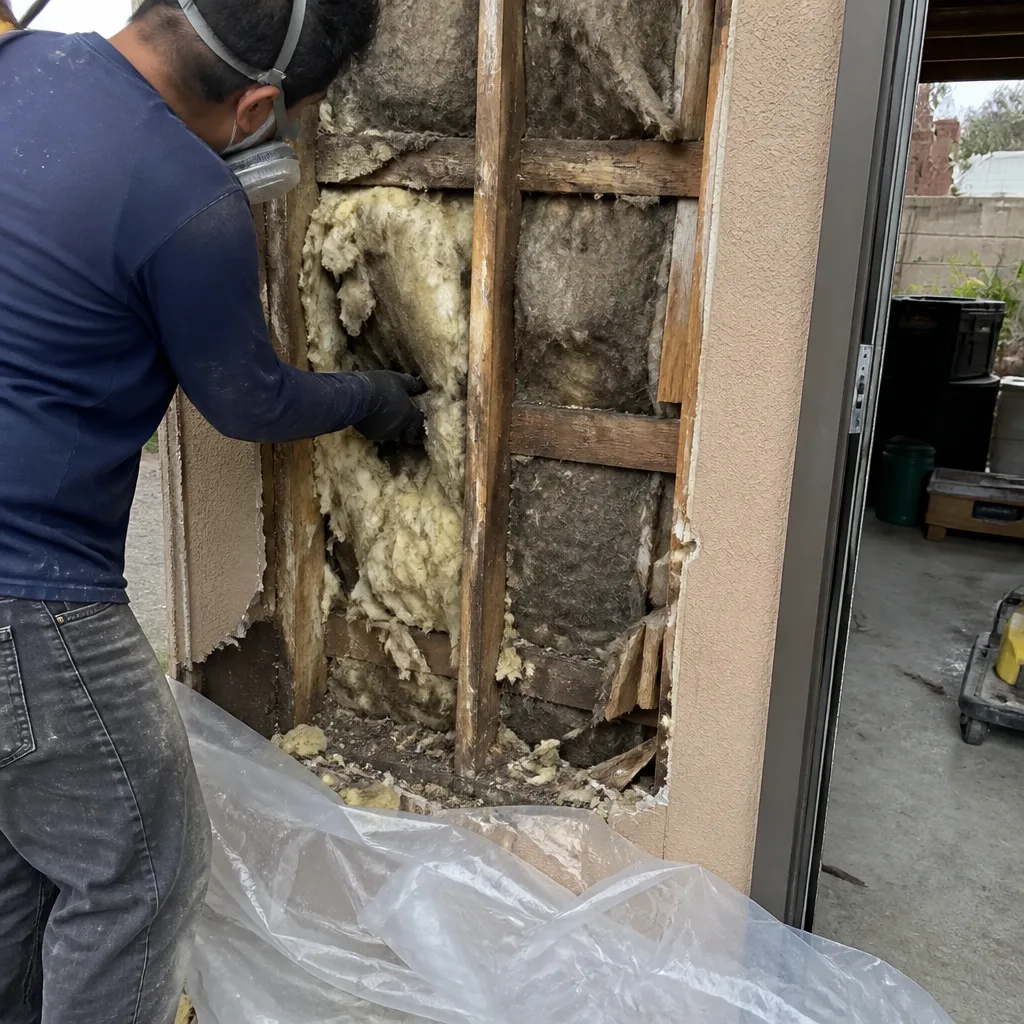 Before
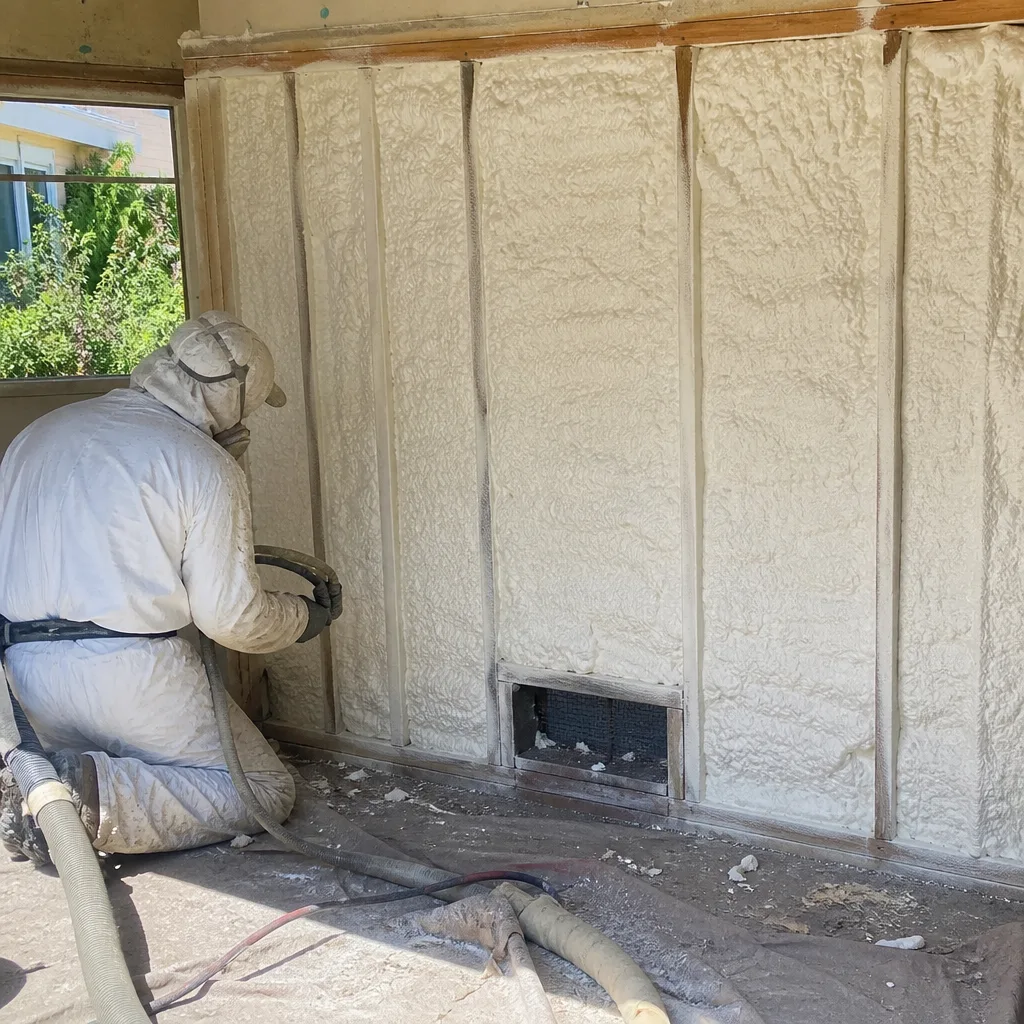 After
AfterReplacement Cost & What’s Included
| Component | Typical Range (Pomona) | What Drives It |
|---|---|---|
| Vent baffles (per soffit bay) | $45-$85 | Accessibility, rafter spacing, existing insulation removal |
| Recessed can light covers (per fixture) | $120-$195 | Fixture type, ceiling height, attic clearance |
| Top-plate foam gasket replacement (per linear foot) | $8-$14 | Plate accessibility, number of penetrations |
| Penetration sealing (plumbing/electrical) | $35-$75 per penetration | Size, location, need for fire-stop caulk vs. intumescent foam |
| Full attic air-sealing package (typical 1,600-2,200 sq ft home) | $1,800-$3,400 | Attic square footage, existing condition, blower-door baseline |
These are installed prices, parts and labor combined, with no add-ons after the written scope. The range reflects attic accessibility more than part cost. A Pomona home with a 30-inch scuttle hatch and 4:12 roof pitch takes longer per bay than one with a framed stair and 6:12 pitch. Every GreenFiber air-sealing job we complete includes a Documented Photo Record of each sealed penetration and, on full packages, before-and-after blower-door numbers so you can verify the CFM50 reduction in writing. Our 365-Day Done Right Promise applies to all work, and the written warranty is delivered before anyone enters the attic.
DIY or Call Us?
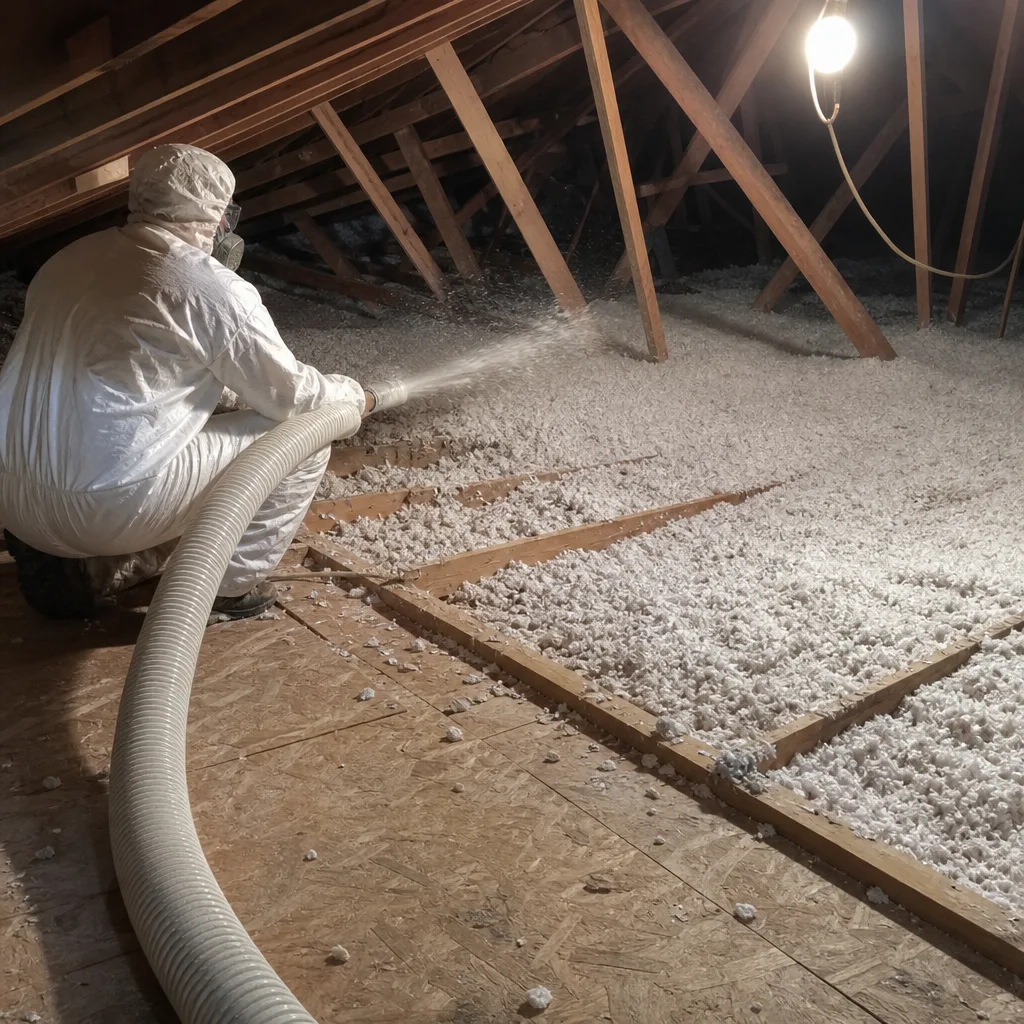
There’s a safe middle ground here, and then there’s the point where you need the right tools and the right documentation. A homeowner can safely verify baffle collapse from the attic hatch with a flashlight and a yardstick, measure rafter spacing to confirm 16-inch versus 24-inch centers, and photograph dust streaking around can lights for our review. What you cannot safely or effectively do yourself: remove existing cellulose around live electrical, apply fire-rated foam or caulk in a way that satisfies Title 24 inspection, or run a blower-door test to confirm your work actually reduced air leakage. The blower door is the scoreboard. Without it, you’re guessing.
We’ve also found that DIY caulk jobs in Pomona attics often fail within 18 months because the wrong product was used. Standard latex caulk degrades at attic temperatures; GreenFiber-compatible air sealing requires sealants rated for continuous 180°F exposure and direct cellulose contact. We stock those sealants on every truck. If you want a second opinion on what you’re seeing, text us photos or call (562) 242-7569. We’ll tell you straight whether it’s a weekend fix or a scope-of-work job.
FAQs
Properly installed fire-rated covers and foam gaskets last 15-25 years, but the Inland Empire’s 120°F+ attic peaks accelerate caulk degradation. We inspect for brittle sealant at year 10 as a matter of course. Call (562) 242-7569 if your home is approaching that age and your energy bills are creeping up.
Spot repairs work for isolated gasket failures or single collapsed baffles, but if the original installation missed multiple top plates or used non-fire-rated materials, partial repair leaves you with a patchwork envelope that won’t test well. We evaluate repair-versus-replace based on blower-door impact, not visual guesswork. Bring us any written estimate for a free second opinion.
A typical Pomona single-story home takes one crew day for access, sealing, and blower-door verification. Two-story homes or those with finished attic space may run into a second day. We never leave a job mid-sequence; the attic is closed out and documented before we leave.
Yes. We carry GreenFiber-compatible baffles, Tenmat fire-rated covers, specified sealants, and dense-pack netting on every Pomona-area truck. If your configuration is unusual, we’ll source it within 24 hours rather than install an incorrect substitute. Call (562) 242-7569 to confirm availability for your specific model and attic layout.
Topside Attic Insulation Pomona is an independent service provider, not affiliated with GreenFiber. We source materials from GreenFiber, Owens Corning, Johns Manville, Knauf, Rockwool, CertainTeed, Icynene, Demilec, and Reflectix, with no proprietary lock-in on any brand.
Seal the leaks first. The insulation is just the last layer of the answer. If your GreenFiber attic air sealing is showing any of the symptoms above, or if you have a written estimate you’d like us to review, call (562) 242-7569. A live person answers 24/7, and we’ll schedule a free evaluation with a written price before any work starts. That’s Haven Standard Clause 1, and it’s how we’ve operated since 2016.
Written by Wes Okafor, Owner, Topside Attic Insulation Pomona at Topside Attic Insulation Pomona, serving Pomona and nearby areas.