
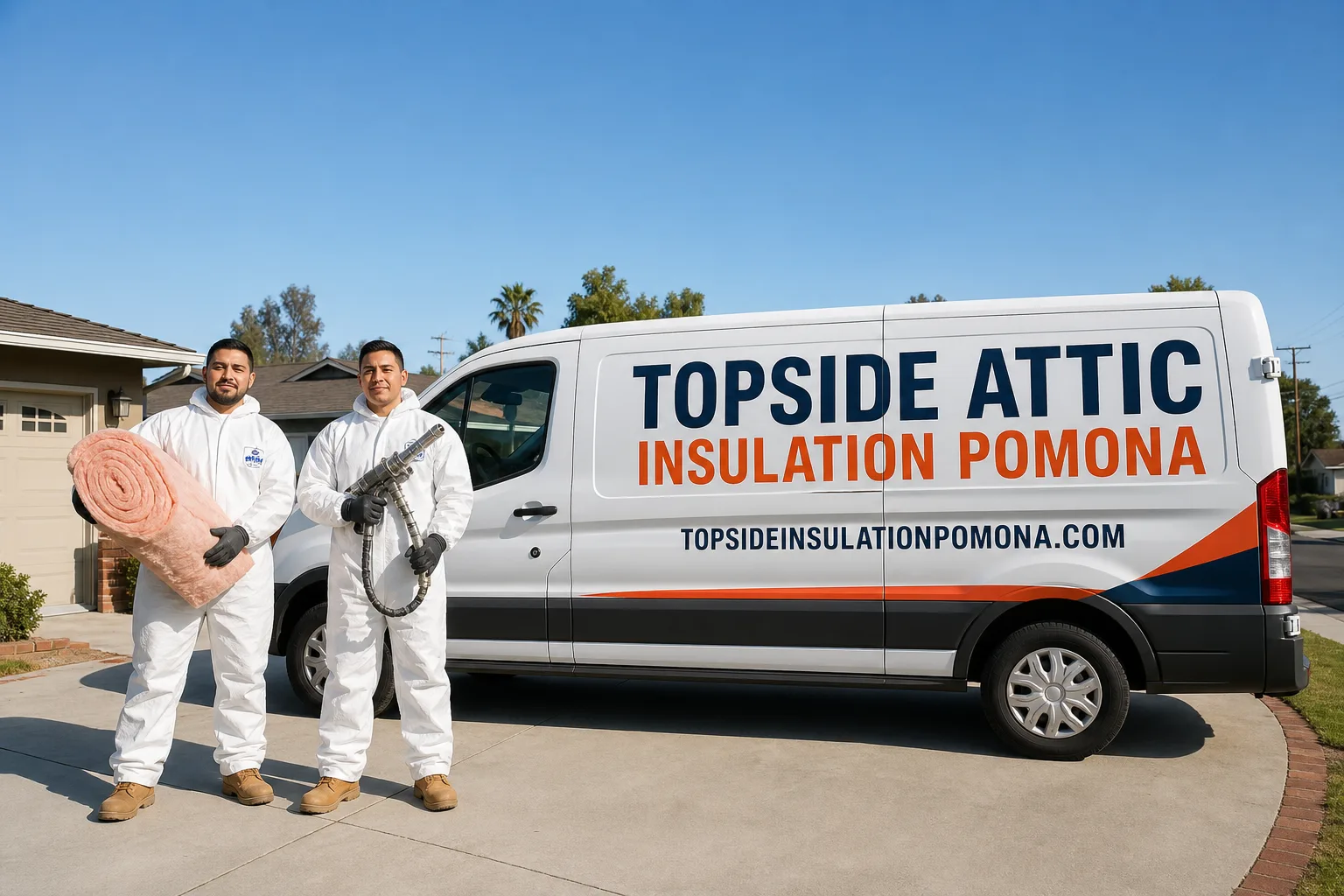
Fast, Reliable Blown-In Insulation Across Monrovia
Most blown-in insulation jobs in Monrovia run $1,800-$4,500 depending on attic size, existing material condition, and whether the home sits in the fire hazard zone above Foothill Boulevard. Our crews are dispatched from the Los Angeles office and typically reach Monrovia properties within 45 minutes during business hours. Call (562) 242-7569 for a written price before any work starts.
We’ve worked in Monrovia since 2016, from the Craftsman bungalows near Old Town to the hillside builds above Foothill Boulevard. The canyon geography here creates real material constraints that out-of-area crews miss. If your home falls within the Very High Fire Hazard Severity Zone, standard fiberglass batts or open-cell spray foam won’t pass inspection. We pull the VHFSD overlay before quoting so you don’t face a mid-project material swap.
Why Topside Attic Insulation Pomona Is Monrovia’s Preferred Blown-In Insulation Company
Our Blown-In Insulation team has completed jobs on Canyon Boulevard, Greystone Avenue, and throughout the Mayflower Village-adjacent blocks where Monrovia meets Duarte. Homeowners in these neighborhoods leave reviews mentioning the blower-door numbers we publish, not vague promises about “efficiency.” We’ve got a strong local reputation built on documentation you can verify.
Response time to Monrovia averages under 45 minutes from dispatch. That’s faster than most crews coming from the Inland Empire or Orange County who don’t know the difference between Foothill Boulevard access and the canyon roads.
We understand Monrovia’s split personality: the flatland historic core with its 1920s balloon-framing and the hillside zone with its fire-code material restrictions. One-size-fits-all quoting doesn’t work here. A crew that treats your Upper Monrovia attic like a Baldwin Park ranch is going to hit an inspection wall.
Under Haven Standard Clause 1, every Monrovia job starts with a written price, written scope, and written warranty before anyone lifts a tool. No exceptions.
Our Blown-In Insulation Services in Monrovia
Blown-In Cellulose
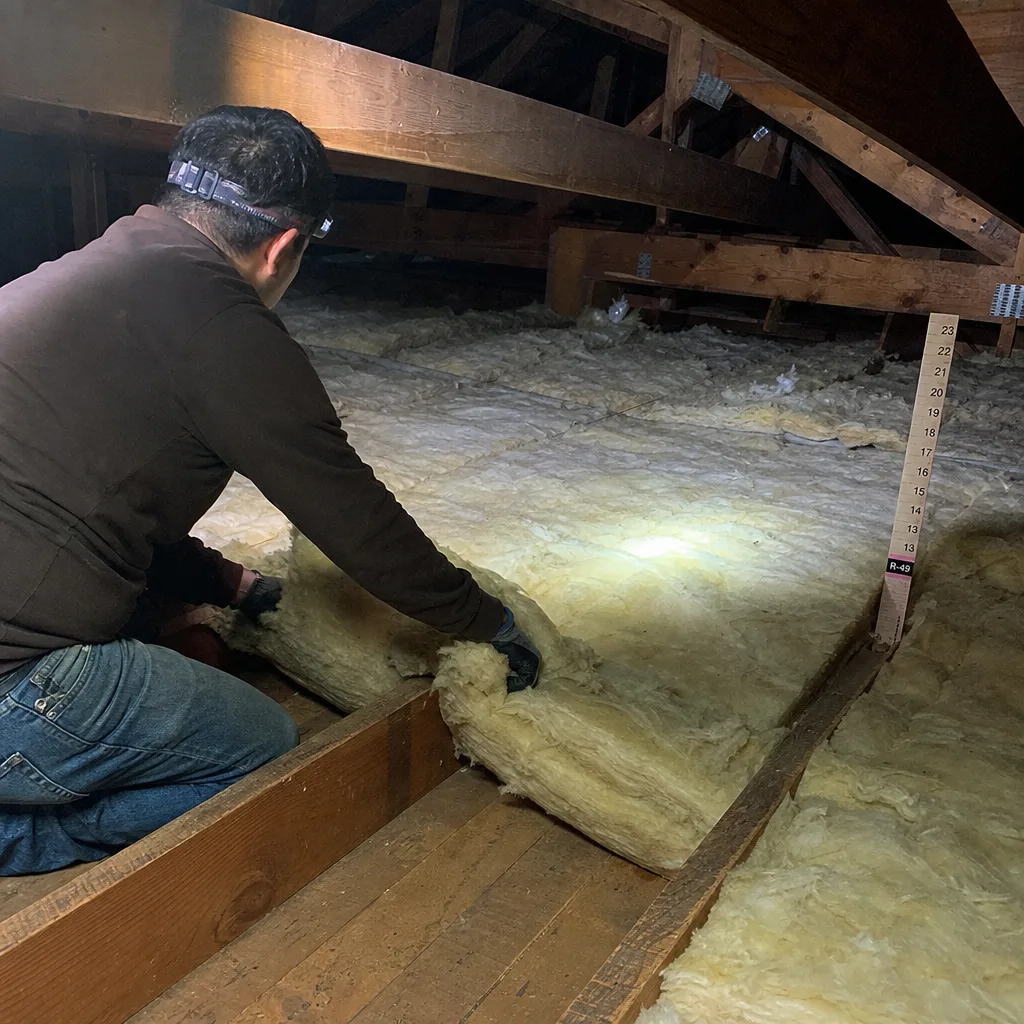
Cellulose works well in Monrovia’s pre-war Craftsman homes near Old Town where wall cavities were never insulated at construction. We dense-pack cellulose into 2×4 stud bays at 3.5 pounds per cubic foot, which prevents the settling that creates cold bands behind baseboards. For attic applications in the flatlands below Foothill Boulevard, blown-in cellulose hits R-38 at roughly 10 inches depth. We source from GreenFiber, a cellulose manufacturer whose fire-retardant treatment meets California Title 24 requirements.
Blown-In Fiberglass
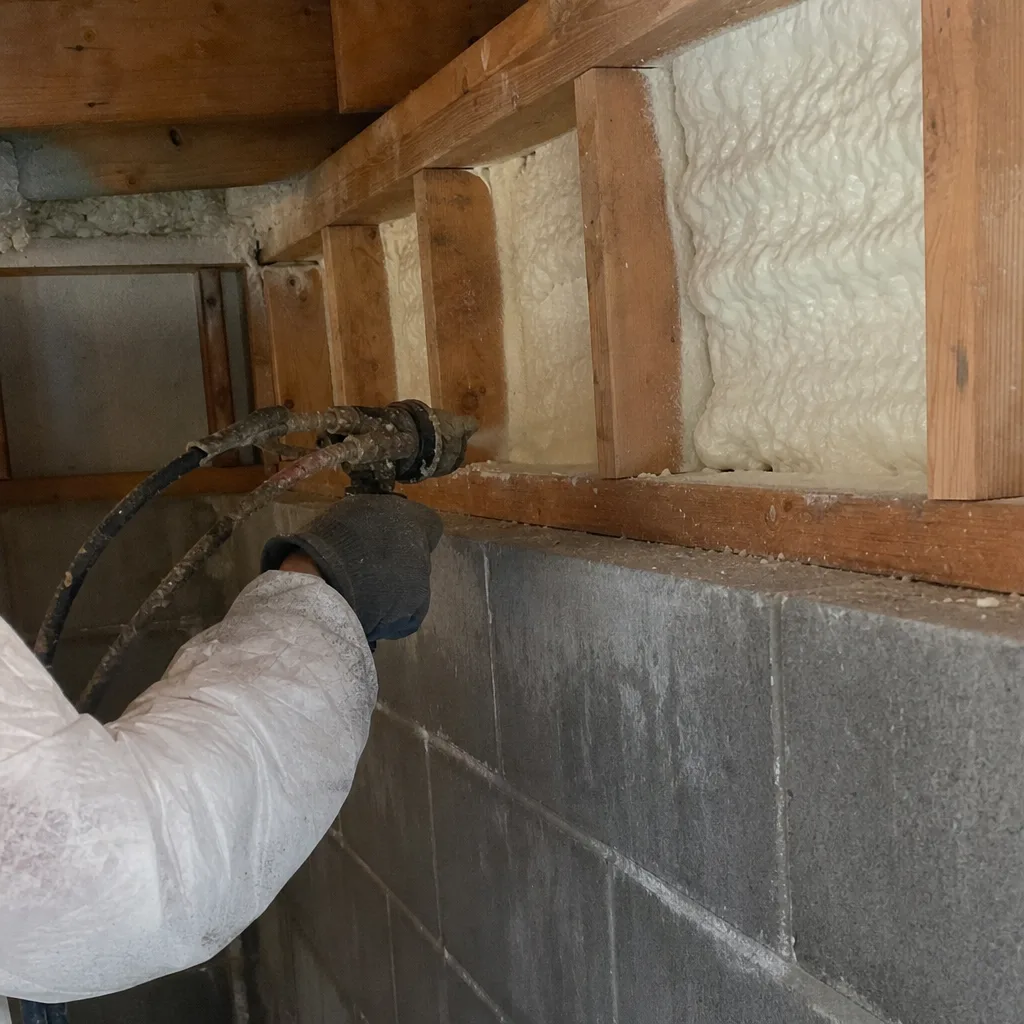
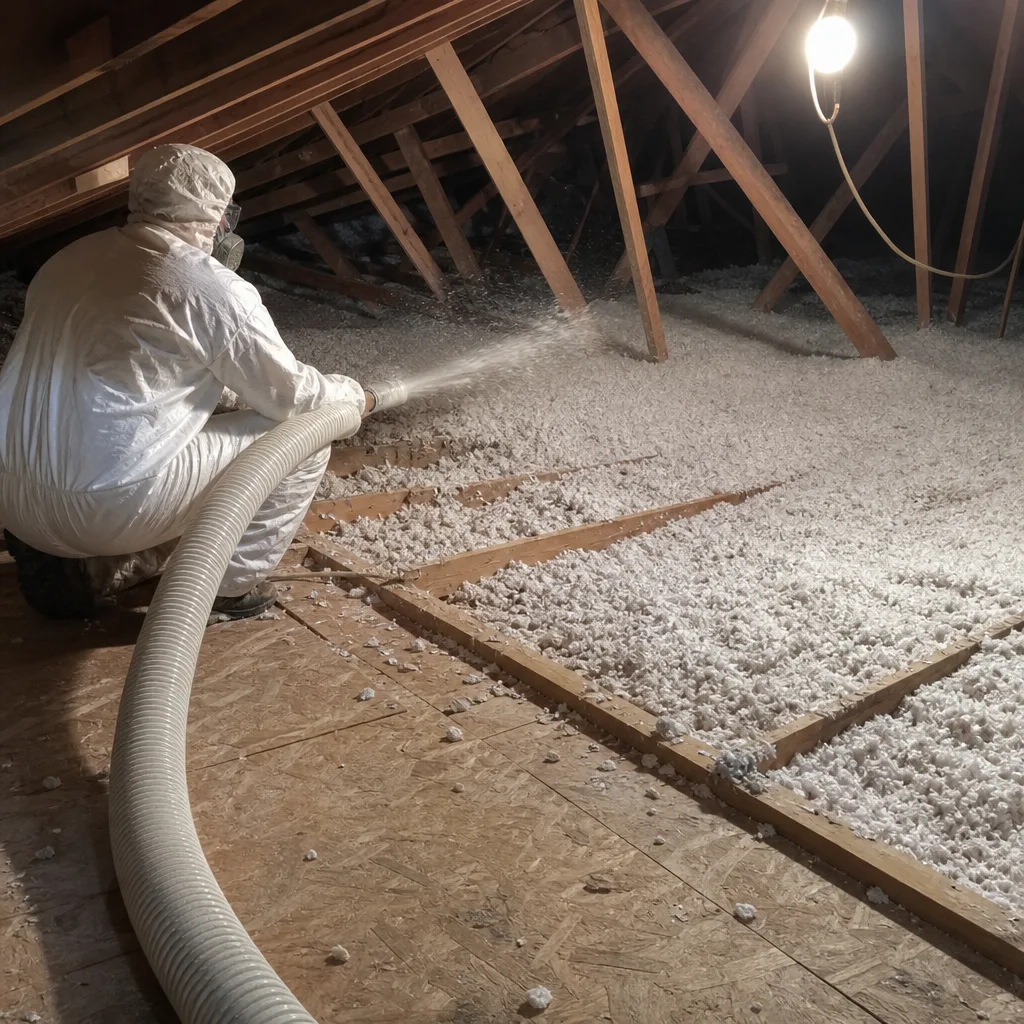
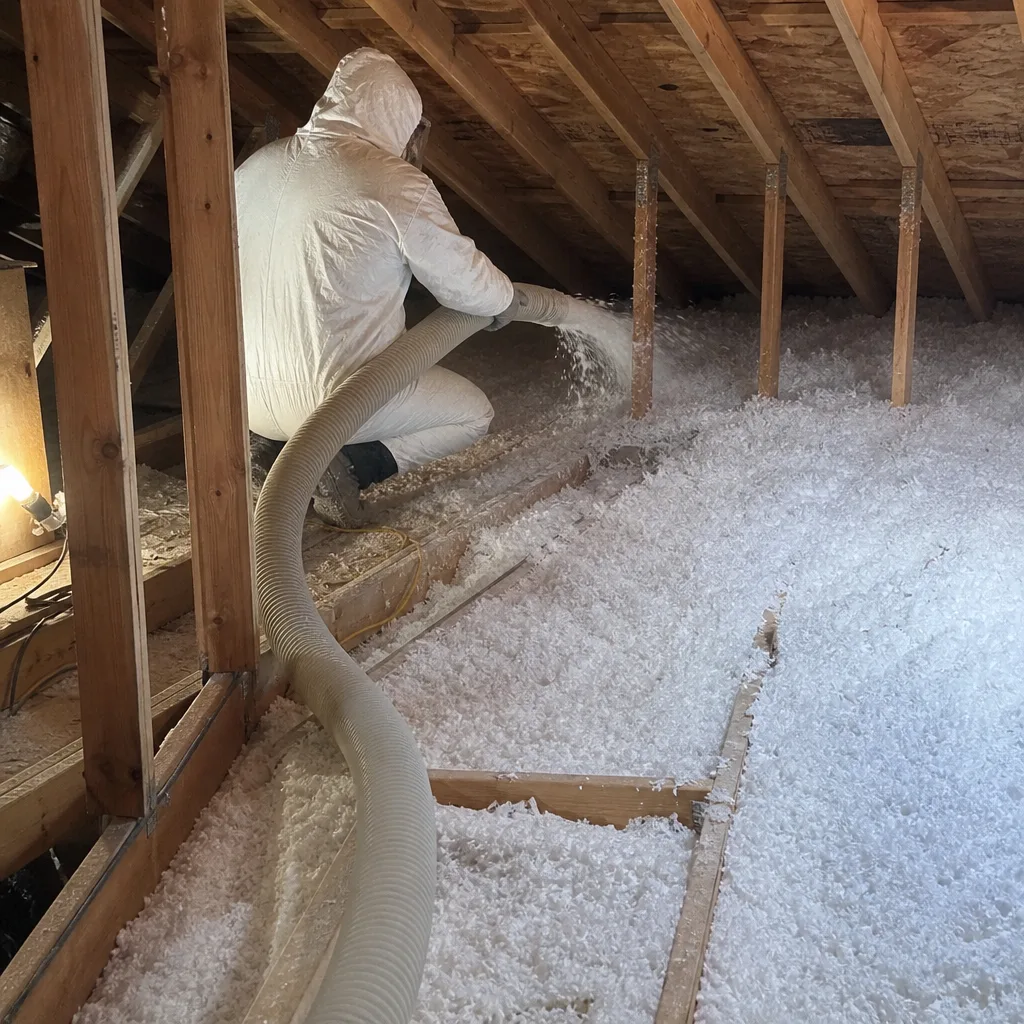
On jobs above Foothill Boulevard where the VHFSD overlay applies, blown-in fiberglass from Owens Corning often becomes the default attic material. It’s non-combustible, passes fire-zone inspection, and installs faster than mineral wool batts in open attic floors. We pair it with thorough air sealing of top plates, can lights, and penetrations first. Blowing insulation over an unsealed attic floor is something we don’t do. The conditioned air you’re paying to create would just escape into the vented space.
Dense-Pack Wall Insulation
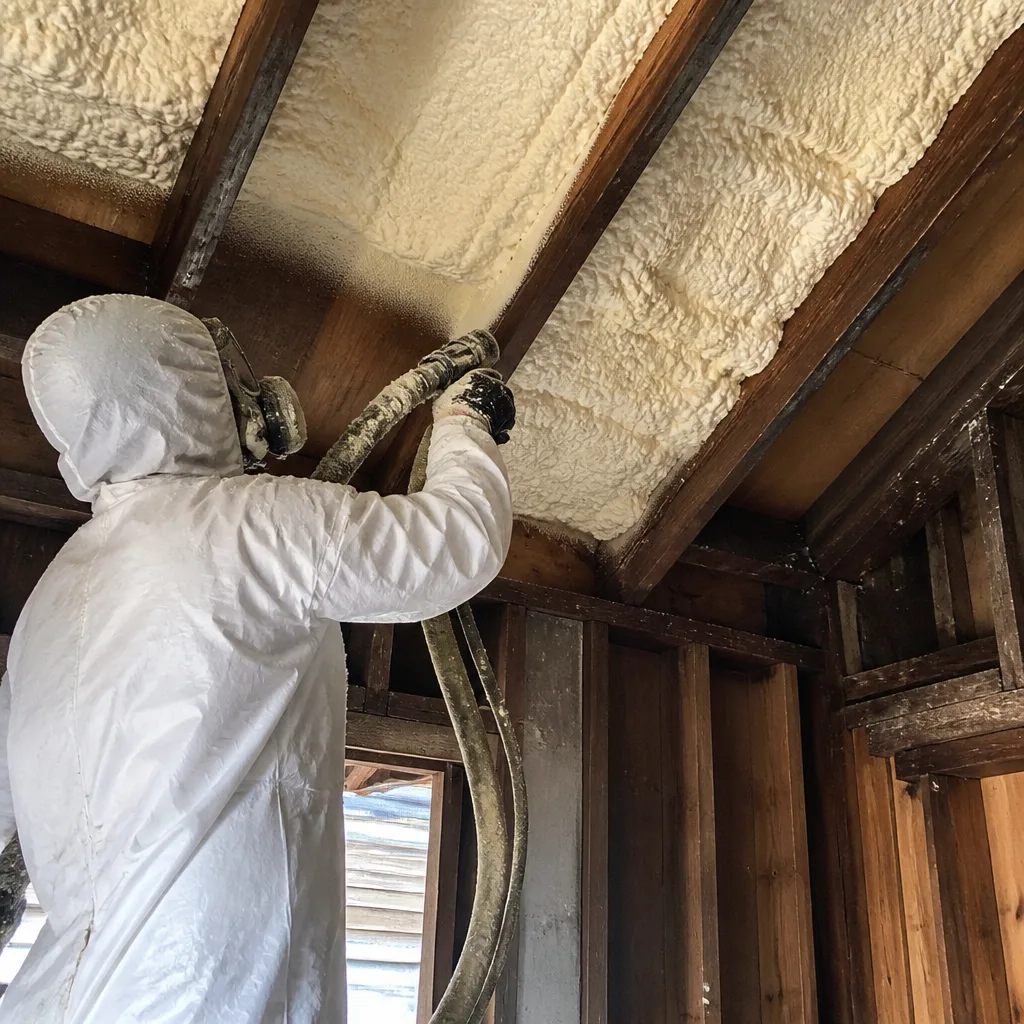
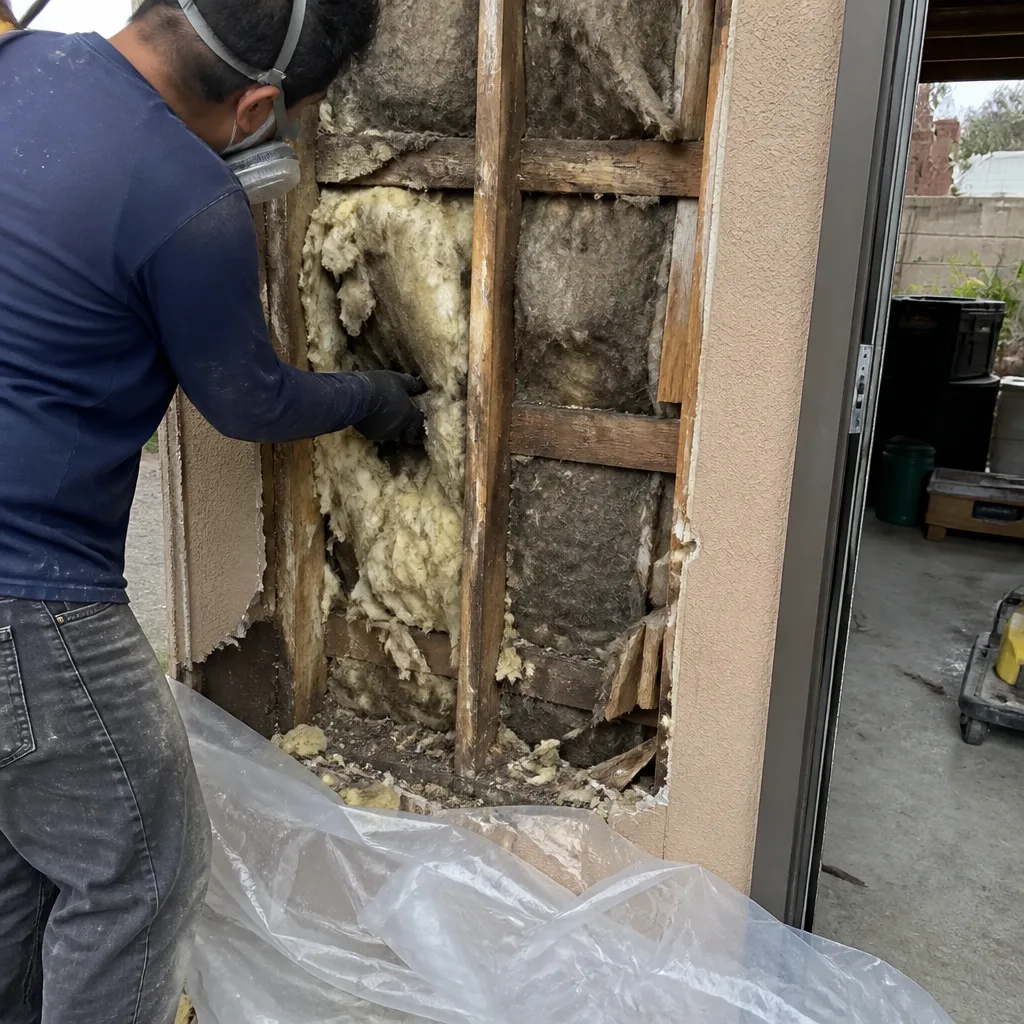
Monrovia’s 1910s-1940s bungalows and early ranch homes in the historic core have uninsulated wall cavities that were never meant to hold batts. Dense-packing fills these cavities completely without gutting plaster or drywall. Our techs drill access holes at stud-bay intervals, pack cellulose to refusal density, then patch and texture-match. On a recent job near Colorado Boulevard, we dense-packed a 1923 bungalow and dropped the blower-door reading from 3,800 CFM50 to 2,400. The homeowner got before-and-after numbers in writing, plus the photo record.
Blown-In Top-Up
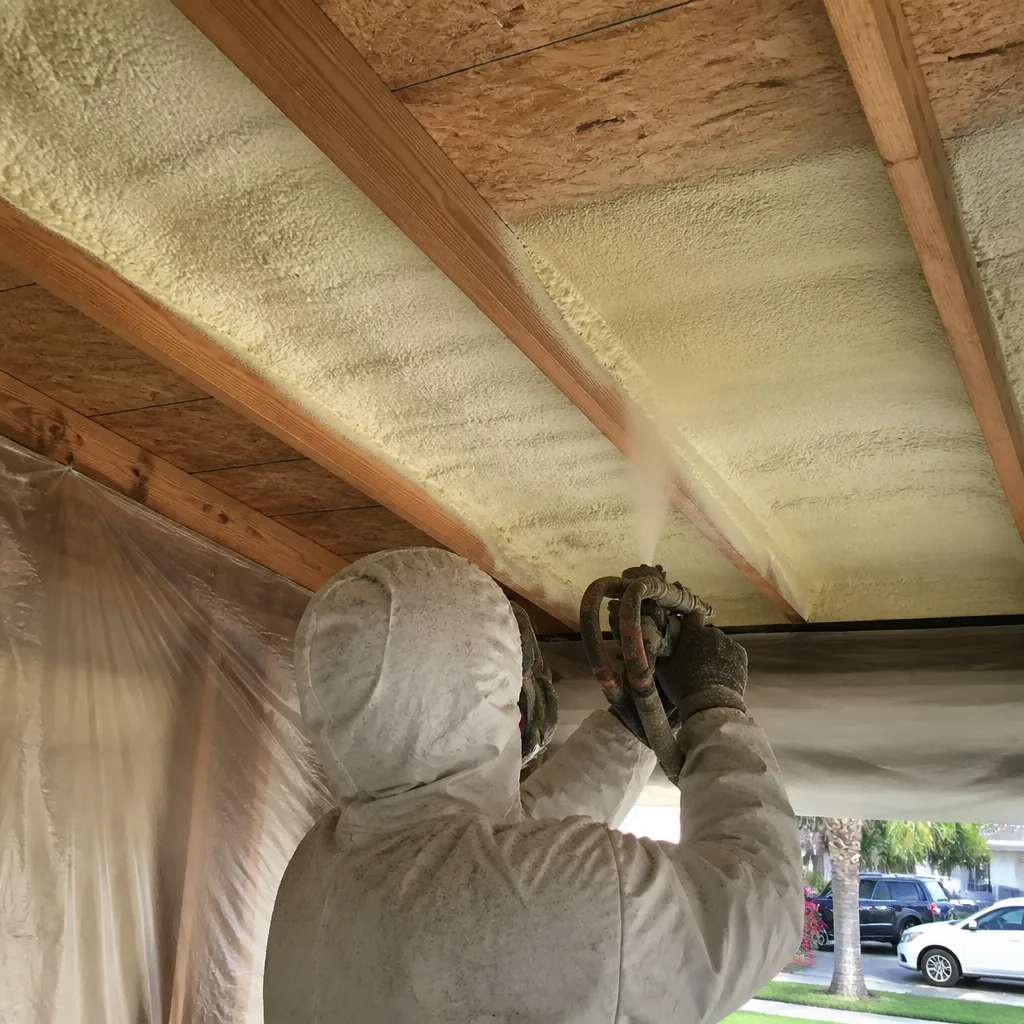
Many 1960s-1980s hillside homes in Monrovia have attics where original fiberglass batts were compressed by decades of storage. Adding blown-in material over compressed batts without addressing the underlying condition is a common mistake. We remove or fluff existing material, verify fire-zone compliance, then top up to current R-value with the correct material for your zone. The homeowner on that 1968 build above Foothill Boulevard? We found batts compressed to less than half thickness under holiday boxes. Because the address falls in the VHFSD overlay, we skipped the open-cell foam a prior out-of-area bid had quoted and instead dense-packed the 2×4 wall cavities with cellulose, then topped the attic with Owens Corning blown-in fiberglass to bring the assembly up to zone-required levels. The homeowner passed inspection without a mid-project material swap.
What happens when you call
- 1
A real person answersNo phone trees - you reach a local pro.
- 2
You get an upfront price rangeHonest numbers before anyone is dispatched.
- 3
A background-checked tech heads outLicensed & insured, dispatched right away.
- 4
You approve before work beginsNothing starts until you say go.
 Before
 After
AfterTrusted Brands We Service in Monrovia
We stock and install materials from Owens Corning, Johns Manville, and GreenFiber for Monrovia jobs, with no proprietary lock-in that limits your options. Owens Corning blown-in fiberglass is our go-to for VHFSD-zone attics where non-combustibility matters. Johns Manville mineral wool handles the fire-code wall assemblies that inspectors above Foothill Boulevard expect. GreenFiber cellulose fills dense-pack applications in historic-core wall cavities. We don’t push one brand. We specify what the code and the building actually need.
Common Blown-In Insulation Problems We See in Monrovia Homes
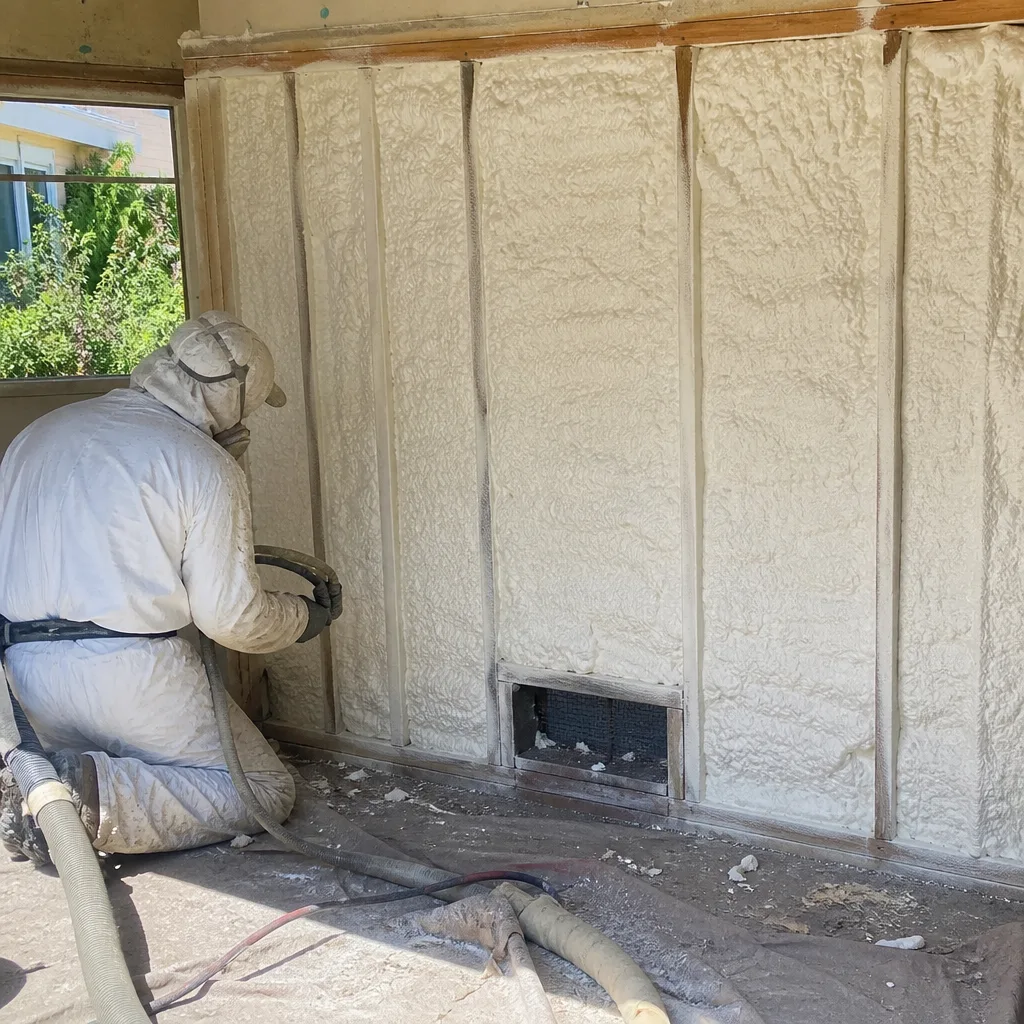
- VHFSD material failures. Out-of-area subs quote open-cell spray foam in Foothill Boulevard attics and fail the fire-zone material check, forcing a costly mid-project swap to mineral wool. We pull the overlay before we quote.
- Settled cellulose in pre-war walls. Blown-in cellulose installed below proper density in Old Town Craftsman bungalows settles below the top plate within a few seasons, leaving cold bands behind baseboards that homeowners notice every winter.
- Compressed batts under storage. Decades of attic storage in 1960s-1980s hillside homes compress existing fiberglass batts, so an uncorrected blown-in top-up just adds depth over dead R-value and misses the fire-zone material requirement entirely.
- Air sealing skipped. Some crews blow insulation directly over unsealed top plates and can lights. In Monrovia’s climate with its 40°F+ day-night swings, that conditioned air loss costs you every month.
Pricing for Blown-In Insulation in Monrovia, CA
| Service | Typical Range in Monrovia |
|---|---|
| Blown-in attic top-up (flatland, below Foothill Blvd) | $1,800 - $2,800 |
| Blown-in attic top-up (VHFSD zone, material upgrade) | $2,400 - $3,600 |
| Full attic replacement with air sealing | $3,200 - $4,500 |
| Dense-pack wall insulation (per 1,000 sq ft of wall) | $2,000 - $3,200 |
| Blown-in cellulose, new installation | $2,200 - $3,800 |
What moves you within these ranges: attic square footage, existing material condition, whether removal is required, and whether your address falls in the VHFSD overlay. Hillside jobs above Foothill Boulevard carry a material premium because non-combustible products cost more than standard fiberglass. We don’t guess. We inspect, measure, and give you a written price before any work starts. Free estimates. Free second opinion on any competing written quote.
Call (562) 242-7569 for your written price.
We Also Serve Cities Near Monrovia
Our crews work throughout the San Gabriel Valley. We regularly complete Blown-In Insulation in Monrovia and nearby Duarte, Baldwin Park, El Monte, and Azusa. Each city has its own code overlays and climate factors. We adjust the spec accordingly.
Serving Monrovia, CA - Our Local Coverage Area
We’re based in the Monrovia area and know this community well. Use the map below to see our service coverage - if you’re nearby, we can almost certainly help.
FAQs - Blown-In Insulation in Monrovia
No. Local inspectors in the VHFSD zone routinely reject open-cell spray foam and kraft-faced fiberglass as combustible materials. Non-combustible mineral wool batts or blown-in fiberglass are the default spec for attic applications in this overlay. If you’ve received a quote specifying open-cell foam for an Upper Monrovia address, get a second opinion before you proceed. Call (562) 242-7569 and we’ll review the competing estimate with you.
Monrovia sits at the mouth of Monrovia Canyon on the alluvial fan of the San Gabriel Mountains, exposing it to both intense inland valley heat and significant cold-air drainage off the mountains at night. The large diurnal temperature swing means your HVAC works harder here than in milder foothill-adjacent cities. Better insulation reduces that load measurably. Most Monrovia homeowners we work with see utility reductions that justify the investment within 4-6 years, faster than the 7-9 year payback typical in Pasadena’s more moderate climate.
Yes. We drill strategic access holes at stud-bay intervals, dense-pack cellulose to refusal density, then patch and texture-match the plaster. No gutting required. The 1923 bungalow near Colorado Boulevard we mentioned earlier? Done in two days, walls intact, blower-door reading cut by 37 percent. You’ll get the before-and-after numbers and the photo record.
We specify non-combustible materials: Owens Corning blown-in fiberglass for open attic floors, Johns Manville mineral wool for wall assemblies requiring fire-rated batts, and dense-packed GreenFiber cellulose only in wall cavities where the assembly as a whole meets zone requirements. We do not install open-cell spray foam or standard kraft-faced fiberglass in VHFSD-zone attics. The material choice is driven by code compliance first, then R-value optimization.
Most need R-38 to R-49 in the attic, which translates to 12-15 inches of blown-in fiberglass or mineral wool depending on the product. But depth alone isn’t the right question. These homes often have compressed original batts under stored items, and many fall in the VHFSD zone. We assess existing condition, verify fire-zone requirements, then specify removal or fluffing plus correct material to depth. A written scope tells you exactly what you’re getting before anyone starts.
Ready for your written price? Call (562) 242-7569. A live person answers 24/7. Estimates are free. Second opinions on any written estimate are free. Every job ends with a Documented Photo Record and, where applicable, before-and-after blower-door numbers you can verify.
Written by Wes Okafor, Owner at Topside Attic Insulation Pomona, serving Monrovia since 2016.