
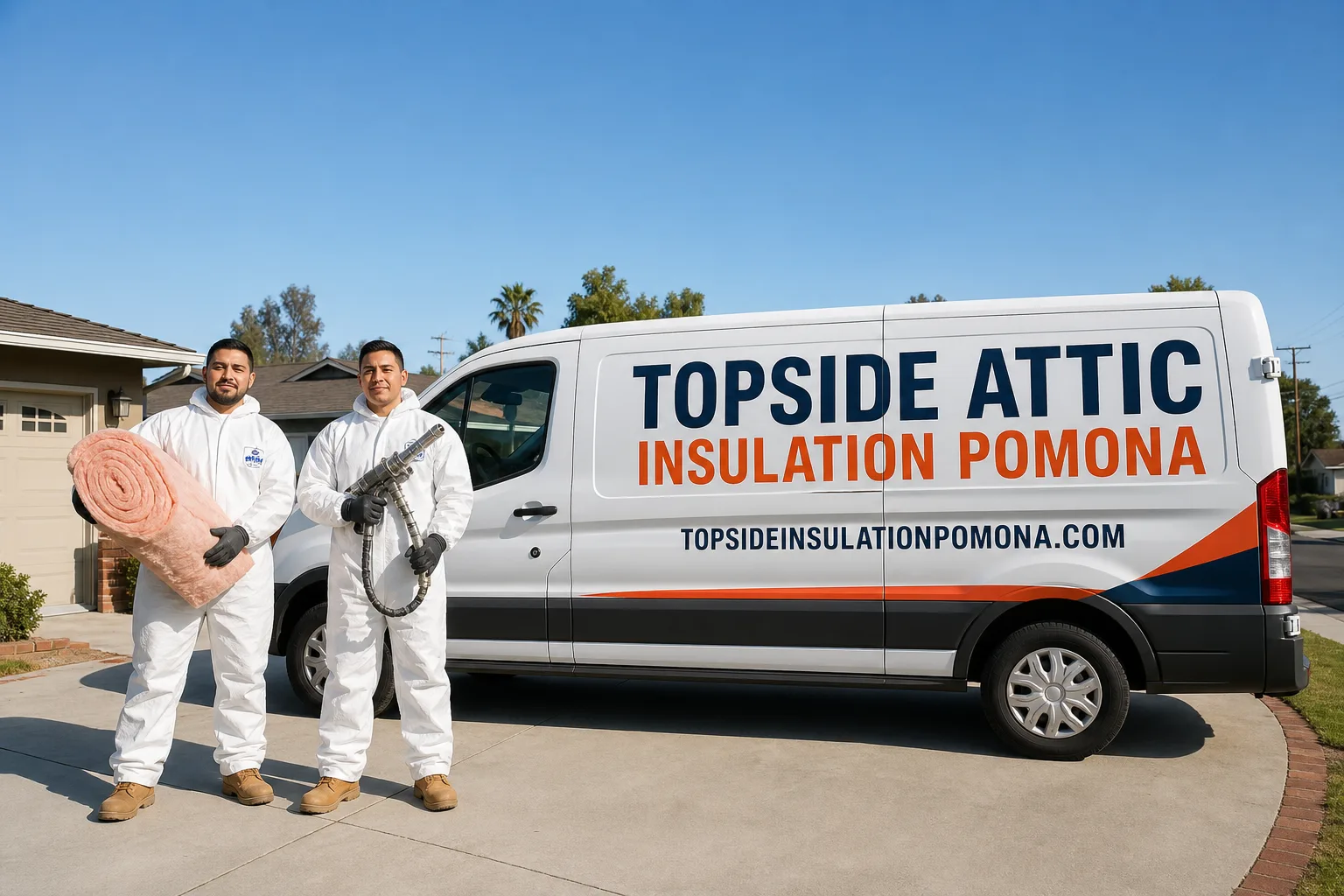
How Much Does Blown-In Insulation Cost in Pomona?
Blown-In Insulation services in Pomona, CA typically cost between $1,200 and $3,800 for a standard attic job, with most single-story homes in the 1,400-to-2,200 square foot range landing between $1,500 and $2,600 installed. The final number depends on your current R-value, whether air sealing is done first (it should be), and the material – cellulose, fiberglass, or mineral wool – that fits your attic’s conditions.
At Envelope Insulation Co., every job starts with a written price before anyone touches a tool. That’s not a sales line; it’s Haven Standard Clause 1, and Wes Okafor built the company around it in 2016 because he’d seen too many homeowners handed a surprise invoice after the crew left.
Blown-In Insulation Cost Breakdown in Pomona (2026)
Blown-in insulation in Pomona typically costs between $1.20 and $2.80 per square foot, installed. That range is wide because it collapses cellulose, open-cell spray, and fiberglass into one figure – the table below separates them out so you can compare apples to apples.
| Scope of Work | Typical Pomona Price Range (2026) | Notes |
|---|---|---|
| Attic blown-in cellulose only (1,200-1,600 sq ft attic) | $1,200 – $1,900 | Existing insulation left in place; top-up to R-38 |
| Attic blown-in cellulose only (1,600-2,400 sq ft attic) | $1,800 – $2,600 | Top-up to R-38 or R-49 |
| Attic air sealing + blown-in cellulose (1,200-1,600 sq ft) | $1,800 – $2,800 | Air sealing of top plates, can lights, and penetrations completed first |
| Attic air sealing + blown-in cellulose (1,600-2,400 sq ft) | $2,400 – $3,600 | Includes blower-door documentation before and after |
| Blown-in fiberglass (per sq ft, any attic size) | $1.40 – $2.40/sq ft | Lower density than cellulose; performs differently in Pomona’s dry heat |
| Blown-in mineral wool (Rockwool) – specialty applications | $2.20 – $3.20/sq ft | Used where fire resistance or sound control is the primary goal |
| Old insulation removal + replacement (blown-in cellulose) | $2,800 – $4,800 | Includes HEPA vacuum removal, attic cleaning, air sealing, new insulation |
| Dense-pack blown-in for existing walls (per sq ft) | $2.00 – $3.50/sq ft | Requires drilling and patching; less common in older Pomona Craftsman stock |
| Crawl space blown-in or batt + vapor barrier combo | $1,400 – $3,200 | Depends on crawl space height and moisture conditions |
What These Numbers Actually Mean for a Typical Pomona Home
The median home in central Pomona – say a 1970s ranch on Garey Avenue or a post-war bungalow near Lincoln Park – runs about 1,400 to 1,800 square feet of conditioned space. That usually translates to a 1,000-to-1,400 square foot attic footprint. A job that includes proper attic air sealing and blown-in cellulose to R-49 (the current California Title 24 target for Climate Zone 10, which covers most of Pomona) will most often land in the $2,100 to $3,200 range for that house type.
Homes in the Phillips Ranch or Ganesha Hills areas tend to run larger – 2,000 to 2,800 square feet of living space – and their attic jobs frequently come in between $2,800 and $4,200 when air sealing and insulation are done together. That’s the honest range. If a quote you’ve received is well below the low end of these numbers, it almost always means either air sealing was skipped, the R-value target is lower than it should be, or material density is being compromised.
Every estimate from Envelope Insulation Co. includes a written scope, a flat price, and a written warranty – delivered before any work begins. On jobs where air sealing is part of the scope, you receive blower-door readings: a pressurization measurement, in a single CFM50 number, that shows how much conditioned air the home was losing before we started and how much less it loses when we’re done. That number is yours; it belongs in your home file.
What Affects Blown-In Insulation Pricing in Pomona
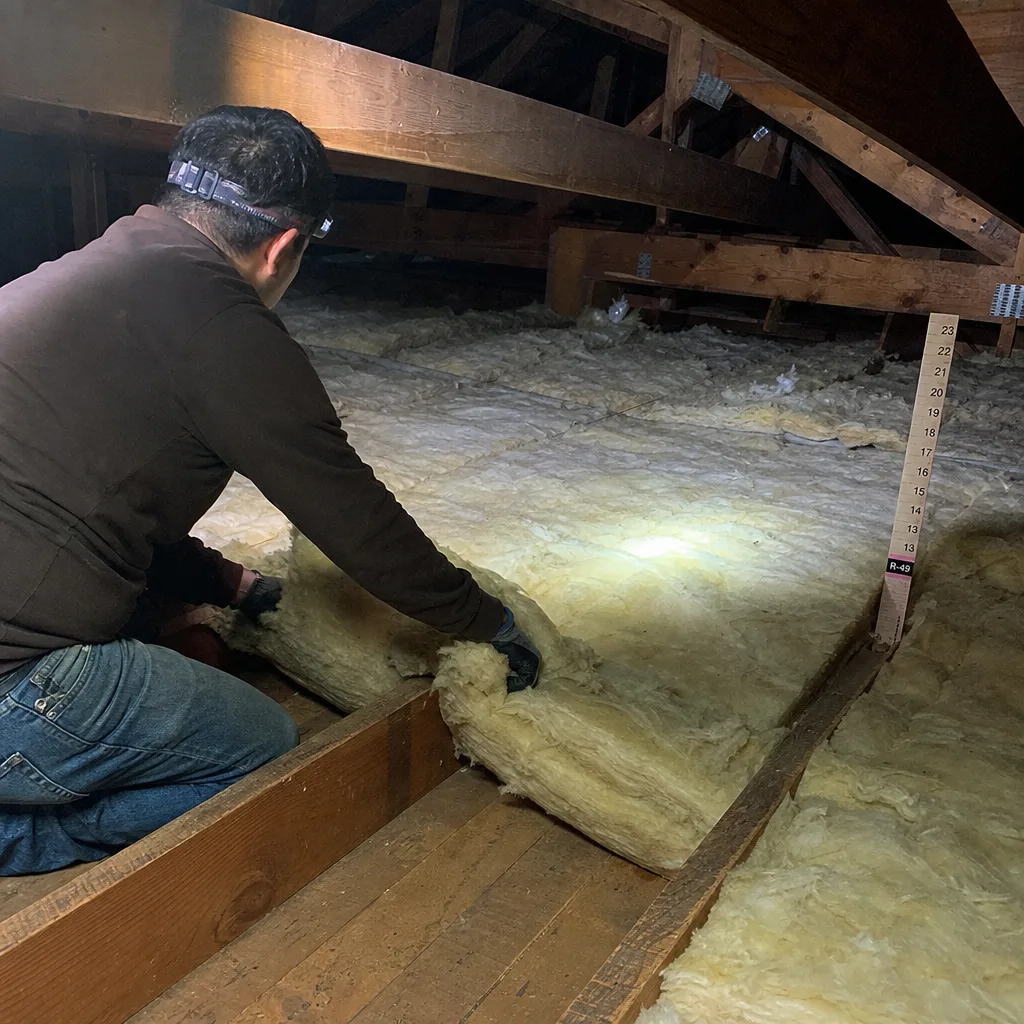
Six variables move the price more than anything else. Understanding them lets you read a competing quote intelligently – and Wes Okafor will walk through any written estimate you have with you, free, under the Blown-In Insulation in Pomona Free Second Opinion offer.
- Attic square footage and geometry. A simple rectangular attic over a tract home in Pomona’s Arroyo Woodlands neighborhood installs faster than a multi-gable roofline common in the older Victorian-influenced homes near downtown. Complex geometry means longer labor, more machine repositioning, and harder-to-reach knee-wall cavities – all of which add to the installed cost. Expect a 15-to-25 percent premium for highly complex attic layouts versus a simple rectangle.
- Current R-value and existing insulation condition. A Pomona home built in the 1960s often has R-11 or R-13 batts – barely a third of what Title 24 now requires. Topping up to R-49 over existing material costs less than a full removal-and-replacement job, but only if the existing insulation is dry, uncontaminated, and properly installed. Rodent damage, moisture intrusion from Pomona’s periodic winter rains, or vermiculite concerns (relevant in pre-1980 homes) can force a full removal, which pushes costs into the $3,500-to-$4,800 range before new insulation goes in.
- Air sealing scope before insulation is blown. This is the variable most contractors don’t talk about, because doing it properly adds two to four hours of labor before the first bag of insulation opens. Pomona homes built before 1990 consistently show blower-door readings between 3,500 and 6,000 CFM50 – meaning significant conditioned air loss through top-plate gaps, recessed-can light housings, plumbing and electrical penetrations, and attic hatch bypasses. Sealing those points costs between $300 and $900 as a line item, but it’s the difference between insulation that performs and insulation that just sits there.
- Material choice: cellulose vs. fiberglass vs. mineral wool. Cellulose (made largely from recycled paper, treated for fire resistance) is typically the most cost-effective option for Pomona attics and handles the Inland Empire’s dry summer heat well. Fiberglass blown-in is slightly more per bag but installs faster in some configurations. Mineral wool – Rockwool is the brand most commonly specified here – costs more but is chosen when fire resistance is the primary concern, particularly in Pomona homes closer to the wildland-urban interface in the foothills. Envelope sources from Owens Corning, Johns Manville, Knauf, Rockwool, CertainTeed, and GreenFiber – the material recommendation comes from your attic’s conditions, not from which product carries a higher margin.
- Attic access and working height. A full-height attic – 48 inches or more of clearance – runs faster than a flat-roof design or a low-slope attic with 24 inches of clearance in most of the space. Many 1950s and 1960s Pomona tract homes have exactly this problem: adequate clearance near the ridge and near-zero clearance at the eaves. Tight conditions add labor time and sometimes require specialized blowing equipment, which affects the quote.
- Permits and California Title 24 documentation. Los Angeles County and the City of Pomona do not always require a permit for insulation-only work, but they may require one when the scope includes air sealing modifications to penetrations or when the project is tied to an HVAC replacement. Your written scope from Envelope will specify whether a permit is required for your job. When it is, permit fees in Pomona typically add $80 to $250 to the project cost and do not affect the insulation price itself.
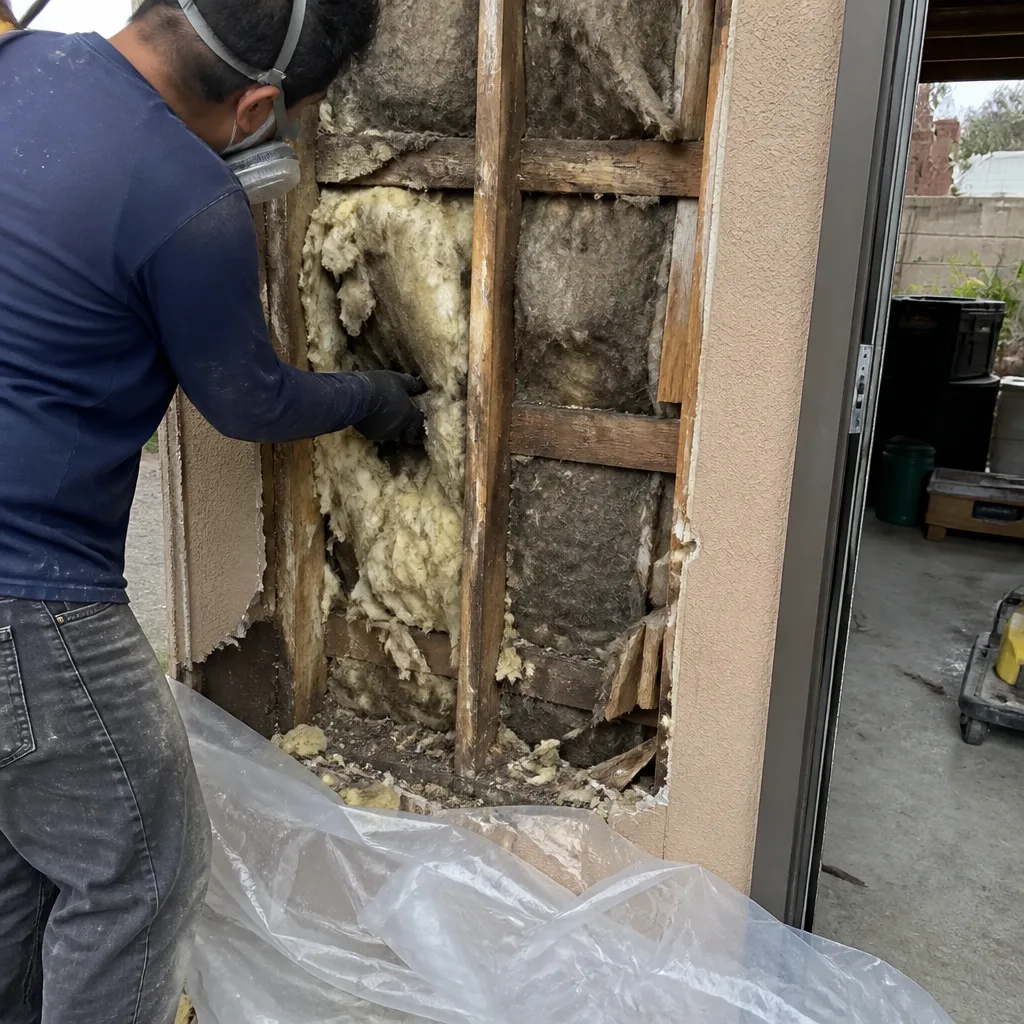 Before
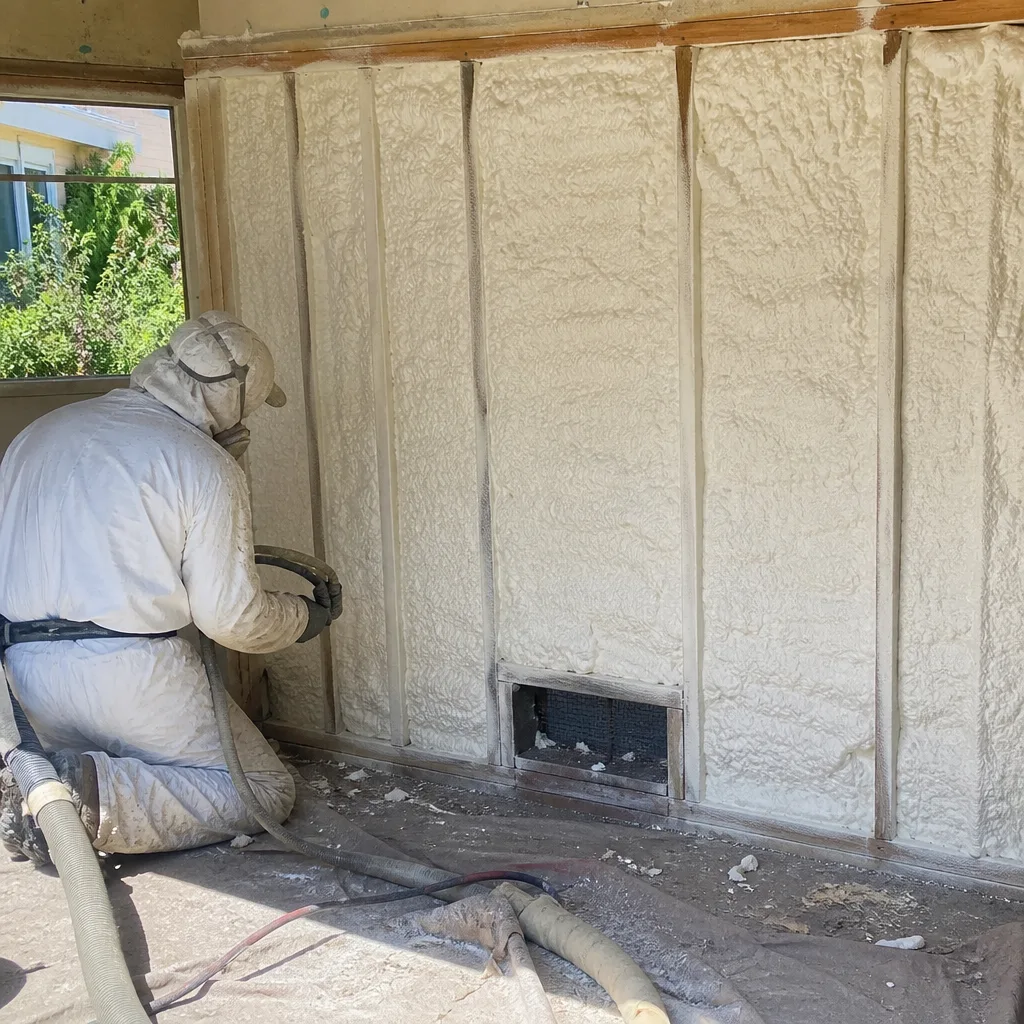 After
AfterPomona’s Climate and What It Means for Your Insulation Choice
Pomona sits in California Climate Zone 10 under Title 24’s residential energy code – one of the warmer inland zones in Southern California, with summer highs regularly reaching 95 to 100 degrees Fahrenheit and significant diurnal temperature swings, especially in the foothills near the 57 Freeway corridor. That combination puts a different kind of stress on an attic than a coastal climate does.
In a Pomona summer, an uninsulated or under-insulated attic can reach 140 to 160 degrees Fahrenheit by mid-afternoon. That heat radiates directly into the living space below, forcing the air conditioner to work harder through what’s known as radiant heat gain. Blown-in cellulose handles this well because it fills irregular framing cavities completely – there are no gaps or voids where heat can bypass the insulation layer. Fiberglass batts, by contrast, often leave small air pockets at irregular joist spacing (common in pre-1980 Pomona framing), and those gaps let heat move through.
We regularly see in the Ganesha Hills and Palomares Hills areas that homeowners have had insulation installed once in the 1980s and again in the early 2000s, but nobody sealed the top plates first either time. The result is an attic that reads R-30 or better on paper but performs like R-15 because conditioned air is bypassing the insulation entirely through stack-effect leakage. The blower-door number before and after sealing makes this visible in a way that a visual inspection can’t.
For most Pomona homes, the right target is R-49 in the attic – the current Title 24 minimum for Climate Zone 10. Homes in the foothills with steeper lot grades and greater wind exposure sometimes benefit from going to R-60, particularly if a radiant barrier is not already installed on the roof decking. That’s a conversation worth having during the site visit, when the attic’s actual conditions are visible.
The Air-Sealing Prerequisite: Why It Changes the Math
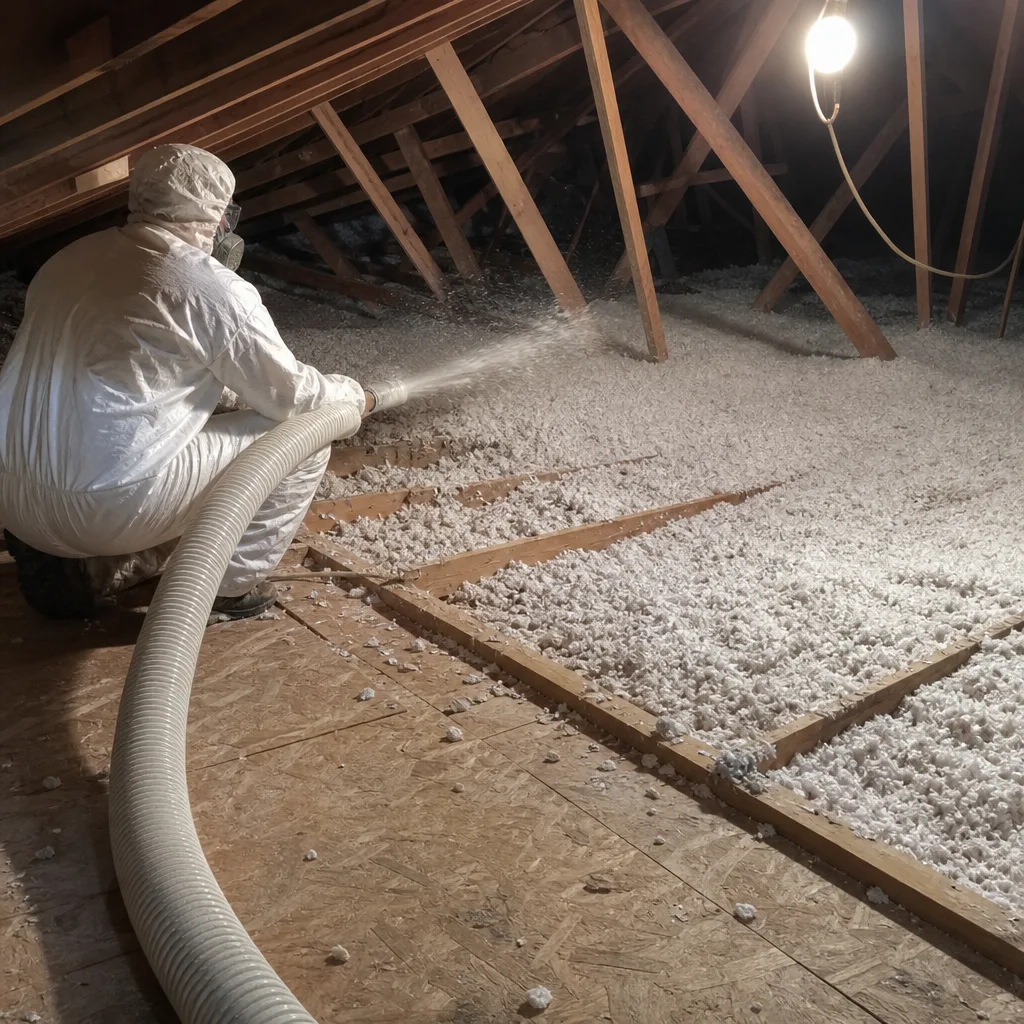
Blown-in insulation performs as advertised only when air movement through the attic floor is controlled first. This is not a nuanced position; it’s physics. Insulation resists heat transfer by conduction – but if air is moving through gaps in the ceiling plane, that air carries heat directly into or out of the conditioned space, bypassing the insulation entirely. Adding R-value on top of an unsealed attic floor is like insulating the outside of a paper bag.
This is why Envelope Insulation Co. will not blow insulation over an unsealed attic floor. It’s not a policy exception or an upsell that gets negotiated out. Air sealing of top plates, can lights, and penetrations is completed before any insulation is added, every time – that’s the first commitment Wes Okafor made when he established the company in 2016, and it hasn’t changed.
What this means practically: on a 1,600 square foot home near Palomares Park in Pomona, the air-sealing portion of the job might add $400 to $700 to the quote versus a competitor who skips it. The blower-door reading afterward will show you exactly what you paid for – a specific CFM50 number, before and after, documented in writing and included in your job record. That’s the evidence you can take to an energy auditor, a buyer’s agent, or a utility rebate program.
Southern California Edison and SoCalGas both offer rebate programs for qualifying insulation and air-sealing work in the Pomona service area. Rebate amounts shift, but jobs that include both air sealing and insulation to Title 24 levels have historically qualified for $200 to $600 in rebates through these programs. Your written estimate will note whether the work as scoped meets the technical requirements for the current rebate cycle.
How to Save on Blown-In Insulation in Pomona
There are a few ways to reduce the out-of-pocket cost without reducing the quality of what goes in your attic. There are also a few “savings” that aren’t really savings – they’re deferred costs.
- Combine scopes in a single visit. If you need attic air sealing, blown-in insulation, and a radiant barrier, doing them together costs less than scheduling three separate jobs. Mobilization, setup, and cleanup are one-time costs per visit; splitting work across multiple appointments duplicates them. The written scope will show you the line-item breakdown so you can see what each component costs separately and together.
- Apply for utility rebates before the job starts. Southern California Edison’s Home Energy Improvement Program and SoCalGas rebate programs require pre-approval in some cases. Ask whether the job as scoped qualifies, and get that confirmed in writing as part of your estimate. Missing the pre-approval window can cost you $200 to $600 in rebates that were otherwise available.
- Get a second opinion on any written estimate you already have. Envelope Insulation Co. offers a free second opinion on any written competing estimate – Wes Okafor or a trained technician will read the scope with you and point out what’s included, what’s missing, and whether the R-value target is appropriate for your home’s climate zone. This costs you nothing and often clarifies why two quotes for nominally the same job differ by $800 or more.
- Don’t skip air sealing to lower the quote. It’s tempting when you’re comparing bids, but a job without air sealing delivers maybe 40 to 60 percent of the performance benefit you’re paying for. The energy savings that would have offset the cost never materialize, and you’ll be back in two or three years wondering why your utility bills didn’t drop.
- Ask about insulation removal only if it’s actually needed. Full removal adds $800 to $2,000 to a project. It’s necessary when existing insulation is rodent-contaminated, moisture-damaged, or so compressed it’s providing near-zero R-value. It is not necessary just because the material is old – well-installed cellulose or fiberglass from the 1990s that’s dry and intact can be topped up without removal. A photo record of the existing attic condition, shared with you before any removal decision is made, is what lets you verify that recommendation rather than just accept it.
- Schedule during shoulder seasons. Demand for attic work in Pomona peaks in late May through July (before the heat hits hard) and again in October and November (before utility bills for winter heating arrive). Scheduling in February through April or in August through September sometimes means faster scheduling, though pricing at Envelope is flat and doesn’t use seasonal surge pricing.
To get a written price for your specific attic – square footage, current R-value, and air-sealing scope included – call (562) 242-7569. A live person answers, and the estimate is free. There’s no obligation and no callback window measured in business days.
How Envelope Insulation Co. Prices a Job: What the Process Looks Like
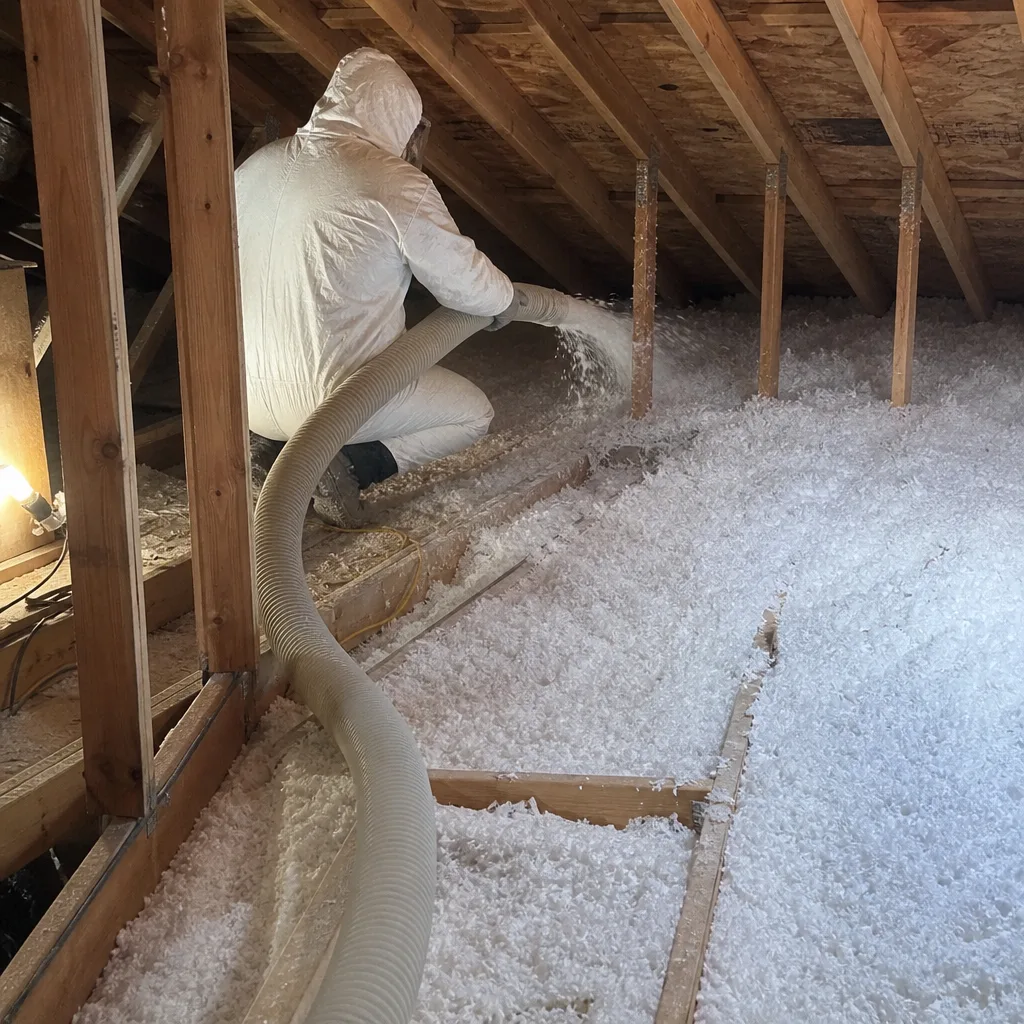
A lot of homeowners in Pomona have had the experience of getting a verbal quote over the phone, agreeing to it, and then finding a different number on the invoice. That doesn’t happen here because Haven Standard Clause 1 is non-negotiable: you receive a written price, a written scope, and a written warranty before anyone starts. If the attic visit reveals something that changes the scope – say, rodent contamination that wasn’t visible from the hatch – you’re presented with a revised written price and you decide whether to proceed. The original price doesn’t quietly expand.
The site visit typically takes 45 to 75 minutes for a standard Pomona home. The technician inspects the attic, photographs the existing conditions (that’s your Documented Photo Record, included on every visit), takes measurements, and identifies air-sealing points. You receive the written estimate the same day in most cases. On jobs that include air sealing, a blower-door test – a pressurization reading that shows, in one number, how much conditioned air your home is losing – is conducted before work begins and again after, so the before-and-after numbers are documented in your job record.
The 365-Day Done Right Promise applies to every completed job. If the insulation settles below the installed depth within the first year, if a sealed penetration shows signs of failure, or if anything about the work isn’t right, Envelope makes it right. That’s in writing before anyone starts – not a verbal assurance you’re hoping to collect on later.
Since 2016, Envelope has sealed and insulated more than 9,000 homes in the region, every one with a written price before work started and a documented record when the crew left. That volume means Wes Okafor and the technicians have seen most of what Pomona attics can throw at a job – the rodent damage under the blown-in cellulose in a 1940s Norton Avenue home, the asbestos-containing vermiculite in a pre-1978 attic in the Palomares Park neighborhood, the completely uncovered attic hatch in a Phillips Ranch home that was losing more conditioned air than every other penetration combined. None of those conditions are surprises. All of them show up in the written scope before work begins.
If you want to understand what our broader home energy services look like beyond blown-in insulation – including crawl space encapsulation, radiant barrier installation, and home energy audits – the site has full documentation of every service line we provide.
FAQs: Blown-In Insulation Cost in Pomona, CA
How much does blown-in insulation cost per square foot in Pomona?
Blown-in insulation in Pomona runs between $1.20 and $2.80 per square foot installed, depending on material, current R-value, and whether air sealing is included in the scope. Cellulose typically lands at the lower end of that range; Rockwool mineral wool at the higher end. A complete job – air sealing plus blown-in cellulose to R-49 – for a 1,500 square foot Pomona home usually comes in between $2,100 and $3,000. Call (562) 242-7569 for a written price specific to your home’s attic dimensions and current conditions – the estimate is free.
Does blown-in insulation include air sealing, or is that a separate cost?
At Envelope Insulation Co., air sealing is always completed before insulation is blown – it is not optional and it is not a separate upsell that gets skipped when you push back on price. The cost of air sealing is a line item on your written estimate, typically between $300 and $900 depending on the number and type of penetrations in the attic floor. Some contractors exclude it entirely to produce a lower headline number; those jobs deliver a fraction of the performance. The blower-door reading before and after the work makes the difference measurable rather than theoretical.
Is it cheaper to repair or replace existing insulation?
Topping up existing insulation is cheaper than removing and replacing it – typically by $800 to $2,000 on a standard Pomona attic job. The right answer depends on the condition of what’s already in the attic. Dry, intact material that’s just undersized for today’s R-49 target can usually be topped up without removal. Contaminated, moisture-damaged, or heavily compressed material needs to come out first. The attic inspection and photo documentation at the start of every job makes that determination visible to you before any work begins.
Can blown-in insulation qualify for rebates in Pomona?
Yes. Southern California Edison and SoCalGas offer rebate programs for qualifying insulation and air-sealing work in the Pomona area. Rebate amounts vary by program cycle, but jobs combining air sealing and insulation to Title 24 standards have historically qualified for $200 to $600. Some programs require pre-approval before work starts – ask about rebate eligibility when you request your written estimate, and confirm in writing that the scoped work meets the technical requirements for the current rebate cycle.
How long does blown-in insulation installation take in a Pomona home?
For a standard 1,200-to-1,800 square foot Pomona attic, the installation itself – after air sealing is complete – takes 3 to 5 hours. Larger attics, complex roof geometry, or full removal-and-replacement jobs run 6 to 8 hours or more. Air sealing adds 2 to 4 hours before the insulation portion starts. Most residential jobs in Pomona are completed in a single day. Attic access, existing conditions, and crew size all affect that timeline; your written scope will include an estimated completion window.
What R-value does California require for attic insulation in Pomona?
California’s Title 24 energy code requires R-49 in attic insulation for residential buildings in Climate Zone 10, which covers Pomona. Some local building departments and utility rebate programs set R-38 as the minimum threshold for incentive programs, but new or replacement insulation projects should target R-49 to meet code and maximize energy performance. Homes in the Pomona foothills with greater sun exposure sometimes benefit from R-60, particularly without a radiant barrier. Your attic visit will confirm the appropriate target for your specific home.
Key Takeaways: Blown-In Insulation Costs in Pomona
- Most Pomona homes (1,200-2,400 sq ft attic) should budget $1,500 to $3,800 for a complete blown-in insulation job that includes air sealing.
- Air sealing is not optional if you want the insulation to perform – it’s a prerequisite, not an add-on, and the blower-door numbers prove it worked.
- California Title 24 requires R-49 in Pomona’s Climate Zone 10. Any bid targeting R-30 or R-38 on a new installation should be questioned in writing.
- Utility rebates of $200 to $600 may be available through Southern California Edison or SoCalGas for qualifying jobs – ask before the work starts.
- A written price before any work starts is the only acceptable starting point. Verbal quotes, ballparks, and “we’ll finalize on-site” pricing are not Haven Standard.
- Before-and-after blower-door documentation is included on applicable jobs – you leave with a number that shows what changed, not just a contractor’s word that it did.
- Free second opinions are available on any written competing estimate. Bring the quote; a technician will read it with you at no charge.
Get a Written Estimate for Blown-In Insulation in Pomona
If you want a flat price, in writing, for blown-in insulation in your Pomona home – with the air-sealing scope included, the R-value target specified, and the warranty documented before anyone starts – call (562) 242-7569. A live person answers. The estimate is free. There are no callback windows, no voicemail loops, and no pressure to decide before you’ve had time to read the scope and compare it against any other written estimate you have.
Wes Okafor has led Envelope Insulation Co. since 2016. In that time, the company has documented before-and-after blower-door readings on thousands of Pomona-area homes and has never started a job without a written price. That’s not a marketing position. It’s the only way the work makes sense to do.
Written by Wes Okafor, Owner at Envelope Insulation Co., serving Pomona, CA since 2016. Pricing reflects the Pomona market as of 2026. Topside Attic Insulation Pomona offers free estimates – call (562) 242-7569.
What Our Customers Say
"They air-sealed the attic floor before insulating and showed me the blower-door number before and after. The upstairs is finally the same temperature as downstairs."
- Marisol D."They photographed rodent damage in the old insulation that we had no idea about, and priced the exclusion work separately so we could decide."
- Harriet N."The winter gas bill dropped by about a third. They had estimated a quarter, so they under-promised."
- Genevieve R.