
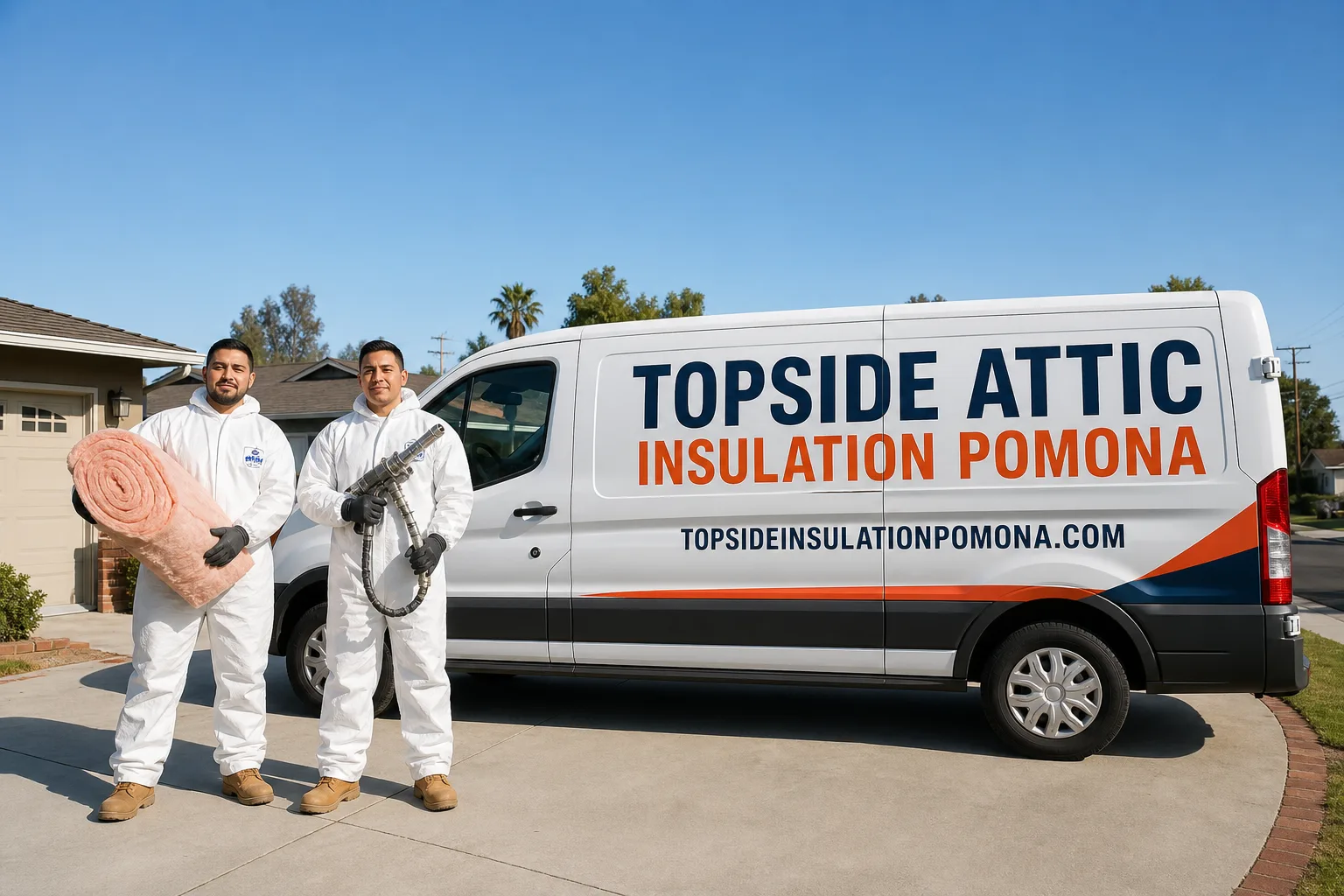
Fast, Reliable Attic Insulation Across Vincent
Most attic insulation jobs in Vincent run $2,200-$5,800 depending on square footage, existing material condition, and whether air sealing is needed first. Our crews typically reach Vincent properties within 45 minutes of dispatch from our Los Angeles office, and we carry Owens Corning and GreenFiber stock so we don’t waste a trip. If your ranch-style home off East Arrow Highway or your townhome near the county line is bleeding conditioned air through a leaky attic floor, we’ll start with a blower-door test - a pressurization reading that shows, in one number, how much air your building envelope is losing - and give you a written price before anyone lifts a tool. Call (562) 242-7569.
Why Topside Attic Insulation Pomona Is Vincent’s Preferred Attic Insulation Company
We’ve sealed and insulated over 9,000 homes since 2016, and Vincent’s unincorporated housing stock presents conditions we see nowhere else in LA County. The absence of a local building department here means many homes were built or added onto with minimal inspection, leaving attic floors with compressed, failing fiberglass batts - or nothing at all - that no permit record ever flagged. Our Attic Insulation team treats this as standard operating knowledge, not a discovery.
Vincent customers find us through referrals from Pomona and La Verne neighbors who’ve already seen our documented photo records and before-and-after blower-door numbers. Our 365-Day Done Right Promise applies here exactly as it does everywhere else: if it’s not done right, we make it right, backed by a written scope and written warranty delivered before work starts. Calls are answered by a live person 24/7, and our background-checked, uniformed technicians text when they’re on the way. Under Haven Standard: Arrive on schedule, you get a named technician.
Our Attic Insulation Services in Vincent
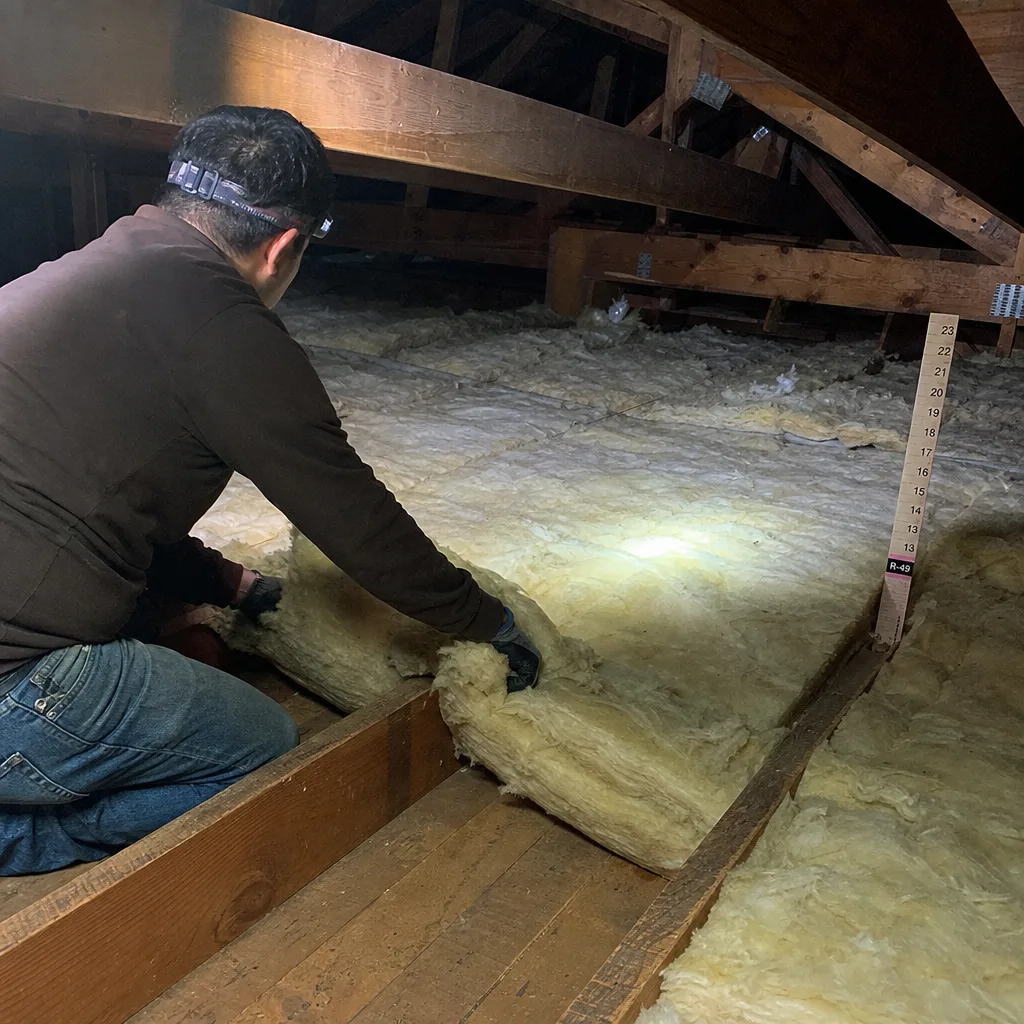
Blown-In Attic Insulation
Blown-in fiberglass or cellulose is our most common recommendation for Vincent’s ranch-style homes with vented attics and minimal existing insulation. The material fills irregular joist cavities and covers top plates that batt insulation rarely seals properly. On a typical 1,200-square-foot Vincent attic with compressed original batts, we’ll remove or work around the old material, seal penetrations and can lights with fire-rated foam and intumescent sealant, install baffles at the soffits, then blow Owens Corning fiberglass to R-38 or better. Most jobs finish in one day. The blower-door test comes before and after so you see the leakage reduction in CFM50.
Attic Batt Insulation
Batt insulation still has a place in Vincent, particularly in manufactured homes with uniform truss spacing and accessible attic hatches where blown material would drift in wind-prone installation conditions. We use Johns Manville or Knauf batts in these applications, but only after air sealing is complete. In Vincent’s WUI fire zone, batts must carry the proper fire-resistance rating and be installed without compression gaps that create thermal bridges. We document the installation with photos showing full contact at all edges.
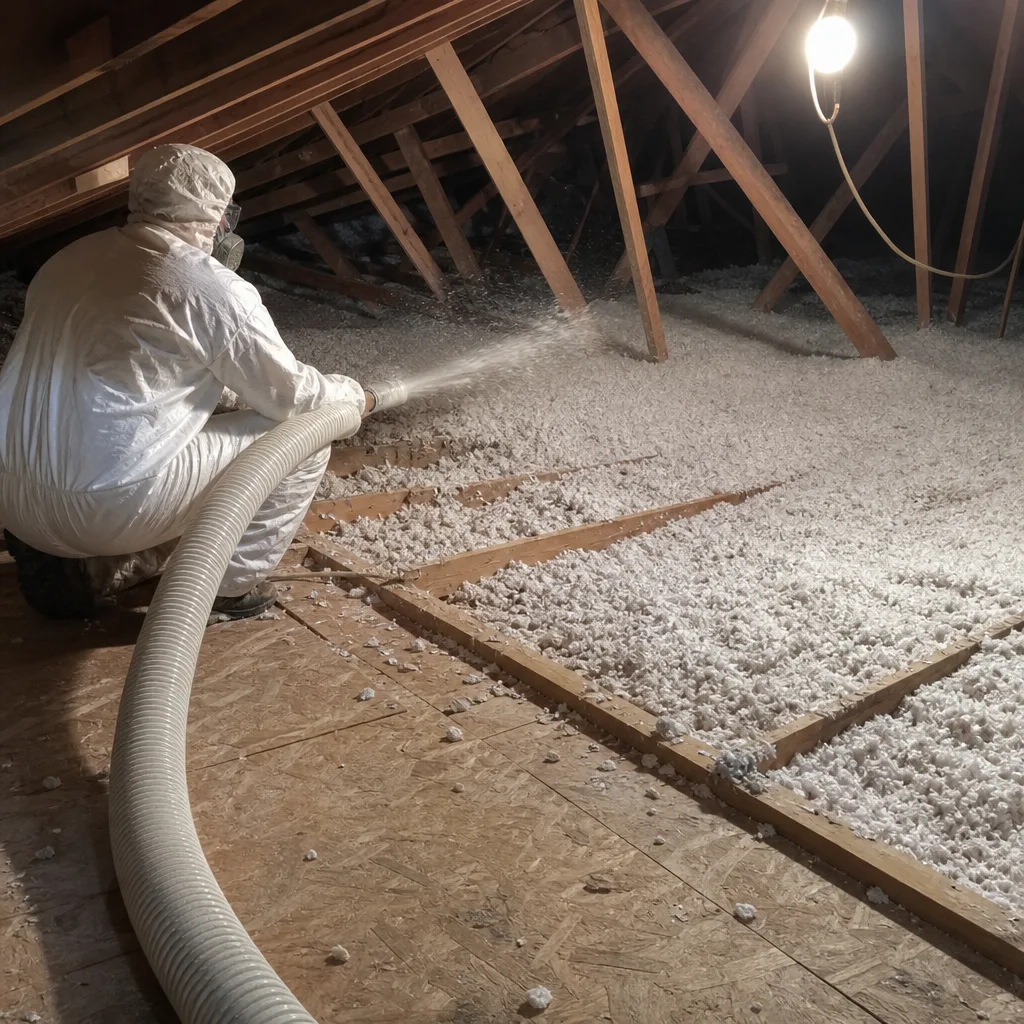
Attic Insulation Top-Up
Top-up work is common in Vincent where homeowners have some insulation but not enough to meet Title 24 or handle the 100°F-plus summer radiant load. We don’t simply add material over the old. First we inspect for moisture staining, rodent damage, or compressed batts that have lost their loft and R-value. Then we air seal, add baffles if soffit vents are blocked, and blow a new layer to achieve the target depth. A recent job on a 1960s ranch near East Arrow Highway started with R-11 batts compressed to 2 inches; we topped to R-38 and cut the blower-door reading by 60 percent.
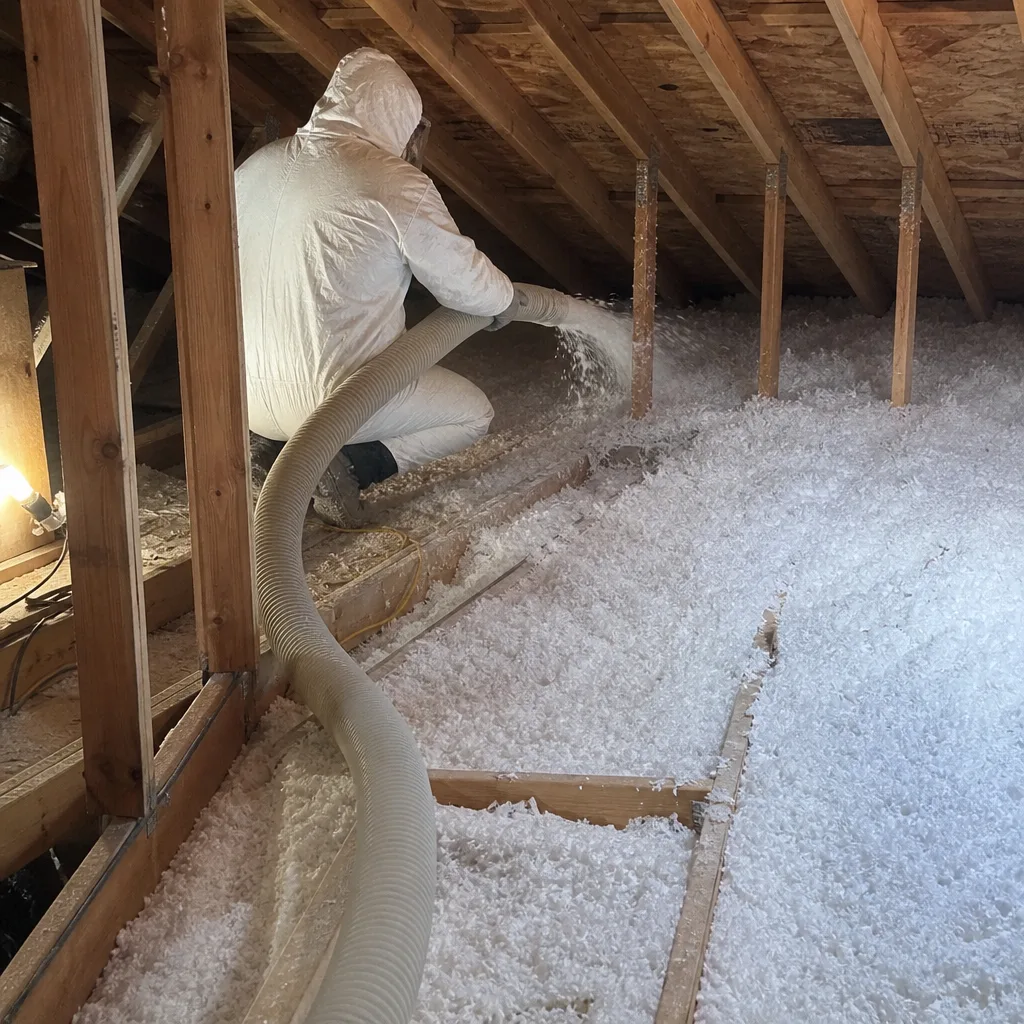
Attic Insulation Replacement
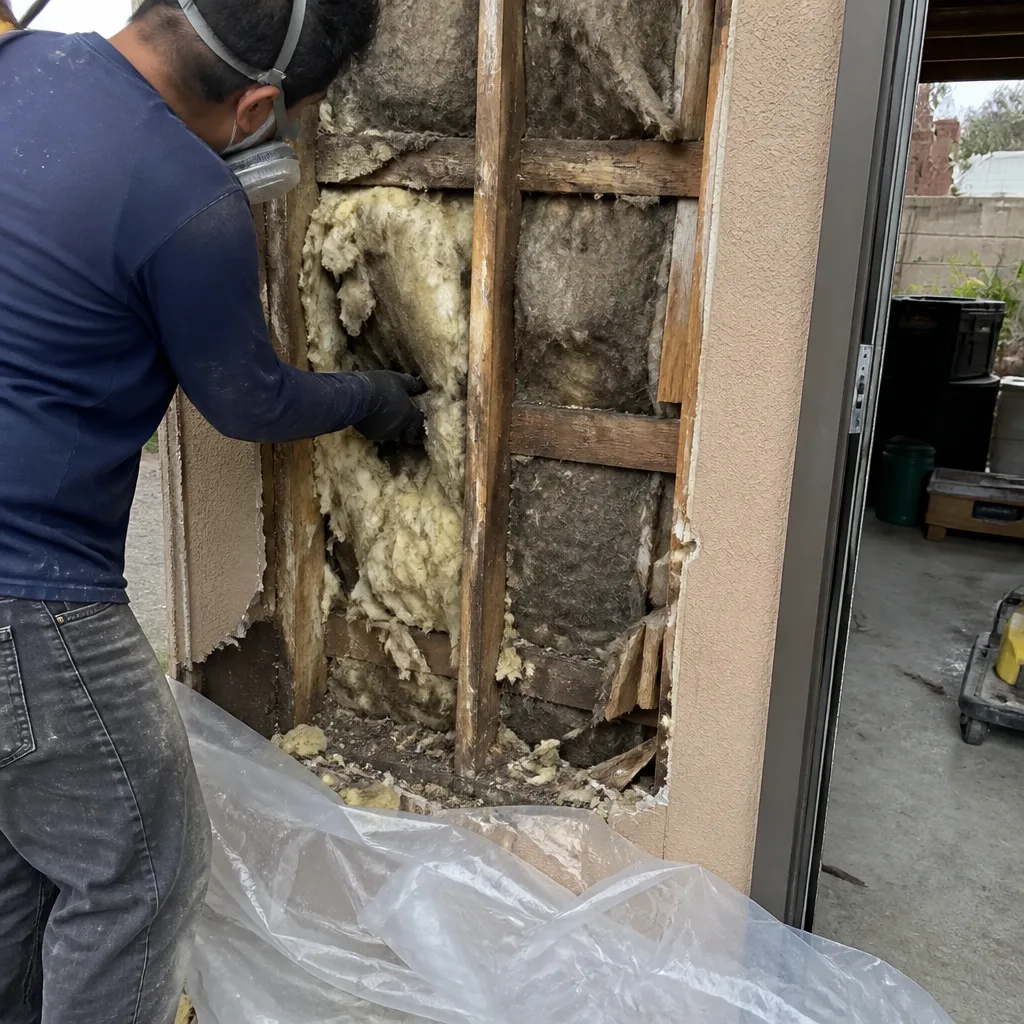
When existing material is contaminated, water-damaged, or fire-compromised, full removal and replacement is the only sound approach. In Vincent’s older stock, we regularly find 1950s fiberglass batts with failing paper facing, or evidence of past roof leaks that homeowners didn’t know about because the attic hatch hadn’t been opened in years. Removal is messy work. We contain the space, HEPA-vacuum the deck, repair any roof deck condensation damage, then seal and reinsulate from a clean base. The photo record shows every stage.
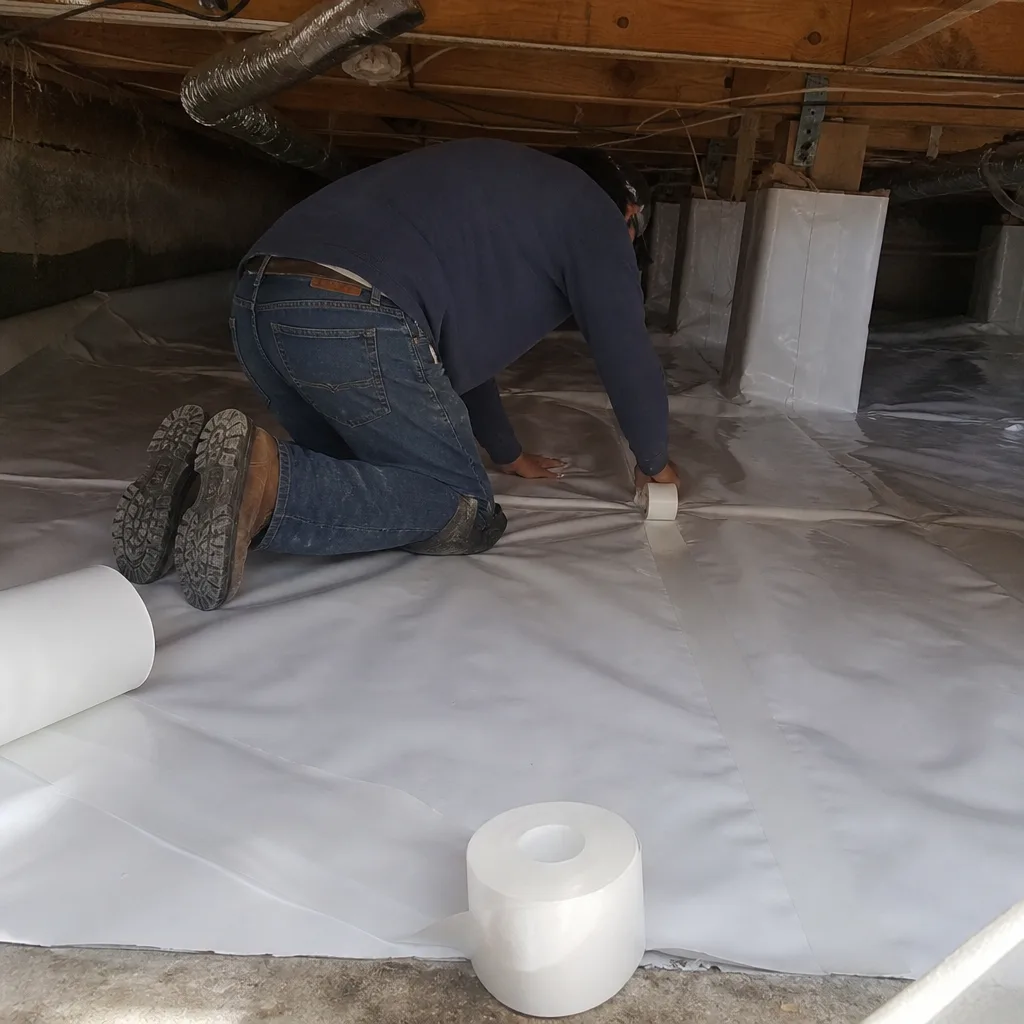
Attic Baffles & Ventilation Prep
Vincent’s inland foothill position creates a high-desert-adjacent thermal envelope: extreme radiant heat in summer, dry cold in winter. Without proper soffit-to-ridge ventilation, attic air stagnates, cooking the insulation and voiding its fire-resistance rating. We install proper baffles at every soffit vent to maintain the air channel, verify ridge vent continuity, and ensure exhaust fans aren’t dumping moist air into the assembly. This step is non-negotiable on our jobs. WUI compliance depends on it.
What happens when you call
- 1
A real person answersNo phone trees - you reach a local pro.
- 2
You get an upfront price rangeHonest numbers before anyone is dispatched.
- 3
A background-checked tech heads outLicensed & insured, dispatched right away.
- 4
You approve before work beginsNothing starts until you say go.
 Before
 After
AfterTrusted Brands We Service in Vincent
We source materials from Owens Corning, Johns Manville, Knauf, Icynene, Demilec, and GreenFiber - no proprietary lock-in, so we specify what performs for your specific assembly. For Vincent’s fire-zone requirements, we stock fire-resistant fiberglass and mineral wool options with the ASTM E84 ratings that WUI compliance demands. Our Los Angeles office maintains inventory for same-day starts on most standard jobs, and we don’t markup material costs separately from labor. The written price you receive before work starts includes everything: product, delivery, installation, cleanup, and documentation.
Common Attic Insulation Problems We See in Vincent Homes
- Aged fiberglass batts compressed to near-zero R-value. Original 1950s-1970s batts in Vincent ranch homes have often been walked on, stored on, or simply gravity-compressed over decades. What reads as “some insulation” on a quick glance performs like bare drywall. We measure actual depth and calculate effective R-value, not labeled R-value.
- Unsealed attic penetrations acting as chimneys. Recessed can lights, plumbing stacks, electrical penetrations, and top plates in Vincent’s minimally inspected housing pull cold dry winter air into the attic assembly. This creates condensation risk on the roof deck, a dual-season failure mode not typical of coastal LA.
- Missing soffit baffles and blocked ventilation. In Vincent’s tighter townhome and alley-load properties, attic ventilation is often an afterthought. Heat and moisture stagnate, degrading insulation performance and creating conditions where fire-resistance ratings don’t hold.
- Knob-and-tube wiring and heat-producing circuits in the attic. On a ranch-style home off East Arrow Highway, our crew found a charred 1950s cloth-wrapped circuit above compressed, failing batts. We mapped the heat-producing wiring, coordinated with a licensed electrician for safe clearance, then prepped baffles and blew Owens Corning fiberglass to R-38. The homeowner’s summer cooling load dropped measurably, and the blower-door leakage reading fell from 22 ACH50 to 9.
Pricing for Attic Insulation in Vincent, CA
A typical blown-in attic insulation job in Vincent runs $2,200-$4,500 for homes between 1,000 and 2,000 square feet with accessible attics and no removal required. Attic insulation top-up work, where existing material stays and we add R-value, typically falls between $1,400-$2,800. Full removal and replacement with air sealing starts around $3,800 and can reach $5,800 for larger homes with contaminated material or extensive penetration sealing. Attic baffles and ventilation prep add $400-$900 depending on soffit linear footage.
What moves the number: attic square footage, existing material condition, accessibility (low-clearance crawls take longer), and whether WUI fire-resistant materials are specified. Every estimate includes the blower-door test, the written scope, the written warranty, and the Documented Photo Record. No work starts without a written price. We also offer a Free Second Opinion on any written estimate from another contractor - bring us their scope and we’ll read it with you. Call (562) 242-7569 for yours.
We Also Serve Cities Near Vincent
Our crews work throughout the eastern San Gabriel Valley and inland foothills. We regularly dispatch to Vincent from Pomona, and we serve La Verne, San Dimas, and Claremont with the same written-price-first protocol and documented delivery. If you’re near the county line or in an unincorporated pocket like Vincent, we understand the permitting and code landscape that incorporated-city contractors often miss.
Serving Vincent, CA - Our Local Coverage Area
We’re based in the Vincent area and know this community well. Use the map below to see our service coverage - if you’re nearby, we can almost certainly help.
FAQs - Attic Insulation in Vincent
Yes. Vincent falls within California’s High Fire Hazard Severity Zone, so insulation retrofits must satisfy Wildland-Urban Interface fire-resistance requirements that don’t apply in Pomona, La Verne, or other incorporated cities on the valley floor. We specify ASTM E84-rated materials and document the fire-resistance classification in your written scope. Call (562) 242-7569 and we’ll walk through what WUI compliance means for your specific assembly.
Because Vincent is an unincorporated LA County pocket with no local building department, many homes were built or added onto under minimal inspection, leaving wall cavities and attic floors with aged, compressed fiberglass batts - or nothing at all - that no permit record ever flagged. Our blower-door tests here routinely show air leakage rates two to three times higher than in similarly aged homes in fully incorporated neighboring cities. The fix is systematic air sealing before any insulation goes in, which is why we treat sealing as a hard prerequisite, not an upsell.
Yes. Our crews carry low-clearance equipment and compact insulation blowers specifically for Vincent’s tighter attic spaces and alley-load access constraints. We text when we’re en route so you’re not waiting on a narrow driveway, and we protect flooring and landscaping from the machine hose path. The written scope notes any access limitations and how we’ll address them before work starts.
We typically recommend blown-in fiberglass to R-38 after removing or working around the failed original material and completing air sealing. Blown material fills the irregular cavities and covers top plates that original batts missed. If your home is in the WUI zone, we specify fire-resistant fiberglass or mineral wool with the proper ASTM rating. The exact recommendation comes after we inspect your attic and run the blower-door test - but you’ll get a written price before any work starts, always.
Vincent has no local building department, so permits for attic insulation are typically handled through LA County if required at all for retrofit work. We know the county process and can advise whether your specific scope triggers a permit requirement. More importantly, we deliver our own inspection-level documentation: the blower-door numbers, the photo record, and the written scope that shows exactly what was done. Many Vincent homeowners find this documentation more useful than a county sticker for resale or insurance purposes. Call (562) 242-7569 and we’ll clarify the permit landscape for your job.
Written by Wes Okafor, Owner at Envelope Insulation Co., serving Vincent and surrounding communities under The Haven Standard since 2016.