
Icynene Crawl Space Encapsulation: The Pomona Owner’s Guide
We stock and install Icynene-compatible crawl space encapsulation systems for Pomona homes, with most complete installations running $3,800-$6,200 depending on square footage and whether the foundation needs active dehumidification tied in. Same-day service is available when we have your liner spec on the truck, which we do for the LD-C-50 and MD-R-200 series common to 1950s-1980s ranch homes in the Phillips Ranch and Lincoln Park neighborhoods. Most owners discover their encapsulation has failed when they pull back the access panel and find condensation beading on the underside of the vapor barrier, or when a musty smell starts migrating into the first floor during Pomona’s Santa Ana wind events, which pressurize the crawl and force air through any gap in the seal.
Which Icynene Models This Applies To
Icynene’s crawl space line breaks into two families: the LD series, a lighter 6-mil reinforced polyethylene for conditioned crawl spaces with stable humidity, and the MD series, a 12-mil woven scrim for unconditioned or vented crawls that see seasonal moisture swings. The model number is printed on a white adhesive tag along the seam edge, usually 18 inches from the corner post. If the tag’s worn off, measure the mil thickness with a micrometer at an unstressed section, and note whether the reinforcement grid is diamond-pattern (LD) or cross-hatched (MD).
We carry OEM Icynene liner rolls and compatible seam tape rated to the same perm rating, 0.1 perms or lower, which is what the California Title 24 energy code requires for effective vapor retarders in Climate Zone 10. Aftermarket equivalents from Stego and Viper exist at lower cost, but their adhesive formulations don’t always bond clean to Icynene’s factory-applied termination strips, especially the pre-2019 lots that used a butyl-rubber base. We’ve seen three callbacks in Pomona from homeowners who sourced their own liner, only to have the seam lift at the footing wall where seasonal expansion puts the most shear on the bond. For Icynene systems, we recommend matching OEM at the termination points and using aftermarket only for field repairs where the original seam geometry isn’t load-bearing.
Signs Your Icynene Crawl Space Encapsulation Is Failing
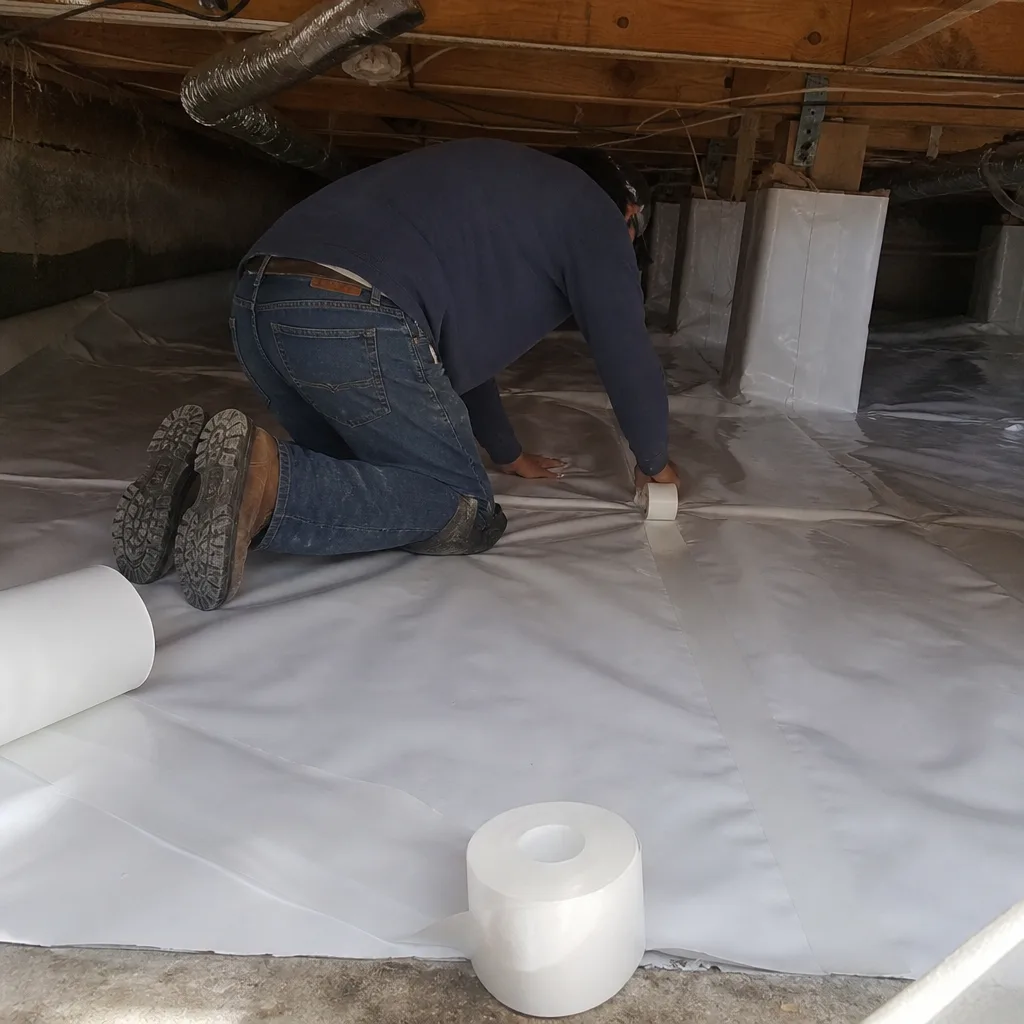
- Condensation pooling on the liner surface. This means the vapor barrier’s perm rating has degraded, or more commonly, that air is bypassing the seal at the sill plate and depositing moisture on the cooler poly surface. In Pomona’s clay-heavy soils near Ganesha Park, we see this where the foundation has settled and pulled the termination strip away from the block wall.
- Musty odor rising into living spaces. The encapsulation is supposed to isolate the crawl’s air mass from the house. When you smell earth or mildew, the sub-membrane depressurization has failed, usually at a pier wrap or plumbing penetration that wasn’t sealed during the original install.
- White mineral deposits on the liner face. This is efflorescence from concrete wicking moisture through a compromised seam. It tells us water is getting behind the barrier and evaporating at the breach, which means the liner is doing its job everywhere except where it counts.
- Sagging or tenting between fasteners. Icynene’s LD series is rated for 10-year tensile stability, but in unconditioned Pomona crawls that hit 95°F in August, the poly relaxes faster. Sagging catches foot traffic from technicians and tears at the fastener points.
- Increased humidity readings on the first floor. We check this with a simple hygrometer. If your indoor relative humidity climbs 8-12% in summer with no change in HVAC use, the crawl is breathing into the house through the subfloor, and the encapsulation seal is the first place we look.
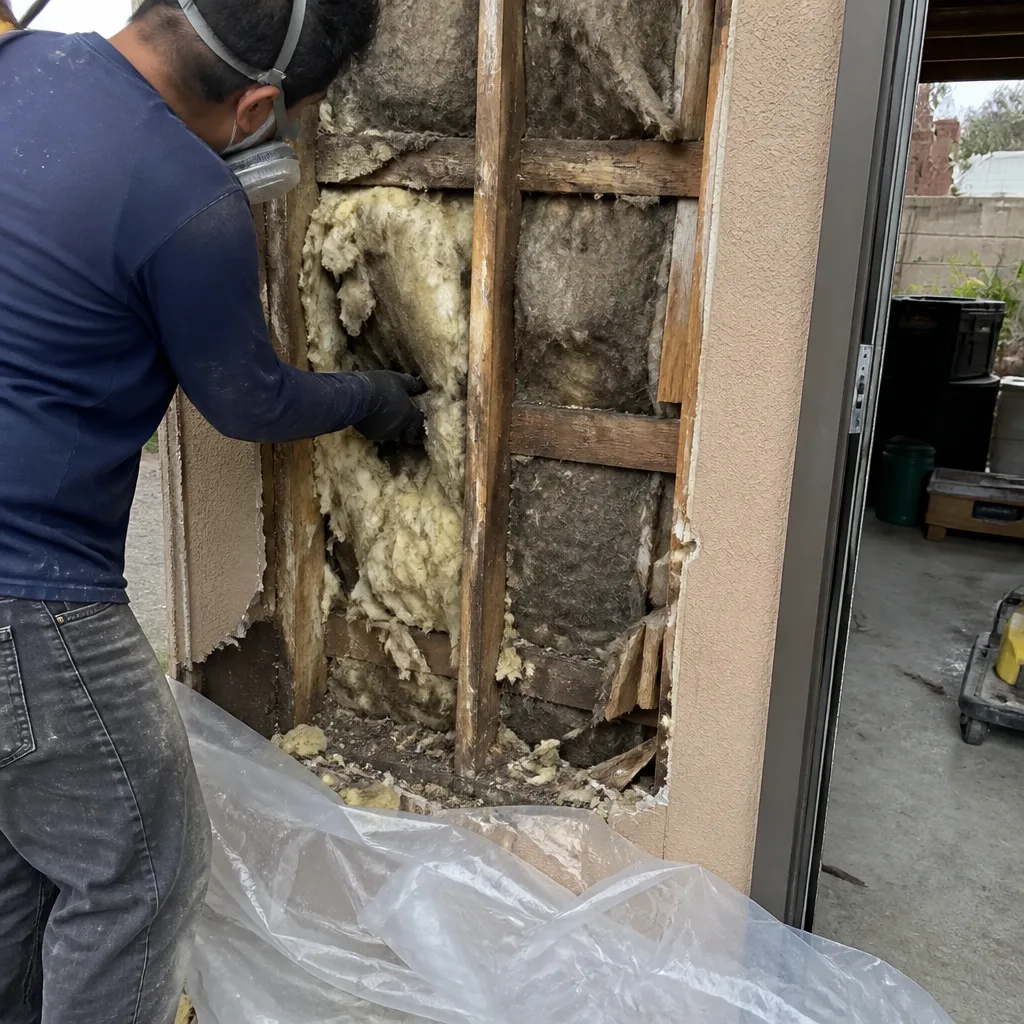 Before
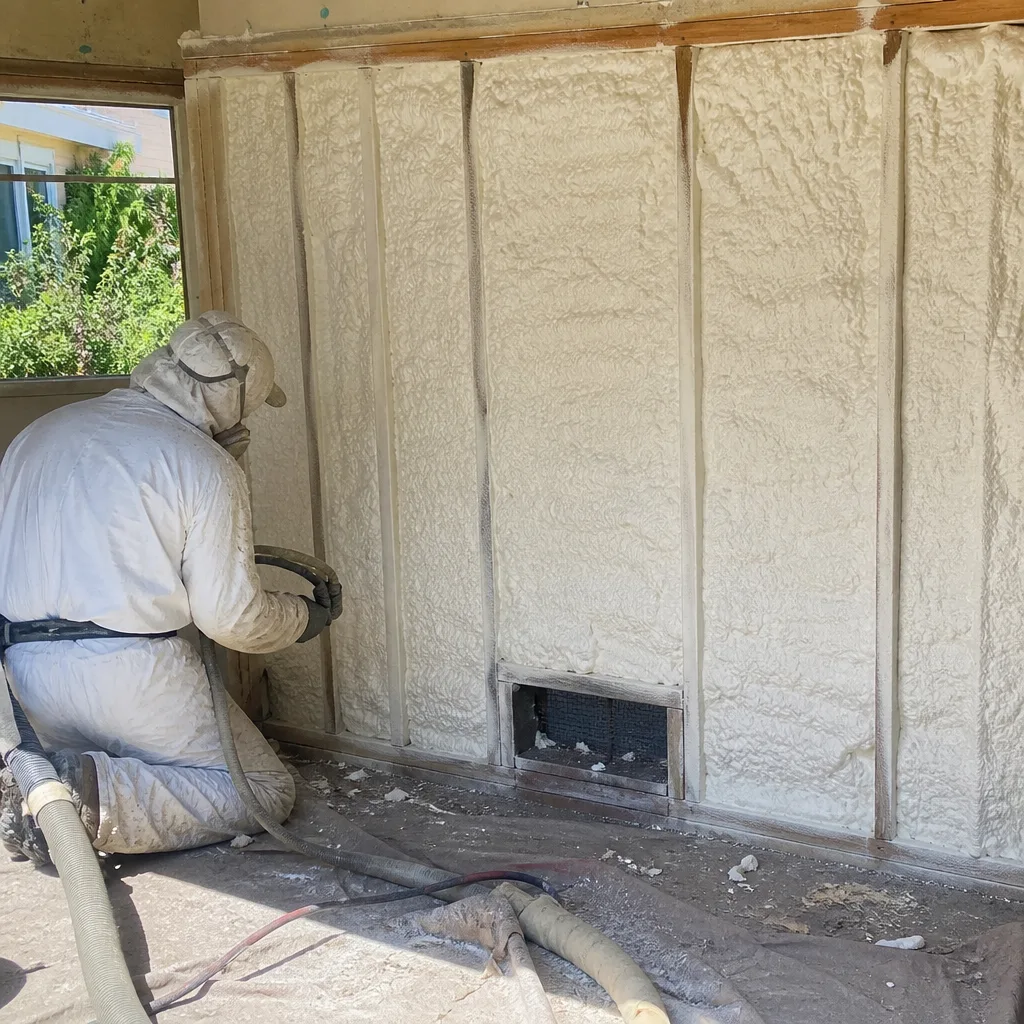 After
AfterReplacement Cost & What’s Included
Complete Icynene crawl space encapsulation in Pomona runs $3,800-$6,200 for a typical 1,200-1,800 square foot footprint. The low end assumes a conditioned crawl with existing dehumidification, clean block walls, and no rodent damage to insulation below the subfloor. The high end covers unconditioned spaces requiring a new Santa Fe or Aprilaire dehumidifier, sill plate sealing with closed-cell foam, and replacement of degraded R-19 batts that got wet before the liner failed.
| Component | Price Range |
|---|---|
| Icynene MD-R-200 liner (12-mil, installed) | $1.80-$2.40/sq ft |
| Icynene LD-C-50 liner (6-mil, installed) | $1.20-$1.60/sq ft |
| Seam tape and termination strips | $340-$580 |
| Sub-membrane dehumidifier (if needed) | $1,200-$1,800 |
| Sill plate air sealing (closed-cell foam) | $480-$720 |
| Degraded batt insulation replacement | $2.10-$2.80/sq ft |
Every encapsulation job includes our Documented Photo Record, before-and-after humidity readings at three crawl points, and a written scope with the Haven Standard 365-Day Done Right Promise. We also publish blower-door numbers when the crawl is tied into the home’s conditioned envelope through a transfer grille, so you can verify the air-sealing result in CFM50, not just a contractor’s word.
DIY or Call Us?
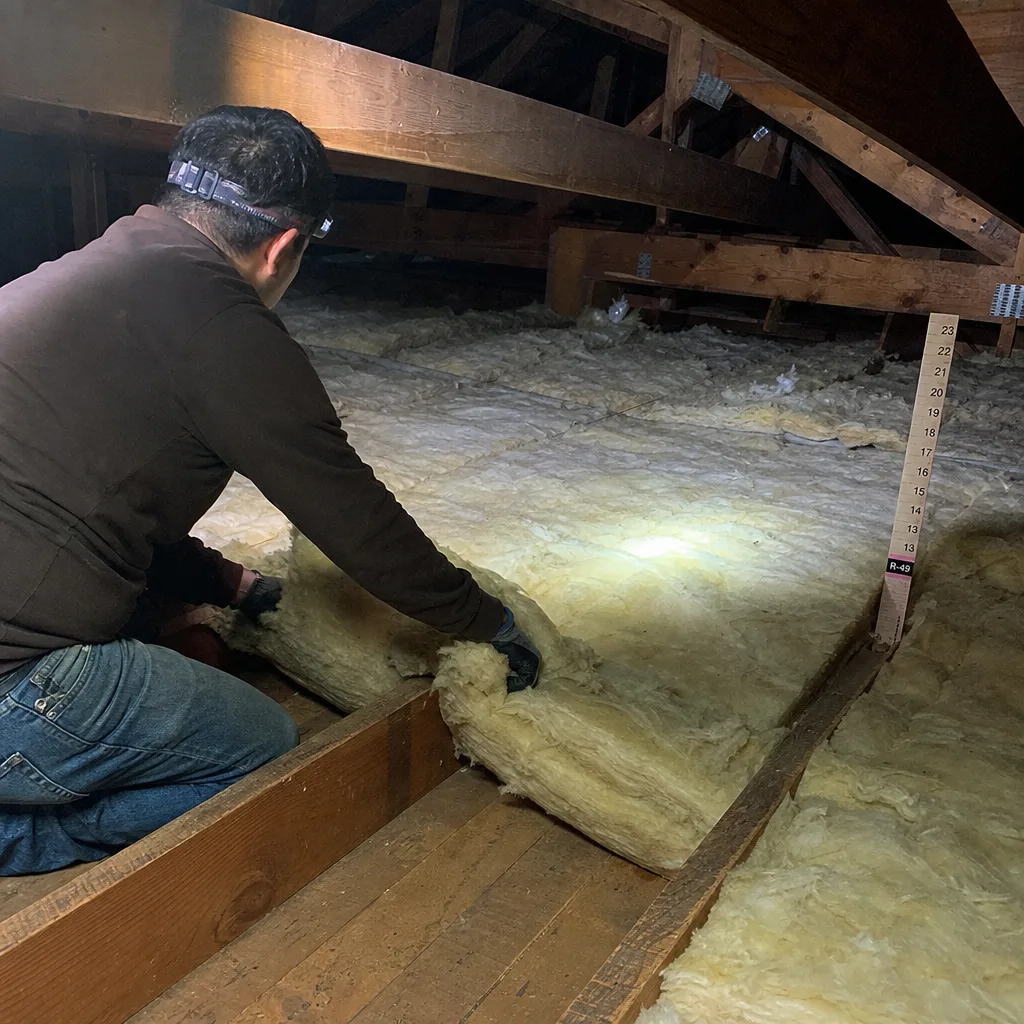
There’s no high-tension danger in crawl space work, but there are two places DIY goes wrong fast. First, measuring liner cuts in a low, irregular space without accounting for the footing wall profile, which leaves you short at the corners where water pools. Second, trying to seal around active plumbing and electrical penetrations without fire-rated caulk and proper strain relief, which violates the California Mechanical Code and can void your homeowner’s insurance if a leak develops.
What you can safely check: pull the access panel, run a flashlight along the sill plate, and look for lifted termination strips or daylight where the poly meets the wall. Note the model tag if you can find it. Then call us at (562) 242-7569 with what you saw. We’ll read your crawl over the phone, tell you whether it’s a field patch or a full re-do, and give you a written price before anyone drives out. Seal the leaks first. The insulation is just the last layer of the answer.
FAQs
In Pomona’s dry-summer, mild-winter climate, a properly installed Icynene MD-R-200 system lasts 15-20 years, while the lighter LD-C-50 typically needs assessment at 10-12 years. The difference is UV stability and mechanical abrasion from foot traffic during HVAC service calls. We warranty our installation labor for 365 days under the Haven Standard Done Right Promise, and the liner itself carries a manufacturer’s defect warranty for 10 years. Call (562) 242-7569 for an exact quote on replacement timing for your specific crawl, estimates are free.
Small punctures under 4 inches in low-stress field areas can be patched with OEM-compatible tape if the surrounding poly is still supple. We don’t patch within 24 inches of a termination strip, any pier wrap, or anywhere the subfloor insulation has gotten wet, because the repair won’t hold and you’re sealing moisture in. For tears longer than 6 inches or any breach near the sill plate, replacement of that wall section is the honest call. Call (562) 242-7569 and we’ll tell you which category you’re in.
A typical 1,400 square foot crawl in Pomona takes one day for removal and prep, one day for installation and sealing, assuming no subfloor insulation replacement or dehumidifier electrical work. If we’re adding a dehumidifier circuit or replacing degraded batts, add a third day. We stock Icynene liner on the truck for the common MD-R-200 and LD-C-50 widths, so we’re not waiting on a distributor run to Ontario. Call (562) 242-7569 to check same-week availability.
We carry Icynene liner rolls, seam tape, and termination strips on every crawl space truck serving Pomona, plus compatible Reflectix radiant barrier for hybrid systems where the homeowner wants both vapor control and thermal break. We are an independent service provider, not affiliated with Icynene, but we source through the same distribution channel as their certified installers and match OEM spec on every job. For less common widths or the discontinued HD series, we can have material within 48 hours. Call (562) 242-7569 to confirm we have your spec in stock.
Written by Wes Okafor, Owner, Topside Attic Insulation Pomona at Topside Attic Insulation Pomona, serving Pomona and nearby areas.