
Icynene Attic Air Sealing: The Pomona Owner’s Guide
Icynene attic air sealing in Pomona typically runs $1,800-$3,400 for a complete seal of top plates, can lights, and penetrations in a 1,200-2,000 square foot home, and we stock Icynene-compatible sealants and accessories for same-day starts. Most Pomona homeowners realize their air sealing has failed when their summer cooling bills spike above $400 despite a recent insulation upgrade, or when a home energy audit reveals the attic is still pulling conditioned air through gaps the original crew missed. The Icynene system depends on a continuous air barrier; once that seal breaks at critical junctions, you’re paying to heat and cool the San Gabriel Valley whether you meant to or not.
Which Icynene Models This Applies To
Icynene’s open-cell and closed-cell spray foam lines, including the LD-C-50 and MD-R-200 series commonly specified for attic applications in California Title 24 projects, require compatible air-sealing prep before foam application. The critical distinction is between Icynene’s water-blown open-cell formulations, which need a separate air barrier at the attic floor when used as a flash-and-batt system, and the closed-cell products that can serve as their own air barrier when applied at proper thickness. We also see legacy H2Foam Lite installs in Pomona’s 1950s-1970s stock, where the original spec called for a separate vapor-retarder paint or membrane that has since degraded.
To identify your system, check the spray-foam tag left by the original applicator, usually stapled near the attic access hatch or scribed on the foam itself with a Sharpie date and product code. The LD-C-50 tags read “LD-C-50” with a density rating of 0.5 lbs/ft³; MD-R-200 reads “MD-R-200” at 2.0 lbs/ft³. If the tag is gone, measure the foam thickness with a poker: open-cell runs 5.5-6.5 inches for R-38 in Pomona’s climate zone; closed-cell achieves the same at 3-3.5 inches. We carry Icynene-compatible acrylic sealants for the open-cell flash-and-batt transition zones, as well as fire-rated caulk for top-plate gaps that meet CA Title 24’s ignition-barrier requirements. Aftermarket equivalents from Tremco and Hilti perform identically at lower cost for the sealant layer, though we source Icynene OEM foam when we’re matching an existing closed-cell application.
Signs Your Icynene Attic Air Sealing Is Failing
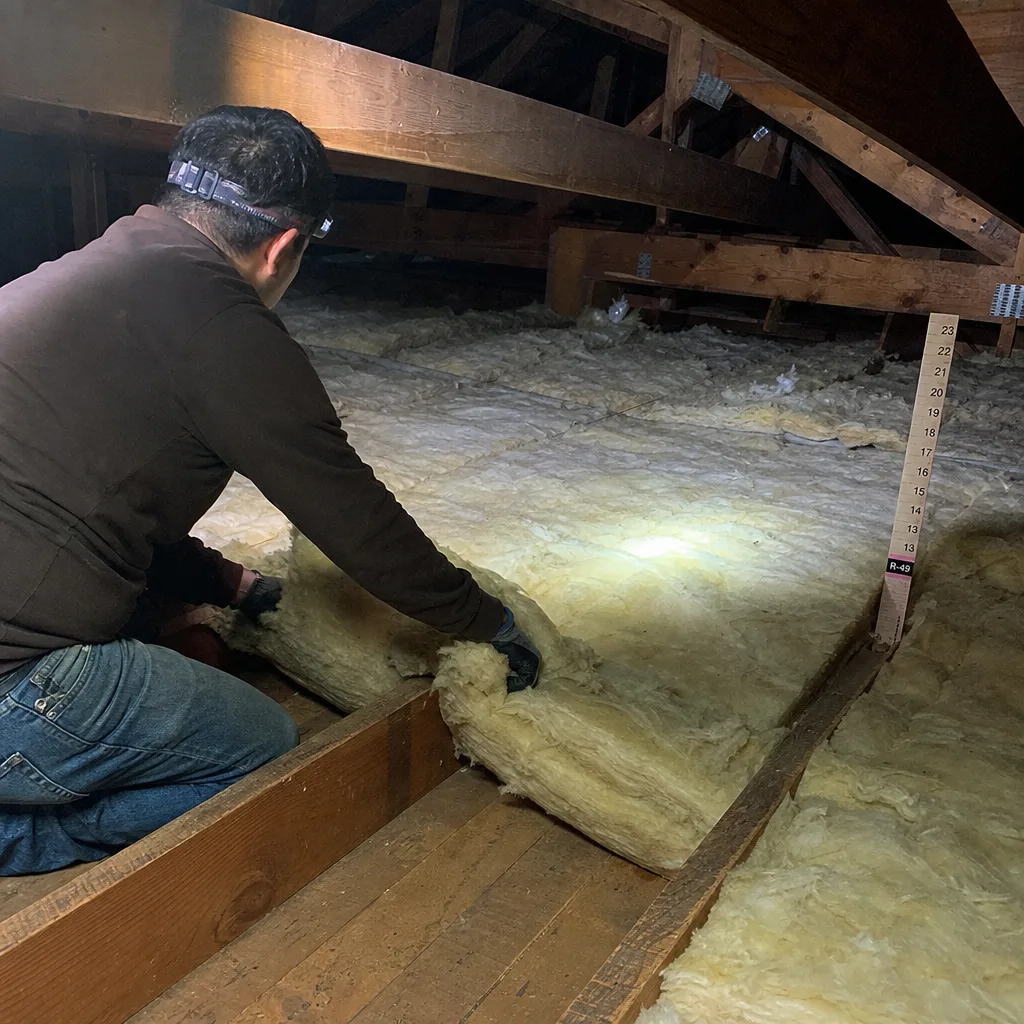
- Hot spots on your ceiling in July. The drywall above your living room reads 85°F on an infrared camera even with the AC running. This means conditioned air is escaping through bypasses at the top plates, and the insulation above is doing nothing because the air is moving around it, not through it.
- Dust streaking at ceiling corners and can-light trim. The brown-gray lines that show up every summer are filtration staining, airborne particles passing through gaps too small to see but large enough to move measurable air. In Pomona’s Santa Ana wind events, the pressure differential across your attic floor can hit 20 pascals, enough to pull attic air through a 1/16-inch crack.
- Ice damming or moisture on roof sheathing in winter. Warm, moist interior air hits cold plywood and condenses. Icynene open-cell is vapor-permeable by design; if the air-sealing layer failed, the moisture drives straight into the attic and rots the sheathing from the inside out. We’ve replaced roof decks in Lincoln Park homes where this went unaddressed for three seasons.
- Rooms that won’t hold temperature despite new HVAC equipment. Your system is sized correctly, the ducts are sealed, but the west bedroom still runs 8°F warmer than the thermostat. The blower-door test we run before any repair will show elevated CFM50 in that pressure zone, pointing to a missed top-plate gap or a can-light housing that was never sealed to the drywall.
- Insulation that looks settled or disturbed directly above exterior walls. Air moving through a bypass creates a mini-jet that disturbs loose-fill fiberglass or cellulose. If you see a trough or depression running parallel to your exterior walls, there’s almost certainly a top-plate leak underneath pulling air upward.
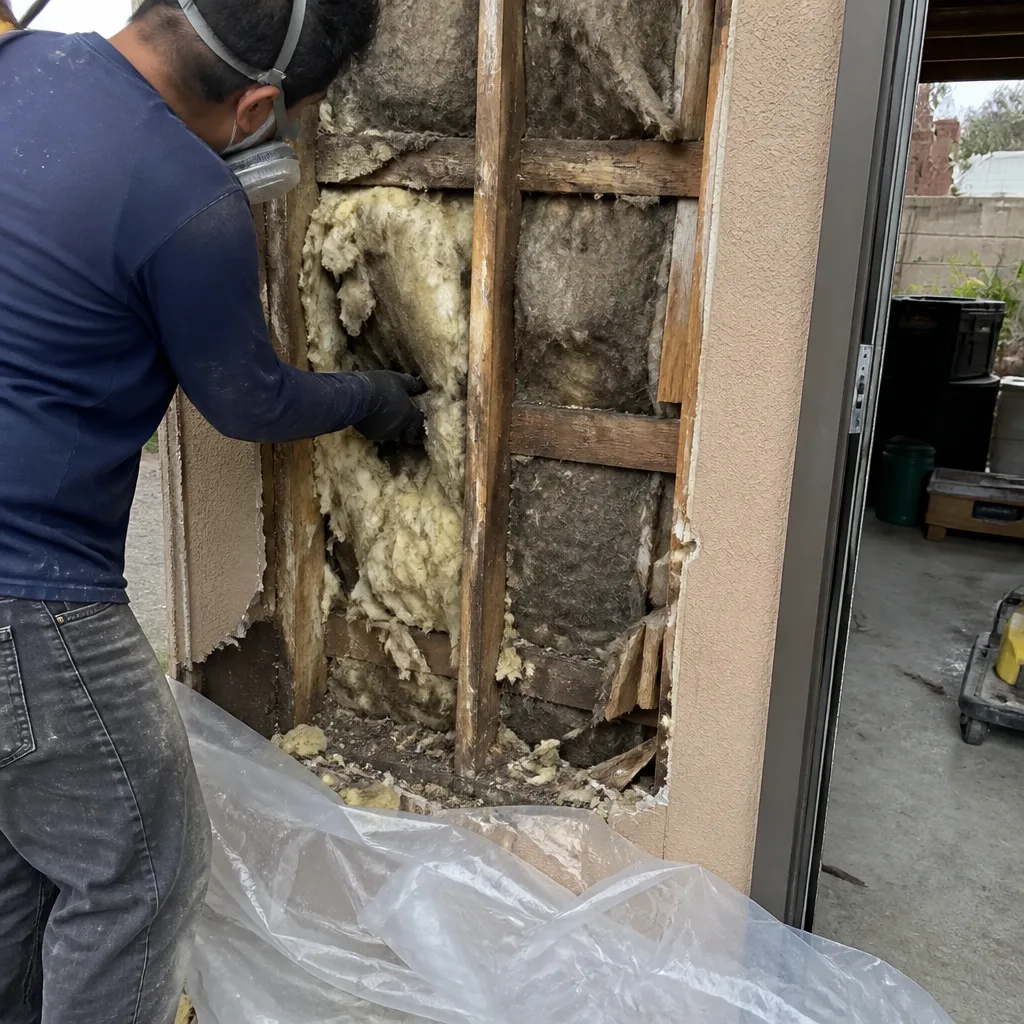 Before
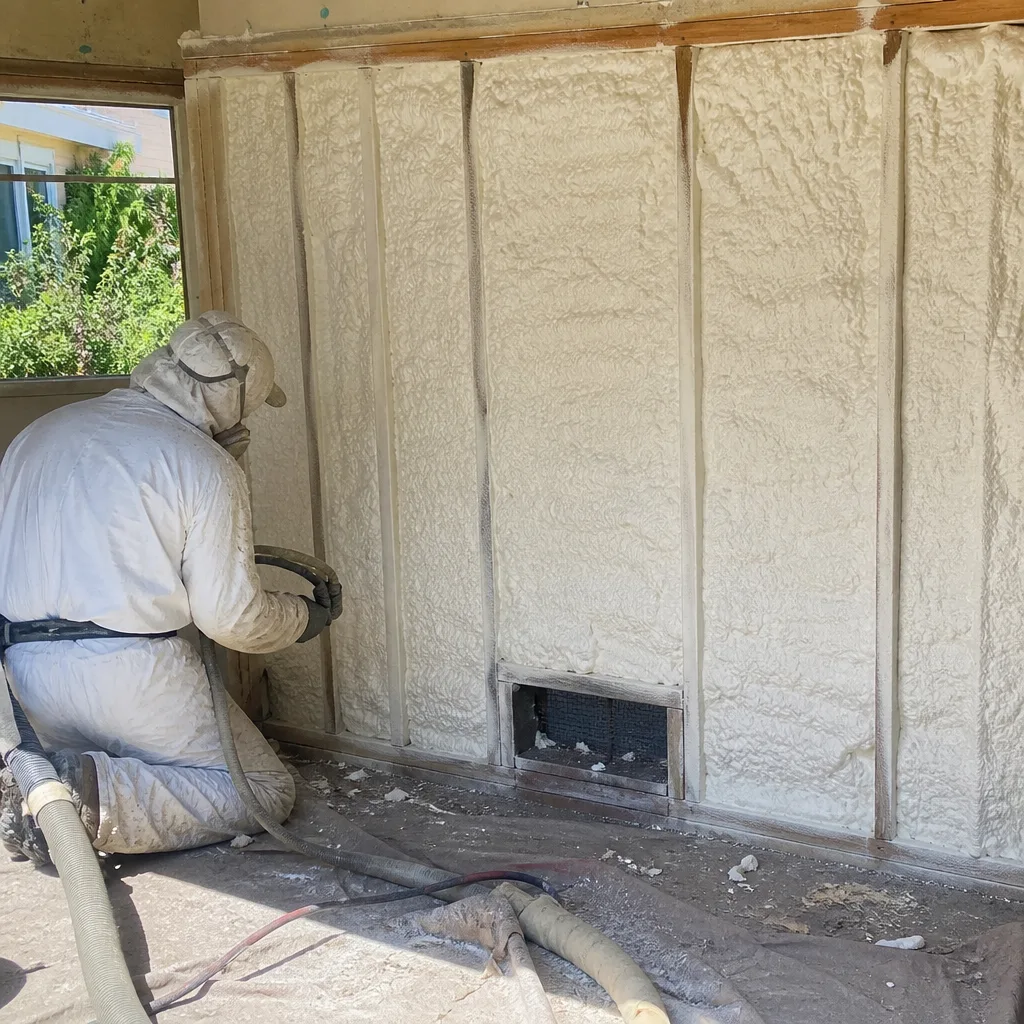 After
AfterReplacement Cost & What’s Included
Most Icynene attic air sealing jobs in Pomona run between $1,800 and $3,400 installed, with the spread driven by attic square footage, accessibility, and how many penetrations need individual treatment. A 1,200 sq ft ranch with a single HVAC chase and six can lights sits at the low end; a 2,400 sq ft two-story with a maze of top plates, a fireplace chase, and fourteen recessed fixtures pushes toward the high end. That price covers labor, Icynene-compatible sealants, fire-rated caulk for ignition barriers, rigid foam blocking where needed, and the blower-door test to prove the result.
We don’t price by the can of caulk. We price by the documented outcome: a written scope before anyone climbs the ladder, a post-work blower-door reading showing the reduction in CFM50, and a Documented Photo Record of every sealed penetration delivered to your inbox before the crew leaves. Our 365-Day Done Right Promise applies to all air-sealing work. If the blower-door number doesn’t hold, we come back and find what shifted.
| Scope Element | Typical Range (Pomona) |
|---|---|
| Basic attic floor seal (top plates, wire/plumbing penetrations, access hatch) | $1,800 - $2,400 |
| Mid-range (adds can-light sealing, HVAC chase, bath-fan termination) | $2,400 - $2,900 |
| Comprehensive (multi-level, fireplace chase, rigid foam baffles, complex geometry) | $2,900 - $3,400 |
DIY or Call Us?
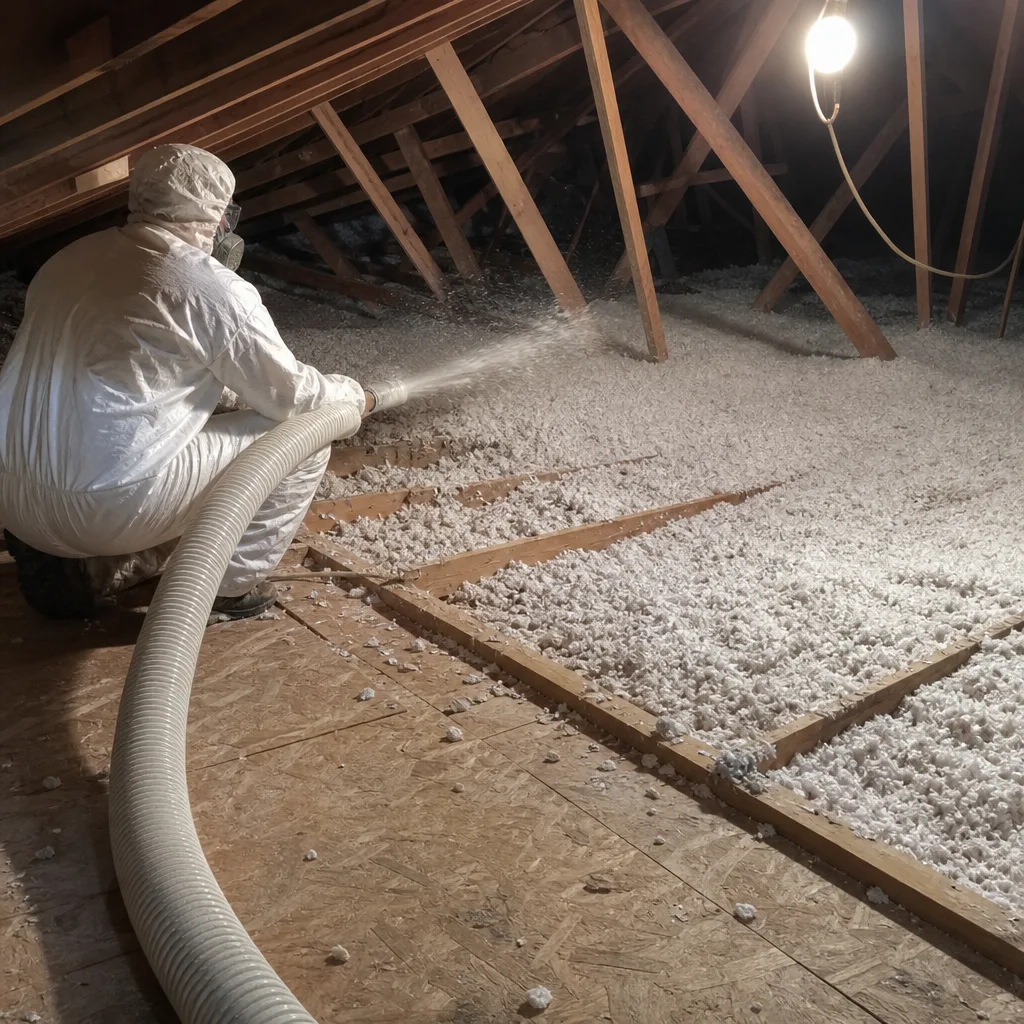
There’s a short list of what a homeowner can safely check from the attic hatch with a flashlight and a piece of wire: whether the access hatch itself has weatherstripping, whether bath-fan ducts are disconnected (a common find in Pomona’s 1960s ranches), and whether any can-light housings are visibly blackened from heat. That’s it. Everything else, including walking the attic floor, disturbs insulation and risks stepping through drywall.
The actual sealing work requires working in confined, hot spaces, identifying pressure boundaries correctly, and applying fire-rated materials where code demands. A homeowner with a caulk gun and good intentions will typically seal the wrong surfaces, creating moisture traps, or miss the critical junctions entirely. We’ve been called to more than one Ganesha Park home where a well-meaning seal job actually increased the blower-door number by blocking intended ventilation paths. Call (562) 242-7569 and we’ll run the test first, so you know what you’re actually fixing before you spend a dollar.
FAQs
Properly installed acrylic and butyl sealants last 20-25 years in Pomona’s dry climate, though thermal cycling at the roof deck can stress certain junctions after 10-12 years. We warranty our workmanship for 365 days under the Done Right Promise, and the materials we use carry manufacturer warranties of their own. Call (562) 242-7569 for an exact quote on your attic - estimates are free.
Localized repair is common and cost-effective if the failure is isolated to one or two penetrations or a single top-plate run. We spot-seal and re-test rather than stripping good work. Full replacement only makes sense when the original sealant has degraded across the entire attic or when you’re upgrading insulation and need a clean substrate. Call (562) 242-7569 for an exact quote - estimates are free.
Most Pomona attic air sealing jobs finish in one day, with crews arriving at 8 AM and the final blower-door test completed by late afternoon. Two-story homes with complex attic geometry or limited hatch access may run into a second day. We don’t charge by the hour; the written price covers the outcome, not the clock. Call (562) 242-7569 to schedule - estimates are free.
We stock Icynene-compatible sealants, fire-rated caulks, and rigid foam accessories on every truck, and we source Icynene OEM foam directly for closed-cell touch-ups and matching work. No special-order delays for standard repairs. Call (562) 242-7569 to confirm availability for your specific model - estimates are free.
Topside Attic Insulation Pomona is an independent service provider, not affiliated with Icynene. We also stock parts for Reflectix and other major insulation brands.
Seal the leaks first. The insulation is just the last layer of the answer.
Ready to stop paying to condition your attic? Call (562) 242-7569 for a free estimate. We’ll run the blower-door test, show you the number, and give you a written price before any work starts. That’s the Haven Standard, and it’s how we’ve handled 9,000+ homes since 2016.
Written by Wes Okafor, Owner, Topside Attic Insulation Pomona at Topside Attic Insulation Pomona, serving Pomona and nearby areas.