
CertainTeed Attic Insulation: The Pomona Owner’s Guide
Most attic insulation replacements in Pomona run between $1.80 and $3.20 per square foot installed for CertainTeed fiberglass batts, with blown-in OptaPro or InsulSafe SP typically landing between $2.40 and $4.10 per square foot depending on the target R-value and whether the attic floor needs air sealing first. We stock CertainTeed-compatible batts and loose-fill on every truck, and we can usually inspect, price, and start the same day you call. Homeowners usually figure out something’s wrong when their summer cooling bills spike, rooms over the garage stay hot into October, or they spot thin, compressed, or moisture-stained batts while storing holiday decorations.
Which CertainTeed Models This Applies To
CertainTeed’s residential attic line breaks into three families you’re likely to find in Pomona homes built from the 1970s through the 2010s: SpeedyRolled batts (kraft-faced or unfaced, R-13 through R-38), TrueComfort batts (formaldehyde-free, denser hand-feel, common in 2005-and-later builds), and the blown-in loose-fill systems - OptaPro (fiberglass, R-2.5 per inch) and InsulSafe SP (spray-applied with stabilized fiber, R-2.7 per inch). The label matters. Rolled batts have a printed tape every 24 inches showing the R-value, manufacturing date, and ASTM compliance; loose-fill bags have a lot code and coverage chart on the poly wrap. If you’re matching existing insulation, measure the settled depth and check the joist spacing - CertainTeed batts come in 15-inch and 23-inch widths, and stuffing a 23-inch batt into 16-inch on-center framing crushes the loft and drops the effective R-value by 15 to 20 percent.
OEM CertainTeed batts are what we install, but we also carry Johns Manville and Knauf equivalents with matching thermal and fire ratings when a homeowner wants price flexibility. The catch with aftermarket loose-fill: density. CertainTeed’s InsulSafe SP uses a proprietary fiber stabilization that resists settling in Pomona’s dry heat; generic loose-fill can settle 10 to 15 percent in the first two years, which is why we note the installed versus settled depth on every job card. We are an independent service provider - not affiliated with CertainTeed - so we have no incentive to push one brand over another.
Signs Your CertainTeed Attic Insulation Is Failing
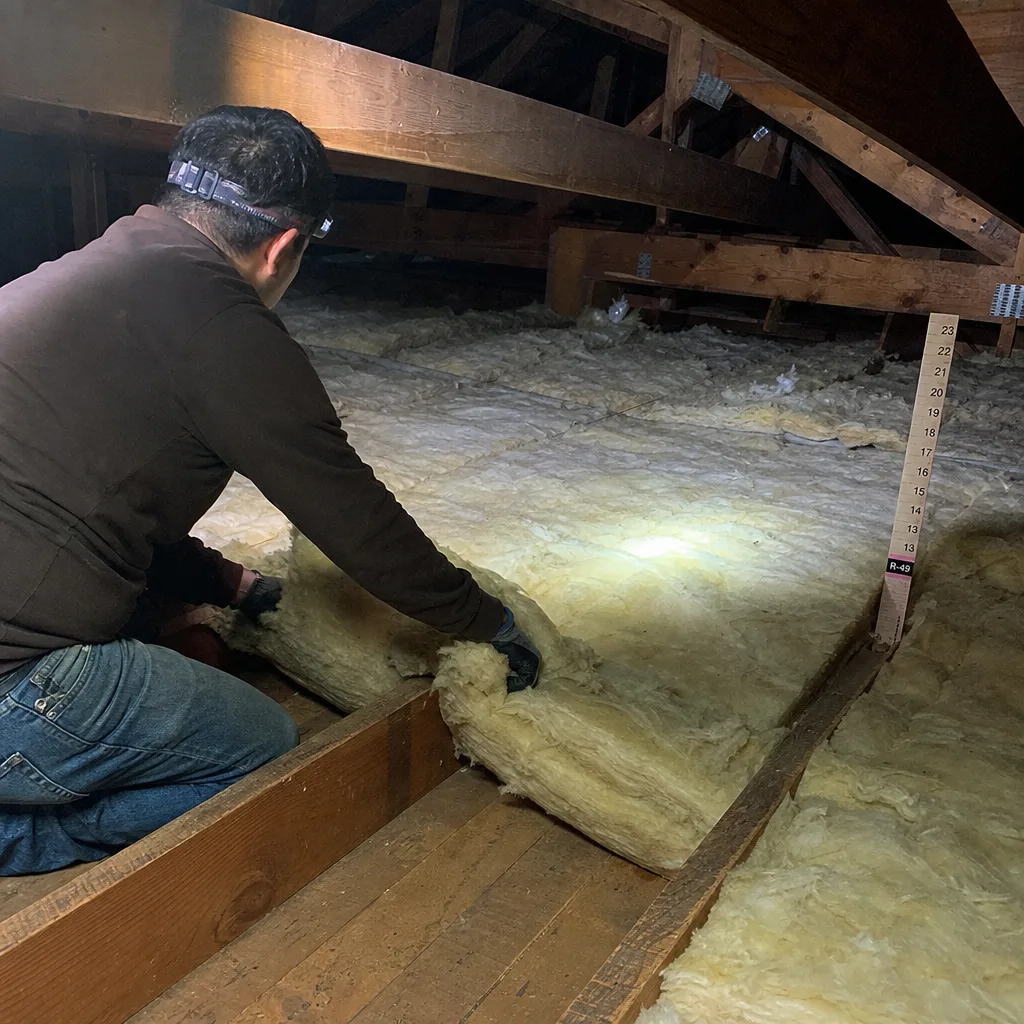
- Uneven temperatures room-to-room. In Pomona, we see this most in the ranch homes near Ganesha Park where the original R-19 batts have compressed to R-12 or lower over forty years. Hot spots over the master bedroom usually mean the batt there has shifted or been walked on repeatedly.
- Ice damming or heavy condensation on roof nails. Even in our mild winters, poor attic insulation lets warm, moist indoor air hit cold sheathing. The frost melts by 10 a.m. and stains the ceiling drywall below. The insulation isn’t the root cause - it’s usually an air leak at the top plate - but the batt is too thin or poorly placed to block the convection.
- Insulation that looks thin, gray, or clumped. Fiberglass doesn’t rot, but it does collect dust and lose loft. We pulled a 1990s SpeedyRolled batt from a Pomona duplex last March that measured 4 inches thick where it should have been 10 - the homeowner’s “R-30” was performing closer to R-10.
- Rodent trails or droppings in the insulation. Mice compress tunnels through batts, creating bare channels. The insulation itself isn’t failed, but it’s compromised enough that spot replacement rarely works - the scent attracts return visitors.
- Energy bills climbing year-over-year with no rate change. SDG&E and SCE rates do jump, but if your usage pattern is flat and the bill is up 20 percent, the envelope is leaking more than it should. We start with a blower-door test - a pressurization reading that shows, in one number, how much air your building envelope is losing - to separate insulation failure from air leakage.
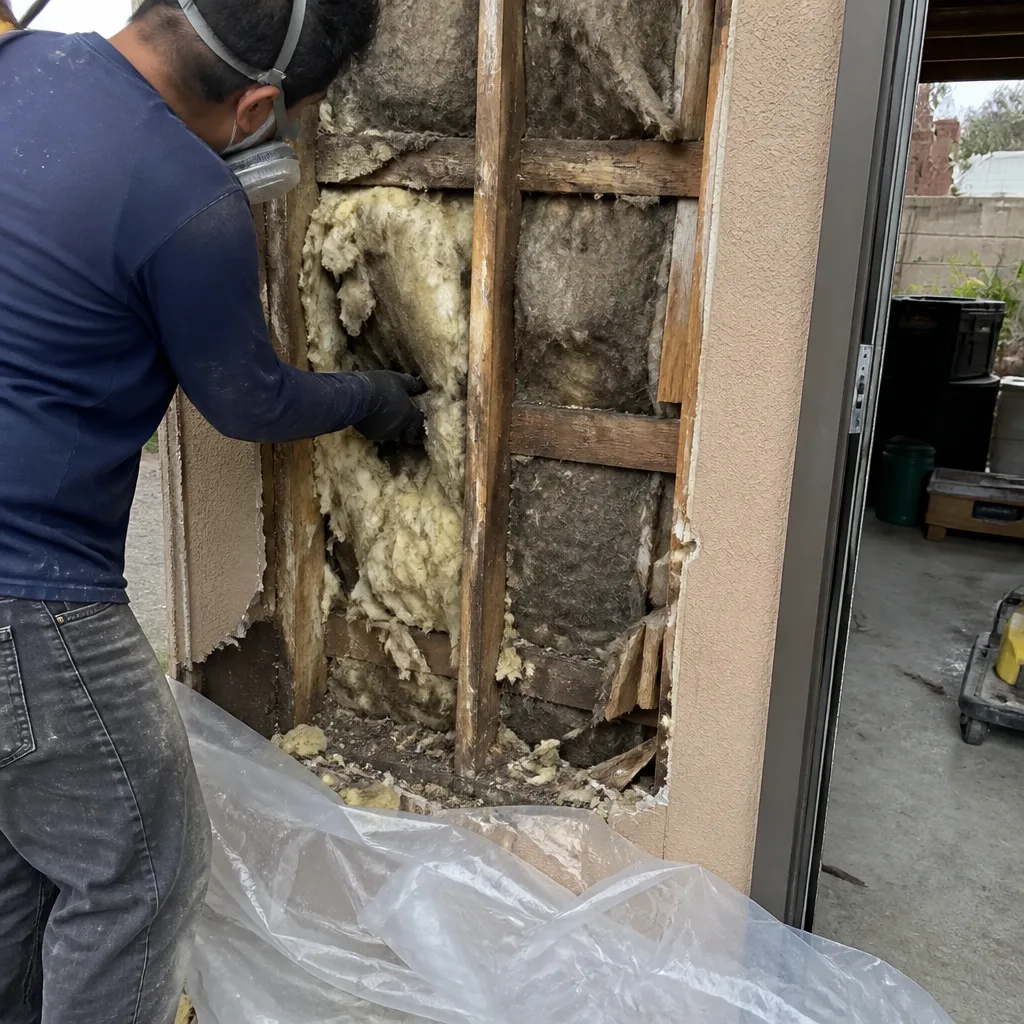 Before
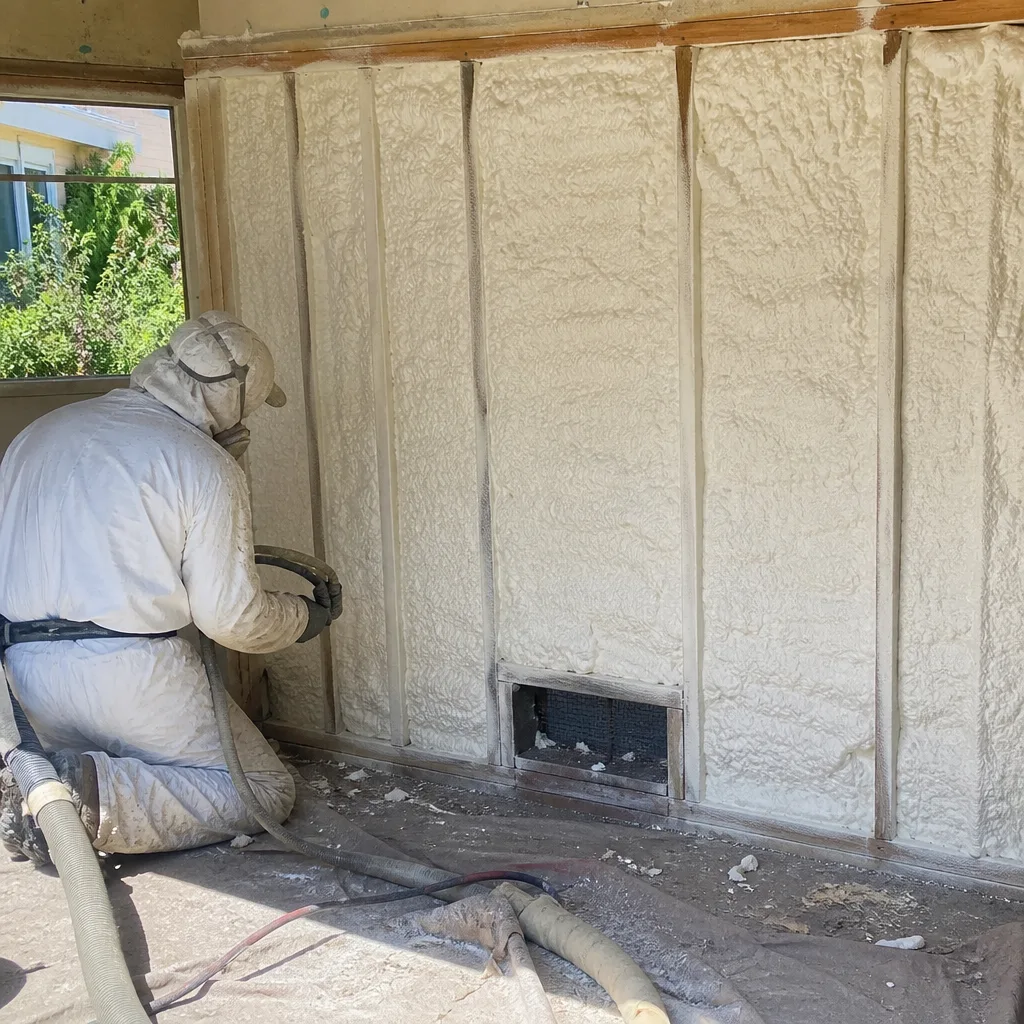 After
AfterReplacement Cost & What’s Included
For a typical 1,200-square-foot attic in Pomona, most full replacements run between $2,200 and $4,800 using CertainTeed batts, or $2,900 to $5,400 for blown-in loose-fill with air sealing. The spread depends on three things: how much old material needs removal (rodent-soiled batts can’t stay), whether we need to build baffles at the eaves for vented attics, and the target R-value - Title 24 now calls for R-38 to R-49 in our climate zone, and many older homes sit at R-19 or less.
Every quote is a written price before any work starts, per Haven Standard Clause 1. The number includes material, labor, old insulation bagged and hauled, and a Documented Photo Record of the completed work. On jobs where we air seal first, you’ll also get before-and-after blower-door numbers so you can verify the performance change. The 365-Day Done Right Promise covers all completed work.
| Scope | Price Range (Pomona) |
|---|---|
| CertainTeed batt replacement, no removal | $1.80 - $2.80 / sq ft |
| CertainTeed batt replacement with old removal | $2.40 - $3.60 / sq ft |
| Blown-in OptaPro/InsulSafe SP with air sealing | $2.90 - $4.50 / sq ft |
| Full removal, air seal, new loose-fill to R-49 | $3.80 - $5.40 / sq ft |
DIY or Call Us?
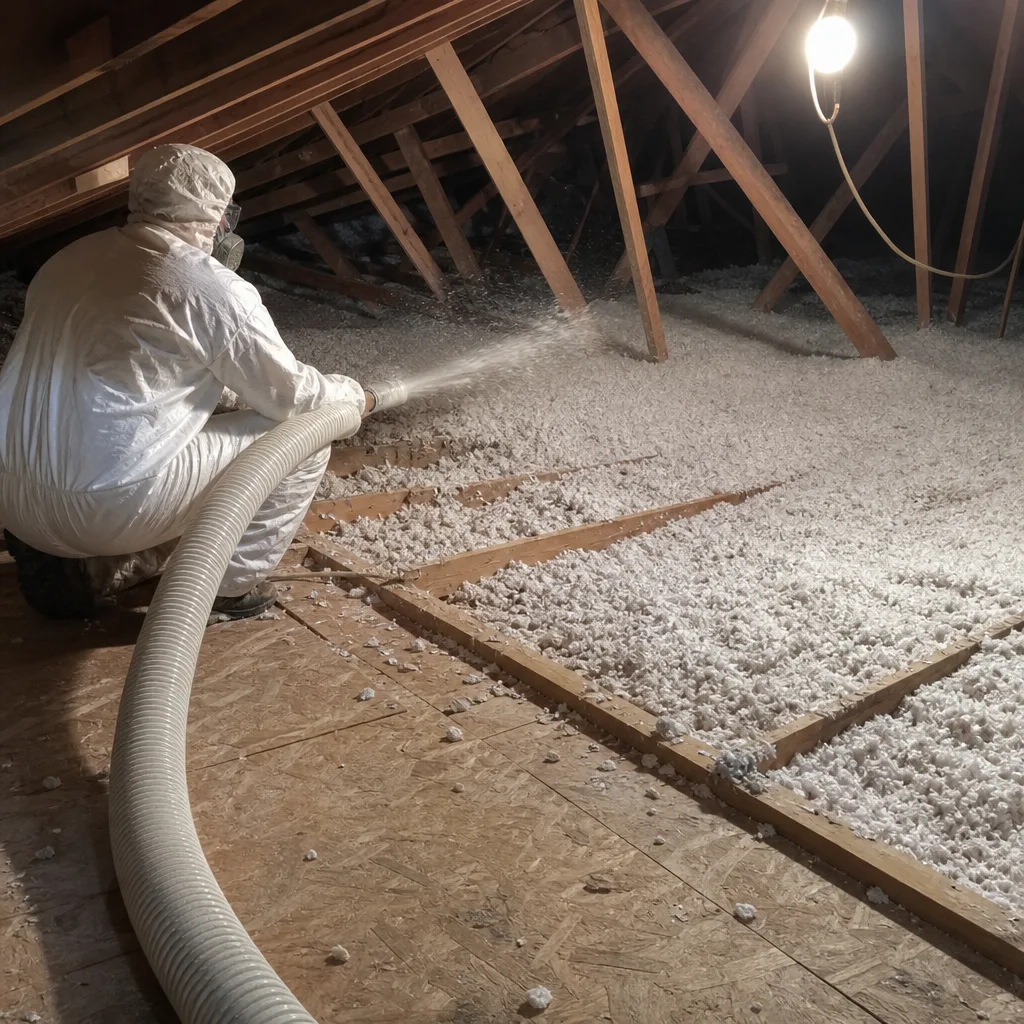
There’s no high-tension spring or live electrical here, but attic work has its own hazards. What a homeowner can safely check: measure existing insulation depth with a ruler, photograph any labels you can find, and look for obvious gaps or compressed areas from the attic hatch. Wear an N95 - fiberglass dust is an irritant, not a toxin, but you’ll itch for days.
Where DIY goes wrong: most homeowners add new insulation over old without sealing the air leaks first. We logged more bypasses in Pomona’s older ranch homes than we could count in a season - gaps around top plates, recessed can lights, and plumbing stacks that let conditioned air escape straight into the attic. Blowing new insulation over an unsealed floor is like putting a thick sweater on a screen door. Seal the leaks first. The insulation is just the last layer of the answer. If you want a second opinion on a quote you’ve already gotten, bring it to us - we’ll read it with you. Call (562) 242-7569.
FAQs
Fiberglass batts hold their rated R-value for 80 to 100 years if left undisturbed, but in practice they fail sooner from compression, moisture, or rodent damage. In Pomona’s dry climate, the bigger enemy is settling and air leakage rather than mold or rot. Call (562) 242-7569 and we’ll assess whether yours is salvageable or needs replacement - estimates are free.
Spot repairs work if the existing insulation is clean, dry, and still near its original thickness. We cut in new batts to fill gaps or top off thin areas with loose-fill. If more than 30 percent of the attic is compromised, full replacement is usually more cost-effective - the labor to patch is nearly the same as starting fresh, and the performance is more uniform. Call (562) 242-7569 for an exact quote on either approach.
Most residential attics in Pomona are a one-day job: removal in the morning, air sealing and baffles through midday, new insulation in the afternoon. Larger homes or those with extensive rodent damage may need a second day. We give you a written schedule with the price, not a window.
We carry CertainTeed-compatible batts and loose-fill on every truck, along with Johns Manville, Knauf, and Rockwool alternatives. For standard R-values - R-30, R-38, R-49 - there’s no ordering delay. Specialty thicknesses or formaldehyde-free batts for sensitive occupants may need 24 to 48 hours to pull from our Ontario supplier. Call (562) 242-7569 to confirm what’s on the truck today.
Ready to get your attic performing like it should? Call (562) 242-7569 for a free estimate. We’ll run a blower-door test, show you the photo record from a similar job, and give you a written price before any work starts - always.
Written by Wes Okafor, Owner, Topside Attic Insulation Pomona at Topside Attic Insulation Pomona, serving Pomona and nearby areas.