
Rockwool Vapor Barrier Installation: The Pomona Owner’s Guide
Rockwool vapor barrier installation in Pomona typically runs $1,800-$3,400 for a complete attic or crawl space application, depending on square footage and whether we’re sealing over existing batts or starting fresh. Most Pomona homes built between 1950 and 1990 need the air-sealing layer addressed first, and we stock Rockwool-compatible vapor barrier membranes and seam tape on every truck for same-day starts. Homeowners usually notice the problem when they pull back insulation in a hot September afternoon and find the kraft paper facing crumbling, or when a home energy audit flags moisture accumulation behind the thermal layer.
Which Rockwool Models This Applies To
Rockwool’s residential line in Pomona breaks into two camps: the Comfortbatt series (R-15 to R-23, sized for 2×4 and 2×6 framing) and the AFB (Acoustical Fire Batt) used in interior partition walls. The vapor barrier we’re installing isn’t bonded to the batt itself, it’s the continuous polyethylene or reinforced membrane that goes on the warm-in-winter side of the assembly, sealed at seams and penetrations. For Comfortbatt jobs, we spec 6-mil minimum poly in attics, 10-mil reinforced where crawl space clearance is tight and abrasion risk is higher.
Identification is straightforward if you know where to look. The batts themselves carry a printed date code and density mark, but the vapor barrier failure is usually visible at the perimeter, where the membrane meets the top plate or rim joist. We see a lot of 1980s Pomona ranches near Ganesha Park where the original installer used 4-mil poly that shredded against rafter nails within fifteen years. OEM Rockwool vapor barrier doesn’t exist as a standalone part, Rockwool manufactures the insulation, not the air barrier. We source cross-laminated polyethylene from Johns Manville and CertainTeed that meets the same permeance specs, 0.1 perms or less, and carries a 20-year UV-exposure rating for those inevitable delays between installation and final inspection.
Signs Your Rockwool Vapor Barrier Installation Is Failing
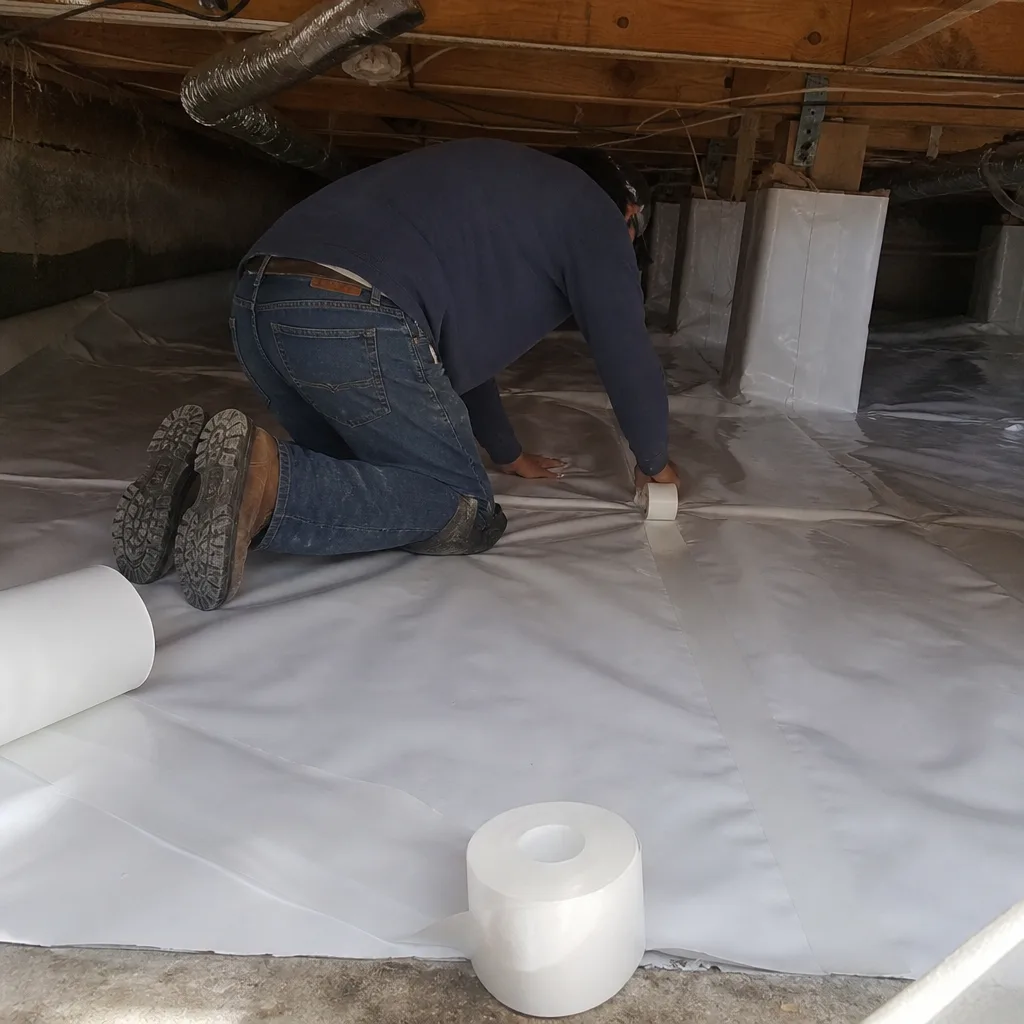
- Condensation on the underside of roof sheathing. Warm, moist interior air is bypassing the barrier and hitting cold plywood. In Pomona’s dry climate, this shows up in December and January when the temperature differential is sharpest, not during summer heat.
- Mold spotting on kraft paper facing or drywall. The barrier has lost continuity at a seam or penetration, letting relative humidity climb above 70% in the cavity. We find this most often behind bathroom ceilings where vent ducts weren’t properly sealed to the poly.
- Insulation batts that feel damp or clumped. Rockwool is hydrophobic, it won’t hold water like fiberglass, but a failed barrier lets airborne moisture condense on the cavity surfaces and wick into contact. The batt weight increases, compresses, and loses its labeled R-value.
- Dust streaking on ceiling drywall around recessed cans. This is the bypass signature, conditioned air is escaping through the light fixture because the vapor barrier and air seal were never detailed around it. The dust is your insulation migrating with the airflow.
- Musty odor in crawl spaces during Santa Ana wind events. Negative pressure pulls soil gas and crawl space air upward through gaps in the barrier. Rockwool itself is inorganic and won’t support mold, but the wood framing and paper-faced drywall around it will.
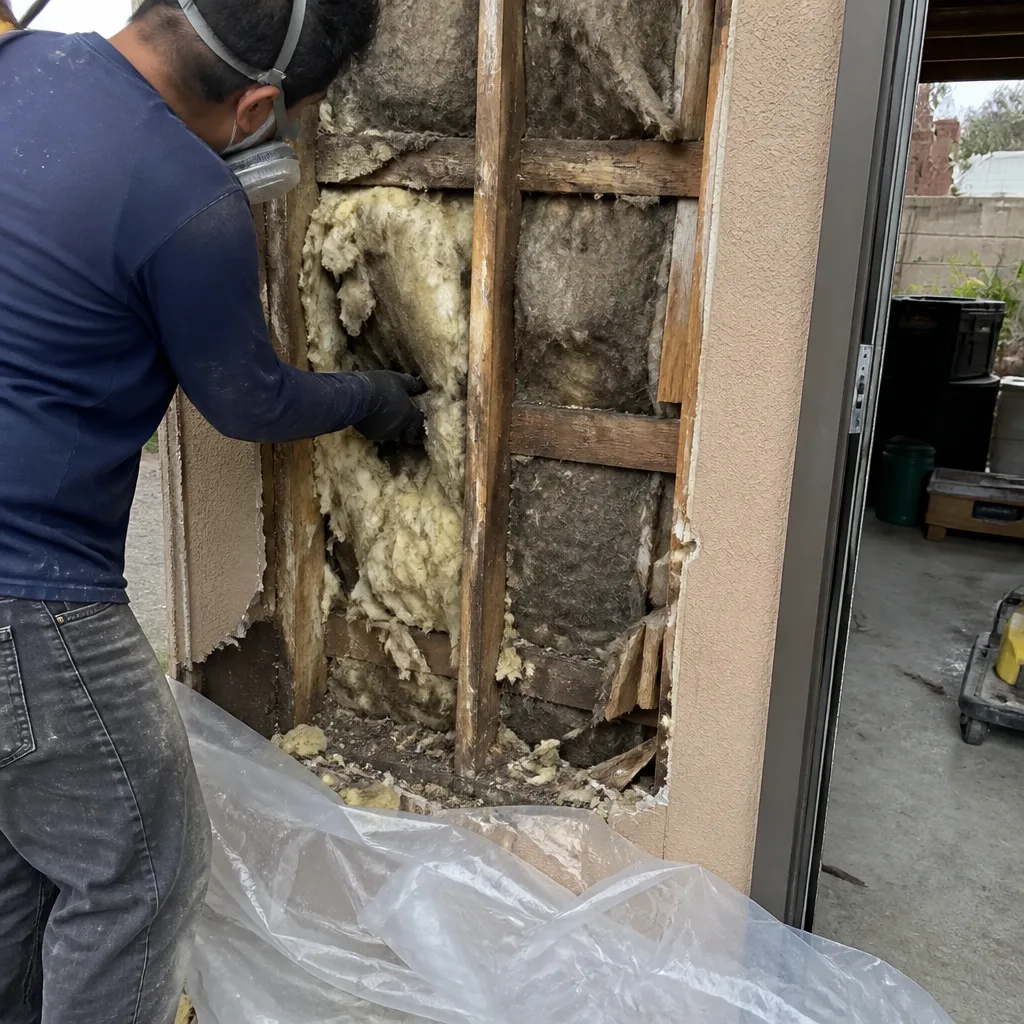 Before
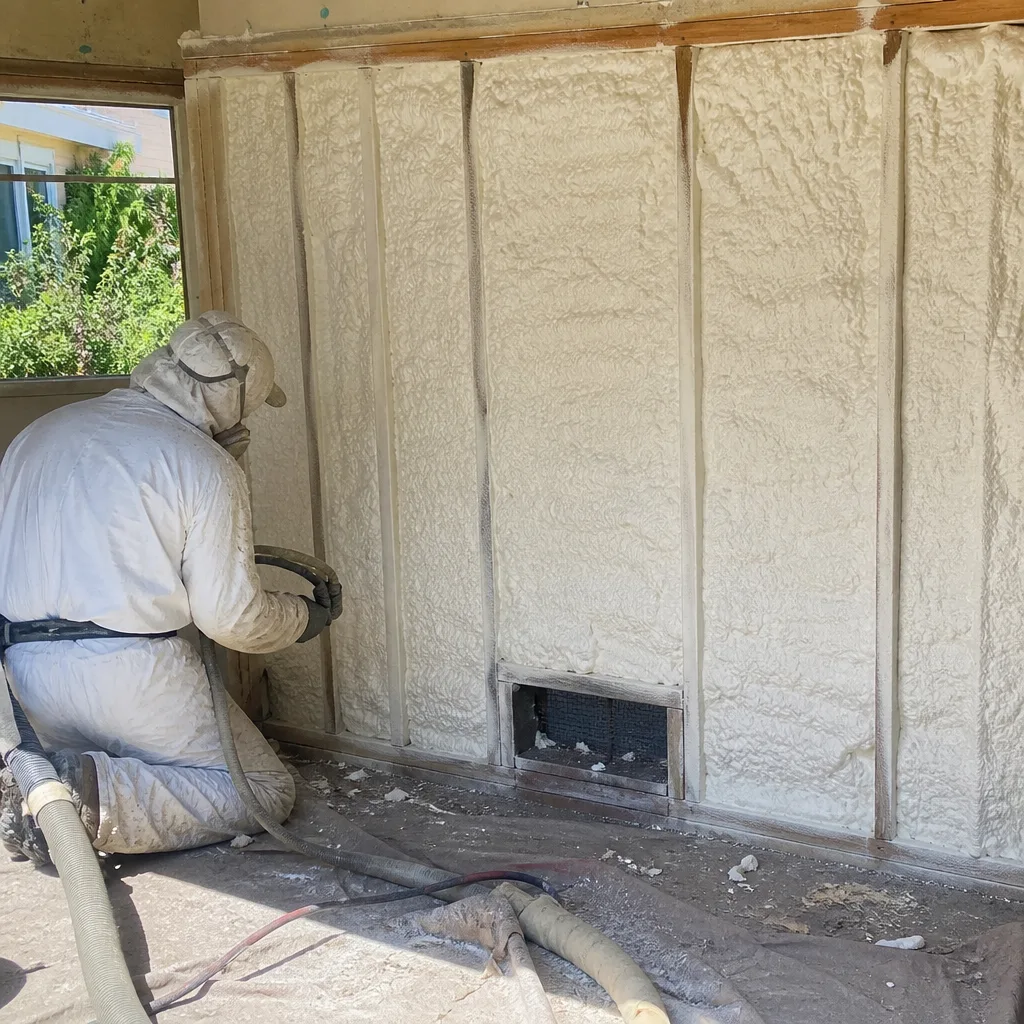 After
AfterReplacement Cost & What’s Included
For a typical 1,200-square-foot Pomona attic, complete vapor barrier replacement with Rockwool batt reinstall or supplement runs $2,200-$3,100. Crawl spaces run higher, $2,800-$3,800, because access is slower and we’re working around plumbing and ductwork. The range depends on three factors: how much existing material needs removal, whether we can reuse the current Rockwool batts (often yes, if they’re dry and intact), and how many penetrations need individual sealing, can lights, top plates, chimney chases, electrical runs.
Every job includes the membrane, pressure-sensitive seam tape, acoustical sealant at rigid boundaries, and mechanical fastening per Title 24. Under Haven Standard Clause 1, you get a written price before any work starts, a written scope describing each air-sealing target, and a written warranty. We also run a blower-door test, a pressurization reading that shows, in one number, how much air your building envelope was losing before and after, so the final R-value on paper matches what the house actually performs. The 365-Day Done Right Promise covers all completed work.
DIY or Call Us?
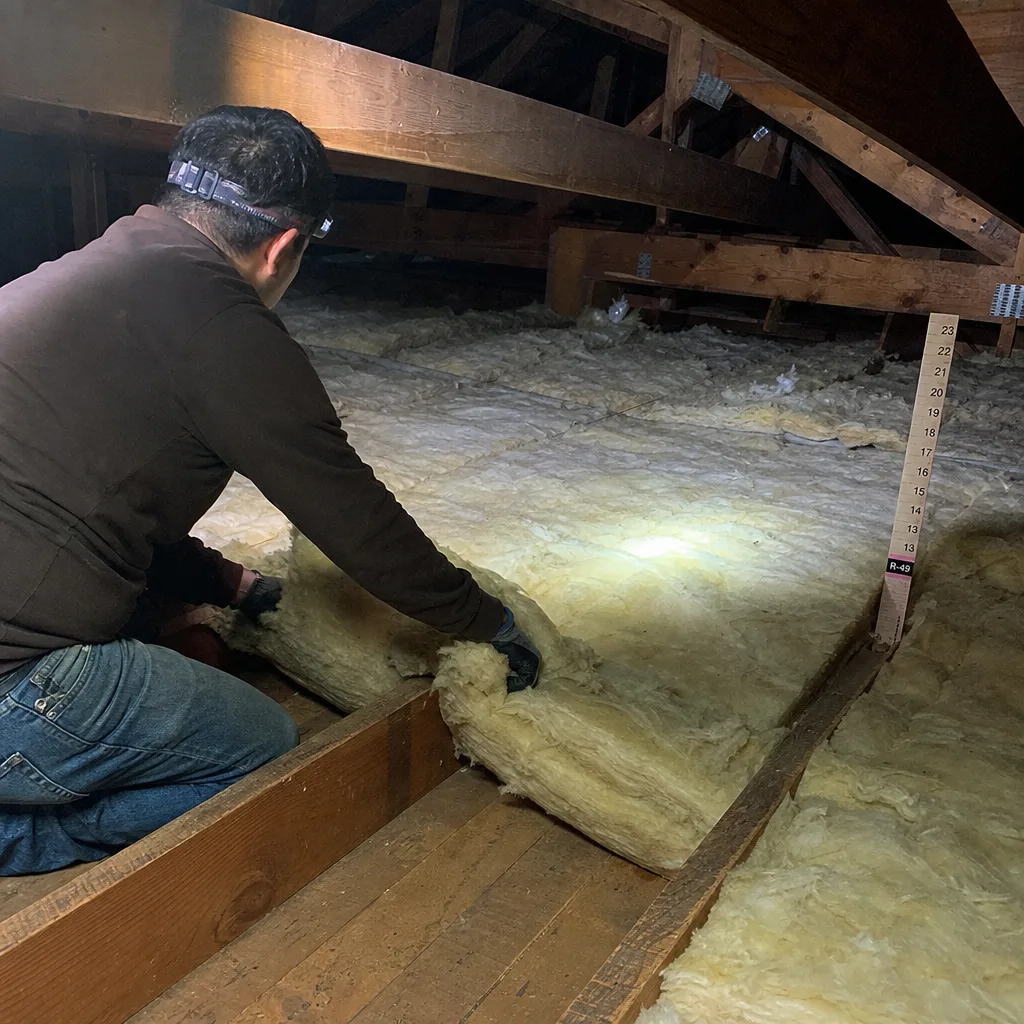
There’s a safe middle ground here. A homeowner can pull back insulation at the attic hatch and photograph the barrier condition, check for obvious tears at light fixtures, and verify whether bathroom vents terminate outside (not into the attic, which we see constantly in Pomona’s 1960s subdivisions). What you cannot safely do is work in a 140-degree attic without hydration and ventilation protocols, or handle old poly that may contain asbestos if the home predates 1980.
Where DIY goes wrong is the detailing. Vapor barrier is only as good as its seams, and sealing around irregular penetrations with tape alone fails within a season. We use a combination of sealant, tape, and rigid blocking that takes training to execute. Rockwool batts are also denser than fiberglass, 4.0 lbs per cubic foot versus 0.5, and compressing them during reinstall costs you performance. If you’re unsure, call (562) 242-7569. Estimates are free, and we’ll show you exactly what we found with a photo record you keep.
FAQs
A properly installed 6-mil or thicker polyethylene vapor barrier should last 20-25 years in Pomona’s climate, though crawl space applications see more abrasion and may need inspection at 15 years. The limiting factor is usually mechanical damage during other trades’ work, not material degradation. Call (562) 242-7569 if you’re near that age and want us to assess condition, estimates are free.
Spot repairs work for isolated tears smaller than a square foot, but degraded poly that’s brittle or widespread failing at seams needs full replacement. Patching over old material creates lap joints that trap moisture and telegraph through new insulation. We evaluate this on every job and tell you straight whether repair is worth the labor.
Most Pomona attic vapor barrier replacements take one day for crews of two, crawl spaces run a day and a half. We won’t quote time without seeing access constraints, low-clearance crawl spaces or attics with HVAC equipment in the way add hours we account for in the written scope, not as surprises.
Yes. We carry cross-laminated polyethylene, reinforced 10-mil crawl space membrane, and pressure-sensitive seam tape rated for the temperature swings Pomona attics see. Rockwool batts themselves are ordered to spec, but the air-sealing layer, the part that actually determines whether your insulation works, is on every truck. Same-day starts are standard when materials are in stock.
Topside Attic Insulation Pomona is an independent service provider, not affiliated with Rockwool. We also stock and install vapor barrier materials compatible with Reflectix and other major insulation brands.
Ready to get it documented? Call (562) 242-7569 for a free estimate. We’ll run the blower-door test, show you the numbers, and give you a written price before any work starts. Seal the leaks first. The insulation is just the last layer of the answer.
Written by Wes Okafor, Owner, Topside Attic Insulation Pomona at Topside Attic Insulation Pomona, serving Pomona and nearby areas.