
Rockwool Spray Foam Insulation in Pomona: What to Know First
We provide independent Rockwool spray foam insulation in Pomona, typically completing most jobs in one to two days with a written price delivered before any work starts. Most Rockwool-to-spray-foam retrofits in the Pomona Valley run between $3,200 and $7,800 depending on cavity depth, accessibility, and whether we’re treating a partial envelope or the full building shell. This page is for homeowners who’ve found Rockwool batts or boards underperforming in their walls, attic, or rim joists and want to understand what replacing or supplementing with spray foam actually involves. Call (562) 242-7569 for a free estimate with a written scope.
How Rockwool Products Fail - and How We Fix Them
- Comfortbatt thermal drift in exterior walls. The semi-rigid batts settle or compress around wiring runs and outlet boxes, creating convection loops that move heat right past the labeled R-value. In Pomona’s inland climate, where summer daily swings hit 30°F, that drift shows up as hot spots on thermal imaging. We pull the compromised batts, dense-pack the cavities with open-cell spray foam - which adheres to framing and seals every electrical penetration - and run a blower-door test to confirm the wall assembly actually performs.
- Comfortboard 80 moisture accumulation at rim joists. The rigid boards don’t fail on their own, but they can’t air-seal the joint between sill plate and foundation. In older Pomona homes near Ganesha Park, we’ve found rim joists with mold staining behind Comfortboard where humid crawl-space air condensed against the cold perimeter. Our fix: remove the boards, treat the wood with antimicrobial if needed, then apply closed-cell spray foam directly to the rim joist - it seals, insulates, and manages moisture in one pass.
- Safe’n’Sound compression in ceiling assemblies. Designed for interior soundproofing, not thermal performance, this line gets misapplied in attic floors where homeowners stack it to R-30 depth. It compresses under its own weight where joists aren’t perfectly flat, and it does nothing for air leakage through top plates. We remove the misapplied material, air-seal every top plate and penetration with targeted foam, then install the correct open-cell or blown insulation for the thermal boundary.
- Rockwool cavity fill leaving gaps at studs. Unlike fiberglass, Rockwool batts don’t spring back if they’re cut too narrow. Over time, shrinkage at the edges creates thermal bypass channels - especially in Pomona’s 1950s-1970s tract homes with irregular stud spacing. We map the gaps with thermal imaging, then use slow-rise open-cell foam to fill and bond to both the existing Rockwool and the framing, eliminating the bypass without full removal.
- AFB evo batt degradation in garage ceiling applications. The formaldehyde-free binder breaks down faster than spec’d when exposed to automotive exhaust and temperature cycling. We’ve replaced AFB evo in several Pomona garage ceilings where the homeowner originally wanted both sound dampening and thermal separation from living space above. Our replacement is closed-cell spray foam - it handles the temperature swing, provides the air barrier the garage never had, and doesn’t degrade from hydrocarbon exposure.
Our Rockwool Spray Foam Insulation Process
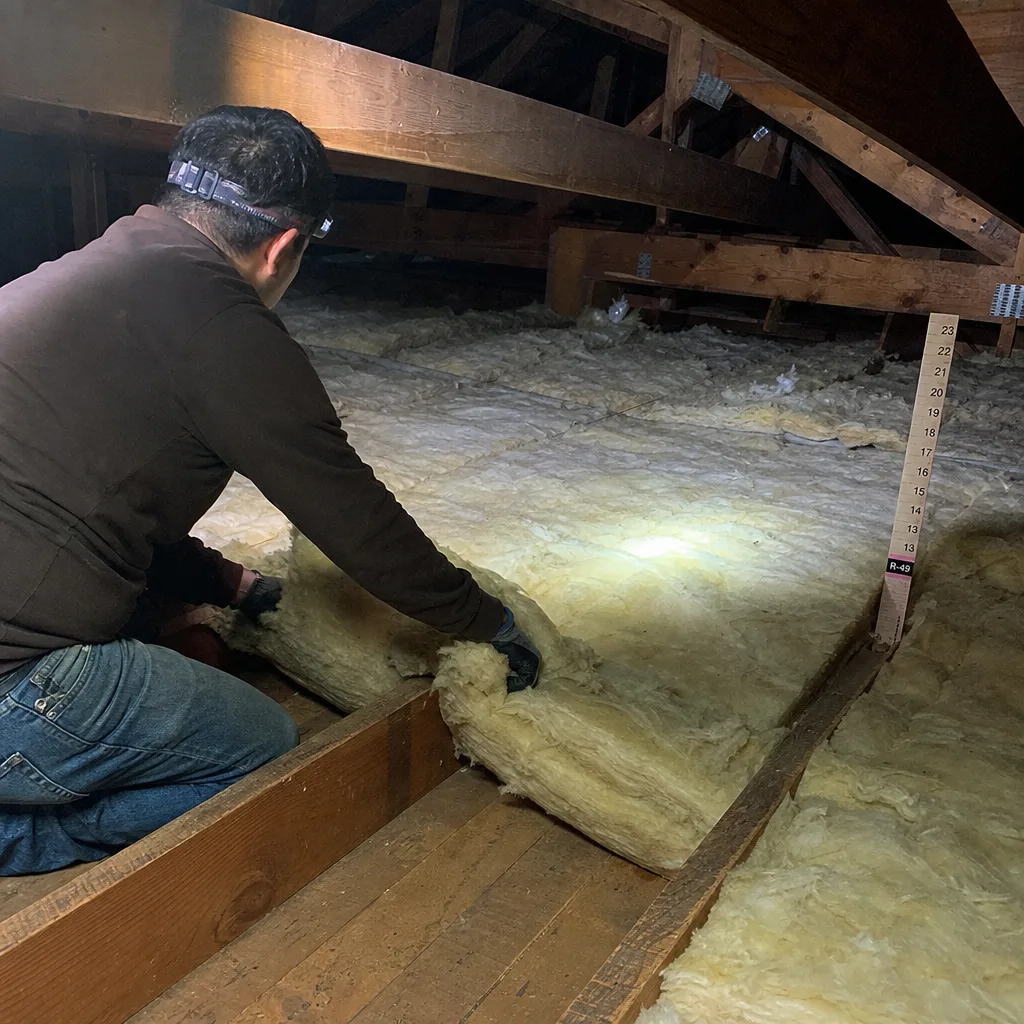
- 1
Call and scheduling. A live person answers, or you text. We book a diagnostic visit with a named technician; you get a text when they’re en route.
- 2
On-site assessment and blower-door test. We pressurize the house to measure baseline air leakage in CFM50 - the number that tells us how much conditioned air escapes through the envelope before we touch anything. We photograph every Rockwool installation we find, noting series, depth, and visible defects.
- 3
Written scope and price. You get a flat price, a written description of what we’re removing and what we’re installing, and the warranty terms. No work starts without your signature on that document - Haven Standard Clause 1.
- 4
Air sealing first, then insulation. Seal the leaks first. The insulation is just the last layer of the answer. We foam every top plate, can light, and penetration before any spray foam goes in.
- 5
Installation and real-time verification. The crew applies specified open-cell or closed-cell foam to proper depth, monitored with thermal imaging during cure. On applicable jobs, we run a second blower-door test and publish the before-and-after numbers.
- 6
Documentation and closeout. You receive a Documented Photo Record, the blower-door readings if measured, and the written warranty. The 365-Day Done Right Promise is active from that moment.
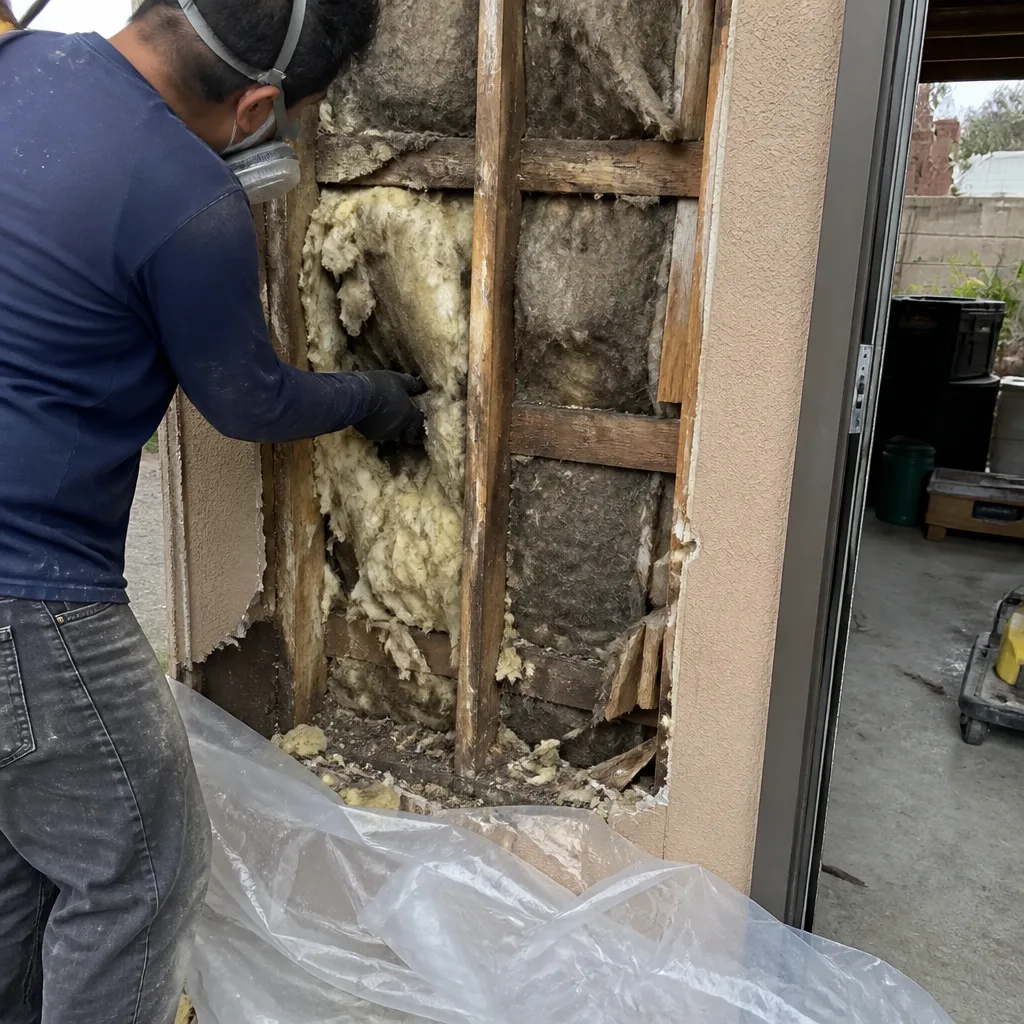 Before
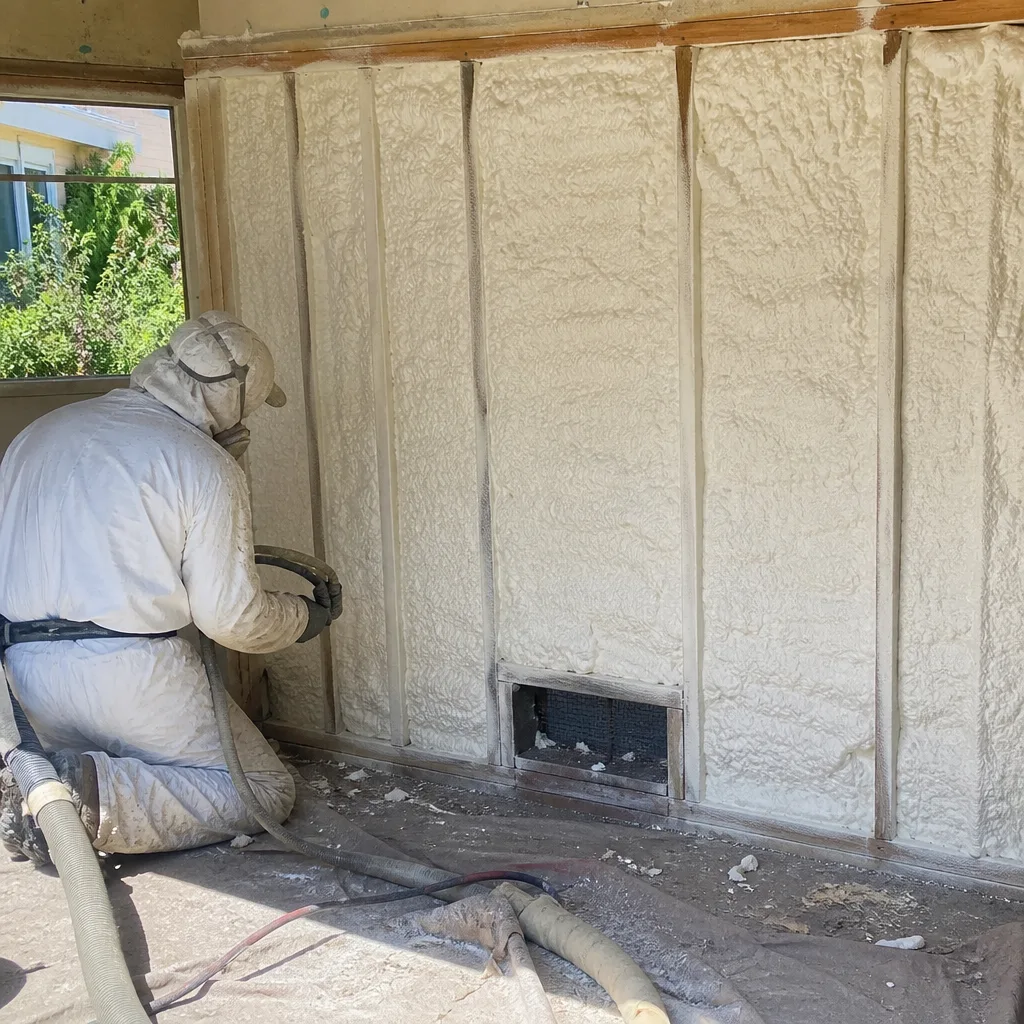 After
AfterWhat Rockwool Spray Foam Insulation Costs in Pomona
| Scenario | Typical Range | What Moves the Price |
|---|---|---|
| Partial retrofit: removing settled Comfortbatt from one wall plane, open-cell foam replacement | $3,200 - $4,800 | Wall height, electrical density, need for interior access |
| Full attic floor: removing Rockwool, air sealing, open-cell spray foam to roof deck | $5,500 - $7,800 | Attic square footage, HVAC duct routing, existing ventilation strategy |
| Rim joist only: removing Comfortboard, treating moisture damage, closed-cell foam | $2,400 - $3,600 | Crawl space clearance, extent of wood damage, need for vapor barrier |
| Garage ceiling: removing AFB evo, closed-cell foam for thermal + air barrier | $3,800 - $5,200 | Garage size, firewall requirements, ceiling finish repair |
These are real ranges from jobs we’ve completed in Pomona and the surrounding Pomona Valley - not teaser prices. Factors that push toward the high end: homes with active rodent issues requiring cleaning and proofing before foam, multiple small cavities rather than open planes, and any need to coordinate with other trades mid-project. We also provide a Free Second Opinion on any written estimate you’ve already received; bring us the scope and we’ll read it with you. Call (562) 242-7569 for your exact written price - estimates are free.
Why Pomona Homeowners Call Topside Attic Insulation Pomona for Rockwool Work
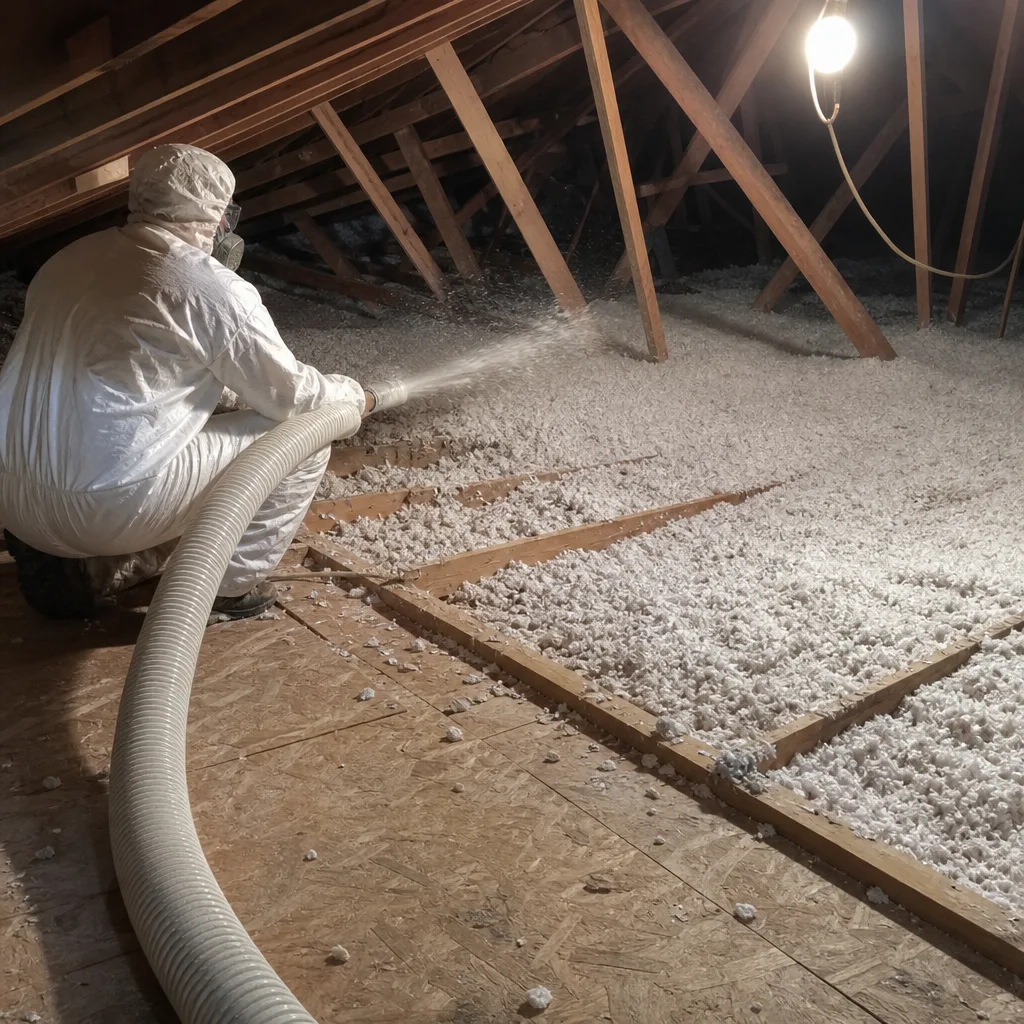
We’ve been independently owned and operated under The Haven Standard since 2016, and we’ve logged more than 9,000 homes with written prices before work started and documented records when the crew left. Wes Okafor, who picked up his air-sealing fundamentals at Richard J. Daley College back when building science was still called weatherization, has spent the better part of two decades working across the Pomona Valley - including that stretch of older ranch homes near Ganesha Park where the bypasses around top plates and recessed cans kept his blower-door busy for full seasons.
Our technicians are background-checked and uniformed, and they know Rockwool’s product lines well enough to spot a misapplication without guessing. We’re not locked to any single brand - we also work with Reflectix and other manufacturers - so our recommendation is driven by what your assembly actually needs, not by a supplier contract. Every applicable job gets before-and-after blower-door numbers. The 365-Day Done Right Promise is in writing before anyone lifts a tool. And when you call (562) 242-7569, a live person answers, 24/7.
FAQs
Rockwool’s product warranty covers manufacturing defects in the original material, not installation or subsequent modification by a third party. As an independent Rockwool service provider with no manufacturer authorization, our work doesn’t interact with Rockwool’s warranty chain because we’re installing a different material entirely. If your Rockwool was installed by a certified contractor with a workmanship warranty, that coverage ends when we remove the product. Our 365-Day Done Right Promise covers the spray foam installation we perform. Call (562) 242-7569 and we’ll review whatever documentation you have.
Open-cell spray foam runs about R-3.6 to R-3.8 per inch, closed-cell about R-6 to R-7 per inch - so yes, we can match or exceed the labeled R-value of any Rockwool batt or board, but the more important number is the assembly’s actual performance after air sealing. A wall with R-13 Rockwool and continuous convection might perform like R-8; the same wall with R-13 open-cell foam and sealed penetrations performs like R-13. We publish the blower-door numbers so you can verify the difference. Call for a free estimate.
Usually not, and often it’s worse. Rockwool batts trapped between spray foam and drywall create a double vapor barrier in our inland climate, risking moisture accumulation at the foam-to-batt interface. We price removal and disposal into every scope where the existing Rockwool is compromised or misapplied. The one exception: well-installed Comfortboard on exterior sheathing can stay if we’re supplementing from the interior, but we verify with moisture-meter readings first. Call (562) 242-7569 for a written scope on your specific assembly.
Most Rockwool spray foam insulation projects in Pomona schedule within 5 to 10 business days of estimate approval. Rush scheduling is sometimes available for homes with active moisture issues or failed inspections, but we don’t manufacture urgency - we book the next available slot that matches your scope and our crew capacity. Call (562) 242-7569 to check current availability; estimates are free and come with a written price.
We don’t use Rockwool accessories because we’re not installing Rockwool products - we’re replacing them with spray foam from manufacturers like Icynene, Demilec, and Johns Manville. Our foam rigs, nozzles, and application equipment are industry-standard professional grade, not OEM-matched to any insulation brand. If you’re keeping Rockwool in one part of the envelope and adding foam in another, we coordinate the transition detail but don’t source Rockwool-branded components for non-Rockwool materials. Call for specifics on your mixed-assembly job.
Written by Wes Okafor, Owner, Topside Attic Insulation Pomona at Topside Attic Insulation Pomona, serving Pomona and nearby areas.