
Johns Manville Crawl Space Encapsulation: The Pomona Owner’s Guide
We stock and install Johns Manville-compatible crawl space encapsulation systems in Pomona, with most complete jobs running $3,800-$7,200 depending on square footage and whether the foundation needs full vapor-barrier coverage or spot repair. Same-day service is available when we have your liner spec in stock, which we do for the common JM 6-mil and 10-mil reinforced polyethylene grades. Most Pomona homeowners discover their encapsulation has failed when they notice a sharp musty smell returning after months of absence, or when their dehumidifier starts running continuously without dropping the relative humidity below 60%.
Which Johns Manville Models This Applies To
Johns Manville does not sell crawl space encapsulation as a branded “system” with model numbers like a mechanical unit. Instead, they manufacture the liner material itself, typically sold through distributors in rolls marked with a lot number and mil thickness. In Pomona, we most commonly encounter JM 6-mil clear polyethylene, JM 10-mil reinforced scrim liner (the woven fiber layer prevents tearing during installation over rough soil), and the JM 12-mil white vapor barrier used when homeowners want a brighter, inspectable crawl space floor.
To identify what you have, check the printed edge tape or roll tag for “Johns Manville” and the mil rating. If the liner is already installed, look for the woven grid pattern in reinforced grades, or measure thickness with a micrometer at a cut edge. The critical compatibility gotcha in Pomona’s older neighborhoods near Ganesha Park: some 1970s homes have crawl spaces with irregular pier spacing that leaves gaps when using standard 12-foot roll widths. We stock 16-foot and 20-foot JM-compatible rolls for these foundations, which many contractors do not carry. We are an independent service provider, not affiliated with Johns Manville.
OEM Johns Manville liner versus quality aftermarket: for encapsulation, the material spec matters more than the brand stamp. We source liner that meets or exceeds JM’s ASTM E1745 Class A vapor-retarder rating, with the same 0.1-perm or lower water-vapor transmission. The difference we have seen in the field is seam tape adhesion. JM’s proprietary tape bonds aggressively to their own liner formulation; some aftermarket tapes lift in Pomona’s summer heat when soil temperatures under a crawl space exceed 85°F. We stock both JM tape and a California-tested acrylic adhesive rated for 120°F continuous exposure.
Signs Your Johns Manville Crawl Space Encapsulation Is Failing
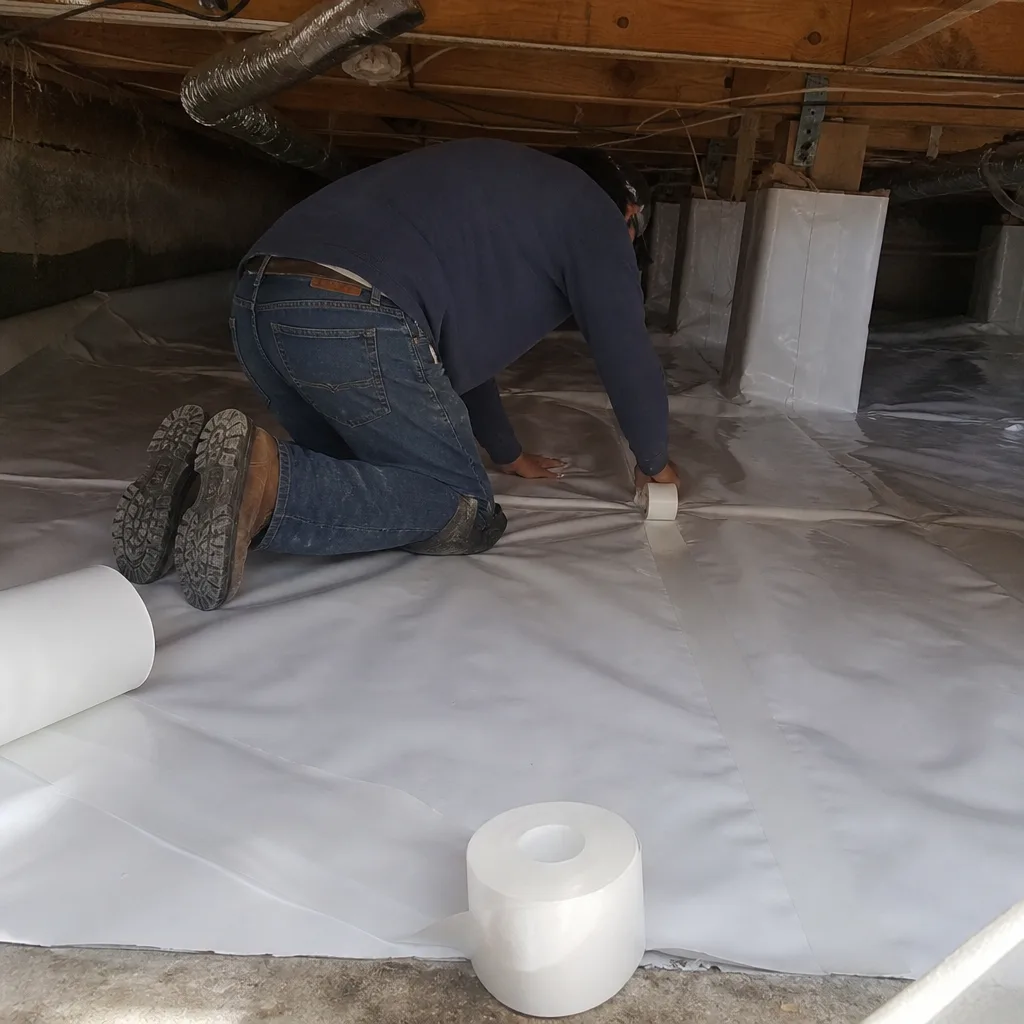
- Musty odor returning. The vapor barrier’s job is to block soil moisture from evaporating into the crawl space air. When seams split or the liner tears at pier pads, humidity rises above 60% and mold spores activate. In Pomona, this happens fastest in spring when the San Gabriel Mountains snowmelt raises the water table in low-lying areas near the 71 Freeway.
- Dehumidifier running nonstop. A properly sealed crawl space with a functioning vapor barrier should hold 45-55% relative humidity with minimal dehumidifier cycling. If your unit runs continuously and the humidity display never drops, the barrier has likely failed at seams or perimeter attachment points.
- Visible condensation on ductwork or floor joists. This indicates the dew point is being reached inside the crawl space, meaning moisture is entering faster than your mechanical system can remove it. The liner may be intact but improperly lapped at seams, or the perimeter may have pulled away from the foundation wall.
- Liner sagging or pooling water on the surface. A properly installed barrier drapes slightly to direct any incidental water to a sump or drain. Pooled water sitting flat on the liner means the soil underneath is saturated and the liner is no longer shedding moisture to the perimeter. This is common in Pomona’s clay-heavy soils near Phillips Ranch where drainage is slow.
- Increased energy bills without thermostat changes. Wet crawl space air is harder to condition. When your encapsulation fails, the HVAC ductwork in the crawl space absorbs latent heat from humid air, forcing longer run times. We have measured this with blower-door and duct-blaster testing: a failed encapsulation can add 15-20% to cooling load in August.
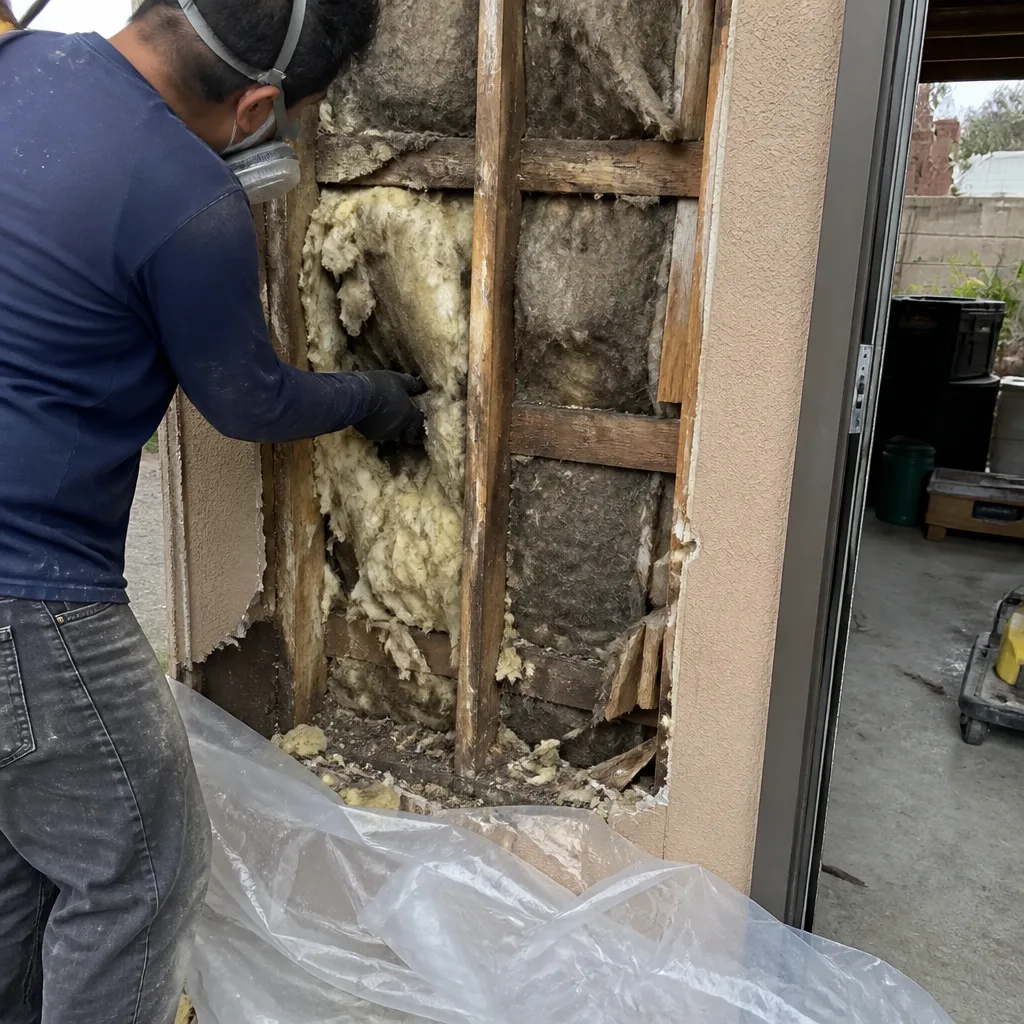 Before
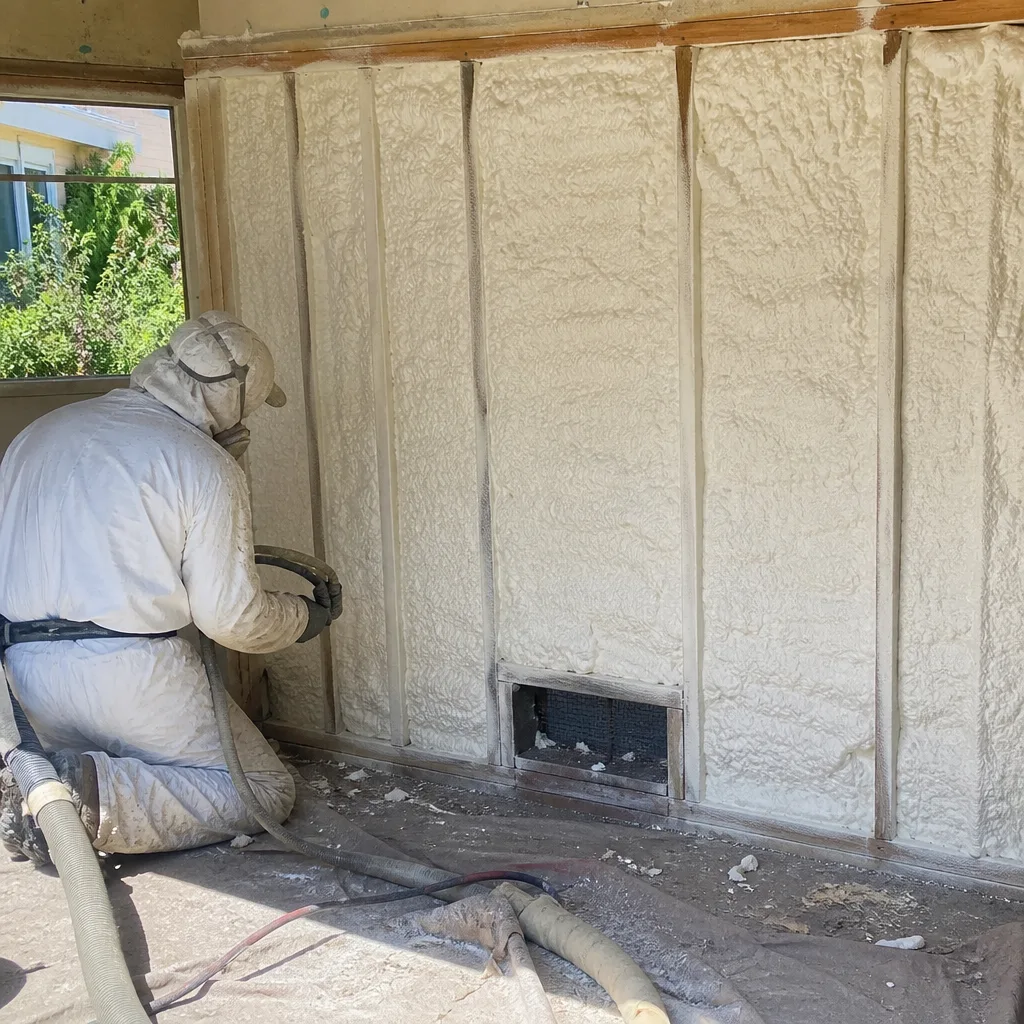 After
AfterReplacement Cost & What’s Included
For a typical 1,200-square-foot crawl space in Pomona, complete Johns Manville-compatible encapsulation runs $3,800-$5,400. Larger footprints or homes requiring full perimeter wall sealing (not just floor coverage) push toward $6,500-$7,200. What drives the range: soil condition (leveling and grading adds labor), pier count (each pier needs a custom-cut pad and sealed seam), and whether the existing liner must be removed and disposed of.
Our price includes JM-compatible liner material, seam tape, mechanical fasteners at the perimeter, pier pads, and installation labor. We also run a blower-door test when the crawl space connects to conditioned space through bypasses, so we can document whether air sealing is needed before the new liner goes down. Every job closes with a Documented Photo Record and, where applicable, before-and-after blower-door numbers. The 365-Day Done Right Promise applies to all encapsulation work.
We also stock Reflectix and other brands for homeowners with mixed-material installations.
DIY or Call Us?
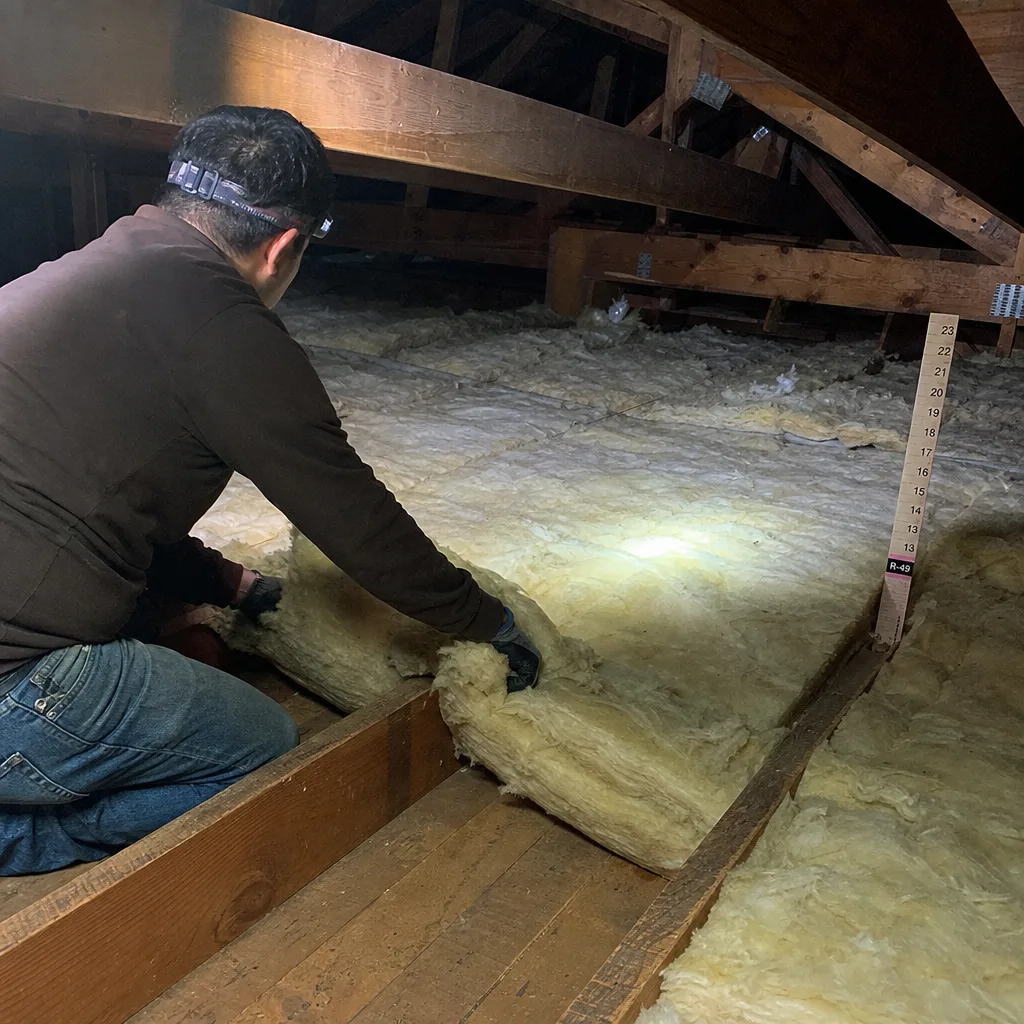
What you can safely check: walk your crawl space with a flashlight and note where the liner is torn, where seams have separated, and whether the perimeter is still attached to the foundation wall. Measure the square footage and count the piers. This information is useful when you call.
Where DIY goes wrong: crawl space encapsulation is not technically dangerous like electrical or gas work, but it is physically brutal and technically unforgiving. The liner must be cut around every pier without gaps, seams must overlap 12 inches minimum and be taped with pressure-sensitive adhesive rated for damp conditions, and the perimeter must be mechanically fastened to withstand soil movement. In Pomona, we regularly see DIY jobs where the homeowner used hardware-store painter’s tape that failed in 90 days, or left a 2-inch gap at the wall that negated the entire installation. The material cost for a 1,200-square-foot space is $800-$1,200; the redo after a failed DIY is the full installed price plus removal.
Seal the leaks first. The insulation is just the last layer of the answer. If your crawl space connects to your attic or living space through bypasses, we will find them with a blower-door test before any liner goes down. Call (562) 242-7569 for a free estimate with a written price before any work starts.
FAQs
A properly installed JM-compatible liner lasts 15-20 years in Pomona’s climate, though the seam tape may need attention at 10-12 years due to thermal cycling. The liner itself degrades from UV exposure if your crawl space has vents or access points that admit daylight. Call (562) 242-7569 for an exact quote on replacement or re-taping - estimates are free.
Spot repair is viable for isolated tears under 6 inches using JM-compatible patch tape and a clean, dry surface. Multiple tears, seam failures across more than 20% of the area, or liner that has become brittle and cracked requires full replacement. We assess this during our free estimate and will show you the damage in our Documented Photo Record before recommending either approach. Call (562) 242-7569.
Most residential crawl spaces in Pomona take one to two days: half a day for removal and surface prep, half a day to a full day for installation depending on pier count and whether we are sealing perimeter walls. We do not rush the seam-tape cure time, which is 24 hours minimum before heavy traffic. Call (562) 242-7569 to schedule.
We stock JM-compatible 6-mil, 10-mil reinforced, and 12-mil white liner in 12-foot, 16-foot, and 20-foot widths on our Pomona truck, along with the correct seam tape and mechanical fasteners. Uncommon widths or specialty formulations may require a two-day order. We will confirm stock when you call (562) 242-7569 for your free estimate.
Written by Wes Okafor, Owner, Topside Attic Insulation Pomona at Topside Attic Insulation Pomona, serving Pomona and nearby areas.