
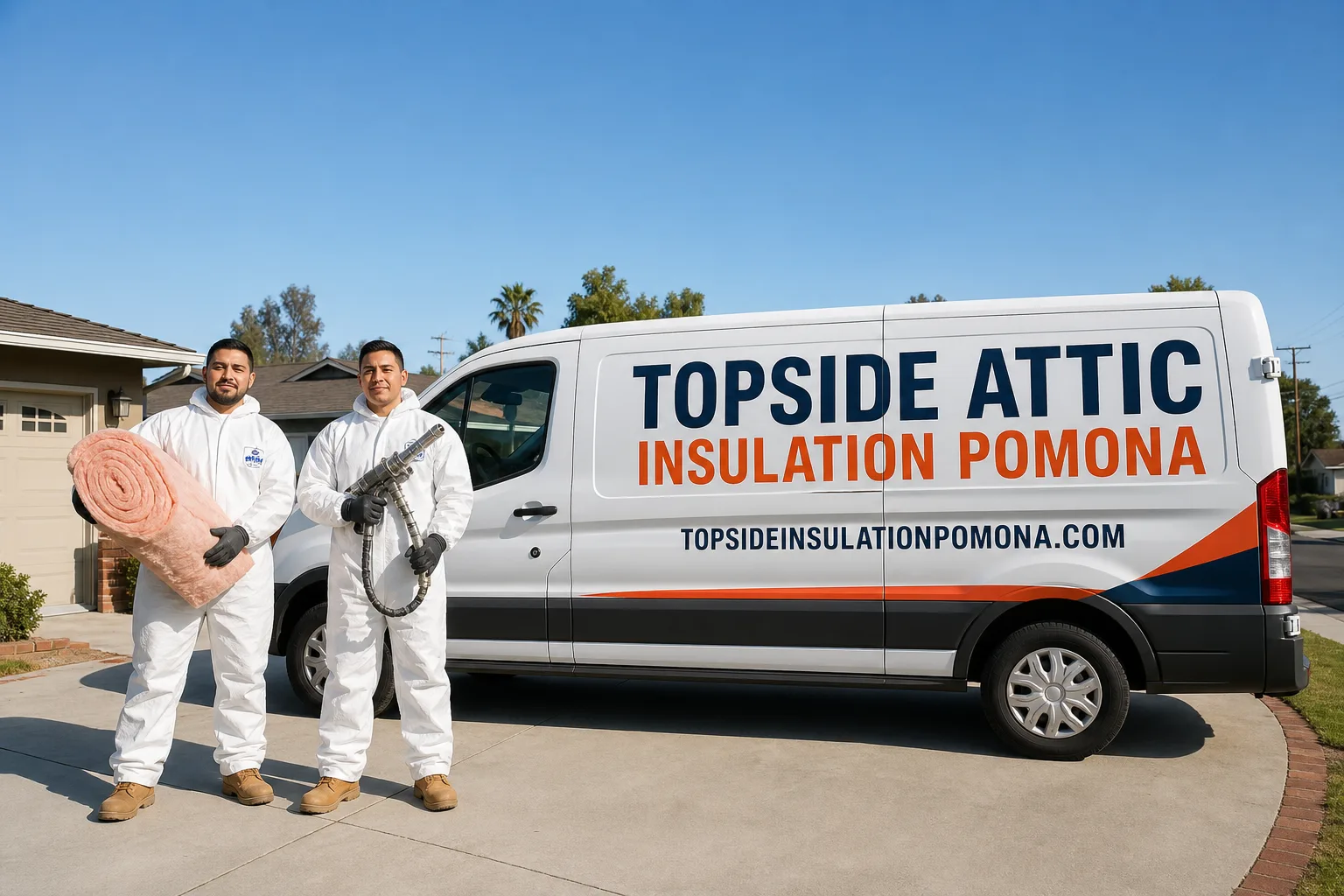
How Much Does Wall Insulation Cost in Pomona?
Wall insulation in Pomona, CA typically costs between $1,800 and $6,500 for a whole-home project, depending on wall type, square footage, and whether air sealing is done first. Most single-story homes in Pomona in the 1,400-to-2,000 square foot range land between $2,200 and $4,400 when blown-in insulation is used. The figures below reflect actual 2026 pricing in the Pomona market – not a national average copy-pasted from a blog in Ohio.
Wall Insulation Cost Breakdown (2026)
Wall insulation cost in Pomona breaks down primarily by material type and installation method. Retrofit jobs – adding insulation to existing walls without opening them up – use different techniques than new construction, and the price difference is real. Here is what each approach runs in this market:
| Insulation Type / Method | Typical Cost Range (Installed) | Best For |
|---|---|---|
| Blown-in fiberglass (retrofit) | $1.80 – $2.80 per sq ft of wall area | Existing walls, minimal disruption |
| Blown-in cellulose (retrofit) | $1.60 – $2.60 per sq ft of wall area | Older Pomona homes, eco-conscious buyers |
| Fiberglass batts (open wall / new construction) | $0.60 – $1.20 per sq ft of wall area | Remodels with drywall removed |
| Mineral wool / Rockwool batts (open wall) | $1.40 – $2.20 per sq ft of wall area | Fire resistance, sound control |
| Closed-cell spray foam (open wall) | $3.50 – $6.00 per sq ft of wall area | Moisture barrier, high R-value in thin cavity |
| Open-cell spray foam (open wall) | $1.80 – $3.20 per sq ft of wall area | Sound attenuation, budget-conscious foam option |
| Air sealing (top plates, penetrations, can lights) | $400 – $900 per project | Prerequisite before any insulation goes in |
| Whole-home retrofit (typical Pomona 1,600 sq ft house) | $2,400 – $4,800 total | Complete exterior wall insulation, blow-in method |
A note on how to read these numbers: wall area is not the same as floor area. A 1,600 square foot single-story home in Pomona’s Lincoln Park or Philips Ranch neighborhoods might have 1,800 to 2,200 square feet of exterior wall surface once you account for eight-foot ceilings and the actual wall run. That distinction matters when you are comparing quotes – a contractor bidding “per linear foot” or “per square foot of floor space” is using a different unit than one bidding per square foot of wall cavity. Ask which unit the price is based on before you agree to anything.
Labor in the Pomona and San Gabriel Valley market runs roughly $60 to $95 per hour for insulation crews, and most retrofit blow-in jobs on a standard two-to-three bedroom Pomona home take four to eight crew-hours. Larger homes in Ganesha Hills or the newer developments near Cal Poly Pomona can push into two full days of labor when the wall run is longer and the attic access points for drilling are more complicated.
Materials sourced from manufacturers like Owens Corning, Johns Manville, Knauf, Rockwool, CertainTeed, Icynene, Demilec, and GreenFiber carry slightly different per-bag and per-board-foot costs, and those fluctuate with supply chains. As of early 2026, blown-in fiberglass and cellulose are running at mid-range historical prices – no unusual surcharges at the moment. There is no proprietary product lock-in here; the right material for your wall type gets specified after we look at what you actually have.
What Affects Wall Insulation Pricing in Pomona
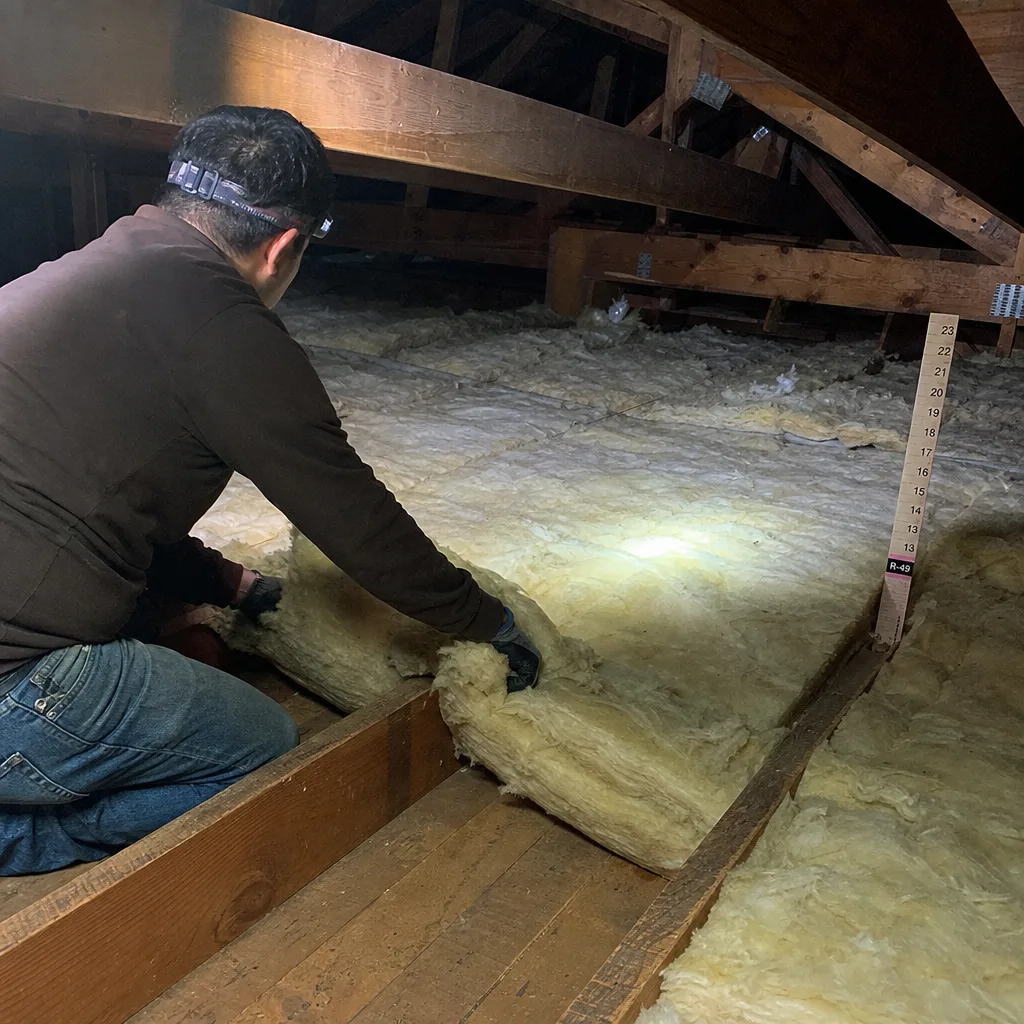
- Wall construction type and cavity depth. Most Pomona homes built before 1980 have 2×4 framing, which gives you a 3.5-inch cavity and limits you to around R-13 to R-15 with blown-in fiberglass. Homes built after the early 1990s near the Diamond Bar border often have 2×6 framing, opening up R-19 to R-21. Deeper cavities cost more material but deliver a meaningfully better result.
- Existing insulation (or lack of it). A surprising number of homes in Pomona’s older stock – particularly the tract homes around Garey Avenue built in the 1950s and 1960s – have zero wall insulation. A completely empty cavity is actually faster to fill than one with degraded, settled fiberglass batts that need to be removed first. Removal adds $0.50 to $1.20 per square foot to the total before new material goes in.
- Retrofit vs. open-wall access. Retrofit blow-in work involves drilling small holes through the exterior siding or interior drywall, filling the cavity, then patching. The patching and painting to match existing siding – especially on stucco homes, which make up a large share of the Pomona market – can add $300 to $800 to the project depending on the repair scope and who does the paint-match work.
- Air sealing requirements. In Pomona’s climate zone (California Climate Zone 10), the building code is clear that thermal insulation without air sealing leaves a significant amount of the efficiency gain on the table. We treat air sealing as a prerequisite, not an add-on – every wall insulation job includes sealing of top plates, penetrations, and any can lights before a single bag of material is blown. That process adds to the invoice upfront and saves you from calling someone back in three years because your energy bills did not move.
- Home age and stucco condition. Pomona has a high density of stucco exteriors. When stucco shows hairline cracking – common in homes that have settled near the foothill areas on the east side – drilling for retrofit blow-in requires extra care and sometimes a stucco repair step that would not be necessary on wood or vinyl siding. Factor this in if your home is showing surface wear on the exterior.
- Permit requirements. As of 2026, wall insulation in Pomona does not universally require a building permit for like-for-like retrofits, but any work that changes the wall assembly or involves structural penetrations in a permitted remodel will pull the project into permit territory. We identify this before any work starts – it is part of the written scope under Haven Standard Clause 1. Permit fees in Pomona typically run $150 to $400 for projects that do require them.
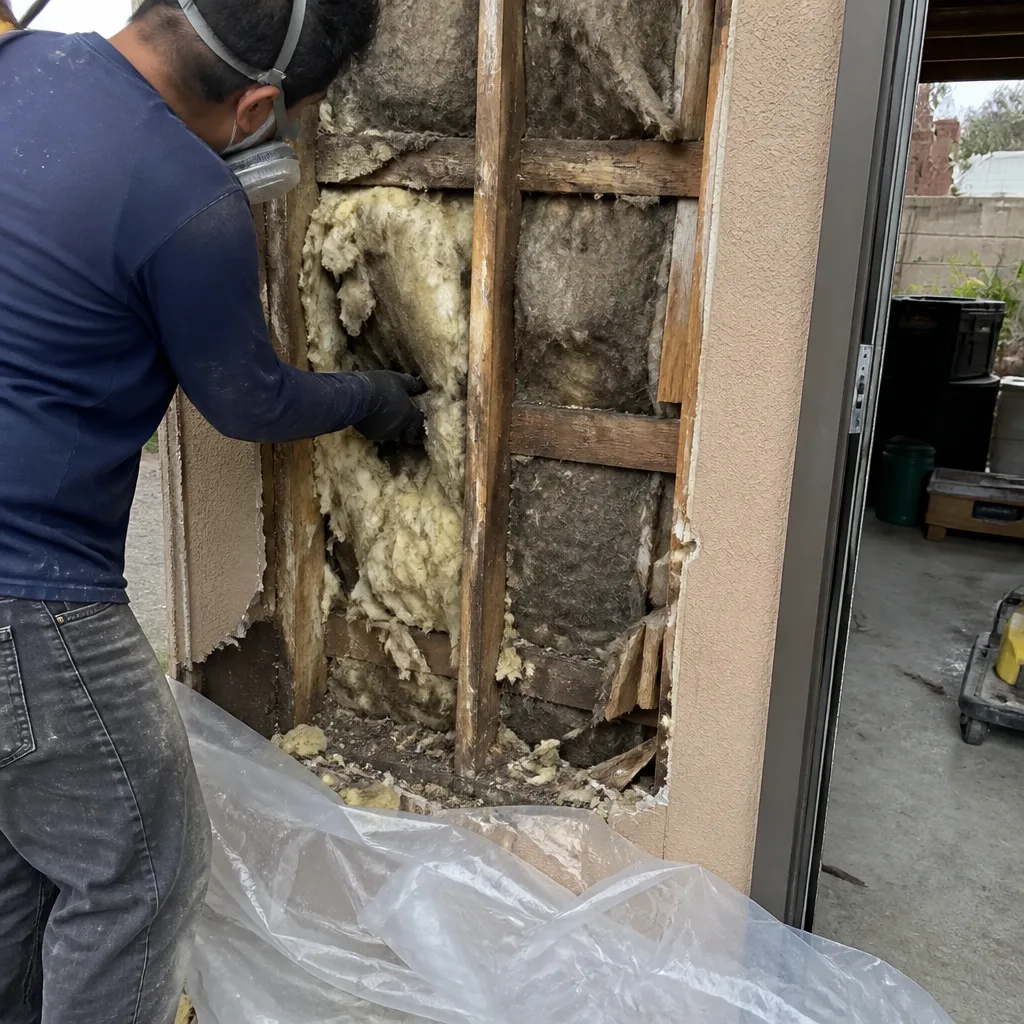 Before
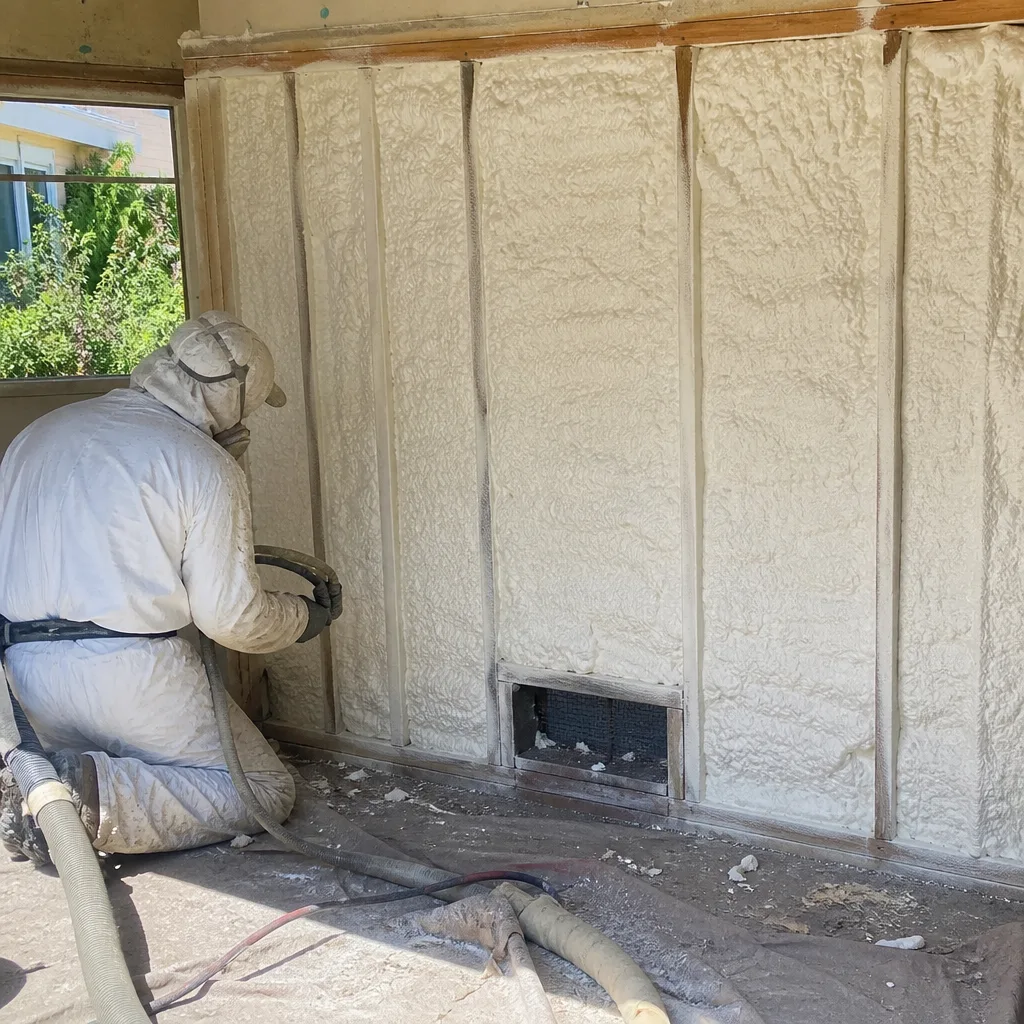 After
AfterClimate Zone 10 and Why It Matters for Your Walls
Pomona sits in California’s Climate Zone 10, which is characterized by hot, dry summers and mild winters with occasional cold snaps that catch homeowners off guard. The Pomona Valley is also subject to the Santa Ana wind pattern – warm, dry easterly winds that pull moisture out of building materials and can accelerate thermal transfer through under-insulated walls.
Title 24, California’s energy code, sets a minimum R-13 for exterior walls in Zone 10 for new construction. But minimum code and optimal performance are not the same number. A home in Phillips Ranch running R-0 walls – which we see regularly on pre-1970 construction – is losing conditioned air through wall cavities at a rate that makes the cooling load significantly higher than it needs to be. The San Gabriel Mountains to the north create a bowl effect over Pomona in summer that traps heat; that physical geography is one reason the ROI on proper wall insulation is higher here than in coastal Southern California markets.
We have run blower-door tests – pressurization readings that show, in a single figure (CFM50), how much conditioned air a home’s building envelope is losing – on Pomona homes before and after wall insulation retrofits. A typical pre-1975 home in the Palomares Hills area reads between 4,000 and 6,500 CFM50 before any work. After air sealing and wall insulation, that number drops to the 2,000 to 3,500 range on a typical job. Those before-and-after readings are documented and given to the homeowner – not held internally as a company metric.
How to Save on Wall Insulation in Pomona
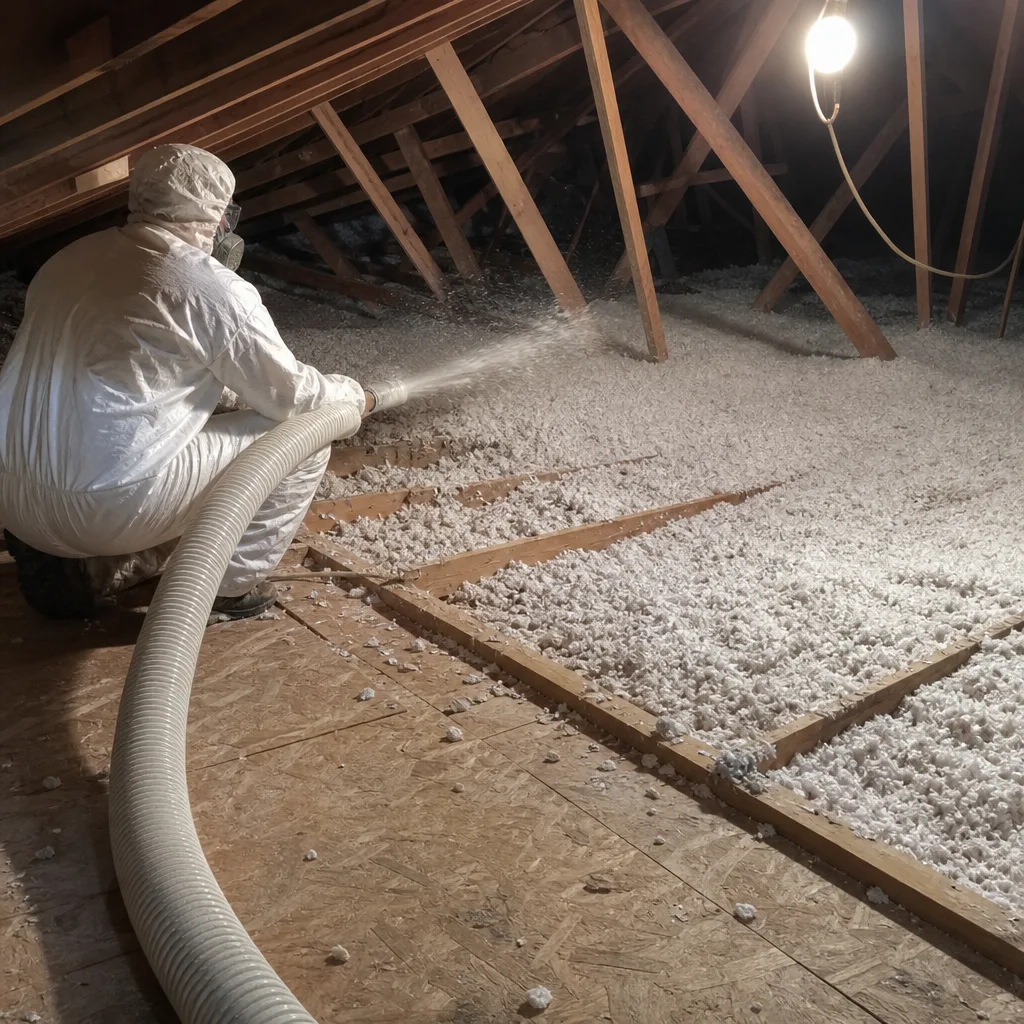
There are a few genuine ways to reduce the total cost without cutting into performance. And a few things that look like savings on the front end but cost more later.
Bundle wall insulation with attic work. If your attic insulation is also due for an upgrade – which it often is in homes where the walls have been neglected – scheduling both in one visit eliminates a second mobilization cost. Crew mobilization for an insulation job in Pomona typically runs $150 to $300; bundling saves that and reduces the total project disruption time. Our Wall Insulation in Pomona service page lays out how we sequence attic and wall work when both are needed.
Check for utility rebates before you commit. Southern California Edison (SCE) and SoCalGas both have active rebate programs in 2026 for qualifying insulation upgrades in Pomona. SCE’s residential programs have offered $0.10 to $0.20 per square foot on qualifying blown-in insulation; the exact figure changes with program enrollment caps, so check directly with SCE or ask us to pull the current schedule before your project starts. Rebates on a typical Pomona retrofit can offset $200 to $600 of the project cost.
Get a second opinion on any written estimate you already have. If another contractor has given you a written quote and you want to know if it is fair for the Pomona market, we will read it with you – no charge, no pressure. This is a standing offer, not a promotional tactic. We have seen quotes in this market that were priced correctly and some that included materials or methods the home did not need. A second set of eyes costs you nothing.
Do not skip air sealing to save money. This is the move that looks like a savings and is not. Blown-in insulation over an unsealed wall cavity still allows air to move through gaps at top plates and around penetrations. The thermal resistance of the insulation is essentially bypassed by convection when those gaps are open. You will spend the money on energy costs over the next several years that you saved on air sealing in year one. We will not skip this step – it is in our written scope on every wall insulation job.
Request a free written estimate with scope. Under Haven Standard Clause 1, every estimate includes a flat price, a written scope, and a written warranty before any work begins. There is no “call for a quote” process here – the price is on paper before a single tool comes off the truck. Call (562) 242-7569 to schedule a free on-site assessment and get your written estimate for your Pomona home.
What the Installation Process Actually Looks Like
For homeowners who want to know what they are agreeing to before anyone shows up, here is the actual sequence for a retrofit wall insulation job on a typical Pomona single-family home.
Step 1: Written scope and price, delivered before the crew arrives. You get a flat-price document with line items, the material specs (brand, R-value, method), and the warranty terms. Nothing starts without your signature on this document.
Step 2: Air sealing of top plates, penetrations, and can lights. Before any insulation material goes in, the crew identifies and seals every air pathway in the wall assembly. This is the part most contractors skip or treat as optional. It is not optional here.
Step 3: Drilling and blowing. For retrofit work, small holes are drilled – typically two to three inches in diameter – at regular intervals through the exterior siding or interior drywall, depending on access and preference. Material is blown into each cavity until it is filled to the correct density, then the holes are plugged.
Step 4: Patching and cleanup. Holes are patched, the work area is cleaned, and the crew does a visual check on every access point. If paint-matching is in scope, that happens before the crew leaves.
Step 5: Blower-door measurement (on applicable jobs) and Documented Photo Record. On applicable projects, a before-and-after blower-door test – that pressurization reading in CFM50 – is conducted and the numbers are documented in writing. A photo record of the completed work is included on every job and delivered to you, not archived somewhere you will never see it.
Comparing Insulation Materials for Pomona Walls
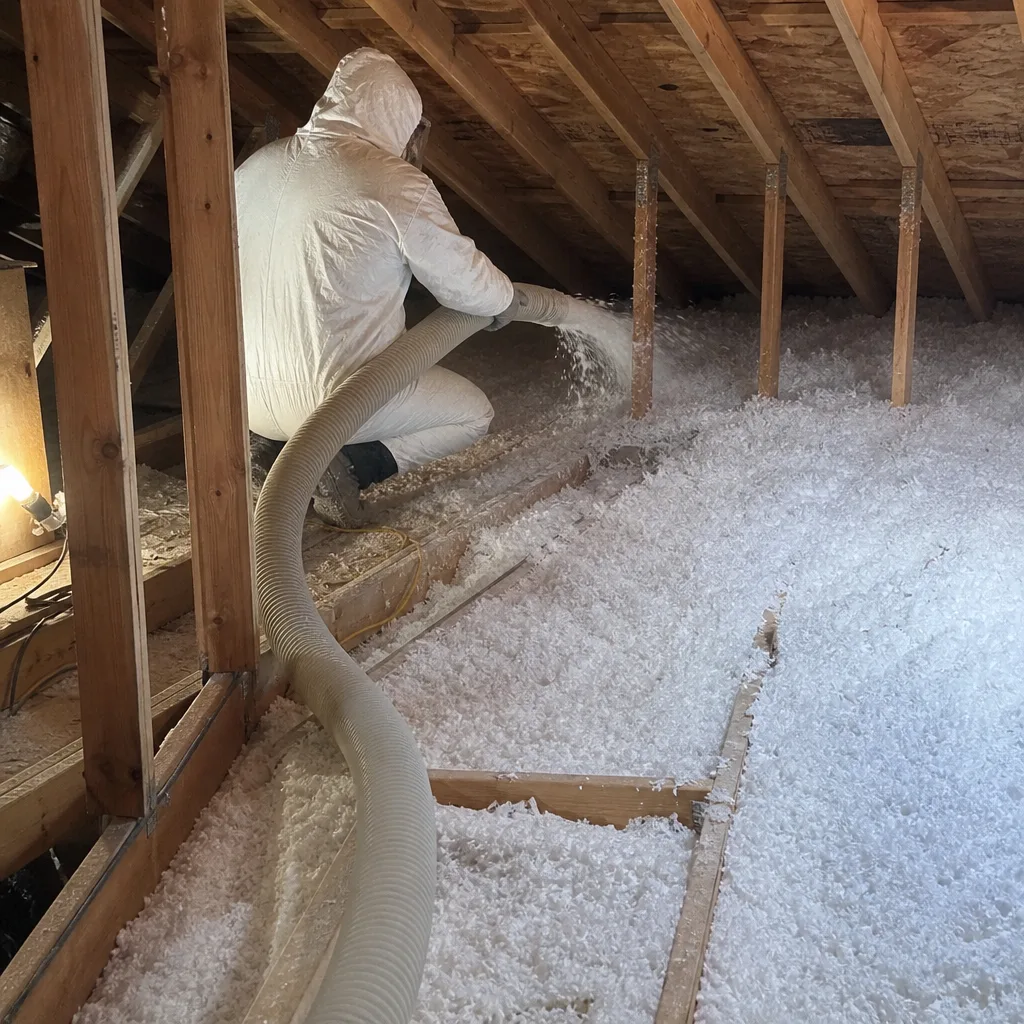
The material choice for wall insulation in Pomona comes down to three practical factors: whether the wall is open or closed, what R-value you need, and whether moisture or sound control is a secondary goal.
Blown-in Fiberglass
Blown-in fiberglass from manufacturers like Owens Corning or Johns Manville is the most common retrofit choice for closed walls in Pomona. It installs without opening the wall, settles minimally over time, and achieves R-13 to R-15 in a 3.5-inch cavity. It does not absorb moisture – a real advantage in homes near the Pomona Fairplex area where sprinkler overspray and landscape irrigation can introduce occasional moisture to wall bases.
Blown-in Cellulose
Cellulose – GreenFiber is one of the brands we work with – is made from recycled paper and carries a higher recycled content than fiberglass. It performs similarly in a 2×4 cavity (R-13 to R-14) and has a slightly higher density that some technicians find fills irregular cavities better. In Pomona’s older homes where framing is not always perfectly consistent, that density can help. It does absorb more moisture than fiberglass, so it is less appropriate in walls with known moisture issues.
Fiberglass Batts
Fiberglass batts from Owens Corning or Knauf are the standard choice when the wall is open – during a kitchen remodel, an addition, or a full gut renovation. They install faster and at lower material cost than blown-in methods when you have direct cavity access. R-15 batts (3.5-inch cavity) run about $0.60 to $1.00 per square foot installed when the wall is already open. The savings over blown-in are real when the wall is open anyway.
Mineral Wool / Rockwool
Rockwool batts add fire resistance and sound attenuation that fiberglass does not match. In Pomona homes where noise from the 10 Freeway or Garey Avenue is a real livability issue, mineral wool in exterior walls facing the noise source delivers a measurable improvement in STC (Sound Transmission Class) rating. It costs more per square foot than fiberglass but the dual function – thermal and acoustic – can make it the more efficient single spend.
Spray Foam
Closed-cell spray foam delivers the highest R-value per inch (roughly R-6.5 per inch vs. R-3.7 for fiberglass) and creates an air and moisture barrier in a single step. For Pomona homes with particularly thin wall cavities or where moisture intrusion is a documented issue, it is worth pricing. The cost is significantly higher – $3.50 to $6.00 per square foot installed – but on the right wall in the right home, it is the correct answer. Spray foam work involves pressurized chemicals and off-gassing during cure; residents should plan to be out of the home for several hours post-installation. We use Icynene and Demilec products and will specify the cure time and re-entry window in the written scope before work starts.
FAQs – Wall Insulation Cost in Pomona
How much does it cost to insulate the walls of a typical Pomona home?
A typical single-story Pomona home in the 1,400 to 1,800 square foot range costs between $2,200 and $4,400 for a full exterior wall insulation retrofit using blown-in fiberglass or cellulose. Two-story homes or homes with complex wall runs (L-shapes, garages integrated into the envelope) push closer to $3,800 to $6,500. These figures include air sealing, which is part of the scope on every job – not a separate line item you can subtract. Call (562) 242-7569 for a written estimate based on your specific home.
Is it cheaper to repair or replace existing wall insulation in Pomona?
Replacing existing wall insulation costs more upfront than adding to it, but adding to degraded or settled insulation rarely delivers the expected result. Fiberglass batts that have been compressed or contaminated with moisture lose R-value and cannot recover it. If a blower-door test or infrared scan shows active performance gaps in walls that were previously insulated, removal and replacement is usually the correct call. Removal runs $0.50 to $1.20 per square foot of wall area on top of the replacement cost. We will document what we find and put both options – repair and replace – in writing so you can make an informed decision.
Does wall insulation require a permit in Pomona, CA?
Most like-for-like retrofit wall insulation projects in Pomona do not require a building permit as of 2026, but the answer depends on your specific wall assembly and whether the project is part of a larger permitted remodel. If a permit is required, Pomona’s fee typically runs $150 to $400 for this type of work. We identify permit requirements during the site assessment and include them in the written scope – you will know before work starts, not after.
How much can I save on energy bills after wall insulation in Pomona?
Homes in Pomona that go from zero wall insulation to a properly installed and air-sealed R-13 wall assembly typically see cooling load reductions of 15% to 25%, depending on the home’s orientation, window quality, and attic condition. Given Pomona’s summer cooling demands – the valley regularly reaches 95 to 105 degrees Fahrenheit in July and August – that reduction translates to roughly $200 to $600 annually for a mid-size home on SCE’s standard rate schedule. The exact figure depends on your current utility rate tier and usage pattern. Before-and-after blower-door readings, documented on applicable jobs, give you a measurable air-sealing performance change rather than a projected estimate from a spreadsheet.
Can wall insulation be added without removing drywall?
Yes. Retrofit blow-in insulation is specifically designed for closed walls – the technique involves drilling small holes (typically 2 to 3 inches) through exterior siding or interior drywall, filling the cavity, and patching. On stucco-sided homes, which are common throughout Pomona including the neighborhoods around McKinley Avenue and Reservoir Street, drilling is done carefully to avoid cracking the surrounding stucco face. The patch and paint step is included in the written scope and cost estimate. You do not need to gut your walls to add insulation to an existing home.
What R-value do Pomona walls need to meet code?
California Title 24 requires a minimum of R-13 for exterior walls in Climate Zone 10 for new construction and significant remodels. Retrofit work on existing homes is held to a slightly different standard – improving performance over existing conditions is the typical threshold rather than meeting new-construction code. For practical performance in Pomona’s summer heat, we recommend R-15 in a 2×4 cavity (achievable with dense-pack blown-in fiberglass or a high-density batt) and R-19 to R-21 if you have 2×6 framing. These recommendations are written into the scope so you know what you are getting, not just that “insulation was added.”
Key Takeaways
- Wall insulation in Pomona runs $1,800 to $6,500 for most whole-home projects, with the typical single-story retrofit landing between $2,200 and $4,400.
- Material choice – blown-in fiberglass, cellulose, batts, or spray foam – depends on whether the wall is open or closed, not on which is cheapest.
- Air sealing of top plates, penetrations, and can lights is a prerequisite, not an optional add-on. Insulation without air sealing leaves a large share of the efficiency gain unrealized.
- Pomona’s Climate Zone 10 and summer heat load make the ROI on wall insulation stronger than coastal California markets.
- Stucco exteriors, common throughout Pomona, require careful drilling technique during retrofit work – this is a cost and quality factor to confirm with any contractor before work starts.
- SCE and SoCalGas rebates can offset $200 to $600 of project cost on qualifying upgrades – check current program terms before committing.
- Every job at Envelope Insulation Co. starts with a flat written price and ends with a Documented Photo Record. On applicable jobs, before-and-after blower-door readings are included.
Get a Written Estimate for Your Pomona Home
If you want to know what wall insulation actually costs for your specific home in Pomona – not a range pulled from a national database – the answer starts with a site visit. Wes Okafor and the Envelope Insulation Co. team have been doing this work under The Haven Standard since 2016, and every estimate comes back as a flat written price with a full scope before anyone lifts a tool. That is Haven Standard Clause 1, and it applies to every job regardless of size.
You can learn more about what we do and how we approach building-envelope work on our home page, or go straight to scheduling. A live person answers every call – no voicemail loops, no callback windows.
Call (562) 242-7569 to schedule your free on-site estimate. If you already have a written quote from another contractor and want a second opinion, bring it – we will read it with you at no charge. The estimate is free, the price is written, and no work starts without your sign-off.
Written by Wes Okafor, Owner at Envelope Insulation Co., serving Pomona since 2016.
Pricing reflects the Pomona market as of 2026. Topside Attic Insulation Pomona offers free estimates – call (562) 242-7569.
What Our Customers Say
"Fixed price, clean work, and they hauled the old material away as agreed."
- Todd M."Crawl space encapsulation done properly. Photographs of the vapour barrier at every seam, and the damp smell in the hallway is gone."
- Ainsley P."Two other companies quoted to blow more insulation on top of what was there. These were the only ones who said the existing material had to come out first, and explained why."
- Clifford E.