
Last updated September 23, 2026
Attic Insulation Maintenance Checklist for Pomona Homeowners
Settled blown insulation in a Pomona attic can look perfectly intact from the access hatch while sitting 3-4 inches below its installed depth - a loss that cuts effective R-value by 25% without a single visible sign of damage. Most maintenance checklists tell you to “look for damage,” but the performance problems that cost Pomona homeowners real money on their summer cooling bills are invisible until they’ve already wasted hundreds in utility overruns. This guide pairs what you can observe with measurable thresholds so you know when you’re looking at normal aging versus a problem that needs fixing. For The Complete Guide to Insulation in Pomona, see our dedicated resource.
Quick Answer
Attic insulation maintenance in Pomona means checking settled depth against original installation records annually, inspecting for heat-degraded batt facing and compressed loose-fill after days over 105°F, verifying HVAC duct integrity in the attic envelope, and watching for rodent tunneling patterns in blown cellulose. Most homeowners can handle the visual inspection; anything involving electrical, steep attic access, or confirmed pest contamination should involve a professional with Attic Insulation services.
Table of Contents
- How to Measure Settled Depth Against Original Records
- Signs of Heat Degradation in Pomona’s Attic Climate
- HVAC Duct Inspection: The Hidden Insulation Killer
- Pest Intrusion Indicators and Rodent Tunneling Patterns
- Annual Checks vs. Event-Based Inspections
- Air Sealing Maintenance and the Blower-Door Baseline
- Common Mistakes to Avoid
- When to Call a Professional
- Frequently Asked Questions
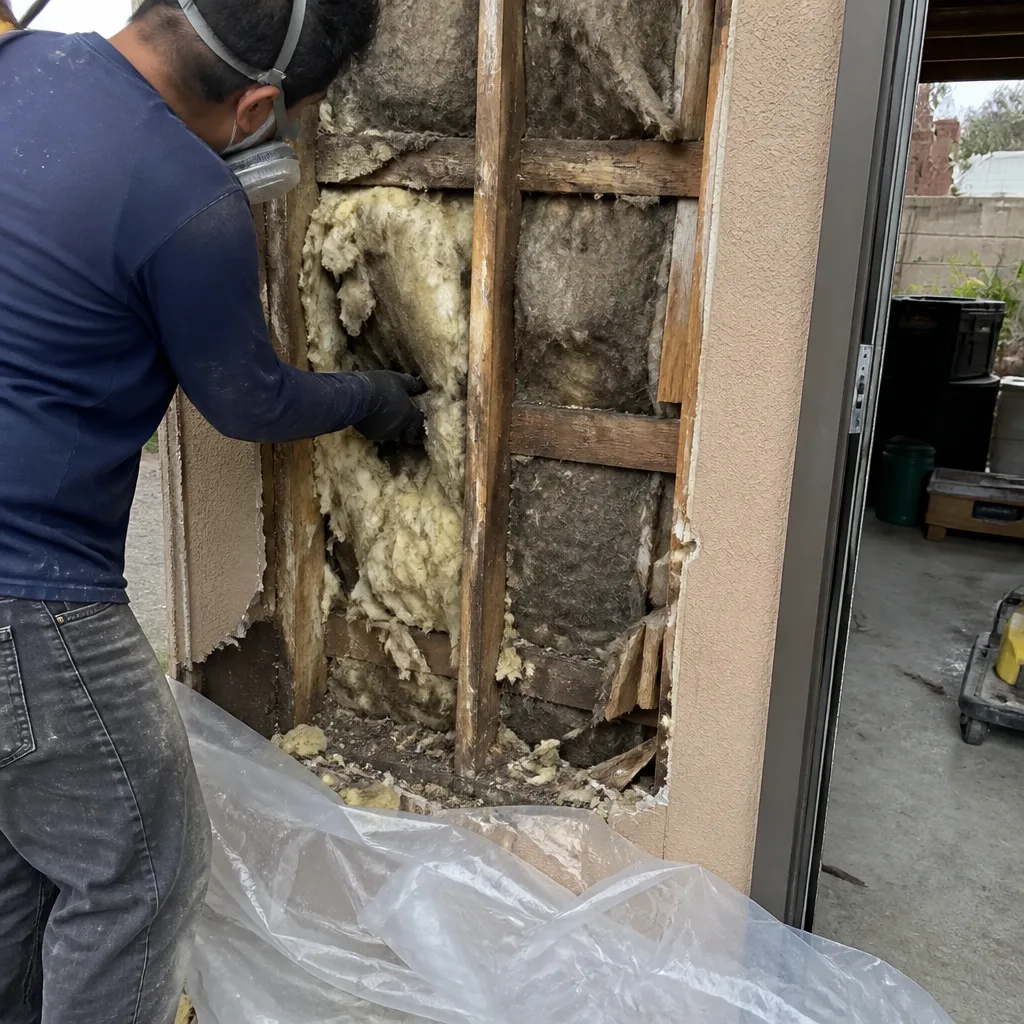 Before
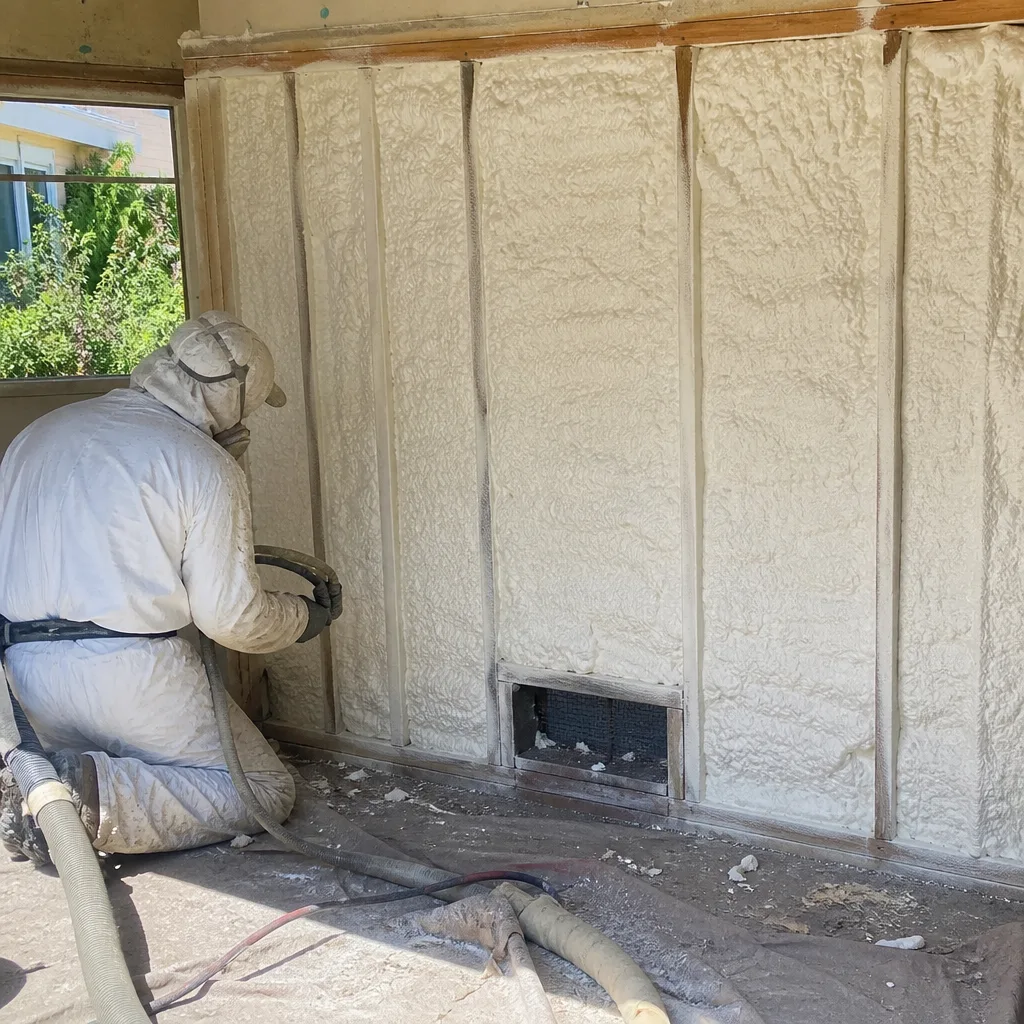 After
AfterHow to Measure Settled Depth Against Original Records
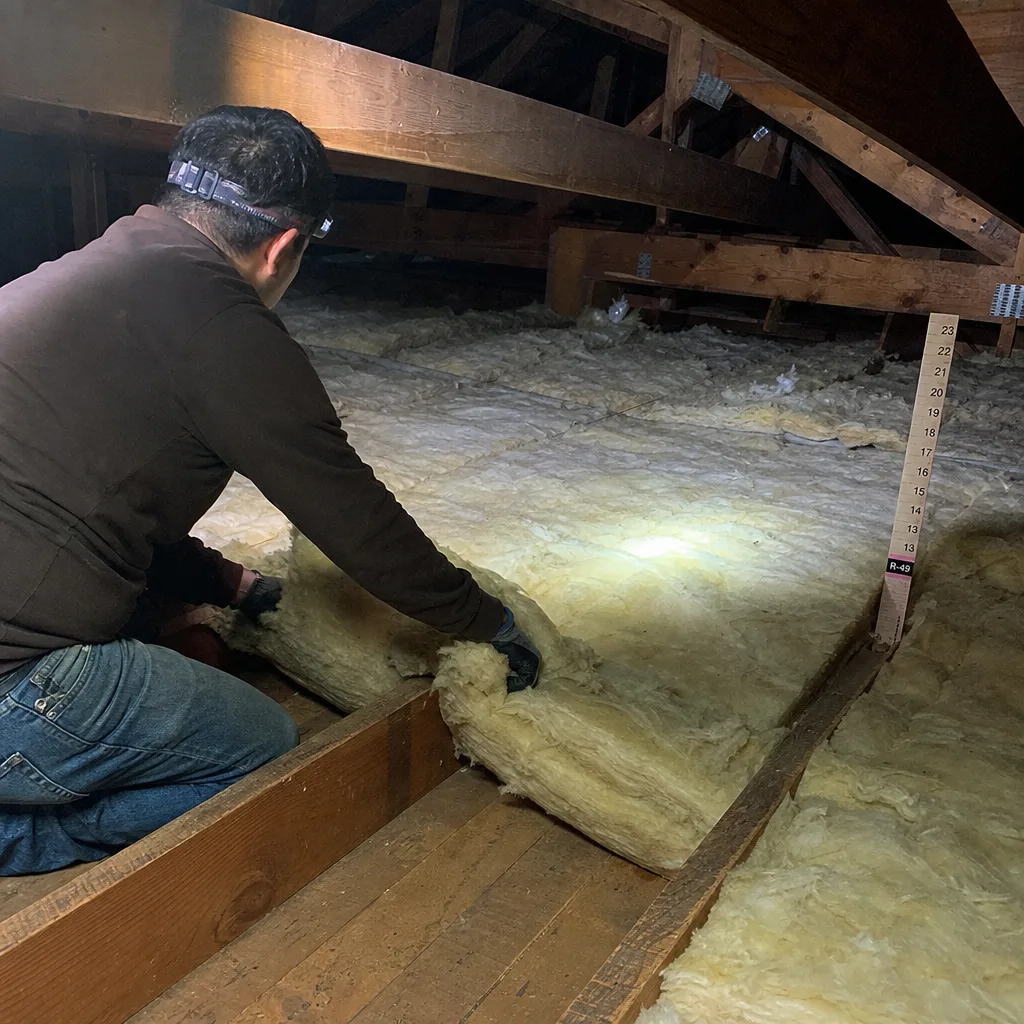
The only way to know if your insulation is still doing its job is to measure what’s actually there and compare it to what was supposed to be there. In Pomona, where summer attic temperatures regularly exceed 140°F, loose-fill fiberglass and cellulose settle measurably within the first two years and continue settling gradually after that.
What You’ll Need
- A yardstick or measuring tape with a stiff blade
- A flashlight or headlamp
- Your original installation documentation, or the installed-depth markers left by a compliant contractor
- A camera to document what you find
The Measurement Process
- Wait for morning cool hours - before 9 a.m. - when attic temperatures are lowest. In July and August in Pomona, this matters for your safety, not just comfort.
- Locate installed-depth markers. California Title 24 requires these on compliant attic insulation jobs - they’re typically cardboard or plastic tabs stapled to trusses or joists, marked with the target depth and R-value. If your home was insulated before 2016 or by a non-compliant contractor, these may be missing.
- Measure at six points minimum: near the access hatch, at the center of the attic, and near the eaves on both the north and south sides. Pomona’s southern exposure creates uneven heat loading, so depth often varies significantly between north and south slopes.
- Press the yardstick gently through the insulation until you hit the drywall or plaster ceiling below. Record each measurement to the nearest half-inch.
- Compare to the marked target depth. A variance of more than 10% or 1 inch (whichever is greater) indicates settling that has reduced your effective R-value.
If You Have No Original Records
Most attics in Pomona homes built between 1950 and 1990 were originally insulated to R-19 or less, even if they’ve been upgraded since. If you have no documentation, measure what exists and cross-reference to material type:
- Blown fiberglass: typically installs at 14-17 inches for R-38
- Blown cellulose: typically installs at 10-12 inches for R-38, but settles 1-2 inches in the first year
- Batt insulation: measure the full thickness of the batt, not just what’s visible; compressed batts may measure less than labeled
If your measurements fall short and you can’t verify original depth, the conservative move is to treat it as underinsulated. In our experience across more than 9,000 homes sealed and insulated since 2016, Pomona attics with no documentation almost always test below current Title 24 standards when we blower-door and thermally map them.
We publish before-and-after blower-door numbers on every applicable job - a pressurization reading that shows, in one number, how much conditioned air your building envelope was losing before and after the work. If you’re unsure about your depth measurements, a home energy audit with documented thermal imaging will tell you exactly where you stand.
Signs of Heat Degradation in Pomona’s Attic Climate
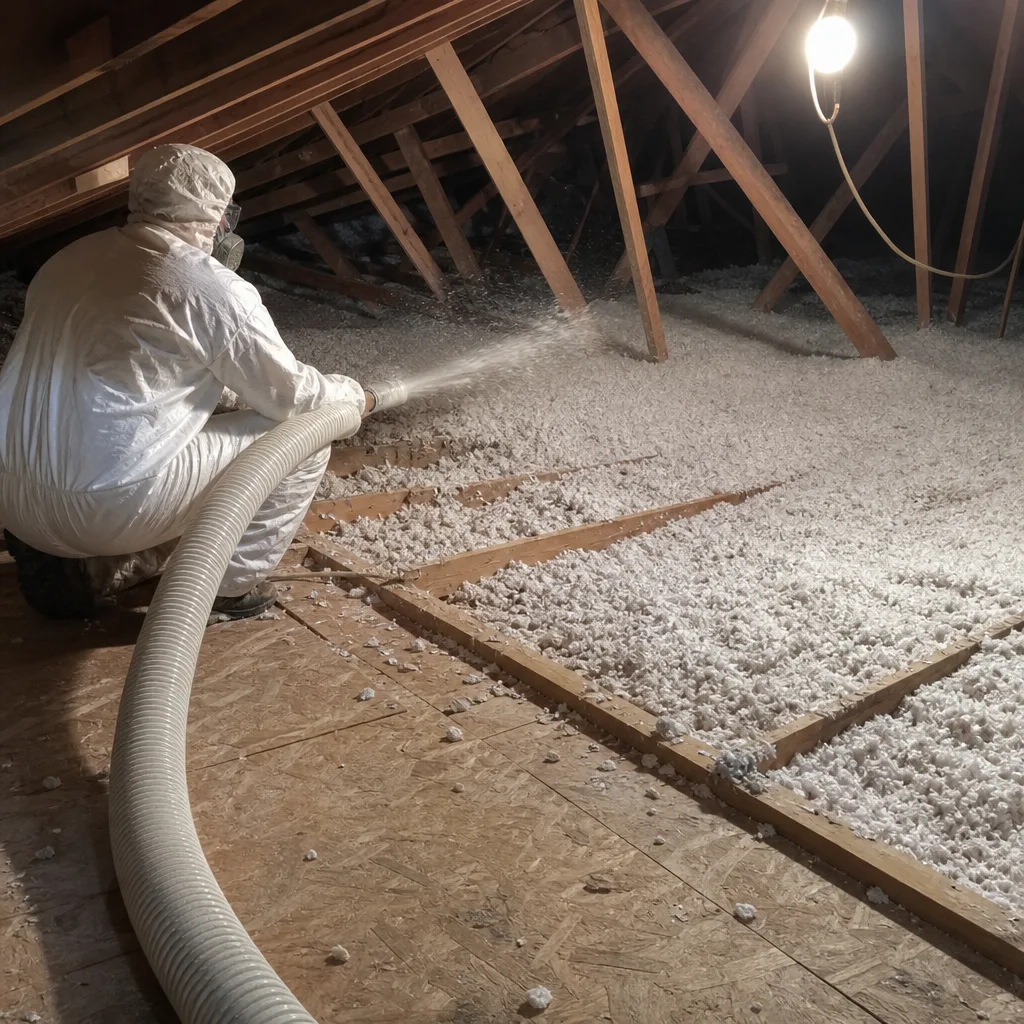
Pomona’s inland location means attic temperatures that coastal California simply doesn’t experience. While Santa Monica or Long Beach might see attic peaks of 110°F, Pomona attics routinely hit 140-150°F in July and August. That heat changes insulation materials in specific, observable ways that differ from moisture damage - the primary concern in fog-zone climates.
Batt Facing Deterioration
Kraft paper facing on fiberglass batts - the brown paper vapor retarder on the “living space” side - dries out and becomes brittle in sustained high heat. In Pomona, we regularly see facing that cracks when touched after 8-12 years in a vented attic. This isn’t mold; it’s thermal aging. The facing is doing its job as a vapor retarder, but once cracked, it can no longer slow moisture migration effectively.
Check facing condition by gently lifting a batt edge near the access hatch. If the paper cracks or flakes, the facing has exceeded its service life. The insulation beneath may still be functional, but the vapor retarder is compromised. In homes with air conditioning ductwork in the attic, this matters more than in homes with ductless mini-splits or evaporative cooling, because the temperature differential across the ceiling assembly is steeper.
Loose-Fill Compression and Glazing
Cellulose insulation exposed to repeated heat cycling above 130°F can develop a surface “crust” - a lightly compacted layer where the top fibers bond slightly. This isn’t water damage; it’s the lignin in recycled paper content softening and resetting. The crust reduces the effective loft of the top inch or two, which matters because that’s the highest-temperature zone.
Run your hand across the insulation surface. Normal loose-fill feels loose and springy. Heat-crusted cellulose feels slightly firm, like packed snow. If you can press your fingers in easily and meet resistance only at the top half-inch, you’ve got glazing. Rake it gently with a garden rake to restore loft, or have a professional add a “cap” of new material.
Discoloration Patterns
Uniform darkening of fiberglass batts - the “dirty” look - is actually filtration soiling. Air moving through the insulation carries dust that deposits on fibers. In Pomona, where Santa Ana winds blow fine dust from the Cajon Pass and San Gabriel Valley, this happens faster than in coastal zones. Darker batts aren’t necessarily failed batts, but heavy soiling indicates air leakage paths that should be sealed. The insulation is filtering your air; that’s not its job.
Look for streaking patterns: dark lines along joist bays often trace air paths from recessed can lights, electrical penetrations, or top plates - the horizontal framing member where wall studs meet the ceiling. These are your air sealing targets, and they’re invisible to anyone who doesn’t know what the streaking means.
HVAC Duct Inspection: The Hidden Insulation Killer
Here’s a number that surprises most Pomona homeowners: a typical unsealed duct system in a vented attic loses 20-30% of its conditioned air before it reaches the rooms below. That means your R-38 ceiling insulation is trying to hold cool air that never even makes it to the living space. Duct leakage is an insulation maintenance issue because it changes the thermal boundary your insulation is supposed to protect.
What to Look For
- Disconnected flex duct runs - the silver or gray flexible ducting common in Pomona tract homes from the 1970s through 2000s. Look for gaps where the inner liner has pulled away from the collar, or where the insulation jacket sags away from the connection point.
- Compressed or flattened flex duct. In attics where homeowners or prior technicians have walked repeatedly, flex duct gets crushed. A 6-inch round duct flattened to 3 inches high moves roughly half the air. The room stays hot; the homeowner blames the insulation.
- Duct tape that has dried and fallen off. Ironically, duct tape fails on ducts. In Pomona’s heat, the adhesive degrades in 2-5 years. What’s left is a gray, dusty residue and an unsealed joint.
- Water stains on duct insulation jacket. This indicates condensation - supply ducts running below dew point because they’re surrounded by 145°F air and moving 55°F air. The water isn’t from roof leaks; it’s from thermal bridging at uninsulated duct sections or from excessive duct leakage pulling humid air into the jacket.
The Measurement That Matters
If you have a thermometer, check the temperature at a supply register when the AC has been running for 15 minutes. Then check the temperature at the air handler return plenum in the attic. A well-sealed, well-insulated duct system will show 2-4°F difference. We’ve measured Pomona homes with 12-15°F drops - meaning the air is being reheated almost to room temperature before it exits the duct. No amount of ceiling insulation fixes that.
Under Haven Standard: Arrive on schedule, you get a named technician and a text when they are on the way. Our home energy audits include duct blaster testing - a pressurization measurement of duct leakage to outdoors - so you can see the actual CFM loss, not just guess at it.
For homeowners considering spray foam insulation in Pomona, note that spray foam applied to the roof deck creates a conditioned attic where ductwork lives inside the thermal envelope. That eliminates the duct-in-attic problem entirely, but it’s a different approach with different cost and moisture considerations.
Pest Intrusion Indicators and Rodent Tunneling Patterns
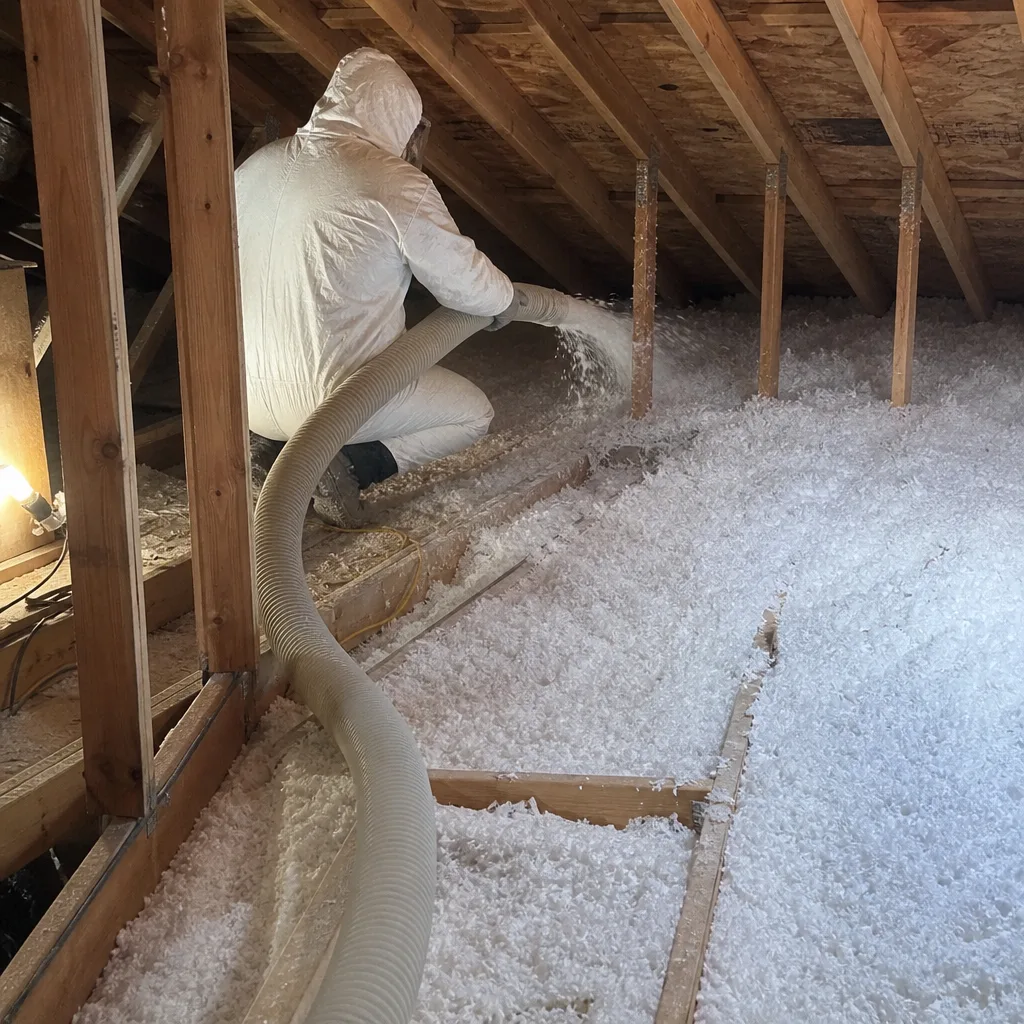
Rodents in Pomona attics don’t just damage insulation - they change its thermal performance in ways that look like settling but aren’t. Knowing the difference saves you from adding insulation over a problem that will just recur.
Tunneling vs. Natural Settling
Natural settling in blown cellulose or fiberglass creates a fairly uniform surface, lower near the center of the attic where installers walked during installation, slightly higher near eaves where they didn’t reach as easily. The surface is smooth, with gradual transitions.
Rodent tunneling looks different:
- Runways - compressed paths 2-3 inches wide where mice or rats travel repeatedly, often along joists or near the attic perimeter where roof meets wall
- Nest cavities - bowl-shaped depressions 6-12 inches across, often lined with shredded facing paper or other soft material
- Scatter patterns - insulation kicked up and distributed unevenly, with piles against obstructions and bare spots nearby
- Urine staining - yellowed or darkened areas that don’t correspond to roof leak patterns; in cellulose, this can cause clumping that looks like water damage but smells different
In Pomona’s older neighborhoods - Lincoln Park, Mayfair, and the homes north of Mission Boulevard built before 1960 - we’ve found that roof rat activity increases significantly after Santa Ana wind events. The rats seek attic shelter from the wind, and once they’ve found access, they establish permanent runways. If your inspection follows a wind event, look extra carefully for fresh disturbance.
Contamination and Safety
Rodent droppings and urine carry hantavirus, leptospirosis, and other pathogens. Do not disturb dry droppings without N95 or better respiratory protection - the particles become airborne easily. If you find active contamination, stop your inspection and call a professional. Insulation removal and replacement, plus rodent proofing, is the correct sequence: seal entry points first, then remove contaminated material, then install new insulation. Reversing that order wastes money.
We include attic cleaning and rodent proofing in our service line, and every job closes with a Documented Photo Record so you can verify what was removed and what was sealed. Materials for replacement come from Owens Corning, Johns Manville, Knauf, Rockwool, CertainTeed, and other manufacturers - no proprietary product lock-in that limits your options.
Annual Checks vs. Event-Based Inspections
Not every inspection belongs on the same calendar. Pomona’s climate and construction patterns create two categories: routine annual maintenance and event-triggered checks that should happen regardless of schedule.
Annual Checklist (Perform Every Spring, Before Cooling Season)
- Measure settled depth at six points; compare to installed-depth markers or original records
- Inspect batt facing for thermal cracking; note any areas where facing has fallen away from the batt
- Check for new water stains on ceiling drywall visible from the attic side - these indicate roof leaks that will eventually wet insulation
- Verify attic ventilation: soffit vents unblocked by insulation, ridge vents or gable vents clear of debris, exhaust fans ducted to outside (not into attic space)
- Inspect for new pest activity: droppings, disturbed insulation, gnaw marks on wood or wiring
- Photograph conditions for year-over-year comparison
Event-Triggered Inspections
After any day exceeding 105°F: Check for heat glazing on cellulose surface, brittle batt facing, and any new duct tape failure. The 2020 and 2022 heat waves in Pomona both caused accelerated degradation that we documented in post-event inspections. In the Phillips Ranch and south Pomona areas, where attic ventilation is often marginal in 1980s-built homes, these effects were more pronounced.
After any roof work: Even minor repairs disturb insulation. Contractors walking in attics compress loose-fill, move batts aside and fail to replace them, and sometimes leave debris. Inspect the work zone and verify depth was restored.
After Santa Ana wind events exceeding 40 mph: Check for displaced ridge vent covers, new entry points where soffit vents were damaged, and fresh pest activity seeking shelter.
After any HVAC service: Technicians in attics step on ducts, disconnect flex runs, and sometimes leave access panels open. Verify duct integrity and insulation cover after any visit.
For homeowners with crawl space encapsulation and vapor barrier in Pomona, the same event-triggered logic applies: any plumbing work, pest treatment, or structural repair in the crawl space should be followed by a visual inspection of the vapor barrier and insulation condition.
Air Sealing Maintenance and the Blower-Door Baseline
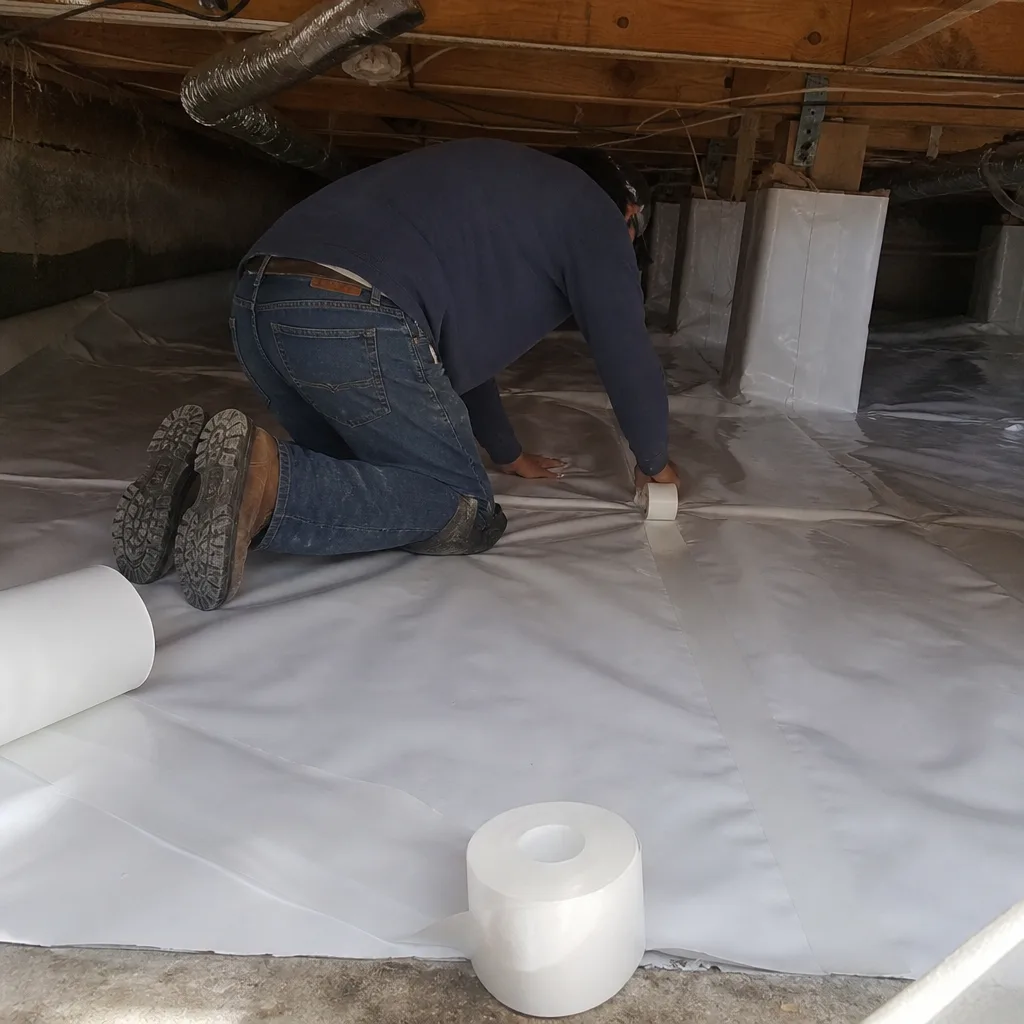
Insulation without air sealing is a filter, not a thermal barrier. Air moving through insulation carries heat directly past the fibers, reducing effective R-value by 30-50% in leaky assemblies. This is why we never blow insulation over an unsealed attic floor - it’s Haven Standard policy, not an upsell.
What Degrades Over Time
Air sealing materials age differently than insulation:
- Acoustic sealant (the flexible caulk used at top plates and penetrations) remains flexible for decades but can pull away from wood if the framing shrinks
- Fire-rated foam around electrical penetrations degrades with UV exposure - relevant in attics with gable windows or vent light
- Metal dampers on exhaust ducts corrode or stick, allowing backdrafting
- Weatherstripping on attic access hatches compresses and loses resilience
The Blower-Door Baseline
If your home has never had a blower-door test - a pressurization reading that shows, in one number, how much air your building envelope is losing - you’re maintaining insulation without knowing whether air sealing is the real problem. A baseline test gives you a number to compare against after any envelope work, and it identifies the leakage paths that visual inspection misses.
We provide before-and-after blower-door numbers on every applicable job. A typical Pomona home from the 1960s-1980s tests at 3,500-5,500 CFM50 before air sealing and 2,000-3,000 after. If you’ve had air sealing work done, ask for your numbers. If you don’t have them, consider that your insulation may be underperforming because the air sealing was never verified.
Attic insulation in Pomona should always include air sealing of top plates, can lights, and penetrations before any insulation is added. If a contractor proposes insulation without sealing, they’re skipping the step that determines whether the insulation will work.
Common Mistakes to Avoid
- Adding insulation over settled material without measuring first. You might be covering rodent contamination, moisture damage, or failed air sealing. Measure, document, and verify the substrate is sound before adding layers.
- Compressing batts to fit odd spaces. Fiberglass batts lose R-value when compressed - a batt stuffed into a narrow cavity performs like a thinner batt. Use the correct width for your joist spacing, or switch to loose-fill for irregular cavities.
- Blocking soffit vents with insulation. In Pomona’s heat, attic ventilation is critical. Baffles - cardboard or foam channels that keep insulation back from the eaves - are required by code but often missing or collapsed. Check them annually.
- Ignoring the access hatch. An uninsulated, unsealed attic hatch is a 6-square-foot hole in your thermal envelope. R-1 plywood and a loose fit can negate R-38 insulation across hundreds of square feet of ceiling. Add rigid foam on top and weatherstrip the perimeter.
- DIY air sealing around recessed can lights without verifying type. IC-rated (insulation contact) cans can be covered; non-IC cans cannot - covering them creates a fire hazard. Check the label inside the housing before sealing.
- Assuming new insulation fixes old problems. We regularly find Pomona homeowners who’ve added insulation twice without addressing the duct leakage or air sealing that caused their comfort problems. Insulation is a system component, not a standalone solution.
When to Call a Professional
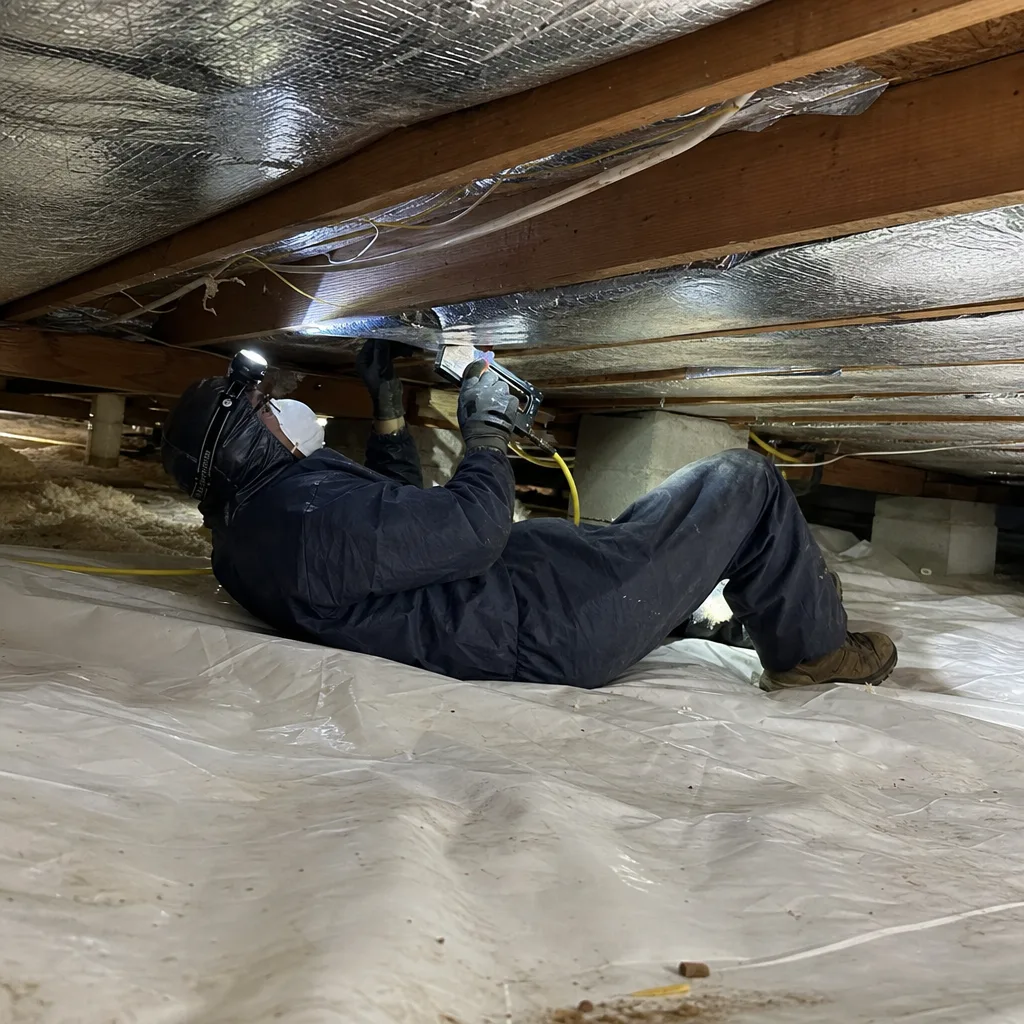
Call a professional when your inspection reveals any of the following: settled depth more than 20% below target with no original records to reference; active pest contamination or rodent tunneling; duct leakage you can feel or measure; water stains indicating active roof leaks; or any electrical work needed in the attic. Steep attic pitches, limited access hatches, or health conditions that make heat exposure risky are also valid reasons to hire out.
Topside Attic Insulation Pomona offers free estimates in Pomona - call (562) 242-7569. Visit our more guides & resources for additional home insulation tips. Every job begins with a written price before any work starts, and we provide a Free Second Opinion on any written estimate you bring us. Our 365-Day Done Right Promise applies to all completed work: if it’s not done right, we make it right, backed by a written scope and written warranty delivered before anyone lifts a tool.
Frequently Asked Questions
Most attic insulation maintenance jobs in Pomona run between $180 and $450 for inspection, minor air sealing, and depth restoration; full removal and replacement with air sealing typically ranges from $2,800 to $5,500 depending on attic square footage and accessibility. Call (562) 242-7569 for an exact quote - estimates are free, and we provide a written price before any work starts.
Perform a full inspection annually every spring before cooling season begins, and add an event-triggered inspection after any day exceeding 105°F, after roof work, after major HVAC service, or after severe Santa Ana wind events. Pomona’s inland heat and seasonal wind patterns create conditions that coastal California simply doesn’t experience, so the standard “check every few years” advice doesn’t apply here.
You can add new insulation over old if the existing material is dry, uncontaminated, and properly air sealed underneath - but never over rodent-affected, moldy, or water-damaged material. In our experience across Pomona homes, about 40% of attics we inspect have conditions that require removal before adding new insulation. The only way to know is to inspect thoroughly and test for moisture content in suspect areas.
Current California Title 24 standards call for R-38 minimum in climate zone 10, which includes Pomona; many homeowners targeting maximum cooling efficiency choose R-49 or R-60. Older homes often have R-19 or less. The key is matching the installed depth to the labeled R-value for your specific material - different products achieve the same R-value at different depths, and settling changes the math over time.
Duct leakage in an unconditioned attic is the most common cause we find in Pomona - a 20% duct leak can make R-38 perform like R-19 or worse. Other causes include unsealed attic access hatches, missing insulation over dropped soffits or stairwells, and thermal bridging through inadequate ceiling framing depth. A blower-door test combined with thermal imaging will identify which factor is dominant in your home.
Spray foam applied to the roof deck creates a conditioned attic that eliminates duct-in-attic losses and reduces thermal bridging, but it costs 2-3 times more than loose-fill over a sealed attic floor and requires careful moisture management. For most Pomona homes with straightforward attic geometry and accessible ductwork, air sealing plus blown fiberglass or cellulose to R-49 is the better value. We source materials from multiple manufacturers including Knauf and Rockwool so we can match the solution to the home, not push a single product.
The Bottom Line
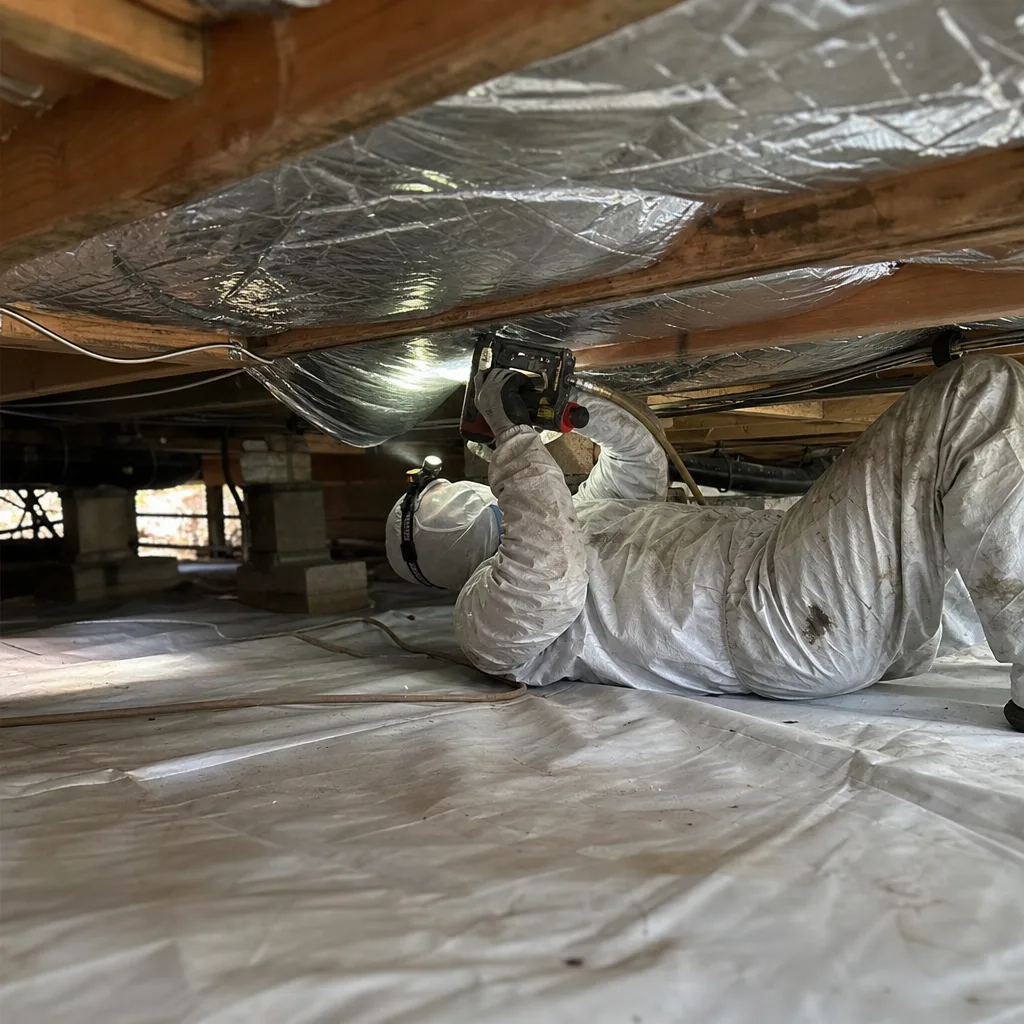
Attic insulation maintenance in Pomona is about measuring what you can’t see: settled depth against original records, duct leakage that negates R-value, and air sealing gaps that turn insulation into a filter. The checklist above gives you observable thresholds so you know when normal aging becomes a performance problem. Document what you find, compare year over year, and don’t add insulation over problems that need fixing first. If your inspection raises questions you can’t answer with a ruler and a flashlight, a professional energy audit with blower-door testing and thermal imaging will give you numbers instead of guesses. For help deciding on your approach, read our DIY vs Professional Insulation: The Pomona Homeowner’s Decision Guide.
Written by Wes Okafor, Owner at Topside Attic Insulation Pomona, serving Pomona since 2016.