
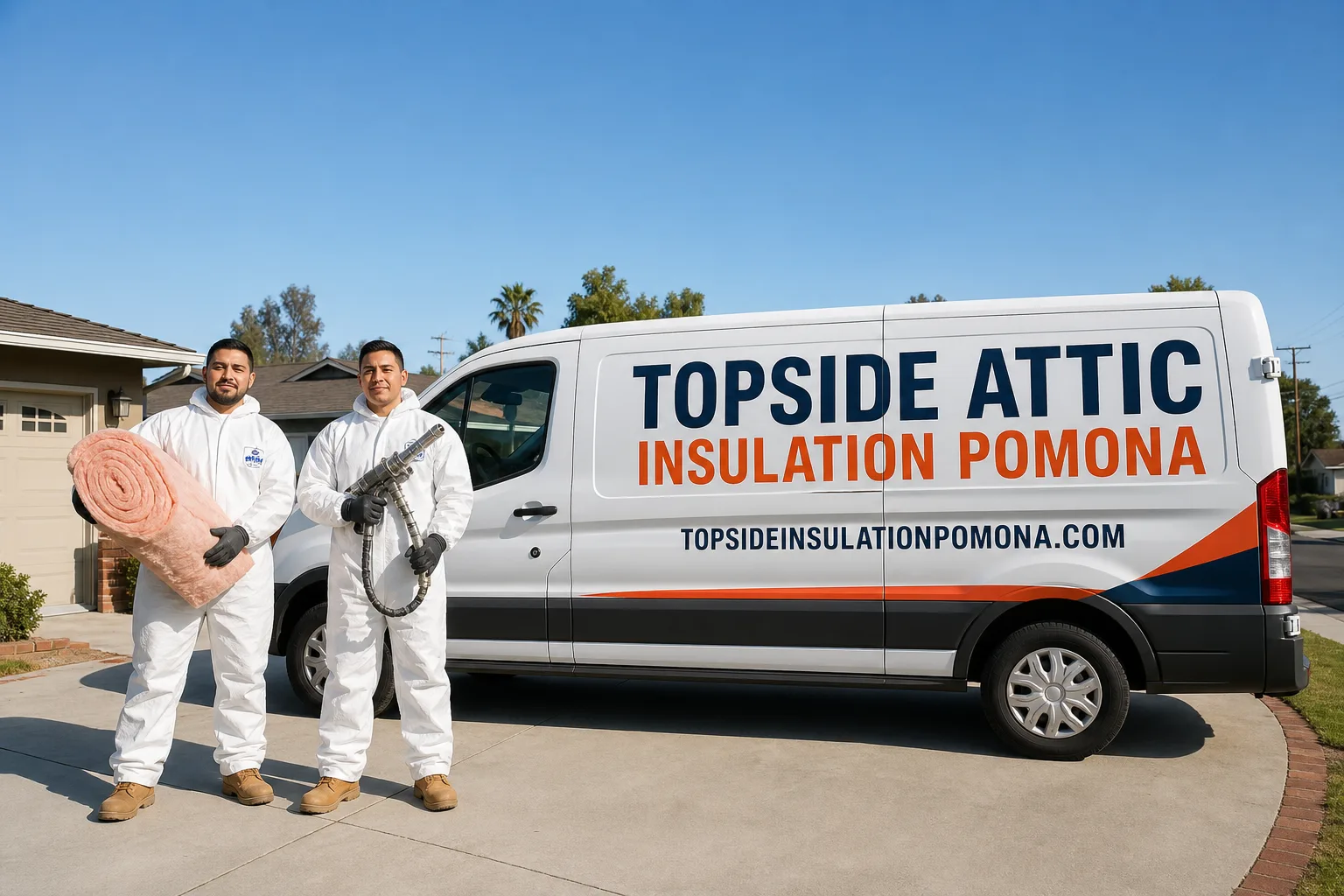
Fast, Reliable Spray Foam Insulation Across Glendora
Spray foam insulation in Glendora typically runs $2.80-$6.50 per board foot depending on open-cell versus closed-cell application, with most our Attic Insulation in Glendora jobs falling between $3,200 and $7,800 for a standard ranch. We’re usually on-site in Glendora within 24-48 hours of your call, and same-day assessments are common for homes south of the 210 Freeway. Our crews know the split personality of this market: the 1950s-1970s flatland ranches with original fiberglass batts degraded by decades of Santa Ana wind pressurization, and the newer foothill tracts north of Foothill Boulevard where fire-zone codes add a layer most out-of-area contractors miss entirely. Call (562) 242-7569 for a written price before any work starts - that’s Haven Standard Clause 1, no exceptions.
Why Topside Attic Insulation Pomona Is Glendora’s Preferred Spray Foam Insulation Company
We’ve sealed and insulated more than 9,000 homes since 2016, and a significant cluster sits right here in Glendora’s 91740 and 91741 ZIP codes. Our Spray Foam Insulation in Glendora work shows up in reviews that mention specific streets and specific outcomes - the blower-door reading that dropped from 4,200 to 2,100 CFM50, the photo record that documented every sealed top plate. Glendora homeowners read three-star reviews as carefully as five-star ones; we publish the numbers so you can verify the claim.
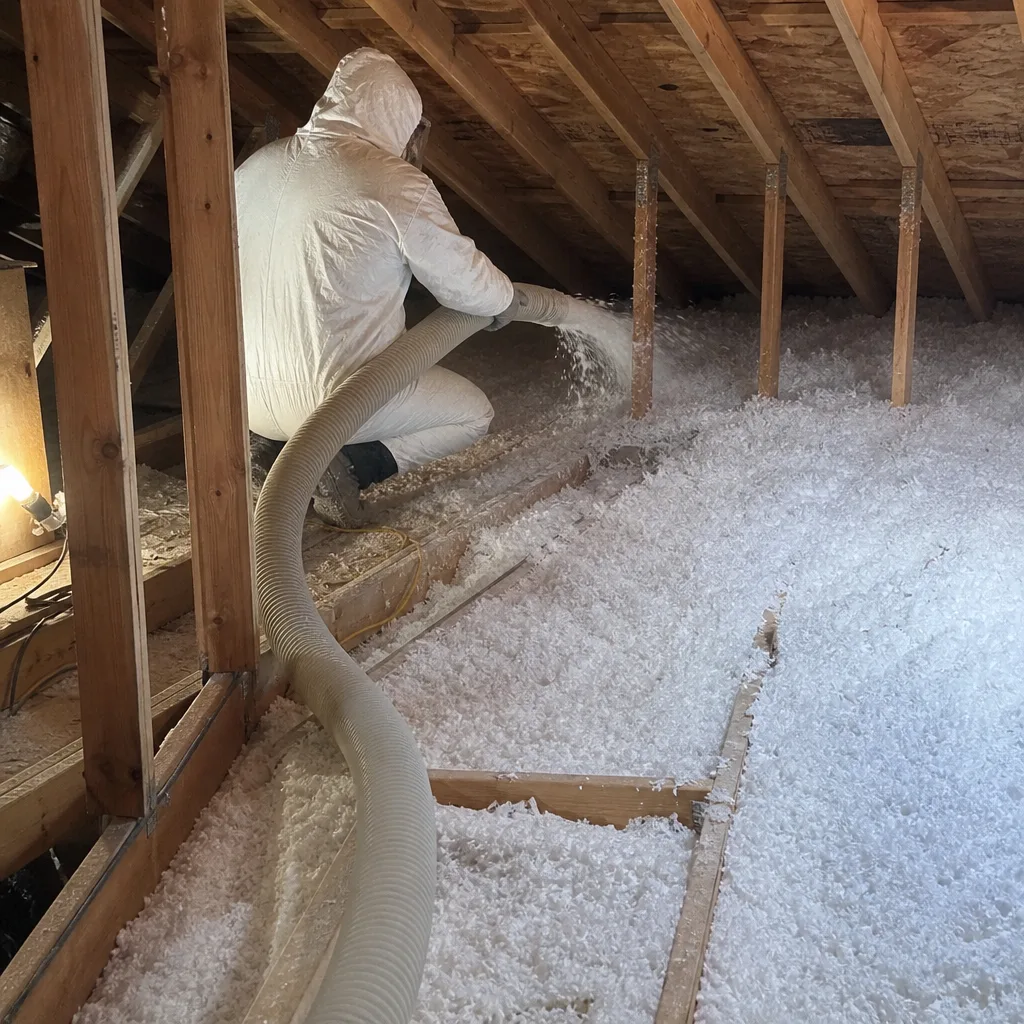
Response time to Glendora averages same-day or next-day from our Los Angeles metro office, with crews carrying both open-cell and closed-cell rigs plus the ignition-barrier materials required for north-side fire-zone work. We don’t subcontract the air sealing - it’s completed by our own background-checked, uniformed technicians before any foam goes in. And we don’t quote fire-zone jobs without accounting for the intumescent coating that Glendora’s fire-department inspectors actively flag; we’ve seen what happens when out-of-area crews skip it.
Our Spray Foam Insulation Services in Glendora
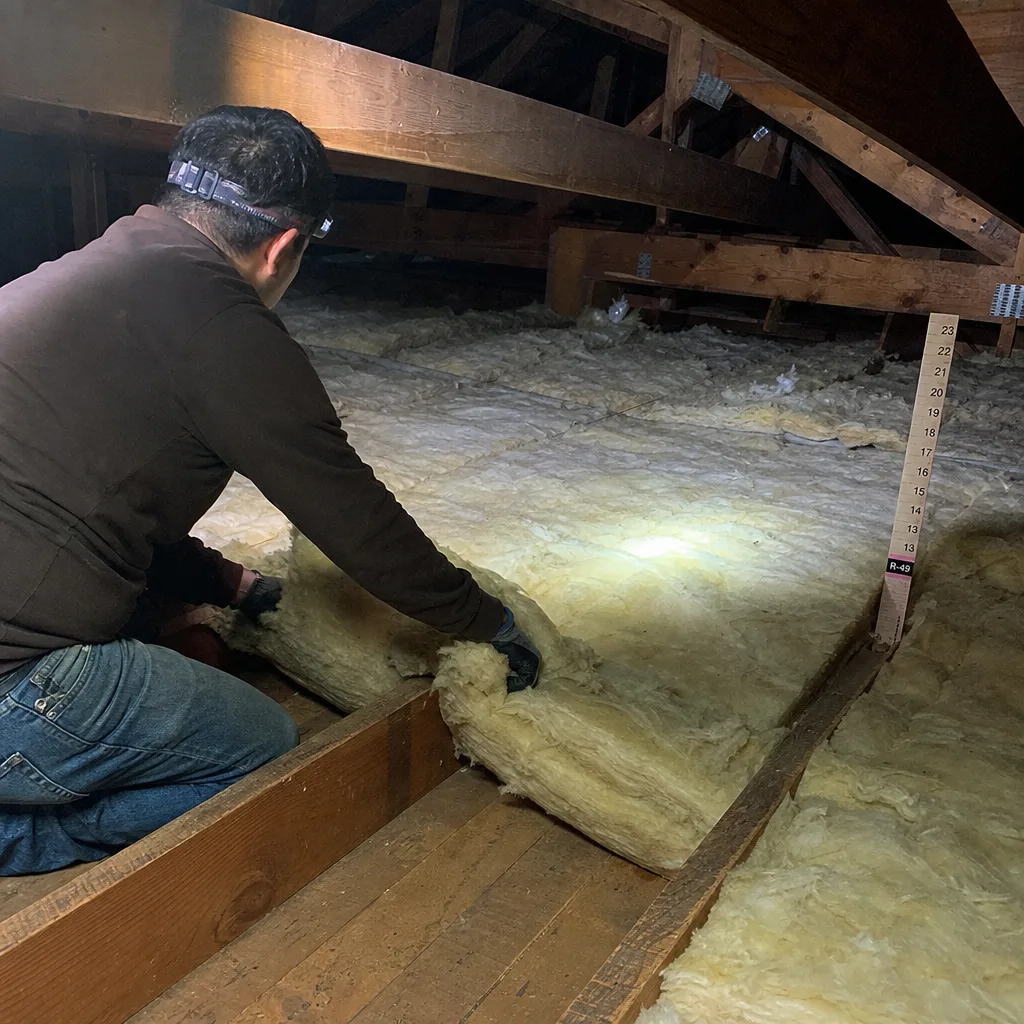
Open-Cell Spray Foam
Open-cell foam - the half-pound density material that expands to fill irregular joist bays - is our most common specification for Glendora’s flatland ranch attics. It breathes, it fills around wiring and ductwork without compression gaps, and at roughly $2.80-$4.20 per board foot installed, it hits the ROI sweet spot for 1,200-1,800 square foot homes built in the 1960s. But here’s the critical distinction: north of Foothill Boulevard, in the Very High Fire Hazard Severity Zone that covers Glendora’s foothill neighborhoods, open-cell spray foam must be covered with an approved ignition barrier per California Residential Code R316.4. We bake that coating into every north-Glendora quote. We’ve had to remediate jobs where other contractors skipped this step and the fire inspector red-tagged the work.
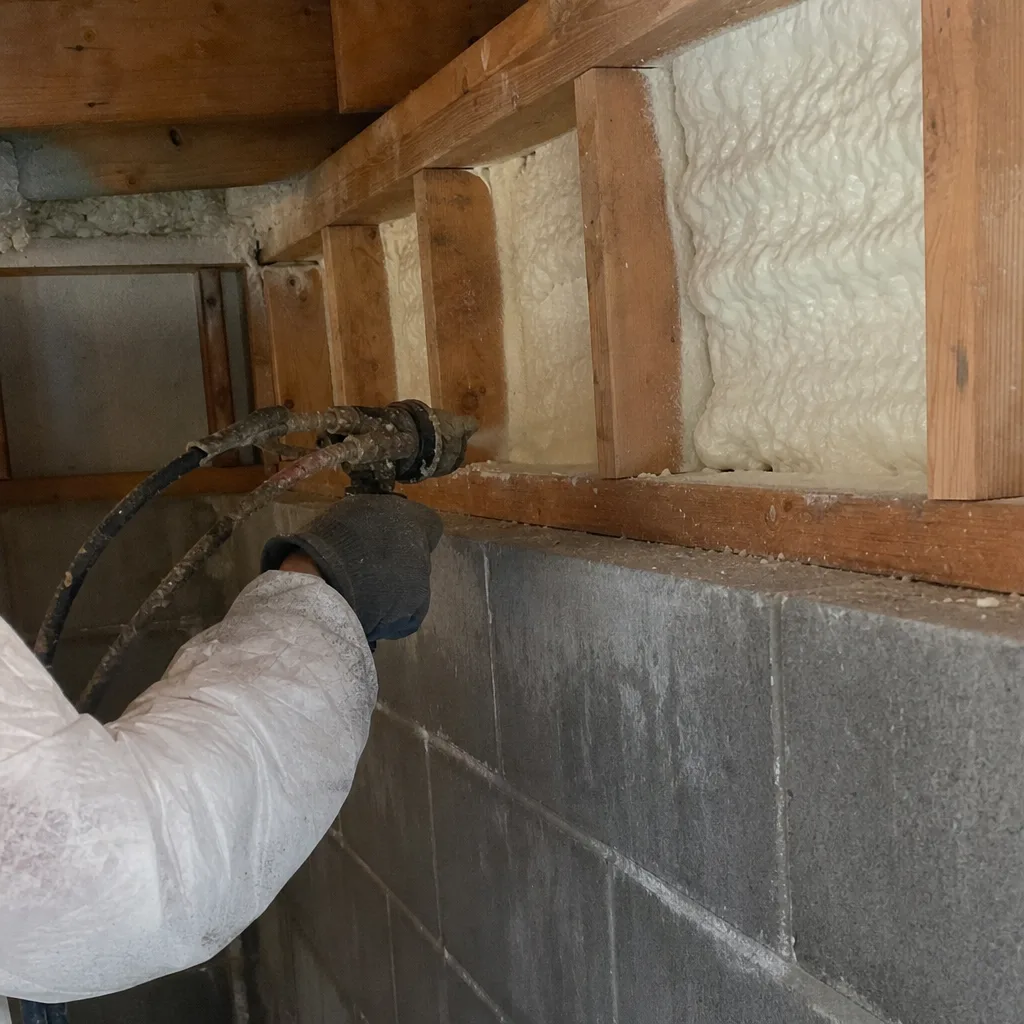
Closed-Cell Spray Foam
Closed-cell foam - the two-pound density material that acts as both insulation and vapor barrier - runs $4.50-$6.50 per board foot in Glendora and makes sense for specific conditions: rim joists in crawl spaces, garage ceiling applications where you need structural rigidity, and any envelope area where moisture drive is a concern. In Glendora’s older flatland ranches with uninsulated crawl spaces, we frequently specify closed-cell at the rim joist to stop the thermal bypass that makes floors cold even when the attic is well-insulated. The material doesn’t need an ignition barrier in the same way open-cell does, which simplifies permitting in the fire zone.
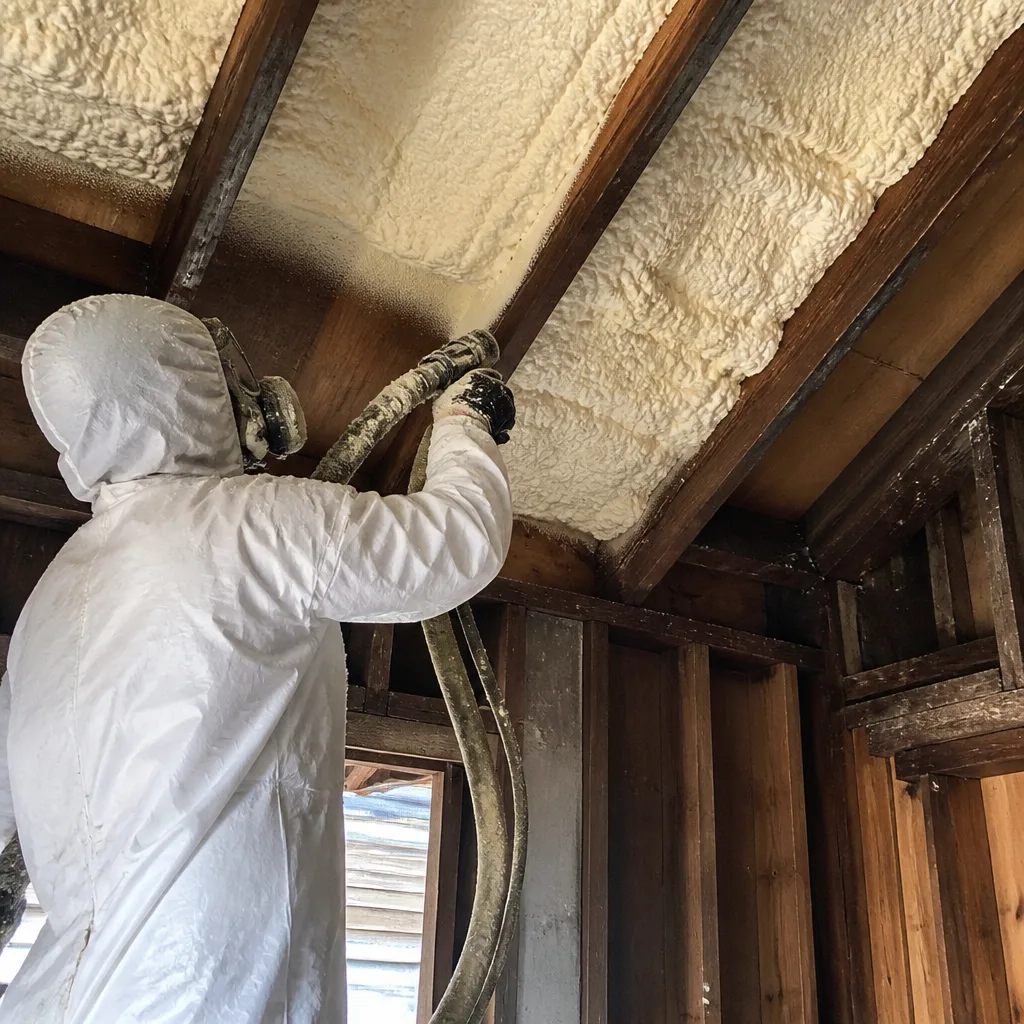
Rim Joist Spray Foam
The rim joist - the perimeter band where your foundation walls meet the floor system - is the single most common air-leakage site we find in Glendora’s 1950s-1970s ranches. Original construction left these cavities open to the crawl space or exterior; conditioned air bleeds out continuously. We spray two inches of closed-cell foam to seal and insulate simultaneously, typically running $1,800-$3,400 for a full perimeter treatment depending on foundation complexity. This is almost always paired with attic work - sealing the rim joist without addressing the attic is like plugging one hole in a bucket with two others.
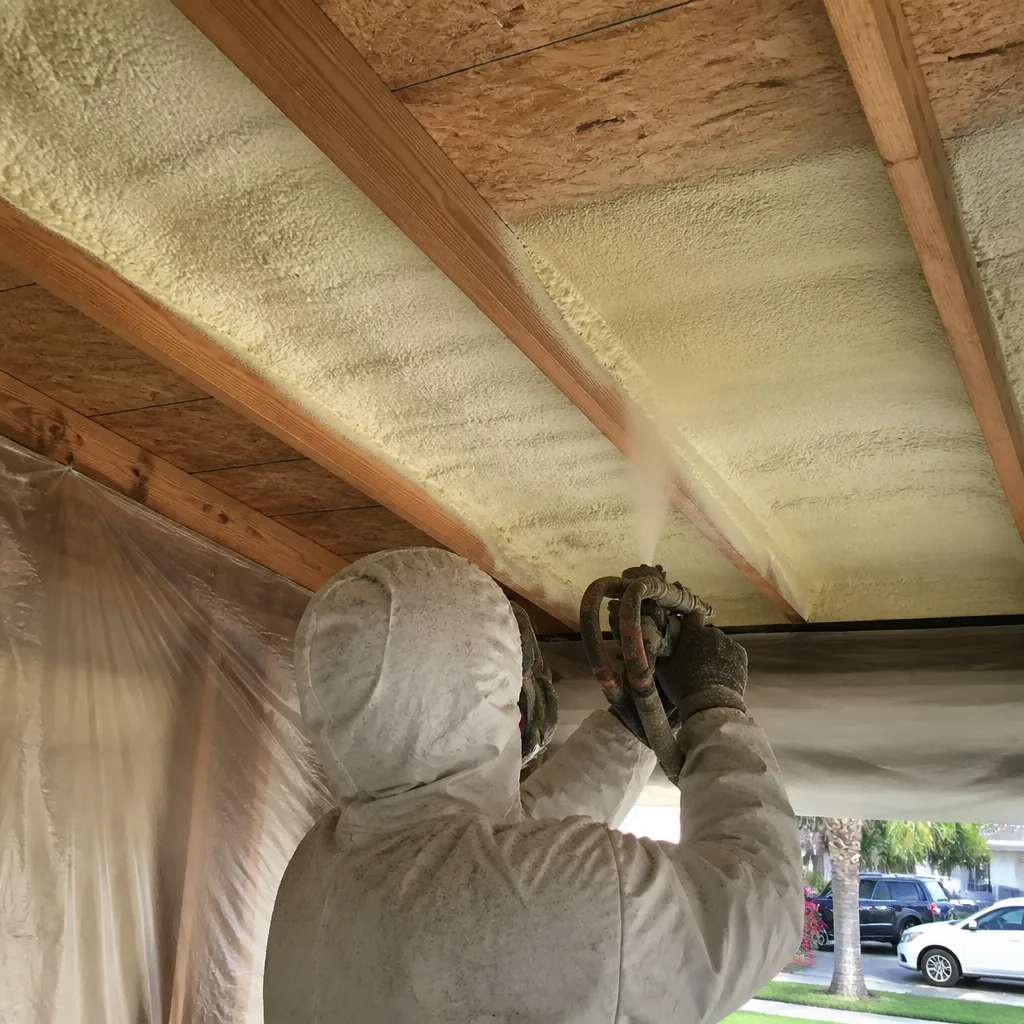
Garage Ceiling Spray Foam
Glendora’s attached garages, especially in the foothill developments from the 1980s-2000s, often have living space above - bonus rooms, bedrooms, or converted lofts - with nothing but a thin drywall ceiling separating the conditioned volume from a space that hits 115°F in August. We spray open-cell foam directly to the garage ceiling underside, creating a thermal and air barrier that drops the temperature differential and reduces the load on the HVAC system above. Typical range: $2,400-$4,800 depending on garage size and duct routing complexity.
What happens when you call
- 1
A real person answersNo phone trees - you reach a local pro.
- 2
You get an upfront price rangeHonest numbers before anyone is dispatched.
- 3
A background-checked tech heads outLicensed & insured, dispatched right away.
- 4
You approve before work beginsNothing starts until you say go.
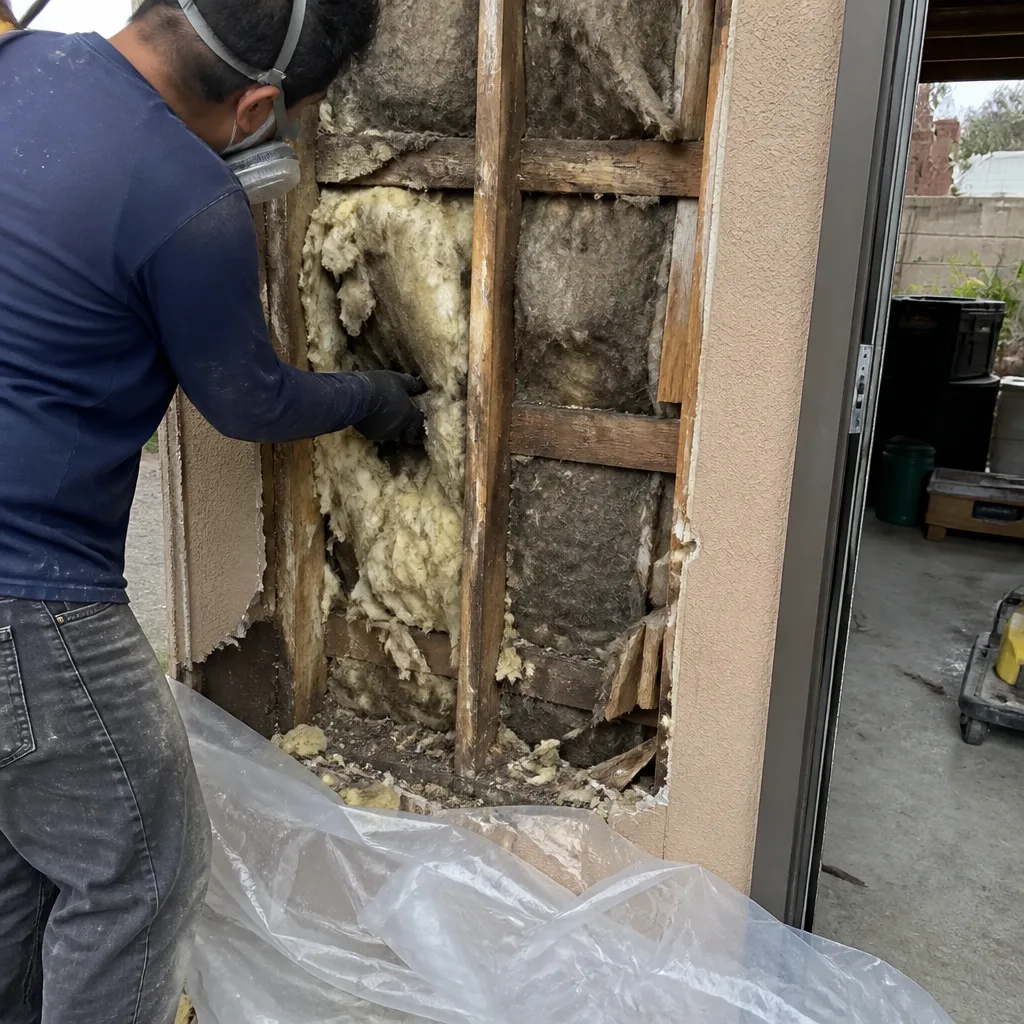 Before
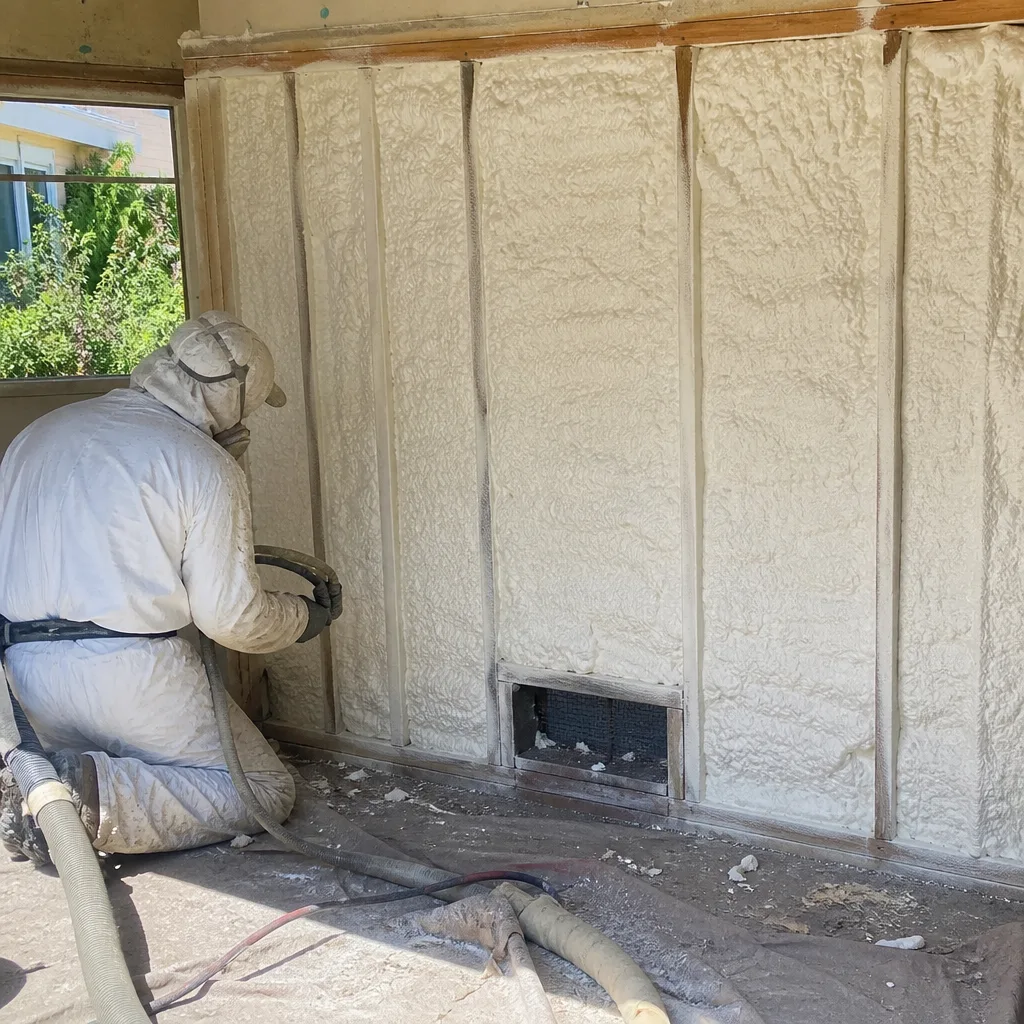 After
AfterTrusted Brands We Service in Glendora
We source spray foam materials from Owens Corning, Johns Manville, and Demilec - no proprietary lock-in, no single-source dependency. For Glendora jobs, this means we can match spec to condition rather than forcing a product that happens to be in the warehouse. Owens Corning’s Foamular line pairs well with closed-cell rim joist work; Johns Manville’s spray foam systems cover both open-cell attic applications and closed-cell structural specs. Demilec’s heat-resistant formulations see use in our north-Glendora fire-zone jobs where ignition-barrier compatibility matters. We stock ignition-barrier coatings locally so fire-zone projects don’t wait on freight.
Common Spray Foam Insulation Problems We See in Glendora Homes
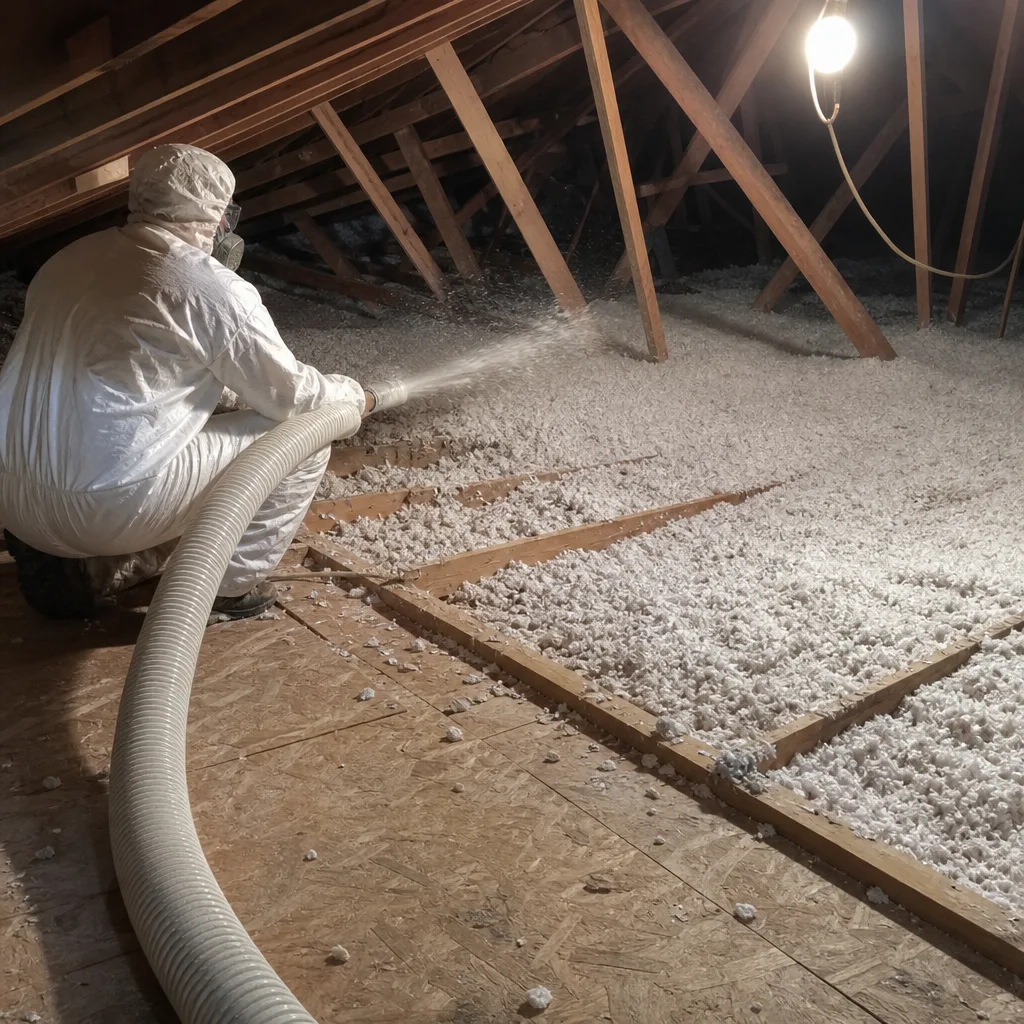
- Open-cell foam sprayed without ignition barrier in north-Glendora fire zones. The 2014 Colby Fire burned directly against residential edges here, and CAL FIRE’s VHFHSZ designation means fire-department inspectors actively check for approved ignition barriers on exposed foam. We’ve been called in to apply intumescent coating over other contractors’ work after red tags - a $2,000-$4,500 remediation that should have been in the original scope.
- Santa Ana wind displacement of legacy insulation before foam installation. These winds funnel through San Gabriel Mountain passes and pressurize attic cavities, accelerating settlement of old loose-fill and creating gaps that make new spray foam look ineffective. We always remove degraded material and air-seal first - blower-door verification proves the envelope is tight before foam goes in.
- Foam-only attic jobs in homes with zero wall insulation. Original 1950s-1970s Glendora ranch walls often have empty cavities; the attic job underperforms because heat still bypasses through the walls. We flag this during assessment and quote wall cavity work separately so expectations match physics.
- Contractors skipping air sealing and blowing foam over leaky top plates. The blower-door test doesn’t lie - foam over unsealed penetrations yields a marginal result. Our Spray Foam Insulation protocol requires completion of top plates, can lights, and all penetrations before foam application, with before-and-after numbers published on every applicable job.
Pricing for Spray Foam Insulation in Glendora, CA
| Application | Typical Range | Notes |
|---|---|---|
| Open-cell attic (flatland ranch, 1,200-1,800 sq ft) | $3,200-$5,800 | Includes air sealing, no ignition barrier needed |
| Open-cell attic (foothill VHFHSZ, with ignition barrier) | $4,800-$7,800 | Includes intumescent coating, fire-district compliance |
| Closed-cell rim joist (full perimeter) | $1,800-$3,400 | Crawl space or basement application |
| Closed-cell garage ceiling | $2,400-$4,800 | Conditioned space above garage |
| Closed-cell wall cavities (retrofit, selective) | $3,500-$6,200 | Requires access strategy - drill-and-fill or remodel |
What moves the number: attic square footage, existing insulation removal requirements, accessibility (steep-pitch trusses cost more to navigate), and the fire-zone ignition-barrier overlay for north-Glendora jobs. Every quote is flat-price, written, and delivered before anyone lifts a tool - Haven Standard Clause 1. We also offer a Free Second Opinion on any written estimate from another contractor; bring us their scope and we’ll read it with you. Call (562) 242-7569 to schedule assessment.
We Also Serve Cities Near Glendora
Our crews work the full eastern San Gabriel Valley corridor: Glendora proper, plus Azusa to the west, San Dimas to the east, Covina to the south, and La Verne to the northeast. Same written-price protocol, same blower-door documentation, same 365-Day Done Right Promise applies across the service area.
Serving Glendora, CA - Our Local Coverage Area
We’re based in the Glendora area and know this community well. Use the map below to see our service coverage - if you’re nearby, we can almost certainly help.
FAQs - Spray Foam Insulation in Glendora
Yes - California Residential Code R316.4 requires an approved ignition barrier over exposed open-cell foam in Very High Fire Hazard Severity Zones, which covers all Glendora foothill tracts north of Foothill Boulevard. We include the intumescent coating in every north-side quote and document its application in the photo record. Call (562) 242-7569 for a written scope that specifies the barrier material and application thickness.
Glendora’s thermal swing is sharper - summer highs of 100-107°F versus milder western San Gabriel Valley readings, plus winter nights in the mid-30s°F - and the Santa Ana wind pressurization accelerates insulation degradation. The foothill fire-zone overlay adds code complexity no flatland city faces. These three factors mean insulation ROI is higher here, but only if the job is specced correctly for the specific zone. Our before-and-after blower-door numbers prove the difference.
No - we remove degraded batts, air-seal the envelope, then spray. We were called to a 1962 ranch near Glendora Avenue where original batts had settled to the joists and the homeowner couldn’t get below 84°F on a 104°F afternoon. We pulled the degraded material, sealed top plates and penetrations, then sprayed two inches of Icynene open-cell foam; the AC cycled off for the first time in years. Foam over compromised substrate traps moisture and masks air leaks - the blower-door test would expose the shortcut.
It affects where you can use them without additional protection. The Colby Fire burned directly against Glendora’s residential edges and reinforced CAL FIRE’s VHFHSZ designation for north-side foothill neighborhoods. This triggers ignition-barrier requirements for exposed foam and influences material selection for any envelope work in the zone, but it doesn’t ban spray foam outright. It means the contractor must understand dual compliance - Title 24 energy code plus fire-district ignition-resistance requirements. We quote both layers upfront.
We install Owens Corning, Johns Manville, and Demilec spray foam systems, selected to match the specific application - open-cell attic, closed-cell structural, fire-zone compatible - rather than forcing a one-product approach. No exclusive arrangements, no proprietary lock-in. The brand selection is documented in your written scope before work starts. Call (562) 242-7569 to review material options for your specific Glendora property.
Ready to see what sealed-first, measured-after insulation looks like in your Glendora home? Call (562) 242-7569. A live person answers 24/7. We’ll schedule a free assessment, deliver a written flat price before any work starts, and leave you with a Documented Photo Record plus before-and-after blower-door numbers on every applicable job. Under the Haven Standard, you know exactly what you’re paying for and exactly what you received.
Written by Wes Okafor, Owner at Envelope Insulation Co., serving Glendora since 2016.