
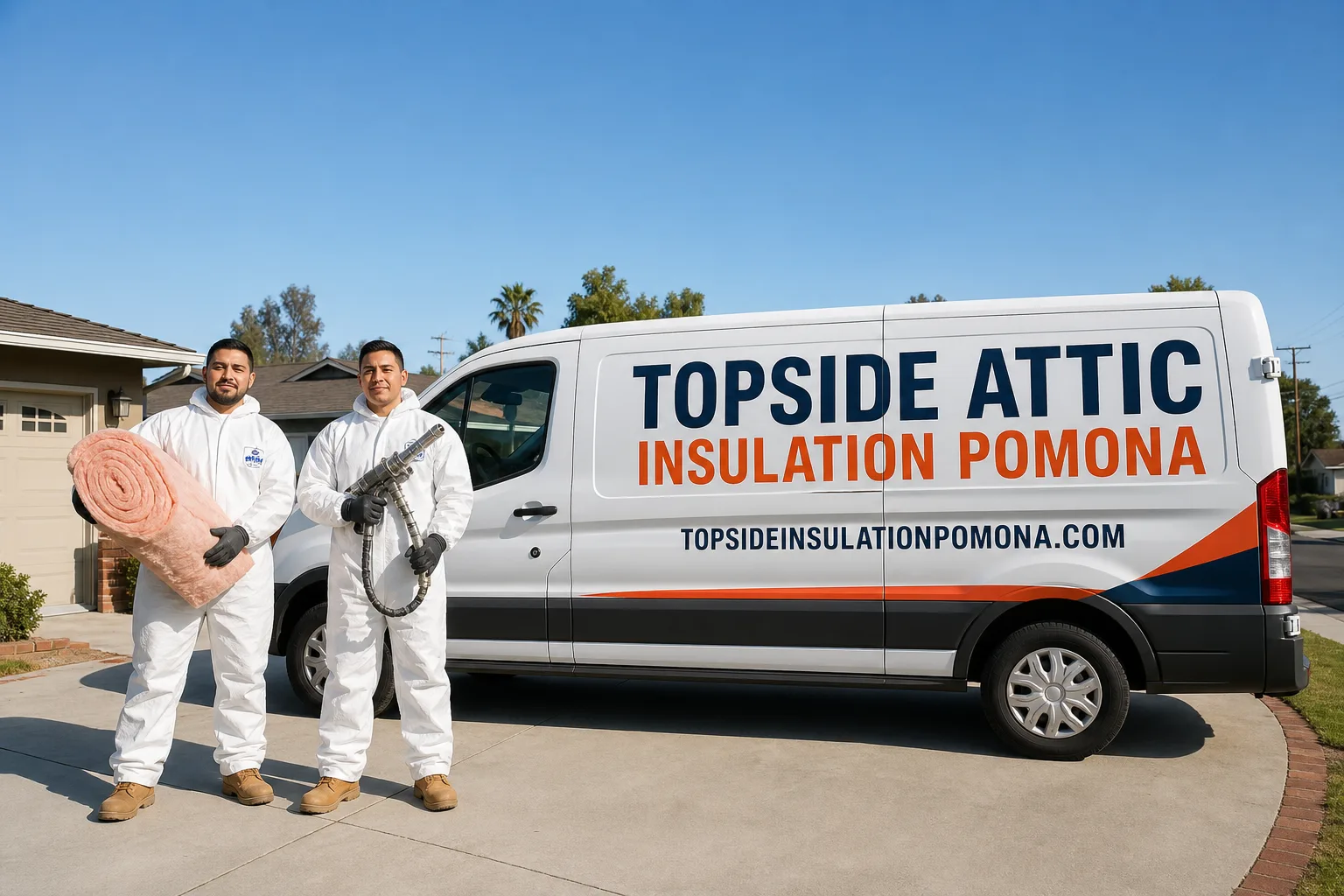
Fast, Reliable Blown-In Insulation Across Vincent
Blown-in insulation in Vincent typically runs $1.80 to $3.20 per square foot of attic floor, with most complete attic jobs falling between $2,400 and $5,800 depending on whether air sealing and old material removal are needed. We’re usually on-site in Vincent within 24 to 48 hours of your call, and every job starts with a written price before anyone lifts a tool. Call (562) 242-7569 for a free estimate with no callback windows.
We’ve worked the inland foothill pockets of LA County long enough to know that Vincent isn’t like Pomona or Claremont. The temperature swings here, the unpermitted construction history, and the High Fire Hazard Severity Zone status all change how we approach a blown-in insulation job. Our crews serve Vincent locally, with dispatch and scheduling coordinated from our Los Angeles office.
Why Topside Attic Insulation Pomona Is Vincent’s Preferred Blown-In Insulation Company
Vincent homeowners tend to research thoroughly before calling, and we respect that. Our reviews from Vincent customers consistently mention the same things: we show up when we say we will, we explain the blower-door numbers in plain language, and we leave documentation behind that proves what got done. We’ve sealed and insulated over 9,000 homes since 2016, and every one started with a written price and closed with a photo record.
Response time to Vincent is typically same-day or next-day for estimates, and we don’t make you wait through voicemail loops. A live person answers calls 24/7. Our technicians are background-checked and uniformed, and you’ll get a text when your technician is on the way. Under Haven Standard: Arrive on schedule, you get a named technician.
What separates us in Vincent specifically is that we understand the local building envelope problems. Many homes here were built or expanded without permits, so there’s no documentation of what’s actually in your walls or attic. We don’t guess. We test, we photograph, and we show you what we found before we quote.
Our Blown-In Insulation Services in Vincent
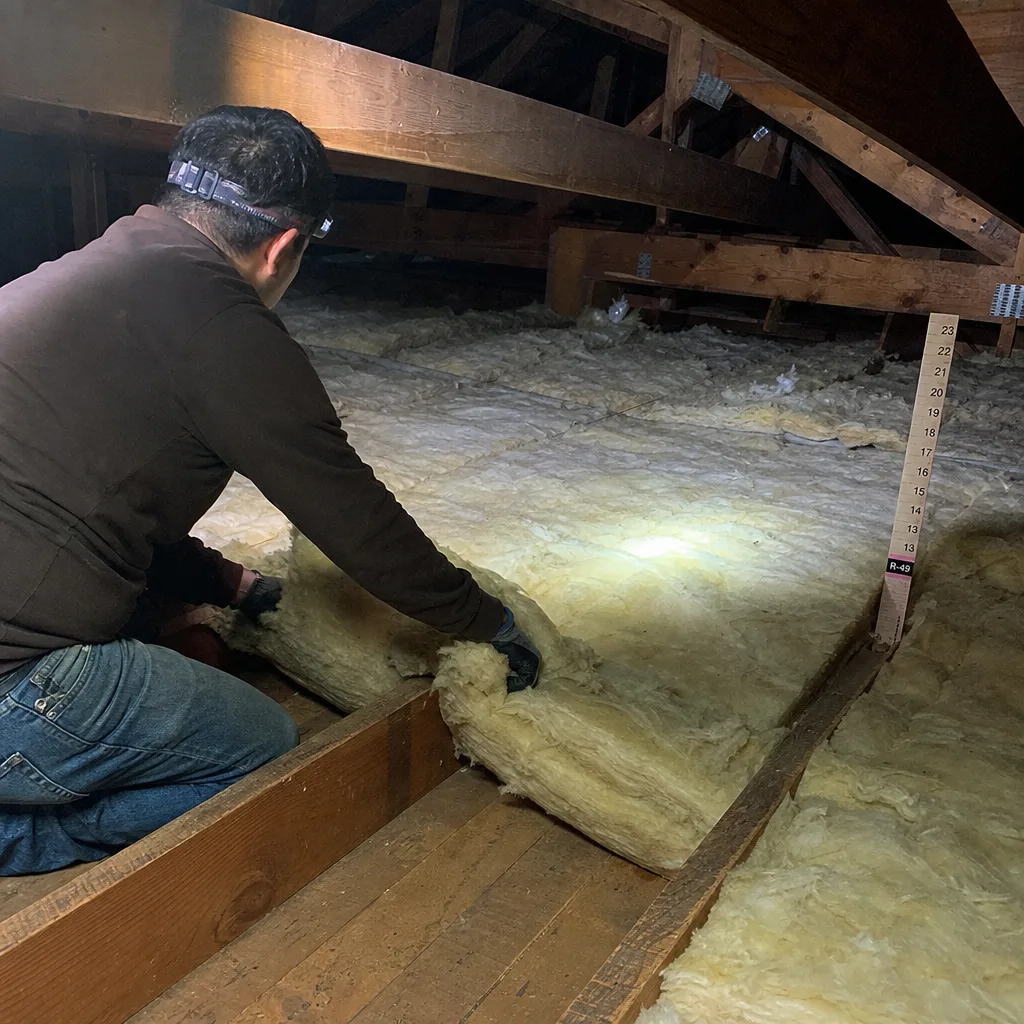
Blown-In Fiberglass
Blown-in fiberglass is our most common specification for Vincent homes inside the High Fire Hazard Severity Zone. Owens Corning and Johns Manville both manufacture loose-fill fiberglass with Class A fire ratings that meet California’s WUI requirements for ember-resistant assemblies. The material doesn’t settle the way cellulose can, and it performs well in the extreme radiant heat load that Vincent attics experience during 100°F-plus summer days. A typical blown-in fiberglass attic job in Vincent runs $2,200 to $4,500 for a standard ranch-style home, including air sealing of top plates and can lights.
Blown-In Cellulose
Blown-in cellulose, treated with borate fire retardant, is often the right choice for Vincent’s dense-pack wall cavities and for topping up existing insulation where fire ratings are already handled by other assembly components. GreenFiber manufactures a cellulose product we use frequently in Vincent’s older ranch homes, particularly for filling undocumented wall cavities in unpermitted additions. Cellulose has higher R-value per inch than fiberglass, which matters when you’re working with the limited cavity depths common in mid-century construction. Dense-pack cellulose in Vincent walls typically runs $3.50 to $5.80 per square foot of wall area.
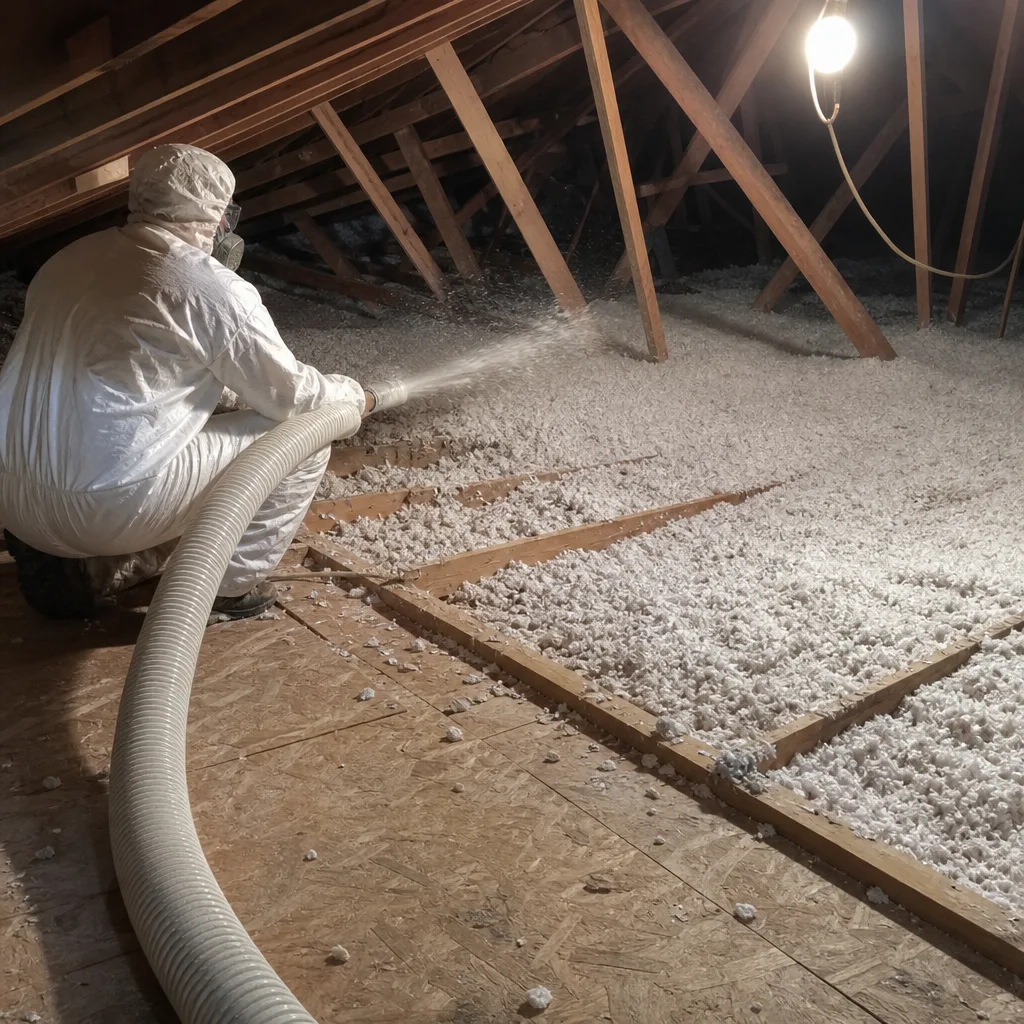
Dense-Pack Wall Insulation
Vincent’s unpermitted additions and converted garages often leave wall cavities completely empty, or with gaps where blown material from a careless installer has settled and migrated. Dense-pack wall insulation addresses this by filling the cavity under controlled pressure so the material stays where it’s placed. We use a tube-fill method for closed cavities, or open the wall from the interior if we’re already doing repair work. Because so many Vincent homes lack any wall cavity insulation at all, this is often the single most impactful upgrade for winter comfort. Most dense-pack wall jobs in Vincent fall between $3,800 and $7,200.
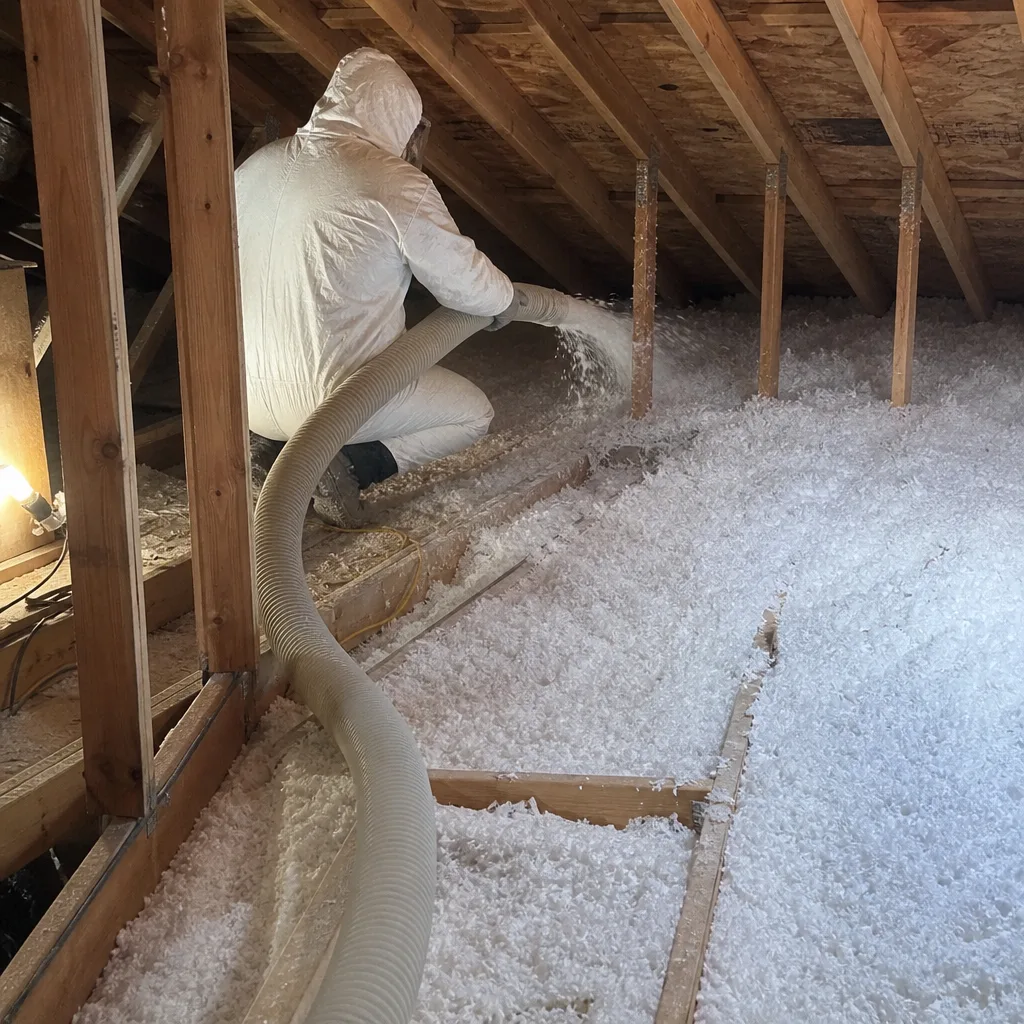
Blown-In Top-Up
Many Vincent attics have some old fiberglass batts, compressed and degraded, that don’t meet current Title 24 standards. A blown-in top-up adds loose-fill material over the existing layer after we air seal the attic floor, bringing the total assembly to R-38 or R-49 as appropriate. This is the most cost-effective option when the existing material is in reasonable condition and the attic floor has been properly sealed first. Top-up jobs in Vincent typically run $1,800 to $3,400. We never blow new insulation over an unsealed attic floor; that’s not how our Blown-In Insulation team works.
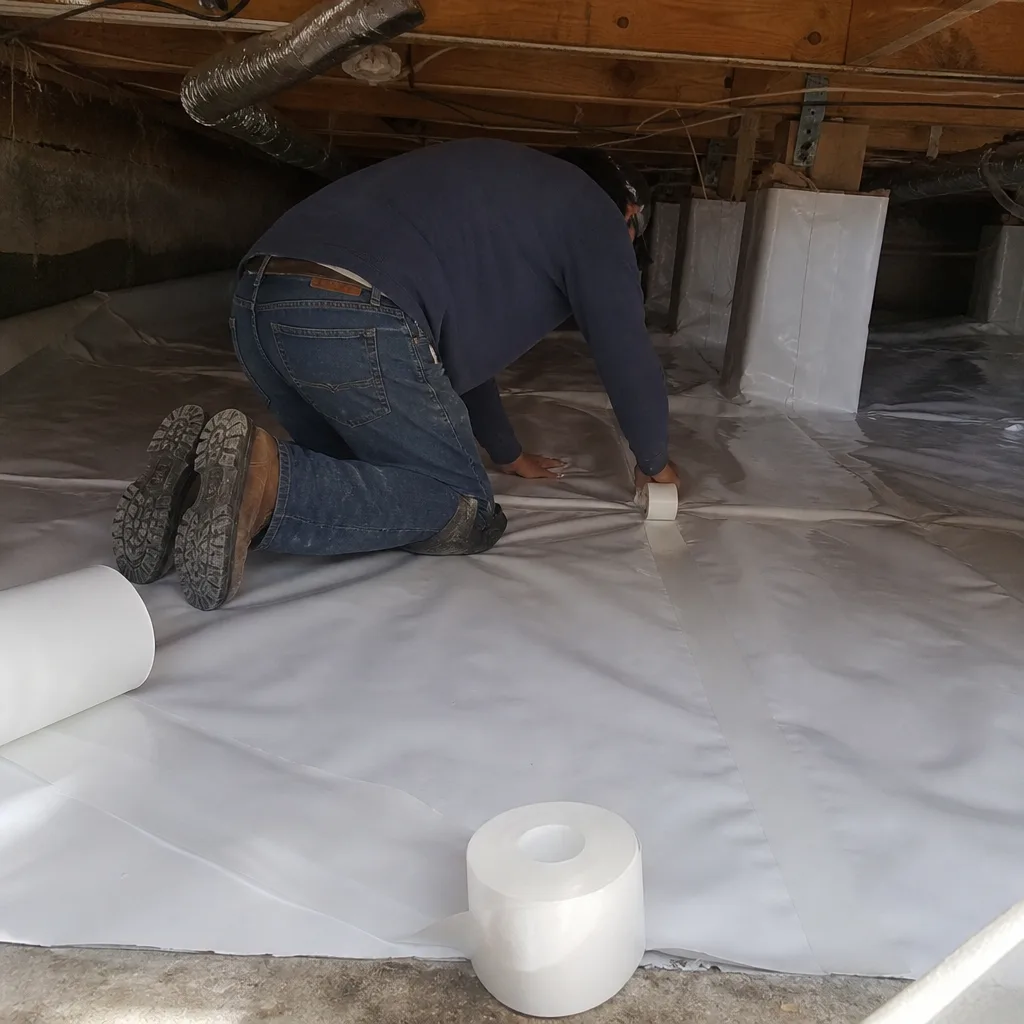
What happens when you call
- 1
A real person answersNo phone trees - you reach a local pro.
- 2
You get an upfront price rangeHonest numbers before anyone is dispatched.
- 3
A background-checked tech heads outLicensed & insured, dispatched right away.
- 4
You approve before work beginsNothing starts until you say go.
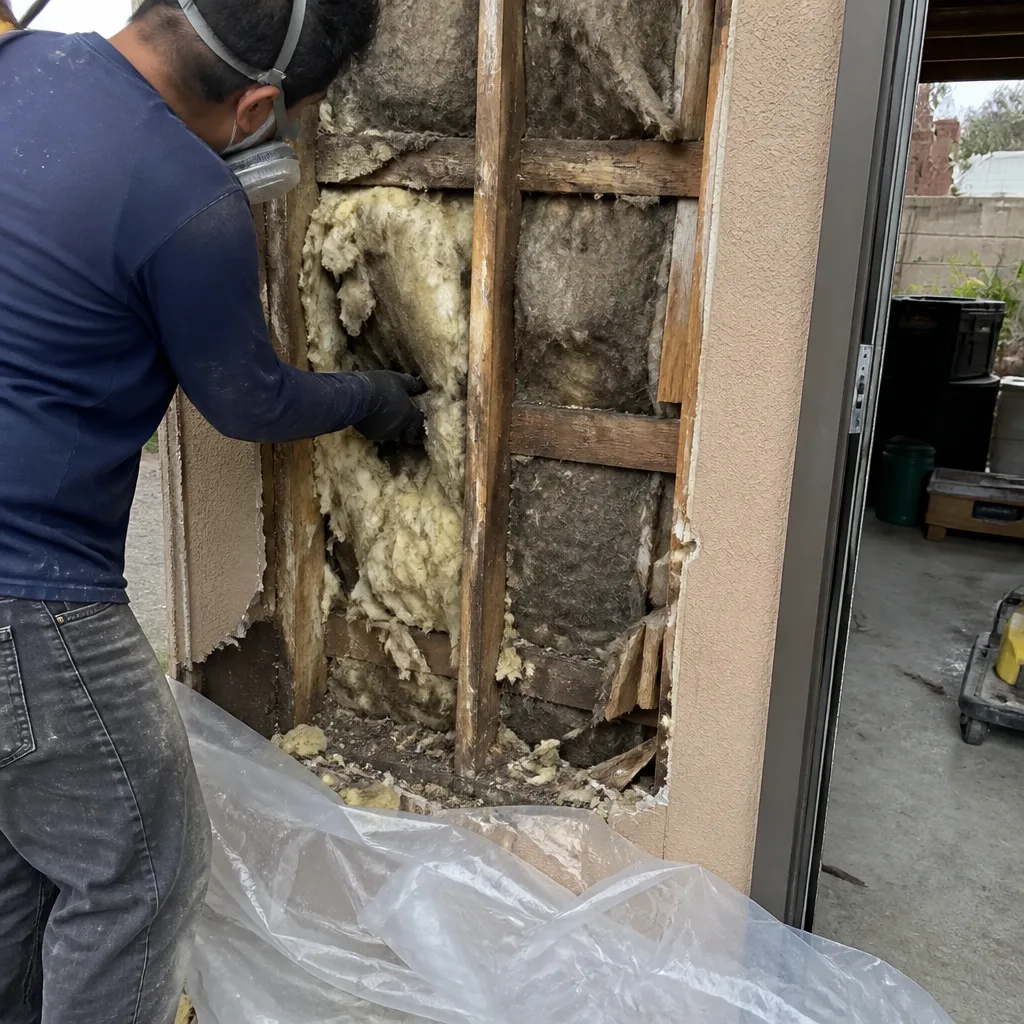 Before
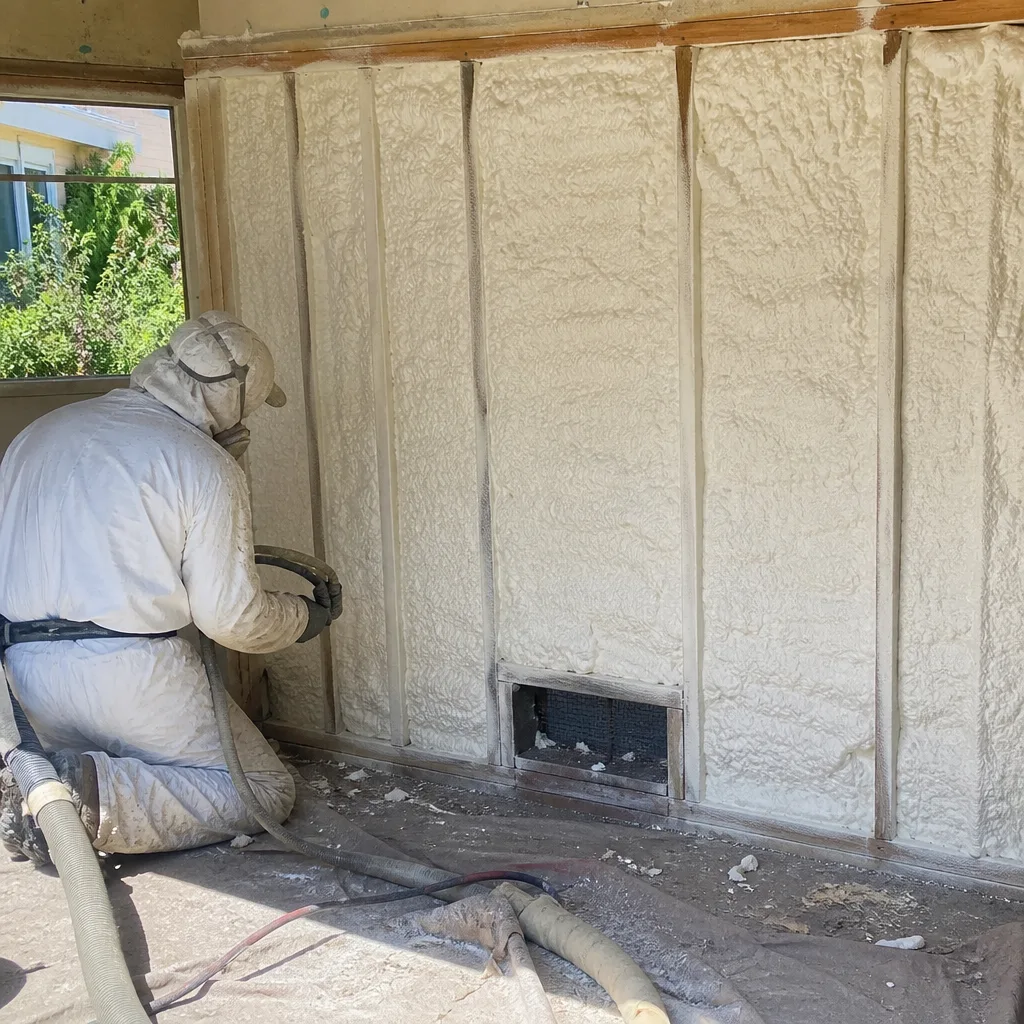 After
AfterTrusted Brands We Service in Vincent
We source materials from Owens Corning, Johns Manville, and GreenFiber, among others, with no proprietary product lock-in. For Vincent’s High Fire Hazard Severity Zone requirements, we keep Owens Corning AttiCat blown-in fiberglass in stock locally, along with Johns Manville Climate Pro formaldehyde-free fiberglass for homeowners with chemical sensitivity concerns. Turnaround on material orders is typically 24 to 48 hours, so we’re not delaying your job waiting on product. Every bag we install carries a manufacturer’s warranty, and our 365-Day Done Right Promise backs the installation itself.
Common Blown-In Insulation Problems We See in Vincent Homes
- Compressed original batts with missing coverage over top plates. The mid-century ranch homes common in Vincent were often built with R-11 or R-13 fiberglass batts that have compressed to a fraction of their original thickness. Summer radiant heat drives straight through these thin spots, and the top plates where walls meet the ceiling are frequently left completely exposed.
- Unpermitted additions with undocumented, empty wall cavities. Because Vincent developed without a local building department, additions and converted garages often have no insulation in the walls and open framing gaps that let blown material migrate. A careless installer fills the cavity, the material settles into the gaps, and you’re left with cold spots and air leaks that bypass the thermal envelope entirely.
- Winter condensation in vented attics without proper vapor management. Vincent’s near-freezing winter nights create a dual-season failure mode that coastal LA contractors rarely see. Warm, moist interior air leaks into a cold vented attic, condenses against the roof sheathing, and any added blown-in insulation without a proper vapor profile can trap that moisture. We’ve found degraded insulation and early rot in attics where this went unaddressed.
- Non-fire-rated materials in WUI zones. Some homeowners in Vincent have had insulation installed by contractors who didn’t account for the High Fire Hazard Severity Zone requirements. Standard cellulose without proper fire-retardant treatment, or exposed foam products, can create compliance and safety issues that a knowledgeable inspector or informed buyer will flag later.
Pricing for Blown-In Insulation in Vincent, CA
| Service | Typical Range in Vincent |
|---|---|
| Blown-in fiberglass attic (new installation, R-38) | $2,400 - $5,200 |
| Blown-in fiberglass attic (top-up to existing) | $1,800 - $3,400 |
| Blown-in/dense-pack cellulose walls | $3.50 - $5.80/sq ft |
| Complete attic removal + new blown-in insulation | $3,800 - $7,500 |
| Air sealing + blower-door test (add-on or standalone) | $850 - $1,600 |
What moves you within these ranges? Attic square footage is obvious, but in Vincent the condition of what we find matters more than in most cities. Homes with unpermitted additions need more investigation time. Properties in the High Fire Hazard Severity Zone may specify Class A rated materials that carry a modest premium. Access matters too: steep roof pitches, limited attic hatches, or homes on unimproved roads off Largo Vista Road can affect labor hours. Every job gets a written price before work starts, no exceptions. Bring us a competing quote and we’ll read it with you; our Free Second Opinion applies to any written estimate.
We were called to a 1950s ranch on a winding, unpaved lane off Largo Vista Road where the homeowner’s summer electric bills had doubled and winter drafts were constant. The vented attic held a thin, compacted layer of original fiberglass batts-no permit record had ever flagged it-and our blower-door test showed air leakage close to three times what we’d see on a comparable home in Pomona. Because the property sits inside the county’s High Fire Hazard Severity Zone, we used Owens Corning blown-in fiberglass with a Class A fire rating, installed cellulose densely around can lights and the chimney chase, and upgraded the attic hatch with an ember-resistant gasket before topping up to R-38.
We Also Serve Cities Near Vincent
Our crews work throughout the eastern San Gabriel Valley and inland foothills. We regularly serve Vincent alongside Pomona, La Verne, San Dimas, and Claremont. Each city has different permit histories, climate conditions, and building stock that change how we approach the work. Vincent’s unincorporated status and WUI fire zone requirements are distinct from what we encounter in those incorporated cities, and we adjust our specifications accordingly.
Serving Vincent, CA - Our Local Coverage Area
We’re based in the Vincent area and know this community well. Use the map below to see our service coverage - if you’re nearby, we can almost certainly help.
FAQs - Blown-In Insulation in Vincent
Yes. Vincent’s High Fire Hazard Severity Zone status means insulation assemblies must meet California WUI requirements for ember and fire resistance. We typically specify Class A fire-rated blown-in fiberglass from Owens Corning or Johns Manville for attic work in these zones, and we verify that all penetration sealing uses fire-resistant materials. Standard cellulose is usable in some applications but must have proper borate fire-retardant treatment and may be restricted depending on the specific assembly. We’ll tell you exactly what your home requires before we quote. Call (562) 242-7569 for a free estimate.
Because Vincent developed as an unincorporated community without a local building department, many homes were built or expanded without permits, leaving no documentation of what’s in your walls or attic. A blower-door test, a pressurization reading that shows in one number how much air your building envelope is losing, reveals the actual condition rather than what we assume. We’ve tested Vincent homes that leaked two to three times what a comparable permitted home in Pomona would show. We publish before-and-after blower-door numbers on every applicable job so you can verify the result. Call (562) 242-7569 to schedule.
Yes, if it’s specified correctly for this dual-season climate. The key is addressing both the extreme radiant heat load in summer and the condensation risk in winter. That means proper R-value, but it also means air sealing first so warm moist air doesn’t reach cold attic surfaces, and using materials that don’t degrade when temperature cycled aggressively. Vincent’s thermal swings are harder on building assemblies than coastal LA’s moderated climate, and our specifications reflect that. Call (562) 242-7569 for an exact assessment of your home.
We remove them if they’re degraded, contaminated, or improperly installed, and we air seal the attic floor before adding any new material. Leaving compressed, uneven batts in place and blowing over them creates an inconsistent thermal layer with voids and cold spots. In Vincent’s climate, that’s a recipe for both summer overheating and winter condensation problems. We’ll photograph what we find and show you before we recommend removal or retention. Estimates are free; call (562) 242-7569.
We use Owens Corning and Johns Manville blown-in fiberglass with Class A fire ratings for most Vincent attic work, GreenFiber borate-treated cellulose for dense-pack wall cavities and some top-up applications, and we select based on your home’s specific assembly requirements and WUI zone status. Every material carries a manufacturer’s warranty, and we document what was installed where in your photo record. We don’t use proprietary products you can’t verify, and we’ll show you the spec sheets before we start. Call (562) 242-7569 for specifics on your project.
Ready to see what your attic actually needs? Call (562) 242-7569 for a free estimate. We’ll run a blower-door test if indicated, photograph what we find, and give you a written price before any work starts. That’s Haven Standard Clause 1, and it’s how we’ve operated since 2016.
Written by Wes Okafor, Owner at Topside Attic Insulation Pomona, serving Vincent since 2016.