
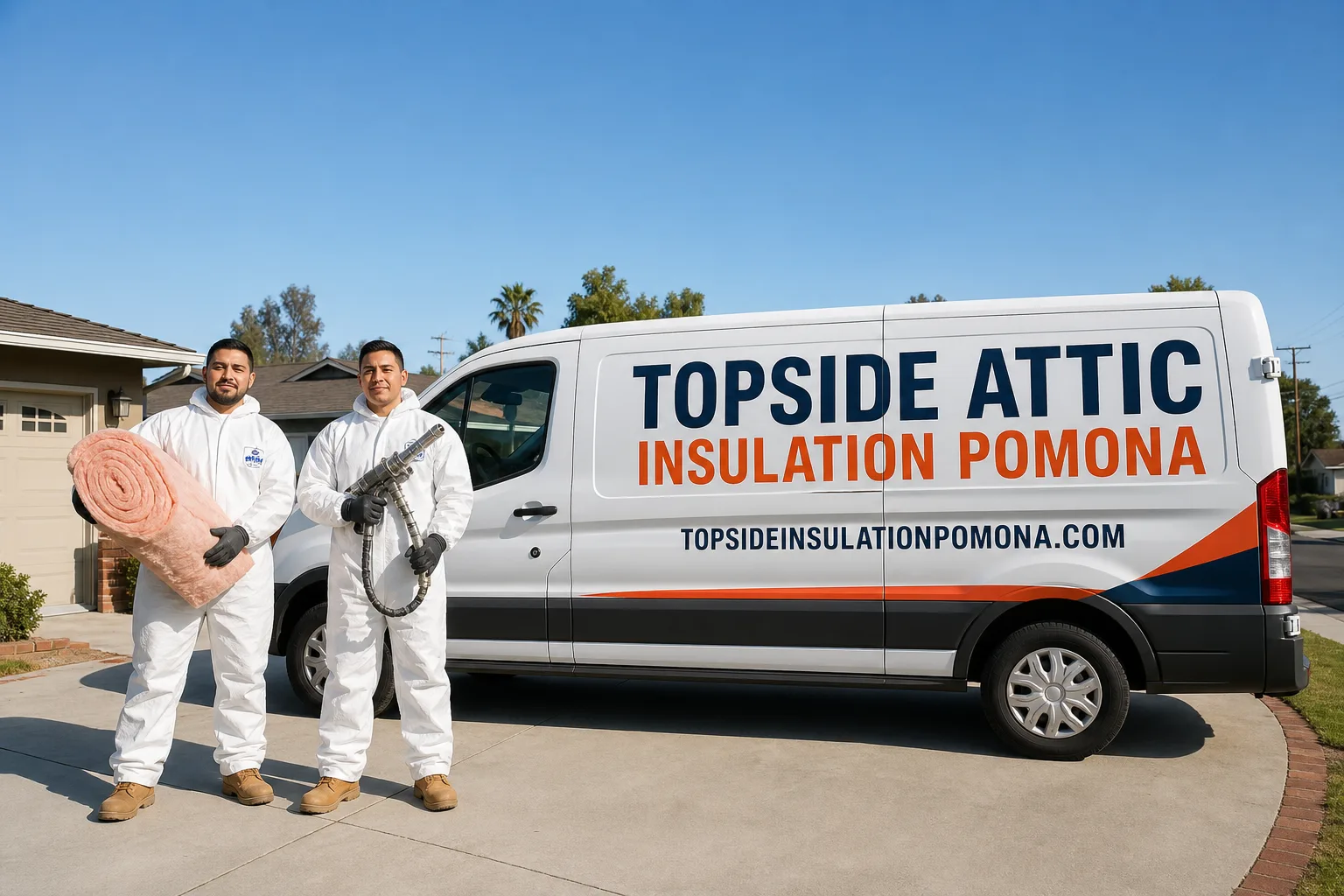
Fast, Reliable Attic Insulation Across San Dimas
Most attic insulation jobs in San Dimas run between $2,800 and $6,500, and our crews can usually assess your space and deliver a written price within 24 hours. We know the difference between a 1960s ranch off Arrow Highway and a custom build in the Country Estates foothills, and that difference changes what goes into your attic. Dispatch and scheduling run through our Los Angeles office, but the crews serving San Dimas live and work locally. Call (562) 242-7569 to speak with a live person now.
Why Topside Attic Insulation Pomona Is San Dimas’s Preferred Attic Insulation Company
We’ve insulated and sealed more than 9,000 homes since 2016, and a significant share sit right here in San Dimas - from the flat-grid ranches near San Dimas Avenue to the sloped-lot estates above Via Verde. San Dimas homeowners leave reviews that mention the same things: the written price that showed up before any work started, the blower-door numbers they could compare, and the photo record they received at the end. We don’t ask you to trust a feeling; we deliver documentation.
Our response time to San Dimas averages same-day or next-day for assessments, because our crews know the local routes - where the 210 backs up, which foothill streets narrow for truck access, and how CAL FIRE’s VHFHSZ overlay changes permit timing on the north side of town. That local fluency means fewer surprises and faster turnaround.
Under Haven Standard Clause 1, you get a flat written price, written scope, and written warranty before anyone lifts a tool. No exceptions. Wes Okafor built this practice into the company from day one.
Our Attic Insulation Services in San Dimas
Blown-In Attic Insulation
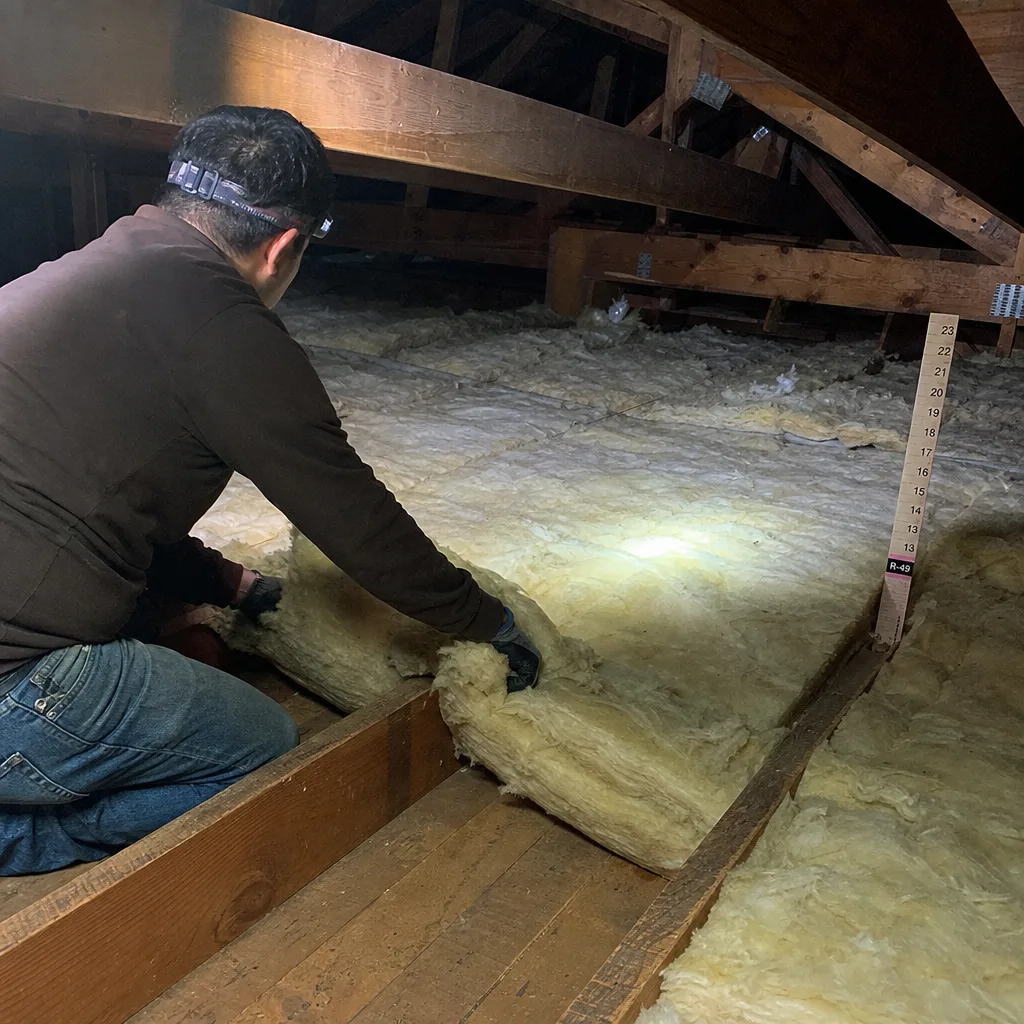
We blow loose-fill fiberglass or cellulose across attic floors in San Dimas ranches, custom homes, and everything between. But we never blow before we seal. Our crew starts with top plates, can lights, and every penetration - the air sealing that blower-door testing later proves. In San Dimas, where Santa Ana winds drive infiltration through mountain-facing walls, that sequence matters more than the R-value alone. We use Owens Corning, Johns Manville, and GreenFiber products, matched to your attic’s condition and any fire-zone requirements.
Attic Batt Insulation
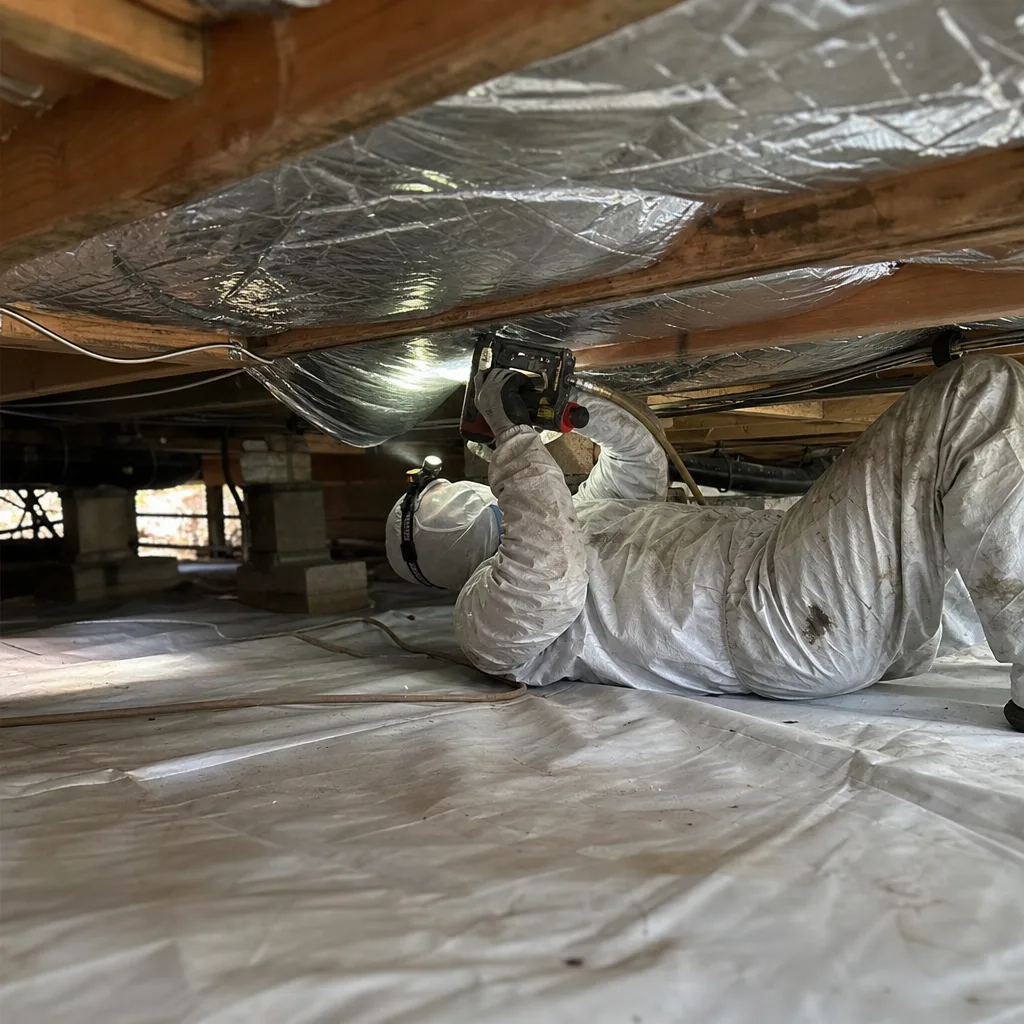
Batt insulation - pre-cut fiberglass or mineral wool sheets - fits attics with obstructions, limited access, or fire-rated assembly requirements. This is often the right call for San Dimas foothill homes in VHFHSZ zones, where WUI standards restrict combustible loose-fill at the deck. We specify Rockwool or Owens Corning batts when the code overlay demands it, and we document the rated assembly in your job record.
Attic Insulation Top-Up
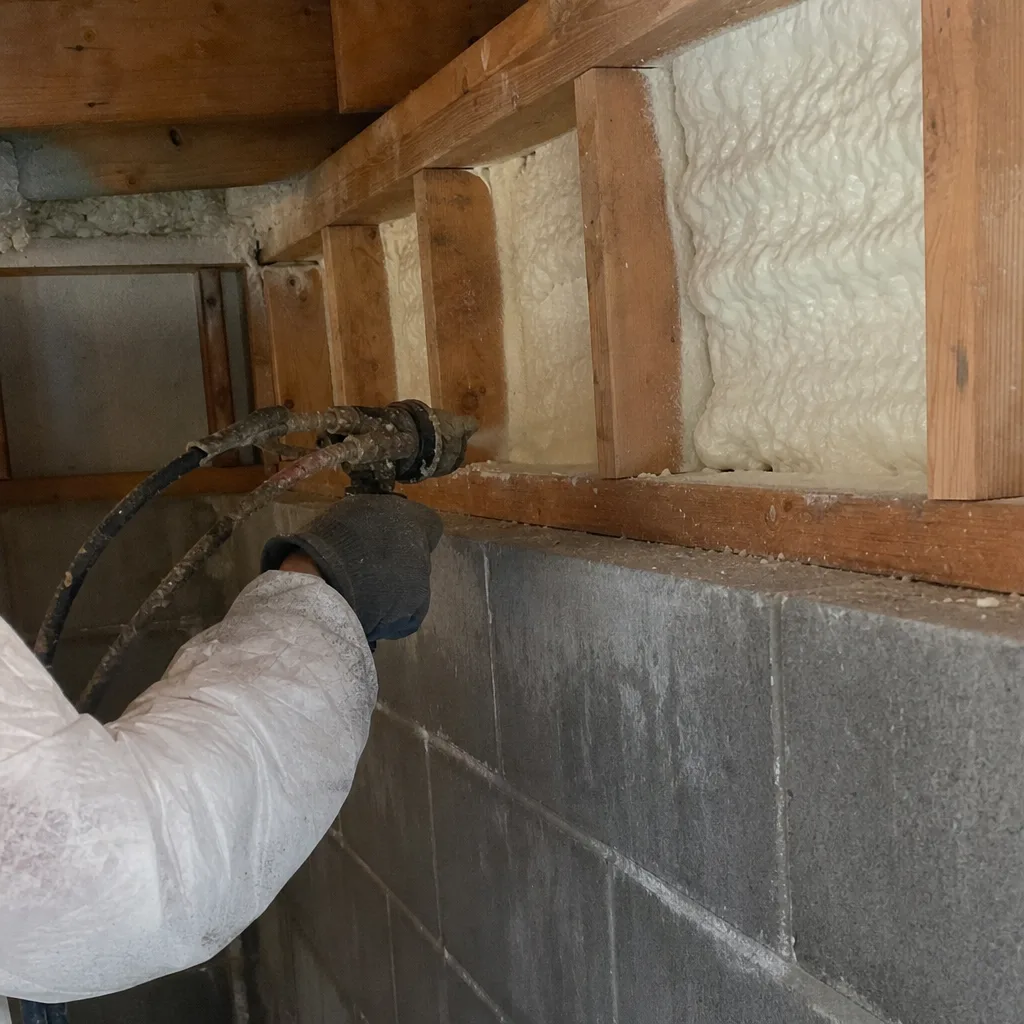
Most San Dimas ranches built between 1955 and 1975 still carry original fiberglass batts compressed to R-11 or less - far below current Title 24 standards. A top-up adds blown-in fill over existing material after air sealing, typically lifting the assembly to R-38 or R-49. We inspect what’s there first. If the old batts are mold-damaged, rodent-compromised, or blocking soffit vents, we remove before we add. At a recent job near Bonita Avenue, we found batts stuffed against unbaffled soffits, choking intake airflow and trapping summer heat. We pulled the scraps, installed baffles, sealed, then blew - and the blower-door reading dropped from 3,800 to 2,100 CFM50.
Attic Insulation Replacement
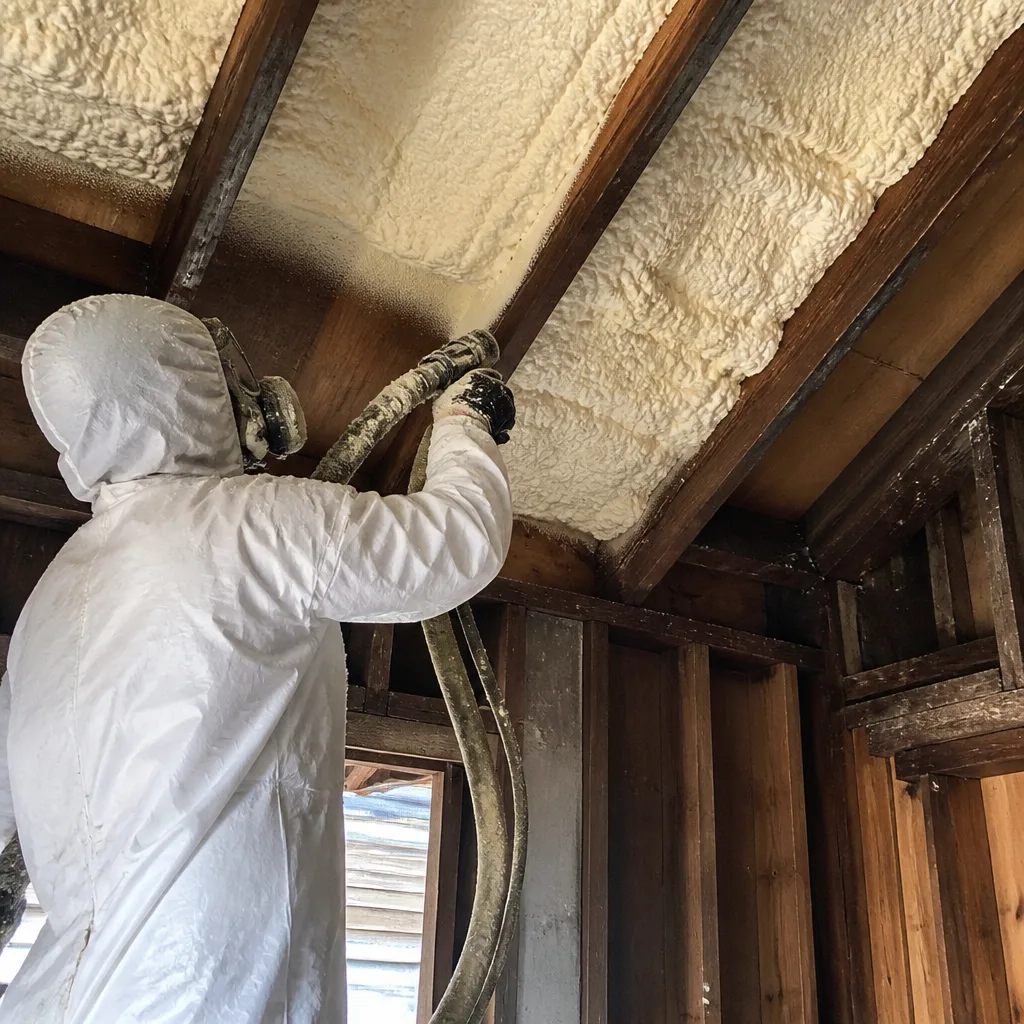
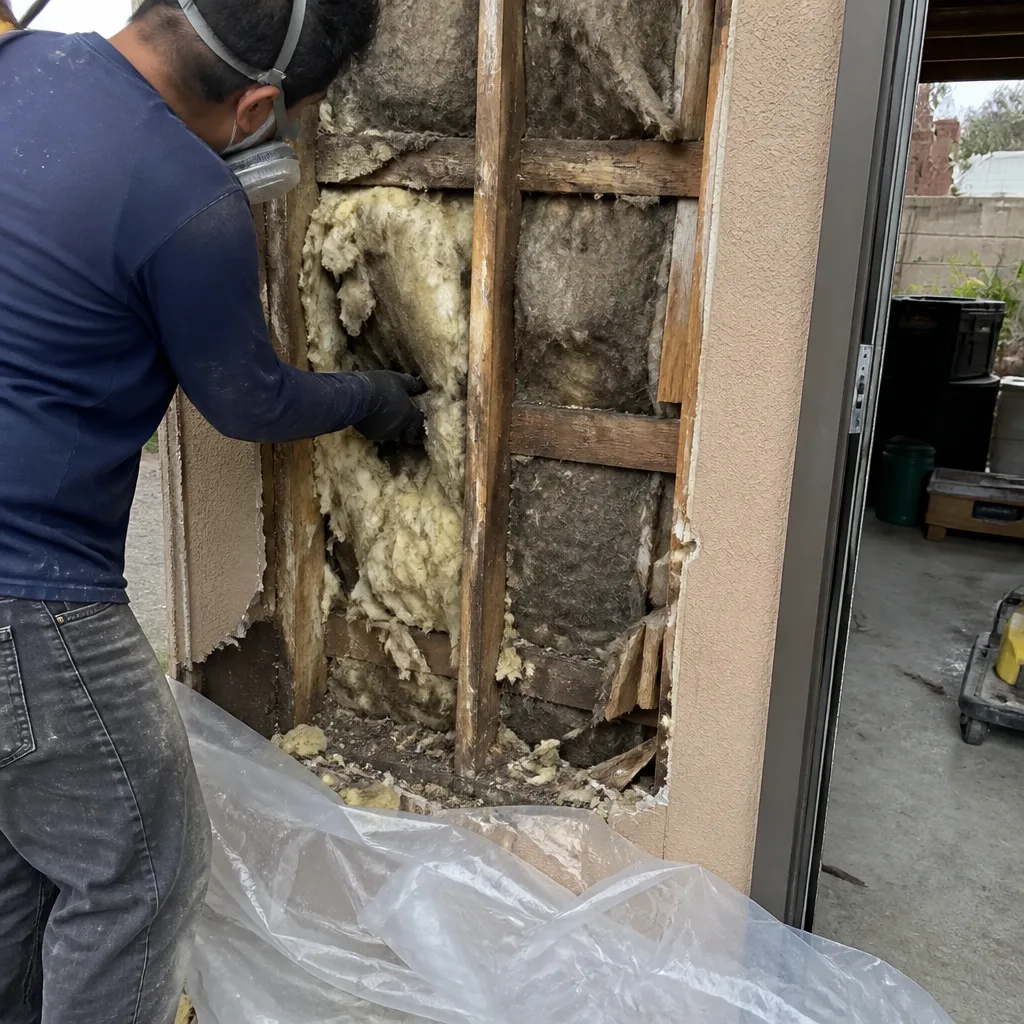
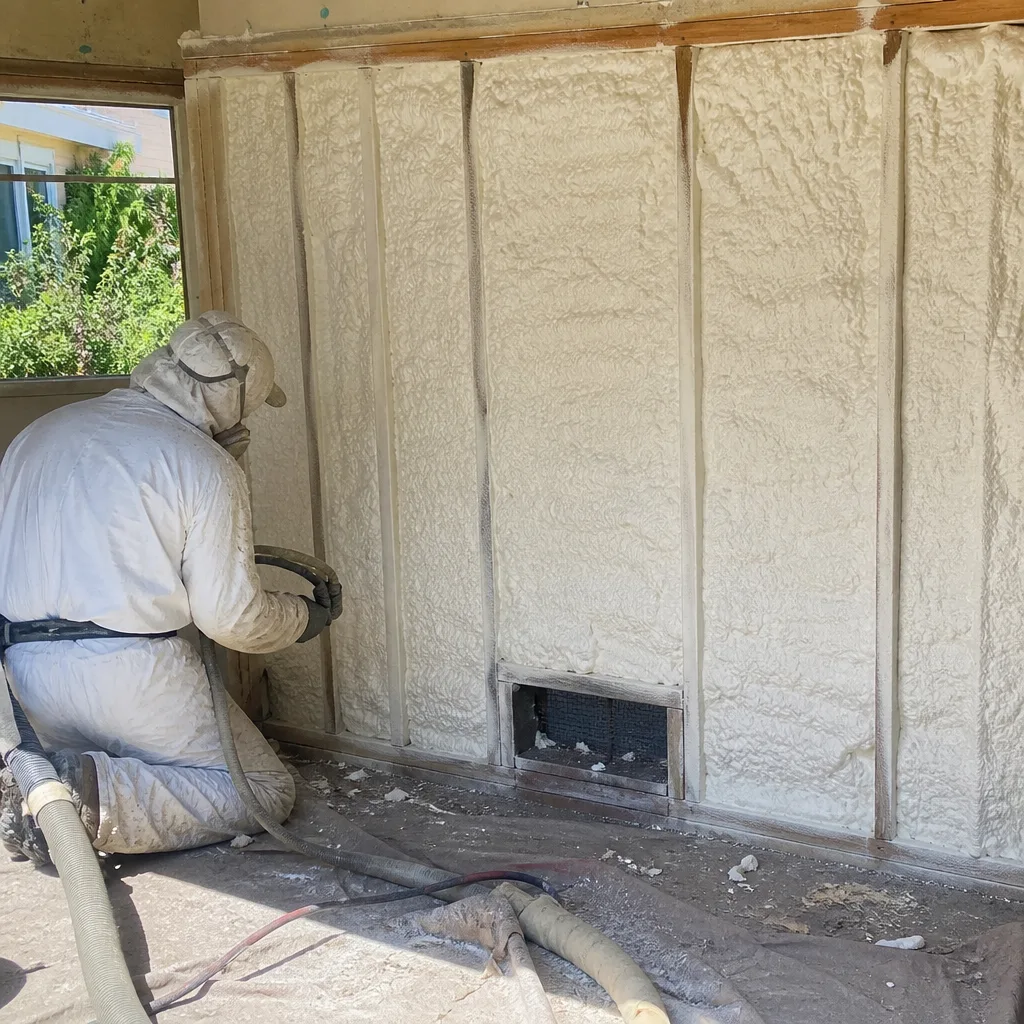
When existing insulation is degraded, contaminated, or simply wrong for the assembly, we strip it out and start clean. Replacement jobs in San Dimas often follow rodent activity, water damage from old roof leaks, or failed DIY attempts. We handle removal, deck cleaning, air sealing, and new installation as a single scoped job with one written price. The photo record shows before, during, and after - every layer documented.
Attic Baffles & Ventilation Prep
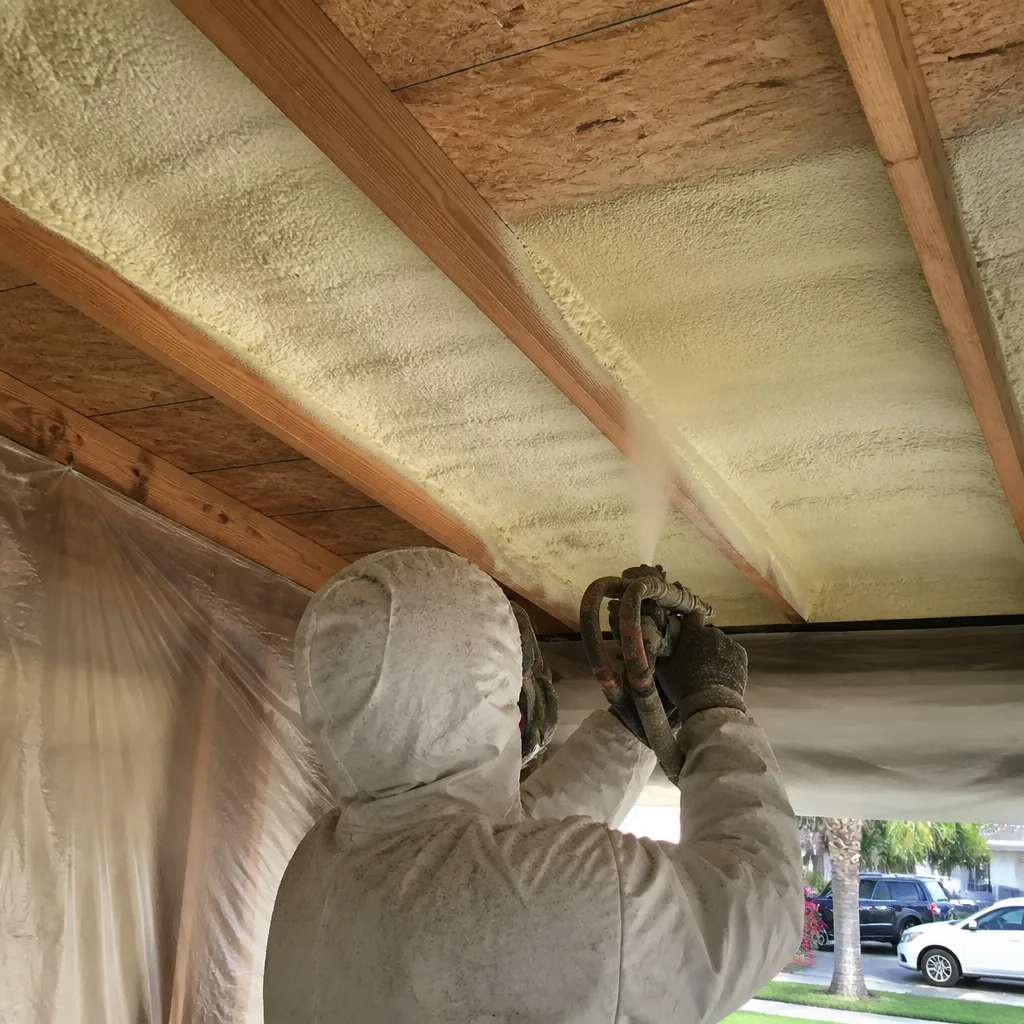
Proper ventilation is the other half of insulation performance. We install polystyrene or cardboard baffles at every soffit vent to maintain intake airflow, preventing new blown-in material from blocking the path. In San Dimas, where summer attic temperatures exceed 150°F and Santa Ana events pressurize the envelope, choked ventilation can undo every dollar spent on R-value. We check ridge vent continuity, verify exhaust flow, and document the assembly in your photo record.
What happens when you call
- 1
A real person answersNo phone trees - you reach a local pro.
- 2
You get an upfront price rangeHonest numbers before anyone is dispatched.
- 3
A background-checked tech heads outLicensed & insured, dispatched right away.
- 4
You approve before work beginsNothing starts until you say go.
 Before
 After
AfterTrusted Brands We Service in San Dimas
We source materials from Owens Corning, Johns Manville, Knauf, Icynene, Demilec, and GreenFiber - no proprietary lock-in, no house brand pushed for margin. For San Dimas foothill jobs requiring WUI-compliant assemblies, we stock Rockwool mineral wool batts locally and can pivot specs mid-project without the lead times that stall out-of-area contractors. That local inventory matters when a Country Estates job shifts from cellulose to mineral wool after permit review. You get the right material, not the available one.
Common Attic Insulation Problems We See in San Dimas Homes
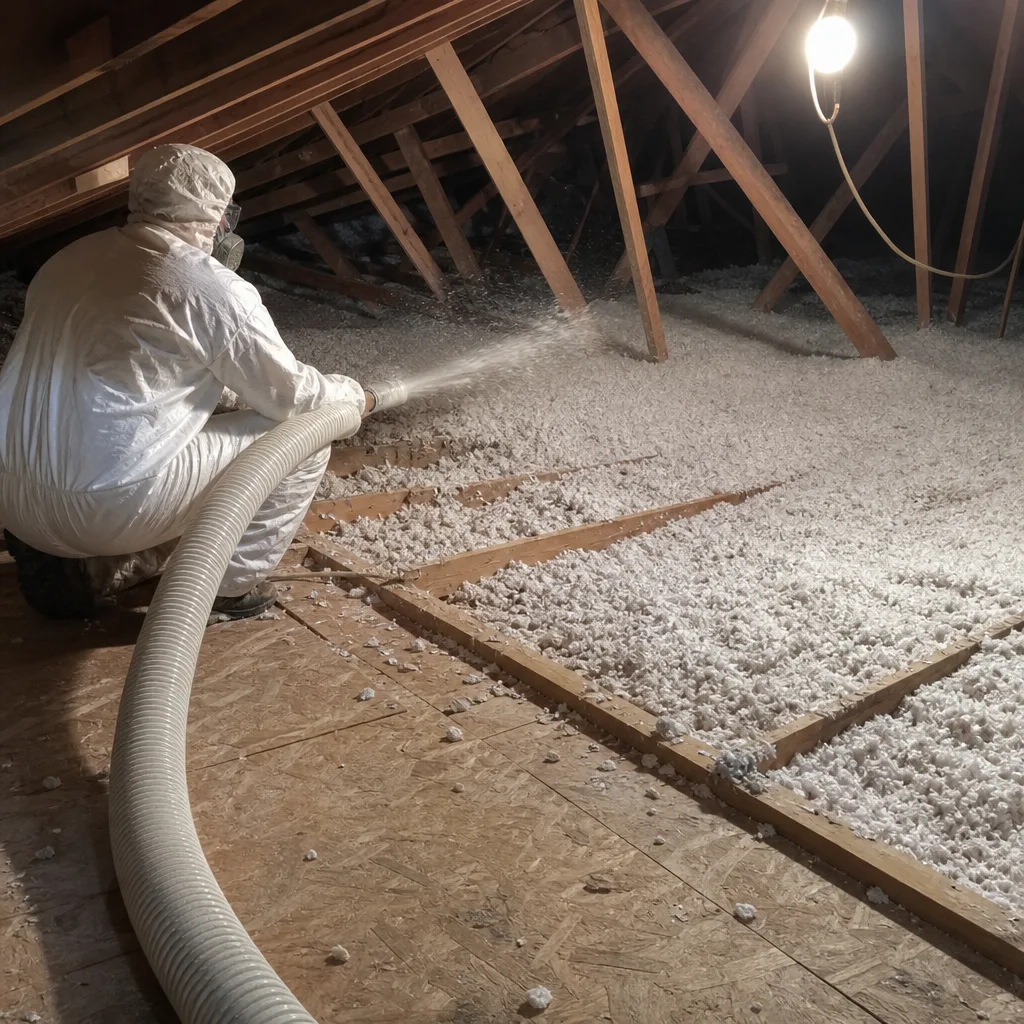
- Compressed original batts in 1950s-70s ranches. The post-war tract homes near San Dimas Avenue and Arrow Highway were built with R-11 fiberglass at best. Sixty years of gravity, foot traffic, and summer heat have compressed most of it to half its original thickness. The ceiling below gets hot because there’s almost nothing left to stop it.
- Fire-zone spec mismatches in foothill homes. Northern San Dimas neighborhoods like Country Estates and upper Via Verde sit in CAL FIRE Very High Fire Hazard Severity Zones. Standard cellulose or fiberglass blown-in may not clear WUI assembly rules, and not every contractor catches the overlay before quoting. We’ve seen homeowners hold two bids: one that assumed standard material, and ours that specified the rated assembly from the start.
- Under-floor gaps in sloped and split-level lots. Foothill homes built on grade changes often have raised foundations or split-level designs with rim joists and subfloor cavities that flat-grid ranches never expose. Insulation gaps there bleed conditioned air year-round, and they’re invisible from the attic hatch. We check them with thermal imaging during assessment.
- Unbaffled soffits choked with debris. Old batt scraps, blown-in overshoot, and rodent nesting material clog soffit vents across San Dimas. Without clear intake airflow, hot air stagnates in summer and moisture lingers in winter. We clear and baffle every vent as part of our ventilation prep.
Pricing for Attic Insulation in San Dimas, CA
Here’s what most San Dimas homeowners pay, based on attic size, access difficulty, and whether fire-rated materials apply:
| Service | Typical Range in San Dimas |
|---|---|
| Attic air sealing + blown-in top-up (flat ranch, ~1,200 sq ft) | $2,800 - $4,200 |
| Full batt replacement with air sealing (standard ranch) | $3,500 - $5,500 |
| Sloped-lot or split-level home with under-floor work | $4,500 - $6,800 |
| VHFHSZ-compliant mineral wool assembly (foothill zones) | $5,200 - $7,500 |
| Insulation removal + replacement (contaminated/damaged) | $4,000 - $6,500 |
What moves the number: attic square footage, existing material condition, access constraints (tight hatches, low clearance), fire-zone material upgrades, and whether rodent proofing or deck repair is needed. Every job starts with a written price - no work begins without it - and we offer a Free Second Opinion on any competing written estimate. Call (562) 242-7569 for your exact quote.
We Also Serve Cities Near San Dimas
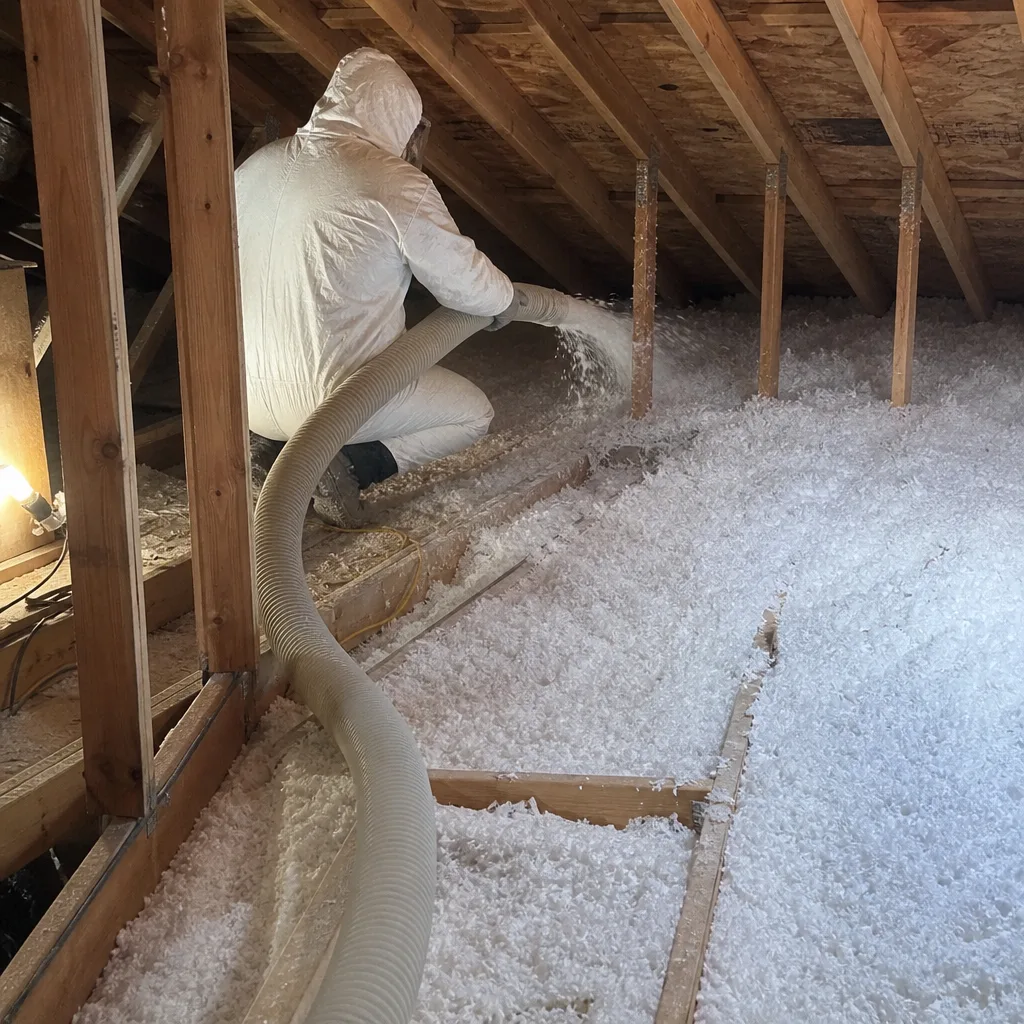
Our crews work throughout the San Gabriel Valley foothills and inland valley. If you’re in San Dimas or nearby - La Verne, Glendora, Covina, or Azusa - we run the same process: written price first, documented record at the end, blower-door numbers when applicable. The WUI fire-zone issues that complicate northern San Dimas jobs don’t apply to flat-valley La Verne or Covina, but the heat-trap climate and aging 1960s housing stock do. Our Attic Insulation team adjusts the spec to the location.
Serving San Dimas, CA - Our Local Coverage Area
We’re based in the San Dimas area and know this community well. Use the map below to see our service coverage - if you’re nearby, we can almost certainly help.
FAQs - Attic Insulation in San Dimas
Yes. Northern San Dimas neighborhoods including Country Estates and upper Via Verde fall inside CAL FIRE Very High Fire Hazard Severity Zones, which triggers California’s WUI construction standards. Those standards may restrict combustible loose-fill insulation at the attic deck and require fire-rated assemblies - typically mineral wool batts or specific fiberglass formulations with documented flame-spread ratings. Flat-valley areas of San Dimas south of the 210 generally don’t face this overlay. We verify your property’s fire-zone status during assessment and spec accordingly. Call (562) 242-7569 to confirm what applies to your address.
San Dimas sits in a natural heat trap against the San Gabriel Mountains, where summer highs hit 100-107°F - 15-20°F above coastal Los Angeles and several degrees hotter than La Verne’s slightly more open valley position. Your attic likely exceeds 150°F on peak days, and if original insulation has compressed below R-19 or soffit ventilation is blocked, that heat pushes straight through the ceiling. Air sealing plus adequate R-value and clear ventilation paths fixes it. We measure the before-and-after with blower-door and thermal imaging.
Sometimes, but only after we inspect what’s there. Original batts in San Dimas ranches are often compressed to R-11 or less, and may be moldy, rodent-damaged, or stuffed against soffits blocking airflow. If the material is clean and the deck is sound, we air seal penetrations first, install baffles, then blow loose-fill over the top to reach R-38 or R-49. If the old batts are compromised, removal and replacement is the only path that performs. We photograph everything and show you before quoting.
Sloped lots common in foothill areas create raised foundations, crawl spaces, and split-level designs with rim joists and subfloor cavities that flat-grid homes don’t expose. These gaps bleed conditioned air and often lack any insulation at all. We address them with thermal imaging during assessment, then specify under-floor or rim-joist work as part of the scoped job. A Covina or flat-valley quote won’t catch these gaps because the estimator never looked for them.
Most San Dimas homeowners see measurable cooling-load reduction within the first billing cycle, with full payback typically in 3-5 years depending on current insulation condition, HVAC efficiency, and whether the home sits in the deeper heat-trap of the northern foothills. The 150°F+ attic temperatures here make under-insulated homes work harder than equivalent homes in cooler microclimates. We document the air-leakage reduction with before-and-after blower-door numbers so you can verify the improvement yourself. For a precise payback estimate on your home, call (562) 242-7569 - estimates are free.
Written by Wes Okafor, Owner at Topside Attic Insulation Pomona, serving San Dimas and the San Gabriel Valley since 2016.